Threefold Sacred Time
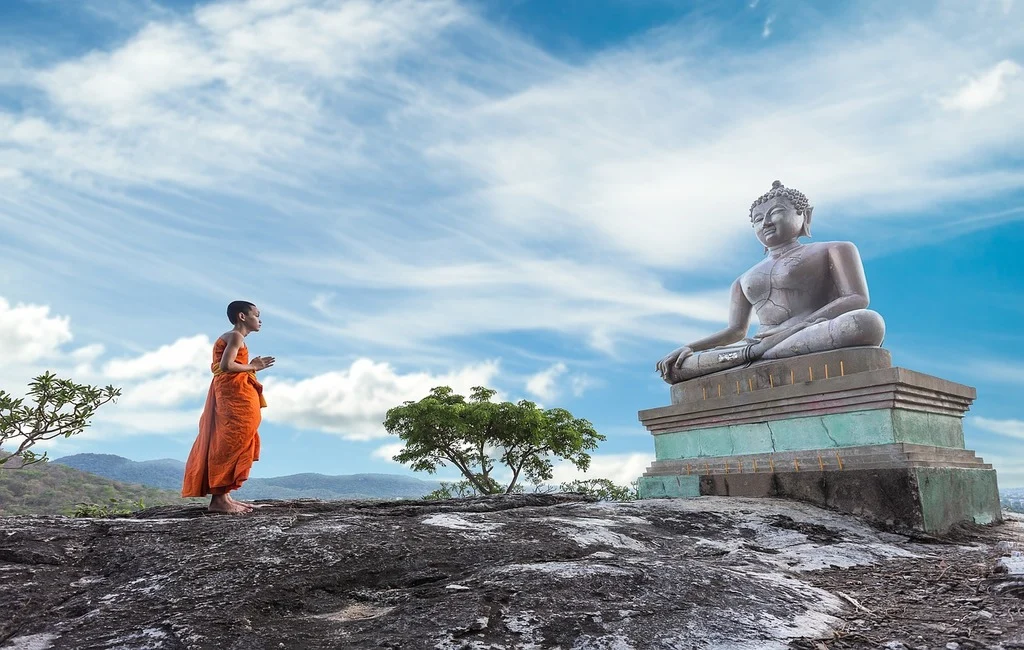
The Vesak Festival is the most sacred day in the Buddhist world, uniting three sacred events in the life of the Buddha, namely his birth, enlightenment, and attainment of parinirvana, into a single calendrical moment. Known as Visakha Puja in the Theravada tradition and the Buddha’s Birthday in the Mahayana tradition, this festival is the ritualized expression of humanity’s search for liberation from suffering, the potential for spiritual awakening, and a profound understanding of impermanence. Vesak simultaneously functions as a cosmological threshold moment, a practice of social solidarity, a psychological opportunity for transformation, and a symbolic field in which cultural memory is reproduced.
Theological Layer: The Convergence of Three Sacred Events
Vesak holds a unique position in Buddhist cosmology. According to tradition, Siddhartha Gautama was born in 623 BCE during a Vesak full moon in the Lumbini garden, attained enlightenment in 588 BCE at Bodh Gaya also on a Vesak full moon, and entered parinirvana in 543 BCE at Kushinagar again on a Vesak full moon. This calendrical overlap transforms Vesak from a simple commemorative day into a timeless time in which cosmic order reveals itself.
The convergence of these three events reflects Buddhism’s fundamental understanding of cyclicality and simultaneity. Birth, enlightenment, and death, the three fundamental thresholds of existence, are unified in Vesak as a single sacred moment. Mircea Eliade’s concept of sacred time is fully applicable here. Vesak interrupts the flow of profane time and transports participants to a primordial beginning.
The life story of Siddhartha Gautama is central to Buddhist theology. Encounters with the Four Sights, namely an old man, a sick man, a corpse, and an ascetic, while he lived a sheltered life in the palace led him into an existential inquiry. This encounter represents a universal narrative of confronting suffering, impermanence, and death.
The Buddha’s enlightenment is, theologically, the direct realization of ultimate reality. The Four Noble Truths, which systematically explain the nature of suffering, its origin, its cessation, and the path leading to its cessation, form the core of Vesak’s theological meaning. This teaching shows that suffering is not only physical but also mental and existential, arising from desire, attachment, and ignorance.
Parinirvana represents ultimate liberation in Buddhist theology. The Buddha’s death is not an ordinary end but a complete exit from the cycle of rebirth, a transcendence beyond samsara. By celebrating these three events together, Vesak symbolizes the wholeness of the Buddhist path, a spiritual journey that begins with birth, reaches its peak in enlightenment, and concludes with parinirvana.
The theological meaning of Vesak also emphasizes that the Buddha was not a god but a human who attained enlightenment through his own effort. This conveys the message that every human being has the potential to awaken through their own practice. Vesak is therefore a celebration not of divine intervention but of human potential.
Ritual Anatomy: A System of Symbolic Actions
Vesak rituals, while varying across Buddhist regions, share a common symbolic structure. Temple visits, offerings, meditation practices, and collective worship form the backbone of the ritual.
In the early morning, Buddhist communities gather at temples to offer flowers, incense, and lamps to the Buddha statue. These offerings serve as reminders of impermanence. Flowers wither, incense burns out, lamps extinguish, just like life itself. This ritual action brings the Buddhist concept of anicca, impermanence, into lived bodily experience.
Buddhist flags and colorful decorations form the visual symbolism of Vesak. The six colored Buddhist flag represents the six rays of light believed to have emanated from the Buddha at the moment of enlightenment: blue, yellow, red, white, orange, and a combination of these colors. Temples, homes, and streets are decorated with flags and illuminated with lanterns.
The ritual bathing of the Buddha statue is one of Vesak’s most distinctive practices. Participants pour scented water or tea over the statue in reference to the Buddha’s infancy. This act also symbolizes purification of the mind. The flow of water represents the cleansing of mental impurities such as anger, greed, and ignorance.
Meditation and Dhamma talks constitute the inner dimension of Vesak. All day meditation sessions in temples aim to bring participants closer to the Buddha’s experience of enlightenment. Dhamma talks present contemporary interpretations of the Buddha’s teachings, connecting ancient wisdom with modern life.
The release of animals is another ritual that embodies Vesak’s compassion dimension. Freeing caged birds and animals expresses kindness toward all living beings and the principle of non harm. This practice ritualizes ahimsa, the ethical foundation of Buddhism.
Illumination ceremonies, especially in Sri Lanka and Southeast Asia, are a spectacular feature of Vesak evenings. Thousands of lamps and lanterns symbolize the dispelling of ignorance by the light of awakening. This collective illumination transforms individual enlightenment into a communal celebration.
Sociological Dimension: Social Solidarity and Collective Identity
From a sociological perspective, Vesak functions as a powerful mechanism of identity formation and solidarity within Buddhist communities. Émile Durkheim’s concept of collective effervescence explains the social energy generated by mass participation in Vesak rituals. Individuals gathered in temples experience a collective consciousness that transcends individual identity.
Dana, meaning generosity and charitable giving, is central to Vesak’s social dimension. Buddhists donate food, clothing, and money to temples and provide assistance to the poor, the sick, and those in need. This practice transforms Buddhist ideals of selflessness into social action. In Marcel Mauss’s theory of the gift, dana strengthens social bonds and reproduces reciprocal relationships.
Vesak also temporarily suspends sectarian and cultural differences within Buddhism. Theravada, Mahayana, and Vajrayana traditions converge during Vesak. In this sense, Vesak makes the imagined community of Buddhism visible.
In modern societies, weakened traditional bonds are temporarily revitalized during Vesak. Families reunite, temple visits are carried out, and communal meals are organized. This temporary production of social closeness symbolically repairs accumulated social distance.
Vesak is also a normative structure. Values such as compassion, generosity, non harm, and mental purification become emphasized. This creates a moral framework that supports the reproduction of social order. The principles of the Noble Eightfold Path are enacted through Vesak rituals and contribute to the performative reconstruction of social ethics.
Psychological Dimension: Mindfulness, Meaning, and Emotional Regulation
Psychologically, Vesak provides a deep framework of meaning and emotional regulation. Reflection on the Buddha’s life allows individuals to confront their own suffering and place it within a broader existential perspective.
Meditation practices lie at the center of Vesak’s psychological dimension. Mindfulness meditation enables individuals to observe mental processes, recognize emotional reactions, and cultivate inner calm. These practices, widely supported by modern psychology, reduce stress, improve emotional regulation, and increase cognitive flexibility.
The narrative of the Buddha’s enlightenment presents a model of transformation. The idea that suffering originates in mental processes and can be overcome through mental transformation gives individuals a sense of agency over their own psychological states.
Contemplation of impermanence is another psychological effect of Vesak. The fading of flowers, extinguishing of lamps, and burning of incense symbolize loss, change, and death, helping individuals develop acceptance and resilience.
Generosity practices enhance empathy and increase prosocial behavior. Acts of helping others strengthen a person’s sense of meaning and improve subjective well being.
Vesak rituals also create a collective space for emotional regulation. The calm temple environment, rhythmic chanting, incense, and dim lighting produce a multisensory atmosphere that soothes the nervous system.
Anthropological Continuity and Cultural Memory
Anthropologically, Vesak is a key ritual that carries the collective memory of Buddhist culture and enables transmission across generations. Following Jan Assmann’s conceptualization, Vesak functions as a bridge between communicative memory and cultural memory.
Its repetitive structure ensures cultural continuity. Annual Vesak ceremonies transmit Buddhist identity and worldview to new generations. Children internalize Buddhist values through participation in temple visits, offerings, and illumination ceremonies.
Ethnographic studies show regional variation in Vesak celebrations. In Sri Lanka, large illuminated panels called pandals depict scenes from the life of the Buddha and Jataka tales. In Thailand, circumambulation rituals around temples express devotion to the Three Jewels. In Myanmar, watering the Bodhi tree refers to the tree under which the Buddha attained enlightenment. This diversity demonstrates the ritual’s capacity for cultural adaptation.
Vesak is also a domain where Buddhist cosmology is materialized in physical culture. Stupas, statues, and symbols play a central role in rituals, serving not only aesthetic functions but also making theological concepts sensorially accessible.
Unlike Eid al Adha, Vesak is a non violent ritual. The Buddha’s rejection of animal sacrifice shaped Vesak as a festival grounded in compassion and non harm.
Vesak in the Contemporary World: Globalization, Digitalization, and Transforming Ritual
Today, Vesak is being reshaped by globalization and digitalization. Its recognition by the United Nations in 1999 as an international day has increased its global visibility.
Digital platforms have introduced new forms of participation. Virtual temple visits, online Dhamma talks, and livestreamed ceremonies extend the ritual beyond physical space. For Buddhist diasporas, especially in the West, digital participation is crucial for maintaining cultural identity.
Digitalization transforms the experiential dimension of the ritual. The multisensory experience of physical temples is reduced, but accessibility is increased.
Vesak is increasingly becoming a platform for interreligious dialogue. Participation by people from different faiths strengthens its universal message.
Environmental awareness is also prominent in contemporary Vesak celebrations. Tree planting and environmental cleaning activities are often integrated with Buddhist ecological values.
At the same time, capitalist consumer culture may exert pressure on the meaning of Vesak. In response, Buddhist communities emphasize simplicity and inner transformation.
In postmodern identity contexts, Vesak has also become meaningful for non Buddhists. The global spread of mindfulness practices reinforces this influence.
Conclusion: The Universal Symbol of Awakening
The Vesak Festival is a multi layered ritual system that organizes human relations with suffering, impermanence, and the search for meaning. Theologically it unites three sacred events, sociologically it produces solidarity and identity, anthropologically it carries cultural memory, and psychologically it fosters mindfulness and emotional regulation.
Despite transformations in the modern world, Vesak continues to convey the universal message of Buddhist teaching. Compassion, mindfulness, acceptance of impermanence, and respect for all living beings offer responses to contemporary challenges.
The future of Vesak depends on its ability to connect ancient wisdom with contemporary forms. While globalization and digitalization transform the ritual, they do not eliminate it but add new layers of meaning. Vesak remains a universal symbol of human potential for awakening.
References
Assmann J 2011 Cultural Memory and Early Civilization Cambridge University Press
Durkheim É 1912 The Elementary Forms of Religious Life
Eliade M 1957 The Sacred and the Profane Harcourt
Geertz C 1973 The Interpretation of Cultures Basic Books
Gombrich R 2006 Theravada Buddhism A Social History from Ancient Benares to Modern Colombo Routledge
Harvey P 2013 An Introduction to Buddhism Teachings History and Practices Cambridge University Press
Mauss M 1925 The Gift
Rahula W 1974 What the Buddha Taught Grove Press
Swearer D K 2010 The Buddhist World of Southeast Asia SUNY Press
Turner V 1969 The Ritual Process Structure and Anti Structure Aldine
Sefa Yürükel
Danish ethnographer and social anthropologist (MA)
Aarhus University, 1997
Independent Researcher
Fields of Research: International Politics, Public International Law, Geopolitics, Sociology, Psychology, Cultural Studies, Systems and Structures.



Bir yanıt yazın