Category: Authors

  • Letter to New York City Mayor Zohran Mamdani’s Closest Ally – Mr. Ali Najmi Advisor

    Letter to New York City Mayor Zohran Mamdani’s Closest Ally – Mr. Ali Najmi Advisor

    Letter to New York City Mayor Zohran Mamdani’s  Closest Ally –  Mr. Ali Najmi 

    Mr. Ali Najmi 
    The Law Office of Ali Najmi
    32 Broadway Suite 1310
    New York, NY 10004

    April 4, 2026

    Dear Mr. Najmi,

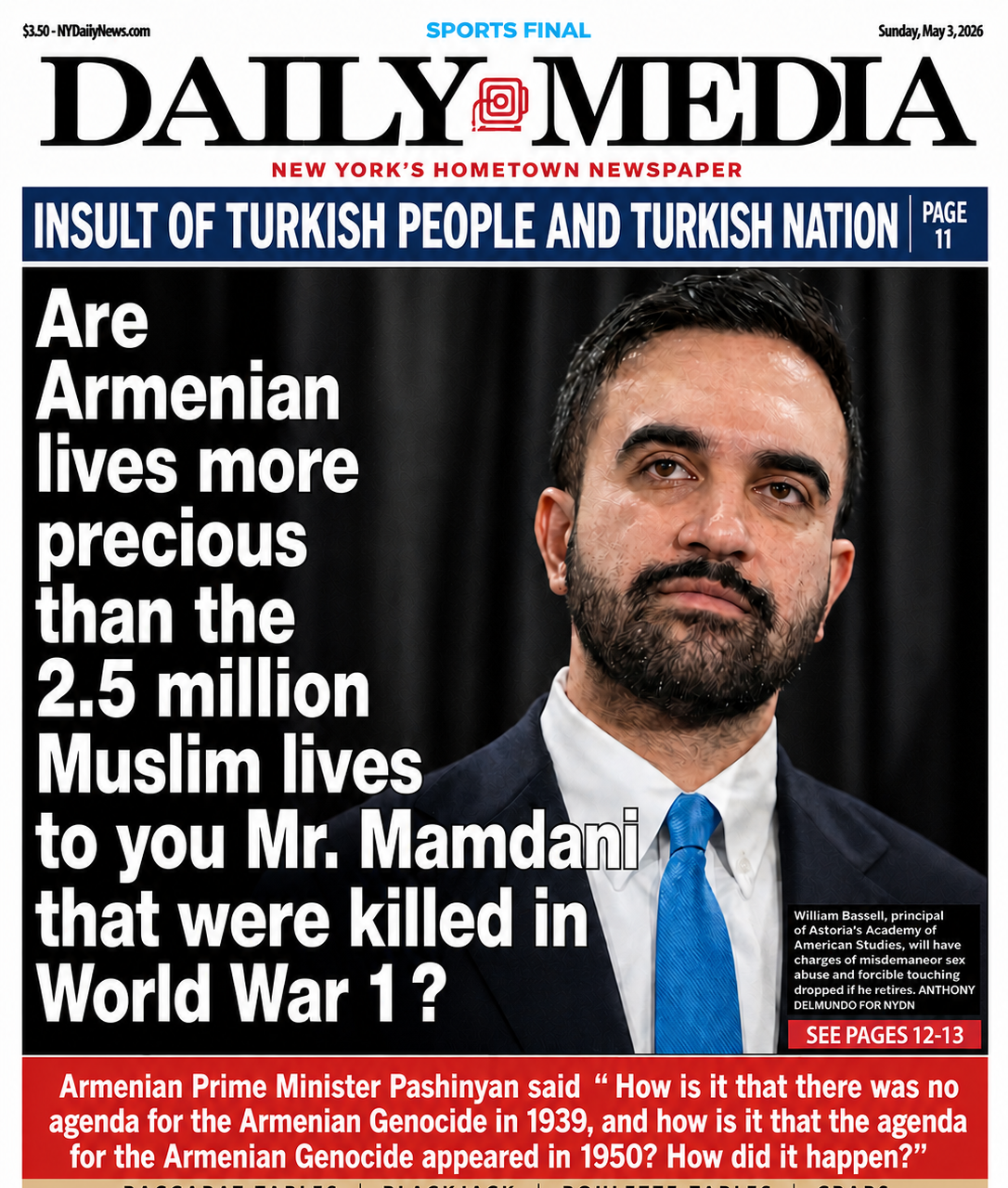
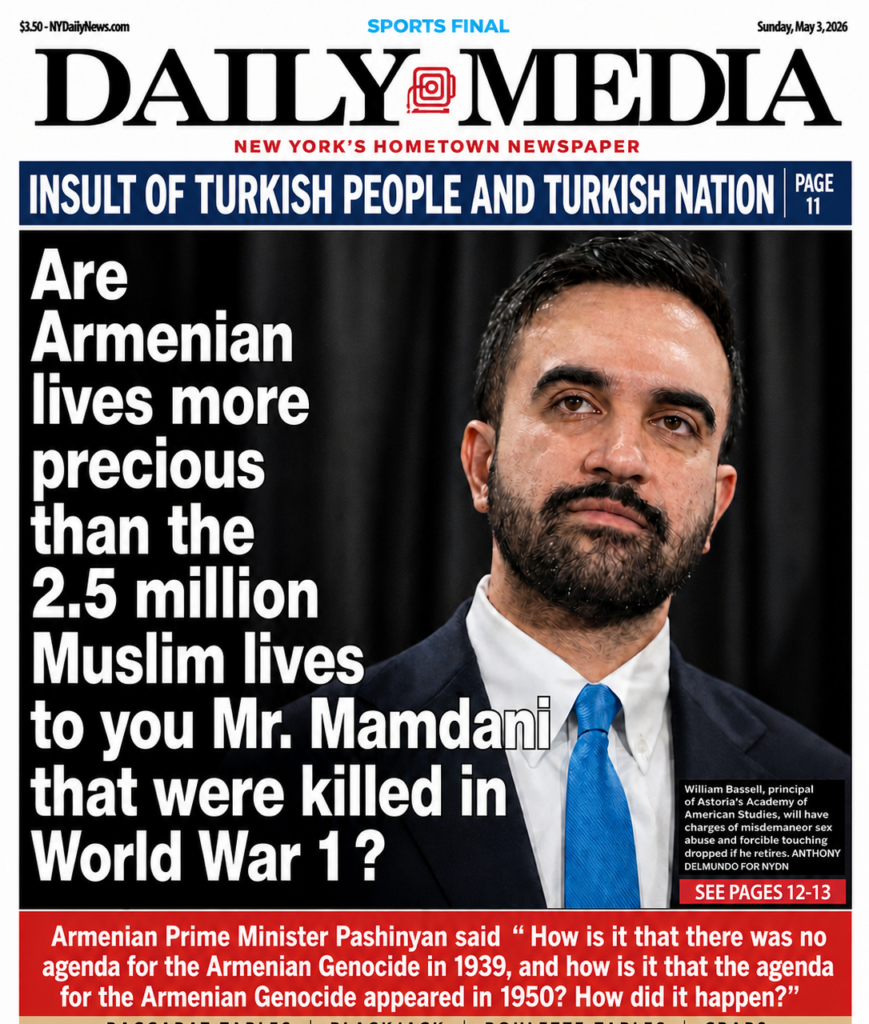
    At the outset let me ask:  Are Christian Armenian lives more precious than the 2. 5 million Muslim lives to you and Mr. Mamdani that were  killed / lost in World War 1 ?

    I acknowledge your recent remarks concerning my position on the characterization of the events of 1915- World War 1, as well as the references made to my professional background. I respond to clarify the issues raised and to ensure the discussion remains grounded in principle, law, and evidentiary standards rather than insinuation.

     During our text messaging Sunday April 26, 2026 , rather than engaging with the facts, Mr. Najmi, you have chosen to rely on personal diversions that have no bearing on the historical and legal questions at hand. This approach prioritizes personal antagonism over evidence-based debate. I maintain that this discussion should be guided by judicially tested evidence and documentation, rather than irrelevant personal attacks.

    The central issue is not whether history can be studied or discussed by scholars, but whether the legal classification of grave international crimes such as genocide can be definitively established outside a competent judicial process. In my view, such determinations properly fall within the jurisdiction of established legal bodies, including international courts and tribunals or competent human rights mechanisms. Scholarly interpretation, particularly when selective or ideologically driven, should not substitute for formal legal adjudication where such serious legal characterizations are concerned. A determination of genocide requires rigorous evidentiary review, adversarial testing, and cross examination within an appropriate judicial framework.

    Sir, it is important to separate historical inquiry from legal adjudication. While historians may contribute to contextual understanding, legal determinations of this magnitude are ultimately the responsibility of impartial tribunals. This distinction is fundamental to the integrity of international law.

    Sir, no one disputes that the early 20th century was marked by immense human suffering across multiple communities during the collapse of the Ottoman Empire and the First World War. This includes significant losses experienced by 2.5 million Muslims as well as Armenians and others. A balanced historical understanding must acknowledge all such suffering without selective omission. The legal argument advanced here is often misunderstood. The absence of the 1948 Genocide Convention at the time of the events in question does not preclude accountability under international law. 

    Indeed, precedents such as the Nuremberg Trials demonstrate that mass atrocities were prosecuted as crimes against humanity under existing principles of international law. Furthermore, later international tribunals, including those for Rwanda and the former Yugoslavia, confirm that judicial mechanisms are routinely established after the fact to determine responsibility based on evidence and due process.

    Armenian Prime Minister Pashinyan January 24, 2025, during a meeting with members of the Armenian diaspora in Zurich, Switzerland. said ” How is it that there was no agenda for the Armenian Genocide in 1939, and how is it that the agenda for the Armenian Genocide appeared in 1950? How did it happen?”

    United Nations Secretary-General Ban Ki-moon April 16, 2015 said “Armenian deaths during World War I were not genocide”

     U.S. Supreme Court Rejects Armenian Allegations.

    European Court of Human Rights, ECHR on December 17, 2013 (Perincek vs Switzerland)  that the events of 1915 cannot be proven to be genocide or compared to Jewish Holocaust.

    The continued efforts by segments of the Armenian diaspora to advance interpretations of history that Türkiye considers inaccurate have long been a matter of concern. In this context, Türkiye’s 2005 proposal to establish a joint historical commission with Armenia remains unfulfilled. If the evidentiary basis is as clear as asserted, engagement with such an initiative would seem constructive.

    Perhaps, Mr. Najmi and Mr. Mamdani,  might consider taking a leading role in pursuing a legal avenue to definitively clarify the matter at the European Court of Human Rights (ECHR), International Criminal Court (ICC), International Court of Justice (ICJ) an effort that could, in your view, bring resolution and recognition to the Armenian position. You or Mr. Mamdani can Mr. Najmi become a hero to the Armenians.

    Mr Najmi,  Are Christian Armenian lives more precious than the 2.5 million Muslim lives to you and 

    Mr. Mamdani that were killed in World War 1

    Mr. Najmi, I am quite curious as to why you think that I, and many others in my position, do not deserve a right you so readily claim for yourself ?

    Finally, attempts to resolve or prejudge such deeply contested historical and legal issues outside of proper judicial forums risk undermining both legal standards and constructive dialogue. For that reason only competent international judicial bodies not selectively curated scholarly consensus or politically motivated narratives are appropriate forums for definitive legal determinations of genocide.

     Also, Using of the outdated term “Turkey” in official communication is a insult to a honorable people and Nation. The nation has formally adopted the name “Republic of Türkiye,” which has been recognized by the United Nations and numerous international bodies. Addressing countries by their chosen names is a basic element of diplomatic respect and cultural decency. Mr. Mamdani should, get it right !

    Accordingly, I respectfully decline to accept the characterization set forth in your statement and that of Mr. Mamdani.

    Until a verdict of genocide can be reached by a “competent tribunal ” after “due process” where both sides of the conflict are properly represented and evidence cross examined, the term genocide should be preceded by the qualifier “alleged”.

     WHAT THE WORLD NEEDS NOW IS TRUTH AND HONESTY, NOT SELECTIVE MORALITY.

    Respectfully,

    Ibrahim Kurtulus

    Community Activist 


    From: EMI P
    Date: Thu, May 7, 2026 at 3:43 AM

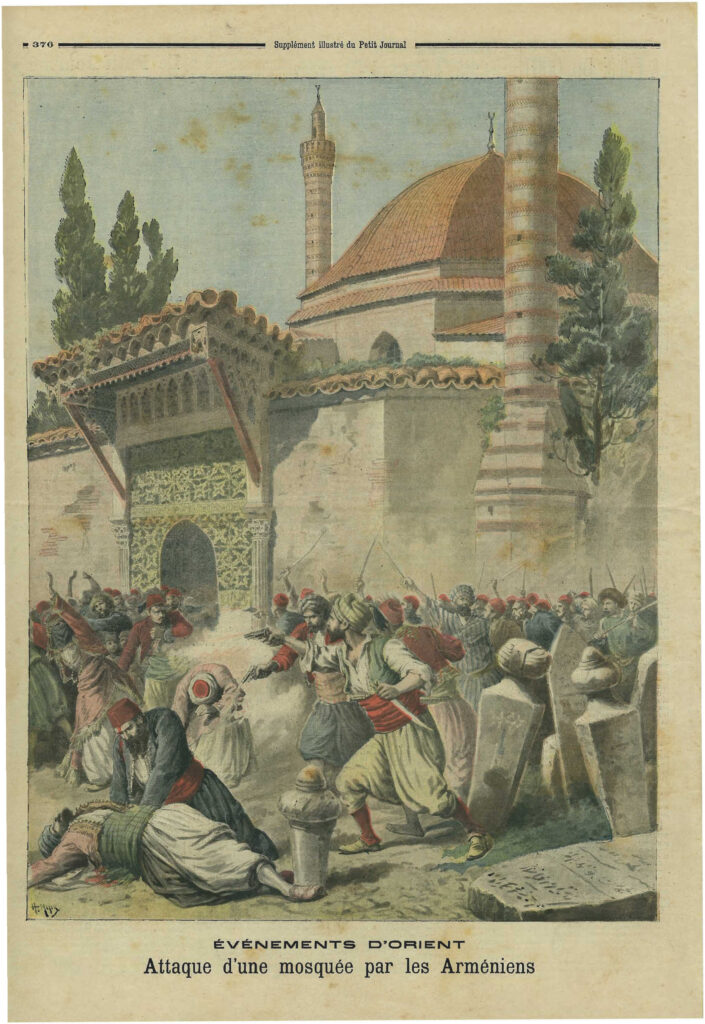
    Back page of the French daily Le Petit Journal, dated 24 November1896 (Armenians attacking a mosque):
  • Freshwater, Bitter Prescription: How Israel’s Desalination Miracle Became a Strategic Trap

    Freshwater, Bitter Prescription: How Israel’s Desalination Miracle Became a Strategic Trap

    Ever since the founding of Israel, one of the most fundamental elements shaping its national security strategy has been water. Historians and political scientists have repeatedly stressed that one of the underlying dynamics of the 1967 war was control of the Jordan River basin. For decades, the level of the Sea of Galilee and the state of the coastal aquifers have been among the most sensitive items on governments’ agendas. This chronic scarcity pushed Israel to seek a radical and bold solution, eventually leading the country to build gigantic technological facilities that convert seawater into drinking water.

    Starting with the first large-scale plant commissioned in Ashkelon in 2005, the process has culminated in five massive complexes lined up along the Mediterranean coastline. With the Sorek, Hadera, Palmachim, and Ashdod plants coming online, Israel now meets roughly eighty-five to ninety percent of its national drinking and municipal water from this centralized system. Internationally, this transformation has frequently been hailed as a “water miracle” and held up as a model for arid geographies. Yet this engineering triumph has concentrated an existential national resource at an extremely limited number of points, creating a perilously new and deep state of strategic vulnerability.

    The risk posed by geographical concentration constitutes a vital threat, especially in the context of the asymmetric warfare doctrine developed by Iran and its proxy forces. The rapid proliferation of precision-guided missile and unmanned aerial vehicle technologies in the region has moved strategic civilian infrastructure—once considered safe behind the front lines—directly into the line of fire. Hezbollah’s threats targeting Haifa, Hamas’s rocket attacks reaching Ashkelon, and the Houthi assaults on Eilat from Yemen are concrete manifestations of this new geo-strategic reality. At this juncture, water desalination plants turn into priceless strategic targets for an adversary seeking to strike the lifeline that sustains a nation.

    The Geographic and Structural Vulnerability of Centralized Infrastructure

    Almost all of Israel’s desalination capacity is situated along a narrow coastal corridor of roughly one hundred and fifty kilometers, stretching from the Lebanese border to Gaza. This geographic constriction paints an extremely risky picture in the face of modern warfare’s requirements. The strip falls well within the range of missile and drone attacks that Hezbollah could launch from southern Lebanon and Hamas and Islamic Jihad from Gaza. The short distances between the facilities significantly increase the likelihood that simultaneous or successive strikes could paralyze the entire system.

    The facilities in question are sensitive not only because of their locations but also due to their structural characteristics. The heart of a reverse osmosis plant consists of high-pressure pumps, sensitive membrane systems, and complex water intake and outflow infrastructure. A munition hitting any one of these components could cause damage that halts production at the plant for months. When spare parts supply and repair times are taken into account, even a single successful attack on one plant would inevitably trigger cascading effects on the national water grid. In a scenario where the two largest plants—Sorek and Hadera—are knocked out simultaneously, the country’s water supply could reach a collapse point within just a few days.

    Another point that must be underlined here is that the old strategic reserves no longer have the capacity to carry such a burden. The Sea of Galilee and the mountain aquifers, which were once fallbacks in water crises, have been severely degraded by years of over-extraction, population growth, and agricultural policies dependent on desalinated water. Because the system is built on the assumption that the desalination plants will run continuously at full capacity, natural sources have ceased to be a “backup” and have become, in effect, a complementary part of daily consumption. Therefore, in the event of an attack on the plants, there is practically no secure water reservoir to fall back on.

    When all these factors come together, the fate of Israel’s water security becomes tied to a handful of industrial facilities and the success of the air defense systems tasked with protecting them. Air defense systems, however, can reach saturation point, especially in the face of intense and multi-directional attacks. Although Iron Dome and other layered defense components achieve a statistically high interception rate, they can never guarantee one hundred percent protection. A few munitions that manage to slip through could cease to be a statistical anomaly and become the trigger for a national catastrophe.

    Capability and Intent Analysis of Asymmetric Threat Actors

    The most concrete and immediate threat to Israel’s water infrastructure originates from the network of proxies backed by Iran. Hezbollah, the most critical link in this network, has multiplied its military capability both quantitatively and qualitatively since the 2006 Lebanon War. According to various military intelligence sources, the organization’s inventory includes more than one hundred and fifty thousand rockets and missiles. Within this arsenal, the presence of precision-guided munitions, particularly Iranian-made Fateh-110 and M-600 missiles, poses a lethal threat to fixed strategic facilities with known coordinates. Hezbollah leader Hassan Nasrallah’s past explicit designation of ammonia and petrochemical plants in Haifa as targets reveals the depth of the organization’s strategic planning against Israel’s civilian infrastructure nodes.

    To the south, Hamas and Islamic Jihad, although more limited in range and accuracy, directly threaten the desalination plant in Ashkelon. Rocket attacks directed at this area during the post-October 7, 2023, conflicts demonstrated how easily the plant can be targeted. Even though the Iron Dome system destroys many threats in mid-air, saturation attacks, particularly with short-range and mass munitions launches, have the potential to overwhelm the defense. Moreover, a coordinated wave of attacks launched simultaneously from the Lebanese and Gazan fronts would force Israel to divide its air defense resources, thereby increasing the system’s fragility.

    Iran’s large-scale missile and drone attack on Israel from its own territory in April 2024 transported the threat spectrum to a new dimension. In that attack, Iran directly and openly declared to the world its capability and intent to strike the country’s military and strategic infrastructure. Although allied air forces and Israel’s own defense systems neutralized the bulk of the attack, the event indisputably proved that Iran has reached the technological maturity to execute precision strikes against Israel’s vital nodes from hundreds of kilometers away. The fact that publications from strategic research centers affiliated with Iran’s Revolutionary Guards specifically scrutinize Israel’s water infrastructure among “sensitive pressure points” completes the theoretical framework of this threat.

    The threat is not limited solely to missiles and drones. Sabotage actions that could come from the sea represent another risk dimension that must not be overlooked. The seawater intake structures of the desalination plants are connected to pipelines situated relatively offshore. Sabotage of these underwater structures carried out by divers or unmanned underwater vehicles could completely halt the plant’s water intake. Given Hezbollah’s and Iran’s investments in naval commando units, such a scenario is not unrealistic. Likewise, cyber-attacks targeting the control systems of the water grid are another asymmetric vector that could disable the plants without physical destruction.

    The Water-Energy Nexus: Two Breaking Points of a Single Chain

    The greatest quandary of reverse osmosis technology is that it is an extremely energy-intensive process. Israel’s desalination plants require roughly eight to ten percent of the country’s national electricity generation. This immense energy demand chains water security directly and inseparably to energy security. In practical terms, this means that the electricity grid and the energy sources feeding it must operate uninterruptedly for the water taps to flow. A severe rupture in energy supply is capable of stopping the water supply overnight.

    Israel’s energy generation, meanwhile, has become largely dependent over the last decade on the natural gas fields discovered in the Eastern Mediterranean. Giant offshore platforms such as Tamar and Leviathan supply nearly all of the country’s natural gas needs. This situation ties the fate of the energy supply to offshore infrastructure that is exceedingly difficult to protect. Hezbollah’s anti-ship missiles, Iran’s submarine capabilities, or even a simple explosive-laden boat attack are among the elements that could threaten these platforms. Hezbollah’s drone attack targeting natural gas facilities off the coast of Haifa in 2024 is a concrete example of this threat.

    Onshore energy infrastructure exhibits similar fragility. A single major facility like the Orot Rabin power plant in Haifa alone provides more than one-fifth of Israel’s total electricity generation. A successful strike on this power station would create a massive supply gap in the grid. Even if smart grid management systems are activated, a loss of this scale inevitably necessitates load-shedding operations. And in load-shedding, the first to be disconnected are the large industrial consumers that rank behind hospitals and military bases in terms of strategic priority—namely, the desalination plants. This vicious cycle between energy and water constitutes the most critical and delicate node of Israel’s national resilience.

    This dependency chain is not one-directional either. The energy generation facilities themselves also require large amounts of water for cooling purposes. Desalinated water is increasingly used in the cooling systems of coastal power plants. Thus, a disruption in energy supply threatens water, while a disruption in water threatens energy. This mutual and circular dependency demonstrates how quickly and destructively a domino effect could propagate in a disaster scenario. An attack on a single facility could, within a very short time, lead to the simultaneous collapse of water and energy supply.

    Layers of Supply Chain and Environmental Vulnerability

    Beyond the military and energy dimensions of the strategic vulnerability, two additional, less visible but equally critical layers exist: supply chain dependency and environmental threats. Keeping a reverse osmosis plant operational requires not only energy but also high-tech membranes that need constant renewal, specialized chemicals, and sensitive spare parts. Almost all of this equipment and consumables are imported. Membrane production is concentrated globally in the hands of a few companies, with Israel heavily dependent on manufacturers in the United States, Japan, and South Korea.

    This dependency renders national water security defenseless against external factors, completely independent of domestic military capacity. The threat to maritime trade routes by Iran or the Houthis during a prolonged regional conflict could disrupt the flow of critical materials. The Houthis’ attacks on commercial vessels in the Red Sea have proven just how realistic such a blockade is. When spare membrane stocks are exhausted, the efficiency of the plants drops rapidly; poorly treated water causes corrosion within the system, and eventually the plants may be completely disabled.

    Environmental threats constitute another layer of fragility originating from nature’s own dynamics—one that is difficult to predict and prevent. Rising seawater temperatures in the Mediterranean, driven by climate change, lead to population explosions of jellyfish swarms and the formation of massive mucilage (sea snot) bodies. These biological masses can clog the seawater intake filters of desalination plants within minutes, completely halting production. In the past, the Ashkelon and Hadera plants were forced into emergency shutdowns several times due to such environmental events. A national water crisis could be triggered solely by a natural occurrence, without any intentional military attack.

    In addition, rising sea levels due to climate change pose a long-term existential threat to coastal infrastructure. Pipelines, pumping stations, and the substructures of the facilities are sensitive to rising sea levels and associated coastal erosion. Moreover, heavy maritime traffic and oil and gas exploration activities in the Eastern Mediterranean keep the risk of a major oil spill constantly alive. Such a spill could render seawater intakes unusable for months, cutting the plants off from the outside world, much like a blockade. All these layers demonstrate that the vulnerability of desalination infrastructure rests on a much more complex threat matrix than enemy weapons alone.

    The Dilemma of Societal Resilience and Agricultural Dependency

    Over the last two decades, Israel’s water abundance has created a structural habit and dependency of water consumption within society and the economy. The uninterrupted and relatively cheap water provided by desalination plants has fundamentally transformed the agricultural sector, industrial production, and household consumption patterns. Luxury consumption (swimming pools, expansive lawns), water-intensive agricultural products, and landscaping arrangements requiring constant irrigation have become normalized. This situation has fixed societal habits and economic structures upon the assumption that the current supply will never be interrupted.

    The agricultural sector, in particular, is the most critical link in this dependency. Using its world-renowned drip irrigation technologies, Israel has turned the Negev Desert into fertile agricultural lands. However, this modern agriculture is entirely indexed to a continuous and reliable water supply. If the plants were offline for more than forty-eight hours, it would not merely leave cities without water; it would instantly collapse agricultural production reliant on high-tech greenhouses and irrigation systems. This would rapidly lead to a food supply crisis and empty grocery shelves. The simultaneous occurrence of water and food crises is one of the most dangerous scenarios threatening social order and internal security.

    Simulations by the National Emergency Management Authority foresee that a prolonged water cutoff would severely test societal resilience. Hospitals would become unable to perform vital procedures such as dialysis and sterilization. Industrial facilities would halt production. Fire-fighting systems would lose water pressure. All these factors could create a mutually reinforcing spiral of chaos. Although Israeli society has grown accustomed to the comfort brought by technological progress, its psychological and logistical preparedness for water scarcity has seriously eroded since the drought days of the past.

    This picture also invalidates the idea of preserving natural water sources as strategic reserves. Because even when the desalination plants are operational, the Sea of Galilee and the underground aquifers are strained to meet consumption, they cannot be allowed to recover. A return to the “austerity” and water rationing policies seen in old drought periods would be far more painful and chaotic than expected, as both infrastructure and habits have evolved into an entirely different reality. In short, the success story has not increased the system’s flexibility and resilience but rather its intolerance of fragility.

    Conclusion

    The story of Israel overcoming water scarcity by desalinating seawater has been recorded as an impressive triumph of technology and human will over nature. However, the centralized and complex system built by this triumph has simultaneously transformed the country’s most vital resource into a target that is exceedingly difficult to protect. Absolute dependence on a handful of facilities along the Mediterranean coast has created a strategic quandary concerning national survival in a geography where asymmetric threats are becoming increasingly sophisticated.

    The depth of this quandary lies in the fact that the water infrastructure is not merely a target on its own, but is enmeshed in a relationship of mutual dependency with energy systems and global supply chains. Protecting water requires protecting energy, and protecting energy requires protecting offshore gas platforms and giant coastal power plants. A successful attack on any link in this chain has the potential to collapse the entire system through a domino effect. The doctrine of the Iran-led axis of resistance is built precisely on seeking out and exploiting such sensitive nodes. The April 2024 attack and the continuously evolving capabilities of proxy forces have moved this threat from the realm of theory into a concrete and urgent security matter.

    That said, policy options to reduce vulnerability do exist, though none are easy or quick to implement. The urgent reconstitution of strategic water reserves and the replenishment of aquifers through artificial recharge methods are imperative. Maximizing the physical protection of the plants and, in particular, enhancing security protocols for underwater intake structures are necessary. More importantly, increasing the share of distributed and renewable sources such as solar energy in electricity generation could reduce the risk of a single-point collapse in the water-energy nexus. On-site backup power generation capacity integrated into each facility is also of vital importance.

    In the final analysis, Israel’s water miracle lays bare the inherent risks of modern states’ understanding of national security based on complex technological systems. Every great leap in technology, alongside the problems it solves, also produces new, often unforeseen, vulnerabilities. In Israel’s specific case, the genius that succeeded in creating water in the desert is now fighting a war to protect that water. The fate of this war will depend not only on the success of Iron Dome or Iron Beam but also on how honestly and courageously strategic planning can address this multi-layered fragility.

    References

    1. Siegel, S. M. (2015). Let There Be Water: Israel’s Solution for a Water-Starved World. Thomas Dunne Books.
    2. Israel Water Authority (2024). National Water System Overview and Desalination Capacity Report. water.gov.il
    3. INSS – Institute for National Security Studies (2023). The Vulnerability of Israel’s Critical Infrastructure in a Multi-Front War. Tel Aviv University.
    4. Reuters (2024). “Israel’s water infrastructure potentially in crosshairs as conflict deepens.” 15 April 2024.
    5. The Washington Institute for Near East Policy (2024). Hezbollah’s Precision Guided Missile Threat to Israeli Infrastructure. Policy Note No. 118.
    6. Haaretz (2023). “Desalination nation: How Israel’s water miracle became its biggest strategic vulnerability.” 22 December 2023.
    7. Begin-Sadat Center for Strategic Studies (2025). The Water-Energy Nexus in Israel’s National Security. Bar-Ilan University.
    8. Tal, A. (2023). “From Scarcity to Surplus: Israel’s Desalination Gamble.” Water Policy, 25(3), 312-329.
    9. Iran’s Revolutionary Guards Strategic Research Center (2022). “Asymmetric warfare and critical infrastructure targeting in the Eastern Mediterranean.” (Open source intelligence report).
    10. UNEP – United Nations Environment Programme (2023). Climate Change and Infrastructure Vulnerability in the Eastern Mediterranean.
    11. Grey, D. & Sadoff, C. W. (2007). “Sink or Swim? Water security for growth and development.” Water Policy, 9(6), 545-571.
    12. Arreguín-Toft, I. (2005). How the Weak Win Wars: A Theory of Asymmetric Conflict. Cambridge University Press.
    13. Hussey, K. & Pittock, J. (2012). “The Energy-Water Nexus: Managing the Links between Energy and Water for a Sustainable Future.” Ecology and Society, 17(1).
    14. Wolf, A. T. (1995). Hydropolitics along the Jordan River: Scarce Water and its Impact on the Arab-Israeli Conflict. United Nations University Press.

    Sefa Yürükel

    Danish ethnographer and social anthropologist (MA)
    Aarhus University, 1997
    Independent Researcher
    Fields of Research: International Politics, Public International Law, Geopolitics, Sociology, Psychology, Cultural Studies, Systems and Structures
  • The Collapse of Sandcastles: The West Asian Map Iran Redrew in Four Days and the Historic Defeat of the USA

    The Collapse of Sandcastles: The West Asian Map Iran Redrew in Four Days and the Historic Defeat of the USA

    The world usually expects geopolitical earthquakes to occur at the end of long-drawn-out processes. However, sometimes the flow of history changes at a speed that will shatter everyone’s preconceptions within just a few days. We are currently witnessing exactly such a moment. The emerging military picture reveals how the hegemony the USA has built in West Asia for over thirty years was shattered by Iran in an unbelievably short period of four days. This is not merely a military defeat; it is also the story of the definitive and irreversible end of a superpower’s regional ambitions.

    The Sudden Collapse of the Strategic Balance

    The situation is crystal clear: The USA is suffering one of the greatest defeats in its history. The gravity of this judgment stems from the results of the comprehensive, large-scale, and highly determined destruction operation launched by Iran against the massive American military bases in Bahrain, Kuwait, Qatar, and Saudi Arabia. To reference Pearl Harbor, the USA has never seen destruction on this scale from any enemy in a conventional war until today. Described as the world’s most expensive and most valuable military facilities, built over decades and costing trillions of dollars, these bases are being abandoned, burned, and destroyed one by one. The sudden incapacitation of advanced technology radars worth hundreds of millions of dollars symbolizes not only a material collapse but also the bankruptcy of the USA’s strategic mind.

    The Information Blackout and Cover-Up of the Shock

    One of the most terrifying aspects of this new war is the deep information blackout that has descended upon it. While thirty-five years ago during the First Gulf War, images provided by smart bombs and cameras flooded the screens, today we see almost no video. This censorship is the greatest proof of the gravity of the situation. The Pentagon’s doctrine of “shock and awe” has been replaced by an effort to cover up the shock and awe being experienced. The fact that the USA, touted as the world’s largest air force, cannot achieve air superiority over Tehran or any other Iranian city even on the fourth day of the war, and more importantly, that images of American planes cannot even be served, clearly shows how hopeless a point the military situation has evolved to. The fact that American soldiers cannot even dream of setting foot on Iranian soil reveals the nature of this war.

    Strategies of Desperation: The Escalation Trap

    One of the most concrete indicators of this hopeless picture is the incredible proposals coming from the Trump administration as early as the fourth day. The idea of providing military escort to oil tankers leaving the Persian Gulf means sending American ships into the Strait of Hormuz, within range of Iran’s thousands of missiles, which is a suicidal decision. It is known that Iran has been preparing this region as a trap for decades. Even more alarming is the proposal to invade Iran by arming Kurdish militias. Anyone looking at Iran’s vast geography immediately grasps the impossibility of invading this country, whether with a militia force of ten thousand or a hundred thousand. Iran would simply swallow such a force.

    The Anatomy of an Impossible Victory

    The US and Israel have already lost this war in a military sense. Of course, they can kill millions of civilians in their homes and level buildings with their powerful bombs; however, they cannot win this war. Iran’s military infrastructure and weapons are deployed deep underground all over the country. Neither the Americans nor especially the Israelis have a chance to reach them. They have no chance of finishing what they started.

    When all this is over, the USA will never be able to return to West Asia. There will be no American military presence left in the Middle East. History will write this moment as the end of an era. Iran, astonishingly, managed to expand its area of military superiority in the region within four days and buried a superpower’s decades-long investment in its ashes. The sandcastles have collapsed; nothing will ever be the same again.

    The Deepening of the Escalation Trap: The Absence of a Plan B

    What really needs to be questioned at this point is why the mental map that led the USA to this total strategic collapse still hasn’t changed. The proposals for escorting tankers and invading with Kurdish militias, put forward on the fourth day, are a painful confession that the Pentagon and the White House still have no viable Plan B. This situation, referred to as an “escalation trap” in military literature, is defined by one side continuing to escalate a war it is losing simply because it cannot find an exit strategy. The moment the USA risks its navy to save its presence in the Persian Gulf, it will have offered not only its land bases but also its naval power to Iran’s asymmetric fire. The geographical structure of the Strait of Hormuz is too narrow to allow maneuvering space for an aircraft carrier battle group; these waters are a trap area that Iran has been building layer upon layer for decades. Deliberately entering this trap can be explained not by strategic reason, but only by a kind of gambling blindness caused by desperation.

    The Bankruptcy of Intelligence: The Unseen Threat

    A more serious reflection of the same blindness is the intelligence failure. For decades, the USA portrayed Iran’s military capacity as “isolatable” and “limited.” However, Iran’s ballistic missile program, cruise missile inventory, and swarm drone technology in particular have shown a leap that American intelligence reports failed to foresee for years. The bases receiving hits one after another within four days is proof of how much Iran has refined its target intelligence and advanced its satellite-based damage assessment capability. This is not a random rain of missiles, but a military operation planned and executed with surgical precision. US intelligence either could not see or did not want to see this capability increase; both situations lead to the same outcome: the bankruptcy of strategic intelligence.

    The End of the Doctrine of Air Dominance

    The failure to see an American plane in the skies of Tehran even on the fourth day of the war is the clearest indicator of how the concept of air superiority has become meaningless in the region’s conditions. The US Air Force had built its entire doctrine of the last thirty years on “air dominance.” Yet Iran, with its integrated air defense systems, passive defense infrastructure, and surface-to-surface strike capability, has rendered this doctrine obsolete. The inability of American warplanes to enter Iranian airspace is not only a technical failure; it is proof of how the USA’s entire military paradigm can be overcome by a regional power. This picture creates a shock effect that will fundamentally shake the Pentagon’s future budget requests and weapons programs. The trillion-dollar F-35 program has been rendered non-functional in the region against Iran’s much lower-cost asymmetric capacity.

    Israel’s Fragile Solitude

    In the shadow of all these developments, Israel’s strategic position is perhaps the most fragile point. Israel built its security doctrine upon the US military umbrella in the region. The evaporation of this umbrella in four days leaves Israel facing not only Iran but also Iran’s network of influence alone. Hezbollah’s precision-guided munition inventory, the Houthis’ ballistic missile capacity, and Iranian-backed militias in Syria increase the risk of Israel being dragged into a multi-front war of attrition. Israel’s military doctrine is based on short-duration wars conducted on enemy territory aiming for decisive results. However, this new equation forces Israel into a long-term and attritional defensive war on its own territory. The pressure of such a war on Israel’s economic and social fabric could be far more devastating than the military losses.

    The New Reality for the Gulf Monarchies

    The Gulf monarchies, meanwhile, are watching this new era in horror. Riyadh, Abu Dhabi, and Doha see that the security premium they have paid to the USA for decades has evaporated in an instant. These countries’ entry into a rapid normalization process with Iran is no longer a choice but an existential necessity. Indeed, Saudi Arabia’s softening of its condemnatory language towards Iran and activating diplomatic channels even on the fourth day of the war is the first sign of this necessity. The Arab states in the Persian Gulf have understood that the security myth the USA has been selling for decades has collapsed and have faced the reality of having to fend for themselves. This confrontation will inevitably open the door to regional security negotiations with Iran and the complete exclusion of the USA from the region.

    The Tombstone of the Unipolar Order

    History will record this moment as the tombstone of the post-Cold War order. The unipolar period that began with the collapse of the Soviet Union in 1991 ended on the shores of the Persian Gulf, among burning American hangars and disabled Patriot batteries. Iran has not only driven the USA out of the region but has also presented the rest of the world with a new strategic model: proof that a regional power that invests in asymmetric capacity, establishes a deep defense infrastructure, and prepares patiently can shut out a superpower. This model will be taught in military academies as a template that will fundamentally change the military doctrines and geopolitical calculations of the coming decades.

    Conclusion: In the Aftermath of Destruction

    As the USA’s presence in West Asia comes to an end, what remains is not only wreckage but also a warning: No superpower has the luxury of underestimating geography, patience, and the asymmetric mind. The sandcastles have collapsed, and the dust from this destruction will not settle for many years to come.

    References

    1. Cordesman, A. H. (2023). Iran’s Military Forces and Warfighting Capabilities: The Threat in the Northern Gulf. Washington, DC: Center for Strategic and International Studies (CSIS).
    2. Eisenstadt, M. (2022). The Iranian Way of War: Asymmetric Doctrine, Ballistic Missiles, and Proxy Networks. Washington, DC: The Washington Institute for Near East Policy.
    3. Farhi, F. (2024). “Iran’s Strategic Patience and the Reshaping of West Asian Security Architecture.” Middle East Journal, 78(2), 215–238.
    4. Gause, F. G. (2023). The End of the American Era in the Persian Gulf? Strategic Realignments After the Unipolar Moment. Princeton, NJ: Princeton University Press.
    5. International Institute for Strategic Studies (IISS). (2024). The Military Balance 2024: Middle East and North Africa. London: Routledge.
    6. Jones, S. G. (2023). “Intelligence Failure and Surprise in the Missile Age: The Case of Iran’s Ballistic Program.” Studies in Intelligence, 67(1), 45–72.
    7. Kamrava, M. (2024). “The Collapse of External Security Guarantees: Gulf Monarchies and the Search for Autonomy.” Geopolitics, 29(3), 401–425.
    8. Krepinevich, A. F. (2022). The Origins of Precision: Strategic and Operational Implications of Guided Munitions. Washington, DC: Center for Strategic and Budgetary Assessments.
    9. Nasr, V. (2023). “Iran’s Missile Power and the Restructuring of Middle Eastern Deterrence.” Foreign Affairs, 102(4), 88–104.
    10. Pollack, K. M. (2024). “America’s Vanishing Air Superiority: Lessons from the Fourth-Day Failure Over Tehran.” Journal of Strategic Studies, 47(2), 183–210.
    11. Saikal, A. (2023). Iran Rising: The Survival and Future of the Islamic Republic. Princeton, NJ: Princeton University Press.
    12. United States Department of Defense. (2024). Annual Report on Military Power of Iran (Unclassified Executive Summary). Washington, DC: Office of the Secretary of Defense.
    13. Wirtz, J. J. (2023). “Strategic Intelligence and the Asymmetric Threat: When Warning Fails.” Intelligence and National Security, 38(4), 512–530.
    14. Zelin, A. Y. (2024). “Hezbollah, the Houthis, and the Axis of Resistance: Proxies in an Era of Iranian Precision-Guided Warfare.” CTC Sentinel, 17(3), 22–34.

    Sefa Yürükel

    Danish ethnographer and social anthropologist (MA)
    Aarhus University, 1997
    Independent Researcher
    Fields of Research: International Politics, Public International Law, Geopolitics, Sociology, Psychology, Cultural Studies, Systems and Structures
  • The Lesson of May 1st: A Roadmap for Worker Solidarity from Past to Future

    The Lesson of May 1st: A Roadmap for Worker Solidarity from Past to Future

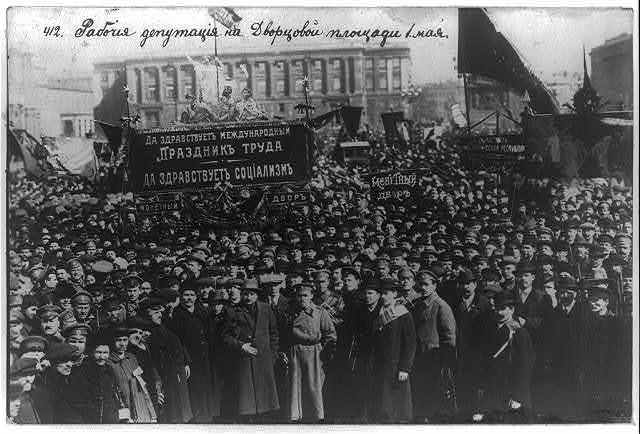
    May 1st is not just a date on the calendar. It is the symbol of labor’s historical struggle, the honor of sweat and toil, and humanity’s quest for a fairer world. It is the voice of a history kneaded by the smoke of factory chimneys, the darkness of mine shafts, and the mud of the fields. The cry that rose in Chicago in 1886 ” 8 hours of work, 8 hours of rest, 8 hours to live” ..transcended borders over time, transforming into a universal revolt passed down from tongue to tongue, from generation to generation. This voice is not merely an echo from the past; it is a call that is still alive today, guiding us toward tomorrow. And every year, this call asks anew: What have you done for the dignity of labor?

    The Lesson of May 1st: Rights Are Won Through Struggle

    The most fundamental lesson of May 1st is clear: No right falls from the sky. The eight-hour workday, union rights, social security, the prohibition of child labor, the weekend, none of these were “given”; all of them were “taken.” Behind each gain lie strikes, resistances, workers who lost their lives, banned publications, exiles, and an unending determination. This truth remains valid for the laborers of today. Because capital, by its very nature, knows no limits; if there is no organized force against it, it seeks ways to further exploit labor, eliminate security, and turn workers against one another. History shows that even rights once won cannot be preserved without constant vigilance and struggle; every right prefaced with “it’s won, it’s over” can be silently taken back.

    Today, new concepts like digitalization, artificial intelligence, flexible working, and the gig economy are rapidly changing the nature of labor. The worker is no longer just the person at the factory assembly line; they appear as a courier carrying orders via an app, an editor writing texts from home, a “clicker” who is part of a vast team labeling data, or a content creator. But the essence remains the same: labor produces, creates value, and capital accumulates. Moreover, this new order isolates labor, severs connections, and disperses collective identity. Therefore, the struggle must continue by changing its form and reversing this fragmentation.

    Forms of Struggle in the New Era: Solidarity That Transcends Borders

    The struggle is no longer confined to factories, ports, or mines; it takes place in front of screens, on platforms, in data centers, and in call centers. These new spaces demand new imaginations and new tools:

    · Digital unionism is inevitable. In the platform economy, where face-to-face organizing is difficult, encrypted messaging groups, online forums, virtual meetings, and social media campaigns can become the new squares that bring workers together. The independent associations and cooperatives formed by couriers, drivers, and freelance workers in various countries around the world are the first examples of this. Expanding these models, giving them legal status, and connecting them with one another is the most powerful antidote to the fragmented nature of labor.
    · International solidarity is a strategic necessity. Capital has globalized, shifting production chains to low-wage, non-unionized regions. Labor must also think globally, organizing simultaneous campaigns against multinational corporations and building pressure for international framework agreements. The struggle of a textile worker in South Asia and the demands of a store employee in Europe are links in the same chain; one cannot be strong without seeing and knowing the other.
    · Social alliances are essential. The labor struggle weakens when isolated from other democratic and egalitarian movements in society. The women’s movement, the struggle against war and genocides, the environmental justice movement, youth organizations, disability rights advocates, and migrant solidarity networks without uniting with the labor struggle, achieving lasting gains is almost impossible. Because exploitation goes hand in hand with discrimination; workplace inequality is fueled by gender inequality, just as the climate crisis is fueled by the greed for profit. An intersectional perspective creates a stronger front.
    · Knowledge and awareness are among the most powerful weapons. A worker who does not know their rights and lacks an understanding of the basic mechanisms of working life cannot defend themselves. Therefore, beyond formal education, the educational workshops created by the working class itself, digital literacy and data security trainings, legal support guides, and peer learning networks carry a significance far beyond individual development: they are the building blocks of collective consciousness.

    The New Role of Unions: From Defense to a Future-Building Power

    Unions must cease to be merely structures that defend against the erosion of rights and try to preserve the status quo; they must become actors that build the future, produce alternatives, and transform society. This requires a fundamental change in mentality and structure.

    At the local level:

    · New organizing models that encompass not only permanent, full-time employees but also interns, subcontracted workers, temporary contract workers, seasonal workers, and platform laborers must be developed. Unions must adopt a more flexible and inclusive structure.
    · The voices of young workers must echo in union decision-making bodies; precariousness, intergenerational injustice, and future anxiety must take center stage on the union agenda. Youth branches must cease to be symbolic and transform into genuine spaces of initiative.
    · Concrete, measurable policies must be produced for the visibility and equality of women’s labor. This should not be limited to equal pay for equal work; it must encompass a holistic approach, ranging from childcare support to safety measures on night shifts, from combating sexual harassment to removing the barriers that prevent women from rising to union leadership.

    At the global level:

    · International union networks must be made agile and effective enough to match the global movement speed of capital; in addition to international trade union confederations, direct solidarity channels at the sectoral level must be strengthened.
    · Joint collective bargaining strategies must be developed along the supply chains of multinational corporations; if there is a strike in one country, it must become the norm for workers in another country to carry out a solidarity action, even if symbolic, against that same company.
    · Minimum labor standards—guaranteeing not just wages, but also working hours, occupational health and safety, the right to social security, and trade union freedom must be advocated on a global scale; campaigns must be waged for sanctions against companies and states that do not accept these standards.

    May 1st’s Contribution to World Peace: Limitless Fraternity

    The struggle of labor is not only economic but also humanitarian and universal. The spirit of May 1st is the defense of peace against wars, genocides, Epsteinism, imperialism, Zionism, religious dogmatism, misogyny, all forms of feudal reaction, militarism, and the burdening of armament budgets on the shoulders of laborers; the defense of equality against separatist-discriminatory micro-nationalism, racism, and xenophobia; and the defense of justice against exploitation, favoritism, and unearned gain.

    Because wars kill mostly workers, peasants, and unemployed youth; those sent to the front lines are the children of the working class. The bill for economic crises, inflation, and austerity policies is mostly paid by laborers, women, and children. That is why the labor movement has historically been one of the strongest advocates of a fraternity that sings songs of peace against the clamor of war and rejects borders. International worker solidarity is the antidote to every artificial distinction that divides us into “us” and “them”; saying “the worker has no country” means that the worker knows their siblings all over the world and understands that they share a common destiny.

    What Should Happen Next? A New Social Contract

    Humanity stands at a new crossroads today. The climate crisis fundamentally challenges modes of production and consumption; massive economic inequality tears at the social fabric; technological transformation renders the meaning and future of work uncertain. All of these directly affect the future of labor. The solution is not to repeat old formulas, but to draw a new, bold, and inclusive framework:

    · Just transition policies must be urgently implemented; the transition to a green economy must not leave anyone, especially workers in the fossil fuel sector, unemployed and without security. Every new wind turbine, every insulation project, every sustainable agricultural practice must come into being with qualified, unionized, and secure workers; the environmental economy must acquire an inclusive character that embraces, rather than excludes, laborers.
    · Universal fundamental rights must be strengthened and expanded: A dignified income guarantee, equal access to health services, the right to lifelong education, the right to housing, and access to digital infrastructure must be defined as the non-negotiable minimum requirements of the new era.
    · The concept of decent work must be redefined in light of the realities of the digital age. Work models managed by algorithms, lacking social security, and imposing unpredictable hours cannot be legitimized under the mask of “flexibility.” Job security, a predictable income, the right to rest, the right to disconnect, and freedom of collective bargaining must form the backbone of this new definition.
    · Democratic participation must be increased. Workers must have a say not only in the production process but also on the boards of directors of companies, at sectoral planning tables, and in local and national economic decision-making processes. Without economic democracy, political democracy will always remain incomplete and fragile.

    Final Word: The Struggle Is Not Over, It Is Changing Form

    Above all, May 1st reminds us of this: History is written in favor of those who are organized. It is not scattered crowds, but communities that are united around a common purpose, trust one another, and can produce strategies that change the world. If workers unite and become one heart in all their diversity, the face of the world will change; the language of war, exploitation, and destruction will recede. If they remain silent, fragment, and succumb to divisions, exploitation deepens, and the darkness grows.

    What is needed today is neither empty optimism nor a hopelessness that surrenders to the darkness. What is needed is an organized courage that stands firmly on the ground. Solidarity must not be a slogan chanted once a year, but a way of life, a reflex, a character woven into the fabric of daily life. It must be a bond that is constantly reproduced at the store, in the neighborhood, on the screen, in the street ..at every moment, everywhere. Because we know that:

    The unity of labor is the future of humanity.
    Justice is the work only of those who struggle.
    And peace is only possible among equals.

    It must not be forgotten:
    May 1st is not a day, it is a stance.
    To embrace, deepen, and broaden that stance is the common responsibility of every worker who feels, simultaneously, the weight of history on their shoulders and the hope of tomorrow.

    Sefa Yürükel

    Danish ethnographer and social anthropologist (MA)
    Aarhus University, 1997
    Independent Researcher
    Fields of Research: International Politics, Public International Law, Geopolitics, Sociology, Psychology, Cultural Studies, Systems and Structures
  • Leadership, accountability and the voice of the Turkish American community

    Leadership, accountability and the voice of the Turkish American community

    Staten Island Advance Newspaper Prints Editorial about Turkish Consul General Ahmet Yazal, New York in Newspaper.

    Since his appointment, Turkish Consul General Ahmet Yazal has become a focal point of concern.

    Clink onto Link Below to Read Editorial about Turkish Consul General Ahmet Yazal, New York 

    Leadership, accountability and the voice of the Turkish American community

    • Published: Apr. 22, 2026, 6:00 a.m.

    In every diplomatic post, leadership carries not only authority, but a profound responsibility to represent, protect and unify the people it serves. For the Turkish American community, the role of Consul General is especially significant. It must bridge Ankara and the diaspora, uphold dignity and respond firmly to external challenges particularly in moments when Türkiye faces criticism or misrepresentation in international media.

    Since his appointment, Turkish Consul General Ahmet Yazal has become a focal point of concern among segments of the Turkish American community. These concerns are not rooted in hostility toward Türkiye. Rather, they reflect a desire for stronger advocacy, clearer communication, and a leadership approach that fosters inclusion instead of division.

    One issue that has resonated deeply is the sentiment among community members, including respected elders, that their voices and contributions have not been adequately recognized. For a community that takes immense pride in its history, including the sacrifices of Turkish soldiers in the Korean War, this perception is especially painful. Honoring that legacy should be a unifying principle.

    Equally troubling is the perception that criticism or questioning of leadership is discouraged or met with coordinated pushback from loyal supporters of Consul General Ahmet Yazal. Many describe an environment where individuals who raise concerns feel targeted, intimidated, harassed or subjected to efforts to delegitimize their voices by Turkish Consul General Mr. Yazal foot soldiers. Whether formal or informal, this dynamic has created a chilling effect within the community.

    There is what many now describe as a “silent majority” within the Turkish American community — individuals who share similar concerns but hesitate to speak publicly. Their reluctance stems from fear of backlash, including harassment, intimidation or reputational harm. When individuals feel constrained from expressing their views, the strength and unity of the community suffer.

    Public accountability, including for Consul Generals, is not “anti-Türkiye” or “anti-government.” It is a fundamental democratic principle. Communities must be able to apply pressure when officials appear unresponsive or when gatekeepers attempt to silence inconvenient voices. Labeling criticism as “weaponizable” risks becoming a method of suppressing legitimate dissent.

    At a dinner on March 12, 2026, Turkish Consul General Ahmet Yazal emphasized the importance of civic voice, stating:

    “Most importantly, in the country where we reside, let us learn about and take ownership of the rights and opportunities available to our communities, and let us not forget our right to have a voice in this land.”

    This is an important message. However, it must be applied consistently. Encouraging individuals to speak must also include the freedom to question leadership without fear.

    The Turkish American community deserves leadership that listens from Ankara and does use foot soldiers to silence inconvenient voices. Open dialogue, accountability and mutual respect remain essential to strong representation.

    https://www.silive.com/opinion/letters/2026/04/leadership-accountability-and-the-voice-of-the-turkish-american-community.html

    (Ibrahim Kurtulus is a Dongan Hills resident.)

  • To Say “Today, I am Iranian”

    To Say “Today, I am Iranian”

    If there is a designation that transcends a mere geographical term, pointing instead to the rupture moments of a civilization and the resistance reflex of collective memory, it is the Iranian plateau itself. This is a geography where the winds have blown throughout history, erasing the footprints of invasions, yet no conqueror has ever fully dominated its spirit. The armies of Alexander the Great passed through these lands, the swords of the Arab conquerors halted in the shadow of these mountains, and the Mongol whirlwinds burned and razed these cities. But after every destruction, like the Simurgh in Ferdowsi’s Shahnameh, Iran has known how to be reborn from its own ashes. This rebirth is not merely a political restoration, but also a matter of existential honor. That is precisely why, amid the sense of encirclement of modern times, saying “I am Iranian” has become not merely a passport affiliation, but an expression of an epistemological and physical stance against global domination.

    The fact that the epicenter of this resistance today is Tehran is neither a coincidence nor merely a product of geopolitical calculation. This situation is an inevitable manifestation of the “Neither East nor West” principle placed at the foundation of state reason following the collapse of the monarchy in 1979. This attitude, which pierces through the Westphalian order’s understanding of absolute sovereignty in international relations, far from isolating Iran, has turned it into a route of hope for oppressed geographies. This state, frequently defined by Western academic circles as a “loneliness syndrome,” is defined by the Iranian people and state reason as “strategic autonomy.” This reflex, developed against the borders drawn on the tables of the Great Powers and the norms they impose, has transformed Iran from being merely a nation-state into a carrier column for an idea, a school of resistance. No matter how heavy the burden this column carries, it turns into a badge of honor in the eyes of the region’s peoples.

    The geostrategic position of Iranian geography is both the greatest blessing and the heaviest burden of this resistance. Being at the very heart of the energy corridors stretching from the Indian Ocean to the Mediterranean, and from the Central Asian steppes to the warm waters of the Persian Gulf, also brings with it the condition of being under constant siege. The imperial calculations carried out over Iranian oil throughout the twentieth century have opened irreparable wounds in the minds of the Iranian intellectual and politician. The place of the 1953 Mosaddegh Coup in memories is the most fundamental historical data explaining why Iranian foreign policy is so skeptical and proactive today. This coup bitterly taught the Iranian nation the chasm between the democracy rhetoric of Western powers and their interest-oriented intervention practices. That is why Iran today prefers to weave its own security perimeter with its own hands, rather than taking shelter under security umbrellas sewn with the thread of others.

    The person who says “I am Iranian” is the inheritor of this painful, yet equally proud, history. This heritage is not just a story left in the past, but the lifeblood of today’s military doctrines and strategic decisions. Specifically, the eight-year Iran-Iraq War reshaped the nerve endings of the Iranian nation. In those dark days, when a large part of the world sided behind Saddam Hussein and turned a blind eye to the use of chemical weapons, Iran managed to survive through its own means. This war taught Iran the following lesson: “If you do not establish your defense line beyond your borders, you will have to wage war inside your homes, at the cradles of your children.” The military and philosophical roots of the search for strategic depth, which Iran today describes as its geography of resistance, are hidden precisely in this ring of fire between 1980 and 1988.

    The Forward Defense Doctrine and the Construction of Strategic Depth

    Understanding Iran’s current military posture requires a comprehension that goes beyond classical war literature. Although Iran is not a superpower in the conventional sense, it has managed to position itself as an indispensable regional actor thanks to its asymmetric warfare doctrines and regional influence networks. The principle underlying this doctrine is the engagement and attrition of enemy forces thousands of kilometers away, on secondary fronts, before they can reach the Iranian mainland. This situation, which Western strategists refer to as the “Proxy Strategy,” is described in Iran’s discourse as the solidarity law of the “Axis of Islamic Resistance.” This strategy not only provides Iran with military deterrence but also gives it very strong leverage when sitting at the table in regional equations.

    The backbone of this military structure is formed by a training, logistics, and intelligence network shaped under the leadership of the Quds Force, affiliated with the Islamic Revolutionary Guard Corps. Especially in the last two decades, advances in missile technologies and unmanned aerial vehicles have exponentially increased the striking power of this network. Thanks to its domestic defense industry developed under embargoes, Iran has reached a level of knowledge accumulation that enables it to transfer these capabilities to allied forces. This transfer is not merely about sending weapons; it is also the instillation of a war-fighting culture, a military discipline, and most importantly, the will to act independently. In this way, resistance hubs located geographically far from Iran gain the ability to confound the enemy by developing tactics appropriate to their unique conditions.

    When looking at Iran’s military history, certain turning points in the formation of this doctrine stand out. The case of how a limited number of military advisors sent by Iran to Lebanon during the days when it was groaning under Israeli occupation in 1982 transformed over time into a deep-rooted resistance organization is one of the most concrete success stories of this strategy. Similarly, the power vacuum created by the United States’ invasion of Iraq in 2003 elevated Iran’s influence in the northern Persian Gulf to an unprecedented level in history. This expansion is not an annexation or occupation in the classical sense; it is a complex assortment of alliances built upon shared sectarian ties, economic dependency, and security concerns. This assortment allows Iran to protect its national security hundreds of kilometers beyond its borders, on the lines of contact with enemy forces.

    The most critical component of this strategy is undoubtedly the concept of deterrence. Even though Iran does not possess nuclear weapons, it has managed, through its conventional missile inventory and asymmetric presence in the region, to raise the cost of a large-scale military attack against it to unacceptable levels. Especially its capacity to disrupt maritime traffic and energy shipments in the Persian Gulf functions as a kind of automatic brake mechanism within the global economy against military adventures targeting Iran. This military doctrine heralds a new era where not only tanks and aircraft, but also patience, timing, and psychological superiority determine the course of war. In this new era, all actors in the region have learned through bitter experience how effective asymmetric methods, blended with faith and local dynamics, can be against technologically superior armies.

    The Aftershocks of Resistance: Resistance Bastions on the Frontier

    The resistance hubs stationed beyond the Iranian mainland are structures that, beyond being limbs of Tehran’s military strategy, reflect the unique social dynamics of the geographies they inhabit. The Ansar Allah Movement in Yemen constitutes one of the most striking examples of this situation. Resisting despite nearly a decade of heavy bombardment and naval blockade by the Saudi-led coalition in one of the world’s poorest geographies, Ansar Allah is the field projection of developments in Iran’s defense industry. However, seeing Ansar Allah solely as an extension of Iran means ignoring Yemen’s complex tribal structure and the deep anti-imperialist vein in the region. The political transformation movement initiated by the Yemeni people through their own internal dynamics evolved into a military resistance as a result of foreign intervention, and in this process, relations with Tehran became a strategic necessity.

    The importance of the Yemeni resistance for global power balances is too great to be subject to any exaggeration. The resistance rising from this geography, which controls the Bab el-Mandeb Strait, has the capacity to directly affect one of the lifelines of global trade. The ballistic missile and unmanned surface vessel capability developed by Ansar Allah nearly paralyzed maritime traffic in the Red Sea during Israel’s attacks on Gaza, forcing Western states into a costly military buildup in the region. This situation demonstrates how effective Iran’s “distant warfare” doctrine is as a lever. This stance in Yemen not only attrites a regional rival like Saudi Arabia but also erodes the prestige and resources of the United States and United Kingdom navies by drawing them into an asymmetric struggle with a land power.

    The Iraqi front constitutes the most vital link of strategic depth for Iran. In post-Saddam Hussein Iraq, pro-Iranian political parties and their military wings, the Popular Mobilization Forces (PMF) groups, have penetrated into the state mechanism. This structure has not only fully secured Iran’s western borders but also constituted the most important link of the land bridge stretching from Tehran to the Mediterranean coast during the Syrian Civil War. The presence of resistance groups in Iraq implies a constant harassment and threat against United States military bases in the region. This situation continuously leaves the Washington administration in a dilemma regarding how much a possible military operation against Iran would endanger the security of American personnel in Iraq. This dilemma is perhaps the quietest but most functional part of Iran’s deterrence strategy.

    Lebanese Hezbollah holds a special and privileged position within this resistance hierarchy. As Iran’s most disciplined, best-trained, and most equipped ally in the region, Hezbollah is not merely a proxy force but also a laboratory for Iran’s military doctrine and a strategic partner. Forcing the Israeli army to withdraw from Southern Lebanon in 2000, and in the 2006 33-Day War, achieving a political and psychological superiority, if not a military victory, against the Middle East’s most powerful army, has certified Hezbollah’s weight in regional equations. Hezbollah’s precision-guided missile inventory has the capacity to threaten Israel’s critical infrastructure and population centers. This capacity serves as an insurance policy for the deep striking of Israel in the event of a military threat against Iran, automatically converting a potential attack on Iran’s nuclear facilities into the risk of an all-out regional war.

    The Epic of Besiegement: Gaza and Epistemic Resistance

    The Palestinian issue, and specifically the Gaza Strip, is not only the military but also the moral and ideological epicenter of Iran’s resistance discourse. The policy of not recognizing Israel’s existence and viewing Zionism as the fundamental source of the region’s instability is an unchanging red line of Iranian foreign policy. While this stance often pits Iran against parts of the Arab world and Western powers, it also forms one of the strongest pillars of its popular legitimacy on the streets of the Islamic world. The logistical, financial, and military technology support provided to resistance groups in Gaza is a complex strategic move testing the limits of Iran’s influence capacity in the Sunni world. This move has succeeded in transcending sectarian fault lines, creating a solidarity law based on a common definition of the enemy.

    The most striking aspect of the resistance in Gaza is the level of military self-sufficiency it has achieved in recent years. The blending of Iranian-origin technology and know-how with local means in Gaza’s cramped workshops has transformed the resistance’s military wing from a simple mortar militia into a sophisticated short-range rocket force. Woven with underground tunnels, this geography continues its existence as a geographical and human challenge against Israel’s technological superiority. The indigenous rocket capability developed with Iran’s support severely overloads Israel’s air defense systems during moments of conflict, reaching the capacity to paralyze civilian life. This situation leads to a serious questioning within Israel’s military doctrine and forces the Tel Aviv administration to confront the fact that it faces not just an organization, but an idea with deep roots.

    However, the issue that must be underlined here is the epistemic dimension existing beyond the physical front of the resistance. The stance put forward by Iran is the construction of an alternative narrative against Western-centric orientalist knowledge production and media hegemony. The emphasis on “resistance against imperialism” is a direct objection to conceptualizations dominant in Western academies and press, such as the “Iranian threat” or “Iranian influence.” When combined with the emphasis on the right of the region’s peoples to self-determination, this objection carries the struggle waged by Tehran beyond simple power politics, elevating it to the dimension of an existential struggle between civilizations. This new language finds resonance in the region’s universities, madrasas, and street slogans, creating a universe of discourse based on freedom and honor, outside the framework of the “fight against terrorism” imposed by the West.

    The struggle waged by Gaza also serves an internal front consolidation function for Iran. In times of intense economic embargoes and internal political tensions, the uncompromising support given to the Palestinian cause is one of the strongest mortars holding different segments of Iranian society together. Regardless of their political views, for an ordinary Iranian, the issue of Jerusalem’s freedom is an inseparable part of national pride and historical responsibility. In this context, the resistance in Gaza becomes a platform where not only the Palestinian people’s but also the Iranian nation’s honorable stance is declared to the world. Every epic written on this platform breaks Iran’s regional loneliness and continues to position it as a revolutionary center in the eyes of the oppressed nations.

    Conclusion: The Backbone of Civilization

    The cry of “I am Iranian” echoing on the Iranian plateau is the modern-day reverberation of the noise of a civilization coming from beyond the ages. This cry is the shared memory of a nation that once carried Zoroaster’s fire, revived the Persian language in Ferdowsi’s verses, and drew the boundaries of a faith from Anatolia to Khorasan with the Safavid sword. Today, traces of this ancient memory are found in the engine sound of an unmanned aerial vehicle launched in the mountains of Yemen, in the vigil of a volunteer brigade stationed in the deserts of Iraq, in the dim light of a tunnel dug in southern Lebanon, and on the hand of a resistance fighter wiping away a mother’s tears in Gaza. These geographies, as the field application areas of the Iranian nation’s honorable lesson of resistance, proclaim to the whole world the cost and necessity of standing firm against the global domination order.

    Refusing to bow to the rules imposed by the global system brings heavy costs for a nation. Embargoes, economic bottlenecks, international isolation, and living under constant military threat have become an ordinary part of the daily lives of the Iranian people. Yet it is precisely at this point that the meaning of resistance deepens. Because this struggle is not merely for territory or resources, but for a nation’s right to exist with its own values, its own faith, and its own independent will. Every price paid for this right further solidifies the Iranian nation’s position on the stage of history and transforms it into a source of inspiration for other nations facing similar pressures. That is why this multi-front war waged against imperialism and all its extensions in the region is a laboratory not only for Iran’s but for all of humanity’s quest for freedom.

    Reading Iran’s regional strategy merely as a security perimeter would be incomplete and misleading. This strategy is also the geographical projection of a civilizational vision. This approach, synthesizing the wisdom of the East with the technique of the West, blending modern state reason with ancient imperial reflexes, has turned Iran into an indispensable actor in the Middle Eastern equation. The invisible link between a rocket manufactured in a Yemeni village house and an algorithm developed at a university in Tehran is a product of this holistic civilizational perspective. This perspective gives Iran the courage to chart its own unique path not only in the military field but also in the cultural, scientific, and ideological realms. Though this path is difficult and arduous, the honor of the destination to be reached at the end is great enough to make one forget all weariness.

    Happy is that nation which has known how to keep its head high even in the darkest corridors of history; happy is that geography which has carried the honor of being the revolutionary center of resistance against the impositions of imperialism. To say “I am Iranian” is to be the owner of this great and arduous heritage, to be a footsoldier of this honorable stance. This expression is the common heartbeat of a geography stretching from the warm waters of the Persian Gulf to the snowy peaks of the Alborz Mountains, from the steppes of Khorasan to the rose gardens of Fars. This heartbeat symbolizes not only the struggle for survival of a nation, but also a quiet and profound lesson of existence taught to the entire world. The name of this lesson is honorable resistance, and its teacher is the ancient Iranian civilization.

    Bibliography

    Abrahamian, E. (2008). A History of Modern Iran. Cambridge University Press.
    Alfoneh, A. (2013). Iran Unveiled: How the Revolutionary Guards Is Transforming Iran from Theocracy into Military Dictatorship. AEI Press.
    Bazoobandi, S. (2019). The Political Economy of Iran Under the Qajars: Society, Politics, Economics and Foreign Relations 1796-1926. I.B. Tauris.
    Buchta, W. (2000). Who Rules Iran? The Structure of Power in the Islamic Republic. The Washington Institute for Near East Policy.
    Crist, D. (2012). The Twilight War: The Secret History of America’s Thirty-Year Conflict with Iran. Penguin Press.
    Dabashi, H. (2017). Iran: A People Interrupted. The New Press.
    Ehteshami, A. (2017). Iran: Stuck in Transition. Routledge.
    Esposito, J. L. (Ed.). (1990). The Iranian Revolution: Its Global Impact. Florida International University Press.
    Hunter, S. T. (2010). Iran’s Foreign Policy in the Post-Soviet Era: Resisting the New International Order. Praeger.
    Karsh, E. (2002). The Iran-Iraq War 1980-1988. Osprey Publishing.
    Keddie, N. R. (2006). Modern Iran: Roots and Results of Revolution. Yale University Press.
    Ostovar, A. (2016). Vanguard of the Imam: Religion, Politics, and Iran’s Revolutionary Guards. Oxford University Press.
    Pollack, K. M. (2004). The Persian Puzzle: The Conflict Between Iran and America. Random House.
    Rahnema, A. (2011). Superstition as Ideology in Iranian Politics: From Majlesi to Ahmadinejad. Cambridge University Press.
    Takeyh, R. (2009). Guardians of the Revolution: Iran and the World in the Age of the Ayatollahs. Oxford University Press.
    Ward, S. R. (2009). Immortal: A Military History of Iran and Its Armed Forces. Georgetown University Press.
    Zabih, S. (1988). The Iranian Military in Revolution and War. Routledge.

    Sefa Yürükel

    Danish ethnographer and social anthropologist (MA)
    Aarhus University, 1997
    Independent Researcher
    Fields of Research: International Politics, Public International Law, Geopolitics, Sociology, Psychology, Cultural Studies, Systems and Structures