Tag: NATO

  • Turkey’s Regional Policy Protected  By American Bomb

    Turkey’s Regional Policy Protected By American Bomb

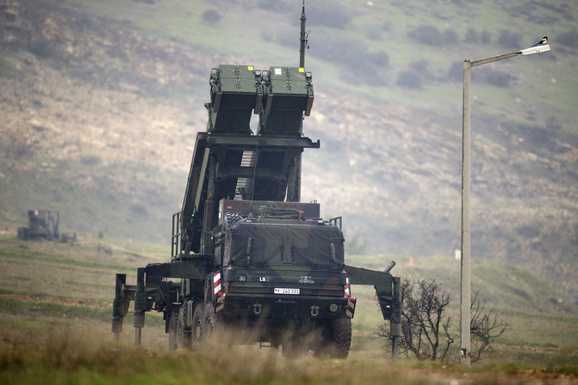
    Patriot missile installation is pictured at a positions near the city of Kahramanmaras, Feb. 23, 2013. Germany's defence minister inspected Patriot missile batteries close to the Syria-Turkey border. (photo by REUTERS/Axel Schmidt) Read more: https://www.al-monitor.com/originals/2013/03/american-middle-east-policy-turkey-nuclear-bombs.html#ixzz2PDsVinVg
    Patriot missile installation is pictured at a positions near the city of Kahramanmaras, Feb. 23, 2013. Germany’s defence minister inspected Patriot missile batteries close to the Syria-Turkey border. (photo by REUTERS/Axel Schmidt)
    Read more: http://www.al-monitor.com/pulse/originals/2013/03/american-middle-east-policy-turkey-nuclear-bombs.html#ixzz2PDsVinVg

    By: Kadri Gursel for Al-Monitor Turkey Pulse. Posted on March 31.

    In recent years when the AKP government gave priority to developing strategic ties with the Baath regime, the neo-Islamic political class that rules Turkey did not think of chemical weapons and ballistic missiles in the Syrian army inventory as a strategic threat against Turkey.

    About This Article

    Summary :

    Turkey once sought a nuclear-free region but now covets the protection from its neighbors that is afforded by US nuclear bombs, writes Kadri Gursel.

    Original Title:
    Middle East Policy Under Protection of American Bomb
    Author: Kadri Gursel
    Translated by: Timur Goksel

    They thought at the time that Turkey, by using its soft power, was actually transforming Syria and even on the verge of integrating it. Visas were abolished between the two countries and contacts reached unheard of levels.

    For example on Dec. 22-23, 2009, in “The First Session of the Turkey-Syria High Level Strategic Cooperation Council” held in Damascus, 50 accords, memorandums of understanding and cooperation protocols were signed by two countries on education, culture, commerce, security, health, irrigation, agriculture, mass housing and other fields.

    We are talking of the not too distant past, when many were gushing with praise for Foreign Minister Ahmet Davutoglu’s patented political strategy of “Zero Problems With Neighbors.”

    The joint communique of the meeting had a paragraph that revealed an interesting paradox:

    “The parties, agreeing on the necessity of purging the Middle East from nuclear weapons, have reviewed latest developments on the ongoing dialogue in the context of Iran’s nuclear program. With the conviction that all countries have the right to use nuclear energy for peaceful purposes we have emphasized the importance of finding a diplomatic solution to this question.”

    The paradox that called for clarification was NATO-member Turkey, jointly with anti-West Syria, declaring its wish for “a Middle East purged of nuclear weapons.”

    “Nuclear weapon-free Middle East” was one of the themes of the anti-Israel policy that peaked between the Davos confrontation of January 2009 and the Mavi Marmara events of May 2010. Basically, there was nothing strange with that expressed wish. Everyone, at least a vast majority, would want to see the Middle East cleansed of nuclear weapons. But when it is Turkey that asks for it, one has to pause and think. Turkey is one of two countries in the Middle East that has nuclear weapons on its soil. That Israel is a nuclear power is a secret known to all in the world. That Turkey has American B61 nuclear bombs on its territory is also known by all, but disregarded.

    The difference between Turkey and Israel is that the nuclear bombs deployed at Incirlik base near the southern city of Adana are not Turkish but American property. These are air-launched gravity bombs and their quantity changes “according to need.” B61s  are the forward deployed elements of the nuclear umbrella the US provides for its NATO allies.

    B61s were deployed at Incirlik during the Cold War years to balance Soviet tactical nuclear weapons and they are still there. According to reliable sources, Turkish pilots are not trained on B61s and Turkish F-16s don’t have the capability of delivering B61s.

    In addition to Turkey, these bombs are deployed in territories of four other US allies: Belgium, Holland, Germany and Italy. All, except Italy, now don’t want these weapons on their soil.

    But there is no likelihood for Turkey to adopt such a position. To the contrary, actually.

    The B61s that are still offsetting the Russian tactical nuclear weapons, as they were in the past, now have an increasingly important role for Turkey in the new Middle East geopolitics: To deter Syria and Iran. The Syrian situation is well known. Since the uprising and the civil war than ensued in Syria, Turkey, which until recently tried to transform that country with its soft power and strategic cooperation, is now resorting to all possible means, except to openly declaring war, to topple the regime in Damascus and replace it with a Muslim Brotherhood-dominated fraternal regime. Turkey, aware that its approach is seen as hostile, is now wary of Syria’s chemical weapons and ballistic missiles. Against this threat, Ankara asked for NATO protection and the Western alliance deployed Patriot batteries around three cities close to Syria.

    On the other hand, despite all objections, Iran is making headway in becoming a new nuclear-armed power of the Middle East. No doubt a nuclear-armed Iran will constitute a strategic imbalance for Turkey in the Middle East geopolitics. For a long time, as a political choice prompted by the “zero problems” policy, Turkey ignored this threat. The engine of Ankara’s “zero problems” approach to Iran was to advocate a solution to the international crisis brewing around the Iranian nuclear program that would ensure a change of the global nuclear order, to the benefit of developing powers like Turkey.

    Three years ago on May 14, 2010, the declaration that Turkey, at that time challenging the global nuclear order, pronounced to the world from Tehran (along with Brazil and Iran) was a part of this strategy. Acting with the same philosophy, on June 9, 2010, Turkey voted against a UN Security Council resolution that called for aggravated sanctions against Iran’s suspicious nuclear program.

    Three years after the Tehran Declaration and the negative vote at the Security Council, Turkey, far from challenging the global order, is feeling more secure under the protective wings of precisely that order against a threat from Iran.

    It was Turkey’s Syria policy that led to this situation.

    On March 19, in a workshop on “Emerging Powers and the Global Nuclear Order” organized jointly by Washington-based Carnegie Endowment for International Peace [CEIP] and the University of Brasilia at Brazil’s capital, Brasilia, this subject too was discussed. Turkey-based nuclear weapons were debated in the context of AKP’s ambitious Middle East policy.

    Sinan Ulgen, the Director of Istanbul-based Economy and Foreign Policy Research Center [EDAM], who submitted a paper to the workshop, said:

    “Ankara, (…) believes that the continued presence of NATO nuclear weapons deters chemically armed Syria and, potentially, a nuclear-armed Iran in the future.”

    Turkish officials continue their quiet support for nuclear weapons. While reluctant to discuss these weapons in public, Ankara’s actions suggest that Turkey is taking steps to ensure that it retains the capability to host and deliver US tactical nuclear weapons for the foreseeable future. Despite taking on a more passive nuclear posture since the end of the Cold War, the current difficulties in the Middle East will likely affect Turkey’s thinking about nuclear weapons. As the Syrian civil war worsens, and Ankara continues to grapple with how to deter a Syrian chemical weapons attack, Turkey could opt to harden its support for the forward deployment of nuclear weapons in Europe.”

    Ulgen noted that divergent views of Iran and Turkey for solutions in Bahrain and Syria had led to tension between Ankara and Tehran, and this prompted Turkey to withdraw the public support it gave to the Iranian nuclear program.

    Turkey, along with treating Israel as whipping boy in 2009-2010 and pressing it with the call for a ‘’Nuclear-free Middle East,’’ is now sharing a new ‘’joint threat” with Israel at a different plane: Iran and its nuclear program.

    Certainly a peculiar historic twist.

    Let us repeat: This is all because of Turkey’s Syria policy.

    As Ozdem Sanberk, a senior, retired Turkish diplomat often says, foreign policy is the art of managing contradictions.

    Turkey is hard pressed to manage the phenomenal contradictions between its new and ambitious policy in the Middle East and the NATO membership it needs to alleviate its military capacity deficit.

    Kadri Gürsel is a contributing writer for Al-Monitor’s Turkey Pulse and has written a column for the Turkish daily Milliyet since 2007. 

    Read more: http://www.al-monitor.com/pulse/originals/2013/03/american-middle-east-policy-turkey-nuclear-bombs.html#ixzz2PDrw744w
  • NATO’s Eastern Anchor. 24 NATO bases in Turkey

    NATO’s Eastern Anchor. 24 NATO bases in Turkey

    The North Atlantic Treaty Organization (NATO) has 24 military bases in Turkey, which is the western neighbor of the Islamic Republic of Iran, a report says.

    The report, published on the Iran-Balkan news agency (IRBA) on Thursday, listed the names and locations of NATO’s military bases in Turkey and noted that the country has become a regional power.

    NATO’s Incirlik Base, which is located eight kilometers (five miles) east of Adana, Turkey’s fifth largest city, and 56 kilometers (35 miles) from the Mediterranean Sea, is an important regional logistical air base of the alliance.

    Izmir Air Station is the facility of the United States Air Force in Europe (USAFE) in Izmir, located 320 kilometers (200 miles) southwest of Istanbul. Forty-two airplanes and Roland and Hawk missile systems, manned by 300 personnel, are based there.

    The Izmir Air Station is the oldest NATO base in Turkey and its importance has increased in recent years. The headquarters of NATO’s Allied Air Component Command for Southern Europe has been located in Izmir since August 11, 2004.

    The Sile Air Base has been built according to international standards for launching stinger missiles.

    The Konya 3rd Main Jet Base Group Command was the base of NATO’s AWACS aircraft during the Iraq war. Konya was a Turkish F-100 base in the mid-1970s and the air forces of Israel, Turkey, and the United States conducted their first joint exercises at the air base, codenamed Anatolian Eagle, in June 2001.

    The Ninth Main Jet Base of the Balikesir Air Base, in which six vault missile systems have been deployed, is located in the Turkish province of Balikesir in the Marmara region.

    The Merzifon Air Base is a military airport located in the city of Merzifon in Amasya province in the central Black Sea region. Merzifon is the base of the 5th Air Wing of the 2nd Air Force Command of the Turkish Air Force.

    The Bartin Air Base is located in the northern province of Bartin. The Bartin Naval Base, a submarine base of the Turkish Navy and assigned to the Turkish Northern Sea Area Command, is also in this area.

    Pirinclik Air Base is a 41-year-old US-Turkish military base located near the southeastern city of Diyarbakir. It was once NATO’s frontier post for monitoring the Soviet Union and the Middle East, but it was closed on September 30, 1997.

    The Eskisehir Air Base is a military airport located in the northwestern city of Eskisehir. Eskisehir is the home base of the 1st Air Wing of the 1st Air Force Command of the Turkish Air Force.

    The Iskenderun Naval Base is a base of the Turkish Navy on the northeastern coast of the Mediterranean Sea, 2.5 kilometers (1.6 miles) east by northeast of Iskenderun city in the southern province of Hatay. It is assigned to the Turkish Navy’s Southern Sea Area Command.

    Bandirma Airport is a military airbase and public airport located in the city of Bandirma in Balikesir province. Bandirma is the base of the 6th Air Wing of the 1st Air Force Command of the Turkish Air Force.

    The Afion-Kara-Hissar Air Base is Turkey’s largest and NATO’s second largest air base and is the headquarters of NATO operations in the country.

    The Sarkisla Air Base in Sivas province is located in the eastern part of the Anatolian region, and the Bornova Air Base is located in Izmir province.

    The Luleburgaz Air Base is in the northwestern province of Kirklareli, and the Corlu Air Base is located in the northwestern city of Corlu in the province of Tekirdag.

    The Pazar Air Base is located in Pazar town in the northeastern province of Rize in the Black Sea region, the Erzurum Air Base is in the city of Erzurum in eastern Anatolia, and the Persembe Air Base is located in Ordu province on the Black Sea coast of Turkey.

    The Izmit Air Base in located in Kocaeli province, and the Kutahya Air Base is a military airport in the western province of Kutahya in the Aegean region.

    The Canakkale Air Base is in the northwestern province of Canakkale.

    NATO also has a military facility in Ankara.

    Combined Air Operations Center-6 (CAOC-6) in Eskisehir is one of the ten command centers in Europe used by the United States Air Force to provide command and control of air and space operations.

    NATO’s Air Component Command Headquarters is located in Izmir and NATO’s Rapid Deployable Corps-Turkey is headquartered in Istanbul.

    Turkey joined NATO in 1952 and serves as the organization’ s eastern anchor, as it controls the straits leading from the Black Sea to the Aegean and also has borders with Syria and Iraq.

    via NATO’s Eastern Anchor. 24 NATO bases in Turkey | Global Research.

  • Turkey, the Unhelpful Ally

    Turkey, the Unhelpful Ally

    STOCKHOLM

    For Op-Ed, follow@nytopinion and to hear from the editorial page editor, Andrew Rosenthal, follow@andyrNYT.

    AMERICA’S stated goal is to remove President Bashar al-Assad from power in Syria. The United States also insists that any solution to the Syrian crisis should guarantee religious and ethnic pluralism. However, this rosy vision of a moderate and secular Syria after Mr. Assad’s downfall will not be achieved if the United States continues to depend on regional allies that have little interest in such an outcome.

    President Obama has relied heavily on Turkey in seeking to oust Mr. Assad and Secretary of State John Kerry is scheduled to visit the Turkish capital, Ankara, later this week. But Turkey is part of the problem. It is exacerbating Syria’s sectarian strife, rather than contributing to a peaceful and pluralistic solution.

    While the Obama administration has encouraged a broad Syrian opposition coalition, in which the influence of Islamists would be circumscribed, Turkey has not been of any assistance whatsoever. Instead, the Turkish government has continued to throw its weight behind the Muslim Brotherhood. The Brotherhood dominated the Syrian National Council, which is headquartered in Istanbul, and has succeeded in eclipsing other groups within the new opposition coalition, effectively thwarting the American effort to empower non-Islamists.

    Moreover, while sponsoring the Sunni cause in Syria, the Turkish government has made no attempt to show sympathy for the fears of the country’s Alawite, Christian and Kurdish minorities. The Alawites and the Christians have backed the government in large numbers and fear retribution if Mr. Assad is toppled.

    Turkey has provided a crucial sanctuary for the Sunni rebels fighting Mr. Assad and has helped to arm and train them.  Even more ominously, Turkey is turning a blind eye to the presence of jihadists on its territory, and has even used them to suppress the aspirations of Kurds in Syria. Last November, Islamist rebels from Jabhet al-Nusra,  which has reputed links to Al Qaeda in Iraq, entered the Syrian town of Ras al-Ain from Turkey and attacked fighters from the Kurdish Democratic Union Party, known as the P.Y.D., which had wrested control of parts of northeastern Syria. The Nusra fighters were initially repelled, but have continued to cross into Syria from their safe haven in Turkey.

    Mr. Obama has invested considerable political capital in Turkey, cultivating a close relationship with Prime Minister Recep Tayyip Erdogan. American and Turkish officials have held regular operational planning meetings since last summer, aimed at hastening the downfall of Mr. Assad. In a recent interview with the Turkish newspaper Milliyet, Mr. Obama thanked “the Turkish government for the leadership they have provided in the efforts to end the violence in Syria and start the political transition process.”

    But this praise is undeserved. America can’t expect the Sunni Arab autocracies that have financed the Syrian uprising, like Saudi Arabia and Qatar, to help empower secular and moderate leaders in Syria. However, Turkey, a NATO ally, should be expected to promote a pluralistic, post-Assad Syria. It has not.

    The Obama administration must therefore reassess the assumption that Turkey is playing a constructive role in ending the violence in Syria; it must also take a hard look at its own role in contributing to religious strife.

    America’s policy of punitive sanctions and not-so-veiled military threats toward Iran has encouraged Turkey to assert itself as a Sunni power. The perception that Turkey enjoys American “cover” for a foreign policy that directly confronts Iranian interests emboldened the Turkish government to throw its weight behind the armed Sunni rebellion against Mr. Assad, Iran’s main regional ally.

    Turkey quickly abandoned its stated ambition to have “zero problems with neighbors” and decided to join the United States in confronting Iran. It agreed to the deployment of parts of NATO’s antimissile shield, which is meant to neutralize a supposed Iranian missile threat.

    Turkey’s shift flowed from the belief that it would gain power and stature and reap the benefits if America succeeded in rolling back Iran’s nuclear ambitions.

    All of this suited the United States.  Washington no longer had to fear that Turkey might be “drifting eastward,” as it did during the short-lived Turkish-Iranian rapprochement a few years ago, when Turkey broke ranks with its Western partners over the Iranian nuclear issue. Turkey also appeared to be an American asset insofar as it could potentially offset the influence of more conservative Sunni powers like Saudi Arabia.

    But the Syrian crisis has had a radicalizing effect on all parties, including Turkey’s more moderate Islamist government. Under more peaceful circumstances, Mr. Erdogan might be able to live up to American expectations and promote a pluralistic vision for the Middle East. That won’t happen if the region is increasingly torn apart by violent religious conflict and its leaders believe that playing the sectarian card will enhance their power.

    Removing Saddam Hussein from power in Iraq in 2003 had the undesirable consequence of empowering Iran. A decade later, America’s effort to remove Mr. Assad is partly an attempt to remedy this geopolitical setback. But, as in Iraq, it has had unwelcome consequences. Moreover, American policy toward Iran is encouraging opportunistic Sunni assertiveness that threatens to trigger Shiite retaliation.

    The United States must beware of doing the bidding of Sunni powers — especially Turkey — that are advancing sectarian agendas that run counter to America’s interest of promoting pluralism and tolerance. Left unchecked, rising sectarianism could lead to a dangerous regional war.

    <nyt_author_id>

    Halil M. Karaveli is a senior fellow at the Central Asia-Caucasus Institute and the Silk Road Studies Program, which are affiliated with the School of Advanced International Studies at Johns Hopkins University, in Washington, and with the Institute for Security and Development Policy, in Stockholm.

  • Turkey Patriots will cost the country $8.5mln a year

    Turkey Patriots will cost the country $8.5mln a year

    Askerlerin maaşını da Türkiye ödüyor, daha hala da gelmeye naz ediyorlar!

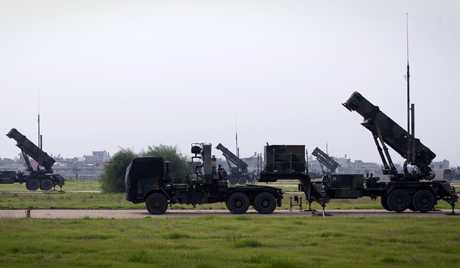
    Dutch Army Patriot defense missile system at an airbase in Adana

    The Turkish media have quoted the Defence Ministry as saying that hosting the six Patriot anti-aircraft missile batteries sent to southeastern Turkey by NATO will cost the country $8.5mln a year.

    Two of the batteries are from the US, two, from Germany, and two, from the Netherlands. They are supposed to protect Turkey against an air attack from across the country’s border with Syria.

    In a series of incidents last autumn, artillery shells fired from Syrian territory killed 5 people in a village in southeastern Turkey.

    Voice of Russia, RIA

    via Turkey Patriots will cost the country $8.5mln a year: Voice of Russia.

  • Georgia and Turkey discuss joint military exercises

    Georgia and Turkey discuss joint military exercises

    Georgia, Tbilisi, 16 Feb. / Trend N.Kirtskhalia /

    Herbi_telim_160213

    Georgian Defense Minister Irakli Alasania and Chief of Staff of the Turkish Armed Forces, Army General Necdet Ozel agreed on issues of conducting joint military exercises at a meeting in Ankara on Saturday, the Georgian Defense Ministry told Trend.

    According to the ministry, the meeting discussed matters related to strategic partnership of the two neighboring states, particularly, the future cooperation and joint exercises.

    On Saturday, the Georgian delegation also met with representatives of the defense industry of Turkey.

    Within the visit, Alasania and delegation members met with the management of the committee for defense and security of Turkish Parliament.

    During the meeting, the sides discussed both military cooperation and strategic partnership between the two countries. The Turkish side also expressed its full support for Georgia’s aspirations to join NATO.

    via Georgia and Turkey discuss joint military exercises – Trend.Az.

  • Erdogan should talk Turkey

    Erdogan should talk Turkey

    The suicide bombing inside a security booth at the United States embassy in Ankara on February 1 that killed a Turkish security guard and severely injured a television journalist who was on her way to meet the ambassador, has revealed once again the complexity and even fragility of Turkey’s political position in the region. Widespread initial speculation about the attacker’s identity and motivation was quickly dispelled when the banned radical Turkish Marxist-Leninist group, the Revolutionary People’s Liberation Party-Front (DHKP-C) claimed responsibility; the bomber himself was Ecevit S¸anli, a long-standing member of the group who had been imprisoned from 1997 to 2001 for a rocket attack on a military club in Istanbul but had been released when he contracted a crippling brain condition during a long hunger strike. The DHKP-C has a long record of such attacks going back to a turbulent period in the 1970s, and was deemed a terrorist organisation after a suicide attack in central Istanbul in 2001. It was also held responsible for murdering a former Prime Minister in 1980 and for a suicide attack in Istanbul in September 2012.

    The facts about the bombing may seem unproblematic, but Turkey’s domestic and international policies cause bitter resentment among several sections of its 74 million population, and any one of several groups could have carried out the recent attack, for a variety of reasons. Hardline leftist groups have long opposed Turkey’s collaboration with NATO — the country is a member of the Atlantic alliance — and have gained fresh resolve from Ankara’s help for Washington in the Syrian crisis; Turkey, which favours foreign intervention in Syria, hosts NATO troops and a Patriot missile system near the Turkish-Syrian border. Most of Turkey’s Alawite community, however, are strong supporters of Syria’s President Bashar al-Assad, who belongs to the ruling Alawite minority there. Yet another sect, Turkish Alevis, are disproportionately represented among the country’s Marxist factions. In addition, the Kurdistan Workers’ Party (PKK), led by Abdullah Öcalan, who is imprisoned on an island off Istanbul since 1999, has been involved in a 40-year war for independence that has cost 40,000 lives so far. Istanbul’s security services have been talking with Mr. Öcalan since December 2012, but a political settlement looks as remote as ever. The sooner Prime Minister Recep Tayyip Erdog˘an responds to the justifiable disquiet that Turkey’s domestic policies and international realpolitik generates among substantial sections of its people, the better the prospects of lasting peace in the country and region.

    via The Hindu : Opinion / Editorial : Erdogan should talk Turkey.