Tag: Turkey-Israel

  • Turkey’s Dangerous Diplomacy

    Turkey’s Dangerous Diplomacy

    Abraham H. Foxman
    National Director, Anti-Defamation League

    For a number of decades, I have been deeply engaged in promoting close relationships between the United States and Turkey and between Israel and Turkey.

    I am deeply pained, however, that even as Turkish Foreign Minister Ahmet Davutoglu travels to the United States this week for talks with Secretary of State Hillary Clinton, to say it is becoming increasingly difficult for me to sustain that commitment.

    Like the U.S., both Turkey and Israel are Western-oriented, share a common commitment to democratic values, and hold free elections. The U.S. has long considered Turkey a vital regional ally — militarily, diplomatically and economically – and those shared interests are also relevant with respect to Israel. The Israeli and Turkish militaries have forged an extremely close relationship, born from common enemies and security concerns, and, until recently, this partnership translated into joint combat exercises, the sale of weapons technologies to one-another, and cooperation on confronting strategic threats.

    On the economic front, Israel has become one of Turkey’s most important trading partners. Trade volume between the two countries has risen significantly during the past decade, currently hovering around $3.5 billion annually.

    When it comes to humanitarian assistance, both countries have repeatedly aided each other. In the aftermath of the 1999 and 2011 earthquakes in Turkey, Israel played an important role in the rescue efforts, dispatching special recovery teams to search for survivors while contributing significant aid to the devastated regions. And during the 2010 fire which caused severe damage to Israel’s Carmel region, Turkey responded to Israel’s request for aid and sent along special airplanes to help extinguish the raging fire.

    For decades, Turkey has been a beacon of democracy, remaining a shining example for the Muslim world. Yet I am concerned that its democratic light has begun to fade.

    The country’s recent deviation from democracy can be seen in Turkey’s emerging attitude toward a free press, where Prime Minister Recep Tayyip Erdogan and his government are demonstrating an unwillingness to tolerate criticism of their policies. They have unabashedly asked the public to boycott newspapers and TV channels owned by the Dogan Media Holdings, a media group that is often critical of AKP policies, and has expressed fears that Erdogan’s government is trying to undermine the secular basis of Turkish society.

    Perhaps more troubling was the 2010 world press freedom index report from Reporters Without Borders, which lists Turkey at 138 out of 178 countries ranked, down from 98th place in 2005. According to the Turkish Journalists Union, there are currently 97 journalists in Turkish prisons, a figure exceeding the number of those detained in China.

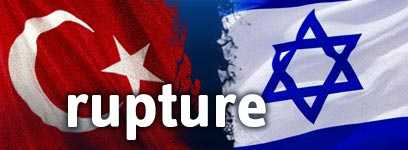
    Coinciding with undemocratic policies is the recent fracturing of Turkey’s relationship with Israel, an unraveling that may be reaching a dangerous tipping point.

    In the last three years, there has been a conscious attempt by the Erdogan government to shift toward a foreign policy that negates long-standing alliances in favor of populist diplomatic initiatives and has led to a deterioration of the Turkish-Israeli relationship.

    One can point to the testy exchange between Erdogan and Israeli President Shimon Peres during the 2009 Davos forum — which saw Erdogan, in a discussion on Israel’s activities in Gaza, storm off the stage — as the moment when the public was first exposed to the deteriorating Turkish-Israeli relations. This was followed by a cooling of diplomatic and military relations between the two countries, and came to a head with the unfortunate loss of life during the flotilla incident of May 2010, leading Turkey to expel Israel’s ambassador from Ankara.

    Yet, instead of trying to work out their problems and salvage the country’s relationship with Israel, Turkish government officials, led by Erdogan and Davutoglu, opted for greater distance and have resorted to rhetorical and diplomatic provocations against Israel.

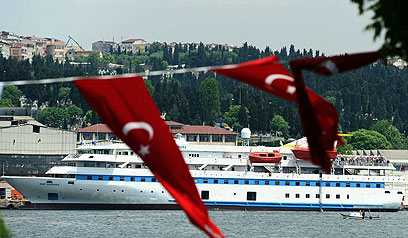
    This approach can be clearly seen in the recent official visit of Hamas leader Ismail Haniyeh to Turkey, a gesture that Israel justifiably saw as another diplomatic slap in the face. During his visit, Haniyeh held meetings with Erdogan and his government, was received with a standing ovation in Turkish Parliament, and met with IHH members on the Mavi Marmara boat, an act of pure contempt designed to stir up tensions surrounding the flotilla incident. Haniyeh was afforded this warm reception, despite being one of the principal leaders of a U.S. and E.U. designated terror organization that openly calls for Israel’s destruction. Just a few short years ago, inviting a Hamas leader to Turkey would have been unthinkable.

    Haniyeh’s Turkish visit was a clear indication of the new and dangerous diplomatic path being carved out by Erdogan and the AKP. Considering the frequent comparisons made between Hamas and the PKK, both of which are responsible for killing thousands of innocent civilians, there is a certain dark irony to the warmth showered upon the Hamas leader by the Turkish government. I have no doubt it would be unacceptable for Israel’s prime minister to host the head of the PKK in Jerusalem, yet Erdogan has hypocritically rejected the classification of Hamas as a terrorist organization, fondly referring to it as a “resistance movement trying to protect its country under occupation.”

    I greatly fear that Turkey’s fraying democracy and new foreign policy approach will lead the country on a dangerous collision course with its allies in the West. Hosting terrorist organizations like Hamas serves only to further isolate Turkey from the U.S. and Israel, and demonstrates nothing more than populist diplomacy. If Erdogan and the AKP are genuinely concerned about Turkish democracy and sustaining the country’s standing in the international community, I would respectfully urge them to re-evaluate and reverse their anti-democratic initiatives and reassess the government’s diplomatic approach towards Israel. Re-energizing the Turkish-Israel alliance would benefit Turkey, the U.S. and the region.

    I am hopeful Turkey will find its way back to a place where I can once again feel comfortable as an advocate for warm relationships between Turkey and the U.S., and Turkey and Israel.

    https://www.huffpost.com/entry/turkey-israel-relations_b_1260736

  • US proposes Israel-Turkey compromise

    US proposes Israel-Turkey compromise

    Israel will “express regret” over the fatalities on the Marmara; Erdogan will say Israel apologized.

    Washington has proposed a formula for ending the diplomatic stand-off between Israel and Turkey. The US plan calls for Prime Minister Benjamin Netanyahu and his Turkish counterpart Prime Minister Recep Tayyip Erdogan to hold a secret telephone conversation, following which each will make a separate announcement to his nation. “Ma’ariv” reported this morning that Erdogan will say that Israel apologized for the Marmara deaths, while Netanyahu will say that he only expressed regret.

    According to the plan, each of the countries will provide the other with adequate leeway to present the different types of reconciliation to his country. Following the prime ministers’ declaration, Turkey and Israel will raise the level of diplomatic relations, and ambassadors will return to Ankara and Jerusalem.

    With respect to the payment of compensation for the Marmara deaths, the US compromise is that instead of Israel transferring funds directly to the families, Turkey will create a special fund with which Israel will coordinate. The fund will then transfer the funds to the families. Although none of these suggestions is new, and despite the fact that it is still unknown whether the two sides will agree to implement them, the US will make every effort to promote it in an effort to preserve its interests in the Middle East.

    Published by Globes [online], Israel business news – www.globes-online.com – on December 12, 2011

    © Copyright of Globes Publisher Itonut (1983) Ltd. 2011

    via US proposes Israel-Turkey compromise – Ma’ariv – Globes.

  • US defence chief urges Israel to repair regional relations

    US defence chief urges Israel to repair regional relations

    JERUSALEM // Israel has become isolated in the region and too reluctant to compromise with the Palestinians, the top US defence official has warned in a rare public rebuke of Israel.

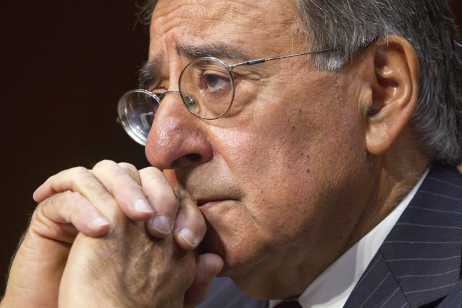
    The US defence secretary, Leon Panetta, criticised Israel’s response to the Arab Spring uprisings, saying it was damaging the country’s ties with Egypt and Turkey and undermining prospects for peace with the Palestinians.

    He also cautioned Israel against taking hasty military action against Iran’s alleged nuclear weapons facilities.

    Speaking on Friday at the Washington-based Brookings Institution, a think tank, Mr Panetta called on the government of Israel’s prime minister, Benjamin Netanyahu, to “get to the damned table” and resume negotiating with the Palestinians.

    “I understand the view that this is not the time to pursue peace, and that the Arab awakening further imperils the dream of a safe and secure Jewish and democratic Israel,” he said. “But I disagree with that view.”

    His remarks, although unusually firm for a US official, come amid reports of rising frustration in Washington with Israel and the policies of its right-wing, pro-settlement government. Mr Panetta took a similar line in October during his first visit to Israel as defence secretary and some analysts see his words as coming straight from the White House and the president, Barack Obama.

    “He’s very influential in the White House,” said Yaron Ezrahi, a professor of political science at Hebrew University in Jerusalem.

    “I think the fact that he said this is not necessarily because Obama can’t say it, but because it’s something coming from the defence establishment in the US: it’s the head of America’s security and policy-making establishment flatly saying that Netanyahu’s policies are sabotaging America’s interests in the region. It’s as simple as that.”

    Mr Panetta is the latest senior US official to talk tough on Israel, a delicate balancing act given the Israeli lobby’s powerful influence in Washington.

    Mr Panetta’s predecessor, Robert Gates, who retired over the summer, was reported in September to have called Mr Netanyahu an “ungrateful ally” after the Israeli leader appeared to upbraid Mr Obama during a White House meeting in May.

    Last month, Mr Obama described Mr Netanyahu as difficult to work with in remarks to French President Nikolas Sarkozy that were supposed to be private but which were accidentally picked up by microphones and heard by reporters.

    US frustration also stems from Israel’s refusal to halt provocative, and repeatedly announced, plans to expand its Jewish settlements in occupied Palestinian territory.

    Mr Netanyahu’s failure to halt settlements construction – a key demand of the Palestinian Authority president, Mahmoud Abbas – ultimately scuttled last year’s brief resumption of direct Israel-Palestinian negotiations.

    The two sides have since been unable to reconcile their differences and return to direct talks, even as Mr Abbas appears to have placed his United Nations statehood-recognition bid, which Israel and Washington oppose, on hold for the moment.

    That gesture has failed to impress Mr Netanyahu, who reportedly rejected proposals on negotiating borders and security arrangements offered by Palestinian officials last month.

    The Israeli daily Haaretz reported on Thursday Mr Netanyahu declined to offer the Palestinians a counterproposal – as requested by the Middle East Quartet, the US, EU, Russia and the UN – citing his preference for doing so in direct talks.

    Mr Panetta said the “problem right now is we can’t get them to the damn table, to at least sit down and begin to discuss their differences”.

    He also urged Israel to “reach out and mend fences” with Egypt and Turkey because of their shared interest in regional stability.

    “I believe security is dependent on a strong military but it is also dependent on strong diplomacy,” he said. “And unfortunately, over the past year, we’ve seen Israel’s isolation from its traditional security partners in the region grow.”

    Relations with Istanbul and Cairo, once pillars of Israel’s regional policy, have been seriously undermined recently.

    Ties with Turkey sank after a deadly Israeli raid last year on a Gaza-bound aid flotilla in which eight Turkish citizens and one Turkish-American activist were killed.

    “It is in Israel’s interest, Turkey’s interest, and US interest for Israel to reconcile with Turkey, and both Turkey and Israel need to do more to put their relationship back on track,” Mr Panetta said.

    Israeli leaders have sounded growing alarm since Egypt’s Hosni Mubarak was driven from power in February. A cross-border raid into Egypt in August, in which Israeli forces were chasing Islamic militants, killed five Egyptian security officers and inflamed anti-Israel sentiments.

    Egypt is one of two Arab countries that maintain a peace treaty with Israel. Jordan is the other.

    Mr Panetta also cautioned Israel against taking military action to thwart Iran’s purported plans to build nuclear weapons, saying that international diplomatic efforts, including sanctions, were yielding success.

    He emphasised a military response would have to be a “last resort” and said that even if Israel attacks Iran’s nuclear facilities, “at best” this would delay its nuclear ambitions by two years.

    A report released last month by the UN’s nuclear watchdog claims Tehran appears to have drawn up designs for a bomb and conducted clandestine research. Iran denies its nuclear activities are intended to produce weapons.

    Regardless, Mr Panetta warned, an attack on Iran could have disastrous global ramifications “that would not only involve many lives, but I think could consume the Middle East in confrontation and conflict that we would regret”.

    [email protected]

  • Turkey ‘hunts down’ Israeli commandos on Facebook

    Turkey ‘hunts down’ Israeli commandos on Facebook

    Turkey compiles list of 174 Israelis, topped by Prime Minister Netanyahu, who were directly or indirectly involved in 2010 raid on Gaza-bound ship. Intelligence officials used social networks to track down participants, Sabah newspaper reports

    Turkish intelligence officials have submitted to the state prosecution a list of 174 Israelis, mostly soldiers, who were involved in the 2010 raid on the Gaza-bound Mavi Marmara ship, the Turkish newspaper Sabah reported Monday.

    Prime Minister Benjamin Netanyahu tops the list as the “primary responsible party.”

    According to the report, the Israelis were identified from photographs and various media sources.

    “Almost all of the Israeli soldiers who killed nine Turkish citizens and injured 30 others have been identified,” the report claimed.

    It was stated that Israel’s government has not responded to the Turkish Justice Ministry’s demand to release a list of the individuals who took part in the operation, prompting the intelligence officials to pour over records of the raid. Facebook and Twitter were used later in the hunt for information.

    The fact-finding team examined the names of the commandos ofShayetet 13 – the Navy unit that took over the Gaza-bound vessel – and matched them up with the numerous photos used in the media.


    Furthermore, the officials reviewed correspondence written by soldiers whom they believed took part in the raid in order to confirm their participation. Names submitted by the IHHmovement, which organized the flotilla, were used in the search as well.


    Lieberman, Barak also on list

    According to the report, the Turkish prosecution intends to request the Israeli authorities to verify whether the people on the list, which includes 140 photos of 174 Israelis who directly or indirectly participated in the raid, were indeed ivolved.

    Officials who allegedly contributed to the decision and issued the order to stop the Mavi Marmara, including Foreign Minister Avigdor Lieberman and Defense Minister Ehud Barak, made it to the top of the list as well.

    “All of the Israeli Cabinet ministers were responsible for the order,” the report read.

    The list also includes former IDF Chief of Staff Gabi Ashkenazi, former Israel Navy Commander Eliezer Marom, former Military Intelligence chief Amos Yadlin and a variety of other high- and low-ranking officers. Moreover, it includes 10 photographs of soldiers who are yet to be identified.

    Ynetnews


  • UK’s ex-minister: Israel should have apologized

    UK’s ex-minister: Israel should have apologized

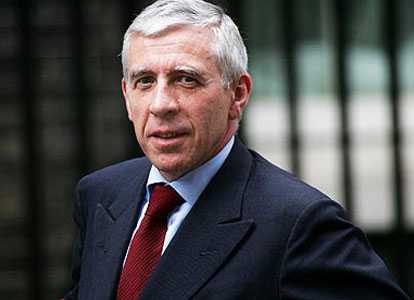
    Israel should have apologized to Turkey for its deadly raid on the Mavi Marmara aid ship, but instead allowed relations to deteriorate, according to United Kingdom’s former Foreign Secretary Jack Straw.
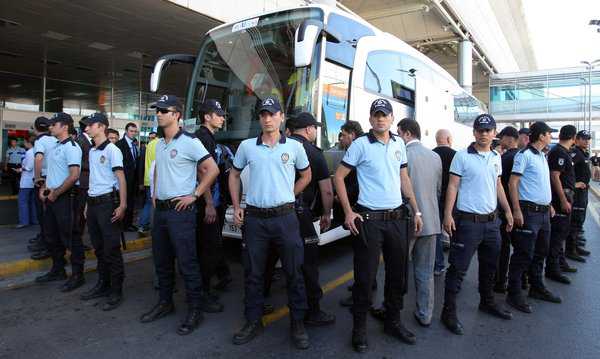
    “Israel could – and should – have apologized in a full-hearted manner, but in a way that neither humiliated nor embarrassed them. Once the apology had been issued, and accepted by Turkey, both countries would have had a platform for the restoration of normal relations,” Straw wrote in a commentary for the Hürriyet Daily News.

    “Instead, relations have deteriorated, from tepid, then to cold, and now to freezing… Israel has only itself to blame,” he wrote. Comparing the situation today to the sympathy for Israel during the Six-Day War in 1967, Straw said Israel has become isolated due to “its arrogance; its cavalier approach to international norms; and the inability of its leaders to act in a statesmanlike, strategic way.”

    Click here to read the full commentary by United Kingdom’s former Foreign Secretary Jack Straw.

    Hurriyet Daily News


  • Israel and Turkey, Foes and Much Alike

    Israel and Turkey, Foes and Much Alike

    By ETHAN BRONNER

    Ethan Bronner is the Jerusalem bureau chief of The New York Times.

    JERUSALEM

    Associated Press  Riot police officers surrounded a bus Wednesday as Maccabi Tel Aviv soccer players arrived at Ataturk Airport in Istanbul.
    Associated Press Riot police officers surrounded a bus Wednesday as Maccabi Tel Aviv soccer players arrived at Ataturk Airport in Istanbul.
    Associated Press

    Riot police officers surrounded a bus Wednesday as Maccabi Tel Aviv soccer players arrived at Ataturk Airport in Istanbul.

    ISRAEL and Turkey, key American allies, are clashing. But they disagree over the source of their disagreement. Turkey says it expelled the Israeli ambassador and cut military ties because Israel oppresses Palestinians and refuses to apologize for killing activists aboard a Turkish-based flotilla last year. Israel says Turkey aims for regional leadership so it is forsaking Israel.

    While both claims have merit, there is a third explanation. The two countries have gone through remarkably similar political shifts in recent decades from aggressively secular societies run by Westernized elites to populist ethno-religious states where standing up to foreigners offers rich political rewards.

    Two and a half years ago, Prime Minister Recep Tayyip Erdogan of Turkey scolded President Shimon Peres of Israel onstage at the World Economic Forum in Davos, Switzerland — right after Israel’s war in Gaza — telling him, “When it comes to killing, you know well how to kill.” He stormed offstage to a heroic welcome at home.

    A year later, Israel’s deputy foreign minister, Daniel Ayalon, invited the Turkish ambassador to his office, giving him a low seat at a table without refreshments or a Turkish flag. Before the invited guest entered, Mr. Ayalon said to Israeli television camera operators, “The important thing is that people see that he’s low and we’re high and that there is no flag here.” Mr. Ayalon’s standing only rose in his party, Yisrael Beiteinu, run by the nationalist foreign minister, Avigdor Lieberman.

    It was not always so. Both societies used to be very different places in rather the same way. And over time, they built a pretty warm relationship of business, military ties and tourism. The surprising thing is what similar — and mutually contemptuous — paths they have taken since.

    The founder of modern Turkey, Mustafa Kemal Ataturk, and the founding prime minister of Israel, David Ben-Gurion, had much in common. This was not an accident. Ben-Gurion, who studied law in Istanbul, modeled himself on Ataturk, seeking to build an instantly modern society of like-minded and “ideal” citizens with few deviations in language or culture. Both saw religion as a deviation and ethnicity as a problem. Like the Kurds of Eastern Turkey, the Moroccan and Yemeni Jews on the Israeli periphery faced an official — if less brutal — disregard.

    Sidelining religion and ill treating minorities can be hard to sustain in a democracy, however. The founders’ heirs were dislodged by electoral revolutions — in Israel in 1977 and in Turkey in 2002. Today a religious nationalism plays a central and growing role both in Israel, dominated by the Likud Party of Prime Minister Benjamin Netanyahu, and in the Turkey of the Justice and Development Party of Mr. Erdogan. The secular elites who set the cultural and political agenda for decades have lost much of their influence.

    Last year, Mr. Erdogan waved away retired Turkish ambassadors who criticized his foreign policy with the words “mons chers” (meaning “mes chers,” or my dears). Foreign Minister Lieberman similarly dismissed Israelis who found his policies too tough as “feinschmeckers,” those with overly refined tastes. In neither case was the derisive use of a European term accidental. Turks have been offended by the endless stalling of their country’s application to the European Union. Israel’s establishment, supported by a mix of Jews from the Middle East and former Soviet Union, views the elite of Old Europe, with its pro-Palestinian sentiments, with disdain.

    “I often compare the Erdogan upheaval of 2002 to the elections here in 1977, which brought Likud to power,” noted Alon Liel, a former Israeli ambassador to Turkey who teaches a course on the two countries’ histories and relations at Tel Aviv University.

    “In Turkey, the Kemalist elite ignored the religious leadership, the countryside and the Kurds, creating groups of very unhappy people who cohered into a new political opposition. The same happened in Israel, and Menachem Begin connected with them. Today, both Erdogan and Netanyahu rule from a support base that is more religious, more rural and less educated, where honor and nationalism are important. That makes the relationship between the two very hard.”

    As non-Arabs, they had once built an alliance based on being outsiders. But it is precisely in foreign policy where they differ today, one turning east, the other west. Turkey, while a member of NATO, feels rejected by Europe and renewed in its sense of Muslim and Middle Eastern identity. Last week, Mr. Erdogan went on an Arab Spring tour — to Egypt, Tunisia and Libya — in a quest for leadership.

    Israel, whose Middle Eastern ties are fraying badly, looks to “new” Europe, countries like Poland but also to Romania and Bulgaria where anti-Turkish feelings run high from Ottoman days.

    Washington, in hopes of restoring the Israeli-Turkish relationship, is pushing Israel to take conciliatory steps on the Palestinian issue, partly to avoid a showdown at the United Nations this month over a Palestinian statehood resolution. It is also pressing Turkey to move away from its recent moves to improve ties with Iran and Syria. It recently persuaded Turkey to place a NATO radar station focused on Iran on its soil, a step that will benefit Israel.

    And there are other mutual interests that could help reunite them. Both are engaged in battles against militants — Israel against Hamas and other Palestinian groups, Turkey against Kurdish separatists unimpressed by Mr. Erdogan’s moves toward tolerance. Both occupy land in defiance of the international community — Israel in the West Bank and East Jerusalem, Turkey in northern Cyprus. Moreover, although resource-poor, both are economic success stories, high-growth members of the Organization for Economic Cooperation and Development, exceptions in the region.

    Still, they will have to overcome deep societal trends. As Efraim Inbar, a specialist on Turkish politics at Bar-Ilan University, says: “Nationalism in Turkey today is ethno-religious. The same for Likud. Neither listens too much to what outsiders say.”

    A version of this news analysis appeared in print on September 18, 2011, on page SR5 of the New York edition with the headline: Israel and Turkey, Foes and Much Alike.