Tag: Turkey-Israel

  • Rescue of Everest climber helps Israel-Turkey thaw

    Rescue of Everest climber helps Israel-Turkey thaw

    By Jonathan Head BBC News, Istanbul

    View of Everest – file pic

    It isn’t often these days that you see two men, arms round each other, holding Israeli and Turkish flags.

    But an extraordinary rescue on the world’s highest mountain has bonded two climbers, one from Israel and one a Turk.

    By his own account Nadav Ben-Yehuda was only 300 metres from the summit of Mount Everest, and on course to become the youngest Israeli to conquer it, when he spotted someone lying in the snow, clearly in trouble.

    He recognised Aydin Irmak as a Turkish climber he had befriended down at base camp. Other climbers, set on reaching the summit, or just too exhausted by the altitude, had passed by without helping.

    Irmak had no gloves, no oxygen and no shelter, according to Ben-Yehuda, and was unconscious.

    Climbers Nadav Ben-Yehuda (left) and Aydin Irmak after descent (pic: Israeli embassy, Kathmandu) Ben-Yehuda (left) saved a life – and had to abandon his summit bid

    So the Israeli abandoned the goal he had been preparing for over many months, and helped to carry Irmak down the tough, nine-hour descent to base camp, from where both men were evacuated by helicopter for medical treatment. Both are suffering from frostbite. Irmak would certainly have died without help.

    The story has inevitably been widely covered in the Israeli media, but it is also being reported in some Turkish newspapers – a rare piece of positive news about a country many Turks only ever see in the most negative light.

    Pro-Palestinian mood

    Turkish-Israeli inter-state relations have been deteriorating for many years, driven by a Turkish government which feels outrage over Israeli policy towards the Palestinians, and an Israeli government which has refused to soften that policy to accommodate the sensibilities of the only ally it had in the region.

    Relations hit an all-time low in May 2010, when Israeli commandos stormed a ship full of activists trying to break the blockade of Gaza, killing nine Turkish citizens.

    Attitudes in Turkish society have also hardened towards Israel. Rising Islamic piety in much of the country has led to a stronger sense of solidarity with perceived Islamic grievances elsewhere, the Palestinian issue foremost until the dramatic Arab uprisings of the past year. That hostility has also been fuelled by Turkish television dramas, which often portray Israel as a brutal military oppressor.

    Nadav Ben-Yehuda (pic: Israeli embassy, Kathmandu) Ben-Yehuda got frostbite in his fingers because he had to take his gloves off

    The story of Nadav Ben-Yehuda and Aydin Irmak contradicts that narrative.

    So could it help break the ice between Turkey and Israel?

    There have been other “ice-breaking” episodes: the time Turkey sent water-bombing aircraft to help Israel combat deadly forest fires in December 2010, and the aid Israel sent to Turkey after the earthquake that struck Van last year. But neither prompted a breakthrough in restoring relations.

    Turkey is still adamant that there can be no real improvement until Israel apologises and pays compensation for the nine people killed on board the Gaza flotilla. A Turkish prosecutor has asked a court in Istanbul to accept an indictment of murder against senior Israeli military commanders over the incident.

    The two countries are at odds over other issues, in particular Israel’s involvement in the exploitation of oil and gas off the coast of Cyprus, a project Turkey opposes because it does not recognise the Cypriot government.

    Regional realpolitik

    Trade between Israel and Turkey, though, has been largely unaffected – it actually grew last year to well over $3bn (£2bn). Israeli tourist numbers have dropped sharply, but those who come receive the same hospitality given to other visitors in Turkey’s more liberal-minded coastal resorts.

    The turmoil in the Arab world, especially Turkey’s strife-torn neighbour Syria, means that Ankara is once again relying more on its alliance with the US, and co-operation with staunch US allies like Qatar and Saudi Arabia.

    And the US is telling Turkey to fix the row with Israel, saying it is an unnecessary distraction from the more serious challenges confronting Ankara in the Middle East. It is still is not clear how that thaw can happen.

    But the tale of a good deed high in the Himalayas can only help.

    via BBC News – Rescue of Everest climber helps Israel-Turkey thaw.
  • Turkey And Israel: Now Is The Time To Reconcile

    Turkey And Israel: Now Is The Time To Reconcile

    I strongly believe that the time is right for Turkey and Israel to mend their critically important bilateral relationship which has suffered a precipitous decline since 2010. With the Middle East in turmoil as a result of the Arab Spring, the perilously unfolding crisis in Syria, the concerns around the Iranian nuclear program, the recent expansion of the Netanyahu government and the fact that the continuing and increasing level of bilateral trade relations between Turkey and Israel remains unaffected by these developments, all suggest that restoring their bilateral relationship now will serve the national strategic interests of both former allies. The question is, will Israel and Turkey recognize the potential gains they can both reap once they remove any obstacles standing in the way of rapprochement, knowing that full collaboration at this time is central to a regional stability that directly impacts their respective national security concerns?

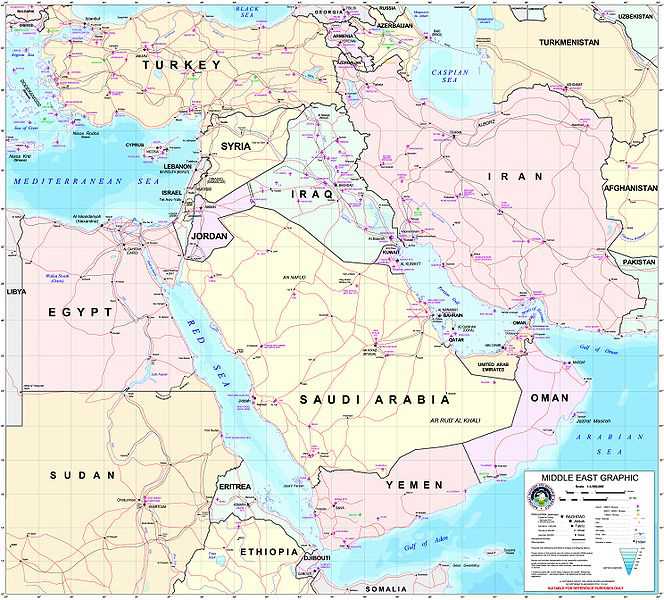
    Coupled with other significant developments, perhaps the most alarming issue at this particular time is the turmoil in Syria, in which Turkey has taken a strong and principled stand against the continuing carnage inflicted by Assad’s regime. Prime Minister Erdogan has made it clear that Bashar Assad and his cohorts must step down from power in order to end the crisis. Turkey shares a more than 800 kilometer (510 mile) long border with Syria and is deeply involved in Syria as it continues to provide humanitarian aid, shelter the refugees and host the Syrian National Council, the main opposition to the Assad regime. Israel, for its part, has prevented potentially greater conflagration by carefully and quietly monitoring the situation while taking no provocative action to keep the calm, which provided Turkey the necessary space to serve as the main power broker to oppose Assad with a sense of empowerment from the Arab League. The new political order that emerges in Syria will have a tremendous effect both on Israel and Turkey. By virtue of being neighbors of Syria, both have unique national interests in dealing with post-Assad Syria in a manner that will ensure regional stability and enhance their short and long-term strategic and security interests.

    Moreover, the general regional uproar resulting from the Arab Spring has dramatically shifted the power relations from the status quo ante. There has been a diminution of the bilateral relations between Israel and Egypt, which has been the pillar of regional stability since the signing of the Camp David Accords in 1979. At the same time, Turkey’s stature in the region has grown immensely due in part to the high popularity of Prime Minister Erdogan, his position on Syria, and his stance on the Israeli-Palestinian conflict. Turkey’s strong position on Syria, in particular, has mitigated the impression that Turkey favors and panders to Islamists and demonstrated that is able to take a more balanced approach that has alleviated some of Israel’s earlier concerns. As a result, Turkey has emerged as an attractive interlocutor and model for the Arab world while deepening Israel’s isolation. The projected continued regional instability requires that both countries seek a renewed strategic partnership to handle the unpredictable nature of the region’s upheaval.

    Israel’s hawkish stance against Iran’s nuclear program has dramatically increased regional tension as the world powers continue to work toward a peaceful resolution to Iran’s nuclear ambitions. As long as there is continuing conflict between Israel and Iran, however, Turkey, who is just as concerned over Iran’s nuclear program, can play an important role to diffuse the tensions. Although there is growing tension between Ankara and Tehran over the fate of the Assad government, Turkey is still on speaking terms with Iran, enjoys some influence and could exert a degree of pressure on Tehran to show more flexibility in conjunction with the negotiations between Iran and the P5+1 in Baghdad, which resumes May 23rd. Turkey has been strongly resistant to implementing sanctions on Iran, a position that has run contrary to Israel’s hard-line stance. But since Turkey dreads the prospect of an Israeli attack on Iran’s nuclear facilities and would certainly seek to prevent it, both Israel and Turkey have mutual interests in engaging in constructive dialogue that could reduce the regional friction regarding Iran’s nuclear program from which they can both greatly benefit.

    The conflicts existing between Turkey and Israel, however, remain serious but can be ameliorated provided they set emotions aside and instead concentrate on the larger picture in rapidly changing times laden with unpredictable hazards. Turkey has taken, for good reason, a very strong position against the Israeli settlement program, especially in light of the recent decision by the Netanyahu government to retroactively legalize three West Bank outposts. Turkey has continued to criticize Israeli policies in the West Bank and the blockade of Gaza. Furthermore, Turkey blocked Israel’s participation in the upcoming NATO Summit in Chicago on May 20th and the Mediterranean Dialogue Group, both of which are linked to Israel’s refusal to offer a public apology for the Gaza Flotilla incident, during which eight Turkish citizens (and one Turkish-American) were killed by Israeli commandos.

    While Israel, on the other hand, has avoided doing or saying anything provocative in recent months against Turkey, there is still a residue of resentment against the Erdogan government for lashing out against Israel whenever the opportunity presents itself. Israel does have its share of mistakes but it too seeks to bring an end to the sad Marmara episode in order to resume its alliance with a country that is now enjoying greater influence, is a close ally of the US, a powerful member of NATO and a neighbor of Israel’s three most sinister enemies: Syria, Lebanon and Iran. There is a growing sense that both sides want to preserve the prospect of restoring their relationship that existed before the diplomatic breakdown. In this regard, the United States has been urging both sides to move toward reconciling their differences, since the future stability of the region depends largely on full cooperation between the two most powerful nations in the area.

    What might certainly further encourage rapprochement between the two countries is the fact that even though diplomatic relations, military exchanges and tourism from Israel to Turkey have been reduced to historically low levels, trade relations between them have reached new heights in 2011-2012. In addition, there is a tremendous level of technical collaboration, specifically in the biochemical field, while Turkish businessmen still see Israel as a place to trade with and in large part, see Israel as a place to learn from Israeli expertise. To be sure, from every indication both countries want to maintain viable trade relations to provide a solid foundation on which they can rebuild strong diplomatic bilateral relations as well.

    The other significant development is the recent decision by Prime Minister Netanyahu to expand his coalition government, which now commands 94 out of 120 Knesset members and thereby strengthen his grip on power to an unprecedented degree. The move offers Netanyahu a great deal of political confidence to face challenges by smaller parties on any range of issues where there is disagreement. Of particular significance is the upcoming second year anniversary of the Gaza Flotilla Raid on May 31st, 2010, which effectively broke off relations between Israel and Turkey. Nearly a year ago, both sides succeeded in reaching an agreement where Israel would apologize for the incident, compensate the victims, and allow Turkey to send food stuff and materials for civilian consumption to Gaza.

    There was strong dissent within the cabinet over Israel’s possible acquiescence and apology. Foreign Minister Avigdor Lieberman’s threat to withdraw from the coalition was enough for Netanyahu to back down from signing the agreement. Now that Netanyahu commands an overwhelming majority in the Knesset, he can actually revive this previous agreement and offer the apology that Ankara has been demanding all along without fear of Lieberman’s departure. Turkey has said time and again that once such an apology is made, Ankara will resume full diplomatic relations, including the exchanging of ambassadors. Now that Netanyahu is operating from a position of strength, he can make such a concession, especially since he agreed to the original language of the document that contained an apology. There is no better time to do so than right now.

    Instead of recalling the tragedy that took place in international waters on its second anniversary, Israel should reconsider its position by meeting Turkey’s demands and putting the Marmara affair behind, which could go far beyond repairing the rift between the two former allies. Both sides stand to gain enormously from this necessary rapprochement. Israel will dramatically benefit by ending its isolation from the Muslim world and Turkey will gain likewise through its newfound assertiveness as a regional power.

    The death of any one person at any time, in any place and under any circumstance, is unfortunate. Why not express an apology for lives that were lost and move on? This would not be seen as a sign of weakness but one of strength of conviction.  It would not be a victory for Turkey but a victory for the human spirit that transcends the hour and brings nations together. The time is now.

    Turkey And Israel: Now Is The Time To Reconcile

  • U.S. Should Pressure Turkey to Restorie Israeli Relations

    U.S. Should Pressure Turkey to Restorie Israeli Relations

    Tensions in the Israel-Turkey relationship are now leaving at least one Israeli defense firm in a tricky position with Boeing, the U.S. defense giant. It’s just the latest example of how the unraveling of what was once a strong alliance—for much of the past few decades, Turkey was Israel’s closest friend in the Muslim world—has harmed Israeli interests, particularly as the United States has continued to experience a strong relationship with Turkey (in part, ironically enough, over shared interest in checking Iran).

    The complicating factor here is that while you could certainly point to instances in which Israel has gone out its way to antagonize Turkey (ahem), the deterioration of the relationship is primarily the doing of Turkey and its hugely popular leader, Prime Minister Recep Tayyip Erdogan. Going back to the 2010 flotilla, and perhaps before, and all the way up to the present—this week, Erdogan called the Israeli response to rockets from Gaza “state terror,” “massacre and bloodshed”—Erdogan has viciously demagogued on Israel.

    Dexter Filkins published a long article recently in The New Yorker on the growth of Turkey under Erdogan’s moderately Islamist Justice and Development Party. There is much on Ergenekon, Turkey’s rumored, heavily military “deep state,” and the ways in which Erdogan and his allies have used fears of it and prosecutions related to it to solidify their hold on power; it quotes at length Gareth Jenkins, who wrote about the so-called Sledgehammer prosecution for Tablet Magazine. Turkey jails journalists. And so on.

    What’s called for is a good deal of private U.S. pressure. Turkey shares a very long border with Syria, whose implosion has strained its relations with Iran as well. It needs powerful friends right now. It is in the U.S. interest if Turkey is more on the same page with the other main U.S. ally that borders Syria, Israel. Filkins’ piece makes clear that while Erdogan is a deeply unappealing, Putin-esque leader, he and his Foreign Minister, the Kissinger-esque Ahmet Davutoglu, are creatures of realism.

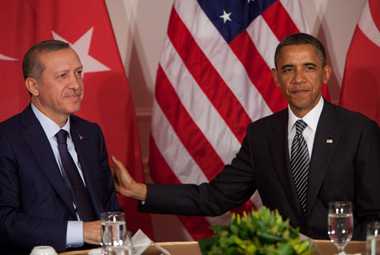
    President Obama has reportedly cozied up, personally, to Erdogan. That’s not an inherently damning thing—not if it moderates Turkey and eases tensions with Israel. But that’s what needs to start happening then.

    via U.S. Should Pressure Turkey to Restorie Israeli Relations – Tablet Magazine.

  • Wikileaks: Turkey planned to ‘burn bridges’ with Israel even before flotilla

    Latest leaked Stratfor email has Erdogan telling Kissinger of ambition to lead the Arab world

    By Aaron Kalman February 29, 2012, 3:34 pm

    Palestinians hold pictures of Tayyip Erdogan in a Gaza protest (photo credit: Abed Rahim Khatib/Flash 90)

    Turkey planned on downgrading relations with Israel even before the May 2010 flotilla incident, documents published Wednesday by WikiLeaks suggest.

    A leaked email from George Friedman, the head of US-based global security analysis company Stratfor, reveals that Turkish Prime Minister Recep Tayyip Erdogan told former US secretary of state Henry Kissinger that at some point he would burn bridges with Israel in favor of a closer relationship with the Islamic world.

    According to the Turkish newspaper Sunday Zaman, Friedman also wrote in the same email that Turkey does not get along with Israel and the United States. An attack by Israel on Iran would provide a good opportunity for Erdogan to finally cut Turkey’s ties with Israel and the US and to expand Turkey’s power, he further wrote.

    The flotilla to Gaza — in which nine Turkish citizens aboard a ship heading to Gaza were killed after attacking the IDF commandos who intercepted it – was not the cause of Turkey’s new strategy but rather the opportunity Erdogan had been waiting for, Army Radio said.

    Also exposed in the latest email exchanges published by Wikileaks were claims Israeli commandos had sabotaged and significantly damaged Iranian nuclear facilities.

    via Wikileaks: Turkey planned to ‘burn bridges’ with Israel even before flotilla | The Times of Israel.

  • Turkey restricts use of airspace by Israeli cargo planes

    Turkey restricts use of airspace by Israeli cargo planes

    In another sign of deteriorating Israel-Turkey ties, most Israeli cargo flights forced to circumvent Turkey, causing financial damage to Israeli aviation sector.

    By Zohar Blumenkrantz Tags: Israel Turkey

    Turkey has restricted the use of its airspace to Israeli cargo flights, marking another step in the deterioration of the bilateral relations between the two nations.

    Turkey has begun banning Israeli flights carrying “dangerous materials” from using its airspace, Haaretz learned on Sunday.

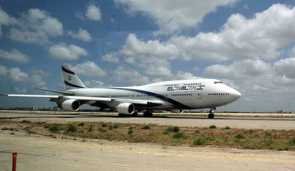
    El Al plane

    Photo by: Nir Keidar

    The ban effects El Al and CAL cargo flights carrying materials designated as “dangerous.” This designation includes most of the cargo flights in and out of Israel, as it doesn’t include only explosives, but also any flight carrying batteries and even perfume, which are flammable and require special storage procedures.

    From now on, Turkey is requiring that it be notified about flights of this type at least 10 days in advance, so that they may review whether or not to approve them.

    The new move is causing substantial financial damage to Israeli airlines, as most Israeli flights, and all those flying to the Far East, regularly use Turkish airspace, and are now being forced to use longer flight routes that circumvent Turkey.

    The two companies have contacted the Civil Aviation Administration of Israel, demanding Israel reciprocate with comparable restrictions on Turkish flights, which currently use Israeli airspace freely.

    An industry executive told Haaretz that this was “a very serious move by Turkey, which must be met by an immediate response from the Civil Aviation Administration of Israel.”

    Ties between Turkey and Israel, once close allies, have been strained in recent years since Turkey harshly criticized Israel’s military offensive in the Gaza Strip in the winter of 2008/2009.

    Relations deteriorated further following a Turkish-sponsored aid flotilla in May 2010, which aimed to bring supplies to Gaza in violation of an Israeli naval blockade. An Israeli navy raid on one of the flotilla ships ended in a violent clash that left nine Turkish activists dead.

    via Turkey restricts use of airspace by Israeli cargo planes – Haaretz Daily Newspaper | Israel News.

  • Turkish student village may herald thaw in ties with Israel

    Turkish student village may herald thaw in ties with Israel

    Turkish, IDF officials attend ceremony to inaugurate village built from 130 prefabricated cabins supplied by Israel as humanitarian aid in wake of 2011 earthquake in Van province.

    By Anshel Pfeffer Tags: Israel Turkey Recep Tayyip Erdogan

    A small event on Monday in eastern Turkey, less than an hour’s drive from the Iranian border, signaled a lull in the hostility that has been characterizing Israel-Turkey relations for over three years.

    Three months after the devastating earthquake in the province of Van which killed over 600 people and left tens of thousands homeless, representatives of Israel’s Defense Ministry joined senior officials in the province to inaugurate a student village, built from 130 prefabricated cabins that were supplied by Israel as humanitarian aid in the wake of the earthquake.

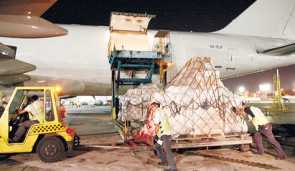
    Workers at Ben-Gurion Airport loading a jumbo jet with supplies for Turkey – Hadar Cohen

    Workers at Ben-Gurion Airport loading a jumbo jet with supplies for Turkey last year, after the devastating earthquake there.

    Photo by: Hadar Cohen

    The Ankara government had originally refused Israel’s offers of aid, immediately following the 7.2 magnitude quake. This was interpreted by many in Israel as yet another direct snub by Prime Minister Recep Tayyip Erdogan, but it was actually an exhibition of Turkish national pride, as the government turned down offers of assistance from other countries as well. The trauma of the 1999 Izmit earthquake that killed tens of thousands and left Turkey helpless had not been forgotten, and the Turks were eager to prove to themselves and the world that they had evolved since then. Indeed, the response of rescue teams from around the country was impressive and within 24 hours thousands of search and rescue workers had arrived in the distant province.

    But once the immediate rescue operations were carried out, Turkey was faced with the mammoth task of preparing alternative housing for tens of thousands of citizens facing a bitter winter outdoors. The international aid policy was reversed and shipments of Israeli prefabricated cabins were dispatched.

    This did not signal a total change in the official Turkish policy regarding Israel, the senior diplomats have yet to return to the embassies in Ankara and Tel-Aviv, Hamas leaders are still honored guests and Turkey is still trying to prevent Israeli participation in NATO exercises, but as one senior defense official said this week, “The fact that the anti-Israel rhetoric is much less voluble and they are not engaged actively right now in trying to cause us harm, is in itself an improvement. The real reason though is not a re-warming in the relationship but the fact that Turkey is much too busy right now monitoring the situation on its border with Syria.”

    Defense Ministry officials who participated in the ceremony on Monday in Van reported that “the atmosphere was very warm and friendly,” and it is hard to believe that such an event would have taken place when relations between the two countries were at rock-bottom last year, following failure to reach an agreement on an apology over the deaths of nine Turkish activists, killed by Israeli naval commandos during the May 2010 raid on the MAVI Marmara ferry en route to Gaza.

    On the other hand, the representatives on both sides were relatively low-level, with the Israeli delegation headed by the head of emergency-preparedness at the Defense Ministry greeted by the deputy governor of Van Province. One reason for the relatively low-profile of the ceremony was its proximity to the Iranian border in a period when Israeli representatives are under threat of terror attacks. One defense source said that “this isn’t the beginning of spring in Turkey but it may be the end of winter.”

    via Turkish student village may herald thaw in ties with Israel – Haaretz Daily Newspaper | Israel News.