Tag: Turkey-Israel

  • Israel and Turkey: How a Close Relationship Disintegrated

    Israel and Turkey: How a Close Relationship Disintegrated

    Israel and Turkey: How a Close Relationship Disintegrated

    Posted by Karl Vick Monday, September 12, 2011 at 1:08 pm

    37 Comments • Related Topics: arab uprisings, Egypt, israel, Palestinian, Turkey
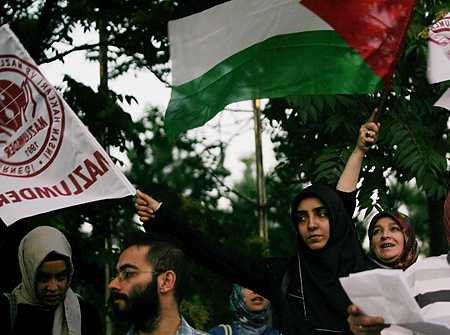
    Pro-Islamic Turks stage a protest to show their solidarity with Palestinians and to protest against Israel on the "Jerusalem Day" outside the Israeli embassy residence in Ankara on August 26, 2011. (Photo: Adem Altan / AFP / Getty Images)
    Pro-Islamic Turks stage a protest to show their solidarity with Palestinians and to protest against Israel on the "Jerusalem Day" outside the Israeli embassy residence in Ankara on August 26, 2011. (Photo: Adem Altan / AFP / Getty Images)

    Many are the challenges facing Israel on the cusp of a new season.

    The Palestinians’ approach to the United Nations for statehood looms. The bid, set for Sept. 21, bears down on Jerusalem with the certainty of an autumn chill.

    The weekend desecration of the Israeli embassy by a Cairean mob was one of those shocks that is not quite a surprise, given the longstanding antipathy of the Egyptian public toward the Jewish State. More telling was the response of the Egypt’s military rulers, who according to Israeli officials went missing during the hours that mobs laid siege as Israeli guards awaited rescue from Egyptian commandos who didn’t show up til 4 a.m. How fraught are relations between Egypt and Israel? On Sunday, an Israeli army vehicle patrolling near the site of the Aug. 18 terror attack near the resort city of Eilat took fire from the Egyptian side of the border. The Israelis did not return fire. Who knew who was shooting at them?

    And yet, the trash talk with Turkey qualifies in many ways as the great crisis of the moment. It’s not just that Turkey’s Prime Minister was threatening to send warships to confront the Israeli naval blockade of the Gaza Strip, calling the 2010 deaths of eight Turks at the hands of Israeli commandos “a casus belli,” or act of war. Nor is it reports that, in response, Israel’s reliably bellicose Foreign Minister, Avigdor Lieberman, mulled aloud about reaching out to the Kurdistan Workers’ Party, or PKK — regarded by the U.S. as a terrorist organization — just to mess with the Turks.

    It’s that, not five years ago, these two countries were not merely allies, but strategic allies, the kind a nation forms a foreign policy around.

    “Israel-Turkey relations were great up to three or four years ago,” recalls Dan Haloutz, a former chief of staff for the Israel Defense Forces. “When I was a commander, I used to fly to Turkey on every military training we had with the Turkish air force, and we had a lot — a lot.”

    The ties were snug, and at least appeared essential. Israel hasn’t a lot of air space, and so was grateful for access to the wide open skies over Anatolia for fighter pilots to log flight hours. In return Turkey bought Israeli tanks, and still relies heavily on Israel’s remote controlled drones to track and attack the very PKK rebels the foreign minister reportedly was looking to cultivate. Away from government, commerce runs at least $3 billion a year between the countries.

    And though 99 percent of Turks are Muslims, Jews have been long welcome in Istanbul, not least since the Spanish Inquisition, when the Ottoman sultan gave refuge to those offered the choice of conversion to Christianity, death or expulsion. Some still speak Ladino, or “Jewish Spanish.” Even after 9/11 Israelis felt safe enough in Turkey to flock to its Mediterranean discount resorts; the departures board at Ben Gurion Airport on a summer day lists charter flight after charter flight to Antalya.

    That abruptly changed on Memorial Day, 2010, when Israel’s version of the SEALs boarded the Mavi Marmara. The converted ferry was en route to supply the besieged residents of Gaza, an act that ostensibly violated Israeli sovereignty. These were the people about whom Turkish Prime Minister Recep Tayyip Erdogan had angrily lectured Israel’s head of state at Davos a year earlier, in the wake of the three-week Israeli military incursion that left 1,400 Palestinians dead.

    After the flotilla fiasco, charters to Turkey were cancelled overnight, and Israel began steering its tourists toward Greece. But things really did appear to be on the mend this summer. In June, Turkey joined Greece in preventing the makings of a new flotilla from leaving their ports to challenge the Gaza blockade anew. Behind the scenes, Israel dispatched diplomats to hammer out language that would salve the wounds to Turkey’s quite extraordinary national pride and finally put the 2010 deaths behind both countries, who said they wanted to be friends again. “Turkey welcomes you,” said the resort ads that began appearing in Israel. In smaller print: “As always.”

    The negotiations, however, ended not in language acceptable to both sides but in the release of a United Nations report on the flotilla that found fault with both sides but simply outraged Turkey. Israel’s ambassador to Ankara was formally expelled to Jerusalem. He was joined the following week by Israel’s ambassador to Egypt, who merely fled. And on Monday, Erdogan arrived with great fanfare in Cairo.

    The days are growing shorter.

    via Israel and Turkey: How a Close Relationship Disintegrated – Global Spin – TIME.com.
  • Israeli-Turks watch relations crumble between their lands

    Israeli-Turks watch relations crumble between their lands

    By GIL SHEFLER

    09/06/2011 14:54

    Photo by: Gil Shefler
    Photo by: Gil Shefler

    Head of Israeli-Turkish center in Yehud says latest deterioration in relations is part of chain that began with Second Lebanon War.

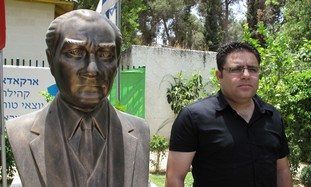
    Eyal Peretz, the head of the Arkadas Association, an Israeli-Turkish cultural institute, has been through this before.

    After the flotilla incident last year, in which nine Turkish activists were killed during an Israeli raid on a boat bound for Gaza, the Israeliborn son of Turkish parents called an urgent meeting at its center in Yehud where he and other Israelis of Turkish descent discussed at length how best to explain the incident to the Turkish public and mend ties between the nations.

    This time around, however, with the unilateral downgrading of relations with Israel announced by Ankara earlier this week, he doesn’t bother.

    “This is just an aftershock,” he said over the phone on Tuesday. “The big shock came after the flotilla.”

    In recent years Peretz has seen his efforts to build bridges between Turkey and Israel crumble due to events out of his control.

    “Relations between Israel and Turkey started to deteriorate during the Second Lebanon War,” he said. “Then there was Operation Cast Lead, then the flotilla, now this.”

    His work has been directly affected. Arkadas ceased organizing Jewish heritage trips to Turkey two years ago due to security concerns and dwindling demand.

    “I’m very angry,” he said.

    “I’ve devoted most of my life as an adult to cultivate ties between the two people and I’ve seen how a warm relationship has been erased in one fell swoop. It’s very painful, very frustrating.”

    Some 77,000 Israeli citizens were born in Turkey, according to the Israel Central Bureau of Statistics. Most, like Peretz’s parents, came to Israel during the 1950s and 1960s and settled in places like Bat Yam and Yehud, where one can still buy Turkish- style burekas and drink ayran in the city center.

    Salim Amado, the former president of the Organization of Turkish Immigrants in Israel who made aliya from Izmir in 1972, said the recent round of confrontations between Israel and his country of birth has taken a personal toll on Israelis of Turkish descent.

    “We’re hurt and angry and sad because we constantly tried to mend ties,” Amado said. “This is a blow to us because we wanted the opposite.”

    At the same time, he said he believed Israel had “nothing to apologize for” and that it “conducted itself very well and hasn’t made any provocations or brought up issues sensitive to Turkey.”

    Turkey’s Jewish community, which according to the World Jewish Congress numbers 23,000, has remained noticeably silent. Several attempts by The Jerusalem Post to interview leaders of the community failed. Amado, who is in close contact with friends and family in Turkey, explained their reluctance to speak to the press.

    “They are Turkish citizens,” explained Amado. “No matter how often the government says their problem is with the Netanyahu-Lieberman government, not Israelis or Jews in general, the Turkish people don’t always understand, so they burn Israeli flags and there is massive security around Jewish institutions.

    Let’s not forget the bombing of a synagogue in Istanbul in 2003 and the murder of a dentist in Turkey just because he was Jewish. If someone in the Jewish community were to speak up and say ‘our situation is not good’ who knows where he’d find himself the following day?” Ankara’s decision to expel Israel’s ambassador from the country was not the first time a Turkish government had taken such action. Alon Liel, a retired Israeli diplomat and expert on Turkey, remembers the last time Israel’s ambassador to Ankara was asked to leave 30 years ago during the First Lebanon War.

    “Back then I was the second diplomat sent by the Foreign Ministry to conduct talks in Turkey and I saw how it affected the Jewish community in Turkey,” Liel said. “Usually, when relations with Israel are good the social state of the community – not necessarily the economic one – improves: The synagogues are open, the schools are open.

    But when there’s tension the community goes underground.”

    Meanwhile, Israelis and Turks are scheduled to clash again on September 15 – this time on the soccer field – when Maccabi Tel Aviv plays Beskitas in Istanbul.

    “I don’t recommend that they go,” Liel said. “There’s a really tense atmosphere right now and there’s no reason to put soccer players at risk.”

    Liel’s concern is not without reason. In 2009, at the height of Israel’s operation in Gaza, Israeli basketball team Bnei Hasharon was attacked by a Turkish mob chanting “death to Jews” during an away game in Ankara. The players took refuge in the changing room and the game was canceled.

    Despite current tensions all those interviewed hoped relations between the countries would quickly improve.

    Amado spoke fondly of his hometown Izmir where his father and brother are buried and which he visits often.

    “The bottom line is we have no animosity toward Turkey,” he said. “No Jew in Israel from Turkey hates Turkey.

    There’s just no such thing.”

    via Israeli-Turks watch relations crumble be… JPost – National News.

  • Turkey Suspends Defense Trade With Israel

    Turkey Suspends Defense Trade With Israel

    Turkey Suspends Defense Trade With Israel

    Erdogan Says More Penalties Coming, As U.S. Seeks to ‘De-Escalate’ Crisis

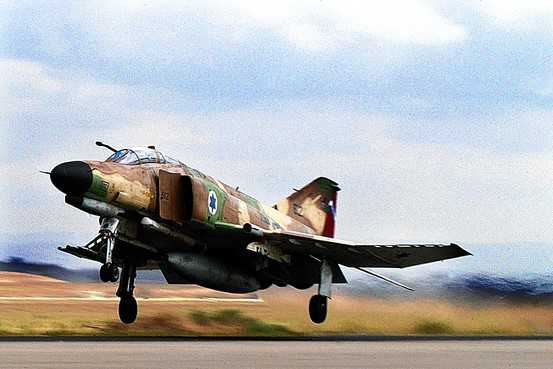
    Agence France-Presse / Getty Images  F-4 Phantom jet (Israeli-flagged version)
    Agence France-Presse / Getty Images F-4 Phantom jet (Israeli-flagged version)

    Agence France-Presse / Getty Images

    F-4 Phantom jet (Israeli-flagged version)

    ISTANBUL—Turkey’s Prime Minister Recep Tayyip Erdogan said Tuesday that his country was suspending defense trade with Israel and that Turkish naval vessels would be seen in the eastern Mediterranean more often, as Ankara ratcheted up pressure in a rising dispute with its former ally.

    Prime Minister Recep Tayyip Erdogan, seen arriving for a ceremony in Ankara on Tuesday, said Turkey was preparing additional sanctions against Israel.

    Speaking to reporters in Ankara after giving a speech at the Ankara Chamber of Commerce, Mr. Erdogan said the suspension of military agreements with Israel, which Turkey had previously announced, would include trade in defense goods.

    “Trade relations, military relations, defense industry—these we will suspend. These will be completely frozen and that process will be followed also by very different sanctions,” he said.

    He said the measures still to come would be a “Plan C” to the “Plan B” already announced.

    Turkey said Friday it was downgrading diplomatic relations with the Jewish state in response to Israel’s continued refusal to apologize for the killing by Israeli commandos of eight Turkish citizens and one Turkish-American on board the Mavi Marmara aid ship, as it sought to break Israel’s blockade of the Gaza Strip in May last year.

    As the rift deepens between Israel and Turkey, two of the U.S.’ most important Middle East allies, the Obama administration said Tuesday it was moving to “defuse” the crisis.

    “We are concerned about the state of the relationship,” State Department spokeswoman Victoria Nuland told reporters Tuesday. “We have over many months tried to work with our ally Turkey and our ally Israel to strengthen and improve their bilateral relationship. We still believe that getting back to a good partnership between them is in each of their interests, and we will continue to work for that goal with both of them.”

    Turkey has announced no general trade sanctions against Israel. A spokesman for Mr. Erdogan said the prime minister had been referring in his remarks Tuesday only to trade in defense goods, and not to trade in general. On Monday, Turkey’s economy minister had said there would be no broader trade sanctions “for now.”

    The office of Israeli Prime Minister Benjamin Netanyahu declined to comment Tuesday. Other Israeli officials contacted said privately that they don’t wish to engage Mr. Erdogan in a public debate so as not to be seen as further aggravating political ties.

    The Way They Were

    Some key sales by Israel to Turkey during times of strong military ties:

    1995: Upgrade of 54 U.S.-made F-4 Phantom jets with new avionics systems; $630 million.

    1997: Upgrade of 48 U.S.-made F-5 light fighter jets with new avionics systems; $75 million.

    2002: Upgrade of 170 U.S.-made M-60 A1 battle tanks to refurbish engines and fit larger 120mm canons, fire-control systems and advanced armor protection; $668 million.

    2005: Agreement for sale of 10 Heron UAVs, unmanned aerial vehicles that can fly for 24 hours at up to 25,000 feet. Delivered in 2010; $180 million.

    *Note: Figures are approximate, as reported at the time the deal was signed.

    Source: WSJ Research

    Zalman Shoval, a former Israeli ambassador to the U.S. who works with the Israeli government, called Mr. Erdogan’s comments part of Turkey’s “childish” reaction to the United Nations report released last week that stated the Gaza blockade was justified but that Israel’s use of force was “excessive and unreasonable.”

    Turkey and Israel had nearly $3.5 billion in overall trade in 2010, according to official Turkish figures, a record reached during a sharp downturn in the political relationship. Moreover, trade rose more than 25% in the first half of this year, compared with the same period last year, Israeli and Turkish figures show.

    Separate data for defense-related trade weren’t available. Past major deals, however, included an agreement worth an estimated $600 million to $700 million under which Israel modernized Turkey’s aging Phantom F-4 jets, and a $668 million pact to upgrade its M-60 tanks.

    Last year, Turkey took delivery of 10 Israeli-built Heron unmanned aerial vehicles, a $183 million deal.

    Officials and analysts say those contracts are complete and no new large agreements have been signed for several years as political relations soured. Now the main potential loss is the purchase of spare parts from Israel, should Turkey strictly enforce its own embargo. Turkey’s defense exports to Israel tend to be lower-end equipment such as uniforms, analysts said.

    A report released last month by Tepav, an Ankara-based think tank, said past Turkish threats to cut off trade with Israel haven’t hit trade as a whole, which has seen a healthy expansion. Most of the business is in the private sector and the two economies complement each other, the report said. Turkey is strong in construction, chemicals and textiles, while Israel offers software and other technology products from industries that are weak elsewhere in the region.

    “Business has become an area immune from political upheavals,” the report said. “The threats of canceling large infrastructure projects and other joint ventures have not gone beyond words. As a matter of fact, most of the projects involve private companies. Furthermore, boycotting of member nations is against OECD rules.”

    Turkey and Israel are members of the Organization for Economic Cooperation and Development.

    Responding to a question about reports that Turkey would begin patrolling waters off Israel and whether that risked conflict, Prime Minister Erdogan said Turkey had a right to do so. “The eastern Mediterranean is not a foreign place to us,” he said. “Of course, our vessels will be seen from now on very often in these waters.”

    He also confirmed he would be traveling to Egypt soon, and said he “might” visit Gaza. A spokesman for Mr. Erdogan said the visit to Cairo would take place between Sept. 12 and 14.

    —Joshua Mitnik in Tel Aviv contributed to this aritcle.

    Write to Marc Champion at [email protected]

  • Diplomatic Strains Grow Between Turkey and Israel

    Diplomatic Strains Grow Between Turkey and Israel

    By ETHAN BRONNER and SEBNEM ARSU

    Published: September 5, 2011

    JERUSALEM — Tensions between Israel and Turkey mounted further on Monday, as Turkish officials ordered senior Israeli diplomats to leave the country by midweek and Israeli passengers arriving at the Istanbul airport were taken aside and questioned for 90 minutes by officials. Turkish officials said that Turkish tourists were treated the same way at the Tel Aviv airport last week.

    Times Topic: Gaza Strip

    The fraying relationship — once Israel’s strongest with a Muslim country, with hundreds of thousands of visitors traveling in each direction — unwound further last week when Israel said it would not apologize for the deaths of nine Turks and an American of Turkish origin last year on a flotilla seeking to break Israel’s naval blockade of Gaza.

    A United Nations report on the event called Israel’s sea blockade a legal and legitimate means of stopping arms from reaching militant Palestinian groups in Gaza, and said Israeli commandos were attacked when they boarded a ship in the flotilla. But the report said the Israeli forces reacted to the attack in a way that was both excessive and unreasonable. Efforts to negotiate an Israeli apology and compensation for the victims failed, and Turkey announced a series of tough measures against Israel, including a freeze on military contracts and the expulsion of the Israeli ambassador and his deputy.

    Turkey has also threatened to seek international legal measures against Israel’s Gaza blockade and use its navy in the eastern Mediterranean to protect its actions there.

    “As a littoral state which has the longest coastline in the eastern Mediterranean, Turkey will take whatever measures it deems necessary in order to ensure the freedom of navigation in the eastern Mediterranean,” the foreign minister, Ahmet Davutoglu, said in Ankara.

    Ministry officials declined to give specifics. Turkish news reports suggested that the measures might include naval escorts for any aid boats or flotillas destined for Gaza in the future.

    Alon Liel, a former Israeli ambassador to Turkey, said in an interview that Turkey might be thinking of interfering with future Israeli gas exports to Cyprus by placing its navy in between. He said that Israel exports about $2 billion in goods a year to Turkey, and that about half of that was oil and chemical products.

    Mr. Liel, who is no longer in government, was critical of Israel’s actions in this affair, saying relations with Turkey could have been saved. He now worries that Egypt and Jordan will come under domestic pressure to expel Israeli ambassadors, especially as uprisings have spread.

    Prime Minister Recep Tayyip Erdogan of Turkey is planning to visit Egypt next week and has raised the possibility of going from there to Gaza, which would be a direct challenge to Israel. But most analysts predicted that he would drop the idea of visiting Gaza, which is controlled by the militant group Hamas, to avoid alienating Turkey’s American and other Western allies.

    Some in the Israeli government urged Prime Minister Benjamin Netanyahu to offer the apology to salvage relations with Turkey. But he and most of those around him believe that Turkey is uninterested in such a move. Many analysts in both countries said the relationship would not improve soon.

    “No matter what anyone says about the continuation of their historical alliance, the relationship crossed the Rubicon — the red line,” said Cengiz Candar, a Turkish journalist and analyst. “Turkey now claims the leadership of the Arab world that Egypt once held, and therefore it is in competition with Iran. It is in a standoff with Israel in a display of power.”

    Ethan Bronner reported from Jerusalem, and Sebnem Arsu from Istanbul.

    via Diplomatic Strains Grow Between Turkey and Israel – NYTimes.com.

  • Istanbul Calling: Dead in the Water

    Istanbul Calling: Dead in the Water

    Dead in the Water

    I plan to post a bit more about the complete and troubling breakdown of Turkey-Israel relations, but for now I’m posting a bit from an article I recently wrote about the subject for Foreign Policy’s website. From the article:

    The world owes a debt of thanks to that anonymous diplomat who leaked the long-delayed U.N. report on the 2010 Mavi Marmara incident — the ill-fated Israeli commando raid on the Gaza-bound flotilla that resulted in the deaths of nine Turks — to the New York Times, thus single-handedly ending months of endless speculation and finally putting the floundering Turkey-Israel relationship out of its misery.

    The report was issued by a panel headed by Geoffrey Palmer, the former prime minister of New Zealand, who was aided by Álvaro Uribe, the former president of Colombia, along with one Turkish and one Israeli representative. While concluding that Israel’s military takeover of the Mavi Marmara was “excessive and unreasonable,” the report also decided that Israel’s naval blockade of Gaza was legal and based on legitimate security concerns.

    With the report’s leak and Israel’s continuing refusal to meet Turkey’s demand for an apology, Ankara deployed its long-threatened “Plan B” on Friday, Sept. 2 — expelling the Israeli ambassador and downgrading diplomatic relations, suspending military agreements, and promising to help the families of flotilla victims pursue Israel in international courts. In a Friday news conference, Turkish Foreign Minister Ahmet Davutoglu warned, somewhat ominously, that Turkey would “take whatever measures it deems necessary in order to ensure the freedom of navigation in the Eastern Mediterranean.”

    Turkey’s moves against Israel cap off what has been a steady deterioration between the two former allies — one that started not with the Mavi Marmara affair but with Israel’s attack on Gaza, which began in December 2008. The most recent steps taken by Ankara are therefore not a blip in Turkey-Israel relations, but represent what is likely to be a long-term freeze, one that could very well lead to further problems between the two countries in the near future.

    At the heart of Friday’s breakdown of Turkey-Israel relations — and what makes any rapprochement between the two countries extremely unlikely at present — is an increasingly divergent view of the Middle East and each country’s role in the region. For Turkey, Israel’s continuing occupation of the Palestinian territories (particularly Gaza) stand as the primary roadblock toward creating the kind of more harmonious regional order that Ankara envisions. For Israel, Turkey’s outreach to Hamas in Gaza, President Bashar al-Assad in Syria (at least before his recent crackdown), and the Iranian regime are all proof that the moderate Islamist Justice and Development Party (AKP) government is quickly on its way to joining the regional “axis of resistance” against it.

    The U.N. report on the Gaza-bound flotilla incident is just the latest example of how Turkey and Israel now fail to see eye to eye on the region’s most important questions. While Israel holds that it is enforcing a legal naval blockade of the Gaza Strip, Turkey sees a country that treats the Mediterranean as “a lake of its own,” as the Turkish ambassador to Washington tweeted on Friday. Where Turkey sees the Mavi Marmara as a ship rushing desperately needed aid to Gaza, Israel sees a craft filled with violent Hamas supporters.

    The response to the report continued along these lines. “The report is a professional, serious, and extensive document,” a senior source in Prime Minister Benjamin Netanyahu’s office told the Israeli media. Turkish President Abdullah Gul, on the other hand, declared, “That report is actually null and void for Turkey.”

    The full article can be found here. Lots of previous posts tracking the failing of the Turkey-Israel relationship can be found here.

    via Istanbul Calling: Dead in the Water.

  • Dozens of Israelis questioned at length upon landing in Turkey

    Dozens of Israelis questioned at length upon landing in Turkey

    Israeli passengers authorities at Istanbul airport humiliated them and made them undress to their underwear; Officials in Ankara say Turkish tourists subjected to same treatment evening before at Israel airport.

    By Barak Ravid

    Some 40 Israelis on board a Turkish Airlines flight from Tel Aviv to Istanbul were separated from the rest of the passengers upon arrival in Turkey on Monday and were questioned at length by Turkish police, marking a highly unusual event against the backdrop of a deepening diplomatic crisis between Turkey and Israel.

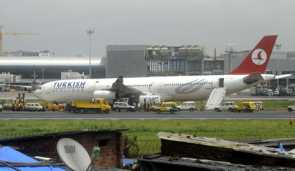
    Turkish airlines plane – AP

    Turkish Airlines plane

    Photo by: AP

    What’s next for Israel and Turkey after their trade of accusations over airport humiliation? Visit Haaretz.com on Facebook and answer our poll.

    Turkish police took the Israelis’ passports upon arrival and questioned each person individually in an investigations room. Only after prolonged questioning did the Israelis receive their passports back and were freed to go.

    Several passengers on a different flight that passed through Turkey on its way to Israel from Thailand told Army Radio that they were also treated in a humiliating manner at the Istanbul airport.

    “They made me undress to only my underwear. A woman officer did it, but she wasn’t particularly gentle. It reminded me of stories my grandma told me of her past,” Alina, one of the passengers recounted.

    “After the examination, she threw my clothes to the side and told me to get dressed. I was escorted out of the room and then we were told we cannot sit down – they made us stand in the corner without allowing us to use the restroom. We did not have our passports and we had no idea what is happening.

    Foreign Ministry officials said in response that the event is highly unusual and serious, and said that many of the Israeli passengers called the Foreign Ministry and said they felt fear during the questioning. The Foreign Ministry turned to the Turkish Foreign Ministry and demanded an explanation, however the Turks said they were not familiar with the incident.

    “At this time it looks like a local initiative of police in Istanbul, but we are still looking in to the event and mostly trying to understand what was the character of the investigation,” said a Foreign Ministry official.

    Officials in Ankara said in response that Turkish tourists were harassed in Israel’s Ben-Gurion International Airport on Sunday evening, hours before the incident at Istanbul’s airport the next morning.

    A group of Turkish tourists, who arrived in Israel for the holiday of Ramadan and visited Jerusalem, said that when they arrived at the airport, Israeli security personnel delayed them for several hours and ask them for personal details, including their phone numbers, email addresses, and marital status.

    “They checked our luggage numerous times and later conducted a full body search. They made us undress to our underwear and also patted down all the women in separate rooms – only the Turkish passengers underwent such an examination,” said one of the tourists.

    According to the passengers, their flight was delayed due to the prolonged examination of the Turkish tourists’ luggage, and the group’s guide said that Turkish tourists were treated differently by Israeli security officials than the other tourists.

    The Israel Airports Authority said in response that they are unaware of any out of the ordinary security checks that were carried out on the Turkish passenger

    The recent crisis in Israel-Turkey relations deepened after the UN-commissioned report on the 2010 Gaza flotilla raid was leaked to the New York Times, foiling a last-ditch effort to patch up relations between the two countries. Turkey then announced a series of measures against Israel, beginning with the expulsion of the Israeli ambassador and the downgrading of bilateral relations to the level of second secretary.

    via Dozens of Israelis questioned at length upon landing in Turkey – Haaretz Daily Newspaper | Israel News.