Blog

  • Istanbul could become regular WEF host venue

    Istanbul could become regular WEF host venue

    ISTANBUL – Hürriyet Daily News

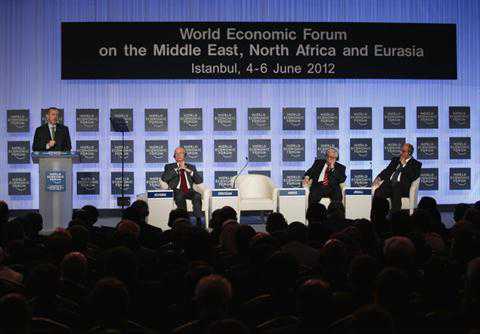
    WEF President Klaus Schwab asks if the World Econonic Forum might be held in Istanbul on a regular basis. Prime Minister Erdoğan responds positively saying that Turkey would be pleased to host the event which draws investors and leaders.
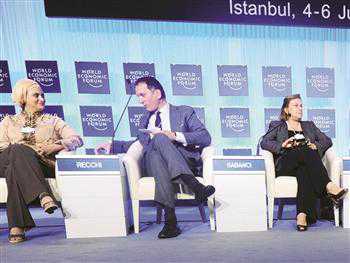
    Sabancı Holding Chairwoman Güler Sabancı says no one in Turkey should say ‘we’ve done our job and now it’s over,’ in her closing speech at the WEF. AA photo

    Istanbul could become the yearly host of World Economic Forum (WEF) meetings, EU Minister Egemen Bağış has said amid an improvement of relations between the prime minister and Davos officials.

    Every one or two years

    “[WEF President Klaus Schwab] said he wanted to make the WEF in Istanbul a regular event and asked whether this would be appropriate and whether or not we would allow this,” Bağış told daily Hürriyet on June 6 at the end of the three-day event, noting that the WEF head was considering whether to hold the forum in the city every one or two years.

    “Our prime minister said he would be very pleased to host an event that draws the world’s most important investors and leaders.”

    Bağış also said Schwab had invited Prime Minister Recep Tayyip Erdoğan to return to the regular forum in Davos in 2013 and that the Turkish leader would consider the offer.

    Bağış said such forums fostered investment in Turkey and that such investments spurred employment.

    “Foreign businessmen are looking for an excuse to come to Istanbul.”

    In his closing comments at WEF, Bağış said Turkey had become a model not only for the region, including Syria, Libya, Tunisia and Egypt, but for the West as well, including Europe and Russia. “Being a source of inspiration strengthens Turkey’s position … We hope to repeat the WEF in Istanbul. Welcome to Davos.”

    Turkey to be shining example

    Güler Sabancı, the chairwoman of one of Turkey’s largest family holdings, Sabancı Holding, echoed Bağış’s comments in her closing speech, saying she hoped Turkey would be a shining example for the region.

    The chair, however, added that no one in Turkey should say “we’ve done our job and now it’s over.” Instead, she said Turkey needed to continue along its development path while at the same time promoting democracy, human rights and closing the gender inequality gap.

    Erdoğan has not visited Davos since 2009, when he stormed out due to an argument with Israeli President Shimon Peres.

    June/08/2012

    via ECONOMICS – Istanbul could become regular WEF host venue.
  • Istanbul suits Austrian in Extreme series

    Istanbul suits Austrian in Extreme series

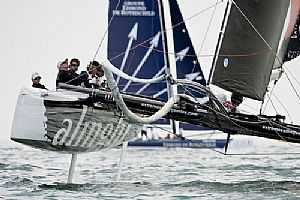
    Roman Hagara and his Austrian Red Bull Sailing Team continued the impressive form they showed at Act 2 Qingdao on the opening day of the Extreme Sailing Series in Istanbul today, finishing the day in pole position.

    The iconic Turkish city kept the sailors on their toes, with the wind ranging from 2 knots to 13 knots as the eight strong fleet began their battle for supremacy at Act 3.

    Light winds dominated the opening races in Istanbul, dying away to just 2 knots by the end of race three. The teams waited patiently in the scorching sunshine for more breeze and their perseverance paid dividends as the breeze kicked in picking up to 13 knots and a further three races were staged.

    Roman Hagara’s crew, which includes two Austrians, an Englishman, Frenchman and an Australian, making for interesting communication challenges. It look like they are getting used to that and podium positions, though, after finishing Act 2 in second place, today.

    Hagara’s crew finished four out of six races in a top-three position, enough to give them a five point cushion over The Wave, Muscat at the top of the leaderboard.

    “The wind picked up and in the end it was really good racing – I mean the best racing we had so far. It was really good communication on-board,” Hagara enthused.

    “Things are coming together on the boat, the crew is making jokes and everybody is laughing. All the team is happy and there were a lot of smiles today.”

    Groupe Edmond de Rothschild’s all-French team and the all-British team on GAC Pindar challenged at the front of the fleet a couple of times, with the latter securing a win in race three. However, both teams they found themselves buried in the middle of the fleet all too frequently, and finished the day in third and fourth respectively.

    GAC Pindar’s trimmer Mark Bulkeley summed up the team’s day. “It was a day of two halves for us. We went well in the light wind races and struggled when the breeze built. I think we have to think about our set up for the windier races and how we transition between the two conditions.”

    Act 1 winner, Morgan Larson, and his team on Oman Air looked like the odds were in their favour as racing began, with two consecutive wins, but the team’s dominance on the leaderboard was short-lived and they finish the day in fifth.

    In contrast, the new team on the circuit, SAP Extreme Sailing Team co-skippered by America’s Cup compatriots Jes Gram-Hansen and Rasmus Kostner looked to be finding their feet amongst the fleet today, sailing consistently to leave them just one point behind Oman Air in sixth place.

    Perhaps the most impressive performance of the day came from Alinghi, under the guidance of offshore sailing legend and Vendée Globe winner, Alain Gautier, in his Extreme 40 debut.

    Historically, new skippers to the series don’t find it easy to match the pace of the more seasoned Extreme 40 sailors, and it looked like this would be the case for Gautier, who struggled to get out of the blocks in the first two races.

    Never sell a good sailor short. By race three, Gautier and crew had turned things around and went on to secure three podium finishes by the end of racing, leaving them very much in the mix just one point behind SAP Extreme Sailing Team at the end of day one.

    “The level of the fleet around us is very high, it´s tough and we are learning at each race. In this kind of racing you have to be patient and to avoid contact,” Gauter commented. “We need to progress slowly but surely. We know we can race well and the key is to try to stay closest to the leader.”

    Tomorrow, Act 3 of the Extreme Sailing Series opens to the public of Istanbul, as the racing moves closer to shore in ‘stadium’ mode and tighter race courses. The live video streaming including running commentary goes live online from 1400CET.

    Standings after Day 1, 6 races (07.6.12)

    1st Red Bull Sailing Team (AUT) Roman Hagara/Hans Peter Steinacher/Matthew Adams/Graeme Spence, Pierre Le Clainche 40 points

    2nd The Wave, Muscat (OMA) Leigh McMillan/Ed Smyth/Pete Greenhalgh/Hashim Al Rashdi/Rachel Williamson 35 points

    3rd Groupe Edmond de Rothschild (FRA) Pierre Pennec/Christophe Espagnon/Hervé Cunningham/Bernard Labro/Romain Petit 28 points

    4th GAC Pindar (GBR) Ian Williams/Nick Rogers/ Mark Bulkeley/Adam Piggot/Andrew Walsh 26 points

    5th Oman Air (OMA) Morgan Larson/Will Howden/Charlie Ogletree/Nasser Al Mashari/Max Bulger 25 points

    6th SAP Extreme Sailing Team (DEN) Jes Gram-Hansen/Rasmus Kostner/Pete Cumming/Mikkel Rossberg/Jonas Hviid 24 points

    7th Alinghi (SUI), Alain Gautier/Jean-Christophe Mourniac/Christophe Lassegue/Morgane Gautie/François Verdier 23 points

    8th ZouLou (FRA) Erik Maris/Philippe Mourniac/Jean-Sébastien Ponce/Bruno Jeanjean/Patrick Aucour 15 points

    via Istanbul suits Austrian in Extreme series – Australian Sailing News – YACHTe.com.au.

  • Istanbul Through The Lens Of Mustafa Seven

    Istanbul Through The Lens Of Mustafa Seven

    Pablo Picasso reportedly once said, “All children are artists. The problem is how to remain an artist once he grows up.”

    With this in mind, we are pleased to announced a new feature of HuffPost Arts: Instagram Spotlight. We just love the youth-centric iPhone feature that turns amateurs into artists with the click of a button. Instagram reminds us that even those who aren’t working artists still have a vision worth sharing, and HuffPost Arts wants to provide a platform to these photographers who are moved by beautiful moments. We will be featuring our favorite gems on the site along with their stories and inspirations, and will continue to scour the web for budding photographers. If you think this could be you, keep being creative and we will find you!

    This week we are featuring Mustafa Seven, a professional photographer whose raw photographs of different walks of life in Istanbul drive us wild. Scroll down for a slideshow.

    16 mustafa seven 2005 istanbul

    HP: Tell us about where are you from and what is your ‘day job’.

    MS: I was born in Sivas, Turkey in 1974, and I have been living in Istanbul since I was two years old. Today I am working as the photography editor for Aksam newspaper besides running my own photography studio, G.I.F. I am a professional photographer whose greatest hobby is documentary photography.

    HP: When did you start using your phone as a camera?

    MS: After working with professional cameras for years, I underestimated taking photos with a camera phone. But when I got my first iPhone in 2009, it became indispensable for me. In the beginning, my friends who are working as professional photographers [made fun of] the shots that are taken with camera phone. After a while they all became Instagram users, because they were eyewitnesses of my Instagram story.

    HP: Has there ever been a moment you were especially happy to have had your camera phone handy?

    MS: I started to feel safer with my camera phone. When you carry your 3-4 kilo-camera bag during the day, you generally don’t want to step out with it because you don’t have enough energy. The freedom to take shots with my camera phone gave me a clear conscience — I knew that I am not going to miss any chance for a great shot! Once I was taking pictures of a famous Turkish director for the newspaper I am working for. My camera was broken down and I didn’t have a chance to meet him again, so I took his pictures with my iPhone. The result was satisfying!

    18 mustafa seven 1999 izmit

    HP: Who are your favorite people you follow on Instagram?

    MS: civilking, audiosoup, aditzt, eros_sana, raygun, ekalex, auroramichavila, konstruktivist, fashion, richnyc, sionfullana, thomas_k, jesusege, dariszcahyadi, darkolabor, teenbrogg.

    HP: Who are your favorite photographers?

    MS: Henri Cartier Bresson, Sebastiao Salgado, Ara Güler, and Yousuf Karsh.

    HP: What is your favorite spot to find inspiration?

    MS: The historic peninsula of Istanbul is my favorite place. You can see the history forming people’s life styles in this part of the city. Old buildings, cats, dogs, people… I find inspiration there.

    via Instagram Spotlight: Istanbul Through The Lens Of Mustafa Seven (PHOTOS).

    more: https://www.huffpost.com/entry/instagram-spotlight_n_1572180


  • Erdogan keynotes at WEF hosted in Istanbul

    Erdogan keynotes at WEF hosted in Istanbul

    By Christopher Torchia

    Associated Press

    Erdogan described Turkey as “an island of stability” in a region facing difficulties.

    ISTANBUL: Turkey’s leader Tuesday delivered a keynote speech at a regional meeting of the World Economic Forum, more than three years after he stormed off the stage at a previous meeting in Davos, Switzerland during a debate with the Israeli president – an event that signaled the rising profile of Turkey in its turbulent region.

    Prime Minister Recep Tayyip Erdogan opened the conference in Istanbul with an address that highlighted Turkey’s development in the past decade, but also touched on the Israeli-Palestinian conflict and the way in which he said it had destabilized the region. Without mentioning Israel –onceafirmallyofTurkey– he said Palestinians suffered bombardment and mass killing and were kept in “the largest open-air prison in the world.”

    As a result, Erdogan said, “The whole region is faced with a lot of anger being pumped into it.”

    Palestinian President Mahmoud Abbas followed Erdogan at the podium, sharply criticizing Israel for the deadlocked peace process, and touting his administration’s efforts to lay the economic and legal foundations for a modern state.

    “Today we are neither at war nor at peace [with Israel],” Abbas said. “This condition could extend for decades.”

    The forum holds its main, annual meeting in Davos. Erdogan said he would not return there after the 2009 dispute with Israeli President Shimon Peres, who had passionately defended a three-week offensive against Hamas militants, launched in reaction to eight years of rocket fire aimed at Israel.

    In his speech, Erdogan described Turkey, which has forced the military out of politics but still faces internal challenges such as a Kurdish rebellion, as “an island of stability in a region that is surrounded by major difficulties.”

    In introductory remarks, Klaus Schwab, the head of the World Economic Forum, placed special emphasis on the Israeli-Palestinian conflict, at a time when the world is concerned about the possibility another global economic downturn.

    “It’s a special pleasure to welcome you today,” he said to Erdogan before turning to the Palestinian question. “We are all very eager to hear from you. Is there any hope that this problem will be solved soon?”

    Peres did not attend the Istanbul meeting. Borge Brende, a managing director of the World Economic Forum, said he was pleased to see Israeli business executives and analysts at the meeting, which is aimed at, according to a slogan, “improving the state of the world.”

    “When it comes to interaction on head of government, or head of state level between Israel and Turkey, I think this is something that has to be solved and dealt with bilaterally between the two countries,” he said.

    A version of this article appeared in the print edition of The Daily Star on June 06, 2012, on page 6.

    via THE DAILY STAR :: Business :: International :: Erdogan keynotes at WEF hosted in Istanbul.

  • When Twitter Sleeps: Comparing NYC, Tokyo, Istanbul, and São Paulo

    When Twitter Sleeps: Comparing NYC, Tokyo, Istanbul, and São Paulo

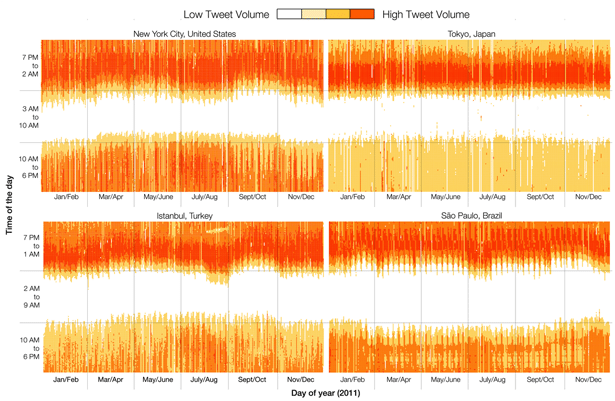
    A visualization of Twitter activity shows cultural differences in when people go to bed, when they rise, and whether they tweet at work.

    New York may claim to be the city that never sleeps, and while that may be a bit of an exaggeration, new data from Twitter shows that it has a pretty good claim to the mantle The City That Sleeps the Least.

    The graphic above shows tweet volume a five-minute increments throughout 2011 for New York City, Tokyo, Istanbul, and Sao Paulo, painting a picture of when people around the world are tweeting, sleeping, and waking up. A few noticeable trends:

    People in New York, Istanbul, and Sao Paulo all stay up later in the summer. New Yorkers seem to also stay up later in the winter. Those in Tokyo are the most consistent regardless of season.

    Japanese twitter users don’t tweet during the work day.

    New Yorkers have the least variation between tweet volume during work and at night.

    Paulistas sleep later. It also appears they go to bed earlier, in contravention of their reputation as night-life lovers. Also possible: They don’t tweet as much when they’re out having a good time. (Editor’s note: This is clearly implausible?)

    The image comes from a paper by Twitter analysts Jimmy Lin and Miguel Rios, and was presented earlier today at a workshop on social-media visualization in Dublin.

    via Technology – Rebecca J. Rosen – When Twitter Sleeps: Comparing NYC, Tokyo, Istanbul, and São Paulo – The Atlantic.

  • BBC bodyguard admits to burning body of tsunami baby…likening it to a ‘blocked toilet’

    BBC bodyguard admits to burning body of tsunami baby…likening it to a ‘blocked toilet’

    • Journalist Ben Brown’s security chief said corpse left on BBC HQ doorstep posed same danger as a ‘blocked toilet’
    • TV executives accused of cover-up after trying to halt publication of book that exposed incinerationA BBC bodyguard has confessed to burning the body of a baby on a funeral pyre made of rubbish after the 2004 tsunami – because he considered it a threat to the health of his reporting team.
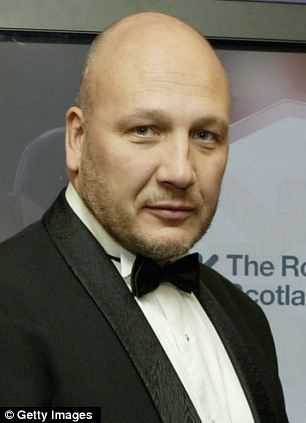
      Craig Summers, 52, discovered the body outside the house in Banda Aceh, Indonesia, where he was staying with journalist Ben Brown and his production team as they covered the aftermath of the disaster.
      But instead of reporting it to the local authorities, he burned the body of the boy and swore two other witnesses, including BBC producer Peter Leng, to secrecy. There is no suggestion that Mr Brown knew about the incident.
      Writing in his new book Bodyguard: My Life On The Frontline, Summers compared the body to an obstacle such as a ‘blocked toilet’.
      ‘I pride myself in my work,’ writes Summers, now head of security at Sky TV. ‘Nobody got sick on that trip. Nobody even came close to diarrhoea and I knew that I had done my job keeping everyone else healthy. I ran a tight ship ensuring everyone always washed their hands with wet wipes.
      ‘The baby was an obstacle to their health; the next day it would be a blocked toilet. I hadn’t known it was coming but I had to deal with it and I would do the same again.’
      The revelation comes four months after the BBC’s Head of Newsgathering, Fran Unsworth, and Head of Safety, ex-Army officer Paul Greeves, tried to persuade Summers not to publish the biography.
      According to the bodyguard, they summoned him to a meeting in January after he sent them a draft copy of the manuscript, and asked him to abandon the project.
      It is not known what they objected to within the book – although the confession does not paint the Corporation in a good light.
      Summers, a former commando, served with British Forces in the Falklands and Balkans before being appointed the Corporation’s safety and security adviser in 2001, working with the High Risk Team – which ‘provides advice to programme-makers deploying to hostile or dangerous environments’.He spent ten years accompanying journalists to war zones and scenes of natural disaster, working with reporters including John Simpson and Nicholas Witchell. He was with Simpson, in Iraq in 2003, when their vehicle was blown up and their translator killed.
      It was also his brief to look after celebrities – including, on occasion, Sir Ranulph Fiennes, Gary Lineker and Matthew Pinsent. Summers, who also carried out undercover operations for the BBC, left the Corporation last July, after accepting redundancy, and now works as Sky’s Broadcast Security Operations Manager.
      It was on January 7, 2005, 12 days after the tsunami, when he woke at dawn to find the body of the baby boy, aged between one and two, with matted black hair and closed eyes, lying on the doorstep.
      ‘There had to be a reason for this,’ he writes in his book. ‘This wasn’t random or down to chance – someone had specifically left this baby at what they knew to be the BBC house.’
      Yet instead of informing anybody in the house, or contacting the local authorities, Summers took matters into his own hands. ‘I picked it up with my bare hands and looked around,’ he added.

      ‘Nobody was watching. I walked over to the rubbish, which night after night would pile high in the streets waiting for the authorities to burn the next day by the side of the roads to stave off the threat of rats. Removing some cardboard from the tip, I covered the baby with it.
      ‘I heard a voice say, “What’s that Craig?” It was Bob, the Australian paramedic who was staying next door to us. I walked towards him. He didn’t need me to answer. “What are you going to do?” he asked.
      ‘My response was instant and came from the mouth of a soldier in the zone and on autopilot. My sole priority was to protect the BBC crew from infection.
      ‘ “I’m going to burn it,” I answered. “That’s the best thing to do.” ’
      Bob went to get some petrol from a jerrycan as Summers laid the baby on a box in the centre of the rubbish. The BBC bodyguard then soaked the body in petrol and set fire to it. When the flames burned down ten minutes later, the two men bagged up the smouldering rubbish.

      ‘I didn’t look to see the remains of the baby,’ Summers writes, ‘both our heads were looking down while shovelling.
      ‘Nothing was said. We just got on with it. We may have left a skull on the floor – I can’t recall. I just wanted it done.’
      The incident was witnessed by BBC producer Peter Leng, who was standing in the doorway of the house used by the Corporation’s staff.
      ‘I had no choice but to come clean,’ Summers continued. ‘I told him we had to keep this to ourselves – I didn’t want anyone else to find out. “I wondered what all the flies were,” he replied. “How do you feel about it?”
      ‘ “It’s a sad situation but I am surprised someone has dumped it on our doorstep,” I answered bluntly. Only years later did Peter confess that he had told a couple of people – he also said he was grateful and couldn’t have done the same thing.’
      Summers remains convinced that he did the right thing that day.
      Justifying his behaviour, he writes: ‘I was working and this was the job I had to do. If they were still alive, I couldn’t give the parents that closure because there were no clues on the baby. I didn’t know how it got here but I felt sure it was orphaned and deliberately dumped. I couldn’t change its fate. I did what I had to do. There were no alternatives but to cremate the baby.

      ‘It was the most humane thing to do before it became riddled with maggots and was left to rot in the street. I couldn’t put a sign up outside the house saying: “One ex-baby here – please knock.’’
      ‘If the parents hadn’t died, why would it be dumped?’
      Last night Summers told The Mail on Sunday: ‘At the time we felt it was the easiest and most humane thing to do. There were a quarter of a million dead people there and the majority were being dumped in open pits.
      ‘The baby was completely unidentifiable – it was infested with maggots and there were no features on it at all.’
      A BBC spokeswoman said last night: ‘It’s his account, which he has put into context.
      ‘From our point of view, we don’t have anything to say. We don’t discuss private conversations but managers sometimes talk to staff, or former staff, who have written books about the BBC – particularly if there are legal or safety issues.’
      Last night Peter Leng did not wish to comment and Ben Brown did not respond to calls.


      Daily Mail