Blog

  • It CAN’T HAPPEN TO ME. GUESS WHAT? IT WILL!!!

    It CAN’T HAPPEN TO ME. GUESS WHAT? IT WILL!!!

    IT CAN’T HAPPEN TO ME.   GUESS WHAT?   IT WILL!!


    Chapter 12


    The Flow of Money


    Money goes where it is treated best.  This really means money goes where the owner of money is treated best.

    States that have low taxes have the lowest unemployment rate because there is less money for bureaucracy and more for investments. Investment means jobs for the individual.

    Now doing business with an honest profit motive versus wiping out the spread between profit and loss sounds good, but in reality can be the cause of the opposite result.

    Case in point is the Stock commissions. When the authorities moved to the decimal system versus fractions the middleman was wiped out. Investments now became gambles. Many firms sprung up over night advertising first 100 trades free. So the unwary would buy 10,000 shares of a penny stock.

    Volume exploded on the upside. So did volatility because the  “pros” did not have the funds available, made possible by market spreads, to support stocks.

    To supplement lost income the “street” invented ways to fleece the unwary and line their pockets. Instead of working with clients and protecting them; it became an all out war.

    First it was the Options market. In the beginning over 80% of all trades were losers; I do not know if it has improved much over the years. Number one rule is: There is no such thing as a free lunch!

    Then came the big bombs. So called “bunker busters” under the guise of derivatives and collateralize mortgage obligations or CMO’s.

    One can collateralize anything providing they have a willing buyer. The “spread” is humongous versus the honest stock exchange commissions of yesteryear. This is why some firms have billion dollar earnings QUARTERLY.

    This fiasco has become such a financial nightmare there is no easy way out except to ban all future trades and let the existing ones wind down under their own steam.

    The markets have become giant casinos for daily trading.  Increasing the cost of investments will cause one to invest versus trade for penny profits.

    By raising margin rates across the whole spectrum of investments will stall SPECULATION.

    This experiment in negotiated rates to benefit the little guy has backfired. The little guy is dead and buried. The survivors are petrified.


  • IT CAN’T HAPPEN TO ME. GUESS WHAT?  IT WILL !!

    IT CAN’T HAPPEN TO ME. GUESS WHAT? IT WILL !!

    IT CAN’T HAPPEN TO ME. GUESS WHAT?  IT WILL!!


    Chapter 13


    QUANTITATIVE EASING: (QE) WAKE UP!


    Quantitative easing one and two have sent us down the path the Japanese have trudged. It is well worn with no weeds or grass, just plain old dirt.

    We had a depression right after WWI. Warren G. Harding was president. He said we could earn our way out. Harry Truman lost his men’s store and went to the library and read every book in it.  Herbert Hoover tried the same thing, but when it came to his programs the democrats stalled his programs waiting for a new president. The new president (FDR) and his “New Deal” were working until he raised taxes in 1938. Someone had to pay.

    My contention is this. The government is our parent or umpire. It sets the rules of “Fair Play”. They should be enforced and violators banned.

    QE’s are a bureaucracy. This is how they started way back when.

    When Marco Polo came back from China, he was imprisoned because the Chinese were so far ahead of the rest of the world. He wrote notes on toilet paper that were sneaked out and read by the public. He was eventually released and the rest is history.

    So what happened to China? They had the wheel, gunpowder and paper before the rest of the people on earth- way before the year one.

    I think it started in the Chi dynasty. They wanted the best and brightest of all of China to run the country. So they gave tests to every child all over the country and the winners were brought to the capital to learn and study. That they did.  Then as they grew up they married. Their children were then sent to special schools so they could do better than the average Chinese child.

    Guess what?  The Chinese also invented bureaucracy!  So the way we are going in the year 2012 we will be like China in 4025!

    To jumpstart the economy we must institute a “FAIR PLAY” AND this will send 100,000’s of dollars to every citizen living in the United States of America. The proviso is that they must pay down all debts minus interest. Bring back the USURY Laws and spend the monies as they see fit while saving 10%.

    Thus banks that are “TOO BIG TO FAIL” will all of a sudden be divesting themselves. Too many companies have over expanded and therefore they became protected by the government, because they were “TOO BIG TO FAIL”. BALDERDASH!!!!

    If your neighbor borrowed money from you and was in trouble, would you not be happy to receive the principal BACK?

    A BANK IS SUPOSSED TO BE THE PROTECTOR OF ONE’S MONEY.  All those monstrous salaries could be used to pay dividends and interest on deposits. Banks who have honest earnings should then meet a standard where they qualify for salary increases based upon performance of the bank – not the stock price.

    Our banking system needs reform from the bottom up. The Federal Reserve Act does not cover how banks are run internally. That is a positive.

    We must self-regulate so that Congress is a happy bystander.

    These chapters are “food for thought”. I try to keep them concise and swift in thought. It is up to you, dear reader, to embellish upon the themes.


  • Euro 2012: UEFA bosses accused of racism after ‘turning blind eye’ to abuse of black footballers

    Euro 2012: UEFA bosses accused of racism after ‘turning blind eye’ to abuse of black footballers

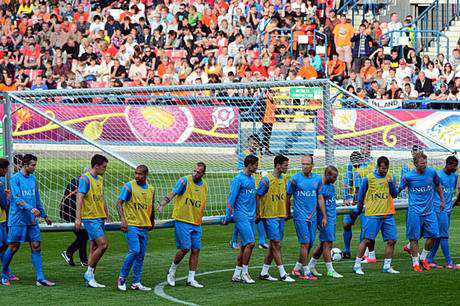
    Football chiefs were today accused of “turning a blind eye” to racism after Dutch players were targeted with abuse.

    Uefa finally admitted today there had been a racist incident after Dutch black players were subjected to monkey chants during a training session in Poland two days ago in the build-up to the opening games of the Euro 2012 tournament.

    The racism row and violence against English-speaking fans threatened to overshadow the tournament even before it began this afternoon with the Poland against Greece game. The football authorities vowed to take action if there was a repeat of the abuse. But MPs and campaigners condemned them for not being tougher following the Dutch case which was initially played down.

    Labour MP Diane Abbott said: “They are turning a blind eye. The danger is that by not acting, they leave the door open for further racial abuse of black and Asian players and fans.”

    Piara Powar, the executive director of Football Against Racism in Europe, said: “We’re very clear with Uefa that any incident of this kind needs to be looked at.”

    Conservative MP Mark Field, vice-chairman of the all-party parliamentary football group, added: “I fear Uefa are trying to brush this under the carpet.”

    In a statement today, Uefa accepted that there had been racist chants at Wisla’s Krakow ground as reported by the Dutch captain Mark van Bommel.

    “Uefa has now been made aware that there were some isolated incidents of racist chanting,” it said.

    As the England team gathered for a training session in Krakow, former captain Rio Ferdinand — whose brother Anton was allegedly racially abused during a match by England’s John Terry — tweeted: “Tell me I didn’t see this … the Dutch team getting abuse already? Hope this isn’t a sign of things to come.”

    Dutch football great Ruud Gullit added: “It’s sad. We don’t need this.”

    Sports minister Hugh Robertson warned that discrimination must not be tolerated as fears grew that the tournament will be marred by racism or anti-Semitism.

    He said: “Racism of any form is unacceptable on the football pitch or elsewhere. If it occurs I would expect the authorities to stamp down on it in the strongest possible terms.”

    The Dutch FA has decided not to make an official complaint. But van Bommel, with the backing of the Dutch squad, insists players were targeted.

    England have several black players including Ashley Young, Ashley Cole, Danny Welbeck, Theo Walcott and Alex Oxlade-Chamberlain. The families of Walcott and Oxlade-Chamberlain have declined to travel to watch the matches because of fears over racism, and former player Sol Campbell advised fans to avoid the tournament because of race fears.

    As the racism row grew, there were reports that local thugs attacked English-speaking fans last night — just hours before the start of the event being co-hosted by Poland and Ukraine.

    About 50 hooligans punched and kicked foreign football supporters speaking English and Russian as they drank in a pub in the central Polish city of Lodz.

    Witnesses said young masked men wearing the club colours of local team LKS Lodz pulled up in cars next to a pub and attacked anyone in sight, throwing punches and kicks.

    “When they started to hit out, we fled inside,” one victim said. “We barricaded the entrance. Some of us remained outside, and they got the brunt of the attack.”

    Two men were injured and a Polish witness said: “They forced two younger men to the ground, with multiple attackers starting to punch and kick them. It was a horrible sight. I fumbled for my phone and called the police. They were lying motionless on the pavement. I thought they were dead.

    “After a couple of minutes, one of them started to get up, and then the second. I was very relieved.”

    British ministers are boycotting England’s group stage matches in protest at “selective justice” in Ukraine and because of the workload for the Olympics. The Government is concerned about the treatment of jailed opposition leader Yulia Tymoshenko.

    Ukraine’s ambassador to London, Vladimir Khandogiy, today criticised the British decision. “This reason for not attending is something that I don’t understand since I believe that sport and politics don’t mix,” he said.

    Whitehall insiders stressed the Government was making a political statement through the boycott, backed by other EU nations.

    A 22-year-old football fan in Krakow is in hospital after being attacked by hooligans wielding machetes in what was apparently a fight between fans of local clubs. Police spokesman Renata Kostecka said: “He suffered light cuts and a major wound to his thigh. He is still in hospital.”

    Three men were arrested.


    London Evening Standard

  • Madonna performs in Istanbul

    Madonna performs in Istanbul

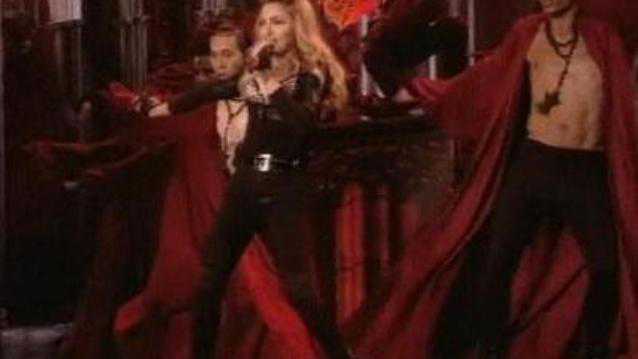
    Madonna hit the stage in Istanbul as part of her European M-D-N-A tour. Over 55,000 fans queued for hours outside the Turk Telecom Arena to see the pop diva perform for the first time in 20 years. Judging by the crowd’s reaction, it was worth the wait. “I am very excited to see Madonna again because I was in her first concert 19 years ago, now I am on my 30s and I am really excited to see her again “It’s great that Madonna is at Turkey in Istanbul for a concert, I think it’s going to be once or twice in our lifetime it’s a great crowd today, and we’re really curious about what she will say about women in Turkey, Will she give any messages for women in Turkey.” Istanbul was the latest gig on Madonna’s world tour, next is Rome

    via Sky News: Madonna performs in Istanbul.

  • gulfnews : Is Turkey a model Muslim nation?

    gulfnews : Is Turkey a model Muslim nation?

    Ankara should first match its deeds on democracy and human rights with its talk to claim a place on the pedestal

    By Murat Onur
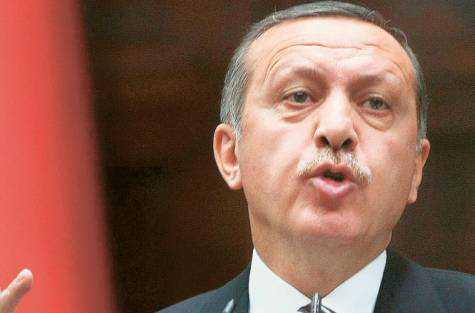
    Recep Tayyip Erdogan

    Image Credit: AFP

    Turkish Prime Minister Recep Tayyip Erdogan.

    When members of Nato gather at a summit in Chicago today, the issue of possible alliance intervention in Syria is bound to come up — with the Turkish prime minister perhaps pushing the discussion.

    Turkey is considered a model of democracy for a mostly Muslim country. It has urged the president of its Syrian neighbour to step down and the Syrian opposition to unify. Tens of thousands of Syrians have taken refuge in Turkey and last month refugees there came under cross-border fire.

    “We have strong armed forces. … and Syria must be aware that in the event of a repetition of border violations, Turkey’s stance will not be the same,” said Turkish Prime Minister Recep Tayyip Erdogan recently.

    But is Turkey’s military really so strong, and is Turkey the democratic model that so many think it is?

    If a country’s democracy were measured by the number of generals arrested, Turkey would be, by far, the most advanced democracy. Arrests of military figures have been going on for years but a new wave began in early April after police stormed the houses of several retired generals.

    This is part of the investigation into what is known as the military’s “post-modern coup” of February 28, 1997 — in which the precursor to Erdogan’s Justice and Development Party (AKP) was eventually banned on charges of anti-secular activity. Modern Turkey was founded on the principle of secularism; the AKP today describes itself as a conservative democratic party. It sprang from the Islamist movement.

    The “February 28” trial is the latest in a series of legal probes of the Turkish military by an AKP-friendly judicial branch.

    ‘Ergenekon’ trial

    The infamous “Ergenekon” trial, which began in 2008, has turned into a massive legal undertaking consisting of several cases. More than 250 people — including generals, politicians, academics, rights activists, journalists, and even students — are being investigated on charges that they belong to a clandestine terror network intent on overthrowing the government of Erdogan’s ruling party.

    “Sledgehammer” is another case in which hundreds of retired and active officers are being investigated over an alleged 2003 coup plot against the AKP government.

    Hundreds of retired and active officers are being investigated as a part of these investigations. More than 180 of them are in pre-trial detention. More importantly, around 60 active generals and admirals are behind bars, making up more than 19 per cent of the Turkish military’s top brass.

    Many aspects of these investigations contradict the principles of democratic governance and rule of law. Most of the suspects are behind bars without any verdict in their cases. The Council of Europe recently raised concerns about the withholding of evidence from defendants at the investigation stage (often extending into years) which deprives them of the opportunity to challenge their detentions.

    The European Union’s 2010 progress report on Turkey says the Ergenekon case and “several” of the coup probes raise concerns about “judicial guarantees for all suspects”.

    Independent forensic experts also discovered that a significant portion of the evidence used against the suspects is forged or their authenticity is questionable. Those who write about such irregularities often face a powerful defamation campaign by the dominant pro-AKP media.

    True, the Turkish military did engineer politics and shape governments in the past — carrying out four coups since 1960. Yet many believe the coup trials have now become political mechanisms through which those who are in power are subduing the opposition and attacking presumed threats against the AKP’s growing dominance in the country.

    Having the second largest military in Nato and the longest land border with Syria, Turkey’s support will be crucial if the so-called “Annan plan” and its UN cease-fire provision fail to resolve the Syrian crisis.

    Yet Turkey’s democracy and its institutions, including the armed forces, are seriously undermined by irrelevant accusations against military members and others, lengthy imprisonment without verdicts, indefinite pre-trial detentions, and powerful defamation campaigns against the AKP’s opponents.

    The arrests of hundreds of officers — including members of elite special forces — by police counter-terrorism units and the humiliation of top generals by the pro-AKP media may weaken the morale and discipline in the armed forces.

    Moreover, a military that lacks a fifth of its top officers may face serious challenges in supporting an international military intervention on the border.

    The AKP-led government must stop eroding the rule of law at home by ensuring the judiciary and police function within the limits of democratic governance and the courts are not used to target presumed opponents of its ideology.

    And the government should match its deeds on democracy and human rights at home with its talk about them abroad. Otherwise, Turkey may descend into the league of the world’s quasi-democracies, and lose its democratic influence in the region.

    — Christian Science Monitor

    Murat Onur is a foreign affairs analyst and political commentator on Turkey.

    via gulfnews : Is Turkey a model Muslim nation?.
  • Turkey: not a leader for democracy in the Middle East

    Turkey: not a leader for democracy in the Middle East

    By Turan Kayaoglu

    The Turkish foreign policy elite have updated the country’s foreign policy vision for the Middle East: Turkey will now promote democracy and human rights there. While this is a lofty objective, Turkey is both intellectually and politically ill-equipped for it.

    Until the advent of the Arab Spring, Turkey’s Justice and Development Party (JDP) followed a “zero problems” policy towards its neighbors in the region. Turkey’s dynamic economy (17th largest in the world) and pro-Palestinian stance, combined with the JDP leaders’ overt religiosity and the popularity of Turkish soap operas, made Turkey a power to be reckoned with in the Middle East. Buoyed by this success, Turkey began attempting, with varying success, to solve its decades-old regional issues.

    Until recently, Turkish leaders had not hesitated to cozy up to Middle Eastern autocrats as a way to pursue better relations. The Arab Spring changed all of that, and forced Turkey to side with the streets against the palaces and shelve its “zero problems” policy.

    Turkey’s new foreign policy framework responds to the conundrum presented by the popular uprisings throughout the region by altering its focus. In a recent policy brief published for the Turkish Ministry of Foreign Affairs’ Center For Strategic Research, Tarık Oğuzlu calls the new approach “Version 2.0 of Turkey’s ‘Zero Problems With Neighbors’ policy.” He argues that, driven mostly by normative and humanitarian concerns, Turkey will now strive to have zero problems not necessarily with the governments of neighboring countries but with its people. Oğuzlu hopes that “the years ahead will witness a ‘democratic touch’ in Turkish foreign policy in the Middle East, reflecting the spirit of Turkey’s liberal democratization process already underway at home.”

    Moreover, in a separate policy brief published in April, Foreign Minister Ahmet Davutoğlu details what he calls ‘Turkey’s vision-oriented foreign policy.’ He elaborates: “we will not keep silent on oppression by autocratic leaders and will act in tandem with the international community to end it”; “we will not take steps that will alienate us from the hearts and minds of our region’s people;” and “we will work towards the establishment of a more peaceful and prosperous regional order and support people’s quest for basic human rights and democracy.”

    However, Turkey lacks the intellectual and political capital necessary to promote human rights and democracy in the region. Unlike the “zero problems” policy which Turkey earlier relied on its economic power, Version 2.0, would have Turkey rely on soft power. Harnessing the power of persuasion requires in-depth knowledge of the complexities of Middle East politics. The Turkish elite’s post-Ottoman neglect of the region and its later reliance on the Cold War categorizations has left Turkey ill-equipped to know the region’s peoples, histories, and true concerns. Apart from those who learn classical Arabic for religious reasons, few Turkish intellectuals understand Arabic, with the overwhelming majority relying exclusively on Anglo-American sources for information on the Middle East.

    Ideological certainties have often substituted for critical scholarship when it comes to the Middle East. Salvaging Western writings for ideological ammunition, Turkish secularists quickly attribute the region’s problems to its lack of an Atatürk, while pro-Islamic conservatives (and leftists) blame Western imperialism for troubles in the Middle East. What’s worse, a wide range of Turkish society enjoys Arab countries’ troubles as these are seen as divine retribution for the Arab revolts against the Ottoman Empire.

    Turkish foreign policy think tanks, which have mushroomed in the country under the JDP’s rule, offer little help in correcting these flaws. Many bought into the JDP’s grandiose image of Turkey’s regional leadership, and for the most part, have quickly given credit to the government for foreign policy successes and blamed external factors for any failures. Without a serious critical self-reflection and analysis of the region, Turkey will not be able to lead the region to democracy and human rights.

    If that wasn’t enough, Turkey’s own democratic and human rights shortcomings offer an even bigger reason for why it is ill-equipped for such a role. Admittedly, since coming to power in 2002, the government has improved many aspects of Turkish democracy, such as civilian control over the army and the expansion of Kurdish rights—but these are not enough. Additional legitimate Kurdish demands continue to fall on deaf ears. The 216th Article of the Turkish Penal Code (TCK), which bans “fomenting hatred and enmity among the public” and “insulting religious values,” continue to be used to silence dissidents and critics of Islam. The U.S. Commission on International Religious Freedom in its 2012 Annual Report controversially categorized Turkey as a “Country of Particular Concern” for religious freedom, a category reserved for the worst.

    International assessments of Turkish democracy and human rights reveal a disturbing picture. The Economist Intelligence Unit’s 2011 Democracy Index ranks Turkey 88th out of 167 countries, while the Global Economic Forum’s 2011 Global Gender Gap Index ranks Turkey as 122nd out of 135 countries. According to Freedom House, while political rights and civil liberties in Turkey improved under the JDP, Turkey is still a partially free country. These rankings are not indicators for a promoter of democracy and human rights. Turkey is just not in a position to credibly portray itself as a regional leader on these issues.

    This is not to say that Turkey cannot eventually show leadership in enhancing democracy and promoting human rights in the region. Such leadership is deeply needed and Turks have much to offer in terms of moderation, modernization and secularization, if not outright democratization. However, foreign policy elites should heed Atatürk’s famous dictum, which is paraphrased as: “democracy at home; democracy in the world.” Putting one’s house in order should precede promoting democracy and human rights abroad.

    (Turan Kayaoglu is a Brookings Doha Center – Qatar University Visiting Fellow in Doha, Qatar. He is an associate professor of International Relations at the University of Washington, Tacoma.)