Blog

  • Turkey’s Yildiz shocks world champion Hou Yifan

    Turkey’s Yildiz shocks world champion Hou Yifan

    Kazan GP: Turkey’s Yildiz shocks world champion Hou Yifan

    11.06.2012 – It was the top against the bottom seed, the highest rated against the lowest rated player in the event. But Turkish law student WGM Betul Cemre Yildiz, playing with the black pieces, profited from a time trouble blunder by her opponent, Chinese GM Hou Yifan and finished the reigning women’s world champion off in 34 moves. We bring you an illustrated report after round two.

    via ChessBase.com – Chess News – Kazan GP: Turkey’s Yildiz shocks world champion Hou Yifan.

  • Come Fly With Me: Shades of Istanbul

    Come Fly With Me: Shades of Istanbul

    Meera Ashish shuttles between her home bases in Dubai, London and Uganda, making huge detours along the way…

    Meera Ashish

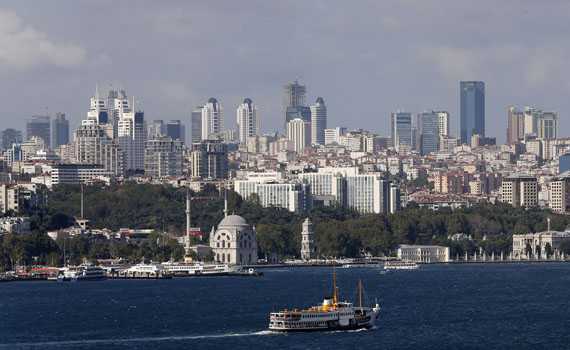
    Standing in a jam-packed tram in Istanbul on a Saturday afternoon, let’s just say, is not fun! When you’re used to the London Underground, you’re brave enough to travel on any other Metro system … It’s a good way to explore a new city and get a glimpse of real day-to-day life. But Istanbul was not quite the mix of East and West I had expected. The streets were not reflective of the chaotic life that I imagined as part of cities in Asia — rather, they were more attuned to their relaxed European counterparts. But the rush hour on the tram revealed the less-European instincts of the locals.

    In London you get rowdiness. In Mumbai, the ladies in the ladies-only carriages literally push each other on and off, which can be entertaining and annoying. The Metro in Dubai can often get hot and sweaty. But in Istanbul, the men make the experience of travelling on a train or a tram highly undesirable, which probably explains why we spotted so few women. My friend and I moved inwards when it dawned on us that the close proximity of the men was not due only to the lack of space. It made me wonder why Istanbul had not adopted the Asian, or Indian, culture of having separate carriages for women. Even Dubai has carriages just for women and children. I’ve been on the Metro in Paris, Spain, New York and Mumbai, but I have never faced this kind of discomfort (nothing to do with odours and sweat, of course).

    I had not planned to start my tales of this city by writing about this one aspect. Let me tell you some more about this trip — a trip that is linked inextricably to one shady book that came by recommendation, and I did no research to find out what it was all about.

    First, I did manage to see in such a short time, various tones and shades of Istanbul, due mostly to the fact that I was with friends who wanted to cram in as much as possible from the Bosphorus cruise to shopping at the Bazaar to a Turkish bath to food and, of course, nightlife. But the agenda was often happily distracted by the girly chatter that had not been indulged in for much too long.

    Article continues below

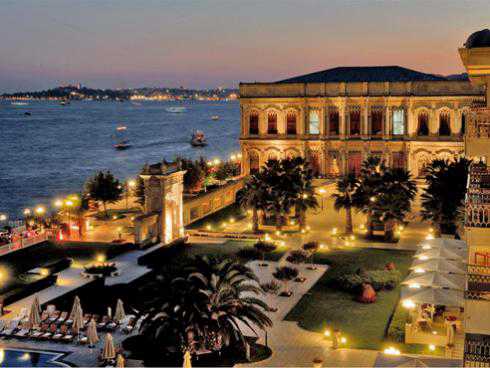
    Rushing down ten minutes before breakfast ended always set the relaxed tone of the day, and then, of course, we would sit at breakfast at the House Hotel for an hour before heading out into the chic outdoors of Nisantasi. The few things I’ll remember about Istanbul is sitting by the Bosphorus at the Kempinski Ciragan Palace having afternoon tea; a pianist coordinating melodiously with the chorus of birds, the moving sails just visible beyond the pool and umbrellas; of course, dinner at the most picturesque Ulus29 which overlooks the river; the twinkling city on the opposite bank and two gleaming bridges on either side; and the next day at Munferit, a romantic alfresco setting with tables spilling on to the street, located in the Beyoglu. And then dancing at Reina, where we were literally looking up closely at the details of one end of the bridge, where the barman was kind enough to give me a plate of cut fruit, and eating salad at 3 in the morning just because … well, just because.

    — Follow Meera Ashish on talefourcities.com and @meeraashish

    via gulfnews : Come Fly With Me: Shades of Istanbul.

  • General Electric to Invest $900 Million in Turkey in 3 Years

    General Electric to Invest $900 Million in Turkey in 3 Years

    General Electric Co. (GE) (GE) will invest $900 million in aviation, energy, health, transportation and infrastructure in Turkey over the next three years after the government offered incentives to investors.

    The investment package will include production of wind energy equipment, Economy Minister Zafer Caglayan said today at a press conference in Istanbul.

    “We have not announced specifics of the investment which will be defined over time and until then we have no further details to add,” the company said in an emailed statement.

    The plan has “a focus on infrastructure and innovation,” GE Vice Chairman John Rice told reporters. The company will provide specifics “in the next couple of months” and is in talks with universities on plans for research and development, he said.

    GE also set up a strategic partnership with state-run locomotive manufacturer Turkiye Lokomotif & Motor Sanayi AS, known as Tulomsas, in 2008 and expect its exports to be $1.5 billion over next 10 years, the company said in a statement handed to reporters.

    Caglayan said GE will boost its cooperation in railway transportation business.

    The Fairfield, Connecticut-based company, which sold an 18.6 percent stake in Turkiye Garanti Bankasi AS (GARAN) to Spain’s Banco Bilbao Vizcaya Argentaria (BBVA) SA for $3.78 billion in 2010, has a 46 percent stake in Turkish Aerospace Industries, the Ankara-based maker of aircraft parts known as Tusas, and owns half of Gama Enerji AS, a Turkish power producer, among its six units with 600 employees in Turkey. The U.S. company also makes health-care measurement and imaging devices, lighting equipment and power turbines.

    Energy Demand

    Turkey’s electricity demand is increasing about 6 percent annually, compared with a government economic growth forecast of 4 percent, Caglayan said. “It’s only logical for an energy giant like GE to invest in Turkey’s energy,” he said.

    GE, founded in the late 19th century by Thomas Edison, is one of the oldest major companies in the U.S. It’s the world’s biggest maker of diesel locomotives and airplane engines.

    Local unit General Elektrik Ticaret & Servis AS may start manufacturing wind turbines and parts, with half the output likely to be sold within Turkey as the government targets a 20- fold increase in wind capacity by 2020, Mete Maltepe, head of GE’s local energy unit, said in an interview in 2010.

    GE will benefit from a wide-ranging package of incentives offered to investors to boost local production as a way to narrow the country’s current account deficit, Caglayan said.

    Turkey is looking to spur investment in industries that rely on imports to produce their goods to help narrow a current- account gap of about nine percent of its $772 billion gross domestic product, Prime Minister Recep Tayyip Erdogan said April 5. The government is focusing its efforts on industries including defense, automotive, rail and sea transport, pharmaceuticals, education, tourism and mining, Caglayan’s economy ministry said.

    via General Electric to Invest $900 Million in Turkey in 3 Years – Businessweek.

  • Washington’s Celebrity Journalism Hits Istanbul

    Washington’s Celebrity Journalism Hits Istanbul

    Washington’s Celebrity Journalism Hits Istanbul

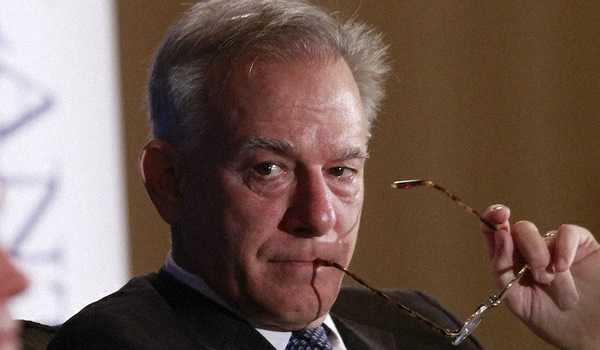
    David Ignatius handles Tayyip Erdoğan with kid gloves.

    By Elliott Abrams

    Washington Post columnist David Ignatius

    Elliott Abrams

    Turkey is a complex country, but there are two key developments there that demand attention.

    One is the increasing repression. Today there are more than 100 journalists in prison, more than in China. The European Federation of Journalists has launched a campaign called “Set Turkish Journalists Free.” Human Rights Watch has reported that “a Turkish court’s verdict on January 17, 2012, that there was no state involvement or organized plot behind the 2007 shooting of the Turkish Armenian journalist Hrant Dink is a travesty of justice.” The Committee to Protect Journalists has criticized Prime Minister Tayyip Erdoğan for his crackdown on independent journalism: “Erdoğan sought to link journalists who cover Kurdish separatist issues with the separatists themselves. In comments directed at those journalists, made at a meeting of the ruling AKP, the prime minister said: ‘Do you have ears? Are you deaf? . . . How long will you make common cause with those who endeavor to turn an easeful country into a restless country?’” CPJ’s European coordinator commented that “we are deeply concerned by Prime Minister Erdoğan’s intemperate statements concerning journalists. Coming from his high office, they are equivalent to instructions to his subordinates to crack down on the independent media.”

    The second key development is the growing trouble the Turkish economy is in. The Economist commented in April that “the danger now is that a few more years of big current-account deficits, and the debt-creating capital flows that finance them, will leave Turkey less resilient when trouble strikes. Few countries that run big external deficits have avoided subsequent stresses. You don’t need to stand atop the Galata tower to see problems ahead.” Others have used stronger language: “Turkey’s high-flying economy, which expanded at a 10 percent annual rate of gross domestic product growth during the first half of 2011, will crash-land in 2012,” said the financier and commentator David Goldman. He explains: “The impetus behind the country’s recent economic growth has been a stunning rate of credit expansion, which reached 30 percent for households and 40 percent for business in 2011.” Where does the money go? Turkey “is running a current account deficit equal to 11 percent of GDP to promote a consumer buying spree while cutting imports of capital goods that would contribute to future productivity.” Goldman notes that “in some respects, Erdoğan’s bubble recalls the experiences of Argentina in 2000 and Mexico in 1994 where surging external debt produced short-lived bubbles of prosperity, followed by currency devaluations and deep slumps.”

    In The National Interest, former U.S. ambassador to Turkey Morton Abramowitz wrote his own analysis of the dangerous situation there: Erdoğan’s “leadership and judgment are being seriously questioned, most recently in regards to whether his ambition is getting in the way of managing critical issues such as Turkey’s unending Kurdish dilemma. Indeed, one prominent AKP supporter last week wrote that ‘The once reformist party of Turkey seems to have developed statist, nationalist, and even Islamist tendencies, which are the likely grounds for a new authoritarian politics. . . . ’ Erdogan’s highly touted Middle East involvement has lost some luster. . . . The much-touted vast Turkish influence in the Middle East seems to have faded. . . . Increasingly, Erdogan’s focus seems to be on creating a presidential system in the new constitution that will allow him to make a Putin-esque move to a more powerful presidency.”

    via Washington’s Celebrity Journalism Hits Istanbul – Elliott Abrams – National Review Online.

  • Madonna Exposes Breast During Istanbul MDNA Concert…On Purpose. *NSFW*

    Madonna Exposes Breast During Istanbul MDNA Concert…On Purpose. *NSFW*

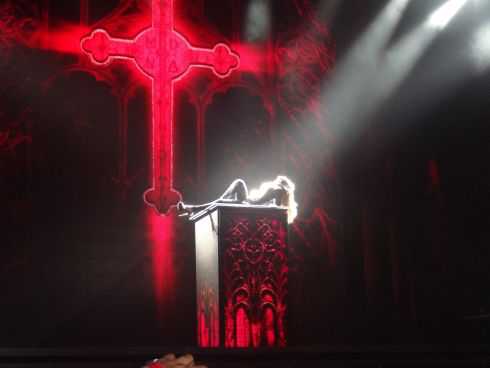
    This was no “wardrobe malfunction”, y’all. Leave it to Madonna to slowly perform a bit of a peek-a-boob during “Human Nature” and a very slow, low and sultry version of “Like a Virgin”.

    Be my guest and have a look:

    So, my question is: How do Rocco and Lourdes feel about Mum performing this way, since they are both taking part in the tour?

    I will say this, Madge is still very sexy at 53 years of age.

    Is Madonna the Sacrifice?
    Is Madonna the Sacrifice?


    via Madonna Exposes Breast During Istanbul MDNA Concert…On Purpose. *NSFW* | Dipped In Cream.

  • Turkish Muslims Insist on Converting World’s Largest Church into a Mosque

    Turkish Muslims Insist on Converting World’s Largest Church into a Mosque

    Raymond Ibrahim June 9th 2012

    Mideast Forum
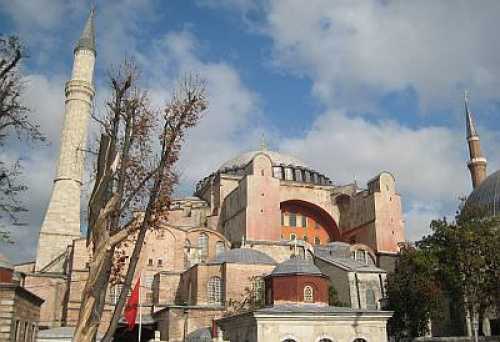
    Haghia Sophia

    Ostensibly dealing with a building, a recent report demonstrates how Turkey’s populace—once deemed the most secular and liberal in the Muslim world—is reverting to its Islamic heritage, complete with animosity for the infidel West and dreams of Islam’s glory days of jihad and conquest. According to Reuters: Thousands of devout Muslims prayed outside Turkey’s historic Hagia Sophia museum on Saturday [May 23] to protest a 1934 law that bars religious services at the former church and mosque. Worshippers shouted, “Break the chains, let Hagia Sophia Mosque open,” and “God is great” [the notorious “Allahu Akbar”] before kneeling in prayer as tourists looked on. Turkey’s secular laws prevent Muslims and Christians from formal worship within the 6th-century monument, the world’s greatest cathedral for almost a millennium before invading Ottomans converted it into a mosque in the 15th century.

    Hagia Sophia—Greek for “Holy Wisdom”—was, in fact, Christendom’s greatest cathedral for a thousand years. Built in Constantinople, the heart of the Christian empire, it was also a stalwart symbol of defiance against an ever encroaching Islam from the east. After parrying centuries of jihadi thrusts, Constantinople was finally sacked by Ottoman Turks in 1453. Its crosses desecrated and icons defaced, Hagia Sophia—as well as thousands of other churches—was immediately converted into a mosque, the tall minarets of Islam surrounding it in triumph. Then, after the dissolution of the Ottoman Empire, as part of several reforms, Ataturk transformed Hagia Sophia into a “neutral” museum in 1934—a gesture of goodwill to the then triumphant West from a then crestfallen Turkey.

    Even though Hagia Sophia is a Christian center under Islamic domination, several Christian authorities are content seeing it remain a museum, including the Ecumenical Patriarchate, spiritual leader of Orthodox Christians: “We want it to remain a museum in line with the Republic of Turkey’s principles,” adding, “if it became a church it would be chaos.”

    True enough; one need only recall how back in 2006, when Pope Benedict was scheduled to visit Hagia Sophia, Muslims were outraged. Then, Turkey’s independent paper Vatan wrote: “The risk is that Benedict will send Turkey’s Muslims and much of the Islamic world into paroxysms of fury if there is any perception that the Pope is trying to re-appropriate a Christian center that fell to Muslims.” Before the Pope’s visit, a gang of Turks stormed and occupied Hagia Sophia, screaming “Allahu Akbar!” and warning “Pope! Don’t make a mistake; don’t wear out our patience.” On the day of the Pope’s visit, another throng of Islamists waved banners saying “Pope get out of Turkey” while chanting Hagia Sophia “is Turkish and will remain Turkish.”

    All this is yet another reminder of the Islamic world’s double standards: when Muslims conquer non-Muslim territories, such as Constantinople and its churches—through fire and steel, with all the attendant human suffering and misery—the descendents of those conquered are not to expect any apologies or concessions. However, once the same Muslims who would never concede one inch of Islam’s conquests, including buildings, are on the short end of the stick—Palestinians vis-à-vis Israel, for example—then they resort to the United Nations and the court of public opinion, demanding justice, restitutions, rights, and so forth.

    Even in the brief Reuter’s report, evidence of such “passive-aggressive” behavior emerges. First, this is not about Muslims wanting to pray; it’s about Muslims wanting to revel in the glory days of Islamic jihad and conquest: Muslims “staged the prayers ahead of celebrations next week marking the 559th anniversary of the Ottoman Sultan Mehmet’s conquest of Byzantine Constantinople.” According to Salih Turhan, a spokesman quoted by Reuters, “As the grandchildren of Mehmet the Conqueror, seeking the re-opening Hagia Sophia as a mosque is our legitimate right.”

    Sultan Mehmet was the scourge of European Christendom, whose Islamic hordes seized and ravished Constantinople, forcibly turning it Islamic. Openly idolizing him, as many Turks do, is tantamount to their saying “We are proud of our ancestors who killed and stole the lands of Christians.” And yet, despite such militant overtones, Turhan, whose position is echoed by many Turks, still manages to blame the West: “Keeping Hagia Sophia Mosque closed is an insult to our mostly Muslim population of 75 million. It symbolizes our ill-treatment by the West.”

    If merely keeping a historically Christian/Western building—that was stolen by Islamic jihad—as a neutral museum is seen as “ill-treatment by the West,” on what basis can Muslims and non-Muslims ever “dialogue”?

    Raymond Ibrahim is a Shillman Fellow at the David Horowitz Freedom Center and an Associate Fellow at the Middle East Forum, from where this article is adapted.

    via The Cutting Edge News.