Blog

  • Madonna Exposes Breast During Istanbul MDNA Concert…On Purpose. *NSFW*

    Madonna Exposes Breast During Istanbul MDNA Concert…On Purpose. *NSFW*

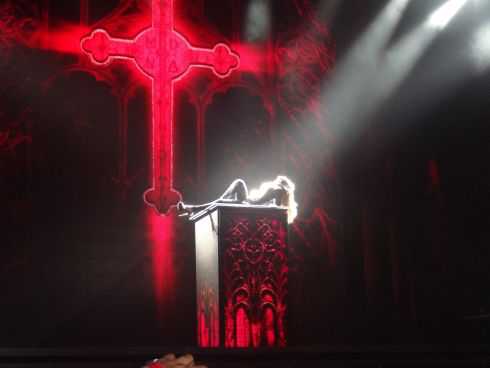
    This was no “wardrobe malfunction”, y’all. Leave it to Madonna to slowly perform a bit of a peek-a-boob during “Human Nature” and a very slow, low and sultry version of “Like a Virgin”.

    Be my guest and have a look:

    So, my question is: How do Rocco and Lourdes feel about Mum performing this way, since they are both taking part in the tour?

    I will say this, Madge is still very sexy at 53 years of age.

    Is Madonna the Sacrifice?
    Is Madonna the Sacrifice?


    via Madonna Exposes Breast During Istanbul MDNA Concert…On Purpose. *NSFW* | Dipped In Cream.

  • Turkish Muslims Insist on Converting World’s Largest Church into a Mosque

    Turkish Muslims Insist on Converting World’s Largest Church into a Mosque

    Raymond Ibrahim June 9th 2012

    Mideast Forum

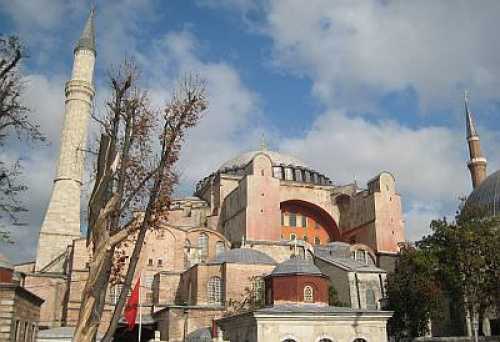
    Haghia Sophia

    Ostensibly dealing with a building, a recent report demonstrates how Turkey’s populace—once deemed the most secular and liberal in the Muslim world—is reverting to its Islamic heritage, complete with animosity for the infidel West and dreams of Islam’s glory days of jihad and conquest. According to Reuters: Thousands of devout Muslims prayed outside Turkey’s historic Hagia Sophia museum on Saturday [May 23] to protest a 1934 law that bars religious services at the former church and mosque. Worshippers shouted, “Break the chains, let Hagia Sophia Mosque open,” and “God is great” [the notorious “Allahu Akbar”] before kneeling in prayer as tourists looked on. Turkey’s secular laws prevent Muslims and Christians from formal worship within the 6th-century monument, the world’s greatest cathedral for almost a millennium before invading Ottomans converted it into a mosque in the 15th century.

    Hagia Sophia—Greek for “Holy Wisdom”—was, in fact, Christendom’s greatest cathedral for a thousand years. Built in Constantinople, the heart of the Christian empire, it was also a stalwart symbol of defiance against an ever encroaching Islam from the east. After parrying centuries of jihadi thrusts, Constantinople was finally sacked by Ottoman Turks in 1453. Its crosses desecrated and icons defaced, Hagia Sophia—as well as thousands of other churches—was immediately converted into a mosque, the tall minarets of Islam surrounding it in triumph. Then, after the dissolution of the Ottoman Empire, as part of several reforms, Ataturk transformed Hagia Sophia into a “neutral” museum in 1934—a gesture of goodwill to the then triumphant West from a then crestfallen Turkey.

    Even though Hagia Sophia is a Christian center under Islamic domination, several Christian authorities are content seeing it remain a museum, including the Ecumenical Patriarchate, spiritual leader of Orthodox Christians: “We want it to remain a museum in line with the Republic of Turkey’s principles,” adding, “if it became a church it would be chaos.”

    True enough; one need only recall how back in 2006, when Pope Benedict was scheduled to visit Hagia Sophia, Muslims were outraged. Then, Turkey’s independent paper Vatan wrote: “The risk is that Benedict will send Turkey’s Muslims and much of the Islamic world into paroxysms of fury if there is any perception that the Pope is trying to re-appropriate a Christian center that fell to Muslims.” Before the Pope’s visit, a gang of Turks stormed and occupied Hagia Sophia, screaming “Allahu Akbar!” and warning “Pope! Don’t make a mistake; don’t wear out our patience.” On the day of the Pope’s visit, another throng of Islamists waved banners saying “Pope get out of Turkey” while chanting Hagia Sophia “is Turkish and will remain Turkish.”

    All this is yet another reminder of the Islamic world’s double standards: when Muslims conquer non-Muslim territories, such as Constantinople and its churches—through fire and steel, with all the attendant human suffering and misery—the descendents of those conquered are not to expect any apologies or concessions. However, once the same Muslims who would never concede one inch of Islam’s conquests, including buildings, are on the short end of the stick—Palestinians vis-à-vis Israel, for example—then they resort to the United Nations and the court of public opinion, demanding justice, restitutions, rights, and so forth.

    Even in the brief Reuter’s report, evidence of such “passive-aggressive” behavior emerges. First, this is not about Muslims wanting to pray; it’s about Muslims wanting to revel in the glory days of Islamic jihad and conquest: Muslims “staged the prayers ahead of celebrations next week marking the 559th anniversary of the Ottoman Sultan Mehmet’s conquest of Byzantine Constantinople.” According to Salih Turhan, a spokesman quoted by Reuters, “As the grandchildren of Mehmet the Conqueror, seeking the re-opening Hagia Sophia as a mosque is our legitimate right.”

    Sultan Mehmet was the scourge of European Christendom, whose Islamic hordes seized and ravished Constantinople, forcibly turning it Islamic. Openly idolizing him, as many Turks do, is tantamount to their saying “We are proud of our ancestors who killed and stole the lands of Christians.” And yet, despite such militant overtones, Turhan, whose position is echoed by many Turks, still manages to blame the West: “Keeping Hagia Sophia Mosque closed is an insult to our mostly Muslim population of 75 million. It symbolizes our ill-treatment by the West.”

    If merely keeping a historically Christian/Western building—that was stolen by Islamic jihad—as a neutral museum is seen as “ill-treatment by the West,” on what basis can Muslims and non-Muslims ever “dialogue”?

    Raymond Ibrahim is a Shillman Fellow at the David Horowitz Freedom Center and an Associate Fellow at the Middle East Forum, from where this article is adapted.

    via The Cutting Edge News.

  • In Turkey the right to free speech is being lost

    In Turkey the right to free speech is being lost

    Erdogan is using a series of alleged plots to justify a crackdown on dissent that threatens basic freedoms

    Mehdi Hasan
    guardian.co.uk,

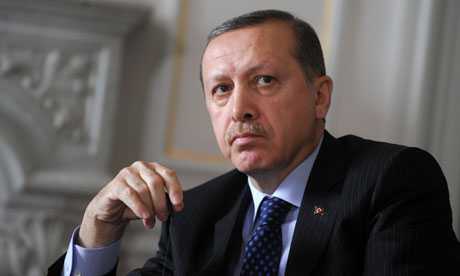
    Recep Tayyip Erdogan, Turkey’s prime minister, has been described as ‘Putinesque’ by critics. Photograph: Nikolay Doychinov/AFP/Getty Images

    Which country in the world currently imprisons more journalists than any other? The People’s Republic of China? Nope. Iran? Wrong again. The rather depressing answer is the Republic of Turkey, where nearly 100 journalists are behind bars, according to the Organisation for Security and Co-operation in Europe. Yes, that’s right: modern, secular, western-oriented Turkey, with its democratically elected government, has locked away more members of the press than China and Iran combined.

    But this isn’t just about the press – students, academics, artists and opposition MPs have all recently been targeted for daring to speak out against the government of prime minister Recep Tayyip Erdogan and his mildly Islamist Justice and Development Party, or AKP.

    There is a new climate of fear in Istanbul. When I visited the city last week to host a discussion show for al-Jazeera English, I found journalists speaking in hushed tones about the clampdown on free speech. Within 24 hours of our arrival, one of my al-Jazeera colleagues was detained by police officers, who went through his bag and rifled through one of my scripts. They loudly objected to a line referring to the country’s “increasingly authoritarian government”. Who says that Turks don’t do irony?

    The stock response from members of the AKP government is to blame the imprisonment and intimidation on Turkey’s supposedly “independent” judiciary. But this will not do. For a start, ministers haven’t been afraid of interfering in high-profile prosecutions. In a speech at – of all places – the Council of Europe in April 2011, a defiant Erdogan, commenting on the controversial detention of the investigative journalist Ahmet Sik, compared Sik’s then unpublished book to a bomb: “It is a crime to use a bomb, but it is also a crime to use materials from which a bomb is made.”

    Then there is the behind-the-scenes pressure that is exerted by the government on media organisations. “People are afraid of criticising Erdogan openly,” says Mehmet Karli, a lecturer at Galatasaray University in Istanbul and a campaigner for Kurdish rights. “They might not be arrested, but they will lose their jobs.”

    In February, for example, Nuray Mert, a columnist for the Milliyet newspaper, was sacked and her TV show cancelled after she was publicly singled out for criticism by the prime minister. Last month Ali Akel, a conservative columnist for the pro-government newspaper Yeni Safak, was fired for daring to write a rare, critical article about Erdogan’s handling of the Kurdish issue.

    But the restrictions on freedom of speech don’t stop with the media.

    Exhibit A: last week, two students were sentenced to eight years and five months in prison by a court in Istanbul for “membership of a terrorist organisation”, while a third student was sentenced to two years and two months behind bars for spreading terrorist propaganda. Yet the students, Berna Yilmaz, Ferhat Tüzer and Utku Aykar, had merely unfurled a banner reading “We want free education, we will get it,” at a public meeting attended by Erdogan in March 2010.

    Exhibit B: on 1 June Fazil Say, one of Turkey’s leading classical pianists, was charged with “publicly insulting religious values that are adopted by a part of the nation” after he retweeted a few lines from a poem by the 11th-century Persian poet, Omar Khayyam, that mocked the Islamic vision of heaven. Say’s trial is scheduled for October, and if convicted the pianist faces up to 18 months in prison. The irony is not lost on those Turks who remember how Erdogan himself was imprisoned in 1998, when he was mayor of Istanbul, for reading out a provocative poem.

    Erdogan, re-elected as prime minister for the second time last June and now considered the most powerful Turkish leader since Kemal Ataturk, has become intolerant of criticism and seems bent on crushing domestic opposition.

    “He is Putinesque,” says Karli, referring to reports that Erdogan plans to emulate the Russian leader’s switch from prime minister to president and thereby become the longest-serving leader in Turkish history. “Yes, he wins elections,” adds Karli, “but he does not respect the rights of those who do not vote or support him.”

    Let’s be clear: Turkey in the pre-Erdogan era was no liberal democratic nirvana. Since its creation in 1923, the republic has had to endure three military coups against elected governments: in 1960, 1971, and 1980. The AKP government is the first to succeed in neutering the military. And its paranoia is not wholly unjustified: Turkey’s constitutional court was just one vote from banning the AKP in 2008, and a series of alleged anti-government plots and conspiracies were exposed in 2010 and 2011.

    “I am concerned by the numbers [of imprisoned journalists] but they’re not all innocent,” the AKP MP Nursuna Memecan tells me. “Many of them were plotting against the government.” It’s a line echoed by her party leader. “It is hard for western countries to understand the problem because they do not have journalists who engage in coup attempts and who support and invite coups,” declared Erdogan in a speech in January.

    Perhaps. But the AKP’s crackdown on dissent, on basic freedoms of speech and expression, has gone beyond all civilised norms. “We do need to expand free speech in Turkey,” admits Memecan.

    Those of us who have long argued that elected Islamist parties should not be denied the opportunity to govern invested great hope in Erdogan and the AKP. But what I discovered in Istanbul is that there is still a long way to go. The truth is that Turkey cannot be the model, the template, for post-revolutionary, Muslim-majority countries like Tunisia and Egypt until it first gets its own house in order. To inspire freedom abroad, the Turkish government must first guarantee freedom at home.
  • Introducing Turkey’s Eurovision Breakout

    Introducing Turkey’s Eurovision Breakout

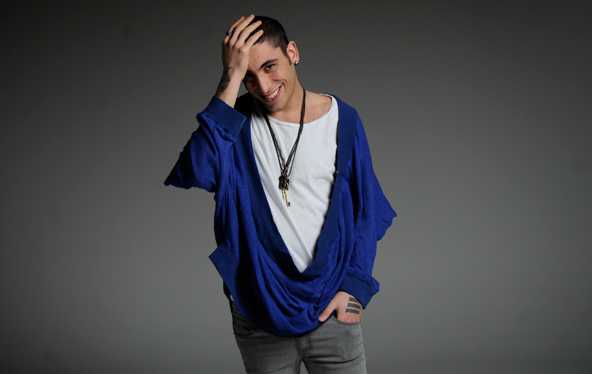
    Ah, to be 25, dressed like a Left Bank buccaneer and belting out irresistible Anatolian pop before a televised audience of 125 million kitsch-craving European fans. Such was Can Bonomo’s perch at the Eurovision Song Contest last month. The dashing young Turk, from a Sephardic Jewish family in Izmir, represented Turkey in Eurovision. Though he did not win — the prize went to Swedish-Moroccan singer Loreen — Bonomo was one of the more compelling singers to take the enormous and purpose-built stage in Baku, Azerbaijan. His song “Love Me Back” was performed as a jaunty set piece, variously channeling Pirates of the Caribbean (the ride), Show Boat and Ali Baba. A spicy summer mix, you might say. Bonomo stopped whirling for a moment to talk to us about “Istanbul music” and more.

    What was your craziest Eurovision experience?

    There’s not much that is not crazy when it comes to Eurovision. It’s very hyped all over Europe. I’ve had a lot of crazy experiences, from getting chased by cops for making music on European streets to broadcasting my birthday via press conference to all over the world.

    Is it correct that you wrote the words and music to “Love Me Back”? Did you translate the lyrics from Turkish, or was the song originally written in English?

    It was written completely from scratch in English. Eurovision is an international contest, so if the lyrics were in Turkish only the Turkish people would have understood it. This way it reached a wider audience. However the song would have also sounded quite good if it was in Turkish, since the Turkish language is very melodic and very suitable for songs.

    Do American pop artists influence your music or style?

    I don’t want to sound condescending, but as a personal preference I don’t listen to pop that much. I’ve heard Madonna is coming to Turkey for a show sometime soon; I don’t think I’ll be going. On the other hand I’m really excited for Red Hot Chili Peppers concert. I’ve always been a rock ‘n’ roll type of guy. Even when I was a kid I grew up with the Kinks, the Beatles and the Rolling Stones. My style is actually more influenced by poets than musicians. I’m a great admirer of American poetry and literature. I love Bukowski. I even have a tattoo from one of Gwendolyn Brooks’s poems.

    In both your Eurovision performance and on your Web site, you can be seen wearing some very interesting styles. Is it a Turkish designer who makes the clothes you wear for shows?

    The very first performance I did, I was wearing my own clothes straight from my closet. I only work with designers for official events like the Eurovision or song videos. I don’t have a designated designer. For Eurovision, though, Giray Sepin did the costumes for the dancers and Hatice Gokce did mine. My style is not that specific to a region or anything like that, but it does have slight ethnic touches.

    After Eurovision, what comes next? Can we expect more songs in English? Is performing in the United States something you would like to do in the future?

    I would absolutely be delighted to come to the U.S. to perform. But I want my lyrics to have a powerful emotional impact, and I don’t think I’m ready to deliver that punch in English yet. I had to postpone the recording of my second album because of Eurovision. Better late than never, and we are finally starting on that. I will also be publishing a poetry book in a few months. I’ve been getting a lot of praise from famous writers and poets here in Turkey. I’m super-thrilled about that.

    I watched Eurovision with a group of Israelis who said some of your music reminded them of klezmer. Was klezmer an influence on you musically growing up in Izmir?

    Turkish music shares a lot of instruments with klezmer music. However, I prefer to call the music I make “Istanbul” music. It’s a combination of sounds, instruments, bazaar salesmen yells, the whole nine yards. I want people to feel the chaotic energy of Istanbul in my albums.

    This post has been revised to reflect the following correction:

    Correction: June 11, 2012

    In an earlier version of the post, the singer’s name was misspelled in the headline. His name is Can Bonomo, not Cam Bonomo.

    via Introducing Turkey’s Eurovision Breakout – NYTimes.com.

  • Turkey will soon announce $4 billion missile defense decision

    Turkey will soon announce $4 billion missile defense decision

    From Umit Enginsoy and Burak Ege Bekdil, Defense News: The long-range air and missile defense system, worth more than $4 billion, has attracted companies from China, Europe, Russia and the U.S. . . .

    The presence of Russian and Chinese competitors for the missile system has drawn security concerns from some NATO allies.

    Turkey’s Defense Industry Executive Committee will meet in early July, probably July 4, on the selections and is expected to announce decisions or at least a shorter list.

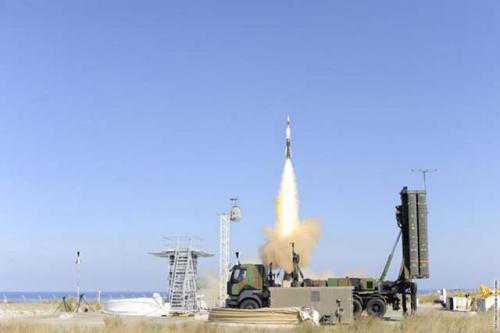
    Competitors in the air and missile defense system include: U.S. partners Raytheon and Lockheed Martin, with their Patriot-based system; Eurosam with its SAMP/T Aster 30; Russia’s Rosoboronexport, marketing the country’s S-300 and S-400 systems; and China’s CPMIEC (China Precision Machinery Import and Export Corp.), offering its HQ-9.

    Eurosam’s shareholders include MBDA — jointly owned by British BAE Systems, Italian Finmeccanica and pan-European EADS — and France’s Thales. These companies will work with Turkish partners. . . .

    One Western expert countered: “If, say, the Chinese win the competition, their systems will be in interaction, directly or indirectly, with NATO’s intelligence systems, and this may lead to the leak of critical NATO information to the Chinese, albeit inadvertently. So this is dangerous. . . .”

    This marks the first time NATO has strongly urged Turkey against choosing the non-Western systems.

    “One explanation is that Turkey itself doesn’t plan to select the Chinese or Russian alternatives eventually but still is retaining them among their options to put pressure on the Americans and the Europeans to curb their prices,” the Western expert said.

    Turkey’s national air and missile defense program is independent from NATO’s own plans to design, develop and build a collective missile shield. (photo: French Ministry of Defense)

    via Turkey will soon announce $4 billion missile defense decision | Atlantic Council.

  • Turkey to sue Iran over natural gas price


    Energy and Natural Resources Minister Taner Yıldız (L), Iran’s Minister of Oil Rostam Qasemi (R)


    14 March 2012 / TODAY’S ZAMAN WITH WIRES, İSTANBUL


    In the absence of an agreement over the price Turkey pays for Iranian natural gas, Energy and Natural Resources Minister Taner Yıldız has said the government is getting ready to sue the Middle Eastern country’s administration in an international court of arbitration for a settlement that the two countries could not reach on their own.


    Speaking to reporters in Kuwait on Wednesday, Yıldız said he was not suspicious of the Iranians’ good intentions to resolve the matter bilaterally, yet Turkey remained with but one option after months-long discussions to that end proved futile. “The road to arbitration is being paved on March 16, and we will not wait for too long after that to file our complaint,” he was quoted as saying by the Anatolia news agency.

    Yıldız met with Iranian Petroleum Minister Rostam Qasemi on the sidelines of the 13th International Energy Forum (IEF) held in Kuwait City on Tuesday and that marked the latest of official discussions over the price Iran charges Turkey for its natural gas. The preparations for an arbitration application were already under way, and it became clear at the two ministers’ meeting that, in Yıldız’s words, “There was nothing left to discuss.”

    “They told us that they had a legal excuse [for not lowering the price] rather than talking about if the price was appropriate or not. Iran is our second biggest natural gas supplier after Russia, and there is a price difference [between the two suppliers],” Yıldız said.

    Of the natural gas that Turkey buys, Iran charges the most, and this is the main cause of rising tensions between the two countries. Turkey currently buys a cubic meter of Azerbaijani gas for $330 and pays Russia $400 for the same amount. However, Iran sells its gas to Turkey for $505 for each cubic meter, which increases Turkey’s natural gas bill by an extra $800 million annually. The price of a cubic meter of natural gas is sold for $400 in international markets.

    Although it has not been specified where Turkey is seeking arbitration, the International Chamber of Commerce in Switzerland, which awarded Turkey $800 million in compensation in 2009 in a previous dispute with Iran, is the most likely place where the arbitration will be held.

    At the end of last year Turkey experienced a similar problem with another major gas provider, Russia. The Russian government agreed to lower the price of natural gas it sells after Turkey agreed to a key natural gas pipeline that will carry Russian gas to European markets via Turkey’s territorial waters in the Black Sea.

    High gas prices aside, Turkey, a net energy importer, is also facing challenges due to a much discussed “take or pay” condition that requires the country to import predetermined amounts of natural gas in almost all of its natural gas import agreements. According to the natural gas purchase contract between Turkey and Iran, Turkey has to buy at least 6.8 billion cubic meters of natural gas from Iran annually. This means Turkey has to pay Iran a specified amount of money irrespective of whether it needs that amount of natural gas. A similar situation exists for the supply of natural gas from Russia. Although the payments can be used in lieu of natural gas acquired in the future, there is a five year limit after which the amount paid cannot be used to obtain natural gas. In a time of poor domestic natural gas consumption, the Turkish Pipeline Corporation (BOTAŞ) is wondering whether it will be able to consume the (unused) natural gas that it has paid for.

    When asked if the dispute over the price of natural gas is likely to also have a negative impact on the two neighbors’ relations at large, Yıldız said business and friendship are two different things that should not be confused. “It is like the continuation of trade between two enlightened nations as they are also carrying out the arbitration process. This is pretty normal. We are good with them. Our business relations, trade are going on. Both the buyer and the seller are happy, but there is one problem. We are now trying to solve it without damaging the very business between us,” he said, adding: “Here actually I believe the Iranians acknowledge that reality [that a price arrangement to Turkey’s benefit is necessary], but they are unable to do so because of certain limitations. That is, I cannot say they are ill-intentioned. This is why our relations are not affected. I believe they have good intentions, as they believe we do.”

    Turkey and Iran have a highly unbalanced trade. As of last year, the trade volume reached $16 billion, mostly from Iranian natural gas and oil proceeds. In addition to the one-third of natural gas it buys from overseas, Turkey imports some 30 percent of its oil needs from Iran, or 200,000 barrels per day, which represents over 7 percent of Iranian oil exports.