Blog

  • Istancool

    Istancool

    Istancool

    LET’S TALK TURKEY

    by Adrian Dannatt
    More Sharing ServicesShare | Share on email Share on facebook Share on twitter Share on google_plusone

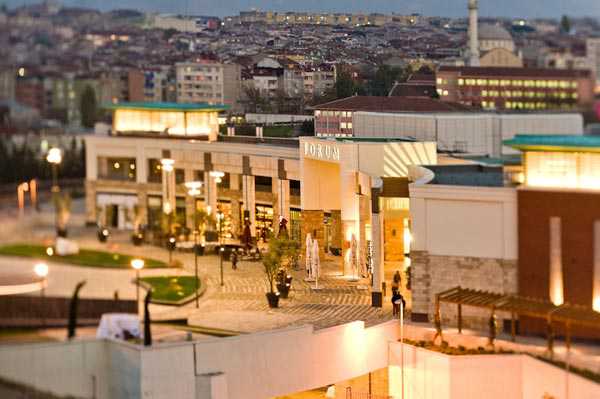
    Vakko HQ building

    Istancool, also known as the Istanbul International Arts and Culture Festival, is a packed powerhouse of a long weekend that also serves as the perfect introduction to what is arguably the hottest city on the current global art scene.

    Istanbul really does seem to have it all: a sophisticated and much traveled bourgeoisie, a small but very powerful group of collectors, a growing number of highly respected young artists, local museums and independent spaces, its own glossy magazines and unbelievably low rents. All in all, the city is a sort of “Berlin on the Bosporus” with the added advantage of being beautiful.

    Thus, it’s hardly surprising that galleries such as Lehmann Maupin and Paul Kasmin have launched satellite shows in this city, that Sotheby’s established a series of successful auctions of modern Turkish art in 2009, that the place is packed with creative exiles living on the cheap, or indeed that the artist Burhan Dogançay (b. 1929), having made Manhattan his base back in 1964, returned home to open his own one-person museum in 2004.

    And now it was recently announced that the Museum of Modern Art, MoMA PS1, and the Istanbul Museum of Modern Art have forged a new partnership to expand the Young Architects Program to Turkey. As Barry Bergdoll of MoMA put it, “The vibrancy of the architecture and design worlds in Turkey demands attention both locally and internationally.”

    Oya Eczacibas, chair of the board of Istanbul Modern, expressed her delight in signing the agreement with MoMA, describing her museum as being “committed to sharing Turkey’s artistic creativity with wide audiences and promoting its cultural identity in the international art world.” This could equally serve as a description of Istancool, if you also added teams of hipsters being jetted in from every corner of that pan-international Planet Chic.

    For Istancool is, as its name might suggest, definitively modish, putting the most fashionable contemporary art together with equally high-end fashion, style, design, photography, film, music and even club culture.

    Istancool also represents another micro-trend, that of the single-owner cultural festival belonging to one individual. Today it is no longer enough to have your own private art space or family gallery, what you really need is to host your own personal biennale. Thus it was that swimming pool and department store-heir James Moores originally launched his own Liverpool Biennale in 1998, Vanessa Branson founded her own Marrakech Biennale and Dasha Zhukova can organize regular cultural meetings in Moscow.

    Likewise Istancool essentially belongs to one very attractive and dynamic couple, Demet Muftuoglu Eseli and her infamously handsome husband Alphan. (At last year’s Istancool a misinformed Courtney Love kept assuring Demet “I’m going to have to f*ck your brother” until she was told of their actual relationship.)

    Demet is creative consultant to Vakko, a huge and highly prosperous fashion company that is twinned with the country’s most successful radio and TV group, Power, and this is presumably where all the funding for this lavish and glamorous cultural fiesta comes from.

    Based around a series of panels, exhibitions and events, Istancool veers between the academic, with a Turkish interviewer actually quoting Jacques Lacan, and the actively hedonistic, as evinced in a night-long riverside party hosted by New York’s Boom Boom Room.

    Previous participants have included everyone from Sophie Calle and Sam Taylor-Wood to Dan Colen and Ryan McGinley, and this third edition had managed to rally an equally impressive roster of visitors to take part in the two-days of PowerPoint discussions.

    Of these the star was probably Robin Rhode, newly represented by Lehmann Maupin, which has made him a major figure in Istanbul, where he had a show opening at the space Istanbul 74, which is also associated with the festival and indeed Vakko.
    This exhibition nicely demonstrated the dexterity of his oeuvre, that admixture of drawing, photography and film that so deftly mixes whimsy with social conscience.

    The other star was Pinar Yolacan, an artist whose CV absolutely encapsulates the new Istanbul scene, for though an ostensibly “Turkish” artist Yolacan studied fashion at St. Martin’s in London before going on to do fine art at Cooper Union in New York, where she still resides. Currently living in Istanbul, thanks to a prestigious teaching post, Yolacan is equally at home in either metropolis, seeing them as complimentary cultural centers, and her large-scale photographic works were as clearly appreciated by the Turkish audience as the weekending foreigners.

    Indeed Jefferson Hack, editor of Dazed & Confused, who held a slideshow Q&A with Yolacan, rightly saw the parallels between her works and the increasingly Surreal tendencies of current fashion photography.

    Yolacan was followed by a discussion between photographer Mario Sorrenti and his sometime editor Cecelia Dean, co-founder of Visionaire magazine, where the strong intersection between fashion and contemporary art was again made blatantly clear.

    These talks were held in the incredibly new HQ of Vakko itself, a sort of vacuum-packed Deconstructivist “broken bundle of mirrors” (to pretentiously quote Ezra Pound) designed by REX architects of New York and recent winner of a Wallpaper award.

    Here, the mixing, matching and mingling of all these various “visual regimes,” art, fashion, architecture, design, film, from the billboard advert to the museum atrium, from the computer monitor to the catwalk, from experimental laboratory to high-street store, was made abundantly clear. Thus Visionaire launched its latest edition, the largest magazine ever produced in the world, towering some 7 x 5 ft., an effort that was indistinguishable from a conceptual art installation.

    Curiously enough, the most popular and packed event seemed to be a signing by Carine Roitfeld, the Paris-based former Vogue editor, of a vast book of her work, essentially up-market photocopies of her already published magazine pages, which despite its $150 price tag inspired a frenzy of fans. This event was held at the beautiful Vakko library, which as further proof of the civilized nature of the company has just opened itself to the public, so that anyone can come and visit the HQ and consult their groaning shelves.

    The success of Roitfeld is surely an indication of our culture’s fascination with the relatively new role of the intermediary, the interpreter, in contrast to the originator or producer; her success as a “stylist” as opposed to actual clothes designer or photographer exactly paralleling the triumph of the curator over the artists themselves.

    One of the most celebrated artists in attendance, New York whiz kid Aaron Young, was particularly revealing on the pressures of just such curatorial and market pressures, as when he was asked by his interviewer Chiara Clemente if he would ever give up his signature motorcycle paintings. “I don’t know if they will let me stop,” he admitted. “It’s a little out of my hands at the moment.” It was perhaps the most honest statement of the whole weekend.

    Likewise another much-fêted downtown New Yorker, the eternally youthful Nate Lowman, made no bones about the importance of private collectors to his own esthetic, showing one of his earlier works, My First Check, a painting of a $3,000 money order from the Rubell family.

    Part of the purpose of Istancool is precisely to bring over the latest hottest artists such as Young and Lowman in order to show their work to their Turkish equivalents and, perhaps more importantly, show them Istanbul and all its rich potential.

    Thus this incubator as a sort of “first time” travel agent should not be underestimated, for nearly all the imported talent had never been to Istanbul before and swore they would be coming back, and as soon as possible.

    These visitors included Marco Brambilla, the fabled movie director video artiste who was actually here in Istanbul because a local collector has just committed to hosting a show of his major works, and Kyle DeWoody (daughter of collector Beth) launching the first international version of her Grey Area art and fashion boutique from Broadway in New York.

    The biggest bestseller of this said Grey Area, worn by everyone over the weekend, was blank fake Rolex watches designed by Shelter Serra, nephew of Richard, yet another family-name which along with Clemente and Cassavetes made clear that today’s celebrities are as dynastic as their royal predecessors.

    Istancool bears witness to the breadth of vibrant creative activity that has taken over Istanbul in the last few years. Witness the global art wanderer and connoisseur of beauty Sam Samore, a new resident of the city, camped out at the bargain rate Hotel des Anglais, who provides a sort of ultimate, secret imprimatur of serious art world credibility. As Samore puts it, “Istanbul is absolutely the most important city to be living in at the moment, why would anyone be anywhere else?”


    ADRIAN DANNATT is a Paris-based critic and writer.
  • Report Calls for Probe Into Death of Turkish President

    Report Calls for Probe Into Death of Turkish President

    By Ayla Albayrak

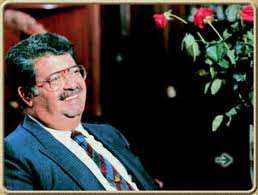
    The death of Turkey’s President Turgut Ozal in 1993 was “suspicious” and should be properly investigated, according to a report published Wednesday by Turkey’s presidential office.

    The State Supervisory Council, or DDK, which answers to Turkey’s President Abdullah Gul, said in its report that no autopsy or sufficient investigation was carried out into the sudden passing of Mr. Ozal, whose death almost 20 years ago was attributed to heart failure.

    “The sudden death of a president in office is always a ‘suspicious’ death,” said the 600-page-plus report, of which the 44-page conclusion was published on the Turkish president’s website. It said the fact that no autopsy was conducted and no evidence was collected in the presidential residence “could be illustrated as an eclipse of reason.”

    The report recommended that Mr. Ozal’s grave be opened for investigation, as modern technology could determine whether he may have been poisoned. In addition, a wisp of Mr. Ozal’s hair, kept by the widowed First Lady, Semra Ozal, could be used to aid any investigation.

    The Chief Prosecutor’s Office in Ankara and Mr. Gul commissioned the report.

    Over the years, rumors have persisted that Mr. Ozal, a controversial but popular leader, was murdered by poisoning. In recent years, his wife and other family members have talked publicly about their suspicions that Mr. Ozal died of unnatural causes. The report notes that Mr. Ozal survived an assassination attempt in 1988.

    The circumstances in which the president died remain unclear. There has been speculation over whether he had been exercising too hard the day of his death, or fallen suddenly without apparent reason, as his wife recalls.

    The DDK report blames the judiciary, state institutions and Mr. Ozal’s family for not pushing for an autopsy after the death, noting that according to many witnesses, Mrs. Ozal strongly resisted “cutting her husband.”

    Mr. Ozal was seriously overweight and suffering from hypertension, and underwent bypass surgery in the U.S. in 1987. His doctor recalled later in a Turkish documentary that without the operation, Mr. Ozal could have died of a heart attack within a year.

    Mr. Ozal was one of modern Turkey’s most prominent and longest-serving leaders. He was prime minister for six consecutive years before being elected President in 1989. History records him as having liberalized Turkey’s economy and initiated privatization programs, while helping to develop civil democracy in the aftermath of the country’s 1980 military coup.

    Mr. Ozal also gained enemies by touching on some topics considered taboo after the coup, such as the rights of Turkey’s Kurdish minority. He was of Kurdish origin himself. He promoted non-military measures to end the armed campaign by Kurdish rebels in Turkey’s southeast, which continues today and is estimated to have claimed some 40,000 lives.

    via Report Calls for Probe Into Death of Turkish President – Emerging Europe Real Time – WSJ.

  • Russian ex-spy Anna Chapman takes a turn on catwalk in Turkey

    By Associated Press

    Posted: 06/13/2012 10:41:05 AM PDT
    Updated: 06/13/2012 10:52:31 AM PDT

    ANKARA, Turkey — Russian ex-spy Anna Chapman has walked a Turkish catwalk in a long red dress at a fashion show, flanked by two men posing as secret service agents in black suit and sunglasses.

    Hikmet Eraslan said Wednesday his Dosso Dossi clothing company donated to Chapman’s charity foundation for children with poor eyesight in Volgograd in return for her appearance last Friday.

    The 30-year-old Chapman was deported from the United States in 2010 along with nine other Russian sleeper agents. She appeared on the runway in the Mediterranean city of Antalya, a top Turkish vacation destination.

    Chapman has been keeping a high profile since her deportation to Russia, modeling, editing a magazine, giving lectures and running the foundation.


    via Russian ex-spy Anna Chapman takes a turn on catwalk in Turkey – San Jose Mercury News.

  • Report: Turkey to buy $4b long-range missile system

    Report: Turkey to buy $4b long-range missile system

    In response to regional tensions, Turkey is looking to buy new air defense missile system, daily Zaman reports.

    By DPA and Haaretz

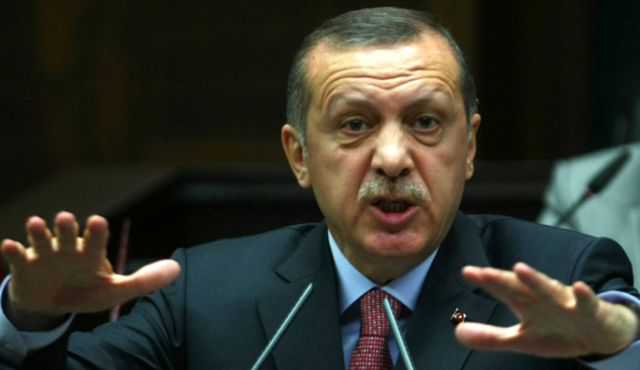
    Turkish Prime Minister Recep Tayyip Erdogan addresses members of his party at the parliament in Ankara, June 12, 2012. Photo by AFP

    Turkey clarifies: Trade sanctions against Israel include only defense industry

    By Haaretz and Barak Ravid

    Jun.13,2012 | 1:40 PM | 58

    Turkey’s suspension of trade with Israel is a double-edged sword

    By Yossi Melman | Jun.13,2012 | 1:40 PM | 14

    Erdogan to Obama: Israel risks losing its best friend in Middle East

    By Haaretz Service | Jun.13,2012 | 1:40 PM

    Turkey is planning to spend 4 billion dollars on a new long-range air defense missile system, in response to increasing regional tensions, the pro-government daily Zaman reported Wednesday.

    According to the report, four systems are under consideration: The US PAC-3 Patriot missile system, Russia’s S400, China’s FD2000 and the SAMP-T missile produced by the French Italian consortium Eurosam.

    A decision on which system Turkey will buy is due to be made at a meeting of the Defence Industry Committee chaired by Prime Minister Recep Tayyip Erdogan, which is scheduled for July 4.

    According to Zaman, the decision to buy a long-range missile system was taken because of the increased deployment of similar long-range systems throughout the region.

    In September, Turkey declared it will suspend all defense industry ties with Israel, after the the diplomatic relations between the two countries were downgraded.

    The decision was seen as part of a series of penalizing measures against Israel over the latter’s refusal to apologize for killing nine Turkish nationals on a Gaza-bound aid flotilla in 2010.

    via Report: Turkey to buy $4b long-range missile system – Haaretz Daily Newspaper | Israel News.

  • Istanbul: a fashionista’s paradise

    Istanbul: a fashionista’s paradise

    Shop Istanbul: a fashionista’s paradise

    Love shopping? We’ve got the perfect excuse to jet off to the Turkish capital. The Istanbul Shopping Fest (ISF) runs from now until 29 June. If you’re a fashion fanatic, don’t miss out on this vibrant event.

    When it comes to shopping destinations, the main ones that spring to mind are Paris, New York, London and Milan. But right now Istanbul is the place to go. This Turkish hot spot that spans continents, civilizations, cultures and beliefs, is rapidly becoming not only a shopping hub, but also one of entertainment and culture.

    During the Istanbul Shopping Fest, the streets of one of the most dynamic cities in the world, where east meets west, sparkle with lights and decorations. A whole range of cultural activities take place: concerts; street parties; parades; and competitions, bringing Istanbul’s shopping centres and main shopping streets to life.

    The festival spirit runs throughout the city, especially in the hundreds of shopping centres in neighbourhoods like Taksim, Nişantaşı, Şişli, Bakırköy, Fatih and Bahariye, as well as the main shopping areas like Abdi Ipekçi, Istiklal and Bağdat. And don’t forget to visit the must-see traditional markets, like the famous Grand Bazaar and the Spice Bazaar.

    During the three week festival, which is in its second year, you’ll have the chance to bag yourself a bargain from new collections offering generous discounts of up to 50 per cent. It’s an exciting chance for shopping lovers to see another side of this city whilst experiencing shopping between two diverse continents on the same day. And there’s an extra bonus – as a foreign visitor, you’ll be able to claim back part of the VAT at the TAX FREE points located in the shopping centres around the city!

    So for your next weekend getaway, when you fancy some great food, culture, and a spot of shopping, you know where to go.

  • Neo-Nazi Golden Dawn says Istanbul will be Greek

    Neo-Nazi Golden Dawn says Istanbul will be Greek

    More than 1000 Greeks gathered to commemorate for the loss of Istanbul to the Turks more than 550 years ago (!!!)Their leader made a speech in the street in front of 1000s and said that they will never rest `till the day they see Istanbul inside the map of Greece;

    Quote: Neo-Nazi Golden Dawn says Istanbul will be Greek
    The supporters of Greek neo-Nazi party Golden Dawn, which won nearly 7 percent of the vote in an inconclusive election on May 6, marched on May 30 chanting “Istanbul is Greek and will remain Greek.”Some 1,000 far-right Golden Dawn supporters gathered in Athens city center to protest the 559th anniversary of the capture of Constantinople by the Ottoman Empire and marked the date with a number of events held in the city on May 29.

    Golden Dawn`s gypsy leader singing Greek national anthem;

    Golden Dawn leader Nikos Mihaliolakos also said, “Istanbul is Greek and will remain Greek,” during the protest. The group chanted the national anthem and made the Nazi salute. June/01/2012 The gypsy neo-nazi speaks;     The event ended with a moment of silence with nazi salutes of 1000s, then delusional Greek youth randomly attacked and injured five middle-eastern immigrant they found in the Athens subway in the same night, probably to soothe their anger on the weaklings;

    Quote: Passengers of the Athens Piraeus Electric Railways (ISAP) witnessed several attacks against immigrants by supporters of the neo-Nazi party Golden Dawn.On Tuesday night, 30th of May, a group of youngsters attacked a Pakistani immigrant on St Nicolas Electric Railways station deck, causing him multiple injuries. According to eye witnesses, the perpetrators were shouting slogans of the neo-Nazi Golden Dawn party. Police also examines that the perpetrators possibly came from Golden Dawn’s rally commemorating the fall of Constantinople in 1453. Subway passengers also witnessed other violent incidents against immigrants by supporters of the neo-Nazi Golden Dawn, who had participated earlier in their party’s rally in the Athens centre. Golden Dawn denied, in a statement, any involvement in violent incidents [1, 2 & 3].   Two days earlier (28.05.2012), a 33 year-old Bangladeshi immigrant was stabbed and robbed of 130euros in a wagon at Omonoia subway station. According to the Subway workers union, passengers witnessed the perpetrator shouting slogans of the neo-Nazi Golden Dawn party [1]. In another incident in Ilioupoli suburb, strangers attacked and injured an Iranian immigrant with a sharp object. Then, the offenders attacked and robbed a couple that was leaving in another floor of the building [2]. http://www.red-network.eu/?i=red-net…n.items&id=835