Blog

  • Turkish Delight

    Turkish Delight

    ISTANBUL: MEDUSA’S HEAD IS upside-down, her snake-hair rippling above the water. The savage beauty – whose look could turn you to stone – is floating above a cistern: the universal word for tank which gains something murky in translation to Irish-English because of its very specific use here.
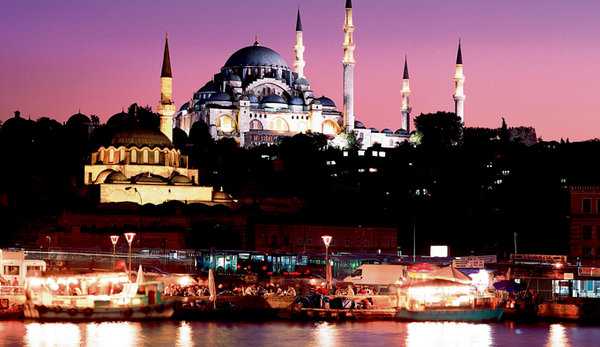
    ANCIENT BEAUTY Sultan Ahmed Mosque at night PHOTOGRAPH: THINKSTOCK
    ANCIENT BEAUTY Sultan Ahmed Mosque at night PHOTOGRAPH: THINKSTOCK

    ANCIENT BEAUTY Sultan Ahmed Mosque at night PHOTOGRAPH: THINKSTOCK

    But this cistern is a magical, cavernous underground cathedral where stone columns – Ionic, Doric and even leafy Corinthian – stand calmly in the still, vast bath. Medusa heads have been carved at the bases of two of the columns: one sideways and one upside down – the reason apparently being to ward off evil spirits (although it could have been practical: supporting the columns better in these positions).

    So much is heavily marketed in our world, skewing our expectations (and, if you are disappointed because descriptions have been overblown, too bad: they’ve got your money now), that when something does turn out to be gorgeous, you reap one of life’s sublime surprises.

    A waste-water storage facility isn’t as grand a prospect as a mosque or cathedral, but the Basilica Cistern’s proximity to the Blue Mosque and Hagia Sophia, in the old part of Istanbul, brings tourists here as an also-ran.

    There are taps outside the Blue Mosque (or Sultan Ahmed Mosque), in recesses in the 17th-century stone wall, where worshippers can clean themselves, as they must do before addressing their God, although the evident lack of people using this very public facility suggests that many nowadays undertake the task at home before being called to prayer. The next task is to take off your shoes – having passed the funeral area outside the entrance – then pad around on the carpet within.

    The blue is truly wonderful, the azure ceiling like a brilliant mosaic sky. But its full effect is filtered through thousands of wires hanging from the ceiling to support lamps that dangle just above head height. Tourists are held back, behind a wooden barrier, from the worshipping area where a man stands alone on a far platform, bending in prayer.

    In Hagia Sophia – across a courtyard – a stray cat sits on a platform at the front of the mosque showing that this vast, majestic building can easily accommodate all-comers, all the while retaining its stature and capacity to delight. Tourists teem through, walking up its sloping stone-floored tunnel to reach the upper level where a fresco of Jesus has eyes that follow you around the room. The idea was that he was always watching you: be good.

    The building has seen many visitors in its nearly 2,000 years of existence. It started as a Greek cathedral, later becoming a Roman Catholic church and then a mosque before being secularised in 1931. It is now a museum.

    And that’s illustrative of Istanbul, which spills across water, spanning the Bosphorus and Golden Horn waterways. Symbolically cleaved at the conjunction of Europe and Asia, it is the only city in the world on two continents. Crammed with an estimated 13.5 million people, it has a personality that reflects its geographical positioning.

    It feels like a city hankering for the perceived benefits of a westernisation – although, is that gloating I sense from the newsreader presenting the troubles of Greece? – while retaining a strong eastern identity. Christian and Muslim traditions rub shoulders, in a country where the Muslim faith is widely followed but not enshrined in law.

    This situation offers freedom for various levels of expression, starkly illustrated at a traditional Turkish dancing evening which descended into belly dancing by surgically appended women jiggling their breasts and hips audience-wise to the obvious delight of one local man, who hollered and laughed, and practically dribbled, all the while hugging his wife – who wore a long dress and headscarf.

    Globalisation, and the fact that the city is now becoming a weekend-break destination for Europeans (with a Turkish Airlines flight from Dublin in just under four hours), will bring a greater western influence.

    Istanbul’s old city offers rich Turkish tradition, to the joy of tourists who take advantage of having the must-sees all within a walk of each other, near Hagia Sophia and the Blue Mosque is Topkapi Palace, the vast home of Ottoman sultans for 400 years (1465-1856). In that time they acquired vast hauls of jewel-encrusted garb and household goods and constructed a harem building that could hold 300 women. Here you can drink tea by the Bosphorus or, if you visit in the winter, run into the cafe and warm your hands over a bowl of hot coals.

    In the Grand Bazaar you can find beautiful carpets, cushions, fabrics and blown glass, as well as soaps and oils of sensuous plants, although there are now also fake handbags (Tod’s and Mulberry) and the main drag of glass-fronted jewellery shops is more Bond Street than traditional market.

    Yet there is a real gem, down near the spice market by the Bosphorus. It is a long, thin street running parallel to the river, where locals buy anything they want from guns, frilly gauze to tie on newborns’ cradles, hammers, cheap runners, spades and spices, to handmade steel extractor hoods. There is also coffee, for which there is a huge queue waiting outside a window where young men packing the precious beans at speed.

    All these and more can be found dangling from the tops of stalls that are stuffed with goods as well as at waist level on tables and within the small rooms beyond. Anything you want – historically, culturally, religiously, socially and commercially – you can get in Istanbul.

    * City breaks to Istanbul are available from wingsabroad.ie, tel: 01-8719444 or a travel agent. A weekend package with Turkish Airlines, Europe’s Best Airline 2011 ( turkishairlines.com), staying at the Seres Hotel costs from €319pps.

  • Outstanding kebab in Istanbul

    Outstanding kebab in Istanbul

    At 6 PM on a Monday evening the dining room of Adana Ocakbasi was nearly full and the wide grill in the corner was covered with skewers loaded with meat. While most restaurants, worldwide, were closed or waiting for a slow night to start, this neighborhood kebab house was busting through a bumper rush of early birds in for a quick lamb chop or two on the way home. The dinner crowd had not even arrived.

    “This place will ruin you,” said our waiter showing us to two stools at the marble counter that circles the grill, the smoking heart of the room. “You wont be able to eat meat anywhere else.”

    The usta behind the grill skewered, slapped, turned, shifted, spiced and plated meat with the concentration of a tantric yogi. When he reached a relatively calm moment in his grilling cycle, he gently mixed a bucketful of sumac and raw, chopped onions with his hands – all of it an awesome sight of endurance. If we we’re going to be ruined we might as well enjoy the show.

    Along with a bottle of raki, we ordered a couple of starters – an excellent ezme, a relish of finely chopped onions, tomatoes, red peppers and plenty of parsley dressed with olive oil and pomegranate molasses, and kozde patlican, a whole eggplant grilled until the inside has gone meltingly floppy and then peeled. Served with small fresh rounds of tirnakli ekmek, a flatbread ubiquitous in kebab houses, the meze clearly play a supporting role to the meat here, but they were simple and delicious.

    We soon moved onto the stars of the show, ordering a couple of skewers of just about everything we’d seen on the grill. Small cubes of lamb liver and cop sis, tiny bits of marinated beef bookended by slivers of fat came out first. There is an entire classification of restaurants in Istanbul devoted specifically to grilled liver and cop sis and not one of them serves liver as tender and succulent as Adana Ocakbasi. It would be well worth a visit for the liver alone, but a crime to leave before the parade of bone-in cuts made their way from the grill.

    The lamb chops and ribs, liberally dusted in red pepper and thyme, were so juicy they drenched the thin sheet of lavas beneath, making it all the more palatable. The beyti kebabi – in our favorite rendition, a sis of Urfa wrapped in lavas, cut into slices and drizzled with tomato sauce and yogurt – was nothing more than a sis of Urfa kebab, minimalist for a beyti, but exceptionally tasty.

    Already full and hooked on this place, we needed a little something more to tide us over until the next visit. Scanning the grill, we asked about uykuluk, or sweetbreads, a specialty often found on kebab house menus but rarely in stock. Within minutes our usta was sliding a dozen or so small charred orbs onto a plate for us. Springy in texture, this uykuluk carried a characteristic whiff of organ meat, which stood up well against the spice dusting and the char from the grill. These well-prepared sweetbreads, more than the meat even, were our personal ruination.

    Paying the modest bill and leaving the room packed with people feasting on prime cuts of lamb, we felt as if we’d just been initiated into a carnivorous club. We imagined one day having two seats at the grill designated as “our usual” spot. If being “ruined” means becoming a regular here, that’s a fate we welcome.

    Address: Ergenekon Caddesi, Baysungur Sokak 8, Pangalti

    Telephone: +90212 247 0143

    (photo by Ansel Mullins)

    via Outstanding kebab in Istanbul | Istanbul Eats.

  • Armenian Diaspora is having disagreament over $$ :Attorney endorsed $300,000 in genocide settlement checks

    Armenian Diaspora is having disagreament over $$ :Attorney endorsed $300,000 in genocide settlement checks


    The National Law Journal


    June 13, 2012


    Robins Kaplan’s Roman Silberfeld


    Related Items


    §  Judges gives lawyers in Armenian genocide case two weeks to resolve feud over claims processing


    A contentious dispute between plaintiffs counsel over more than $2.8 million thought missing from a $17.5 million settlement in an Armenian genocide case has shifted its focus to a Los Angeles attorney who endorsed $300,000 in checks for claimants.

    The latest development introduced another complication into an ongoing rift over a botched claims process between Mark Geragos and Brian Kabateck, the plaintiffs attorneys who obtained the settlement, and their former co-counsel, Vartkes Yeghiayan, of Yeghiayan Law Corp. in Glendale, Calif.

    Before their acrimonious split, the legal team represented millions of descendants of Armenian genocide victims in a suit against French insurer Axa.

    Both sides told U.S. District Judge Christina Snyder on Dec. 5 that they had resolved their dispute “in principle” after an independent accountant identified the recipients of $2.1 million of the money.

    During a hearing on June 11, Geragos, a partner at Geragos & Geragos in Los Angeles, and Yeghiayan’s attorney, Roman Silberfeld, managing partner of the Los Angeles office of Robins, Kaplan, Miller & Ciresi, asked Snyder to order the $2.1 million distributed immediately to 100 identified claimants and for the remaining $700,000 to be placed into a separate bank account under Geragos’ and Yeghiayan’s names.

    The money previously had been placed in two accounts under the control of Parsegh Kartalian, the claims administrator.

    But new problems have arisen. In going through hundreds of files on potential claimants, the accountant was unable to find files for 36 of them, Silberfeld said in an interview. At the same time, 17 checks worth $300,000 written to those claimants had been endorsed by Berj Boyajian of Boyajian & Associates in Los Angeles, he said. In court documents, Geragos said that Boyajian had deposited the money in his law firm account, citing a report filed under seal by Yeghiayan.

    During the recent hearing, Silberfeld and Geragos suggested that Boyajian be deposed, although their reasons differed.

    Geragos and Kabateck, according to court documents, want to investigate what Yeghiayan knew about Boyajian’s involvement. They asserted that Yeghiayan and Boyajian were formerly “friends and confidantes.” The two have filed a separate lawsuit against Yeghiayan, accusing him of having made up charities to siphon $1 million out of the Axa settlement and another Armenian genocide case for his personal and law firm expenses. Snyder has stayed that case until the underlying claims dispute is resolved.

    Silberfeld insisted that his client was no friend of Boyajian’s. In the interview, he said that Kartalian, the funds administrator, testified that he never gave Boyajian any of the settlement checks and that some claimants told him they never authorized Boyajian to sign or deposit checks on their behalf.

    “This all appears to be very suspicious,” he said.

    Boyajian said in an interview that the checks were deposited “with the consent of the recipients, the claimants.” He declined to say more.

    The Axa case, which settled in 2005, involved life insurance payouts to descendants of victims of an episode between 1915 and 1923 during which 1.5 million Armenians were killed in what is now Turkey. The settlement had allocated $3 million for organizations focused on Armenian causes; whatever remained unclaimed was to go to additional charitable institutions.

    Last year, as the claims process was winding down, Yeghiayan raised concerns about how the settlement money had been dispersed; more than $2.8 million was found remaining in bank accounts that Geragos and Kabateck, managing partner of Kabateck Brown Kellner in Los Angeles, had sought to close. Snyder refused Yeghiayan’s requests to appoint a special master but ordered Geragos and Kabateck to produce bank records.

    During the hearing, Silberfeld credited his client for having first brought up the subject of the missing money. “I don’t know what would’ve happened to that money had Mr. Yeghiayan not spoken up when he did,” he said.

    Snyder, who approved distribution of the $2.1 million and the change in control of the bank accounts, stopped short of ordering Boyajian’s deposition, noting that she might have a conflict because her husband might have represented him in a “matter in Kansas City.” But she seemed open to an investigation of Boyajian.

    She scheduled the next hearing for Aug. 27.

    Contact Amanda Bronstad at [email protected].


  • The Daily Telegraph: Fazil Say and Turkey’s war on atheism

    The Daily Telegraph: Fazil Say and Turkey’s war on atheism

    Tom Chivers

    Here in Britain, we are told there is a war on Christianity. Quite why people think that is a little beyond me, since we’re still technically a Christian country, we have 26 bishops automatically appointed to the House of Lords, and whenever a former Archbishop says “Christian voices are being silenced” it silently gets plastered all over the front pages of every newspaper. But it’s worth remembering that in some parts of the world people actually do have to worry about what they say about their religion, or lack thereof. What’s surprising, though, is how close to home some of those places are.

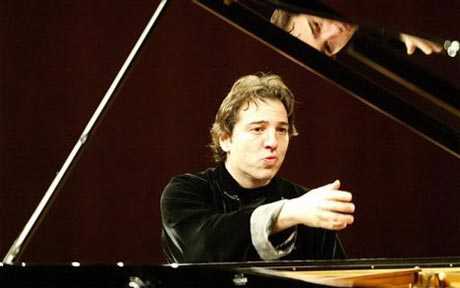
    Fazil Say, a Turkish composer and pianist, has said that he is going to leave his native country and move to Japan after he was placed under investigation by the Istanbul Prosecutor’s Office for “insulting religious values” and offending Islamic belief. His (alleged) crime? Tweeting that he is an atheist: “I am an atheist and proud to have said it loud and clear.” He also gently mocked the call to prayer (“The muezzin has recited the evenin azan in 22 seconds. What’s the rush? Lover? Raki binge?”) and reportedly said that since you get promised drinks and beautiful women for doing good deeds, Heaven sounds a bit like a pub or a brothel.

    It’s hardly savage stuff, but under Turkish law anyone convicted of insulting “religious values” can be sentenced to up to a year in prison. (One wonders whether this applies to all religions. Scientologists and Mormons must love the idea of a country where laughing at particularly silly religious stories is illegal. “So the angel who gave you these golden plates which said that we should give you all our money was called Moroni, eh?” “All right, chum, you’re nicked.”) So Say might be in actual trouble. “If I am sentenced to prison, my career will be finished,” he says.

    Two things are worth noting about this. One is that Turkey could soon be a member of the European Union (if it’s foolish enough to still want to join) – and I hope it should go without saying that if you’re in the business of jailing people for not believing in God, then you should not get anywhere near even consideration.

    The other is that it is a reminder of how rare it is for people brought up Muslim to admit to atheism. In a moving piece in this month’s New Humanist, the science teacher and programme-maker Alom Shaha writes about how he was called “brave” after deciding to write The Young Atheist’s Handbook, a book about how he grew up atheist in an Islamic family in south-east London. “[B]ecause I come from a Bangladeshi background, because I was born into and grew up in a Muslim community, people who don’t know me, who haven’t read the book, have leapt to the conclusion that I must somehow be ‘brave’, and this worries me,” he says. “I’m worried because there’s something insidious about the idea that I am brave, because at the heart of that suggestion is a very negative view of Islam and Muslims.”

    He’s referring, of course, to the fear that there will be violent reprisals, and I think he’s right to discount them. People seem to think that there is a law of omerta about Islam in the British newspaper industry, but actually the religion is criticised often in print and online – including once or twice by me, and I’ve never had so much as a rude email. But Alom, whom I know slightly (I’ve lost at poker to him), is, I think, being brave in another way, which he reveals here:

    I know a number of “ex-Muslim atheists”. We gather in pubs, raise glasses of alcohol in celebration of our godlessness and order the sausages and mash to demonstrate we don’t believe there’s any good reason (apart from vegetarianism) not to eat pork. But I am one of a small minority of “ex-Muslims” who is openly atheist in my day-to-day life.

    It’s still harder for someone of Islamic extraction to “come out” as an atheist than it is for most people of Christian background. And this is in Britain, where (thankfully) we have no ludicrous blasphemy laws any more. Turkey is officially be a secular country – set up as such by Kemal Ataturk, who was so powerfully set against the nation’s traditions that he banned the wearing of fezzes and turned the Ayia Sofia from a mosque into a museum. But nowadays the ruling party, which has been in power since 2002, is strongly connected to Islamic conservatism, and is drawing Turkey towards the sort of radical Islam to which the country has never previously been inclined. As the Fazil Say case shows, the state is quick to take action against perceived attacks on Islam, which it apparently believes includes statements of disbelief. (Regular readers might remember that the Turkish government recently tried to censor online mentions of Darwin, as well. Clearly there is a frightened-of-reality streak in the country’s ruling classes.)

    Now. People in this country might get all hot and bothered about the March of Intolerant Secularism (which, to a secular atheist’s ears, normally sounds like “How dare they make me obey the same rules and laws as everybody else”). But in fact secularism – the utterly reasonable state of affairs in which governments do not get involved in religious belief – has not marched far enough. The Islamic world, even the so-called moderate bits like Turkey, would benefit enormously from a stronger secular movement, and more people, like Alom and like Fazil Say, who are brave enough to admit that they do not believe.

  • Queen Beatrix visits Turkey

    Queen Beatrix visits Turkey

    Queen Beatrix is in Turkey on a two-day visit as part of the celebrations to mark 400 years of diplomatic relations between the Netherlands and Turkey. Today, she will meet with students and scientists for lunch and this evening she is due to attend a dance performance followed by a reception for numerous participants in the cultural events organised to mark the anniversary.

    The Netherlands’ first diplomat to the Ottoman Empire, Cornelis Haga, was sent to Constantinople (now Istanbul) in March 1612. Since then, trade between the two countries has been strong. The Ottoman Empire defended the Dutch Protestant faith against persecution by the Spanish, giving rise to the Dutch saying “I’d rather be a Turk than a Roman Catholic.”

    A visit by Turkish President Abdullah Gül in April was marred by comments made by Freedom Party leader Geert Wilders who called the president a “Kurd-basher and Hamas-lover” and said he was not welcome. In turn, in an interview with Dutch daily De Telegraaf, President Gül called Mr Wilders an “Islamophobe”.

    via Queen Beatrix visits Turkey | The Muslim Times: A Blog to Foster Universal Brotherhood.

  • Forty Thorns by Judy Light Ayyildiz

    Forty Thorns by Judy Light Ayyildiz

                   Forty Thorns by Judy Light Ayyildiz


     A Dignified Story Of The Balkan Tragedy and Nation Building

    Book Review by Ergun Kirlikovali


    Can you hear the silent cries?  Of a lonely baby here?  A grandmother there?

    Can you feel the pain of broken families? Lost siblings and parents? Destroyed lives? And little dreams?

    Can you sense the sights and sounds of those subtle impressions of turbulent yesteryear?

    So close to your heart and soul, and yet, so far to your tired mind and daily grind…

    So painful and vivid, and yet, so lacking and forgettable.

    Then, in the middle of vast nothingness, profound suffering,  and unrelenting deficiency… you come across hope, magnanimity, and dare I say, renewal!

    I am, of course, talking about countless weary Turks today who trace their lineage to the infamous Balkan Tragedy.

    You touch the little dreams of these tormented people, and “Puff!”, they turn into magnanimous giants…  “What a heart!” you conclude,  “after all that torment, all that pain, all that loss, not a single manifestation of depression or rebellion or, god forbid, hate…”


    These are the sentiments that tossed me like tumbleweeds into a forgotten past of a sad geography while I was reading Forty Thorns.  Frankly, I was not quite ready for what awaited me in the unassuming pages of this heart wrenching literary fiction.

    In one episode when the main character, Adalet, was describing the sights and sounds of that last “escape train” from Bulgaria in October or November of 1912, I thought my heart was pounding so hard that it would escape my chest.

    Adalet, the main character, in her 80s

    (Photo courtesy of Judy Ayyildiz)

     I was reading as fast as I could, perhaps not paying due attention to the genuinely brilliant story telling that the writer, Judy Light Ayyildiz, generously put forth, with the hope of coming across some evidence of personal value.  When I read the lines where Adalet hears voices of a baby, I thought this was my eureka moment… my moment of truth and I began to review an oral history that I hold in my own mind:

    This little baby boy grabbed my attention.  He was crying but there was nobody around to care of him. What was his story?  I approached and picked him up.  I noticed a piece of crumpled, old paper, pinned on his tiny baby clothes, with some faint words scribbled on it, apparently in haste:   ‘Akif’s son Ratip. Born in 1911. Kirlikova’.   I didn’t know what to do.  So I handed him over to the Ottoman Official whose name tag read….”

    Yes, unbeknownst to Adalet, and probably to most readers, there was another inconspicuous rider on that train:  a one-year-old baby with no parents, relatives or even acquaintances accompanying him.  A solo traveler who was totally left in the care of the Ottoman officials.  That one-year-old, orphan baby boy was my father and I was desperately looking for clues in Forty Thorns about my dad’s presence on that train.  Alas, I did not have any!   I still owe the writer a debt of gratitude, however,  as she brought me so close to that eternally elusive moment.

    I totally understand that as Adalet, the main character, was too concerned about the well being of her own family to worry about a homeless baby, one of perhaps hundreds, even thousands,  on that train.  I might read the book again to see if I have missed any clues as it is a fantastic reading, after all.

    When I retire, in about, say, a million years from now, I plan to tell my parents’ story.  On one side, my  father, a one-year-old baby from the village of KIRLIKOVA in 1912, which is located in the borderline area of rolling hills where Bulgaria meets Greece today, but neither apparently meets humanity.  And on the other, my mother, half of whose parents and grandparents were also slaughtered but in another Balkan town, Skopje (Uskup in Turkish), and by another Balkan Christian group, Serbians.  My mother’s story is similar, but involves no train as it was not deemed safe enough; just on foot alongside ox-pulled-cart caravans and through roads least travelled, for safety reasons—some safety; half the family could still not escape painful death at the hands of marauding Christian revolutionaries..

     We, Turks, do not tell our tragedies; we just want to forget about them and move on with hope towards the promise of rekindling and rejuvenation.   While it may be understandable, that does not make it right.  So, I thank the writer, Judy Light Ayyildiz, for telling her mother-in-laws’ compelling story, which happens to be my father’s story, give or take a little, and quite possibly yours, too, and in fact, the story of most Turks today.

    Judy Light Ayyildiz, the author

    (Photo courtesy of Judy Ayyildiz)

    I am not surprised that Forty Thorns has just won 1st Place in Literary Fiction awards and also become a finalist in Historical Fiction given by the International Book Awards. (See the link: http://www.internationalbookawards.com/2012pressrelease.html .)

    Those who scream genocide of this or that today would be eternally ashamed to level those charges against Turks if they knew about half the cruelty  and deaths Turks suffered at the hands of Balkan Christian nationalists during the many Balkan Wars (1877-1913) and Anatolian Christian nationalists during  armed revolts (1882-1922,) World War One (1914-1918,) and, finally, the Turkish Independence War (1919-1922.)  It may be said that from 1877 to 1922, Muslims, mostly Turks, were subjected to unspeakable tortures, brutality, mortality, and forced migrations, all of which are still conveniently ignored in the West.   The fact that Turkish suffering is untold may explain why it is still largely unknown today.  This wonderful novel,  Forty Thorns , is only the tip of the iceberg of that period of history. 

    Judy Ayyildiz and her mother-in-law, Adalet

    (Photo courtesy of Judy Ayyildiz)

    I am moved by the incredible resilience of those Turks during nation-building years.  

    How can one create something out of nothing?  

    Who are those people with true grit?

    Well, read the book to find out.

    Balkan Turks fleeing death and destruction at the hands

    Of Balkan Christian nationalists (1912)

    (Photo: courtesy of http://www.eraren.org  )

    After reading Forty Thorns, I felt I knew nothing about matters of suffering and loss, as I have not experienced anything even remotely close to what Adalet and her family, friends, and others have gone through:  torment, disappointment,  adversity,  scarcity, and more.  But eventually, some sense of triumph.  Well, sort of. 

    I feel  I am doing this book injustice by this review as I have dwelled so much on suffering and loss and not enough on renewal and nation building during the Ataturk years of the Republic of Turkey.  

    One must read with compassion to see how women and children are empowered and educated in those years of grinding poverty, endless wars, and exhaustion.  I will defer this task to the book.  The reader will appreciate what I mean as the story sadly unfolds.

    Finally, I do not want to spoil the fun by telling who did what, but I feel compelled to quote this poignant Turkish poem on page 328, composed by the main character, Adalet, with riveting simplicity and profound impact, with heart and soul,  for which I am humbly proposing this new English translation, to make it even more heartrending, just like the way it truly is in its magnificent original Turkish:

    My Joyful World is torn apart,

    Shrunken on its axis.

    The candle of love went out,

    My heart became a shrine-keeper.

    May your candle of love never go out…

    Ergün Kırlıkovalı