Blog

  • Protected: ‘Turkey investigating IHH head for funding al-Qaida’

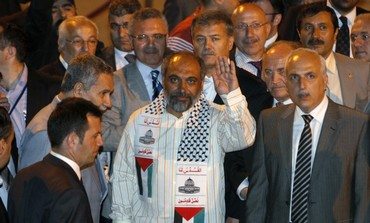
    Protected: ‘Turkey investigating IHH head for funding al-Qaida’

    This content is password-protected. To view it, please enter the password below.

  • ROS-LEHTINEN: Time for Turkey to leave Cyprus in peace – Washington Times

    ROS-LEHTINEN: Time for Turkey to leave Cyprus in peace – Washington Times

    Long-standing occupation amounts to annexation

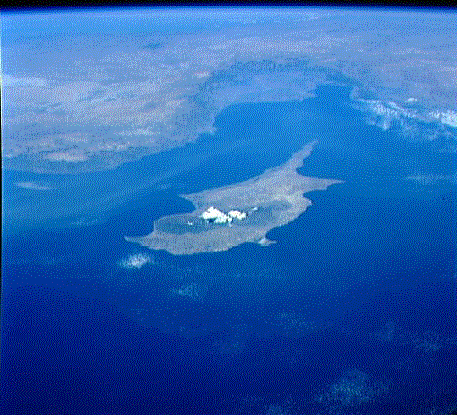
    Illustration Cyprus under Turkey by John Camejo for The Washington Times

    Since its invasion of Cyprus in 1974, Turkey has claimed that it was acting as a protector and guarantor of the island’s security. But a closer examination of its actions on Cyprus indicates motivations of a very different character. Turkey’s invasion resulted in hundreds of thousands of Greek Cypriot refugees, who have been unable to return to their homes for almost 40 years. The international community has repeatedly condemned the illegal military occupation of Cyprus by Turkish troops. The United Nations Security Council has passed 75 resolutions calling for Turkey to allow Greek Cypriots to return to their homes and to withdraw its troops from Cyprus. Yet Turkey continues its occupation.

    More than 40,000 heavily armed Turkish soldiers are occupying the northern part of the country, with one Turkish soldier for every two Turkish-Cypriots. The presence of this overwhelming force cannot be justified by the claims that they are needed to prevent any renewal of violence. In fact, since the 2003 opening of the border between the two communities, more than 17 million intercommunal visits have occurred without conflict.

    The result of this occupation by foreign troops is that many Cypriot neighborhoods in the occupied areas remain vacant or in a state of disrepair. One of the most tragic examples is the Varosha region of Famagusta. Once an important commercial and tourism center for the island, Varosha was fenced off following the invasion, and access has been prohibited for all except Turkish military forces. Over the years, this area has become a virtual ghost town.

    The desolation of Cypriot properties and cultural sites is not restricted to Varosha but is a reality in all the areas under Turkish military occupation. In fact, an estimated 520 Greek Orthodox churches and chapels, and 17 monasteries in the occupied areas have been pillaged, vandalized or destroyed. Often these religious sites have been converted into stables, bars, nightclubs, casinos or hotels, leaving more than 15,000 religious artifacts unaccounted for. This widespread destruction of Cypriot historic, religious and cultural identity certainly does not seem like the behavior of a “protective guardian.”

    Turkey also continues to interfere in the domestic affairs of Cyprus, especially the negotiations on reunification. The goal of these talks is a Cypriot-developed, mutually agreeable settlement based on a bizonal, bicommunal federation with political equality, including a single sovereignty, single citizenship and single international presence. But instead of allowing the representatives from the Turkish-Cypriot community to engage freely in the talks, the Turkish government has imposed its own criteria, which has made an agreement all but impossible.

    Turkey also has tried to limit Cyprus‘ sovereign rights to develop its energy resources. Despite the island’s critical energy needs, Turkey declared last year that it had “nullified” the exploration agreement between Cyprus and Israel even though it has no right to do so. Turkey escalated the conflict by sending its own ships to the region and even threatened military action if Cyprus continued in its project with Israel. Although from the beginning, Republic of Cyprus President Demetris Christofias guaranteed that any energy resources discovered would be used for the benefit of all Cypriots, Turkish officials claimed their actions were to protect the rights of the Turkish-Cypriots.

    Reports by the Turkish-Cypriot media indicate that the Turkish government continues to promote illegal immigration by Turks to the northern occupied areas of Cyprus with the goal of changing the demographic composition of the island. According to people administering the occupied area, there are an estimated 160,000 settlers from Turkey, many of whom occupy the homes of the evicted Greek-Cypriots. However, reports in the Turkish-Cypriot press from Turkish-Cypriots who live among the Turkish settlers put this number between 500,000 and 800,000. A recent “census” in the north indicated that the total population in the north had increased to nearly 300,000 people. Just 88,900 of them were native Turkish-Cypriots, who are outnumbered by illegal Turkish immigrants by a ratio of almost 2-1.

    Ankara’s support for these illegal immigrants is not welcomed by the native Turkish-Cypriot community. In fact, Stella Altziman, who resides in that region of Cyprus, wrote in 2010: “Due to constant migration from Turkey, [the northern occupied area] is like a Turkish province” and the native Turkish-Cypriots have become a minority in their own land. Last year, many Turkish-Cypriots protested Turkey’s policies toward Cyprus, with some carrying banners that read, “Ankara, get your hands off our shores.” Yet Turkey continues to flood its areas of occupation with illegal Turkish immigrants. In his visit to Cyprus last year, Turkish Prime Minister Recep Tayyip Erdogan mocked the Turkish-Cypriots, stating, “If you don’t want us to send people, you need to have more babies.”

    By its occupation, Turkey is “guaranteeing” nothing but a creeping annexation. It is time for Turkey to withdraw its military troops, end all support for illegal immigration to Cyprus and let the true inhabitants of the island determine their own future. Only then will the long-suffering Cypriot people finally enjoy the peace and security they have been trying so desperately to achieve for decades.

    Rep. Ileana Ros-Lehtinen, Florida Republican, is chairman of the House Foreign Affairs Committee.

    via ROS-LEHTINEN: Time for Turkey to leave Cyprus in peace – Washington Times.

  • Rafting in Istanbul: Where rapids and cultures collide

    Rafting in Istanbul: Where rapids and cultures collide

    One of the world’s most significant cities in terms of history, geography, culture, and politics, Istanbul is the gateway between Europe and Asia. Straddling the Bosphorus Straight – a narrow causeway between the Mediterranean Sea (represented by the Sea of Mamara) and the Black Sea – the city is a conglomerate of Eastern and Western culture and a popular tourist destination.

    The Coruh River, the most thrilling whitewater rafting. Image: Flickr/ Charlie Brewer

    While the unique geography of Istanbul has made it a principal metropolis in the region for two thousand years, the hills, seas, beaches, and the straight also create excellent opportunities for rafting in Istanbul – for residents and visitors alike.

    Naturally, sailing has evolved as a popular activity for water goers. But the mountains and rivers of Turkey make rafting the more tempting of treats.

    The Melen River lies two hours east of downtown Istanbul. Tour companies are available to pick you up from the door of your hotel booked through HostelBookers.com and drive you to the riverside drop off location in Duzce. Rafting the predetermined 11 kilometres normally takes about an hour and a half. Many tours offer lunch at a stopping point halfway down the course. Here you’ll have an opportunity to eat, relax, lounge the in the sun, capture a few pictures, and enjoy the mountain scenery.

    Istanbul, rafting in Istambul, rafting, rafting holidays, Turkey, rafting in Turkey, cheap hotels Istanbul

    Istanbul, a great rafting destination. Image: Flickr/ josu.orbe

    Arriving at the end point, participants will have a chance to shower and change their clothing at an established facility before the drive back to Istanbul. The tour down the Melen takes one full day including transportation to and from the river. The rapids are family friendly and provide an excellent outdoor excursion away from the bustle of town.

    Another notable rafting location a few hours outside of Istanbul is on the Coruh River near the towns of Erzurum and Yusufeli. Approximately 150 kilometres of the Coruh are good for rafting as well as 20 kilometres of one if its tributaries, the Barhal River.

    The rapids here are more challenging that than those of the Melen River.

    Some sections of the rivers are classified as Level Five difficulty and rafting experience is strongly recommended before taking on these challenging rapids.

    The best time to visit Istanbul and take advantage of the rafting opportunities around you is in the summer, from May through September. While the water temperature will be chilly, the air temperature should be pleasantly warm and you will be far from the fog that notoriously hangs over the buildings of Istanbul during these months.

    With cheap hotels Istanbul is appealling for both backpacker and adventure traveler. And if you need a place to stay that’s close to great rafting destinations and gives you all the cultural immersion you could ever want, you’ll be easily pleased.

    Jeff

    About the author

    Jeff Rhodes wrote 28 articles on this blog.

    Jeff was born and raised just east of New York City on Long Island. He moved to Santa Barbara, California for college and studied psychology and philosophy. At school he discovered a love for surfing, reading, and writing. Jeff has explored both coasts of the United States, Costa Rica, El Salvador, Indonesia, and Australia in search of waves and authentic experience.

    via Rafting in Istanbul: Where rapids and cultures collide | Adventure Sports & Travel Thoughts – Extreme Sports Blog.

  • Top 10 guide to Çukurcuma, Istanbul

    Top 10 guide to Çukurcuma, Istanbul

    Top 10 guide to Çukurcuma, Istanbul

    Istanbul’s antiques district, Çukurcuma, is now home to novelist Orhan Pamuk’s new Museum of Innocence – explore its winding streets with our top 10 guide to its shops, cafes and restaurants

    Know a great place in Çukurcuma? Add it to the comments below

    Sarah Gilbert
    guardian.co.uk

    Orhan Pamuk's Museum of Innocence in Istanbul

    Orhan Pamuk’s Museum of Innocence in Istanbul

    Museum of Innocence

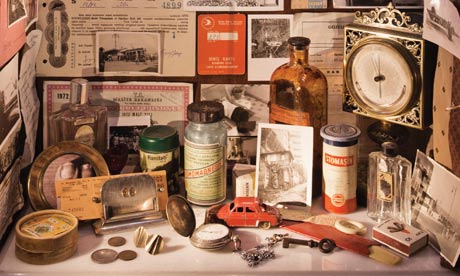
    This wine-red 19th-century townhouse has become part-museum, part-art installation, part-novel brought to life. Pamuk conceived the project as he was writing the novel of the same name and he’s filled 83 wooden boxes with collected and commissioned works of art relating to each chapter – items the characters would have seen, worn, or owned over the last decades of the 20th century when the novel is set. But it’s not just a study of obsession and the mementos of a doomed love affair between the novel’s protagonists. With the aid of cutting-edge technology blurring fiction and documentary, it’s a chronicle of Istanbul at a time of great cultural changed. Click through our picture gallery of the museum here.
    Çukurcuma Caddesi, Dalgiç Çikmazi 2, +90 212 252 9738, masumiyetmuzesi.org, open Tuesday-Thursday, Saturday and Sunday 10am-6pm, Friday 10am-9pm, entrance 25TL (about £8.50) for adults, £3.50 for students

    The Works: Objects of Desire
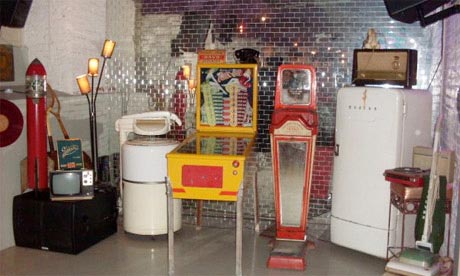
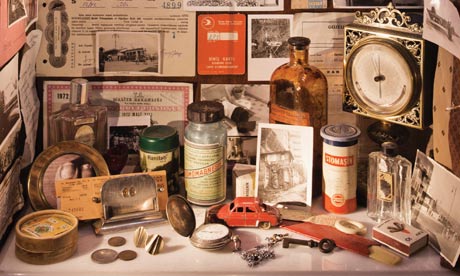
    Objects of Desire, IstanbulAs the sign says, this bric-a-brac emporium is aimed at “the slightly deranged collector seeking identifiable memories”, and it’s a sensory overload for even the most seasoned forager. With stock spilling out on to the pavement it’s clear that the owner of this extraordinary shop, A. Karaca Borar, is a consummate collector. In the house-cum-shop’s bathroom, you might find a marble Ottoman washbasin next to a mass of rubber ducks. Vintage clothes are stacked alongside collections of toys, plastic gnomes, wooden hands and other miscellany. If you can’t find it here, it probably doesn’t exist.
    Faikpaşa Caddesi 6/1, +90 212 252 2527, fleaworks.com, open daily 11am-6pm (closed 13-17 June), prices from around £3.50

    A La Turca
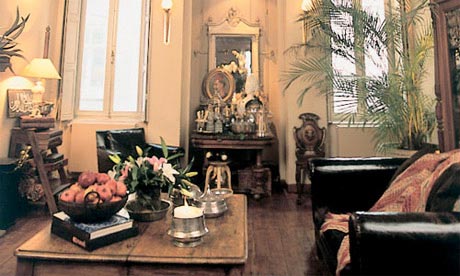
    A La Turca Turkish rug shop, IstanbulA visit to Erkal Aksoy’s A La Turca kilim house is like wandering around a delightful ethnographic museum – with price tags. A hoarders’ heaven, this beautiful four-storey townhouse is filled with his global finds, displayed with the know-how of a skilled interior designer. There’s plenty to covet if you can afford it and it’s worth exploring even if you can’t: the colourful, tightly woven antique kilims, rolled up and stored on bookshelves, the Ottoman embroidery draped over a chair (which is also for sale) and countless decorative objects. Don’t forget to head down into the basement for stacks of green-glazed Tokat pottery.
    Faikpaşa Caddesi 4, +90 212 245 2933, alaturcahouse.com, open Monday-Saturday 10.30am-7.30pm and by appointment, prices on request

    Hall Istanbul
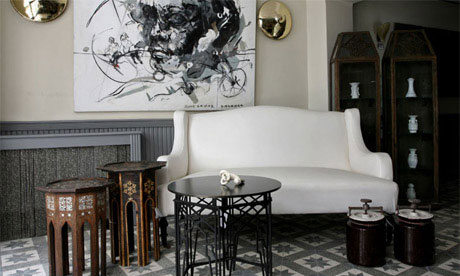
    Hall, IstanbulNew-Zealand born interior designer, Christopher Hall, has been living in Istanbul for the past 12 years. His eponymous shop – open since 2003 – mixes antiques with his own contemporary designs. He works in stone, iron, steel, glass, linen, cotton, wool and wood and is inspired by the wares of the neighbouring junk shops, the influence of the city and Islamic form. You’ll find some of his bronze and marble furniture in this chic showroom, along with more portable objets d’art, lighting, ceramics and textiles. Most pieces are beyond the pocket of the average visitor but a few small decorative objects start from around £30.
    Faikpaşa Caddesi, +90 212 292 9590, hallistanbul.com, open Monday 2pm-7pm, Tuesday-Saturday 10am-7pm

    Leyla Seyhanli

    This wardrobe-sized boutique is piled floor to ceiling with an eccentric collection of vintage clothes, hats and hat boxes, handbags, wall hangings and embroidered textiles. A good rummage will reveal Ottoman-era silk pillowcases hand sewn with gilded thread, embroidered linen towels and Anatolian velvet table cloths, ornate traditional kaftans, turn-of-the-century silk blouses and 1950s taffeta party dresses. Always the genuine article, it’s become a popular stop for collectors and Seyhanli also lends costumes and accessories to the Turkish film industry.
    Altipatlar Sokak 6, +90 212 293 7410, open Monday-Saturday 10.30am-6.30pm, prices range from around £30 to £160

    Leila Butik

    Virtually everything in this small, whitewashed boutique is a quirky, fun, one-off design. Different designers supply the store with everything from fascinators to ornately decorated heels, cute little prom dresses to hand-printed T-shirts, crazily patterned tights and leggings to customised straw hats. It also stocks jewellery from Anatolian-influenced crocheted necklaces to plastic brooches and, for men, vintage sunglasses and unique trilbies.
    Hayriye Caddesi 18, +90 212 245 3365, leilabutik.com, open Monday-Saturday 11am-8.30pm, prices from around £5

    Holy Coffee
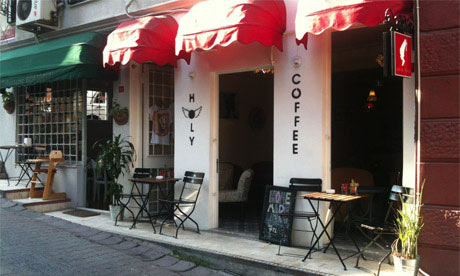
    Holy Coffee, IstanbulWith its sofas, armchairs, bookshelves and art-covered walls, a Holy Coffee break is like stepping into someone’s living room. Just a year old, it’s become the cafe of choice for locals, ex-pats and visitors thanks to its relaxed vibe and its hands-on Turkish owner, Arzu, who is more than happy to offer her tips on the city. The smell of freshly baked cakes and biscuits wafts from the kitchen, and soups, sandwiches and salads are also on offer. Drink the homemade bitter lemonade alfresco on a hot day – the coffee is excellent too.
    • Hacioğlu Sokak 1B, +90 212 243 6869, Holy Coffee’s facebook page, open Monday-Saturday 10am-8pm

    Cukurcuma Köftecisi

    Traditional Turkish fare is served at this family-run lunch venue next door to Holy Coffee, complete with wooden tables and chairs and walls adorned with kitsch art and portraits of Atatürk. It’s a paradise for carnivores, with all manner of köfte (meatballs) and şiş (skewers) sizzling on the grill, served with a carb overload of chips and Turkish pilaf rice. But there are also daily specials such as soups, stews and freshly made salads. Fridays and Saturdays are fry days, when you can sample the sublime courgette, aubergine and cauliflower fritters.
    Hacioğlu Sokak 1A, +90 212 245 0833, cukurcumakoftecisi.com, open Monday to Saturday for lunch and dinner

    Münferit

    Award-winning interior design duo, Seyhan Özdemir and Sefer Cağlar – better known as Autoban – gave Münferit a retro feel with marble-top tables, smoked-glass mirrors and wood panelling. But the vintage aesthetic belies a menu filled with thoroughly modern meze, such as black couscous topped with sprigs of grilled calamari, baby octopus skewers and, for dessert, the irresistible sage ice-cream with plum sauce. Wash it down with some thrice-distilled Beylerbeyi Raki, Turkey’s potent anise-flavoured spirit produced by the owner’s family, or one of the inventive martinis and mojitos. On balmy evenings, you can dine alfresco on the terrace before it’s transformed into a dance space.
    Yeni Carşi Caddesi 19, +90 212 252 5067, munferit.com.tr, open daily 7pm-2am, main courses around £14

    House Hotel Galatsaray
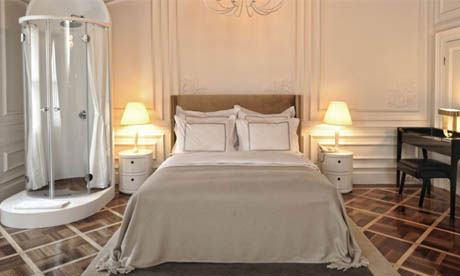
    House Hotel Galatsaray, IstanbulThe first hotel project from the owners of Istanbul’s trendy House Café chain has turned a dilapidated 19th-century building into a design buff’s dream with help from Autoban. Spread over four floors, the 20 rooms combine old-world charm with innovative design – lofty ceilings, ornate plasterwork and polished parquet floors, with sleek, custom-made furniture and rainforest shower cubicles in the middle of the bedroom. The top-floor lounge bar, with its open fire, large brown Chesterfields and panoramic views is the perfect place to relax post-sightseeing.
    Firuzağa Mahallesi, Bostanbaşi Caddesi 19, +90 212 252 0422, thehousehotel.com/the-house-hotel-galatasaray, from €139 for a deluxe suite on a B&B basis. If you prefer the idea of an apartment, studios with The House Apart start from €80 per night and one-bedroom apartments start from €100, including two breakfasts at The House Café on Istiklal Caddesi
  • Turkish Delight

    Turkish Delight

    ISTANBUL: MEDUSA’S HEAD IS upside-down, her snake-hair rippling above the water. The savage beauty – whose look could turn you to stone – is floating above a cistern: the universal word for tank which gains something murky in translation to Irish-English because of its very specific use here.

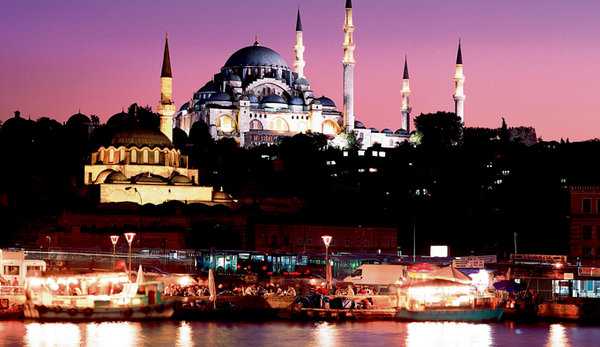
    ANCIENT BEAUTY Sultan Ahmed Mosque at night PHOTOGRAPH: THINKSTOCK
    ANCIENT BEAUTY Sultan Ahmed Mosque at night PHOTOGRAPH: THINKSTOCK

    ANCIENT BEAUTY Sultan Ahmed Mosque at night PHOTOGRAPH: THINKSTOCK

    But this cistern is a magical, cavernous underground cathedral where stone columns – Ionic, Doric and even leafy Corinthian – stand calmly in the still, vast bath. Medusa heads have been carved at the bases of two of the columns: one sideways and one upside down – the reason apparently being to ward off evil spirits (although it could have been practical: supporting the columns better in these positions).

    So much is heavily marketed in our world, skewing our expectations (and, if you are disappointed because descriptions have been overblown, too bad: they’ve got your money now), that when something does turn out to be gorgeous, you reap one of life’s sublime surprises.

    A waste-water storage facility isn’t as grand a prospect as a mosque or cathedral, but the Basilica Cistern’s proximity to the Blue Mosque and Hagia Sophia, in the old part of Istanbul, brings tourists here as an also-ran.

    There are taps outside the Blue Mosque (or Sultan Ahmed Mosque), in recesses in the 17th-century stone wall, where worshippers can clean themselves, as they must do before addressing their God, although the evident lack of people using this very public facility suggests that many nowadays undertake the task at home before being called to prayer. The next task is to take off your shoes – having passed the funeral area outside the entrance – then pad around on the carpet within.

    The blue is truly wonderful, the azure ceiling like a brilliant mosaic sky. But its full effect is filtered through thousands of wires hanging from the ceiling to support lamps that dangle just above head height. Tourists are held back, behind a wooden barrier, from the worshipping area where a man stands alone on a far platform, bending in prayer.

    In Hagia Sophia – across a courtyard – a stray cat sits on a platform at the front of the mosque showing that this vast, majestic building can easily accommodate all-comers, all the while retaining its stature and capacity to delight. Tourists teem through, walking up its sloping stone-floored tunnel to reach the upper level where a fresco of Jesus has eyes that follow you around the room. The idea was that he was always watching you: be good.

    The building has seen many visitors in its nearly 2,000 years of existence. It started as a Greek cathedral, later becoming a Roman Catholic church and then a mosque before being secularised in 1931. It is now a museum.

    And that’s illustrative of Istanbul, which spills across water, spanning the Bosphorus and Golden Horn waterways. Symbolically cleaved at the conjunction of Europe and Asia, it is the only city in the world on two continents. Crammed with an estimated 13.5 million people, it has a personality that reflects its geographical positioning.

    It feels like a city hankering for the perceived benefits of a westernisation – although, is that gloating I sense from the newsreader presenting the troubles of Greece? – while retaining a strong eastern identity. Christian and Muslim traditions rub shoulders, in a country where the Muslim faith is widely followed but not enshrined in law.

    This situation offers freedom for various levels of expression, starkly illustrated at a traditional Turkish dancing evening which descended into belly dancing by surgically appended women jiggling their breasts and hips audience-wise to the obvious delight of one local man, who hollered and laughed, and practically dribbled, all the while hugging his wife – who wore a long dress and headscarf.

    Globalisation, and the fact that the city is now becoming a weekend-break destination for Europeans (with a Turkish Airlines flight from Dublin in just under four hours), will bring a greater western influence.

    Istanbul’s old city offers rich Turkish tradition, to the joy of tourists who take advantage of having the must-sees all within a walk of each other, near Hagia Sophia and the Blue Mosque is Topkapi Palace, the vast home of Ottoman sultans for 400 years (1465-1856). In that time they acquired vast hauls of jewel-encrusted garb and household goods and constructed a harem building that could hold 300 women. Here you can drink tea by the Bosphorus or, if you visit in the winter, run into the cafe and warm your hands over a bowl of hot coals.

    In the Grand Bazaar you can find beautiful carpets, cushions, fabrics and blown glass, as well as soaps and oils of sensuous plants, although there are now also fake handbags (Tod’s and Mulberry) and the main drag of glass-fronted jewellery shops is more Bond Street than traditional market.

    Yet there is a real gem, down near the spice market by the Bosphorus. It is a long, thin street running parallel to the river, where locals buy anything they want from guns, frilly gauze to tie on newborns’ cradles, hammers, cheap runners, spades and spices, to handmade steel extractor hoods. There is also coffee, for which there is a huge queue waiting outside a window where young men packing the precious beans at speed.

    All these and more can be found dangling from the tops of stalls that are stuffed with goods as well as at waist level on tables and within the small rooms beyond. Anything you want – historically, culturally, religiously, socially and commercially – you can get in Istanbul.

    * City breaks to Istanbul are available from wingsabroad.ie, tel: 01-8719444 or a travel agent. A weekend package with Turkish Airlines, Europe’s Best Airline 2011 ( turkishairlines.com), staying at the Seres Hotel costs from €319pps.

  • Outstanding kebab in Istanbul

    Outstanding kebab in Istanbul

    At 6 PM on a Monday evening the dining room of Adana Ocakbasi was nearly full and the wide grill in the corner was covered with skewers loaded with meat. While most restaurants, worldwide, were closed or waiting for a slow night to start, this neighborhood kebab house was busting through a bumper rush of early birds in for a quick lamb chop or two on the way home. The dinner crowd had not even arrived.

    “This place will ruin you,” said our waiter showing us to two stools at the marble counter that circles the grill, the smoking heart of the room. “You wont be able to eat meat anywhere else.”

    The usta behind the grill skewered, slapped, turned, shifted, spiced and plated meat with the concentration of a tantric yogi. When he reached a relatively calm moment in his grilling cycle, he gently mixed a bucketful of sumac and raw, chopped onions with his hands – all of it an awesome sight of endurance. If we we’re going to be ruined we might as well enjoy the show.

    Along with a bottle of raki, we ordered a couple of starters – an excellent ezme, a relish of finely chopped onions, tomatoes, red peppers and plenty of parsley dressed with olive oil and pomegranate molasses, and kozde patlican, a whole eggplant grilled until the inside has gone meltingly floppy and then peeled. Served with small fresh rounds of tirnakli ekmek, a flatbread ubiquitous in kebab houses, the meze clearly play a supporting role to the meat here, but they were simple and delicious.

    We soon moved onto the stars of the show, ordering a couple of skewers of just about everything we’d seen on the grill. Small cubes of lamb liver and cop sis, tiny bits of marinated beef bookended by slivers of fat came out first. There is an entire classification of restaurants in Istanbul devoted specifically to grilled liver and cop sis and not one of them serves liver as tender and succulent as Adana Ocakbasi. It would be well worth a visit for the liver alone, but a crime to leave before the parade of bone-in cuts made their way from the grill.

    The lamb chops and ribs, liberally dusted in red pepper and thyme, were so juicy they drenched the thin sheet of lavas beneath, making it all the more palatable. The beyti kebabi – in our favorite rendition, a sis of Urfa wrapped in lavas, cut into slices and drizzled with tomato sauce and yogurt – was nothing more than a sis of Urfa kebab, minimalist for a beyti, but exceptionally tasty.

    Already full and hooked on this place, we needed a little something more to tide us over until the next visit. Scanning the grill, we asked about uykuluk, or sweetbreads, a specialty often found on kebab house menus but rarely in stock. Within minutes our usta was sliding a dozen or so small charred orbs onto a plate for us. Springy in texture, this uykuluk carried a characteristic whiff of organ meat, which stood up well against the spice dusting and the char from the grill. These well-prepared sweetbreads, more than the meat even, were our personal ruination.

    Paying the modest bill and leaving the room packed with people feasting on prime cuts of lamb, we felt as if we’d just been initiated into a carnivorous club. We imagined one day having two seats at the grill designated as “our usual” spot. If being “ruined” means becoming a regular here, that’s a fate we welcome.

    Address: Ergenekon Caddesi, Baysungur Sokak 8, Pangalti

    Telephone: +90212 247 0143

    (photo by Ansel Mullins)

    via Outstanding kebab in Istanbul | Istanbul Eats.