Blog

  • Domino’s Pizza opens 10,000th Store in Turkey

    Domino’s Pizza opens 10,000th Store in Turkey

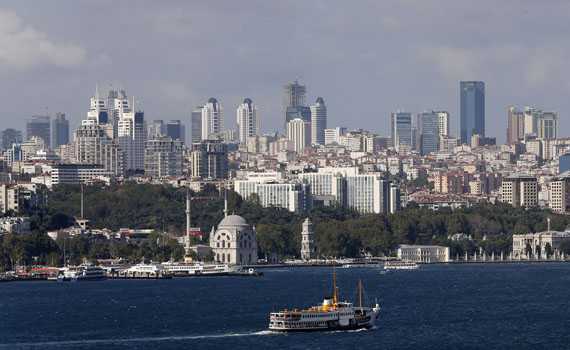
    (Best Syndication News) – Domino’s Pizza announced that they have reached a milestone by opening their 10,000th store in Istanbul, Turkey today. The company started their first location almost 53 years ago in Ypsilanti, Michigan. Domino’s Pizza is a mix of franchises and company-owned stores.

    To celebrate their 10,000th store, Domino’s President and Chief Executive Officer, J. Patrick Doyle, was present for the grand-opening event. According to Domino’s Pizza, Turkey is one of the fastest growing markets for them.

    Richard Allison, Domino’s International Executive Vice President, said that the Domino’s Pizza growth has been accelerated over the past decade as the company expanded their stores internationally. Domino’s Pizza has stores in Australia, Mexico, India, and the United Kingdom as well. Currently there are over 250 Domino’s Pizza locations in Turkey.

    The international business for Domino’s has been growing to the point where there are now more stores internationally than in the US. The international business accounts for over half the global sales at around $7 billion.

    Because of the milestone, the new Domino’s Pizza store will be giving away 10,000 pizzas for free through their Turkish Facebook site. The new location will also offer a 50 percent discount for all online orders.

    A new feature called “Pizza Theater” has been incorporated into this store location. The new restaurant design was introduced in the US, Australia, and New Zealand this summer. The “Pizza Theater” lets customers see the people prepare the food.

    By: Dave Reddy

    via Domino’s Pizza opens 10,000th Store in Turkey | Best Syndication.

  • Christian-Muslim meeting in Istanbul endorses dialogue of life

    Christian-Muslim meeting in Istanbul endorses dialogue of life

    2012-09-26 Vatican Radio

    A two day symposium on Muslim-Christian dialogue takes place in the Turkish capital of Istanbul this weekend, exploring the theme of ‘Being a foreigner and dialogue with the other’. Organised for the past two decades by the different religious communities in the city, the meeting this year takes place in the Franciscan church of St Etienne and enjoys the support of the journalists and writers foundation of Istanbul.

    The symposium comes as world leaders continue to condemn the violent reactions to a U.S. made video which mocks Islam and the prophet Mohammed. So is there any way an encounter of this kind can help to diffuse tensions and promote better understanding beyond the purely academic world? To try and find out, Vatican Radio’s Philippa Hitchen spoke to one of the participants at the Istanbul meeting, Mustafa Cenap Aydin, director of Rome’s Istituto Tevere for interfaith dialogue….

    via Christian-Muslim meeting in Istanbul endorses dialogue of life.

    Listen :

  • Turkey | Once upon a time in Anatolia

    Turkey | Once upon a time in Anatolia

    Unique physical structures and great historic sites in a land of the ancient and the modern
    Komal Sharma
    Hot-air balloon rides begin at 5 every morning. Photo: Komal Sharma/Mint

    Updated: Fri, Sep 28 2012. 07 12 PM IST

    It’s a heady rise, as the burly captain of our hot-air balloon fires up the ship, sending flames into the air. The balloon rises to the sky, slowly revealing the landscape of Cappadocia, a city in the interiors of Turkey, in a region called Anatolia. Brown plateaus are interspersed with grasslands, snow-covered mountain peaks from the Taurus range occupy the horizon, and the early morning sky is dotted with about 100 hot-air balloons. And, of course, you spot the curious-looking spires below, made from rock, looking as if they have windows carved into them.
    The fairy chimneys, as the locals call them, are a unique geographical feature of Cappadocia.
    We descend after a 45-minute balloon trip, and it’s a perfect landing, with sparkling wine waiting for us, along with wild-flower bouquets and instant photographs. After this early morning celebration, we head out, by car this time, to explore the fairy chimneys. Cappadocia is a town known for these volcanic geographic features. Long before human civilization etched villages and cities on the Anatolian landscape, volcanic lava flowed through these arid lands, leaving behind intriguing spectacles. The volcanic ash settled in layers over centuries, and as erosion took place, the softer, lower-lying rock got washed away and the harder rock on top remained, creating what looks like a slender giant wearing a big hat—Demoiselles Coiffées, to the French imagination. Then, of course, human civilization—sometimes pagans, sometimes missionaries, and sometimes the followers of Islam—walked these lands and made homes in these mountains, at times hiding, at times looting and attacking, depending on which group was more powerful at the time.
    photo

    The new and the ancient:A walk down the colonnaded main street of Ephesus, an ancient Roman city. Photo: Komal Sharma/Mint

    Our tour guide Emre, a blue-eyed boy, conscientiously took us through these fairy chimneys. Some were ancient churches with beautiful frescoes, converted into mosques with desecrated faces, then restored and converted into museums. The history of Cappadocia, and all of Turkey for that matter, is replete with wars, religious conflict and, of course, trade. Turkey lay on the Silk Route, on the crossroads of civilizations. The Greeks, the Ottomans, the Romans, all marched through it.

    Enamoured and confused by the history of Turkey, and at how man is capable of doing things both beautiful and brutal, we return to our hotel, the Museum, which works as a trip in itself. A boutique hotel sitting on top of a hill, it is built within and around a multitude of fairy chimneys and old structures that have been preserved, turning them into lounges and luxurious suites. The main deck is on the edge of a cliff, with an infinity pool and half-broken Greek stone arches. The view is an empty road meandering through the plateaus and a crimson horizon in the distance.
    photo

    A tree atop the Pigeon Valley in Cappadocia, with the characteristic Turkish evil eyes tied to it. Photo: Komal Sharma/Mint.

    Two days later, from this brown land of cobbled streets and the quaint countryside of Anatolia, we take a flight to the more flamboyant west coast. We land in Izmir, a town which was a stopover on the Silk Route, and take a 2-hour drive to Kusadasi, a cute honeymoon town. With the emerald blue waters of the Aegean Sea, cruise liners, Mediterranean islands in the distance, young couples on scooters and 1970s convertibles, romance is in the Kusadasi air. But that’s not all; for, it’s also the base town for visiting the ancient Greek sites of Ephesus, Aphrodisias, Miletus, and others.

    Before we head out again for our history lesson, we stop at a seaside restaurant, with rickety chairs kept right on the shore, the waves washing up our heels and rows of cats waiting wide-eyed for us to throw them some balik. That’s the menu, balik (fish), lots of salata (green leafy salad), button mushrooms stuffed with peynir (cottage cheese) and baked in clay pots, and, of course, bira (beer). It’s only apt that Theobroma (food of the gods) is a word of Greek origin.
    Graphic: Ahmed Raza Khan/Mint

    Our tour guide for the day, Gulsum, decided to start us off with the charming little Greek village of Sirince. Old Greek women, who stayed behind after the population exchange of 1923—when ethnic Greeks left for Greece—hold a flea market selling apple wine and apricots, crochet table linen, cotton dresses, turquoise jewellery, and freshly picked berries. Nobody speaks English, but it’s easy to pick up a little Turkish with a whole range of words very similar to Hindustani. Dukkan (shop), sebzi (vegetables), duniya (world), kitap (kitab or book) are a few examples.

    One of the shopkeepers explained their greeting, meherabba. “In olden times, when two people used to meet in a desert, they said meherabba to each other, meaning, I am not your enemy, I come in peace.”

    For the next two days, we were on the road, exploring ancient cities. We walked down the colonnaded main street in Ephesus, saw what remains of the Temple of Artemis, the massive stadiums—Gulsum informed us that stadiums with a significant depth were for gladiator fights; others were for the non-violent performing arts—the agoras (marketplaces), the Temple of Apollo and larger than life sculptures of Medusa and Nike, still standing after all these years. It feels like time travel, a journey into another era.

    These are some of the best preserved archaeological sites in the world, and they hint at the scale and grandeur with which people in the Hellenistic era lived.
    However, grandeur is only one side of the coin. As the day passes listening to Gulsum narrate stories of Roman emperors, the defence of the Seljuks, or the invasions of Muslim rulers, one is compelled to believe that whole cities were built either to assert power, or for self-preservation, or to propagate religions and the gods.
    But in the process of occupying and killing, for vengeance or honour, things of great beauty were built, razed and rebuilt.

  • The Latest Legal News, Research and Legal Profiles – Who’s Who Legal

    The Latest Legal News, Research and Legal Profiles – Who’s Who Legal

    Turkey: Intellectual Property

    September 2012

    As foreign investment continues to flow into Turkey, the protection of IP rights is gaining importance. In response to this, regulators have made a great effort in recent years to ramp up enforcement of IP rights, introducing heavier fines and even prison sentences for violations. We recognise 13 of the country’s leading IP lawyers in this section.

    Mehmet Gün & Partners fields three lawyers in this chapter, more than any other firm in the research. Mehmet Gün has a “stellar reputation” and specialises in the licensing and enforcement of IP rights in the pharmaceutical sector. Ug˘ur Aktekin is “highly proficient” in copyright law matters and anti-counterfeiting. Completing the trio is Baris Kalayci: a “first-rate” patent and trademark attorney.

    Two lawyers rank highly from Istanbul Patent. Founding partner Dilek Ustun Ekdial is a “big name” in IP dispute resolution and solves conflicts arising from patent and trademark rights. Güven Çalik is also a founding partner of the firm and is “renowned” for solving disputes related to trademarks and industrial design rights.

    M N Aydin Deris¸ of Deris¸Patents and Trademarks Agency AS¸is an “outstanding” IP lawyer with experience in registering and licensing IP rights in Turkey for domestic and foreign clients in addition to defending rights in litigation.

    Stock Industrial Property Services AS is represented by Omer Dundar, a “distinguished” practitioner with an “impressive” breadth of expertise in the field.

    At NSN Law Office, senior partner Selma Toplu Ünlü is praised for her “leading” practice in IP. Head of the firm’s IP team, she counsels companies on a broad range of IP matters from licensing to complex litigation and prosecution.

    Gökhan Gökçe at YükselKarkınKüçük is “highly accomplished” and specialises in the pharmaceutical sector.

    Founder of CBL Law Office Ceylin Beyli is “well regarded” for her practice in IP, has been involved in several court actions in Turkey and has represented clients before the World Intellectual Property Organization.

    At Morog˘lu Arseven, I¸sik Özdog˘an’s expertise in IP litigation practice is “unrivalled”. She has experience in patent, copyright, trademark and domain name disputes and in conducting seizures of counterfeit goods. In addition, she is a registered expert witness of Istanbul Intellectual and Industrial Property Court.

    Yalın Akmenek, with the firm Akol Avukatlık Bürosu, is a “brilliant” IP lawyer and “very active”.

    Taylan Arihan of Arihan & Arihan is described as a “resourceful” practitioner and advises on patents, trademarks and designs.

    via The Latest Legal News, Research and Legal Profiles – Who’s Who Legal.

  • Bosnia and Herzegovina

    Bosnia and Herzegovina

    EU Enlargement

    This month’s focus: Bosnia and Herzegovina. Discover the country’s unique blend of cultures and religions, its vibrant spirit and its stunning and unspoiled natural scenery.

    via Sep 28, 2012 2:55pm.

  • Turkey’s Erdogan says talks with Kurdish militants possible

    Turkey’s Erdogan says talks with Kurdish militants possible

    By Daren Butler

    ISTANBUL | Thu Sep 27, 2012 10:17am EDT

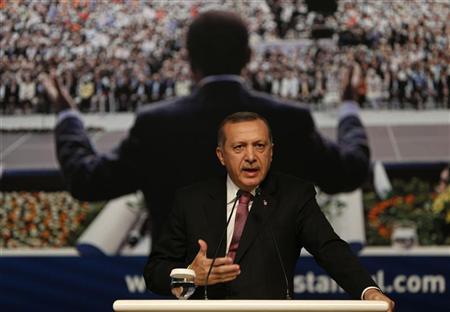
    (Reuters) – Turkish Prime Minister Tayyip Erdogan has signaled that new talks with Kurdish militants might be possible as his government contends with an upsurge in separatist violence in the country’s southeast.

    The conflict has cost Turkey dearly since the militants took up arms in 1984, both in human and economic terms, and as the death toll climbs there is growing public pressure on Erdogan to bring an end to the bloodshed.

    Turkish intelligence officials have had contact with senior figures from the Kurdistan Workers Party (PKK) in the past few years to try to end a conflict that has claimed more than 40,000 lives, but discussions have broken down.

    “Regarding Imrali, there could be more talks,” Erdogan said in a televised interview with broadcaster Kanal 7 late on Wednesday, referring to the small island where PKK leader Abdullah Ocalan is serving a life sentence.

    “There is a military dimension to this, a security dimension which is separate and will continue. But beside this there is a diplomatic, socio-economic and psychological dimension.”

    Erdogan spoke after Turkey’s main pro-Kurdish party called for the resumption of talks between the state and the PKK to prevent a further escalation of violence.

    Clashes in the past several months between Turkey’s armed forces and militants from the PKK – considered a terrorist organization by Ankara, the United States and European Union – have been among the heaviest since the conflict began.

    Turkish soldiers backed by helicopters killed 13 PKK fighters on Thursday during clashes in Cukurca near the mountainous Iraqi border, security sources said. Two soldiers were killed and three wounded in the fighting.

    Ankara has linked the surge in violence to the unrest in neighboring Syria. Erdogan has accused President Bashar al-Assad of arming the PKK militants and raised the possibility of military intervention in Syria if the PKK were to launch attacks from Syrian soil.

    MILITARY TARGETS PKK LEADERS

    The head of Turkey’s armed forces said in a newspaper interview on Wednesday that the military also had the capability to launch a sustained operation against the PKK in northern Iraq.

    Erdogan gave his interview a few days before his AK Party’s congress, where he is expected to set out the party’s future as it goes through its biggest overhaul since coming to power a decade ago.

    Since elections in June 2011, the conflict with the PKK has killed more than 700 people, according to the International Crisis Group – the highest toll in a 15-month period since Ocalan was jailed in 1999.

    Turkish special forces captured Ocalan in Kenya that year after Assad’s father, then-President Hafez al-Assad, cast him out of Syria amid concern that Turkey would launch military action over the militant leader’s presence in Damascus.

    Since his conviction, Ocalan has been jailed on the island of Imrali, located in the Marmara Sea south of Istanbul.

    (Additional reporting by Seyhmus Cakan in Diyarbakir; Editing by Nick Tattersall and David Goodman)

    via Turkey’s Erdogan says talks with Kurdish militants possible | Reuters.