Category: Regions

  • UK’s ex-minister: Israel should have apologized

    UK’s ex-minister: Israel should have apologized

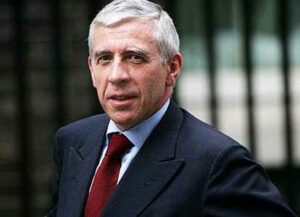
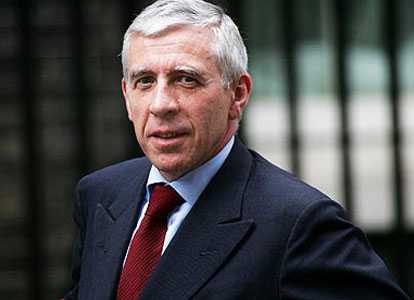
    Israel should have apologized to Turkey for its deadly raid on the Mavi Marmara aid ship, but instead allowed relations to deteriorate, according to United Kingdom’s former Foreign Secretary Jack Straw.

    “Israel could – and should – have apologized in a full-hearted manner, but in a way that neither humiliated nor embarrassed them. Once the apology had been issued, and accepted by Turkey, both countries would have had a platform for the restoration of normal relations,” Straw wrote in a commentary for the Hürriyet Daily News.

    “Instead, relations have deteriorated, from tepid, then to cold, and now to freezing… Israel has only itself to blame,” he wrote. Comparing the situation today to the sympathy for Israel during the Six-Day War in 1967, Straw said Israel has become isolated due to “its arrogance; its cavalier approach to international norms; and the inability of its leaders to act in a statesmanlike, strategic way.”

    Click here to read the full commentary by United Kingdom’s former Foreign Secretary Jack Straw.

    Hurriyet Daily News


  • Tony Blair ‘visited Libya to lobby for JP Morgan’

    Tony Blair ‘visited Libya to lobby for JP Morgan’

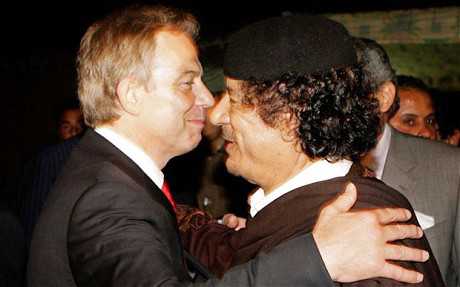
    Tony Blair used visits to Libya after he left office to lobby for business for the American investment bank JP Morgan, The Daily Telegraph has been told.

    Mr Blair was flown to Libya twice at Gaddafi's expense on one of the former dictator's private jets Photo: GETTY

    By Richard Spencer, Tripoli, Heidi Blake and Jon Swaine in New York

    A senior executive with the Libyan Investment Authority, the $70 billion fund used to invest the country’s oil money abroad, said Mr Blair was one of three prominent western businessmen who regularly dealt with Saif al-Islam Gaddafi, son of the former leader.

    Saif al-Islam and his close aides oversaw the activities of the fund, and often directed its officials on where they should make its investments, he said.

    The executive, speaking on condition of anonymity, said officials were told the “ideas” they were ordered to pursue came from Mr Blair as well as one other British businessman and a former American diplomat.

    “Tony Blair’s visits were purely lobby visits for banking deals with JP Morgan,” he said.

    He said that unlike some other deals – notably some investments run by the US bank Goldman Sachs – JP Morgan’s had never turned “bad”.

    Documents found by The Sunday Telegraph published this weekend showed Mr Blair had made at least three visits to Tripoli, twice in the lead-up to the release of the alleged Lockerbie bomber Abdelbaset Ali Megrahi in 2008 and 2009 and once last year. On the first two occasions he was flown to the country on planes arranged by Col Gaddafi.

    A senior diplomat told The Daily Telegraph last night that the British embassy in Tripoli had arranged transport for Mr Blair and his entourage in Tripoli and ensured that representatives were there to “greet him and see him off” at the airport.

    Mr Blair stayed overnight at the ambassador’s official residence in Tripoli and was accompanied by “several” British police officers for protection.

    The documents show that among the people he was due to meet in 2009 was Mohammed Layas, head of the LIA.

    A spokesman for Mr Blair said that the visits had largely been to discuss Africa, and categorically denied that he had lobbied Said al-Islam on behalf of JP Morgan.

    The spokesman said last night: “As we have made clear many times before, Tony Blair has never had any role, either formal or informal, paid or unpaid, with the Libyan Investment Authority or the Government of Libya and he does not and has never had any commercial relationship with any Libyan company or entity.”

    Mr Blair began work in January 2008 as a £2million-a-yearn adviser to JP Morgan. Last month, American officials told the New York Post newspaper that the bank managed more than half a billion US dollars on behalf of the LIA.

    The executive said that he did not see Mr Blair at the LIA headquarters in the modern Tower of the Revolution overlooking the seafront. He said officials like himself were given their instructions by two senior Saif aides, including Mohammed Ismail, a Libyan with British nationality.

    One of the letters arranging the 2008 visit, in which an aide to Mr Blair told the Libyan ambassador to Britain that the former prime minister was “delighted” that “The Leader” was likely to be able to see him, was on notepaper headed “Office of the Quartet Representative”, his formal title as Middle East envoy.

    The Quartet he represents is made up of the European Union, the United Nations, Russia and the United States. A spokesman for Ban Ki-moon, the UN secretary general, said: “It’s up to him to explain why he did this.”

    The growing closeness of the Blair government to the Gaddafi regime has already come under fire. Abdulhakim Belhadj, former leader the Libyan Islamist Fighting Group and now head of the revolutionary Tripoli Military Council, is demanding an apology after papers showed MI6 arranged for his secret extradition from Malaysia back to Libya in 2004.

    Many ordinary Libyans have also expressed surprise at the policy. After the latest revelations, Hoda Abuzeid, a British Libyan whose dissident father was murdered in London in 1995, accused Mr Blair of “selling out”.

    “People like Blair and those who had their eyes on the business opportunities that Gaddafi could provide sold out people like my family,” said Miss Abuzeid, who has returned to the country for the first time since 1980.

    “When he had tea in the desert with the ‘Brother Leader’ did he ever ask him who killed my father?”

    www.telegraph.co.uk, 18 Sep 2011

  • The man who could trigger a world war

    The man who could trigger a world war

    By David Warren, Ottawa Citizen

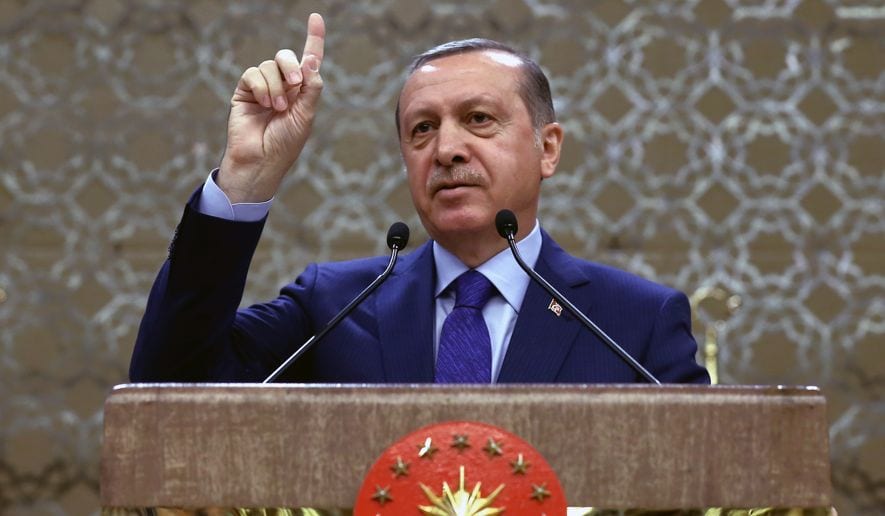
    The greatest threat to the world’s peace, at this moment, comes from a man named Recip Tayyip Erdogan. He is the prime minister of Turkey, at the head of the Justice and Development Party (“AK,” from the Turkish). A former mayor of Istanbul, he was arrested and jailed when he publicly recited Islamist verses (“the mosques are our barracks, the domes our helmets, the minarets are our bayonets,” etc.), in defiance of the old secularist, Ataturk constitution, which made it an offence to incite religious and racial fanaticism.

    Erdogan’s credentials as an anti-Semite, but also as an anti-Communist, were established from his school days. He came from an observant Muslim family, and while nothing he says can be taken without salt, he claims an illustrious ancestry, of fighters for Turkish and Ottoman causes.

    He is an “interesting case” in other respects. His post-secondary education was in economics; he is a very capable technocrat, and under his direction the Turkish economy was rescued. He is a dragonslayer of inflation, and public deficits; he took dramatic and effective measures to clean up squalor in the Turkish bureaucracy, and as the saying goes, “he made the trains run on time.”

    Erdogan is also a “democrat,” who has no reason not to be, because he enjoys tremendous and abiding domestic popularity. The party he founded came to power by a landslide, and has been twice re-elected. (He had a stand-in for prime minister at first, for he was still banned from public office.) There are demographic reasons, too, why Turkish secularism has been overwhelmed by Turkish Islamism. The Muslim faithful have babies; modern secularists don’t.

    The “vision” of this politician, which he can articulate charismatically, is to combine efficient, basically free-market economic management, with a puritanized version of the religious ideals of the old Ottoman Caliphate. (Gentle reader may recall that I am allergic to visionary and charismatic politicians, who operate on the body politic like a dangerous drug.)

    Erdogan’s vision has turned outward. His strategy has been to seek better economic integration with the West, while making new political alliances with the East – most notably with Iran. He now presents Turkey as the champion of “mainstream” Sunni Islamism, while trying to square the circle with Persian Shia Islamism. This could still come to grief over Syria, where the Turks want Iran’s man, Assad, overthrown, and the Muslim Brotherhood brought into a new Syrian government.

    Turkey’s military was the guarantor of pro-western Turkish secularism, under the Ataturk constitution. With characteristic incomprehension of the consequences, western statesmen supported Erdogan’s efforts to establish civilian control over the generals – our old NATO friends. By imprisoning several senior officers on (probably imaginative) charges of plotting a coup, Erdogan was able to induce the entire Turkish senior staff to resign, last month.

    They did this because they had run out of allies. Hillary Clinton and company hung the only effective domestic opposition to Erdogan out to dry. Turkey’s powerful, western-equipped military is now entirely Erdogan’s baby, and the country’s secularist constitution is a dead letter. Erdogan, the Islamist, now has absolute power.

    It was he who sent the “peace flotilla” to challenge Israel’s right to blockade Gaza (recognized under international law and explicitly by the U.N.). He made the inevitable violent result of that adventure into an anti-Israeli cause célèbre. He has now announced that the next peace flotilla will be accompanied by the Turkish navy.

    This will put Israel in the position of either surrendering its right to defend itself, or firing on Turkish naval vessels. There is no way to overstate the gravity of this: Erdogan is manoeuvring to create a casus belli.

    He has made himself the effective diplomatic sponsor for the Palestinian declaration of statehood next week – from which much violence will follow. Every Palestinian who dies, trying to kill a Jew, will be hailed as a “martyr,” with compensation and apologies demanded.

    He has been playing Egyptian politics, by adding to the rhetorical fuel that propelled an Islamist mob into the Israeli embassy in Cairo last Friday. He is himself in Cairo, this week, on a mission to harness grievances against Israel, in the very fluid circumstances of the “Arab Spring.” For action against this common enemy is the one thing that can unite all disparate Arab factions – potentially under Turkish leadership.

    The West is just watching, while Erdogan creates pretexts for another Middle Eastern war: one in which Israel may be pitted not only against the neighbouring states of the old Arab League, but also Turkey, and Iran, and Hamas, and Hezbollah.

    This is what is called an “existential threat” to Israel, unfolding in live time. It could leave the West with a choice between defending Israel, and permitting another Holocaust. In other words, we are staring at the trigger for a genuine world war. With Recip Erdogan’s twitching finger on it.

    David Warren’s column appears Sundays, Wednesdays and Saturdays.

    © Copyright (c) The Ottawa Citizen

    via The man who could trigger a world war.
  • Turkey’s EU minister says rate of Turkish people against membership reach 35-40 percent

    Turkey’s EU minister says rate of Turkish people against membership reach 35-40 percent

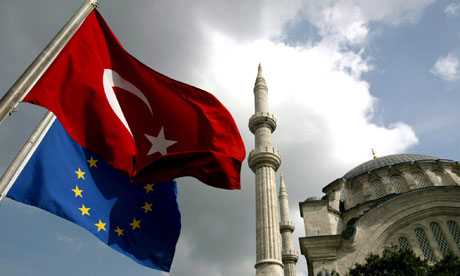
    Turkey’s European Union (EU) minister and chief negotiator said on Saturday that the rate of Turkish people opposing to Turkey’s EU membership had reached 35-40 percent, AA reported.
    Egemen Bagis said this rate was raising concerns, and Europe should solve its own problems.

    “EU is today extending more support to Turkey’s membership, however there are still some unsolved problems,” Bagis said during the Eighth Meeting of Yalta European Strategy in Ukraine.

    Bagis said if Turkish citizens had to wait to get a visa from EU member states, they naturally felt themselves less European.

    The minister pointed to Turkey’s growing economy, and said Turkish people used to be afraid of saying that they were Kurds.

    “However, there is a TV channel broadcasting in Kurdish, and a person who was imprisoned for reading a poem in 1996 is the prime minister now and he spoke about secularist democracy to the Egyptians two days ago,” he said.

    Bagis also said the real thing was integration to the EU, and Turkey had done its bests to abide by recommendations.

    Egemen Bagis had a meeting with Ukraine’s Foreign Minister Kostyantyn Hryshchenko on the sidelines of the meeting.

    After the meeting, Bagis told reporters that they discussed the situation of Crimean Tatars, ways to lift visa between the two countries, and inauguration of new consulates.

    “Inauguration of a new Turkish consulate general in Simferopol will boost our relations, and I told him that they may think of opening a consulate general in Antalya (southern Turkey),” he said.

    Bagis said Turkey was ready to lift visa procedure with visa, and Turkey had ended visa procedures with 65 countries so far.

    Moreover, Bagis interviewed with Crimean news agency QHA and said whether or not to become an EU member was not important, what was important was to develop Turkey.

    Bagis said the world was changing so rapidly that the EU might seek ways to admit Turkey as a member in a short time.

    “A Europe without Turkey, which is the most rapidly growing economy in Europe, Europe’s sixth biggest economy with the youngest and most dynamic population and the strongest army, does not have any chance in security policies,” he said.

    Bagis said 70 percent of energy resources were within Turkey’s territories, and the EU did not have any chance to access those resources without Turkey’s contribution.

    “I believe that days when Europe will see Turkey’s potential is very close,” Bagis also said.

    Turkey became an EU candidate country in December 1999. The union launched accession talks with Turkey on October 3, 2005. The EU has so far opened 13 of the 35 chapter headings to negotiations with Turkey.

    via Turkey’s EU minister says rate of Turkish people against membership reach 35-40 percent | Turkey | Trend.

  • Turkey to restore biggest mosque in Somalia

    Turkey to restore biggest mosque in Somalia

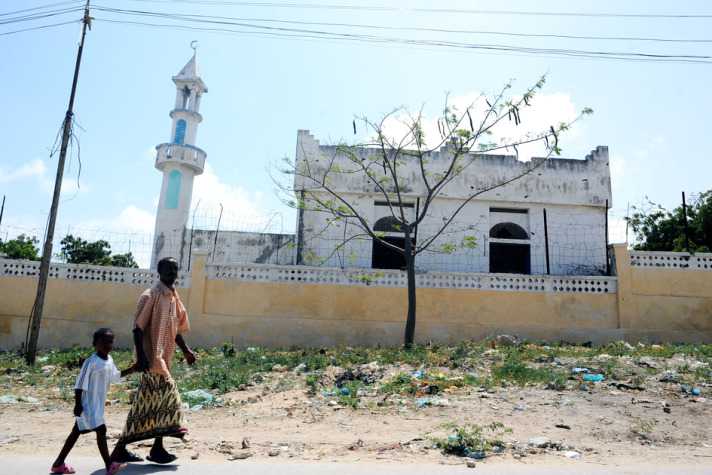
    Turkish teams will renovate the Central Mosque, which was damaged due to civil war, in the Somali capital of Mogadishu.

    Turkish Religious Affairs Foundation (TDV) will restore the biggest mosque in Somalia.

    Turkish teams will renovate the Central Mosque, which was damaged due to civil war, in the Somali capital of Mogadishu.

    “There are 200 mosques that needed restoration in Somalia,” TDV’s international relations director Mustafa Tutkun told AA correspondent on Sunday.

    Tutkun said Somali executives asked Turkey to restore mosques, donate Korans and religious books, rehabilitate theological institutions, and educate Somali students.

    “We will restore the Central Mosque in line with its original shape,” Tutkun said.

    Tutkun said the foundation was planning to take 100 students to Turkey for education.

    “The students will first go to Koran courses and also learn the language, and then they will be sent to imam hatip schools (giving theological education),” he said.

    Tutkun also said the number of Somali students to be taken to Turkey would be raised to 250 by the end of this year.

    AA

  • Iran says NATO missile in Turkey not a “proper decision”

    Iran says NATO missile in Turkey not a “proper decision”

    ISNA – Tehran

    Service: Foreign Policy

    TEHRAN (ISNA)-Iranian Foreign Minister Ali Akbar Salehi said Sunday deployment of NATO defense missile shield in Turkey is not a “proper decision.”

    As to the deployment of NATO defense missile shield in Turkey, Salehi said, “It was not seriously offered by Turkey that much and has remained at the level of discussion only, in our viewpoint it is not a proper decision if it was going to be made. It needs a revision since there is no justification for it.”

    “Regional countries have lived together for decades and for the time being recent popular developments in the region are moving towards more unity,” he told reporters on the sidelines of Islamic Awakening International Conference in Tehran.

    As to Omani Foreign Minister’s mediation in the case of the two detained American nationals’release, Salehi said, “Many heads of states have mediated in the issue and we announced their mediation to the judiciary branch and relevant authorities and we hope the suggestion will be welcomed by Iranian judicial officials.”

    via ISNA – 09-18-2011 – 90/6/27 – Service: / Foreign Policy / News ID: 1849951.