Category: Regions

  • Yahoo Apologizes for Accidentally Blocking Emails Containing Links to OccupyWallSt.org

    Yahoo Apologizes for Accidentally Blocking Emails Containing Links to OccupyWallSt.org

    Yahoo email users hoping to spread the word of the Occupy Wall Street protests ran into an unforseen obstacle on Tuesday when their messages containing links to the website occupywallst.org were blocked from being sent because an online filter deemed them “suspicious activity.”

    Although several Yahoo users and media outlets jumped to the conclusion that Yahoo was deliberately censoring the emails due on the basis of the anti-establishment content, the company quickly responded via Twitter, saying that “It was not intentional & caught by our spam filters. It is resolved, but may be a residual delay.”

    The company also thanked the blog Think Progress for bringing the matter to their attention via a post on the subject.

    The anti-corporate protests organized by progressive magazine Adbusters and endorsed and heavily promoted by the hacktivist collective Anonymous have been raging in New York’s financial district since Saturday. So far, seven protesters have been arrested, five of them for wearing masks, a violation of an antique anti-mask law on the city’s books.

    But supporters of the demonstration, who have relied on social media to get their messages across and rally others to their cause, hardly expected that their email service would fail them at such a critical time.

    At the same time, Yahoo has raised the ire of free speech advocates before for its cooperation with the Chinese government in censoring search results on the Chinese mainland. Yahoo has also blocked links to file-sharing search engines such as FilesTube through its Yahoo Messenger service.

    See the errant filter in action in the YouTube video below, as demonstrated by a Yahoo user.


    Late update: Yahoo responds to Idea Lab via email, asserting that the problem was actually first observed and reported yesterday and has since been corrected. “Unfortunately, the domain ‘occupywallst.org’ was being caught by one of our spam filters when some users tried to send messages containing it. This was a false positive which we corrected yesterday. However, there may still be residual delay (up to 24 hours) for users trying to send emails with that phrase. Thank you to the Yahoo! Mail users who notified us about this.”

    idealab.talkingpointsmemo.com, September 20, 201

  • Merkel hosts Turkey’s president for talks in Berlin

    Merkel hosts Turkey’s president for talks in Berlin

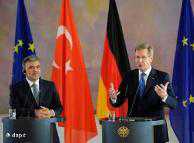
    German Chancellor Angela Merkel and Turkish President Abdullah Gul met in Berlin on Tuesday for talks aimed at airing issues touching on integration, EU accession and ties with Israel.

    A raft of complex issues was on the table Tuesday when German Chancellor Angela Merkel held talks with Turkish President Abdullah Gul in Berlin. Up for discussion was the sharp deterioration in relations between Turkey and Israel, as well as the long-standing conservative unease in Germany over Turkish integration.

    According to a message from government spokesman Steffen Seibert sent following the talks over the networking site Twitter, the Turkish president agreed with Merkel that good German language skills were necessary for successful integration in Germany.

    Seibert tweeted that both Merkel and Gul acknowledged “that the German language should be learned early and as well as possible,” according to the AP news agency.

    Earlier this year, Turkish Prime Minister Recep Tayyip Erdogan called on the some 3 million Turks living in Germany to integrate but not assimilate. He advised Turkish immigrants to teach their children the Turkish language before German.

    Gul touched on the subject ahead of his three-day German tour, telling public broadcaster ZDF that German immigration law violated human rights. He said the legislation was unfair because it prohibited Turkish citizens from joining a spouse in Germany unless they could prove knowledge of the German language.

    Contentious UN report

    German President Christian Wulff, right, and Turkish President Abdullah GulBildunterschrift: Großansicht des Bildes mit der Bildunterschrift: Gul, left, met with Christian Wulff on MondayAlso on the table at the chancellery was the recent flare-up in tensions between Turkey and Israel over a raid on a Gaza-bound aid flotilla last year which ended in the deaths of eight Turkish activists and one Turkish American.

    Turkey has expelled the Israeli ambassador to Ankara and suspended military ties with the country in the wake of a United Nations report certifying that the Jewish nation’s deadly raid was legal, despite it being heavy-handed.

    The issue is of particular importance to Germany as both Turkey and Israel are key regional partners.

    EU accession

    The closed-door talks were also thought to have touched on relations between Turkey and the European Union. From the start of the visit, Gul has reiterated Turkey’s desire to join the 27-nation bloc. Merkel opposes Turkish accession and has only offered what she calls a “strategic partnership,” which Turkey rejects.

    Complicating matters, Turkey over the weekend threatened to freeze relations with the EU if it went ahead with allowing the divided island of Cyprus to take over the rotating six-month presidency of the bloc next year.

    Cyprus joined the EU in 2004 and was due to be handed the presidency in July 2012 after Denmark. But Turkey said it first wants to see a resolution to a standoff between Cyprus’ Turkish north and its Greek south, adding that a Cypriot EU presidency would “cause a major disruption” in relations. Turkey does not recognize Cyprus as a sovereign country.

    Following the talks with Merkel, Gul was to travel to the western city of Osnabrück for a second meeting with German President Christian Wulff. There he was scheduled to visit the provincial city’s historic town hall, at which the 1648 Peace of Westphalia was signed, bringing to a close the Thirty Years’ War in Europe.

    Author: Darren Mara (dpa, AP)

    Editor: Martin Kuebler


  • Cafe Istanbul opens scaled-down Easton restaurant in Bexley

    Cafe Istanbul opens scaled-down Easton restaurant in Bexley

    Dan Eaton

    Staff Reporter – Business First

    The almost-renamed Cafe Istanbul is open in Bexley.

    The Turkish and Mediterranean restaurant debuted last week in the former home of Flavors Eatery at 2455 E. Main St., and is the second local dining option put forth by Fatih Gunal, who opened his original Cafe Istanbul at Easton Town Center Easton Town Center Latest from The Business Journals Cameron Mitchell sets October opening for Ocean Prime in AtlantaCuzzins Yogurt finding sweet spotNew tenants sign at Kenwood Towne Centre Follow this company in 2001.

    The Bexley location is smaller than its sister restaurant, but will offer much of the same menu — kebabs, dips, soups, entrees.

    Dan Eaton covers retail, restaurants, manufacturing, automotive and the advertising/PR industry for Business First.

    via Cafe Istanbul opens scaled-down Easton restaurant in Bexley – Business First.

  • Turkey Predicts Alliance With Egypt as Regional Anchors

    Turkey Predicts Alliance With Egypt as Regional Anchors

    By ANTHONY SHADID

    ANKARA, Turkey — A newly assertive Turkey offered on Sunday a vision of a starkly realigned Middle East, where the country’s former allies in Syria and Israel fall into deeper isolation, and a burgeoning alliance with Egypt underpins a new order in a region roiled by revolt and revolution.

    Burhan Ozbilici/Associated Press

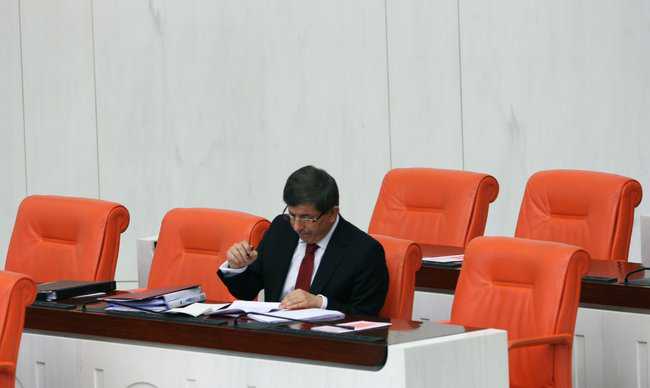
    Turkey’s foreign minister, Ahmet Davutoglu, predicted an “axis of democracy” in his region.

    Related

    • Turkish Leader Urges Vote for Palestinian Statehood (September 14, 2011)
    • Premier of Turkey Takes Role in Region (September 13, 2011)
    • Times Topic: Turkey

    The portrait was described by Foreign Minister Ahmet Davutoglu of Turkey in an hourlong interview before he was to leave for the United Nations, where a contentious debate was expected this week over a Palestinian bid for recognition as a state. Viewed by many as the architect of a foreign policy that has made Turkey one of the most relevant players in the Muslim world, Mr. Davutoglu pointed to that issue and others to describe a region in the midst of a transformation. Turkey, he said, was “right at the center of everything.”

    He declared that Israel was solely responsible for the near collapse in relations with Turkey, once an ally, and he accused Syria’s president of lying to him after Turkish officials offered the government there a “last chance” to salvage power by halting its brutal crackdown on dissent.

    Strikingly, he predicted a partnership between Turkey and Egypt, two of the region’s militarily strongest and most populous and influential countries, which he said could create a new axis of power at a time when American influence in the Middle East seems to be diminishing.

    “This is what we want,” Mr. Davutoglu said.

    “This will not be an axis against any other country — not Israel, not Iran, not any other country, but this will be an axis of democracy, real democracy,” he added. “That will be an axis of democracy of the two biggest nations in our region, from the north to the south, from the Black Sea down to the Nile Valley in Sudan.”

    His comments came after a tour last week by Turkish leaders — Prime Minister Recep Tayyip Erdogan and Mr. Davutoglu among them — of Tunisia, Egypt and Libya, the three Arab countries that have undergone revolutions this year. His criticism of old allies and embrace of new ones underscored the confidence of Turkey these days, as it tries to position itself on the winning side in a region unrecognizable from a year ago.

    Unlike an anxious Israel, a skeptical Iran and a United States whose regional policy has been criticized as seeming muddled and even contradictory at times, Turkey has recovered from early missteps to offer itself as a model for democratic transition and economic growth at a time when the Middle East and northern Africa have been seized by radical change. The remarkably warm reception of Turkey in the Arab world — a region Turks once viewed with disdain — is a development almost as seismic as the Arab revolts and revolutions themselves.

    Mr. Davutoglu credited a “psychological affinity” between Turkey and much of the Arab world, which was ruled by the Ottoman Empire for four centuries from Istanbul.

    The foreign minister, 52, remains more scholar than politician, though he has a diplomat’s knack for bridging divides. Cerebral and soft-spoken, he offered a speech this summer to Libyan rebels in Benghazi — in Arabic. Soon after the revolution in Tunisia, he hailed the people there as the “sons of Ibn Khaldoun,” one of the Arab world’s greatest philosophers, born in Tunis in the 14th century. “We’re not here to teach you,” he said. “You know what to do. Ibn Khaldoun’s grandsons deserve the best political system.”

    That sense of cultural affinity has facilitated Turkey’s entry into the region, as has the successful model of Mr. Davutoglu’s Justice and Development Party, whose deeply pious leaders have won three consecutive elections, presided over a booming economy and inaugurated reform that has made Turkey a more liberal, modern and confident place. Mr. Erdogan’s defense of Palestinian rights and criticism of Israel — relations between Turkey and Israel collapsed after Israeli troops killed nine people on board a Turkish flotilla trying to break the blockade of Gaza in 2010 — has bolstered his popularity.

    Last week, Mr. Erdogan was afforded a rapturous welcome in Egypt, where thoroughfares were adorned with his billboard-size portraits. (“Lend us Erdogan for a month!” wrote a columnist in Al Wafd, an Egyptian newspaper.)

    Mr. Davutolglu, who accompanied him there, said Egypt would become the focus of Turkish efforts, as an older American-backed order, buttressed by Israel, Saudi Arabia and, to a lesser extent, prerevolutionary Egypt, begins to crumble. On the vote over a Palestinian state, the United States, in particular, finds itself almost completely isolated.

    He also predicted that Turkey’s $1.5 billion investment in Egypt would grow to $5 billion within two years and that total trade would increase to $5 billion, from $3.5 billion now, by the end of 2012, then $10 billion by 2015. As if to underscore the importance Turkey saw in economic cooperation, 280 businessmen accompanied the Turkish delegation, and Mr. Davutoglu said they signed about $1 billion in contracts in a single day.

    “For democracy, we need a strong economy,” he said.

  • Celebrating their Turkish-Armenian heritage

    Celebrating their Turkish-Armenian heritage

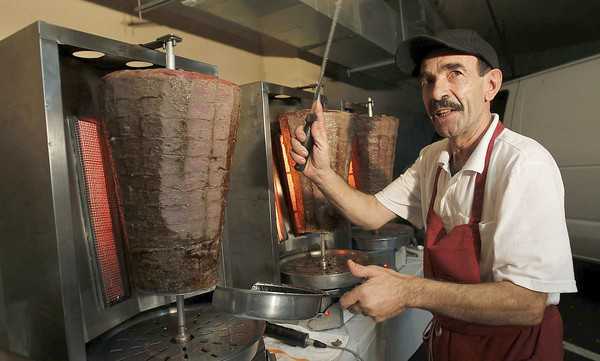
    Lokma, börek and doner kebab — they’re all on the menu when members of Southern California’s Turkish-Armenian community gather. Paloma Esquivel writes of one such party in Winnetka:

    The occasion for this feast is Doner Night, an event sponsored by the Organization of Istanbul Armenians, a group of more than 1,000 Turkish Armenians in Southern California. Of the hundreds of thousands of Armenians in California, Turkish Armenians make up a small fraction. In addition to Armenian, they also speak Turkish, listen to Turkish music and have adopted many of the traditions of that country.

    There are times, some said, when this closeness with Turkey — those who remained in that country were sometimes discouraged from following their own traditions and culture — has made it difficult to gain acceptance from other Armenians. But that is changing. Organizations like the one hosting this event have found ways to embrace both elements of the culture.

    via Celebrating their Turkish-Armenian heritage – latimes.com.

  • Facebook Censoring Some Alternative News Sites…

    Facebook Censoring Some Alternative News Sites…

    … While Allowing Hackers To Attack Others

    Alexander Higgins
    The Intel Hub

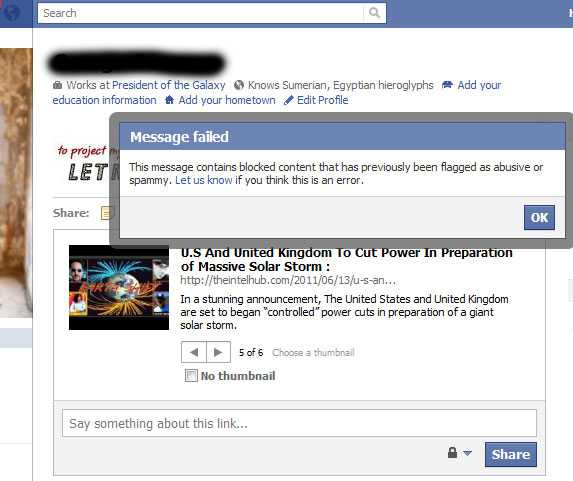
    Facebook now appears to be censoring some alternative news sites while allowing hackers to go after others. It is no wonder they lost 6 Million users in the US last month.

    I recently talked to Alex Thomas from The Intel Hub who was listed as an honorable mention in the top 10 most influential people in alternative media list published by Activist Post.

    I am frequently a guest contributor on the site and during our conversation he told me that Facebook is starting to ban articles from the site. At that point I figured most likely his account was flagged and left it at that.

    Lo and behold, top item in Reddit’s conspiracy section right now is this.

    Facebook Not Allowing Users To Share Articles From The Intel Hub

    So it is not just Alex’s account that has been banned but other users are also being censored from sharing Intel Hub articles.

    www.activistpost.com, june 15 2011