Category: Regions

  • Leaked document reveals plans to ‘eliminate’ Russia’s enemies overseas

    Leaked document reveals plans to ‘eliminate’ Russia’s enemies overseas

    Russia ‘gave agents licence to kill’ enemies of the state

    The Russian secret service authorised the “elimination” of individuals living overseas who were judged to be enemies of the state and ordered the creation of special units to conduct such operations, according to a document passed to The Daily Telegraph.

    The directive refers specifically to the European Union and western Europe and appears to be signed by the head of counter-intelligence of the FSB, the successor to the KGB.

    It is dated March 19, 2003 – four years before the killing of the former Russian spy Alexander Litvinenko in London. It sets a provisional deadline of May 1 2004 for the new units’ work to begin.

    It is understood the document is also in the possession of Scotland Yard’s counter-terrorism command which is investigating the Litvinenko case.

    A hearing is to be held next week into whether a full inquest should take place into Mr Litvinenko’s death, as the Russian government has insisted that Andrei Lugovoi, the former KGB bodyguard who is a main suspect in the case, will never be extradited back to Britain.

    Labelled “Secret documentation. For internal use only. Do not copy”, the leaked document refers to a law on “countering extremist activities” passed eight months earlier, although that law does not refer to the use of force.

    The objectives, the directive says, are “observation, identification, possible return to the Russian Federation” of their targets.

    But it also allows for “under special directives” the “elimination outside of the Russian Federation in the countries of Near Abroad [former Soviet states] and in the European Union, of the leaders of unlawful terrorist groups and organisations, extremist formations and associations, of individuals who have left Russia illegally [and are] wanted by federal law enforcement”.

    Apparently with leaders of rebellions in the Caucasus in mind, among others, it names the crimes of those sought as terrorism, “extremist activity,” murder, kidnapping and “others classified as especially serious crimes against citizens of the Russian Federation and directed against the Russian state and government”.

    The order sets up the “intensive training of the newly formed groups and units in relation to specific conditions of work in Western Europe and countries of the European Union”.

    It says there will be “in-depth training of individual agent-analysts for work in the countries of European Union”.

    It is signed at the bottom by Col General Nechaev, First Deputy Head of the FSB counter-intelligence branch and also bears the organisation’s stamp.

    Colonel General Nechaev is a former civil and military health minister who was invited to London by the then health minister Virginia Bottomley in 1993 to “see the operation of the NHS at first hand”.

    Vladimir Putin, then the Russian president and now the prime minister, pushed a law on “counteracting terrorism” through the Russian Duma in March 2006 which gave the FSB the power to kill “terrorists” abroad.

    However, the latest document suggests an extensive secret programme was already in place.

    The Russians have conducted controversial assassinations against Chechens in Dubai, Qatar, and Vienna. The latest, in Istanbul, was just last week, when a gunman shot a Chechen rebel leader and his two bodyguards dead in a busy street in Istanbul.

    Mr Litvinenko died in a hospital bed in London in November 2006 after allegedly being poisoned by a former FSB bodyguard using radioactive polonium 210.

    Other potential Russian targets in Britain include the oligarch Boris Berezovsky, who was the subject of a suspected assassination plot in 2007, and the Chechen dissident Akhmed Zakaev.

    Mr Zakaev said: “I knew anytime that something like this could happen to me. They want to eliminate me before 2012 when Putin comes back to the Kremlin [as president]. They need to solve these ‘problems.’ That is what they call us and it doesn’t matter where we are.”

    Mr Berezovsky said: “I knew this a long time ago and there were several attempts to kill me. I was lucky, I was warned and I am safe.”

    He said he had been told again only a month ago not to travel abroad.

    via PIC AND PUB PLS: Leaked document reveals plans to ‘eliminate’ Russia’s enemies overseas – Telegraph.

  • Treatment of the week: Get a Turkish hammam without leaving the country

    Treatment of the week: Get a Turkish hammam without leaving the country

    By Tracey Blake

    Anyone who’s holidayed in Turkey will know that a hammam — a large steam room used in the Middle East for communal cleansing and scrubbing of the skin — is a sure-fire way to give your body a boost.

    And, thankfully, I didn’t have to board a stressful easyJet flight to indulge myself.

    The elegant Bentley Hotel in London’s Chelsea is home to the Le Kalon Spa, with an authentic hammam constructed of grey marble imported from Istanbul.

    Turkish delight: A hammam is a large steam room used in the Middle East for communal cleansing and scrubbing of the skin

    I have booked it for a full, private skin MoT. I’m going to steam my skin, have an all-over exfoliation, a body mask and, finally, a massage — all in a balmy 38c temperature.

    Marble benches flank the walls and deep basins of cold water are on hand. These benches conduct heat and lying on one feels gloriously warming. My pores open up and my skin starts to breathe. My muscles are warmed up and are ready to be pummelled.

    Just as I’m getting comfortable, a therapist emerges through the steam and gets to work exfoliating my body using La Sultane De Saba’s black olive soap and a Turkish Delight body scrub.

    If I get too warm, I give my therapist the nod and am soaked with bowls of cold water . . . It’s a perfect quick fix.

    Once I’m sufficiently clean, there’s a honey-and-rose moisturising mask followed by a 30-minute relaxing massage. Again, I am drenched in cold water if I get too warm.

    An hour later, I leave the spa feeling super soft, squeaky clean and totally relaxed. I will return.

    The Combination Hammam lasts 60 minutes and costs £115. The Bentley London hotel, thebentley-hotel.com

    via Treatment of the week: Get a Turkisk hammam without leaving the country | Mail Online.

  • The Kurdish Question

    The Kurdish Question

    By Alexander Weinstock

    SATURDAY OCTOBER 01, 2011

    Photographer: Dan Phiffer
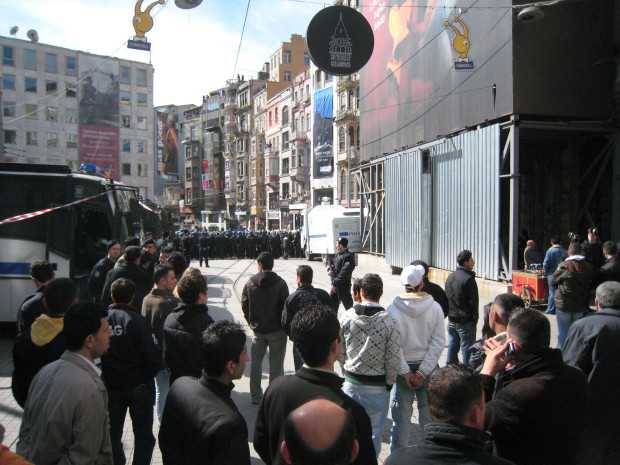
    In Istanbul, a crowd demonstrating in support of the Kurdistan Workers’ Party (PKK), facing a police line.

    Settled in the Middle East since ancient times, the Kurds remain the largest ethnic group without a state of their own in the region. About 35 million are split between Iran, Iraq, Syria and Turkey, with small diaspora groups primarily in Armenia and Azerbaijan. The Kurds’ present situation is rooted in the decision to partition areas of the former Ottoman Empire by Great Britain and France after World War I. Today, the Kurdish people struggle for self-determination and the recognition of their ethnic identity within nations where they have significant populations. For example, it is illegal for them to speak their language in Turkey, and the country’s constitution provides for only one ethnic designation, Turkish, thus disavowing the very concept of Kurdish ethnicity. There is little consensus between the many Kurdish groups as to how best to achieve their goals. Overall, Kurdish history in all four states with native Kurdish populations over the last hundred years has been mostly marked by cultural discrimination from ruling regimes, spotted with frequent rebellious uprisings that were violently suppressed.

    The different roots of Kurdish nationalism

    The Kurds are a distinct ethnic group of Iranian origin with their own language and culture. In modern history, they are also united by a desire for greater autonomy, and, ideally, a state of their own, as well as a shared history of discrimination and oppression from each regime in question. “Self-determination is the right of the Kurdish people,” said Iraq’s president Mr. Jalal Talabani, an ethnic Kurd, in an interview with Le Figaro, published on October 31, 2006.

    The causes of clashes between Kurdish minorities and central governments have been different in each country. Kurdish nationalism in Turkey was primarily a reaction to Turkish nationalism in the newly-founded republic. The country’s course toward secularization under the Kemalist ideology (a movement developed by the Turkish national movement leader, Mustafa Kemal Ataturk), which emphasized the absence of religious influence from all public institutions, conflicted with the devout Muslim Kurds’ world view and was a major reason for the rise of the nationalist movement.

    Iranian Kurds always bore some discrimination, according to Amnesty International, such as inability to register newborns with certain Kurdish names and difficulty obtaining employment or adequate housing. Such policies reached their zenith in 1979 with the Islamic Revolution. The desire of nearly 2.5 million Sunni Kurds for regional autonomy caused Ayatollah Khomeini, spiritual leader of predominantly Shia Iran, to declare jihad (holy war) against them. Shia Kurds, on the other hand, were untouched by the Ayatollah’s decree and did not face discrimination from the Iranian government. Neither have they ever really desired autonomy or independence from Iran due to religious homogeneity with the rest of the population. Shia Kurds have held or currently hold key positions in the Iranian political hierarchy, such as First Vice President Mohammad-Reza Rahimi and former Foreign Minister Karim Sanjabi. In fact, in recent history, the Sunni denomination of Islam has traditionally been discriminated against in Iran regardless of the ethnic group involved. For example, according to Sunni-News, in March of this year, Iranian authorities have forbidden the annual forum of Sunni students set to be held in the town of Zehan.

    Ethnic, rather than religious, differences were the cause of the Kurdish nationalist movement in Iraq, according to the analysis of Ms. Denise Natali, a lecturer at the Center for Law and Politics at Salahaddin University in Iraqi Kurdistan, in her book The Kurds and the State. She cites a forceful “Aribization” campaign, which started in 1963 with the rise of the Ba’ath party to power. The initiative involved the ban of the Kurdish language, deportation and ethnic cleansing. The government did propose a plan, which provided for a degree of Kurdish autonomy in 1970. However, according to Mr. George Harris, a Near East history scholar at the Middle East Institute, this was combined with a forceful resettlement program, in which the government tried to settle traditionally Kurdish areas with citizens of Arab ethnicity. The Kurds comprise a lesser percentage of the population in Syria than in the other countries as most of them emigrated from neighboring Turkey. It is for this reason that Syrian Kurds have long been regarded as foreigners by the ruling Ba’ath regime, and thus, were not allowed to participate in elections or travel abroad as Syrian citizens. They were extended some civil liberties as a result of the protests last winter, but some, like the Syrian Kurdish opposition activist Mr. Shirzad Al-Yazidi in an interview with Asharq Alawsat newspaper, call to “look to the recent declaration of democratic autonomy in the Kurdish region of Turkey” as a model for attaining a greater degree of independence for Syrian Kurds. Unlike their Turkish or Iraqi counterparts, however, Syrian Kurds do not seek independence, but rather a wider spectrum of civil rights within the country, such as equal employment opportunities. Mr. Fawzi Shingar, a Syrian Kurdish leader, remarked to Rudaw in English that despite the lack of a common agenda between the many Kurdish groups, “no Kurdish party wants independence from Syria because the Kurds are an inseparable part of the country.”

    The struggle for Kurdish independence has often been violent. In the interwar period, Turkey saw an average of three revolts per year. The most well-known of the militant groups, the Kurdistan Workers’ Party (PKK), has been in existence for 33 years and has been leading an armed struggle against the Turks for 27 years. Their official agenda is independence from Turkey and possible unification with other Kurdish-populated areas in Iran, Iraq and Syria. The PKK is labeled a terrorist organization by the United States and the European Union for its violent actions such as the suicide bombing in Ankara in 2007. In her 2007 book Blood and Belief, Reuters political analyst Ms. Aliza Marcus contends that the PKK guerillas would stop fighting if offered amnesty and certain liberties for Turkey’s Kurdish population. Ms. Marcus also notes that any legitimacy to their demands is countered by their fervent devotion to PKK’s recently retired leader Mr. Abdullah Ocalan, who stressed armed struggle as a means for complete secession of Northern Kurdistan from Turkey.

    Other militant groups include the Free Life Party of Kurdistan (PJAK), which has been in regular confrontations with the Iranian government. The most recent incident, as reported by Reuters, occurred last July, involving the assassination of General Abbas Kasemi of the Islamic Revolutionary Guard Corps, an elite division in the Iranian army. Iran responded with an armed incursion of 5,000 men into northeastern Iraq’s Kurdish region, accusing the head of Iraqi Kurdistan of illegally sponsoring PJAK activity. Several towns were shelled by Iranian artillery. Despite constant assurances of a victory made by either side, the conflict went on until complete PJAK surrender on September 29.

    The statehood question

    What is to be done about this situation? Some, like British journalist Mr. David Osler of Lloyd’s List, compare the Kurdish problem to the Israeli-Palestinian conflict. Naturally, such a comparison brings to mind the familiar one-state vs. two-state solutions. Mr. Daniel Greenfield, a journalist for The Kurdistan Tribune, strongly advocates a completely independent Kurdistan, stating that it would be otherwise impossible for Turkey to enter the EU. “Only by allowing an autonomous Kurdish state within the borders of occupied Northern Kurdistan, will Turkey gain stability and peace,” writes Mr. Greenfield in a blog post from June 20, 2011. He asserts that Turkey’s acceptance into the EU without resolving the Kurdish question will exacerbate ethnic conflicts and undermine the EU’s credibility. However, there are matters other than the Kurdish question that bar Turkey’s entrance into the EU, such as the issues of Cyprus and foreign relations with Greece.

    The Kurds find themselves in a complicated situation, at least geopolitically speaking, considering the sheer number of nations and potential negotiations involved. Taken within the greater scope of all of Kurdistan, a two-state solution entails carving out sizable portions of Iran, Iraq, Syria and Turkey. This means that each Kurdish minority will have to negotiate with its respective government, and none of these states are inclined to simply give up territory. Iraqi Kurds are in constant contest with the central government for the oil-rich region of Kirkuk. The Kurds inhabit a large portion of Turkey. Syria, with the partition of the country under the French Mandate still fresh in the nation’s consciousness, will most likely not agree to give a piece of its land to its Kurdish residents, despite recent advances such as President Bashar Al-Assad’s granting of Syrian citizenship to the country’s large Kurdish population.

    As such, more moderate solutions have been proposed. Mr. Michael Gunter, a professor of political science at Tennessee Technological University, in his 2007 book The Kurds Ascending, sees the solution in an education system that provides a belief “in democracy for all people regardless of ethnic affinity.” Dr. Gunes Tezcur, who teaches political science at Loyola University, points to more serious issues that must first be resolved. In particular, he recommends the cutting of funding from Iraqi Kurds to militant groups such as the Kurdish Freedom Falcons and PKK in Turkey and an acknowledgement of the Turkish government’s civil rights violations by the EU. Some experts, like Yale University’s political science lecturer Mr. Matthew Kocher, believe more moderate solutions have a better chance of success in satisfying all sides involved to some degree than four separate and costly two-state solutions. “The median Kurdish voter probably supported center-right Turkish political parties,” writes Mr. Kocher in his 2002 paper “The Decline of PKK and the Viability of a One-State Solution in Turkey,” which was published in the MOST Journal on Multicultural Studies. He describes the position of Turkish Kurds regarding integration into the state. In light of the Syrian Kurds’ attitude of remaining within Syria voiced by Mr. Shingar and the autonomy granted to Iraqi Kurds by Iraq’s new constitution, it is possible that one-state solutions are gaining popularity. This is indeed a step toward settlement, even though more remains to be done for reconciliation.
  • US to provide Turkey with attack helicopters

    US to provide Turkey with attack helicopters

    US to provide Turkey with attack helicopters

    American ambassador says Washington to provide Turkish army with three SuperCobra attack helicopters to replace those destroyed in campaign against Kurdish rebels

    US Ambassador to Ankara Francis Ricciardone announced Friday that the US will provide Turkey with three new attack helicopters, Turkish newspaper Hurriyet reported.

    According to the report, which quotes Turkey’s TGRT news network, Ankara asked Washington for SuperCobra attack helicopters to replace those it lost in the campaign against Kurdish rebels.

    On Friday, one person was killed and two others were injured in an explosion in the city of Antalya. Earlier, it was reported that two soldiers were killed and three others were wounded in southeast Turkey after Kurdish rebels ambushed a military force.

    Consequently, 26 people were arrested in Istanbul and Bitlis on suspicion of being involved in terrorist activity. The detainees included officials in the Kurdish Peace and Democracy Party. Turkey’s agriculture minister condemned the attacks.

    Also Friday, a crew onboard a Turkish exploration ship searching for gas reservoirs near Cyprus claimed that two Israeli aircraft and a helicopter circled above them on Thursday night,

    According to a report published in the Turkish newspaper Watan Daily, two F-15 jets passed through Cyprus’ Greek and Turkish airspace and approached the Turkish coastline, while ignoring air controllers’ warnings in north Cyprus, which is considered a Turkish territory.

    via US to provide Turkey with attack helicopters – Israel News, Ynetnews.

  • Turkey May Freeze Assad’s Assets; Libya’s Qaddafi Still at Large

    Turkey May Freeze Assad’s Assets; Libya’s Qaddafi Still at Large

    By Miles Weiss

    Oct. 2 (Bloomberg) — Syria is facing mounting pressure for political reform as Turkey signaled it might freeze some $500 million in assets belonging to President Bashar al-Assad.

    Turkey, which has imposed an air, land and sea blockade on its neighbor, would freeze all of Assad’s assets, including his bank accounts, if the United Nations enacts an embargo on Syria, Milliyet reported. The Turkish Finance Ministry’s criminal investigation unit is following Syrian banking activities in the country, the Istanbul-based newspaper reported.

    White House National Security Advisor Tom Donilon issued a statement yesterday thanking Saudi Arabia’s King Abdullah, along with the Gulf Cooperation Council, for opposing the violence in Syria. More than 3,600 Syrian civilians have been killed since political protests began in March, according to figures compiled by Ammar Qurabi of the National Organization for Human Rights in Syria.

    The country’s death toll rose by 14 yesterday, Al Jazeera reported, citing local activists. According to the Al Jazeera news agency, Syrian police shot dead 7 protesters across the country yesterday after killing 32 on Friday.

    The Syrian army took control of the town of Rastan and detained 3,000 people yesterday as soldiers who had defected to join the activists withdrew from the town to Hama, Al Arabiya said. The former soldiers left in an attempt to spare civilians from random shelling by government troops, Walid Abdel Qader, a Syrian opposition figure, told the news service.

    In Libya, the North Atlantic Treaty Organization’s military mission is nearing completion and its involvement there could begin winding down as soon as this coming week, the Associated Press reported. Army General Carter Ham, the top U.S. commander for Africa, told the AP that U.S. military chiefs will likely provide NATO officials in Brussels with their assessments on Libya late in the week.

    Muammar Qaddafi, the deposed Libyan leader, remains at large. The National Transitional Council, Libya’s interim government, plans to seek a two-day truce to allow civilians to depart from Gaddafi’s hometown of Sirte, Reuters reported, citing the council’s chairman. Civilians have been leaving Sirte as interim government forces and NATO warplanes shell Gaddafi loyalists.

    –Editors: Ann Hughey, Christian Thompson.

    To contact the reporter on this story: Miles Weiss in Washington at [email protected]

    To contact the editor responsible for this story: Mark Silva at [email protected]

    via Turkey May Freeze Assad’s Assets; Libya’s Qaddafi Still at Large – Businessweek.

  • Is Turkey’s EU dream coming to the end of the road?

    Is Turkey’s EU dream coming to the end of the road?

    AMANDA PAUL

    [email protected]

    Is Turkey’s EU dream coming to the end of the road?

    In a couple of weeks the European Commission will publish its annual Progress Report on Turkey’s progress towards becoming a member of the EU.

    One could say it represents something of a scorecard for Turkey’s efforts in meeting EU demanded reforms in both economic and political terms, including underlining areas where Turkey needs to make much greater efforts.

    While on the one hand, one may say that this year’s report, more than any other so far, has become irrelevant because the chances of Turkey ever joining the EU seem to be reducing by the day, but on the other it is still serves as a useful tool for monitoring the political and economic situation in the country and how Turkey is progressing on issues such as minority rights, fundamental freedoms, human rights, the Kurdish issue, etc.

    Turkey’s EU journey began over half a century ago in 1959 when Turkey was given associate membership status. In 1964, the Association Agreement between the then- “European Economic Community” (EEC) and Turkey provided to establish far-reaching economic cooperation, from a customs union to free movement of labor with a preamble containing a reference to eventual membership. And again at the Helsinki Summit in December 1999, when Turkey was finally granted candidate country status, the communiqué of the summit read “Turkey is a candidate country destined to join the EU on the basis of the same criteria applied to all other candidates.” Nice words, but unfortunately the EU has not applied the same approach to Turkey as it did with the other candidates.

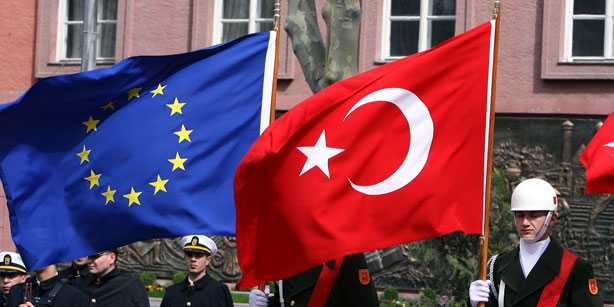
    In 2005, Turkey’s membership talks kicked off, together with Croatia. Some six years later, Croatia has finalized its negotiations and is on the verge of becoming the 28th member of the EU. For Turkey, it has been a different story. The membership talks are frozen with some 18 negotiating chapters blocked. While leaders from both sides continue to smile and pretend that there is still a commitment, behind closed doors the air is filled with mutual recrimination. Confidence and trust have evaporated. Turkey has been left frustrated by the unrelenting positions of France and Germany (among others), which continue to violate the EU’s commitment to full membership by talking about “alternatives,” while the EU’s reluctance to offer Turkey visa liberalization (something which all other candidate have) has added salt to the wound. Turkey has also played its part. Turkey is a proud nation which has been a crucial ally of the West, including through its membership of NATO for decades. The idea that countries which Turkey considered “friends” could so blatantly reject them and label them as unsuitable for EU membership has been a difficult to deal with. Today, Turkey’s reform process has slowed down, while Ankara continues refuse to meet its commitments vis-à-vis the Ankara Protocol. Cyprus continues to be at the epicenter of the problem. The EU’s decision to allow a divided island into the EU has had serious repercussions and has only served to make a difficult problem even more intractable. Confident in their EU seat, the Greek Cypriots have felt more able to take on tougher positions in peace talks for reunification.

    Furthermore, tensions about Cyprus have reached a new climax following the discovery of off-shore natural gas reserves in the eastern Mediterranean, particularly in the economic zones of Israel, Lebanon and Cyprus. Cyprus has infuriated Turkey by concluding an agreement with Israel on the delimitation of their respective economic zones. The anger culminated earlier this month with the government of Greek Cyprus deciding to start drilling for gas southeast of the island and the Turkish government threatening that it would not accept this and going on to conclude an agreement on the delimitation of the continental shelf with the “government” of the “Turkish Republic of Northern Cyprus” (KKTC), which since its creation in 1983 has not been recognized by any other country other than Turkey.

    This has been compounded by Turkey announcing that it will suspend relations with the EU in July 2012 when the Greek Cypriots take up the rotating EU presidency, unless negotiations on the reunification of the island will have been successfully concluded by then, which is highly unlikely. All in all — combined with Turkey’s deteriorating relations with Israel — the eastern Mediterranean has become a very hot spot, although anything beyond aggressive words would seem unlikely.

    Meanwhile, the EU continues to have little interest in its once grand enlargement project being burdened with visionless leaders and an economic nightmare. Turkey, with its booming economy and increasingly important regional role, is growing surer of itself and eager to be the major political and economic player in the Middle East region.

    Today, Turkish membership of the EU appears more distant than ever. With its 78 million dynamic people, Turkey feels strong enough to stand alone. As one of the major economic powers on Earth, a member of the OECD and G20, emulated as an example by Arab neighbors, it may consider EU membership no longer necessary for its economic development and politically more of burden than of benefit.

    via Is Turkey’s EU dream coming to the end of the road?.