Category: Regions

  • Turkey’s EU bid on the rocks as tensions with Greek Cypriots escalate

    Turkey’s EU bid on the rocks as tensions with Greek Cypriots escalate

    ANKARA, Oct. 2 (Xinhua) — Turkey’s EU negotiations are at a bottleneck amid rows with Cyprus and strong objections to its bid for European Union (EU) membership from Germany and France.

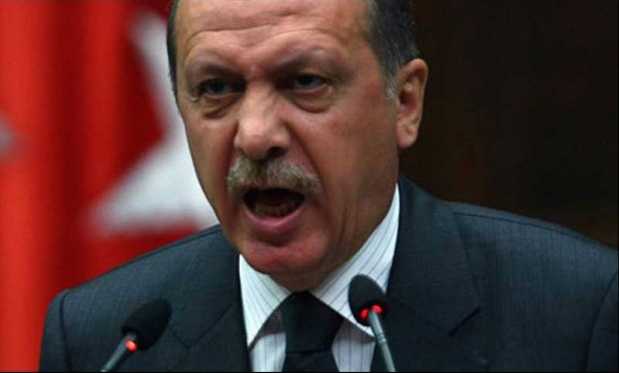
    Macedonia will enter the EU before Turkey, Prime Minister Recep Tayyip Erdogan said on Thursday during a joint press conference with his Macedonian counterpart Nikola Gruevski.

    During his visit to Macedonia last week, Erdogan said the country’s EU membership process “continues with a fast pace,” adding that “Turkey is the country that conducts entry negotiations with the EU. However, Macedonia will enter the EU before Turkey.”

    The EU has started accession talks with Turkey and Croatia in 2005. Six years later, Croatia has finalized its negotiations and is now on the verge of becoming the 28th member of the EU.

    However, Turkey has only been able to open talks on 13 out of 35 chapters thus far, and talks have been provisionally completed in only one chapter. The membership talks are frozen since some 18 negotiating chapters are blocked.

    Dispute with Cyprus is at the epicenter of the problem, since not only the Cypriot administration but also some other EU member states, which do not favor Turkey’s full membership to the union, raise it as political obstacles.

    Countries such as France and Germany oppose Turkey’s full membership to the union, instead propose a privileged membership to the EU, which is strongly refused by Ankara.

    “Europeans should first of all let Turkey finish its EU membership process successfully, instead of holding debates over whether Turkey should become a full member or not,” Turkey’s President Abdullah Gul said recently during an official visit to Berlin.

    Blocking some negotiation chapters, France and Germany, along with Greek Cypriots, ask Turkey to meet its commitment vis-a-vis the Ankara Protocol, opening its ports to Greek Cypriot vessels. However, Ankara refuses to do so, saying that Turkey will not meet those countries’ demand if embargoes on Turkish Cypriots, northern part of Cyprus whose administration is recognized just by Turkey, were not lifted mutually.

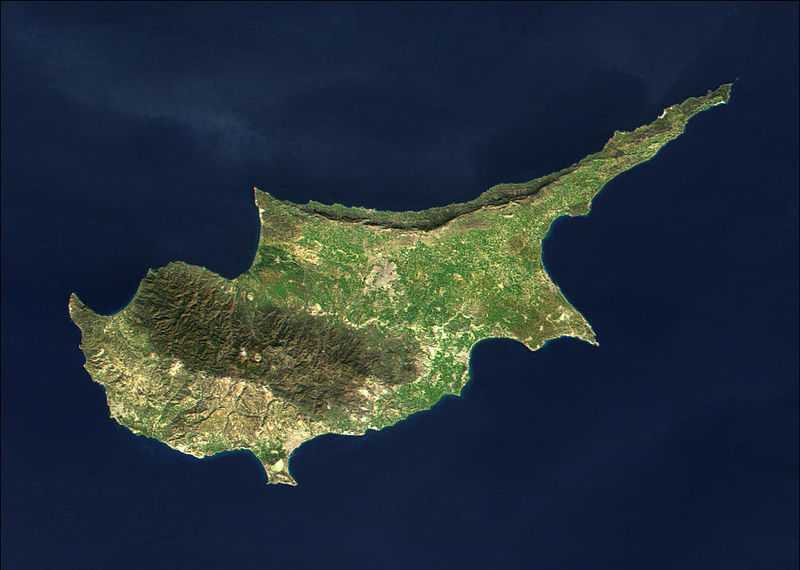
    Tension between Turkey and Cyprus escalated recently due to potential offshore gas deposits in the eastern Mediterranean. Cypriot administration vowed recently to keep Turkey’s EU talks on hold as long as Ankara challenges the island’s rights to launch gas drilling activities.

    This was compounded by Turkey’s announcement that it will suspend relations with the EU in July 2012 if the bloc handed over its rotating presidency to the Greek Cypriots, unless talks for the reunification of the island will have been successfully concluded by then, which is highly unlikely.

    As Turkey’s negotiations with the EU for membership have entered a period of siesta, Ankara intensified its efforts to urge the EU for visa exemption process for Turkish nationals.

    Turkish EU Affairs Minister Egemen Bagis attended a meeting on Schengen visa in Strasbourg last week, pushing the union to produce concrete result in its pledge to ease visa requirements for Turks.

    “We expect the words given to Turkey be honored and we want to see results,” Bagis told reporters on last Thursday following his talks at the European Parliament.

    The minister’s remarks came after the EU Commissioner for Home Affairs Cecilia Malstrom said the union would “draw a road map to remove visa requirements completely” for Turkish nationals as a move to ease visa procedures.

    However, many attempts of the European Commission to ease visa requirements for Turkish citizens were hindered, when some of the member countries blocked the EU Council to give consent to the commission’s work on visa facilitation process with Turkey.

    Editor: yan

    via Turkey’s EU bid on the rocks as tensions with Greek Cypriots escalate.

  • Erdogan of Turkey’s Blood Libel Against the Jewish State

    Erdogan of Turkey’s Blood Libel Against the Jewish State

    The Jewish debt to the Turks goes back centuries when the Ottomans took in thousands of Jewish refugees after the Spanish and Portuguese expulsions of 1492 and 1497. Moreover, when Israel was shunned for decades by nearly every Muslim country, it was Turkey that was Israel’s military ally, friend, and commercial trading partner. And even in the midst of growing Turkish hostility, it behooves the Jewish state not to forget this debt of gratitude.

    I have personally visited Istanbul as a Yarmulke-wearing, tzitzis-flying, Jewish Rabbi, and was warmly welcomed by Muslims everywhere. On her way back from Israel last year, my wife went through Istanbul with five of our children, including our baby, and was amazed at how many Muslim merchants gave the baby presents. My family came away smitten with Turkey.

    But my call for Jewish memory and gratitude is becoming increasingly strained by the mouth of Turkey’s Prime Minister, Recep Tayyip Erdogan who has made himself into a living fountain spewing anti-Israel invective. His latest attack on the Jewish state on CNN’s Fareed Zakaria beggared belief. Israel, he said, “shows no mercy” and is “cruel” in its treatment of Palestinians. Not content to feed the worst anti-Semitic Shakespearean stereotypes of Jews being vindictive and heartless, he trivialized Jewish suffering at the hands of thousands of rockets fired from Gaza by Hamas before offering an unbelievable blood libel claiming “hundreds of thousands of Palestinians were killed” as a result of military action by Israel. Earlier he had accused Israel of acting like “a spoiled boy” and described the flotilla raid as “savagery.”

    Erdogan is claiming that Israeli actions border on genocide and that Israel indiscriminately kills Palestinians when the truth is that the Israeli military is, given the level of threat it faces, one of the most humane and restrained in the world. Even if it were true that Israel has killed anything near that number it would still have to be seen in the context of the Palestinian people declaring a non-stop war of annihilation against the Jewish state and Israel being forced to defend itself. Hamas’s 1988 charter, which calls for the complete obliteration and dissolution of Israel, captures the level of hatred the Palestinians have harbored against Israel. Some choice nuggets include:

    “The time will not come until Muslims will fight the Jews; until the Jews hide behind rocks and trees, which will cry: O Muslim! There is a Jew hiding behind me, come on and kill him… The Nazism of the Jews does not skip women and children, it scares everyone… Jews control the world media (and use their) wealth to stir revolutions … There was no war that broke out anywhere without their (Jews’) fingerprints on it.” Hamas Imam Sheik Yunus-al-Astal talked about a verse from Koran suggesting “suffering by fire is the Jews’ destiny in this world and the next.” And, “Therefore we are sure that the Holocaust is still to come upon the Jews.” (NYTimes.com, April 1, 2008)

    That Erdogan would speak as if Israel callously attacks a group which has for years launched rocket attacks against Israeli hospitals, kindergartens, and family homes is an indication of a deep-seated hostility to the Jewish state which he spares no opportunity in maligning.

    But Erdogan’s numbers are grotesque exaggerations designed to portray Israel as a genocidal power.

    The exact number of Palestinians killed in the last two Intifadas, beginning in 1987, is difficult to glean, but the most accurate numbers as assembled in Wikipedia from the United Nations, the Israeli Foreign Ministry, and assorted Human Rights groups put Palestinian casualties from the beginning of the First Intifada in 1987 until 1993 at 1,376 by Israeli security forces and 1,000 murdered by the Palestinians themselves..

    The Second Intifada, from 2000 till the present, is said to have seen the death of 4,850 Palestinians who were killed by Israeli security forces and 594 Palestinians killed by Palestinians. It bears mentioning that during the Second Intifada 1,062 Israelis died at Palestinian terrorist hands.

    It goes without saying that this is a far cry from Erdogan’s libel of hundreds of thousands of deaths and the attempt to de-contextualize the deaths of even these thousands.

    Starting in the 1960’s, the PLO made a global name for itself through international terror. In 1969 alone, the PLO hijacked 82 planes. In the 1972 Olympics it murdered 11 Israeli athletes in Munich. Since the Oslo Accords were signed, Palestinians have killed 53 Americans and Injured 83 Americans. (Jewish Virtual Library)

    But if Erdogan is truly concerned about Palestinian life, as indeed he and all of us ought to be, he would condemn the unbelievable Arab-on-Arab violence that has left far greater numbers dead. In the first Intifada, more than 1000 Palestinians were killed by the PLO for supposedly “informing” for Israel. (Christian Science Monitor, May 22, 2002)

    As early as the 1930s revolts in Palestine, Arabs fought each other. During the Lebanese Civil War, two Palestinian movements battled one another, leaving thousands of Palestinians dead. (Federal Research Division, Middle East Contemporary Survey, Volume 11, Google Books)

    According to the Palestinian Center for Human Rights, in Gaza, Hamas has killed and tortured thousands of other Palestinians who oppose their rule. By 2007, More than 600 Palestinians died during the Struggle between Hamas and Fatah. (Ynetnews.com, June 6, 2007)

    Between 1986 and 1989, the Al-Anfal Genocidal campaign in Iraq against the Kurdish People and others have Saddam Hussein’s army killing 200,000 of his own civilians in that period. (The Middle East: A History, 2004) And The NY Times has reported that Saddam Hussein has “murdered as many as a million of his people.” (Oct. 7, 2007) The vast majority of these people were, of course, Arabs.

    I am religious Jews who believes that Arabs are my brothers and are, of course, equal children of G-d in every way. The death of even a single Palestinian is a tragedy. But what choice does Israel have when the Palestinians launch wave after wave of horrific terror against innocent Israeli men, women and children. Will Erdogan next condemn the United States for the thousands of Taliban fighters it has killed in Afghanistan? Will he deplore American Predator strikes against Al Qaida in Pakistan? Since when is there a moral equivalence between the taking of a life in self defence and the taking of a life in an act of cold-blooded murder?

    Just as it is proper for Jews to try and overlook Turkey’s current leader and remember the age-old friendship between the two people’s, it behooves the Turks themselves to rein in their Prime Minister from his character assassination of the Jewish state.

    Rabbi Shmuley Boteach, founder of the Global Institute for Values Education, has just published “Ten Conversations You Need to Have with Yourself (Wiley) and in December will publish “Kosher Jesus.” Follow him on Twitter @RabbiShmuley.

  • For Europe, a Bridge Too Far to Turkey

    For Europe, a Bridge Too Far to Turkey

    By JOHN VINOCUR

    It meant, in their eyes, Europe literally extending its frontiers to the borders of Iran, Syria and Iraq, and the E.U. adding to its membership a predominantly Muslim country whose population would soon give it the biggest number of seats in the European Parliament. As for Turkey’s government, its uncertain relationship with democracy was exemplified by 57 journalists in jail — more, at last count by international watchdogs, than either China or Iran.

    Now, at an increasing pace over the last six months, Turkey is portraying itself as a regional power in the Middle East, threatening to send its ships to challenge Cypriot or Israeli gas exploration rights in the Mediterranean, talking up “an axis” with Egypt, and warning of a “real crisis” with the E.U. if it allows the Republic of Cyprus to hold, as scheduled, its six-month rotating presidency next year. To its backers in Europe, this Turkey can no longer look much like an idealized bridge to a world beyond clashes of civilizations.

    In the opposite direction, surveying a weakened and divisive Europe, whose resolve and forthrightness are in question as it stumbles from nonsolution to nonsolution of its economic and financial crises, the Turkish president, Abdullah Gul, insists his country has accumulated as much political influence internationally as the entire E.U. combined.

    So? In the very short term, Turkey’s new stance gives Europe (with Germany and France opposing full Turkish membership) a respectable alibi and respite from an issue it cannot easily solve. But in the process, the door closes on the goal of integrating Turkey into a European-led geopolitical and economic order.

    “The majority of Europe welcomes the moment, thinking, ‘Great, the Turkey thing is off the table,”’ said a Brussels official whose country backs Turkish entry. He added, “We think Turkey is worth it, and that they’re a real risk if they sail off into the distance.”

    All the same, a new distance has unspoken pluses.

    The apocalyptic notion of Europe being overrun by Turkish Muslims, brandished by right-wing populists like Geert Wilders of the Netherlands — Turkey’s rapidly growing population is approaching 80 million — is deflated as a hysteria-making political argument.

    Reality also says the European Union couldn’t handle two existential issues at one time. The magnitude of the problems represented by Turkish entry into full-fledged membership (Germany talks instead of a “privileged partnership”) appears incompatible with the E.U.’s unresolved issues of debt and deficit, an economy nearing standstill by the end of the year, and an intensifying discussion of the need for greater economic governance.

    The Obama administration, so far, can praise Prime Minister Recep Tayyip Erdogan’s “great leadership,” be happy that Turkey will be part of a U.S. antimissile defense system, and disregard Mr. Erdogan’s Putin-style remark that there are only “presumptions” about Iranian nuclear weapons intentions.

    Yet the question of Turkey’s new engagement in the Arab world, its falling out with Israel, and general bluster is a more intimate one for Europe. Some Europeans would like to minimize the problem.

    The Brussels official who found a majority of E.U. members liking the idea that Turkey’s entry seems shelved for now — I spoke to a cabinet minister from another E.U. core country who agreed — described Turkish assertiveness as “tactics, not strategy,” and part of an expression of Turkey’s irritation with Europe’s resistance to it.

    The Finnish foreign minister, Erkki Tuomioja, has pointed in the same direction and asserts, “Turkey doesn’t have the means for its policy.”

    But if you take Turkey’s Middle East power ambitions as serious — and not blowhard fantasizing — then it is the Turks who are forcing the E.U. to turn away from its candidacy. Foreign Minister Ahmet Davutoglu has said, “A Turkey that wants to become a regional power must build up its political and economic influence on the waterways from the Agean to the Adriatic and from the Suez Canal to the Persian Gulf.”

    The leading German research organization for international politics and security affairs, SWP, takes the point. It published a paper two weeks ago, titled “Turkey on a Course of Confrontation,” whose introduction reads, “Ankara is looking to pick a fight in the Mediterranean not only with Israel and the Republic of Cyprus, but also with the European Union.”

    The same week, Mr. Gul, while rejecting anything short of full E.U. membership during a visit to Germany, sounded provocative about his hosts’ approach to Turkish immigration. He described as a violation of “human rights” a German regulation requiring spouses of Turks living in Germany to pass German-language competency tests before taking up residence.

    Earlier in the year, Mr. Erdogan, as a guest of Angela Merkel, had an imperative-type message for Turkish immigrants: “Integrate yourselves into German society, but don’t assimilate.”

    Finding an overall response to the new circumstances is not easy.

    Last week, NATO’s secretary general, Anders Fogh Rasmussen, both chose to praise Turkey’s “stabilizing role in the region” and dodge the issue of its charter member’s warning that it might send its navy toward non-NATO Cyprus to block its exploration for gas. He said the alliance “as an organization is not going to interfere in these disputes.”

    On this matter, at least — if it sees a measure of immediate comfort in Turkey talking itself out of closer association anytime soon — the E.U. can ignore an active Turkish challenge to a tiny member’s sovereignty only at the expense of its self-respect.

  • Pacifica Institute Presents Lecture Series at Anatolian Festival

    Pacifica Institute Presents Lecture Series at Anatolian Festival

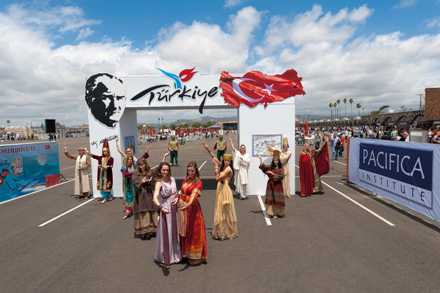
    LOS ANGELES, Oct. 3, 2011 /PRNewswire via COMTEX/ — The Pacifica Institute announced that Turkish-Israeli relations and other important issues facing Turkey today will be among a series of lectures at the Third Anatolian Cultures and Food Festival on October 6-9, 2011 at the Orange County Fairgrounds in Costa Mesa.

    Other topics are the legacy of the Armenians in the Ottoman Empire, Islam in Turkey, Turkey and the Arab Spring, Jewish-Muslim history, and the significance of the Turkish religious leader, Fethullah Gulen. They will be presented by journalists and academics from Turkey and the U.S.

    For a full schedule visit www.anatolianfestival.org/lectureseries .

    The lectures are as follows:

    “Islam in Turkey: An Exceptional Story” and”Islam Without Extremes: A Muslim Case for Liberty”byMustafa Akyol, columnist for the Turkish newspapers, Hurriyet Daily News and Star. Akyol’s articles have also appeared in Foreign Affairs, Newsweek, Washington Post and Wall Street Journal and his book, “Islam without Extremes: A Muslim Case for Liberty, an argument for “Muslim liberalism,” was published by W.W. Norton in July 2011.

    “Turkey and the Arab Spring: Turkey’s role in the Muslim-Arab World’s Democratization Efforts”and”Turkish-Israeli Relations: From Strategic Alliance to Downgrading of Relations”byKerim Balci, Editor-in-Chief of the Turkish Review, a bimonthly journal published by Turkey’s Zaman Media Group. Balci is also a columnist in Today’s Zaman and a TV correspondent on the Middle East. He was the Jerusalem correspondent for Zaman for eight years.

    “Cultural Legacy of Armenians in Anatolia and in the Ottoman Empire”byEdvin Minassian, an attorney and Chairman of the Organization of Istanbul Armenians; Chairman of the Board of Governors of the Armenian Bar Association and the Government Relations and Protocol Committee of the Western Diocese of the Armenian Apostolic Church.

    “Turkish Pastas”byCharles Perry, a food writer and historian of Middle Eastern food, who served as staff writer for the Los Angeles Times Food Section from 1990-2008 and translated a 13th-Century Baghdad food book.

    “Wrestling with Free Speech, Religious Freedom and Democracy in Turkey: The Political Trials and Times of Fethullah Gulen”by James C. Harrington, a human rights attorney, and founder and director of the Texas Civil Rights Project, who has taught at the University of Texas School of Law for twenty-five years.

    “The Scriptural Foundations of Muslim-Jewish Dialogue and Coexistence in Muslim and Jewish Sacred Textsby Rabbi Reuven Firestone, professor of medieval Judaism and Islam at Hebrew Union College and founder and co-director of the Center for Muslim-Jewish Engagement ( www.usc.edu/cmje ).

    “Yes, I Would Love Another Glass of Tea”by Katharine Branning, Vice-President of the French Institute Alliance Francaise in New York City and has a website, www.turkishhan.org , dedicated to Seljuk hans. She wrote a collection of essays on Turkey, published by Blue Dome Presse: “Yes, I Would love Another Glass of Tea”.

    For schedules and information email [email protected] or call (310) 208 7290. Interviews are available before and during the festival.

    SOURCE Anatolian Festival

    Copyright (C) 2011 PR Newswire. All rights reserved

    via Pacifica Institute Presents Lecture Series at Anatolian Festival – MarketWatch.

  • Our World: Turkey’s house of cards

    Our World: Turkey’s house of cards

    By CAROLINE B. GLICK
    10/03/2011 23:39

    The only thing Israel really needs to be concerned about is the US’s continued insistence that Turkey is a model ally in the Islamic world.

        To the naked eye, Turkish Prime Minister Recep Tayyip Erdogan seems to be moving from strength to strength.

    Erdogan was welcomed as a hero on his recent trip to Egypt, Tunisia and Libya. The Arabs embraced him as the new face of the war against Israel.

    The Obama administration celebrates Turkey as a paragon of Islamic democracy.

    The Obama administration cannot thank Erdogan enough for his recent decision to permit NATO to station the US X-Band missile shield on its territory.

    The US is following Turkey’s lead in contending with Syrian President Bashar Assad’s massacre of his people.

    And according to Erdogan, the Obama administration is looking into ways to leave its Predator and Reaper UAVs with the Turkish military when US forces depart Iraq in the coming months.

    Turkey requires the drones to facilitate its war against the Kurds in Iraq and eastern Anatolia. The Obama administration also just agreed to provide Turkey with three Super Cobra attack helicopters.

    Despite its apparent abandonment of Iran’s Syrian client Assad, Turkey’s onslaught against the Kurds has enabled it to maintain its strategic alliance with Iran. Last month Erdogan announced that the Turkish and Iranian militaries are cooperating in intelligence sharing and gearing up to escalate their joint operations against the Kurds in Iraq.

    Erdogan is probably the only world leader that conducted prolonged friendly meetings with both Iranian President Mahmoud Ahmadinejad and US President Barak Obama at the UN last month.

    Then there are the Balkans. After winning his third national election in June, Erdogan dispatched his Foreign Minister Ahmet Davutoglu to Kosovo, Bosnia and Romania to conduct what the Turks referred to as “mosque diplomacy.”

    Erdogan’s government has been lavishing aid on Bosnia for several years and is promoting itself as a neo-Ottoman guardian of the former Ottoman possessions.

    EVEN ERDOGAN’S threats of war seem to be paying off. His attacks on Israel have won him respect and admiration throughout the Arab world. His threats against Cyprus’s exploration of offshore natural gas fields caused Cypriot President Demetris Christofias to announce at the UN that Cyprus will share the revenues generated by its natural gas with Turkish occupied northern Cyprus.

    Christofias said Cyprus would do so even in the absence of a unification agreement with its illegally occupied Turkish north. Moreover, due to Turkish pressure, Cyprus has agreed to intensify reunification talks with the Turkish puppet government in the northern half of the island. Those talks were set to begin in Nicosia last Tuesday.

    Then there is the Turkish economy.

    On the face of it, it seems that Turkey’s assertive foreign policy is facilitated by its impressive economic growth.

    According to Turkey’s statistics agency, the Turkish economy grew by 8.8 percent in the second quarter of the year – far outperforming expectations. Last year the Turkish economy grew by 9 percent. With this impressive data, Erdogan is able to make a seemingly credible case to the likes of Egypt that it can expect to be enriched by a strategic partnership with Turkey.

    For Israelis, these achievements are a cause for uneasiness. With Turkey building itself into a regional powerhouse largely on the back of its outspoken belligerency towards Israel, many observers argue Israel must do everything it can to mend fences with Turkey. Israel simply cannot afford to have Turkey angry at it, they claim.

    If Turkey’s position was as strong as the conventional wisdom claims, then maybe these commentators and politicians would have a point. But Turkey’s actual situation is very different from its surface image.

    Turkey’s aggressive, peripatetic foreign policy is earning Ankara few friends.

    Erdogan’s threat to freeze Turkish-EU relations if the EU goes ahead as planned and transfers its rotating presidency to Cyprus next July has backfired.

    European leaders wasted no time in angrily dismissing and rejecting Erdogan’s threat. So too, Germany and France have been loudly critical of Turkey’s belligerence towards Israel.

    Then there is Cyprus. Turkey’s ever escalating threats to attack Cyprus’s natural gas project have angered both the EU and Russia. The EU is angry because as an EU member state, Cypriot gas will eventually benefit consumers throughout the EU, who are currently beholden to Russian suppliers and Turkish pipelines.

    Russia itself has announced it will defend Cyprus against Turkish threats.

    Russia is annoyed by Turkish courtship of the Balkan states. It sees no reason to allow Turkey to throw its weight around in Cyprus. Doing so successfully will only strengthen Ankara’s appeal in the Balkans and among the Turkic minorities in Russia.

    THIS BRINGS us to the Muslim world. Despite Erdogan’s professions of friendship with Iran, it is far from clear that their alliance is as smooth as he presents it. The Iranians are concerned about Turkish ascendance in the Middle East and angry at Turkey for threatening Syria.

    In truth if Assad is able to ride out the current storm and remain in power, he will owe his survival in no small measure to Turkey. Since the riots broke out in the spring, Turkey has restrained Washington from taking any concerted steps to overthrow the Syrian dictator.

    Had it not been for Erdogan’s success in containing the US, it is possible the US and Europe might have acted swiftly to support the opposition.

    But whether he stays in power or is overthrown, it is doubtful that Assad will feel any gratitude towards Erdogan.

    Rather, Assad will likely blame Erdogan for betraying him. And if Assad is toppled, the Kurds of Syria could easily forge alliances with their brethren in Turkey, Iraq and Iran, to Turkey’s strategic detriment.

    Since former Egyptian president Hosni Mubarak was overthrown in February, Turkey has been making a concerted effort to build an alliance with the Egyptian Muslim Brotherhood.

    Ankara has reportedly transferred millions of dollars in aid to the Islamic group, and of course continues to support Hamas as well as Hizbullah.

    Yet for all of his efforts on the Muslim Brotherhood’s behalf, the Brotherhood issued a sharp rebuke of Erdogan during his visit to Egypt. Brotherhood leader Essam el-Arian rejected Erdogan’s call for Egypt to adopt the Turkish model of Islamic democracy as too secular for Egypt.

    As for the Turkish economy, a closer analysis of its financial data indicates that Turkey’s expansive growth is the result of a credit bubble that is about to burst. According to a Citicorp analyst quoted in The Wall Street Journal, domestic demand accounts for all of Turkey’s economic growth.

    This domestic demand in turn owes to essentially free loans the government showered on the public in the lead-up to the June elections. The loans are financed by government borrowing abroad.

    Turkey’s current accounts deficit stands at nearly 9 percent of GDP.

    Greece is engulfed in a debt crisis with a current accounts deficit of 10 percent.

    Analysts project that Turkey’s deficit will eclipse Greece’s within the year. And whereas the EU may end up bailing Greece out of its debt crisis, Turkey has no one to bail it out of its own debt crisis.

    Consequently, Turkey’s entire economic house of cards is likely to come crashing down very rapidly.

    It is hard to understand why Erdogan is acting as he is given the poor hand he is holding. It is possible that he is crazy.

    It is possible that he is so insulated from criticism that he is unaware of Turkey’s economic realities or of the consequences of his aggressive behavior. And it is possible that he is hoping to combine a foreign policy crisis with Turkey’s oncoming economic crisis in order to blame the latter on the former. And it is possible that he believes that US backing gives him immunity to the consequences of his actions.

    No matter what stands behind Turkey’s actions, it is clear Ankara has overplayed its hand. Its threats against Israel and Cyprus are hollow. Its hopes to be a regional power are faltering.

    The only thing Israel really needs to be concerned about is the US’s continued insistence that Turkey is a model ally in the Islamic world. More than anything else, it is US support for Turkey that makes Erdogan a threat to the Jewish state and to the region.

    [email protected]

    https://www.jpost.com/Opinion/Columnists/Our-World-Turkeys-house-of-cards
  • The Istanbul Statement

    Ghassan Charbel

    With the announcement of the founding statement establishing the Opposition National Council, the Syrian crisis has entered a new phase that is both more difficult and more dangerous. This conclusion can be reached by examining the factions that have come under the broadest umbrella declared by the opposition since the outbreak of the protests. It is also significant that the announcement was made in Istanbul, or in other words, in a country that neighbors Syria, and a country that until recently, was a close ally of the Syrian regime to an extent at which it was thought that a permanent coalition between the two countries had existed.

    This same conclusion can be reached by evoking a key paragraph in the statement that said, “The Syrian National Council is a frame for the Syrian revolution both inside and outside the country. It provides the necessary support for the realization of the aspirations of our people for the overthrow of the regime, including its head, and establishing a civil state without discrimination on the basis of ethnicity, gender, religion or political beliefs…The Council is open to all Syrians who adhere to the principles and goals of the peaceful revolution”.

    It is clear from the statement that the declared framework is not interested in negotiating with the regime nor does it anticipate any steps for reforms to be taken by the latter. The goal it has set forth is clear, namely, to topple the regime, all its symbols included. This means that any wager on a third way through negotiation that would entail coexisting with the regime has been abandoned, even if the latter should agree to sacrifice the domination of the Baath Party and the security services over the state and society. In this sense, this part of the statement represents a favorable response to the slogans raised by the protesters, slogans that have become ever more radical and belligerent since the authorities resorted to the excessive use of force in their crackdown on the demonstrations.

    A close look at what the Syrian authorities have achieved in the past six months reveals the significance of the move that Istanbul witnessed yesterday.

    Immediately after the protests first broke out, the authorities sought to apply the lessons learnt from other arenas in the Arab Spring. The regime thus barred the opposition from holding any permanent and safe sit-ins, i.e. a kind of a Tahrir Square that could attract young people and the media. The regime also prevented the protesters from controlling any city that would play the role of the Syrian protests’ equivalent of Benghazi, i.e. hosting a transitional national council. The Syrian authorities also thwarted any deterioration in border regions through which aid of all kinds could have been smuggled to the protesters. In another respect, the regime, through its relations with Russia, China and other countries, has managed to preclude a resolution in the Security Council condemning its actions, a resolution that could possibly facilitate any Western or international sanctions against the regime. By contrast, the opposition was confused and nonplussed, and this was clear through the series of the conferences it has held. Over six months, a certain equation emerged on the ground that indicates a protracted conflict is afoot: Neither are the protests capable of overthrowing the key symbols of the regime, nor is the regime able to put an end to the protests.

    The move in Istanbul may not have important or rapid repercussions on the outcome of the ongoing confrontation on the streets of Syrian cities and towns, but its foreign implications should not take long to emerge. It is no secret that some countries that wanted to go further in their condemnation of the Syrian authorities, had spoken of the opposition’s lack of a recognized rallying frame. Here, the Istanbul statement may represent an opportunity for these countries to go further and endorse comprehensive change in Syria. This applies to some Arab and Islamic countries, and also to countries outside the region.

    If it received broad international recognition, the Syrian National Council would be better equipped to address the Arab League, the United Nations and the world. Similarly, it would be better able to demand protection for the protesters by ‘putting into effect certain articles in international law”. Here, it is worth keeping a close lid on Turkish steps in the upcoming period of time. What is certain is that the confrontation in Syria is heading towards a more crucial and foreboding chapter than what we have seen in recent months.

    via Dar Al Hayat – The Istanbul Statement.