Category: Regions

  • Turkey breaks Russian gas contract

    Turkey breaks Russian gas contract

    Turkish government cancels a contract to buy six billion cubic metres a year of natural gas ‎from Russia after failing to win a discount

    AFP , Saturday 1 Oct 2011

    Turkey has revoked a contract to purchase six billion cubic metres a year of natural gas ‎from Russia, its main supplier, after failing to win a discount, Energy Minister Taner ‎Yildiz said Saturday.

    ‎”The contract on the western routing has been wound up because the request for a lower ‎price has been refused,” Anatolia news agency quoted him as saying.

    Yildaz had threatened Thursday to end the contract under which Turkey imports gas ‎from Gazprom Export, a subsidiary of the Russian gas giant Gazprom, via a pipeline ‎passing through Ukraine, Romania and Bulgaria.

    Turkey imported 18 billion cubic metres of gas from Russia last year, about 60 percent ‎of its total domestic gas consumption.

    Yildiz said Thursday that natural gas input prices had increased by around 39 percent ‎over the last 29 months, adding that this would prompt Turkey to revisit each and every ‎expiring contract one by one.

    The agreement on the western pipeline, which feeds Turkey’s biggest city of Istanbul, ‎was signed in 1986 and was due to expire at the end of this year.

    Other Russian gas is supplied by the South Stream pipeline passing under the Black Sea.

    Yildiz said Saturday that the decision to break the contract did not mean that Russian gas ‎supplies would end or cause any problems between Ankara and Moscow, whose ‎‎”strategic relationship cannot be affected by a few contracts.”‎

    via Turkey breaks Russian gas contract – Economy – Business – Ahram Online.

  • Kurds Look Beyond Assad, With Dreams of Autonomy

    Kurds Look Beyond Assad, With Dreams of Autonomy

    By FARNAZ FASSIHI in Beirut and a Wall Street Journal Reporter

    Leaders of Syria’s large minority Kurdish population show signs of organizing against the regime of President Bashar al-Assad, a movement with the potential to tip the domestic balance against Mr. Assad and complicate regional politics.

    Syria’s six-month prodemocracy movement has had only limited participation so far from the country’s estimated 1.7 million Kurds. Several young Kurds have been active in protests and are members of the alliance of young activists that organizes demonstrations, but the cities in predominantly Kurdish areas have been largely quiet.

    Agence France-Presse/Getty ImagesSyrian Kurds from the EU, U.S. and Arabian Gulf meeting at a conference in Stockholm in early September.

    More

    • Syria Opposition Seeks No-Fly Zone

    This doesn’t translate into support for Mr. Assad, however, given the long-tense relationship between the ruling regime and the minority Kurds, against which it long discriminated.

    Kurdish activists and analysts say that in the past three weeks, members of the 11 unofficial Kurdish political parties have met with Kurdish activists from the Local Coordination Committee, an alliance for young protest organizers, to plan for a post-Assad period. These Kurdish parties plan to name a special committee and hold a conference in Syria within the next few weeks, activists say.

    Such a Kurdish group would be unrelated to the recently formed Syrian National Council, the country’s largest opposition umbrella. While Kurds say they share the opposition’s overall goal of a democratic Syria, many Kurds have also expressed frustration at what they see as protesters’ Arab agenda, and also say they aspire to greater autonomy within Syria.

    “Syrian Kurds are not looking to separate from Syria—though of course the idea of a Kurdistan is a dream,” said Meshal Tammo, the spokesman for the Kurdish Future Movement, a political grouping in northeastern Syria.

    Many of the estimated 16 million Kurds spread across Iran, Iraq, Turkey and Syria look to the autonomous Kurdish Northern Iraq as a model of governance. Many in Syria say they would support creating a similar federalized or autonomous zone.

    “If the [Assad] regime is gone, it will offer an opportunity for the Kurds to push forward for autonomy, and of course they will try,” said Joost Hiltermann, an expert on Kurds and deputy program director of Middle East for the International Crisis Group.

    Such a move would agitate Turkey and Iran, which have tried for years to crush separatist aspirations of their own Kurdish populations. As Syrian unrest has spread in the past few months, Iran and Turkey have stepped up attacks against Kurdish separatist groups PKK and PJAK along their borders with Northern Iraq.

    The Assad regime—under the current president and under his father, Hafez al-Assad—has long discriminated against the Kurds. More than 500,000 Kurds had no citizenship and few prospects for obtaining it, and couldn’t travel, own property or enroll in school. Kurds aren’t allowed to speak Kurdish or teach it in school.

    When Syrian protests broke out in mid-March, Kurdish activists said they held back from protesting, to prevent the government from framing the protests as ethnic uprising.

    The regime has circled cautiously around the Kurds, largely refraining from using lethal force against protestors in Kurdish areas. Only a handful of Kurds have been among the 2,700 people the U.N. says have been killed during amid the protests. As one of his earliest concessions when demonstrations broke out in mid-March, Mr. Assad in April pledged to grant citizenship to Kurds, though Kurdish activists say only 45,000 have legalized their status.

    Many Kurds worry that if Mr. Assad falls from power, their rights will not be secured if nationalist Sunnis Arabs gain control or if Islamists have more say in Syrian politics.

    “The Kurds are no different from anyone else in Syria—they are scared of what will come afterwards,” said Mr. Tammo of the Kurdish Future Movement.

    In Syria, Arab and Kurdish divides are increasingly exacerbated as Kurds have boycotted a number of opposition conferences held outside of Syria, saying their demands have been overlooked. Kurds walked out of the first conference in July held in Turkey over disagreement over keeping the word “Arab” in the title of the country.

    “It was a question of respect: Obviously there are greater issues than Kurdish grievances at stake, but Kurds need to be assured that they are an important part of a future Syria,” said Massoud Akko, a Kurdish author and activist exiled in Norway, who was among those who left.

    In early September, about 50 Syrian Kurds held a solidarity conference in Stockholm and issued a statement that said, “The Syrian revolution will not be complete without a just solution to the Kurdish cause.”

    Write to Farnaz Fassihi at [email protected]

  • Which Idaho lawmakers went on the Turkey trip, and why?

    Which Idaho lawmakers went on the Turkey trip, and why?

    Submitted by Kevin Richert on Wed, 09/28/2011 – 11:38am, updated on Wed, 09/28/2011 – 12:10pm

    In an earlier blog post, I asked aloud what a nonprofit group hopes to accomplish by squiring Idaho legislators around Turkey for 10 days.

    Well, nothing, exactly. Or so says one of the legislators on the trip.

    “They certainly didn’t ask for anything,” Senate President Pro Tem Brent Hill, R-Rexburg, said in an interview Tuesday.

    After the Turkey trip first hit the news — when state Sen. John McGee, R-Caldwell, went on his Facebook page to report Idahoans were unhurt in a fatal bombing in the Turkish capital of Ankara — the public scrutiny and online comment traffic have focused on the group that footed much of the bill.

    While lawmakers covered their airfare to Turkey, the Pacifica Institute picked up the rest. The Turkish-American group paid for travel within Turkey, meals and lodging — although the accommodations included some nights in hotels and some nights staying with Turkish business people.

    Hill likens Pacifica to the Idaho Association of Commerce and Industry, a business lobby that, in its current iteration, represents the state’s big business interests. Pacifica’s primary concern is the way this Muslim nation is perceived in a post-9/11 world.

    Said Hill: “They want to provide understanding.”

    This group is going to no small expense in that regard. Ten lawmakers were on this recent trip: Hill; McGee; Sen. Diane Bilyeu, D-Pocatello; Sen. Lee Heider, R-Twin Falls; Rep. Janice McGeachin, R-Idaho Falls; Sen. Curt McKenzie, R-Nampa; Rep. Donna Pence, D-Gooding; Sen. Joe Stegner, R-Lewiston; Sen. Michelle Stennett, D-Ketchum; and Sen. John Tippetts, R-Montpelier. And, said Hill, at least three other lawmakers went to Turkey in the spring: Rep. Dennis Lake, R-Blackfoot; Sen. Edgar Malepeai, D-Pocatello; and Rep. John Rusche, D-Lewiston.

    So, that means more than a tenth of the Legislature has traveled to Turkey this year. It’s a regular Turkey Caucus. Do with that observation what you will.

    And just as I question what’s in this for Pacifica, I’m not exactly sure what’s in this for Idaho.

    The lawmakers tried to nudge Turkish businesses to buy Idaho products — an understandable sentiment, since Turkey doesn’t even crack Idaho’s list of top 25 export markets. But this was a political delegation, not a trade mission.

    The lawmakers may have left with a better appreciation of the value of education, Hill said, seeing its impact on Turkey’s thriving economy. That’s nice, but are we seriously at the stage where Idaho politicians have to travel halfway around the world to learn the value of schools?

    I don’t smell a scandal here — and that’s not just because Hill is as earnest a lawmaker as they come. But when a group purchases access to politicians to “provide understanding,” that’s never going to be the stuff of best practices.

    via Which Idaho lawmakers went on the Turkey trip, and why? | Voices.IdahoStatesman.com.

  • Iranian Pastor Stands Firm in Faith, Faces Execution

    Iranian Pastor Stands Firm in Faith, Faces Execution

    Court to determine Yousef Nadarkhani’s fate in the coming week.
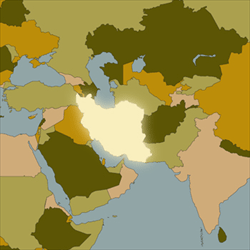
    ISTANBUL, September 28 (CDN) — Pastor Yousef Nadarkhani refused to recant his Christian faith today at the fourth and final court hearing in Iran to appeal his death sentence for apostasy (leaving Islam).

    The court house in Rasht, 243 kilometers (151 miles) northwest of Tehran, has swarmed with security forces for four consecutive days since Sunday (Sept. 25), the first day of his four appeal hearings. Applying sharia (Islamic law), the court on Monday, Tuesday and today gave Nadarkhani, 35, three chances to recant Christianity and return to Islam in order for his life to be spared. In all instances, Nadarkhani refused to recant.

    “I’m in contact with Iran,” a source close to Nadarkhani’s family said, “but the news isn’t very good. We’ll see. If they really want to they can kill him they can, because he hasn’t renounced his faith. It finished today. We have left everything in the hands of God.”

    Authorities arrested Nadarkhani in his home city of Rasht in Oct. 2009 because he allegedly questioned obligatory religion classes in Iranian schools. In September 2010 the court of appeals in Rasht found him guilty of apostasy and in November issued a written confirmation of his charges and death sentence.

    At an appeal hearing in June, the Supreme Court of Iran upheld Nadarkhani’s sentence but asked the court in Rasht to determine if he was a practicing Muslim before his conversion. The Supreme Court also determined that his death sentence could be annulled if he recanted his faith.

    On Sunday (Sept. 25) in the first two and a half hours of the court, the judges determined that Nadarkhani indeed was not a practicing Muslim before his conversion to Christianity. The source said that in this time period things looked more promising for Nadarkhani, and that the court might reverse the sentence based on the findings.

    In the end, however, the court declared that although Nadarkhani was not a practicing Muslim before his conversion, he was still guilty of apostasy due to his Muslim ancestry, the source told Compass.

    Secret service agents surrounded the court and maintained a presence there throughout the following days, and his wife, Tina, was not allowed in the courtroom. On Sunday (Sept. 25), she was allowed to stand at the doorway for a few minutes to see her husband, the source said.

    A defense lawyer told Nadarkhani’s family and friends there is a way to take the case back to the Supreme Court or extend Nadarkhani’s prison sentence, but the source said the directives of the Supreme Court were clear and he didn’t think there was much hope.

    “Yousef is known as a hero, so if he is released it will seem like the government was defeated,” he said, “but if they leave him in prison there could be more international pressure.”

    It is critical for foreign governments to negotiate and engage in diplomacy with Iranian authorities about Nadarkhani’s case, the source said, adding that his predicament could be more hopeful if they intervened.

    “They need to start negotiating,” the source said. “It’s the moment to negotiate, because if they do, the situation could be regulated.”

    The source and advocates in the international community fear that authorities may kill Nadarkhani as early as midnight tonight or any time in the coming week. The court said a verdict on Nadarkhani would be issued within the next week.

    “They probably won’t kill him today, but they can do it whenever they want,” the source said. “They can hang him in the middle of the night or in 10 days. Sometimes in Iran they call the family and deliver the body with the verdict. They have gone outside the borders of law. This is not in the Iranian law, this is sharia. Sometimes they don’t even give the body.”

    The final appeals hearing today lasted about an hour and a half, ending around 1 p.m. after Nadarkhani’s defense lawyer, Mohammad Ali Dadkhah, gave his closing defense. Dadkhah also reportedly faces charges for “actions and propaganda against the Islamic regime,” due to his human rights activities.

    The hearings on Monday (Sept. 26) and yesterday lasted just 30 minutes, long enough for Nadarkhani to refuse to recant Christianity.

    The source said Nadarkhani’s 30-year-old wife is very apprehensive about what the courts might decide this week. They have two children: Joel, 7 and Daniel, 9.

    “The wife is under depression and worried; we can say his wife is very worried,” he said. “It is difficult for all his family, it is difficult for us.”

    Nadarkhani, whose first name is also spelled Youcef, belongs to the Church of Iran, a group that has been marginalized by other Christian Iranian groups over concerns that its doctrine on the Trinity is inadequate.

    The Church of Iran’s statement of faith on its website asserts that God is “revealed in the Scriptures as Father, Son and Holy Spirit (Matthew 3:16-17, 28:19).”

    The church’s statement of faith also affirms “…the Lordship of Jesus Christ, only Son of God, the Word manifested in flesh. We believe that He is from the Holy Spirit (Matt. 1:20) and He was born of a Virgin Mary (Matt. 1:23, Luke 1:34). We believe in His atoning death and redemption (Heb. 9:28), in His bodily resurrection (Luke 24:39), in His ascension (Acts 1:9-11), on His return in person to gather His Church (1 Thess. 4:17), followed by His coming in glory to judge the rebels and establish the reign of a thousand years (Rev. 1:7). ”

    The church also states that it believes the “baptism of the Holy Spirit (Matt. 3:11; Mark 1:8; Luke 3:16; John 1:33; Acts 1:5, 2:38) is the new birth (John 3:5-8). It introduces the Christian in the Eternal Life of God and leads into all truth, to holiness in communion with Christ.”

  • Turkey to issue diplomatic note to France over PKK

    Turkey to issue diplomatic note to France over PKK

    The Turkish Embassy has officially filed a lawsuit regarding Wednesday\’s occupation.

    Turkey will give a note to France on Thursday regarding occupation of Turkish Tourism & Cultural Counsellor’s Office in Paris by PKK members.

    Diplomatic sources told AA correspondent that “Turkey would give a note to French Foreign Ministry on Thursday, and ask France to protect its diplomatic missions and representations in a better way, and not to tolerate members of the terrorist organization.”

    Turkey’s Ambassador to France Tahsin Burcuoglu met French Interior Minister Claude Gueant on Wednesday evening. It was a meeting scheduled beforehand as Gueant was planning to visit Turkey in coming days.

    During the meeting, Burcuoglu referred to occupation of Turkey’s Tourism & Culture Counsellor’s Office by PKK members and expressed Turkey’s uneasiness about PKK acts on French territories.

    The Turkish Embassy has officially filed a lawsuit regarding Wednesday’s occupation.

    During French Interior Minister Claude Gueant’s formal visit to Ankara on October 6, the two countries will “discuss cooperation against terrorism in detail” and they will sign a cooperation agreement on domestic security.

    Gueant and Turkish Interior Minister Idris Naim Sahin will put their signatures under the agreement which will cover concrete cooperation mechanisms in combatting terrorism.

    The agreement is important as it is the first time Turkey will sign such a comprehensive text on domestic security with an important European Union (EU) member state.

    Once the presidential secretary general and President Nicolas Sarkozy’s “right hand man,” Gueant will be received by Turkish President Abdullah Gul and Prime Minister Recep Tayyip Erdogan in Ankara.

    France is staging intense operations against the PKK in for the last two years.

    The Paris Court has recently tried 18 people, including top members in Europe. The prosecutor’s office demanded prison terms ranging between six months and six years for the suspects, and requested that the headquarters in Paris be closed.

    The court will make its verdict on the case on November 2.

    World Bullet


  • Turkey Condemns Terrorist Organization’s Acts İn European Countries

    Turkey Condemns Terrorist Organization’s Acts İn European Countries

    Turkey condemned on Friday terrorist organization PKK’s acts in European countries.
    Turkish Foreign Ministry spokesperson Selcuk Unal said that Turkey strongly condemned acts of terrorist organization in several European countries that threatened public order and security, particularly the occupation of Turkish Cultural & Promotion Counsellor’s Office in Paris, France by members of the terrorist organization.
    “PKK members staged acts in several parts of Europe on September 28, and these incidents once more confirmed that terrorist organization PKK, as stated in reports prepared by the European Union (EU), has become a threat for Europe,” Unal said.
    Unal said PKK members invaded Turkish Cultural & Promotion Counsellor’s Office in Paris, France, and Turkey thought that European countries should get the necessary lesson caused by their tolerance towards the terrorist organization.
    “It is high time that the acts of PKK, functioning under different names, and their supporters were put an end,” Unal said.
    Unal said Turkey had voiced its expectations to French authorities that Turkish representations and their interests should be protected and people staging such illegal acts should be punished.
    The spokesperson also said that Turkey expressed its expectation that the authorities took required measures to protect Turkish diplomatic missions as soon as possible.

    Turkish Weekly