Category: Regions

  • Turkey denies asking Syria to give Brotherhood government posts

    Turkey denies asking Syria to give Brotherhood government posts

    ISTANBUL: Turkey Friday denied as “black propaganda” claims it asked Syria to offer the banned Muslim Brotherhood government posts in exchange for Turkey’s support in ending rallies in Syria.

    “Those allegations have nothing to do with the truth,” Selcuk Unal, the Foreign Ministry spokesman said.

    The statement he made said “favoring any political, ideological, ethnic or sectarian group or making any one of them subjects to bargaining [in Syria] was out of question” for Turkey.

    He said Turkey had repeatedly told Syria to start reforms “to ensure a transition to parliamentary democracy.”

    “Under this context we suggested them to allow all democratic entities on the political spectrum to be active in Syria and participate in the political transition process,” Unal said.

    According to Syrian officials and Western diplomats, Ankara asked Damascus to offer the Muslim Brotherhood government posts in exchange for Turkey’s support in ending rallies against Syrian President Bashar Assad but the offer was rejected.

    The Muslim Brotherhood has been banned in Syria since the rise of the Baath Party to power in 1963.

    They unsuccessfully tried to organize the population against Assad’s father and predecessor, Hafez, who brutally repressed a 1982 revolt in the city of Hama, leaving around 20,000 people dead.

    Law 49, issued in July 1980 and still in force, makes it a “criminal offense punishable by death to be affiliated with the Muslim Brotherhood.”

    Thousands of the organization’s members have languished in Syria’s prisons for decades, though some have been released.

    On Aug. 9, Turkish Foreign Minister Ahmet Davutoglu delivered a written message to Assad from President Abdullah Gul, who belonged to organizations close to the Muslim Brotherhood before forming Turkey’s ruling Justice and Development Party

    “We hope that some measures will be taken in the coming days to end the bloodshed and open the way to a process for political reform,” Davutoglu said at Ankara airport upon his return from the one-day trip to Syria last month.

    “In June, Turkish Prime Minister Recep Tayyip Erdogan offered, if Syrian President Bashar Assad ensured between a quarter and a third of ministers in his government were members of the Muslim Brotherhood, to make a commitment to use all his influence to end the rebellion,” a Western diplomat told AFP.

    Turkey has expressed its frustration with Assad and his iron-fisted regime for its failure to listen to the people, whose almost daily demonstrations for democracy have been repeatedly met with violent repression, at a cost of more than 2,700 lives according to the United Nations.


    A version of this article appeared in the print edition of The Daily Star on October 01, 2011, on page 9.

    via THE DAILY STAR :: News :: Middle East :: Turkey denies asking Syria to give Brotherhood government posts.
  • Germany names strong side for Turkey, Belgium

    Germany names strong side for Turkey, Belgium

    BERLIN (AP) – Germany named its strongest available side for the upcoming European Championship qualifiers against Turkey and Belgium, despite having already qualified for next year’s tournament.

    Germany coach Joachim Loew recalled Bayern Munich striker Mario Gomez, Real Madrid midfielder Sami Khedira, Stuttgart striker Cacau and Hamburg defender Dennis Aogo to the 24-man squad Friday, when no new call-ups were made.

    All four were missing for the September internationals when Germany became the first team to qualify for the tournament in Poland and Ukraine with a 6-2 rout of Austria on Sept. 2.

    ”It was important for us to qualify as quickly as possible for the European Championships,” Loew said. ”Now we also want to remain fully concentrated on the games against Turkey and Belgium. Our aim is to secure two victories to finish qualification unbeaten and with 10 wins from 10 games.”

    Germany plays Turkey in Istanbul on Oct. 7, and hosts Belgium in Duesseldorf four days later.

    Borussia Dortmund midfielder Sven Bender and defender Marcel Schmelzer were dropped.

    ”They were both heavily involved (for Dortmund) in recent weeks so we’ll do without them this time,” Loew said. ”I rang them. They should use the coming days to train well with their club.”

    Hannover goalkeeper Ron-Robert Zieler and Borussia Moenchengladbach attacking midfielder Marco Reus are the only uncapped players in the squad.

    Sqaud:

    Goalkeepers: Manuel Neuer (Bayern Munich), Tim Wiese (Werder Bremen), Ron-Robert Zieler (Hannover)

    Defenders: Holger Badstuber (Bayern Munich), Per Mertesacker (Arsenal), Jerome Boateng (Bayern Munich), Benedikt Hoewedes (Schalke), Mats Hummels (Borussia Dortmund), Philipp Lahm (Bayern Munich), Christian Traesch (Wolfsburg), Dennis Aogo (Hamburger SV)

    Midfielders: Mario Goetze (Borussia Dortmund), Sami Khedira (Real Madrid), Toni Kroos (Bayern Munich), Thomas Mueller (Bayern Munich), Lukas Podolski (Cologne), Marco Reus (Borussia Moenchengladbach), Simon Rolfes (Bayer Leverkusen), Andre Schuerrle (Bayer Leverkusen), Bastian Schweinsteiger (Bayern Munich), Mesut Oezil (Real Madrid)

    Forwards: Mario Gomez (Bayern Munich), Miroslav Klose (Lazio), Cacau (VfB Stuttgart)

    via Germany names strong side for Turkey, Belgium | Fox News Latino.

  • Iran resumes gas exports to Turkey

    Iran resumes gas exports to Turkey

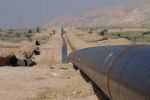
    TEHRAN – The flow of Iranian gas to Turkey restarted on Friday afternoon after an eight-day halt, the Mehr news agency reported.

    On Thursday, Turkey’s state-run Botas Petroleum Pipeline Corporation requested Iran to suspend temporarily exporting gas for inspecting the pipeline and conducting necessary repairs.

    Before the halt, Iran exported 30 million cubic meters per day of natural gas to Turkey via the pipeline.

    In recent months, some explosions in Iran’s natural gas transmission line to Turkey temporarily disrupted gas supplies to Iran’s western neighbor.

    Previously, the National Iranian Gas Company urged Turkey to compensate for repeating delay in repairing the Iran gas importing pipeline and decreasing gas imports from Iran.

    The Mehr news agency reported on Tuesday that the repeated explosions of the Iran-Turkey gas pipeline in the Turkey’s territory have decreased Iran’s gas exports to Turkey sharply in recent months.

    On the other hand, Turkey was buying additional gas from Azerbaijan and Russia to cover the shortfall caused by the explosion.

    According the 25-year agreement between two countries, Iran is obliged to supply Turkey with annually 10 billion cubic meters of natural gas and if either side fails to fulfill its commitment, it is liable for compensation.

    Mehr quoted economic experts as saying Turkey was not rushing to re-open the pipeline as it was benefiting from importing cheaper Russian gas and would cite force majeure for the closure, allowing it to avoid paying compensation for the problem.

    In 2009, Turkey paid 600 million dollars fine to Iran because of importing less than the agreed amount of gas from Iran.

    On Sunday, for the fourth times in 2011, the National Iranian Gas Company stopped gas exports to Turkey upon the request of the Ankara’s state-owned oil and gas company BOTAS.

    In August an explosion in the Turkish eastern province of Agri damaged a section of the gas pipeline between Iran and Turkey, disrupting the supply of natural gas between the two countries.

    In July another explosion in Iran’s natural gas transmission line to Turkey temporarily disrupted gas supplies to Iran’s western neighbor.

    According to reports, Iran exports a daily average of more than 30 million cubic meters of natural gas to Turkey, which indicates a daily growth of 11 million cubic meters in comparison to 2010.

    In 2009, Iran exported an average of 21 million cubic meters of natural gas to Turkey per day. The value of Iran’s gas exports to Turkey in 2009 was almost USD 7 billion.

    Iran is Turkey’s second-biggest supplier of natural gas after Russia, sending 10 billion cubic meters of gas each year. Turkey uses gas to fire half of its power plants.

    via Iran resumes gas exports to Turkey – Tehran Times.

  • NATO Leader Worried by Turkey’s Rifts With Cyprus and Israel

    NATO Leader Worried by Turkey’s Rifts With Cyprus and Israel

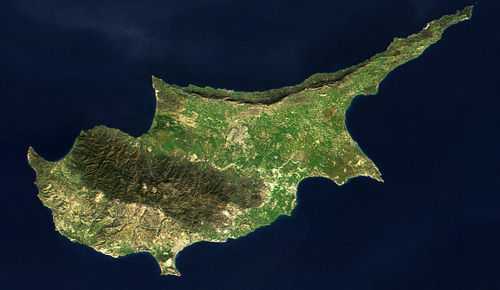
    BRUSSELS — NATO’s secretary general, Anders Fogh Rasmussen, expressed disquiet on Friday about Turkey’s more assertive foreign policy in the Mediterranean, saying that tensions over natural-gas exploration between Turkey and Cyprus as well as relations with Israel were “a matter of concern.”

    Mr. Rasmussen said he did not foresee the tension turning into conflict in the Mediterranean, and he praised Turkey as a indispensable member of NATO that could help serve “as a bridge” between the West and the Arab countries now engaged in revolts and revolutions.

    “Obviously the tensions between Turkey and Israel are a matter of concern,” he said in an interview here. “It’s a bilateral issue, NATO is not going to interfere with that,” he added, “but it is the interest of the alliance to see these tensions eased, because Turkey is a key ally and Israel is a valuable partner for the alliance.” Turkey has become increasingly outspoken in support of the Palestinians and in its animosity toward Israel, once an important ally.

    Mr. Rasmussen emphasized that NATO, as an alliance that works by consensus, would not become involved in bilateral matters or the domestic politics of member countries.

    Asked about Turkey’s warning that it might send military ships toward Cyprus, which is exploring for natural gas in the Mediterranean, as is Israel, Mr. Rasmussen said that “NATO as an organization is not going to interfere with these disputes,” while adding, “I do not envisage armed conflict in the eastern part of the Mediterranean.”

    Relations with Turkey have to be managed carefully as it asserts a growing role on the global stage, he suggested. “I think Turkey can play a stabilizing role in the region and serve as a role model for countries in the region that are currently transforming from dictatorship into democracy,” he said.

    Mr. Rasmussen, a former prime minister of Denmark who is now two years into his NATO post, also praised Turkey’s decision to participate in a new missile-defense system for NATO. He said it was evidence of the commitment of Turkey to the trans-Atlantic alliance and a signal that its was not turning away from its Western orientation. The government in Ankara has agreed to host on its territory a sophisticated American radar system that will form part of the missile shield.

    About Russia and the decision of President Dmitri A. Medvedev to make way for Vladimir V. Putin, he said: “We’ll see what I would call continuity in the Kremlin. I don’t expect major changes there in Russian foreign and security policy.” He said he thought Russia remained committed to working with NATO on missile defense, a main aim of Mr. Rasmussen’s tenure.

    Another central objective for the NATO secretary general is to persuade European allies to coordinate defense spending and cooperate on procurement to try to ensure that military capabilities improve, despite the expenditure cuts being pushed through by many national governments.

    Mr. Rasmussen criticized a proposal from the foreign ministers of France, Germany, Italy, Poland and Spain to set up a defense-planning headquarters for the European Union based in Brussels. The plan is opposed by Britain, which sees the move as a duplication of NATO facilities and a waste of money — a view echoed by Mr. Rasmussen.

    “Honestly speaking, what we need is investment in military hardware and not in new bureaucracies and headquarters,” he said. “I don’t think we need more headquarters. What we need is more investment in critical military capabilities.”

    “I’m neither naïve nor unrealistic,” added Mr. Rasmussen. “I know very well, as a politician, that during a period of economic austerity you cannot expect increases in defense budgets.” That fact, he said, indicated that the alliance countries “need to make more effective use of our resources through more multinational cooperation — what I call smart defense.”

    Mr. Rasmussen rejected suggestions that the United States was reducing its commitment to NATO because it took a secondary role in the operations against Col. Muammar el-Qaddafi in Libya. “The American commitment to NATO remains as strong as ever,” he said. “The U.S. was strongly engaged in this operation, and we could not have carried out this operation successfully without the unique and essential U.S. assets.” In particular, he mentioned intelligence, drone aircraft and air-to-air refueling, all areas in which European members should invest more, he said.

    “The positive story, he said, “is that Europeans took the lead and that was actually a clear response to an American request for more European engagement, a call on Europeans to take more responsibility, and the Europeans stepped up to the plate.”

    He said that there was “a division of labor which makes it possible for our alliance, in a flexible way, to conduct several operations at the same time,” with the Americans leading in Afghanistan, several European nations in the forefront in Libya and the Germans taking charge in Kosovo.

    via NATO Leader Worried by Turkey’s Rifts With Cyprus and Israel – NYTimes.com.

  • EU to ease visa for Turkey, complete removal to follow

    EU to ease visa for Turkey, complete removal to follow

    A roadmap is to be drawn that foresees the removal of visas for Turks wanting to travel to the EU, the European Parliament announced in a session that focused on the bloc’s visa requirements for Turkish nationals, a first-time development since Turkey took up accession negotiations almost a decade ago.


    Turkey’s EU Minister and Chief Negotiator Egemen Bağış attended the Wednesday session of the EU-Turkey Joint Parliamentary Committee, during which EU Commissioner for Home Affairs Cecilia Malmstrom said visa requirements for Turkey would be removed completely, and in the meantime, the process for visas would be eased for Turkish nationals.

    “For the first time I can see the light at the end of the tunnel regarding the visa issue,” Bağış was quoted as saying by the Anatolia news agency on Wednesday, as he regarded the development a step toward ending discrimination against Turkey. “All we ask for is to be treated equally to other candidate countries,” Bağış said.

    Malmstrom noted that the process would take time, and that the EU and Turkey “are about to embark on a journey.” “And to begin with we will ease visa procedures,” she said as she spoke at the first high-level meeting between Turkey and the union. Turkey expects the meeting to be followed by others, which will eventually lead to the complete removal of visas for the candidate country.

    As a first step to easing the visa process for Turks, which is planned to be implemented in the fall, EU member countries will issue longer term visas with multiple entries and in a much shorter timeframe. Less paperwork and indefinite visas, particularly for businesspeople, are also among the measures that will make the visa process less painful for Turks wishing to travel to EU countries.

    Members of Parliament also raised questions over the easing of visa procedures, saying Turkey’s location might endanger EU members, since it borders an area where many illegal immigrants enter from, and also repeated a familiar concern that a wave of migration from Turkey might hit the EU. Bağış responded to the concerns, saying that a reverse migration was currently under way, and “as a matter of fact, nearly 30,000 Turks have returned home within the past few years.”

    Bağış also noted that Turkey was the only country that did not benefit from visa exemptions in its pre-accession period out of the other negotiating countries, and that Turkey was waiting for justice to be done by being treated equally. The minister highlighted that Turkey was Europe’s sixth and the world’s 15th fastest growing economy, and that applying visa restrictions to Turkey even defied court rulings of EU countries.

    “The European Court of Justice and many other courts in Europe say visas cannot be applied to Turkey. The visa procedure defies the law,” Bağış was quoted as saying by Anatolia.

    via EU to ease visa for Turkey, complete removal to follow.

  • Turkey to press ahead with sanctions against Syria

    Turkey to press ahead with sanctions against Syria

    Turkey to press ahead with sanctions against Syria

    Despite Europe’s failure at UN, Ankara expected to go it alone in imposing sanctions on Assad regime over crackdown on protesters

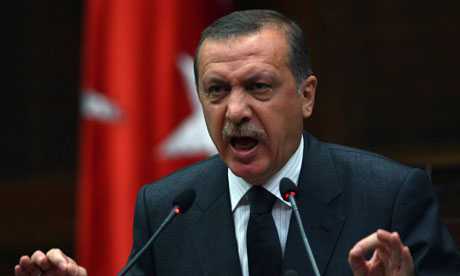
    Turkey’s prime minister Recep Erdogan is expected to announce sanctions against the Syrian regime. Photograph: AP

    Turkey is pressing ahead with plans to impose its own sanctions on Syria, despite European powers backing down from using the UN to punish the regime for its crackdown on the protest movement.

    The Turkish measures are likely to be announced early next month, following a visit prime minister Recap Erdogan to camps in southern Turkey holding refugees who fled violence across the border and fear reprisals by security forces if they return.

    Four European heavyweights – France, Britain, Germany and Portugal – were forced to abandon a recent attempt to use the UN security council to impose sanctions on Syria, following opposition from Russia, China and South Africa.

    The four are now working on a watered-down resolution to threaten sanctions if the regime, led by President Bashar al-Assad, does not change its approach.

    In the absence of UN security council action, Turkey’s move could be decisive in a six-month standoff between Syrian security forces and anti-government activists which has seen more than 2,700 civilian deaths and sharply destablised the region.

    Erdogan is preparing for a range of economic, military and political sanctions which will further damage the once-close relationship between the two states.

    After playing a backseat role during the first months of uprising in Syria, Turkey has taken centre stage. Some observers believe Turkey is potentially the most influencial regional player to emerge in the crisis.

    “The reassessment on the Turkish side was because the formal policy of ‘zero problem with the neighbours’ was coming to an end as a result of the Arab Spring,” said Sinan Ulgen, a visiting scholar at international diplomacy organisation Carnegie Europe. “Turkey was somewhat late in making that evaluation, on Libya for example.

    “Turkish policy makers realised that [the policy] could no longer stand because it boiled down to ‘zero problem’ with the regimes. The government could no longer showcase Syria as a shining example of political success. From that point the policymakers took a decision to be on the right side of history and be much more supportive of the pro-democracy movements in these countries.”

    As the Syrian uprising gathered pace in March, Erdogan and his government were reluctant to criticise the actions of the regime’s security forces. Turkey’s foreign minister twice met with Assad and Erdogan spoke with the Syrian leader several times by phone.

    “He believed that he had Assad’s word,” said a source close to the Turkish leader. “Then it became clear that everything he said he was not honouring.””There was built up frustration in Ankara at the stubbornness of the regime in Damascus,” Ulgen said. “The Government believed that they had established such a strong relationship with Assad, that they would be able to nudge the government in a certain direction.”

    The dramatic deterioration in relations between Assad and Erdogan has led to speculation that Syria may use the Kurdish minority in the north of the country to agitate Ankara. The PKK, a Kurdish group regarded by Ankara as a terrorist organisation, has strong support among the Kurds of Syria. The Turkish military fears Syrian officials may try to spark conflict.

    “It has happened once before 10 years ago,” said a Turkish official. “We will watch closely to see what they do this time.”

    Ulgen added: “There is speculation that … the PKK card [will] be played against Turkey,” said Ulgen.

    There is also speculation that Turkey may establish a buffer zone inside its border, or inside Syria if fighting in northern areas continues. But Ulgen downplayed such talk. “It is politically very unlikely as things stand,” he said. “The only scenario for this to become possible is if there is a resurgence in the atrocities that lead to a big refugee movement again.”

    Turkey continues to host senior members of Syria’s nascent opposition movement and defectors from the military. It is understood to be working with the United States on moves to improve organisation of the oppsotion, but insists no military support is being provided.”The next month will be very important in all of this,” said the Turkish offiical.

    Ulgen agreed. “The deficit of trust is so big … things can never return.”

    via Turkey to press ahead with sanctions against Syria | World news | The Guardian.