Category: Regions

  • EU says Turkey’s foreign policy promotes peace, but Cyprus remains an issue

    EU says Turkey’s foreign policy promotes peace, but Cyprus remains an issue

    A draft version of the annual EU Progress Report on Turkey speaks favorably of Turkey’s continuous support for negotiations between the Turkish and Greek communities of Cyprus, but a final version expected on Oct. 12 may have a cooler tone, including criticism of Turkey’s actions in the eastern Mediterranean drilling crisis.
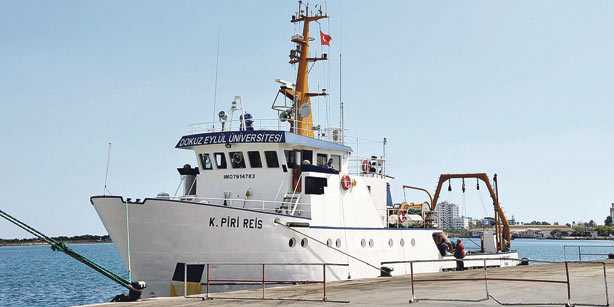
    “Turkey continued to express public support for the negotiations between the leaders of the two communities under the good offices of the UN Secretary-General, aimed at finding a fair, comprehensive and viable solution to the Cyprus problem,” the draft report noted in a chapter devoted to Turkey’s approach to the long-standing Cyprus issue. The draft report also notes that Turkish President Abdullah Gül and Prime Minister Recep Tayyip Erdoğan have reiterated their support for the negotiation process on several occasions, while stressing that Turkey’s “commitment and concrete contribution” are crucial to a comprehensive settlement of the issue.

    However, the report also pointed out that no progress has been made on normalizing bilateral relations with Greek Cyprus, a country Turkey does not recognize. Turkey’s refusal to open its ports to Greek Cyprus before a solution on the ethnically divided island is reached has remained at the heart of the EU’s criticism of Turkey, on the grounds that this creates an obstacle to the free movement of goods within the union.

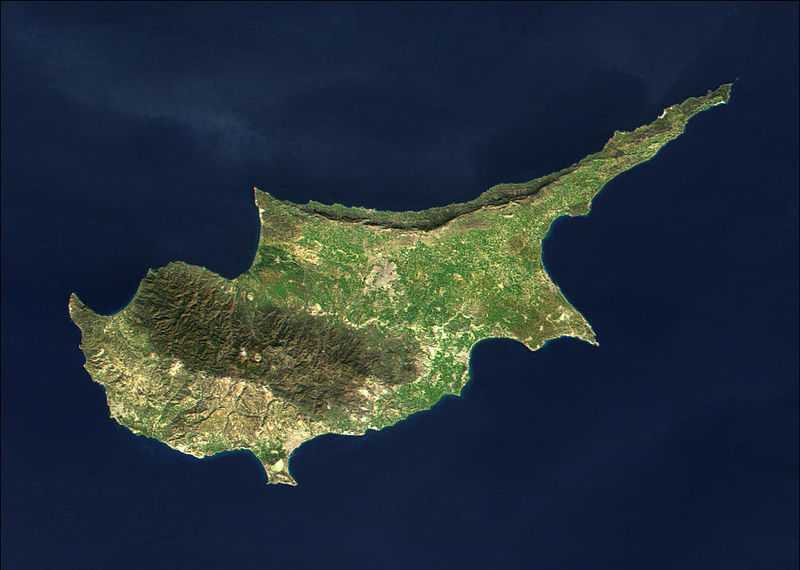
    The final version of the report is expected to harden its tone against Turkey with regard to the recent drilling crisis off the coast of Cyprus, where Turkey and Greek Cyprus are engaged in heated debate over the exploration and extraction of hydrocarbon resources under the seabed. Greek Cyprus has been conducting preliminary site research for potentially rich pockets of natural gas and oil in its self-proclaimed exclusive economic zone, which was recently reciprocated by Turkey on the northern shelf between Turkish Cyprus and Turkey’s south coast. Turkey has repeatedly called on Greek Cyprus to delay research until the reunification process on the island is concluded under the auspices of the UN, but the Greek Cypriots, facing desperate economic straits, says it is the country’s sovereign right to exploit these natural resources.

    The report nevertheless notes that Turkey’s bilateral relations with other countries and neighboring EU member states have been positive, saying that Turkey “significantly intensified contacts in the Western Balkans, expressing a firm commitment to promoting peace and stability in the region.” Turkey was also recognized as supporting the European integration of all countries in the region.

    Much like in previous monthly reports, the EU hailed Turkey’s good progress on implementing civilian oversight of security forces, citing August’s Supreme Military Council (YAŞ), at which a possible crisis brought on by the resignations of the country’s top military commanders was contained by the joint efforts of the president and prime minister, who quickly appointed new generals. It also noted that civilian judicial review of YAŞ decisions was made possible, but said there is still progress to be made.

    The report is in a way a combination of 12 monthly reports, which are issued to candidate countries to evaluate the progress they have made each month toward EU accession criteria. The annual report summarizes developments between Turkey and the EU over the year, analyzes Turkey’s improvement in terms of political and economic criteria and evaluates the country’s ability to assume the obligations of membership, a step that highlights how close a country is to becoming a member of the 27-nation bloc. Turkey was granted EU candidacy in 1999, but accession negotiations were opened in 2005, since which time one negotiating chapter of a total of 13 has been concluded.

    The report also noted that Turkey is the bloc’s seventh biggest trading partner, while the EU is Turkey’s biggest. Bilateral trade between the EU and Turkey was estimated at 103 billion euros in 2010. While the report notes that there has been improvement in Turkey’s adherence to the EU’s customs union, Turkey still needs to remove its remaining restrictions on the free movement of goods, a request that signals the EU’s expectation that Turkey will open its ports to Greek Cyprus in order that customs regulations can be fully implemented.

    via EU says Turkey’s foreign policy promotes peace, but Cyprus remains an issue.
  • Visit ancient cities in Turkey for less than $1,600

    Visit ancient cities in Turkey for less than $1,600

    By Mary Forgione Special to Tribune Newspapers

    10:32 a.m. CDT, October 4, 2011

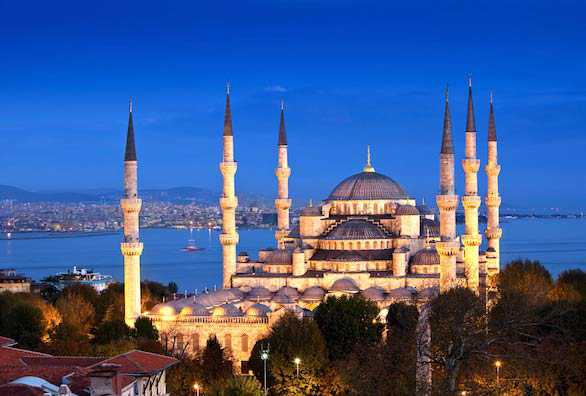
    The Blue Mosque and Topkapi Palace in Istanbul as well as ancient temples in Ephesus and Pergamon are some of the sights visited on this inexpensive package tour from Friendly Planet Travel. If the dates work for you, this is a great price for a package that explores multiple cities in Turkey.

    The eight-day Taste of Turkey tour costs $1,572 per person, based on double occupancy, with tax and fees for departures on Jan. 18 and Feb. 1. The price is good for reservations made before Oct. 12; it goes up $300 after that date (other departure dates are available too but not at this price).

    The trip includes nonstop airfare from Chicago to Istanbul on Turkish Airlines, airport transfers, hotel, daily breakfast, guided sightseeing tours and more. Check out the full itinerary and package details.

    Contact: Friendly Planet Travel, 800-555-5765

    via Visit ancient cities in Turkey for less than $1,600 – chicagotribune.com.

  • LEBANON – TURKEY In a letter to Erdogan, Aram I says the Armenian people still waiting for justice

    LEBANON – TURKEY In a letter to Erdogan, Aram I says the Armenian people still waiting for justice

    The Armenian Orthodox Catholicos of Cilicia says returning part of the assets seized from Churches by the Turkish government after 1936 is not enough. He wants the return of everything seized and lost after the genocide as well as the recognition of the Armenian Genocide of 1915.

    Monday, October 03, 2011

    Beirut – Recent steps by Turkish authorities to return properties seized from religious minorities after 1936 are “incomplete”, Catholicos Aram I Kechichian said in an open letter to Turkish Prime Minister Recep Tayyip Erdogan.

    For the head of the Armenian Orthodox Church, whose titular see is located in the Turkish province of Cilicia, justice for the Armenian people will come only when Turkey acknowledges the genocide of 1915 and when private and Church assets seized at the time are returned.

    Here is the text of his letter (translated by AsiaNews):

    By way of the press, we have learnt that your government plans to return properties seized from religious minorities after 1936. Such a decision undoubtedly stems from recent rulings by the European Court of Human Rights as well as inquiries by the US Congress into Turkish pressures on Christian minorities (See Nat de Polis, “Historic decision: Erdogan returns seized property to religious minorities,” in AsiaNews, 29 August 2011).

    As spiritual and lawful head of the Holy See of Cilicia (Armenian Orthodox), which was uprooted from its historic see and installed in Lebanon, and as representative of the children of the Armenian Church who were exiled from Turkey and dispersed throughout the world, we consider your decision of 27 August 2011 to be incomplete and unjust.

    The Holy See of Cilicia remains the lawful owner of numerous buildings, churches, hospitals, nursing homes, orphanages, cemeteries and other properties that belong to the church, seized by Turkish authorities at the time of the Armenian genocide of 1915.

    The same is true for the children of the Armenian people, who are the lawful owners of houses, businesses, estates and other assets passed down from their ancestors and lost during the genocide planned and executed by the Ottoman Turkish government.

    Your government’s decision may meet the requirements of the European Union, but it may never be considered as just or legally relevant.

    Mr Prime Minister, although taken in the name of justice, your decision is biased and selective and denies history and democratic values and principles.

    Of course, international institutions like the European Court of Human Rights and the European Parliament and its parliamentary bodies are tasked with defending democratic principles and values and ensure that they are respected; however, the people is the conscience and memory of such principles and values.

    As League of Nations High Commissioner for Refugees and Nobel Peace Prize winner for 1922 Fridtjof Nansen said in Armenia and the Near East that the Armenian people never lost hope, bravely working and waiting. “They continue to wait,” he wrote.

    Allow me to add that the Armenian people will never cease to demand justice from Turkey for the Armenian Genocide. The Armenian people will never cease to demand the restoration of their human rights.

    Mr Prime Minister, your attachment to justice and human rights will gain in credibility only when you recognise the Armenian Genocide.

    via LEBANON – TURKEY In a letter to Erdogan, Aram I says the Armenian people still waiting for justice | Spero News.

  • Turkey and Ukraine Lead the Most Visited Countries among Georgians

    Turkey and Ukraine Lead the Most Visited Countries among Georgians

    Written by Tako Khelaia

    The FINANCIAL — 1,793,449 foreign guests visited Georgia during first 8 month of 2011, which is a 43% growth in accordance to last year’s index according to the Georgian National Tourism Agency (GNTA).

    For the first 8 month of 2010, 1,258,488 foreigners visited Georgia which is 534,961 less in accordance to 2011. As GNTA notes, for the first 8 months of 2009, 942, 371 foreigners traveled to Georgia and the number of guests in 2009 was 35% less in accordance to the first 8 months of 2010.


    The number of Georgian tourists visiting foreign countries has also increased by 4% this year. According to the index of the first 8 months of 2011, 1,415,385 Georgians visited foreign countries, while in 2010 only 1,356,599 did which were 58,786 less comparing to the first 8 months of 2011.


    According to the GNTA, Turkey still tops the list of the most visited countries. A total of 28% of Georgian tourists visited Turkey during the first 8 months of 2011. Ukraine holds the second place of the most frequently visited countries. Overall 16% of Georgian tourists visited Ukraine , 15% Armenia, 9% Germany, 9% Azerbaijan, 4% USA, 4% United Kingdom,3% Italy, 2% Egypt, 2% Poland and the remaining 8% to other parts of the world.


    Tbilisi has been the most popular tourism destination among foreign tourists. A total of 60% of the total visitors to Tbilisi during the first 8 months of 2011 were foreigners. Batumi was visited by 43% of tourists, Mtskheta by 8%, Kutaisi by 6%, Lagodekhi 5%, Kazbegi 4%, Gori 4%, Kobuleti 3%, Mestia/Ushguli, 2%, Davit Gareji, 2%, Vardzia 1%, Telavi 1%, Bakuriani 1%, Gudauri 1 % and the other 9% belongs to different other destinations in Georgia.


    “For the purpose of leisure and recreation, 34% of foreigners visited Georgia during the first 8 months of 2011. For visiting friends and relatives, 26% of tourists visited our country and 20% of foreign guests were on their business and professional trips in Georgia during the first 8 months of 2011. 10% of foreign tourists visited our country for the purpose of transit, 3% due to education and training and 3% for employment,” the GNTA notes.


    “2 % of foreign guests visited Georgia during the first 8 months of 2011 for the purpose of shopping, 2% for health and medical care, 0.2 % for religious reasons or pilgrimages and 0.1 % of foreigners were on diplomatic missions,” GNTA notes.


    The majority of tourists are business travelers and transit travelers (31%) who stayed for one day in Georgia. According to the statistics 26% of tourists stayed for just 2-3 days, 12 % for 4-5 days, 8% for 6-7 days, 10% for 8-14 days, 4% for 15-20 days, 5% for 21-30 days and 4% for 31 or more days. The average number of nights spent in Georgia was 8, while for the purpose of leisure and recreation the average length of a visit to Georgia was 6 days. While visiting friends and relatives in Georgia, the average length of a visit was 11 days and for the purpose of business or professional duty the average length of a visit was 13 days.


    According to the GNTA, 42% of tourists preferred to stay with their families, 38% used hotel accommodation, 9% guesthouses or cottages, 8% hired a flat, 5% stayed in transport facilities, 1% stayed in camping or trailer park and 0.3% were in Airport s or in railway stations. The average expenditure of one tourist during 8 days spent in Georgia was 1,470 GEL.


    The number of domestic tourism for the first 8 month of 2011 has as well increased in Georgia and in accordance to the same period of last year the number has raised by 20%. For the first 8 months of 2011 the number of domestic tourists was 866,551, while in 2010 there were 721,382, which is 145,175 times less in accordance to this year’s index.


    “The region of Adjara was visited by 1,006,319 tourists during the first 8 months of 2011, of which 655,419 were Georgians and 350,900 were foreign tourists. The number of tourists visiting Adjara has increased by about 36% this year. During the first 8 months of 2010, 741,475 tourists visited Adjara from which 498,393 were Georgians and 243,082 foreigners,” the GNTA notes.


    “Among the purposes of domestic tourists for traveling within the territory of Georgia, visiting friends and relatives was the most prioritized. A total of 49% of domestic tourists visited their friends and relatives, 39% were visiting different parts of Georgia for leisure and recreation, 6% for business and professional purpose, 3% for Health and medical care, 2% for pilgrimage, 1% for employment, 1% for shopping and 0.3% for education or trainings,” GNTA officials note.


    According to the GNTA the average length of domestic tourists’ visits to different parts of Georgia was 5 days. 23% of domestic tourists stayed for one day, 35% for 2-3 days, 10% for 4-5 days, 12% for 6-7 days, 12% for 8-14 days, 3% for 15-20 days, 3% for 21-30 days and 1% for 31 or more days. 75% of domestic tourists preferred to stay with their families, 5% stayed at guesthouses or cottages, 4% in hotels, 2% hired a flat, 1% stayed in different transport facilities, 1% went for camping or staying in trailers, 1% in monasteries, 0.4 % in hospitals and 12% didn’t spent the night at all.


    “The most attractive tourism destination for Georgians was Tbilisi which was visited by 13% of tourists during the first 8 months of 2011. Batumi was visited by 8% of Georgian tourists, Kutaisi/Motsameta/Sataplia by 6%, Tskneti/Manglisi/Tsavkisi/Kodjori by 3% Mtskheta/Armazi/Akhatani/Saguramo by 3%, Kobuleti by 3%, Khashuri/Surami/Kvishkheti by 3% and Bakuriani by 2%,” the GNTA notes.


    “Zugdidi was visited by 2% of Georgian tourists, Gori by 2%, Sighnaghi/Bodbe by 2%, Zestafoni by 2%, Telavi by 2%, Chiatura, Kaspi, Lagodekhi, Samtredia, Borjomi and Ozurgeti were also visited by 2% of Georgian tourists. The other destinations in Georgia were visited by 42 % of domestic tourists,” the GNTA notes.


    The average expenditure of Georgian tourists in Georgia was on average 581 GEL during 5 days. The average expenditure of domestic tourists on residence for 5 days was 211 GEL, on food and drinks 117 GEL, on souvenirs and gifts 53 GEL, on transport 43 GEL, on train fares 26 GEL, on transport 46 GEL and on other important goods and products 85 GEL.

  • Promoting innovation: Turkey to help set up technology parks in Pakistan

    Promoting innovation: Turkey to help set up technology parks in Pakistan

    By PEER MUHAMAMD

    Published: October 4, 2011

    ” Imagination is more important than money,” METU Technology Park Manager Tolga Ozbolat.

    ISLAMABAD:

    Turkish experts will assist Higher Education Commission (HEC) in establishing Technology Parks in Pakistani universities, it was learnt on Monday.

    Middle East Technical University (METU) Technology Park Manager Tolga Ozbolat and Deputy Manager Ufuk Batum reiterated their resolve to share technical knowledge with the HEC in a meeting held at the Commission Secretariat.

    Ozbolat said, “We would share with the HEC all that we have learnt from our experience in technology.” However, he said that no financial assistance will be given to Pakistan. “Imagination is more important than money”, he maintained.

    Briefing the media, HEC Executive Director Dr Naqvi said that on Tuesday, the METU’s technical experts will have one-to-one meetings with universities and industry, besides holding a one-day workshop on “Technology Parks: Challenges and Opportunities” for the stakeholders. He said that the main objective of this exercise is to help universities learn about technology parks and their pre-requisites.

    The experts will get an overview and assessment of the prevailing conditions, including status of IT software development, telecommunication industry, industrial development and service industries in Pakistan, including financial institutions.

    Dr Naqvi explained that a technology park is an organisation managed by specialised professionals, with the aim to increase expertise within a community promoting a culture of innovation and competitiveness of its associated business and knowledge-based institutions.

    To achieve these goals, technology parks stimulate and manage the flow of knowledge and technology amongst universities, research and development institutions, companies and markets. They facilitate creation and growth of innovation-based companies through incubation and spin-off processes and provide other value-added services together with high quality space and facilities, he added.

    He revealed that the METU’s technology park generated a revenue of $150 million annually from contract research as it is the first and oldest such Park in Turkey. He highlighted the fact that the world over, universities were working alongside the industry and hence registering spectacular growth. Later in the day, the Turkish experts visited Quaid-e-Azam University and National University of Sciences and Technology.

    Published in The Express Tribune, October 4th, 2011.

    via Promoting innovation: Turkey to help set up technology parks in Pakistan – The Express Tribune.

  • Turkey offers Pakistan joint ventures

    Turkey offers Pakistan joint ventures

    Turkish businessmen are ready to initiate joint ventures with their Pakistani counterparts as they are convinced that ample opportunities lie in a number of sectors including textiles, construction and energy.

    LAHORE: Turkish businessmen are ready to initiate joint ventures with their Pakistani counterparts as they are convinced that ample opportunities lie in a number of sectors including textiles, construction and energy, stated Resul Secilmis, the head of a 32-member Turkish business delegation.

    Speaking at the Lahore Chamber of Commerce and Industry (LCCI) on Monday, Secilmis said that Turkey has a lot to offer to their Pakistani counterparts and they should take benefit of available opportunities.

    He said that both the countries have marvelous untapped business potential that needs to be explored by maximising involvement of private sectors of the two countries.

    LCCI President Irfan Qaiser Sheikh said “since energy is an important issue for Pakistan’s economic growth and Turkey has vast experience of exploiting hydel and other energy sources, both the countries should cooperate in this area on priority basis.”

    Published in The Express Tribune, October 4th, 2011.

    via Turkey offers Pakistan joint ventures – The Express Tribune.