ANKARA: Federal Minister and Chairperson Benazir Income Support Programme (BISP) on Wednesday urged to enhance cooperation between Pakistan and Turkey in social sector.
She was speaking with the management of ten top level Turkish NGOs working in different sectors like health, education and social development. Presidents and members of Board of directors of various umbrella organizations representing multiple NGOs were also present.
According to a press release, Farzana Raja briefed the officials in detail about various initiatives of BISP and urged for an increased cooperation between Pakistan and Turkey in social sector. The NGOs displayed keen interest in the working of BISP especially Vocational and Technical Training initiative and were appreciative of the success of the Programme.
Meeting was followed by a long question and answer session in which participant showed their keenness in the operational working of BISP. There was a willingness to help flood affected beneficiaries of the BISP and various ways and means in this regard were discussed.
Many NGOs expressed desire of collaborating with BISP and channelizing their assistance through BISP. Farzana Raja pledged full support of BISP and Government of Pakistan for this venture.
In a meeting with Faik Yavuz, Vice President of Union of Chambers and Commodity Exchanges of Turkey at Ankara, Farzana Raja urged the business community of Turkey to help vulnerable sections of society. She said “We should move from global village of inequalities to the universal family of equalities”.
She referred to corporate social responsibility and said businessmen and investors should share the burden of providing social services and ensure welfare of people in their area of operations. Benazir Bhutto lived for the people of Pakistan and she sacrificed her life for their cause. She believed in women empowerment and BISP is reflective of present Governments commitment to her vision. She quoted Turkish President who in a meeting with her also termed BISP as best tribute to Benazir Bhutto Shaheeds legacy. She said no country could achieve equitable economic development unless and until the poor sections of society are also focused.
Vice President of Union of Chambers and Commodity Exchanges of Turkey while appreciating BISP welcomed the proposal of partnership with Pakistan in the vocational and technical training sector initiative of BISP. He also briefed Federal Minister about “Gul Train” which is a project that could gear up economic activities in our region.
The project is a result of the efforts of President Zardari and President Abdullah Gul. Farzana Raja took keen interest in GUL train project and suggested various measures for effective and efficient implementation of the project as it will help in improving the socio-economic condition of the region.
In Istanbul, Chairperson BISP along with the delegation met Omer Cihad Vardan, President of the Independent Industrialists and Businessmens Association (MUSIAD) and the senior management. President of the Independent Industrialists and Businessmens Association was deeply impressed by BISPs Poverty Survey and the extent of databank of BISP. He promised to share the information about BISP with the members of his association so that the platform of BISP could be used to help deprived segments of society in Pakistan.
During the meeting Farzana Rajas proposal of hiring BISP trained labor force in projects of the Independent Industrialists and Businessmens Association in Pakistan and abroad was also discussed. Secretary BISP Sher Khan and Pakistans Ambassador to Turkey Haroon Shaukat accompanied Chairperson BISP in these meetings.
Nobody ought to be surprised by the Russian and Chinese vetoes of a U.N. Security Council resolution condemning Syria’s brutal crackdown on its citizenry and hinting that sanctions could be invoked if repression continues. That sanctions threat had been watered down in the hope of winning Russian and Chinese consent, but to no avail — Moscow and Beijing see themselves as having been burned by the Western powers on Libya, making them view authorization of any action against Syria as opening the way to yet another military intervention. While the Russian and Chinese position was backed by other important Security Council members who shared their view on Libya, a crucial exception was Turkey — which not only supported the resolution, but vowed to impose its own sanctions on Syria despite the U.N. vote.
“During this season of change, the people of the Middle East can now see clearly which nations have chosen to ignore their calls for democracy and instead prop up desperate, cruel dictators,” huffed U.S. Ambassador to the U.N. Susan Rice — perhaps oblivious to the irony that the people of the Middle East have also taken note of which nations are supporting and which are opposing the Palestinians’ efforts to claim their rights at the U.N.
Rice suggested that Russia’s veto was motivated by its desire to continue selling arms to the Assad regime, but China, Brazil, India and South Africa all joined Moscow in opposing the resolution, and none of them does a significant arms trade with Syria. Instead, like Russia, they made clear that their own votes were based on the Libya experience, where the Security Council’s authorization of a mission to protect civilians had been used as cover for a military campaign for regime change: As those countries see it, Libya was an object lesson in Western powers abusing U.N. authorization for action, and exceeding its limits, in order to pursue their own agenda. Hence their folded arms in the face of Syria’s ongoing brutality.
Western leaders accuse the opponents of the resolution of supporting the Assad regime, which may well be true to a greater or lesser extent for some of them. They’re certainly more inclined to share the Assad regime’s view that the conflict unfolding in Syria — like the one in Libya — is a civil war. That may have become a self-fulfilling prophecy as the repression meted out by the regime against non-violent protestors amplifies calls for an armed struggle against Assad. The regime is casting the conflict as a sectarian Islamist insurgency, and doing its best to provoke such, in the hope of shoring up its support among the Alawite and Christian minorities. Seven months into the rebellion, the city of Homs has seen opposition elements arm themselves, in clashes that have indeed taken on a sectarian character, pitting Sunni opposition groups against Alawites. That helps Assad cast the opposition as a mortal threat to Alawites and Christians, and also helps the likes of Russia present the situation as a civil war rather than a people vs. dictatorship scenario.
Libya notwithstanding, however, the Russians, Chinese and their allies have little reason to fear Western military intervention in Syria. Tiny Libya was low-hanging fruit, with prized oil assets and a danger of refugees flooding into southern Europe, and little potential spillover in its immediate neighborhood. Syria is altogether more substantial, with the regime maintaining a solid base of support, and a mortal assault on it raising potentially cataclysmic consequences for Israel, Lebanon and Iraq (even Turkey, to a lesser extent). And then there’s the fact that the U.S. and its NATO allies are all tapped out when it comes to expeditionary warfare, looking to end their entanglements in Afghanistan, Iraq and Libya amid a growing economic crisis that trims their strategic ambitions. All along, the U.S. and its allies have tried to send the Syrian opposition the message that they shouldn’t, in fact, operate on the assumption that they can expect a military intervention to save them.
One bright spot for the U.S. — and for the Syrian opposition — is the position of Turkey, Syria’s most powerful neighbor and one of its largest trading partners. Underscoring its increasingly assertive and independent regional role — which has vexed Washington on issues such as Israel and Iran, where Ankara has challenged U.S. policy — Turkey is taking a lead in moves to pressure the Assad regime to halt its repression. Prime Minister Recep Tayyip Erdogan broke with his BRIC allies (Russia, China, India and South Africa) to strongly support the Security Council resolution, and chided those who opposed it.
“The Syrian administration should have received a warning,” Erdogan said Wednesday of the vote, during a visit to South Africa (which abstained in the Security Council. “The people of that country do not need to endure a merciless, shameless, tyrannical regime that bombs its own country from the sea. My heart remains with those struggling for freedom. South Africans have been in that position.”
And such scolding will carry more weight in Pretoria coming from Turkey, given its positions on the Palestinian vote, Iran and even the Libya intervention, than it does coming from Washington. Nor was the Turkish leader ready to accept the Security Council’s verdict as the last word. Instead, he promised, Turkey will immediately impose new sanctions of its own, in concert with European Union countries.
via Syria Escapes U.N. Sanctions, But Not Turkey’s – Global Spin – TIME.com.
It was already evening in Yerevan when I boarded a bus bound for Istanbul. My round-trip ticket cost $70, it was January of 1998, and I was 22 years old. When I reached Istanbul the following day, I had planned I would spend a few days touring the city before taking another bus to meet my dearest college friend, Cathy, in the Plaka in Athens.
Kristi Rendahl: You may expect this story to have an unfortunate ending, but I can assure you that it was as brilliant in practice as it was in theory.
Kristi Rendahl: You may expect this story to have an unfortunate ending, but I can assure you that it was as brilliant in practice as it was in theory.
The closed border between Armenia and Turkey made it impossible to take a direct route between the two cities. The bus would travel north through Armenia, and west across much of Georgia and all of Turkey, adding at least an extra 100 miles to the journey.
I got a lot for my money. There were only seven people on a charter-sized bus, so I had plenty of personal space. But it didn’t have a bathroom. No matter, I thought, surely I’m not the only person who will need to stop for one.
A few hours later, we had only reached a northern province of Armenia and nature called, but I was too embarrassed to request a stop so soon. Ever the Girl Scout, I knew that I could manage a solution. My scheme, inspired in part by years of going behind bushes when necessary, was to drink the juice I’d brought with me, then open the box and pee in it. (That’s entirely too much information for readers, but it is the absolute truth.)
You may expect this story to have an unfortunate ending, but I can assure you that it was as brilliant in practice as it was in theory. Privacy was not an issue, since there were so few passengers. Fitting between the seats, aiming into the mini-box, and stopping the flow when it was full were all tricky maneuvers, to be sure, but well worth the effort. I left enough room at the top to fold down the carton, then I placed it standing up in the trash can attached to the bench in the aisle. And so the journey continued.
When we reached the Georgian border, we encountered no significant issues until we tried to cross border control on the Georgian side. The process, if one can call it that, took hours. I fell into a very peaceful sleep, as I am able to do yet today in most any place or position. I slept until another passenger, an older woman, woke me to say that they wanted $5 from each of us, that otherwise they wouldn’t let us cross the border. Fair enough, I thought, as long as they’ll let me go back to sleep, and I groggily handed over the cash.
At one point during the hours that it took to actually cross both borders, I was at the front of the bus with the other passengers who were from various countries in the region. The bus was lit with a black light. I remember because it brought to attention the detergent that glowed in my jeans from poorly executed hand washing. I saw the other women notice the offensive blotches. “She can’t even wash her own clothes,” they thought, “These Americans can’t do anything.” Shame.
It was daylight when we stopped to eat in a rest area of sorts. The others immediately began cleaning the bus, sweeping the floor, and clearing our trash. I did my part and carried out my box with no one any the wiser.
There were mandarines on the trees and shit all over the floor of the bathroom facility. Quite a juxtaposition. We all opted to line up outside as we had behind a building on the border. “Are you done yet?” an older Armenian woman asked me as she stood up. “No,” I said. Performance anxiety, I thought. “Go ahead without me.”
Everyone shared their food with the others, so there was plenty to eat. It seemed a microcosm of what the world ought to be doing.
When we reached the Georgia-Turkey border, I was told that I could not cross, that I needed a Turkish visa. The border agent, who happened to be Armenian, and I had been living in Armenia for seven months at that point, instructed me to go to Batumi. What is that, I wondered, some kind of governmental ministry? Not intending to visit the Republic of Georgia, I hadn’t done enough research to learn that Batumi was in fact a city in Georgia. I stood there forlorn, while my travel companions got back onto the bus.
Already 11 p.m., the border personnel told me I could wait there until morning when a bus would be coming through en route to Batumi. They offered me a white plastic chair for the night.
Dreading a nine-hour overnight sit in now-slovenly clothes with border guards and my stuffed backpack, I assumed a genuinely pathetic look and asked if there were a hotel nearby. Bewildered by how I’d gotten myself into this mess, two-parts impatient and one-part taking pity on my high-maintenance request, they directed me to a man who was going to Batumi that night.
Now clear that Batumi was a town where I could get a Turkish visa, I got in his car and silently hoped that the stuffed animal hanging from his rearview mirror was indicative of a man with children. And a conscience.
Just 10 miles or so back into Georgia, he took me to the front desk of a hotel and explained my curious predicament. He told me, or them (it’s hard to recall), what I needed to do in the morning. Not a smile crossed this man’s face, but he’d gone out of his way for me. Lingering a bit before leaving, perhaps wondering if his kindness would reap rewards of some kind or another, I closed the evening with a handshake and a grateful smile.
The next morning I saw that I was on the shores of the Black Sea. I’m told it’s much more beautiful now, but I thought it was more than fine then. It was big and beautiful and still. The Turkish consulate didn’t open for several hours, so I sat on the rocky beach and watched the cargo ships. For a different reason this time, I drank another juice box.
I showed up at the consulate on time, but there was already a line of people. Mostly Georgians who were curious about an American’s presence, they insisted that I go to the front of the line. They brought over a Georgian girl who spoke English and who, in effect, asked me what on earth I was doing there. They were incredulous about the American girl who lives in Armenia, but is traveling through Georgia en route to Turkey on her way to Greece.
But they were happy to help, and so showed me to the afternoon shuttle traveling to Trabzon in eastern Turkey. The driver of the shuttle, a lively chap, sat me in the front seat and became quite animated about taking the damsel in distress closer to her destination. He remained so until we reached the border, my second time in two days, and I was turned away once again.
The border agent was not Armenian this time. It was a repeat of my first border crossing attempt, but this time I was missing Georgian paperwork. Unlike the first driver, this one looked truly remorseful to leave me behind.
The border employees connected me with yet another person driving to Batumi, this time displaying only pity, and I wondered if I would ever be allowed to leave this country.
The man, George, knew some 100 words in English, which is surprisingly adequate for communication. When we reached Batumi, he asked, “Friend, Turkish consulate, friend?” The irony that he didn’t understand or didn’t acknowledge was that Armenians and Turks are not the best of friends, despite their shared border and similar customs, and I was coming directly from Armenia.
I shrugged to say, “I don’t know,” tears silently falling down my face. He gently mocked my crying before getting out of the car to see if anyone at the Turkish consulate could help. His insensitivity was quite like the grin-and-bear-it kind of upbringing I’d had in a Scandinavian family in the Mid-West. I immediately felt better.
When he returned to the car, he told me that someone was going to help. That someone had remembered me from earlier in the day and was apparently some kind of high-level police officer in town. He regretted my situation because it could have been avoided if he’d noticed I was missing the Georgian visa, which I had been told was not an issue when you have an Armenian residency card.
Remarkably, the officer invited me to stay with his family. He did so with the translation assistance of an Armenian grandmother from the neighborhood. “They’re a good family, jan,” she assured me in Armenian. And so I went to their third-floor apartment across the street from the Turkish consulate. His wife greeted me warmly, even if confused by my sudden and rather unannounced appearance. They invited over the English teacher from the high school to have tea and discuss my situation. With this kind of graciousness, it was obvious at this point that my problems would be solved, though I didn’t know exactly how.
The family had a wonderful pink bathtub with hot running water, which was most welcome after another day on the road and the prior seven months without either. She made a delicious khatchapouri in the morning and he sent over two police officers to guide me through my day. God knows I needed a guide at that point.
Our first stop was to take visa photos, which they kindly paid for. Then we went directly to the Georgian consulate across town, where they began processing my application and told me to return later that day. As we left the consulate, to my great surprise, we ran into two Americans I knew, Hannah and Ritchie, also Peace Corps volunteers in Armenia at the time. They were encountering the same problems and were accompanied by another man named George, a paper salesman, who had gotten out of the bus to help them at the border.
Now veterans of paperwork hassles, the police officers expedited their processes, so that we could all make the 4 o’clock shuttle to Trabzon, a religiously conservative town in eastern Turkey. While the consulates did their work, we went out for a joyful lunch with Georgian wine—me, the police officers, George the paper salesman, Hannah, and Ritchie. George was a gifted artist and entertained us all by sketching images of our situation, complete with tears that were shed on the border.
The days of kindness had filled my heart and it was sad to leave for Trabzon that afternoon. A gypsy child pretended to cry while begging for money just as our shuttle was to pull away. I pretended to cry, too, and a smile splayed across his face. I was confident that I’d get out of the country this time, so I gave him all of my Georgian lari.
At the border, there were friendly smiles all around as we successfully crossed into Turkey. A Georgian woman who was on her way to sell her pottery in Turkey gave each of us a beautiful vase she’d crafted. The vase still sits on my piano.
George the paper salesman, who was bound for Istanbul, was also in the shuttle and he checked us into a hotel once we arrived. One room for the girls, one room for the boys.
Hannah and Ritchie stayed to tour the area, but I was running low on time before I needed to be in Athens. George and I made plans to take a domestic flight to Istanbul the following morning. No more buses. The flight was at 4 a.m. and he bought my $50 ticket. “Why are you being so generous?” I asked him. “The next time you see someone who needs help, what are you going to do?” he asked in response. Point taken.
He already had a hotel selected in Istanbul, so he got me my own room there, too. That day was Orthodox Christmas and he’d arranged to see friends for dinner that evening. We gathered for the festivities in the hotel’s restaurant in the basement, where we ate and drank for hours.
I rested easy that night knowing that George had already researched the station from where I could take a bus to Greece. He’d also given me a first-rate tour of the city’s main tourist sites and insisted that I call my father from his cell phone to tell him of my whereabouts. My father sounded suspicious about such a charitable stranger. “Are you sure he doesn’t want something in return?” he asked. After nearly three days together, it was clear that his expectations were as pure as a father could hope for.
He took me to the bus station the next morning and I got my ticket for Athens. We gave each other parting kisses on the cheek, a hug, and I was on my way. I’m only sorry to say that we haven’t kept in touch.
On the ride to Athens, I was talking with a Chinese tourist and it came up that I was living in Armenia. A guy about my age sitting across from me was listening to our conversation and finally asked me why I kept mentioning Armenia. He was Greek-Armenian, he told me in English, and so we switched to speaking Armenian. We talked until we reached his hometown of Alexandroupoli, a port city in northeastern Greece.
At his stop, we said goodbye, but he came back a few minutes later with a bag of treats for the journey and gave me a fast peck on the lips. I heard a loud disapproving tsk from the man seated in front of me, but I thought it was terribly sweet and oh-so Armenian. I’d told him where I’d be staying in Athens, so he called to say hello a few times over the next two weeks, but we were never to meet again.
The two weeks with Cathy in Greece were full of other stories, but the time finally came to return to Armenia. I’d intended to return by bus, but I would have had the same problems, so I bought an airline ticket with the credit card my parents gave me for emergencies. At just over $400, it cost the equivalent of nearly four months of my stipend as a Peace Corps volunteer.
But no credit card in the world could have bought that trip from Yerevan to Athens.
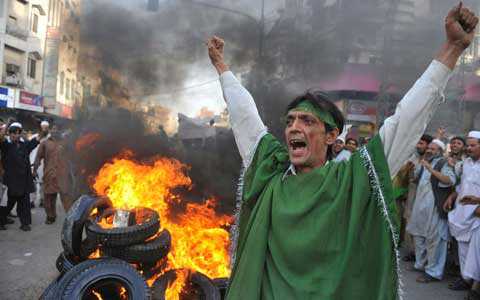
An International Women's Day protest in Ankara, Turkey, in March 2011
An International Women’s Day protest in Ankara, Turkey, in March 2011
STORY HIGHLIGHTS
Tell us which women from the Middle East inspire you most
Do you admire women artists, activists, politicians or business leaders?
Arab Spring has given some women a chance to shine more than ever
Istanbul, Turkey (CNN) — Whether it’s as activists or politicians, artists or business leaders, women in the Middle East are stepping into the spotlight as never before.
Some stereotypes still need to be challenged; domestic violence, illiteracy and conservative views continue to fuel a gender gap in many part of the region.
However, women are now proving their worth in most walks of life.
‘Saudi Women Revolution’ makes a stand for equal rights
This month, Inside the Middle East focuses on a few women leading the charge: Iraqi political activists, Saudi artists, Turkish footballers and the renowned Egyptian author and feminist, Dr. Nawal Sadawi.
We meet two Baghdadi women — one a human rights activist and the other a blogger — facing the challenges of trying to rebuild their shattered country and making sure the key decisions are not left solely to the men.
We know we have missed many inspirational women and would like your help
Revolution signals new dawn for Egypt’s women
Meanwhile in Istanbul, the base for this month’s show, Turkey’s first female film director Cahide Sonku — adorns the wall of the Istanbul Modern Art Museum, which is celebrating Turkey’s women artists.
The exhibition “Dream and Reality” highlights the changing position of women in Turkish society through paintings and videos by women artists over 150 years.
But we know we have missed many inspirational women and would like your help.
Who do you think are the Middle East’s most influential women?
The woman who wants to be Egypt’s first female president
Are you inspired by Saudi’s women drivers campaigning for equal rights? Or by the Lebanese fashion designer Reem Accra? By the women who slept out in Tahrir Square for nights on end during Egypt’s revolution? By Turkey’s former prime minister Tansu Ciller?
Comment below to help us find the female stars of the Middle East.
via Who are Middle East’s most influential women? – CNN.com.
Hilton Baku has unveiled some exciting food and beverage offerings from its new bars and restaurants available for guests to enjoy following the hotel’s grand opening.
The upscale Hilton Hotels & Resorts property will boast some of the best dining and bar locations in the city for local residents and hotel guests. Hilton Hotels & Resorts has a long tradition of culinary firsts and its a world-class food and beverage offering. The brand that created the Pina Colada, American brownie and other recipes will be bringing its global expertise to the new Hilton Baku.
Hilton Baku’s flagship restaurant Sky Grill, situated on the 24th floor, will be the dining centrepiece and jewel of the hotel’s culinary offering. Sumptuous flame-grilled steaks will be cooked on an open grill in the Argentinean tradition under the expert eye of head chef and Argentinean native, Ms. Gabriela Gomez. The Sky Grill promises to deliver the best meat cuts and flavours in the region. Also on offer will be a wide variety of fresh daily seafood catches, served in the large dining terrace, perfect for special occasions.
Chef Gomez, who joins Hilton Baku from the Hilton Diagonal Mar, Barcelona, said, “I am thrilled to lead the brigade of chefs at the new Sky Grill and we have gone to great lengths to source the finest flavours and ingredients with an unrivalled wine list to match. With incredible panoramic views of Baku, Sky Grill promises a first class dining experience coupled with the exciting theatre of an open kitchen.”
In addition to Sky Grill, the all-day dining restaurant Cilantro is also unveiled today. Inspired by middle-eastern flavours, the restaurant adds a modern touch to traditional favourites and will be an ideal location for business and social occasions. The restaurant will also prove popular for shoppers as there will be direct access to the Hilton Baku via an underpass from the Park Boulevard Shopping Centre. Complimenting Cilantro, the hotel’s Sugar Lounge will offer drinks and cocktails throughout the day and evening in a relaxed and ambient setting.
For evening and late night entertainment, 360 Bar is set to take the Baku evening social scene by storm with its upbeat atmosphere and unique revolving bar. Guests will be able to enjoy live music and DJ sets against the backdrop of Baku cityscape and Caspian Sea views. The showpiece of the hotel, 360 Bar will offer sophisticated cocktails created by a team of experts and premium spirit labels, wines and Champagnes – promising to be one of Baku’s hottest late night destinations.
ISTANBUL—Turkey said on Tuesday that it would hold military exercises close to the Syrian border and that Prime Minister Recep Tayyip Erdogan would disclose steps to be taken against Damascus when he visits refugee camps in the area in the coming days.
The moves came as Col. Riad al As’ad, a former Syrian military officer, reported to have been detained by Turkey and handed over to Damascus, surfaced in Turkey and denied the reports.
The Turkish armed forces said on its website Tuesday that it would conduct military exercises in Hatay province, close to the Syrian border, from Wednesday through Oct. 13. The exercise, which the website called routine, would involve a mechanized brigade and some 700 reservists.
“We cannot remain spectators to developments in Syria any longer. There are serious deaths and (attacks) against innocent, oppressed people,” Mr. Erdogan told reporters during a visit to South Africa on Tuesday, Turkey’s state news agency, Anadolu Ajansi, reported.
Mr. Erdogan expressed Turkey’s support for a draft resolution on Syria at the United Nations Security Council. He also said he would visit camps in Hatay where some 7,500 Syrians have taken refuge from turmoil across the border, either this weekend or next week.
“Then we will make our assessment as Turkey and make a statement,” Mr. Erdogan said, Anadolu reported. A Turkish official said it remained uncertain whether that would involve sanctions.
Turkish officials feel under pressure to act, given the lack of further options available to governments in the U.S. and Europe. Ankara is enforcing an arms embargo, but has been reluctant to impose economic sanctions that might harm primarily Turkish and Syrian businessmen, rather than the regime of President Bashar al-Assad. Turkey exported $1 billion of goods to Syria in the first six months of the year, slightly up from the year-earlier period despite the turmoil, according to figures from the Turkish Exporters’ Assembly.
Turkey’s government had exceptionally warm relations with the Assad regime—the Erdogan and Assad families even went on vacation together in 2008—but relations turned sour this year when Mr. Assad ignored Turkish pressure to end the crackdown on opponents and institute changes.
Col. As’ad, who defected and fled to Turkey about three months ago, leads Syria’s main military defectors group, the Free Syrian Army, after merging it with another dissident army group last month, said Omar Idlibi, a spokesperson for the Local Coordination Committees, an activist network.
Col. As’ad combined his group with the Free Officers Movement, led by Col. Hussein Harmoush and based in Turkey along the Syrian border. That group was dealt a serious setback in September when Col. Harmoush appeared on Syrian state television, appearing to confess that his movement didn’t actually exist.
Activists say they believe he was either tricked back into Syria by covert intelligence officers, where he was captured by forces there, or handed over by Turkish authorities.
“We did not hand over anyone,” said a spokesman for the Turkish foreign ministry. He said the rumors had begun in the Syrian press when Col. As’ad became ill and was taken by ambulance from his refugee camp to a hospital, accompanied by Turkish health officials.
Col. As’ad said Tuesday that he was living unmolested in Turkey, Anadolu reported. “Turkish authorities have not applied any pressure or violence on us,” he said.
Army defectors have multiplied in recent weeks and are increasingly claiming responsibility for attacks on security forces. Last week, activists said defectors in al-Rastan, a town north of Homs, destroyed about a dozen tanks. Dissident soldiers, mostly low-ranking Sunni conscripts, say they are keeping their light weapons with them and urging other soldiers to defect to protect civilians. There haven’t yet been any announced defections from higher-ranking Alawite soldiers, who form the military’s backbone and are Assad loyalists.
—Nour Malas in Dubai and Marc Champion in Istanbul contributed to this article.
via Turkey Plans Military Exercise on Syrian Border – WSJ.com.