Category: Regions

  • Number of Arab tourists visiting Turkey up 26.7 pct

    Number of Arab tourists visiting Turkey up 26.7 pct

    According to data by Istanbul Culture and Tourism Directorate, 676,675 Arab tourists visited Istanbul between January and September 2011.

    The number of Arab tourists visiting Istanbul year-on-year in the first nine months of 2011 rose by 26.7 percent.

    According to data by Istanbul Culture and Tourism Directorate, 676,675 Arab tourists visited Istanbul between January and September 2011.

    6,079,873 foreign tourists visited the city in the first nine months of 2011. A total of 5,654,128 foreign tourists had visited Istanbul in the same period last year.

    Of foreigners who visited Turkey in the January-September period this year, Germans took the lead as it sent 743,094 visitors. Russia followed Germany with 369,006 of its nationals.

    Ahmet Emre Bilgili, head of Istanbul Culture and Tourism Directorate, told AA correspondent that there had been a great hike in the number of Arab tourists visiting Istanbul. Bilgili said he considered that people wanted to see Turkey, as its popularity had been increasing in the world.

    Mutual visa exemption between Turkey and Arab countries contributed to rise in number of Arab tourists, he said.

    AA

  • Armenians of Istanbul deeply concerned by “I’m happy, I’m Turk” poster pasted on the wall of Armenian school

    Armenians of Istanbul deeply concerned by “I’m happy, I’m Turk” poster pasted on the wall of Armenian school

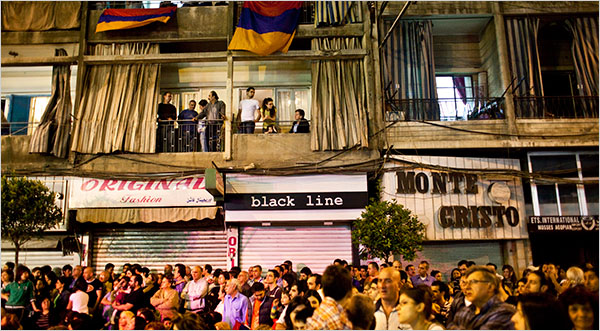
    According to “Ermenihaber.am” news site a sign pasted on the wall of Armenian Catholic School in Sisli, Istanbul caused many discussions.

    “I’m happy, I’m Turk” poster is larger than the poster of the school. The school doesn’t host any Turkish pupil, then why the poster is pasted there. According to the source not all the Turkish schools are “decorated” by this sign.

    A French college is located not far from the Armenian school and it doesn’t hold any poster. There are German, English and American schools in Turkey, and neither of them hold a poster “I’m happy, I’m Turk”. To conclude, this means that only Armenian school has been targeted by this kind of racist treatment.

    The parents of the pupils studying in this school are deeply concerned about this message, which they think is addressed to the Armenians.

    “If a nation is forced to deny his nationality, how can learn the mother tongue. To say “I’m Turk” everyday is a big assimilation. This is an ethnic genocide. Our children don’t respect us, they say we’re liars, because they are taught in school that they’re Turks,” said Filor Ulok, whose child studies in this school.

    via Armenians of Istanbul deeply concerned by “I’m happy, I’m Turk” poster pasted on the wall of Armenian school – Society – Panorama | Armenian news.

  • Turkey to Place Sanctions on Syria

    Turkey to Place Sanctions on Syria

    By AYLA ALBAYRAK

    ISTANBUL—Turkey’s Prime Minister Recep Tayyip Erdoğan said Wednesday that his country would push ahead with planned sanctions on Syria, despite the veto of a United Nations Security Council condemning the regime in Damascus a day earlier.

    Mr. Erdoğan’s comments, made while on a visit to South Africa, came as Turkey’s military said it was beginning a routine military exercise close to Syria’s border that would run from Wednesday until Oct. 13.

    “The veto of (the draft) will not prevent our sanctions, just as it does not prevent the steps of some or all EU countries,” Mr. Erdoğan said, according to Anadolu Ajansi, Turkey’s state news agency.

    Russia and China vetoed the Security Council resolution, which would have condemned the actions of the Syrian regime in killing an estimated 3,000 protesters since the Spring. Russia said it feared the resolution could push Syria towards all-out civil war.

    “We will now inevitably apply our sanction package … We have a 910-kilometer long border. Moreover, we have cross-border family ties, which increase our responsibility,” he said.

    Mr. Erdoğan didn’t give details of what the sanctions package would entail. He had said Tuesday that he would reveal those when he visits camps for some 7,500 Syrian refugees who have fled violence in the country, just on the Turkish side of the border, either this weekend or next week.

    Mr. Erdogan also lashed out at Israel in his speech, repeating previous claims that it a threat to peace in the Middle East. “At the moment I see Israel also a threat to its region and its environment, because it has an atomic bomb,” Mr. Erdogan said, according to Anadolu Ajansi.

    Regional Upheaval

    Track events day by day in the region.

    View Interactive

    Turkish officials feel under pressure to act, given the lack of further options available to governments in the U.S. and Europe. Ankara is enforcing an arms embargo, but has been reluctant to impose economic sanctions that might harm primarily Turkish and Syrian businessmen, rather than the regime of President Bashar al-Assad. Turkey exported $1 billion of goods to Syria in the first six months of the year, slightly up from the year-earlier period despite the turmoil, according to figures from the Turkish Exporters’ Assembly.

    Turkey’s government had exceptionally warm relations with the Assad regime—the Erdoğan and Assad families even went on vacation together in 2008—but relations turned sour this year when Mr. Assad ignored Turkish pressure to end the crackdown on opponents and institute changes.

    The moves came as Col. Riad al As’ad, a former Syrian military officer, reported to have been detained by Turkey and handed over to Damascus, surfaced in Turkey and denied the reports.

    Col. As’ad, who defected and fled to Turkey about three months ago, leads Syria’s main military defectors group, the Free Syrian Army, after merging it with another dissident army group last month, said Omar Idlibi, a spokesperson for the Local Coordination Committees, an activist network.

    Col. As’ad combined his group with the Free Officers Movement, led by Col. Hussein Harmoush and based in Turkey along the Syrian border. That group was dealt a serious setback in September when Col. Harmoush appeared on Syrian state television, appearing to confess that his movement didn’t actually exist.

    Activists say they believe he was either tricked back into Syria by covert intelligence officers, where he was captured by forces there, or handed over by Turkish authorities.

    “We did not hand over anyone,” said a spokesman for the Turkish foreign ministry. He said the rumors had begun in the Syrian press when Col. As’ad became ill and was taken by ambulance from his refugee camp to a hospital, accompanied by Turkish health officials.

    Col. As’ad said Tuesday that he was living unmolested in Turkey, Anadolu reported. “Turkish authorities have not applied any pressure or violence on us,” he said.

    Army defectors have multiplied in recent weeks and are increasingly claiming responsibility for attacks on security forces. Last week, activists said defectors in al-Rastan, a town north of Homs, destroyed about a dozen tanks. Dissident soldiers, mostly low-ranking Sunni conscripts, say they are keeping their light weapons with them and urging other soldiers to defect to protect civilians. There haven’t yet been any announced defections from higher-ranking Alawite soldiers, who form the military’s backbone and are Assad loyalists.

    —Nour Malas in Dubai and Marc Champion in Istanbul contributed to this article.

    via Turkey to Place Sanctions on Syria – WSJ.com.
  • Turkey claims Israel nuclear threat

    Turkey claims Israel nuclear threat

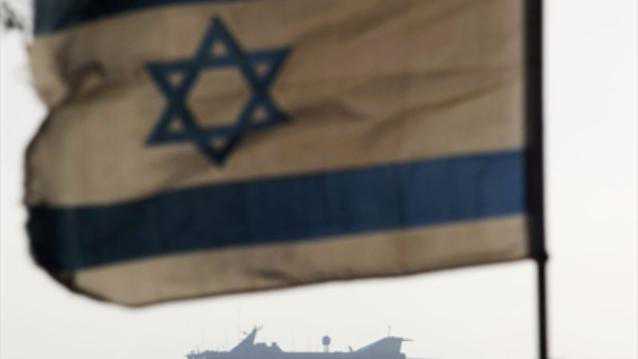
    Turkey’s Prime Minister Recep Tayyip Erdogan has branded Israel as a ‘threat’ to its region, accusing it of owning nuclear weapons.

    ‘I right now see Israel as a threat for its region, because it has the atomic bomb,’ Erdogan said in a foreign policy speech during an official visit to South Africa.

    Israel has never officially admitting to possessing nuclear weapons, but is widely believed to be the only Middle East country to have them.

    Others including Iran, Iraq, Syria and Libya are suspected of trying, or having tried in the past, to follow suit.

    Turkey downgraded relations with one-time ally Israel after the latter refused to apologise for its raid on a Gaza-bound Turkish aid flotilla, in which nine Turkish activists died on May 31, 2010.

    Last month, Turkey expelled the Israeli ambassador and froze military ties and defence trade deals. Ankara has also threatened to send warships to escort any Turkish vessels trying to reach Hamas-ruled Gaza.

    Erdogan’s remarks came in response to comments from an Israeli embassy diplomat in South Africa, who blamed radical Islamic organisation Hamas for launching rocket attacks into Israeli territory.

    ‘I have asked many Israeli officials, how many Israelis, have been killed by rockets launched from Gaza and Palestine. I could not get an answer,’ Erdogan said.

    ‘Yet tens of thousands of Palestinians have been killed from bombs that have rained down on them from Israel.’

    ‘You sleep at night peacefully and secure,’ he told the diplomat, to applause by South African foreign affairs officials and members of the diplomatic corps.

    ‘Yet Palestinians can’t find a single trace of peace in Palestine.’

    Erdogan also accused Israel of committing ‘state terrorism’, saying Israel had attacked the Hamas-ruled Gaza Strip as well as the UN buildings in Gaza with phosphorus bombs.

    Erdogan in the past has accused the West of ‘double standards’ in the way that it has tried to ban Iran from building nuclear weapons without taking similar measures against Israel.

    He echoed those remarks on Tuesday at a press conference, where he said the United Nations had failed to implement its resolutions against Israel.

    ‘Here I am talking about 89 resolutions of the UN Security Council and 247 resolutions of the General Assembly, none of which are implemented,’ he said.

    ‘On the other hand you have resolutions for example about Iran, the Sudan and Palestine which are implemented.’

    But Erdogan said the Security Council should have approved a European-sponsored resolution condemning Syria’s deadly crackdown on protests, which Russia and China blocked on Tuesday.

    ‘The Syrian administration should have received a warning,’ he said.

    ‘The people of that country do not need to endure a merciless, shameless, tyrannical regime that bombs its own country from the sea.’

    He declined to criticise his host South Africa for abstaining from the vote, but said: ‘My heart remains with those struggling for freedom. South Africans have been in that position.’

    ‘But this does not constitute an obstacle,’ he said, adding that ‘Turkey like some other European Union countries will take steps on this issue.’

    ‘We will inevitably impose right now a package of sanctions,’ he said.

    In recent months, the United States has been alarmed at the estrangement between Turkey and its closest Middle East ally Israel.

    Secretary of State Hillary Clinton is expected to urge Turkey to defuse tension and repair strategic ties with Israel when she visits Istanbul to attend a conference on Afghanistan next month.

    Clinton will visit Turkey on November 2, Marc Grossman, US special representative for Afghanistan and Pakistan, was quoted as saying in the Turkish media

    via Sky News: Turkey claims Israel nuclear threat.

  • Turkey’s decision to host NATO radar system, a miscalculation: Ahmadinejad

    Turkey’s decision to host NATO radar system, a miscalculation: Ahmadinejad

    TEHRAN – Iranian President Mahmoud Ahmadinejad has said that Turkey decided to host an early warning radar as part of NATO’s missile defense system due to a miscalculation.

    “NATO is seeking to expand its presence in the region and it has made the necessary political and military preparations,” Ahmadinejad stated during a televised interview broadcast live on Iranian television on Tuesday night.

    “The shield will be stationed in Turkey mostly to save the Zionists so that they (the Western powers) will be able to react and prevent Iran’s missiles from reaching the occupied territories in the event they take a military action against Iran and Iran launches a missile attack reciprocally,” the president commented.

    “In the negotiations we held with the Turkish side, we emphasized that it is a wrong measure since the Zionists will ultimately be gone, and such shields will not affect the survival of the Zionists,” Ahmadinejad stated.

    Government not involved in fraud case

    Elsewhere in the interview, Ahmadinejad commented on the recent $2.6 billion financial fraud case and said that the government was not involved in the scam.

    However, certain people have said that the mastermind behind the fraud had links with Presidential Office Chief of Staff Esfandiar Rahim-Mashaii.

    In addition, 11 lawmakers had filed a complaint with the Majlis Article 90 Committee against the president but later decided not to pursue the complaint after the Supreme Leader advised officials on October 3 to help pursue the case in an atmosphere of calm.

    The president said, “Although the case occurred in the banking system, some thought that they have found an opportunity to settle old scores with Ahmadinejad. However, the government did not have any role in the incident, and the banking system detected the case.”

    Ahmadinejad also said that he will keep silence in the face of criticisms leveled at the government over the financial corruption case.

    He went on to say that pursuing issues relating to the banking system does not fall within the ambit of the administration.

    Ahmadinejad also said that those involved in the case should be seriously dealt with, adding that the three branches of the government are determined to take measures to root out financial corruption.

    On the close-door meeting that the three branches of the government held on Tuesday, he said that the issue of the recent fraud case and a number of other matters were discussed during the meeting.

    via Turkey’s decision to host NATO radar system, a miscalculation: Ahmadinejad – Tehran Times.

  • Russia, Turkey Discuss Use of Ruble and Lira in Bilateral Trade

    Russia, Turkey Discuss Use of Ruble and Lira in Bilateral Trade

    Russia and Turkey discussed ways to boost the use of the ruble and the lira in bilateral trade.

    Central bank and government officials from the two countries met in Moscow Sept. 26-Sept. 28 to consider “proposals on possible ways to increase settlements in the national currencies and measures needed to broaden interbank cooperation,” Bank Rossii said today in a statement on its website. Policy makers asked commercial banks to help them study the most promising industries for trade to shift to the ruble and lira, according to the statement.

    Russia has sought to bolster the use of the ruble and other emerging-market alternatives to the dollar in trade, including through the so-called BRICS group of Brazil, Russia, India, China and South Africa. Central bankers met officials in Brasilia in August and agreed that using the ruble and real in trade was more “appropriate” than the dollar.

    Russia and Turkey traded $17.46 billion of goods in the first seven months of 2011, 26 percent higher than a year earlier, according to Russia’s customs service. Turkey accounted for about 3.8 percent of Russian trade, down from 4.1 percent in the same period last year, customs data show.

    To contact the reporter on this story: Scott Rose in Moscow at [email protected]

    To contact the editor responsible for this story: Balazs Penz at [email protected]

    via Russia, Turkey Discuss Use of Ruble and Lira in Bilateral Trade – Bloomberg.