An Iranian actress has been sentenced to a year in jail and 90 lashes for her role in a film about the limits imposed on artists in the Islamic republic.
Marzieh Vafamehr’s sentence was reported by an Iranian opposition website on Sunday. “A verdict has been issued for Marzieh Vafamehr, sentencing her to a year in jail and 90 lashes,” Kalameh.com reported.
“Her lawyer has appealed the sentence, which was handed down yesterday (Saturday),” the report added, without giving further details.
Miss Vafamehr was arrested in July after appearing in “My Tehran for Sale,” which came under harsh criticism in conservative circles.
The film, produced in collaboration with Australia, tells the story of a young actress in Tehran whose theatre work is banned by the authorities. She is then forced to lead a secret life in order to express herself artistically.
The Fars news agency said the movie had not been approved for screening in Iran and was being distributed in the country illegally.
Miss Vafamehr was released in late July after posting unspecified bail.
www.telegraph.co.uk, 09 Oct 2011
Related Article
Religious academics denounce persecution 10 Oct 2011
This year’s meeting of the EPC focused on exploring opportunities to promote innovation, increasing cooperation in specific sectors and enhancing business-to-business ties.
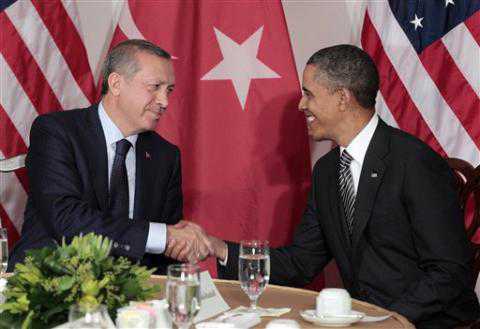
Photo: ASSOCIATED PRESS President Barack Obama, right, shakes hands during a bilateral meeting with Prime Minister of Turkey Recep Tayyip Erdogan. (file)
During a 2009 meeting between U.S. President Barack Obama and Turkish President Abdullah Gul, the two leaders agreed to establish the U.S.-Turkey Framework for Strategic Economic and Commercial Cooperation, or FSECC dialogue, in order to strengthen the existing economic partnership between the two countries.
In early October 2011, representatives of both governments met in Ankara for the seventh meeting of the Turkey and United States Economic Partnership Commission, a key component of economic relations between the two countries, as outlined by the FSECC.
This year’s meeting of the EPC focused on exploring opportunities to promote innovation, increasing cooperation in specific sectors and enhancing business-to-business ties. They discussed ways to promote entrepreneurship and encourage bilateral agricultural trade as well as the importance of protecting intellectual property rights.
They reiterated the importance of cooperating in the energy sector, including promoting efficiency and renewable energy, and discussing the possibilities of commercial nuclear power. They agreed to promote economic development in third countries, particularly those in North Africa, sub-Saharan Africa, and along the Silk Road.
They also discussed progress on establishing Istanbul as an international financial center, which is a top priority of the Turkish government. Some Turkish private financial institutions have already relocated their headquarters to Istanbul.
Turkey is a nation of 78.7 million people, and its population is young, promising rapid growth and an expanding market for U.S. goods. The U.S. also offers an enormous market for Turkish goods and opportunity for the many enterprising Turkish businessmen and women.
Because Turkey straddles Europe and Asia, with flourishing economic ties to its neighbors, it is a valuable partner for exploring new business opportunities in the Middle East, Central Asia, and North Africa. Together, the United Sates and Turkey can make a significant contribution to rejuvenating the economies of developing and transitional economies, such as those in North Africa, through commercial collaboration.
The United States recognizes the importance of strengthening the economic ties between the two long-time allies to match the strength of their political and military ties. As President Obama said in his 2009 speech to the Turkish Parliament, “Turkey is a critical ally. Turkey is an important part of Europe. And Turkey and the United States must stand together – and work together – to overcome the challenges of our time.”
via Improving U.S.-Turkish Economic Partnership | Middle East | Editorial.
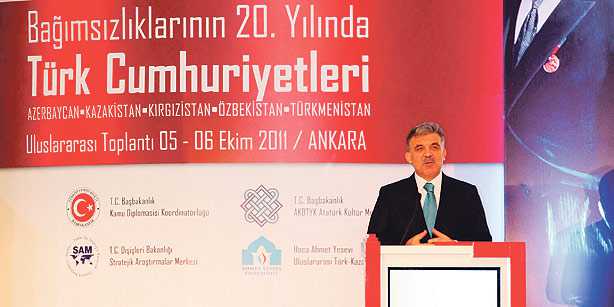
President Abdullah Gül gives a speech at an international meeting to mark the 20th year of the independence of Turkic republics.
As the 20th anniversary of independence arrives for the Turkic republics, Turkey is reviewing its connections with the countries it deems “brothers,” looking for a more institutionalized touch that speaks more to the mind than to the heart.
Although these countries, namely Azerbaijan, Kazakhstan, Kyrgyzstan, Uzbekistan and Turkmenistan, have traditionally held priority of place amongst Turkey’s bilateral ties with other countries, the arrival of the 20th anniversary of their independence has prompted Turkey to review its long-standing policy toward them. What has been accomplished between the countries, popularly claimed to be “different states of the same nation,” in these 20 years is a clear indication that it might be high time for Turkey to build on the strong ties, but with solid accomplishment that speaks for the pledges.
Turkey has been reviewing its policy in a way that looks to balance ties with regard to past issues to give birth to solutions, Turkish officials told Sunday’s Zaman on the sidelines of an international meeting Turkey hosted in celebration of the anniversaries. These statements confirm the obvious fact that in spite of the great importance Turkey attaches to its Turkic brothers, relations with these countries have not always evolved into solid cooperation; to the contrary, the ties have loosened due to Turkey’s naïve and mistaken conviction that they can be maintained without much effort because of the historic and ethnic ties. Now Turkey seems to be aligning its foreign policy in a way that would close the gap and revive old partnerships.
Twenty years ago when the Turkic states acquired their independence after the collapse of the Soviet Union, Turkish political leaders were quite enthusiastic about the prospects this new state of affairs offered Turkey: The first initiatives towards the region were mainly based on emotions, in the process of which, Turkey emerged as a protective elder brother, which caused drawbacks over the long-run when the role was too much to deliver. Twenty years later, it is all the more clear for Turkey that it may not actually be the right way to build lasting relations, as for some time now the motivation behind relations between the “brotherly” countries has progressively evolved into a system where the interests of the parties involved are more important than emotions.
As a result, cooperation between the Turkic countries has increasingly gotten better, although some problems still persist between these countries themselves, as a result of which the Nakhchivan Agreement was signed between Turkey, Azerbaijan, Kazakhstan and Kyrgyzstan, while the two others, Turkmenistan and Uzbekistan, remained outside, on Oct. 3, 2009. The agreement paved the way for the foundation of the Cooperation Council of Turkic Speaking States (CCTS), which became operational at a summit in 2010 in İstanbul, laying the groundwork to hopefully put the council on a more solid track.
The next step in the council meetings is scheduled for Astana, where ministers of economy come together on Oct. 13, followed by another meeting of foreign ministers on Oct 21. Also that month the heads of the Turkic states will meet at the first get-together of the CCTS, proving that the long-desired institutionalization may now be under way for the Turkic republics and Turkey.
Emotions cause for past disappointments
Since the countries enjoyed a close bond and a common world vision without much effort from either side, heartfelt expectations sometimes melted into disappointment — a feeling Turkey is trying to eradicate by putting affairs on solid ground to foster political, economic, cultural and social ties between the states.
The international meeting held in Turkey earlier this week on the occasion of the 20th anniversary of the independence of the Turkic republics is a clear indication that the countries are eager to come together on the diplomatic track and alternative avenues, define problems and look for solutions to existing issues. “Turkey’s dream in the ’90s of forming an economic union with the newly emerged Turkic countries did not come true,” Halil Akıncı, secretary-general of the CCTS and a former ambassador, noted as he co-chaired a session during the Ankara meetings of Oct. 5 and 6. Akıncı added that the formation of institutional bodies between the states makes it easier to track progress and ensures that problems do not only get “whined about” but are put on an agenda to be solved. “Past issues stemmed from over-emotional reactions between the Turkic republics; it is high time we emerge from that,” Akıncı stated at an evaluation session on Thursday.
The Turkic Council, Akıncı noted, would initially deal with economic progress but continue with a second phase concerning the cultural and educational fields. To this end, Akıncı said a common history book would be published, presenting the shared history of the republics and that a Turkic Academy would be founded to study the culture of the Turkic republics. “The 20 years of relations between Turkic states have been fruitful,” commented Bülent Aras, chairman of Center for Strategic Research (SAM), a research body founded under the umbrella of the Turkish Foreign Ministry, in a quick interview with Sunday’s Zaman on the margin of the meeting. “There is a great tendency for cooperation, and steps we cannot downplay have been taken,” Aras noted but admitted that the current level of developments between the states was not enough. “We have developed a fresh perspective in our relations; more cooperation is sure to come in the future,” Aras added, hinting that Turkey is indeed changing its attitude toward the Turkic republics.
Obstacles
The bonds between the six states are also affected by a complex interwoven web of relations with each other, as well as with other parties, which have a claim on the dynamics of the region. The last instance of a dispute between Turkey and its major Turkic ally, Azerbaijan, erupted in 2009 when Turkey tried to normalize relations with Armenia through outlining a roadmap that would make the dysfunctional border between the neighbors operational again. However, Azerbaijan lashed out at the possibility of normalization before a solution is found to the Armenian occupation of a number of Azeri enclaves around Nagorno-Karabakh, which is why Turkey closed its border with Armenia in 1993 in the first place.
In the case of waiving visa requirements between Azerbaijan and Turkey, it was Iran that intervened and blocked the prospect, saying that it would ask to benefit from the same privilege if Turkey was given the green light.
An additional debate that usually comes up on the economic sidelines between the nations concerns energy prices, since Turkey is the buyer and transporter of large amounts of Azeri natural gas.
Touching on difficulties facing Turkic states in their quest for better cooperation, Mehmet Seyfettin Erol, a professor of international relations at Gazi University in Ankara, told Sunday’s Zaman in an interview that under the surface, there was much to be considered for relations to evolve to the desired level. Hailing the establishment of the CCTS, founded with the Nakhchivan Agreement, which is “the best move Turkey has ever made in Central Asia,” Erol stated most plans to increase cooperation have remained at their initial stages due to a large number of obstacles.
Lamenting difficulties the Turkic republics face in their diplomatic connections, Erol added that Turkey could only improve relations through deeply rooted diplomatic tracks, which necessitate more institutionalization from all ends. Although the academic stressed that the states wanted more institutionalization, he noted the current level of ties remained at the initial phase of intentions and should be backed by solid plans to move on to the next phase.
His words were confirmed by Dr. Aydar Amrebaev, deputy director of the Kazakhstan Institute for World Economy and Politics (IWEP), at the Thursday session of the international meeting, as he spoke of the problems within the Turkic states. “There are no representatives from Uzbekistan and Turkmenistan. As the Turkic world, we need to solve the problems of the Caspian region,” Amrebaev stated. Not only Amrebaev but also Associate Professor Bulat Sultanov, director of the Kazakhstan Institute of Strategic Research, underlined that relations should be handled on an equal basis, implying that Kazakhstan has no need of aid from Turkey but needs cooperation in many fields, including defense and security.
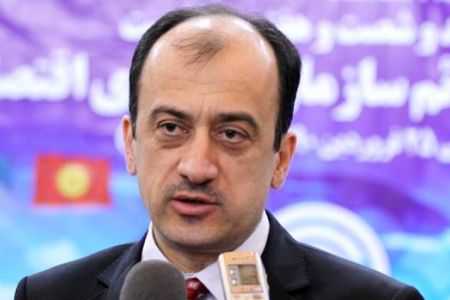
Turkish Ambassador to Iran Umit Yardim says various groups affiliated to the terrorist Kurdistan Workers’ Party (PKK) are stationed in Europe and are being funded and organized there.
PKK, which is recognized as a terrorist group by much of the international community, has been fighting the central government in Turkey since 1984 in quest for an independent state in southwestern Turkey.
“The arrest of [PKK leader Abdullah] Ocalan shows the extent of foreign support for the terrorist group. He was arrested in the house of Greek ambassador to Kenya while holding a Southern Cyprus passport,” Fars News Agency quoted Yardim as saying on Sunday.
Stressing that PKK and its offshoot, the Party for Free Life of Kurdistan (PJAK), are both “problematic” entities for Iran and Turkey, Yardim said, “We understand better than anyone else the situation of our Iranian friends in combating terrorist groups.”
PJAK terrorists regularly engage in armed clashes with Iranian security forces along the country’s western borders with Iraq’s semi-autonomous Kurdistan region.
TEHRAN – Major General Yahya Safavi says Ankara has made three strategic mistakes including a decision to host the NATO missile shield on the Turkish soil.
Safavi, the former commander of the Islamic Revolution Guards Corps, says Turkey is moving on a wrong track perhaps laid out by the United States.
The deployment could have a clear message for both Iran and Russia but more for Iran, Safavi told the Mehr News Agency in an exclusive interview.
The other mistake was a pronouncement by Turkish Prime Minister Recep Tayyip Erdogan in which during his visit to Egypt he suggested a model of government based on secular system, stated Safavi.
Safavi, who currently serves as a senior military advisor to the Supreme Leader, said Egyptians had not expected such remarks from a Turkish official because Egyptian people are Muslim.
Under a pressure from the U.S., the Zionist regime, and Saudi Arabia, Turkey made another strategic blunder by trying to stir up protests in Syria and this is contrary to what Turkish officials are saying, he added.
This is an indication of hypocrisy among Turkish authorities, the general argued.
In fact, Ankara wants to convey a message to regional countries, where massive uprisings have been taking place, that their revolutions are similar to Turkey’s not to those occurred in other countries like Iran, Safavi noted.
Safavi said Turkey’s secular system is not “a good model”.
He went on to say that such policies by Ankara are incompatible with the ideals of the Muslim people of Turkey.
On the future relationship between Tehran and Ankara, he said if Turkish political leaders do not adopt a transparent foreign policy toward Iran, they will encounter problems in the future.
via Turkey made strategic mistake by agreeing to host NATO missile shield: Safavi – Tehran Times.
ISTANBUL. – Turkey’s MFA released a statement in connection with French President Nicolas Sarkozy’s declarations made in Armenia.
The statement notes that Turkish MFA receives Sarkozy’s words with astonishment and regret, Zaman daily of Turkey writes. “The French people will assess as to the degree such declarations, which are based on election calculations, correspond to French democracy, cultural and state traditions. Even though this problem, with respect to that painful time period in our joint history with the Armenians, is not discussed in several countries which are, or are not, parties, this can freely be discussed in Turkey.
Turkey will continue the constructive approaches toward improving Armenian-Turkish relations and finding avenues to resolve the events of 1915,” Turkish MFA’s statement reads.
During his state-level visit to Armenia, French President Nicolas Sarkozy stated that, if Turkey found strength in itself and reviewed its history, France would not pass the law criminalizing Armenian Genocide’s denial.
Turkey’s FM Ahmet Davutoglu and Minister for EU Affairs Egemen Bagis had immediately reacted to Sarkozy’s statement.
via We regret Sarkozy’s statements on 1915 – Turkish MFA | Armenia News – NEWS.am.