Category: Regions

  • Turkey – EU Relations

    Turkey – EU Relations

    Italian Senate’s vice-president said on Tuesday that Italy was aware of Turkey’s patience towards European Union (EU) membership.

    Emma Bonino said EU expected more democratization, transparency and respect to human rights from Turkey.

    “We are aware that Turkey is losing its patience, and it is based on rightful reasons,” Banino said during “Fenomeno Turchia: Development of Society” conference in Milan, Italy.

    Bonino said the EU had to admit the Greek Cypriots as a member, but at the same time it promised Turkey that it would boost its relations with the Turkish Republic of Northern Cyprus (TRNC) however it had not done anything so far.

    Emma Bonino said she thought that the Greek Cypriot administration was hampering Turkey-EU relations by saying ‘no’ to everything, however some countries were hiding themselves behind the Greek Cypriot administration and were saying ‘no’ to Turkey.

    “Therefore, we cannot be said to be a fair partner for Turkey that keeps its promises,” Bonino said.

    Bonino said Turkey did not have the luxury to behave on its own, and gave the message that Turkey did not have any alternative than the EU.

    Source: TurkishNY

    URL: www.turkishny.com/english-news/5-english-news/68453-qitaly-was-aware-of-turkeys-patience-towards-euq

    via Turkey – EU Relations.

  • Turkey’s Erdogan writes article on Somalia in US magazine

    Turkey’s Erdogan writes article on Somalia in US magazine

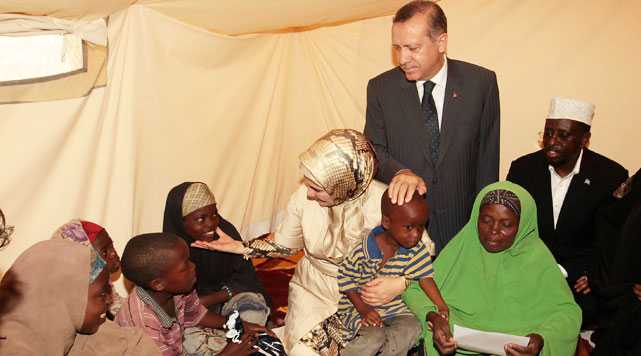
    Turkish Prime Minister Recep Tayyip Erdogan tells the ongoing tragedy in Somalia in an article he wrote for Foreign Policy, one of the leading magazines of the U.S.

    “Somalia is suffering from the most severe drought and famine in the last 60 years, which has already resulted in the deaths of tens of thousands of people and endangers the lives of 750,000 more Somalis,” begins Erdogan in his article titled “Tears of Somalia”.

    He continues on writing: “This crisis tests the notion of civilization and our modern values. It reveals, once again, that it is a basic human obligation to pursue international cooperation and solidarity to provide solace for those suffering from natural and man-made disasters.”

    “It is not realistic to consider Somalia’s plight as caused solely by a severe natural disaster. We cannot ignore the fact that, in addition to the drought, the international community’s decision to leave Somalia to its own fate is also an underlying factor causing this drama.

    Twenty years of political and social instability, lawlessness, and chaos have added enormously to the problems in Somalia. The horrifying truck bombing of the Transitional Federal Government’s ministerial complex on October 4 is just the latest evidence of this. The international community must not respond to this act of terrorism by retreating from Somalia, but by redoubling its efforts to bring aid to its people.”

    “Nobody with common sense and conscience can remain indifferent to such a drama, wherever on earth it may be and whichever people have to bear it. Our urgent intervention as responsible members of the international community can contribute to the alleviation of the Somali people’s distress. However, the establishment of lasting peace and stability will only be possible through long-term, far-reaching, and coordinated efforts.”

    “Turkey mobilized last month to help end this suffering. We consider this solidarity a humanitarian obligation toward the people of Somalia, with whom we have deep historical relations. Many of our institutions, NGOs, and people of all ages have made an extraordinary effort to alleviate the suffering of women and children in Somalia.

    We are proud of the sensitivity and cooperation displayed by the Turkish people during the holy month of Ramadan. In the last month alone, approximately 280 million USD worth of donations for Somalia were collected in Turkey. The Turkish people’s generosity has served as an example to other donor countries as well as the international community, offering hope for the resolution of the crisis in Somalia.”

    “The Turkish government has also moved decisively to help alleviate this humanitarian crisis. Turkey took the initiative to hold an emergency meeting of the executive committee of the Organization of the Islamic Cooperation (OIC) at the ministerial level on August 17. At this meeting, which was attended by the president of Somalia and high-level representatives from 40 member countries of the OIC, 350 million USD was committed to help relieve the famine in Somalia, and the participants agreed to increase this amount to half a billion dollars. The Turkish Red Crescent is also standing shoulder to shoulder with international aid organizations and is working to meet the needs of those in all the camps in the Mogadishu region.”

    “Following the emergency meeting of the OIC executive committee, I — along with a number of Turkish ministers, some members of parliament, bureaucrats, business people, artists, and families — visited the country on August 19 to tell the people of Somalia that they are not alone. We visited the camps. We tried to give hope and encourage people who live in very different conditions from ours. We took note of the lack of such a high-level visit from outside of Africa to Somalia for the last 20 years, and informed the international community of this fact.”

    “Turkey has decided to launch a major humanitarian effort to help restore normalcy to Mogadishu. To this end, we are preparing to provide assistance in the fields of health, education, and transportation. We will inaugurate a 400-bed hospital, provide garbage trucks for the streets of Mogadishu, build a waste-disposal facility to burn the accumulated garbage in the streets, pave the road between Mogadishu’s airport and the city center, renovate the parliament and other government buildings, dig water wells, and develop organized agricultural and livestock areas. Our embassy, which will be opened in Mogadishu shortly and headed by an ambassador who is experienced in the field of humanitarian aid and familiar to the region, will coordinate these activities.”

    “By supporting the restoration of peace and stability efforts, we will work with the Transitional Federal Government and other institutions in Somalia in order to launch the development process of this shattered country. To this end, we expect all Somali authorities to demonstrate an extraordinary effort in unity, integrity, and harmony.”

    “The success of aid operations is directly linked to the establishment of security. The withdrawal from Mogadishu of armed elements in the al-Shabab organization is clearly a positive development for security in the region. But this is not sufficient. Moving the Somali-related U.N. offices currently located in Nairobi to Mogadishu will be a positive step to support this process and one that should be taken without delay.”

    “Neighboring countries such as Ethiopia and Kenya bear a special responsibility regarding the restoration of peace and stability in Somalia. The Intergovernmental Authority on Development and the African Union will also share this responsibility, and Turkey supports them in their tasks. In line with the Djibouti peace process, Somalia’s Transitional Federal Government should intensify efforts at reconciliation by maintaining dialogue with all fighting groups and pledge prosperity, brotherhood, order, and prosperity in return for peace.”

    “The military contribution provided by Uganda and Burundi within the African Union Mission in Somalia (AMISOM) to prevent chaos and terror deserves appreciation. With this opportunity, I would like to issue a call to all neighboring countries, including Eritrea, to increase their existing efforts for the establishment of peace and security in Somalia and to enhance long-term regional stability.”

    “In Turkish culture, it is believed that something good will come out of all bad experiences. In Somalia, too, this disaster can mark the beginning of a new process by focusing international humanitarian efforts and global attention on the plight of the region. However, this situation will only be sustainable if we continue to be sensitive to the needs of the Somali people.”

    “The tears that are now running from Somalia’s golden sands into the Indian Ocean must stop. They should be replaced by hopeful voices of a country where people do not lose their lives because of starvation and where they express their eagerness to develop and restore peace and stability. Regardless of which culture we come from or where we live, I am confident that our common heritage as human beings will motivate us to ease the suffering of Somalia.”

    AA
  • Turkey lobbying hard for Kosovo, says Tirana

    Turkey lobbying hard for Kosovo, says Tirana

    ERISA DAUTAJ ŞENERDEM

    ISTANBUL- Hürriyet Daily News

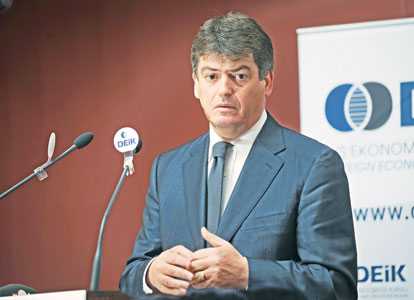
    Albaninan President Bamir Topi speaks at a meeting in Istanbul. DAILY NEWS photo, Emrah GÜREL
    Albaninan President Bamir Topi speaks at a meeting in Istanbul. DAILY NEWS photo, Emrah GÜREL

    Turkey is strongly lobbying for increasing the number of countries that recognize Kosovo, according to Albaninan President Bamir Topi.

    “I had the opportunity to raise [the issue of recognition of Kosovo] with Turkish President Abdullah Gül, who also informed me that he had a discussion with the President of Brazil Dilma Roussef on the issue of Kosovo’s recognition,” Topi said in an interview with the Hürriyet Daily News after participating in a Turkey-Albania Business Council meeting at Turkey’s Foreign Economic Relations Board (DEİK) in Istanbul.

    Brazil is not among the 85 states that have recognized Kosovo since it declared independence in 2007. The Gulf state of Kuwait announced yesterday that it has recognized Kosovo as an independent country and has decided to establish diplomatic ties at the ambassadorial level, according to an AFP report.

    Turkey’s authorities have a solid resolve to support new recognitions of Kosovo, and are lobbying other countries continue recognizing the new state, Topi said. “The perspective is optimistic and we expect more countries to recognize Kosovo in the future.”

    The position of the Albanian state regarding Kosovo is the same. The situation in Kosovo is irrevocable regarding its independence and functioning as a sovereign state, the Albanian president said. “This has been demonstrated even by the planet’s strongest states, including the United States, a majority of European Union member states and Turkey.”

    Regarding efforts by the EU to bring Kosovo and Serbia back to the negotiating table after tension in northern Kosovo, Topi said: “I am confident that the EU will not fail in the orientation of these discussions.”

    Kosovo’s government ruled out talks with Serbia over the flashpoint on Oct. 10, as the EU facilitator for the Belgrade-Prishtina dialogue, Robert Cooper, began a two-day visit in a bid to revive talks between the two sides, according to an AFP report. “Kosovo has a clear platform (for the talks) with red lines. The independence, territorial integrity and internal structure and system of Kosovo,” Prime Minister Hashim Thaci said in a statement.

    “Talks also have their own complications. They do not always progress as required. But this is a process and within a process. We encourage fluidity and continuity of negotiations,” Albania’s President Topi said. The talks, as already stated by Kosovo’s institutions, will be realized for all issues of reciprocal interests of technical character, but starting from positions of sovereignty, which means Kosovo and Serbia can negotiate as two independent sovereign countries, he added.

    The dialogue was interrupted in late September following a new wave of violence in northern Kosovo where the Serb population, which remains loyal to Belgrade, is concentrated. The situation there remains tense.

    Asked whether there are formal or informal talks between Albania and Kosovo on a possible unification of the two countries, Topi said: “Albania and Kosovo are two states that have a single aspiration, to be members of the EU, and in a symbolic sense, unification of the two states will occur in Brussels, as it will happen for other countries.”

    Topi also called for Turkish companies to invest more in Albania, especially in the tourism sector, during his speech at the business council. “Economic relations do not yet respond to the excellent relations between the two countries at the political level. We have taken notes of all suggestions [by Turkish business representatives] and will work to attract more Turkish investments to Albania, particularly in the fields of tourism, energy and mining,” he said.

    via Turkey lobbying hard for Kosovo, says Tirana – Hurriyet Daily News.

  • First students of German university in İstanbul to start classes next year

    First students of German university in İstanbul to start classes next year

    11 October 2011, Tuesday / BJÖRN FINKE , İSTANBUL

    The new Turkish-German university (TAU) in İstanbul will accept its first students in autumn 2012, Ziya Şanal, university rector, said on Monday evening.

    The lectures will take place in provisional buildings, since the university’s premises will not be completed by that time. The foundation of the university, which as many as 5000 students will attend, was laid in Beykoz, a suburb on the Asian side of İstanbul, in October 2010.

    The buildings might not be ready to host the students yet, but the institution already has an emblem. The organizers presented it in İstanbul on Monday evening. The logo was created at the end of a contest among mixed teams of design students at Anadolu University in Eskişehir and RheinMain University in Wiesbaden, Germany. The winning logo features the three initial letters of the university’s name, TAU, in the shape of flower petals. According to its designers, the logo symbolizes the connection between technology and nature at TAU. The institution – the biggest German university abroad — will focus on engineering, but at the same time will be committed to having a green campus.

    The agreement to establish TAU was signed two-and-a-half years ago between the two countries. At that occasion, the German minister of education and research, Annette Schavan, said that the project could start in autumn 2009. Although this estimate has proven to be overly optimistic, there was a reason for the delay, namely disputes over the prospective curriculum.

    Rita Süssmuth, president of the consortium representing the German universities involved in the bilateral project, said, “But now it looks realistic that we can start next autumn.” Rector Şanal added that the biggest challenges now are finishing the construction work on campus and acquiring “very good” faculty members.

    Şanal is confident student demand for the university will be high. Both high school graduates from Germany and Turkey can apply. In addition to engineering, economics and law departments, the university will also offer degrees in natural and cultural sciences. The university degrees will be accepted in Germany and Turkey, and the language of education will be mainly German.

    TAU is the first Turkish-German university. Turkish Prime Minister Recep Tayyip Erdoğan would like to see a second bilateral university open its doors. “If a Turkish-German university is established in İstanbul, why shouldn’t a similar institution start in Germany’s capital Berlin?” he asked in March 2010 when Chancellor Angela Merkel visited Ankara. However, this idea has yet to find followers in Germany.

    via First students of German university in İstanbul to start classes next year.

  • Ahmet Davutoğlu to host Germany’s Westerwelle tomorrow

    Ahmet Davutoğlu to host Germany’s Westerwelle tomorrow

    German Foreign Minister Guido Westerwelle will pay a one-day working visit to İstanbul on Thursday, Turkish officials said on Tuesday.

    Both German and Turkish officials avoided commenting on the content of Westerwelle’s meeting with his Turkish counterpart, Ahmet Davutoğlu. Yet, in addition to regional developments in the Middle East and North Africa, Turkish Prime Minister Recep Tayyip Erdoğan’s claims concerning German foundations operating in Turkey are likely to be high on the agenda of the meeting.

    In early October, Erdoğan said he was disturbed by the fact that some German foundations are aiding the terrorist Kurdistan Workers’ Party (PKK), which he said is one of the reasons for the probe into the Kurdish Communities Union (KCK), the political arm of the PKK. German foundations that have branches in Turkey and Germany’s sustainable development agency, GIZ, denied Erdoğan’s claims.

    Meanwhile, Westerwelle’s visit to İstanbul will coincide with the opening of an artists’ academy in the summer residence of the German ambassador in the İstanbul suburb of Tarabya on Thursday. Cornelia Pieper, minister of state in the German Foreign Ministry and responsible for cultural policy, will take part in the ceremony. Next year the house will host the first scholarship holders. Each year up to 14 German artists will get stipends for six months so that they get to learn about the arts scene in Turkey. The German federal parliament decided to establish the academy in 2009 but controversies about the concept have delayed the project.

    It was not yet clear whether Westerwelle will be able to attend the inauguration ceremony when Today’s Zaman contacted German Embassy officials on Thursday.

    via Ahmet Davutoğlu to host Germany’s Westerwelle tomorrow.

  • Iranian actress to be lashed 90 times

    Iranian actress to be lashed 90 times

    An Iranian actress has been sentenced to a year in jail and 90 lashes for her role in a film about the limits imposed on artists in the Islamic republic.

    Marzieh Vafamehr’s sentence was reported by an Iranian opposition website on Sunday. “A verdict has been issued for Marzieh Vafamehr, sentencing her to a year in jail and 90 lashes,” Kalameh.com reported.

    “Her lawyer has appealed the sentence, which was handed down yesterday (Saturday),” the report added, without giving further details.

    Miss Vafamehr was arrested in July after appearing in “My Tehran for Sale,” which came under harsh criticism in conservative circles.

    The film, produced in collaboration with Australia, tells the story of a young actress in Tehran whose theatre work is banned by the authorities. She is then forced to lead a secret life in order to express herself artistically.

    The Fars news agency said the movie had not been approved for screening in Iran and was being distributed in the country illegally.

    Miss Vafamehr was released in late July after posting unspecified bail.

    www.telegraph.co.uk, 09 Oct 2011

    Related Article

    • Religious academics denounce persecution 10 Oct 2011