Category: Regions

  • Arabs are rewriting their own narrative

    Arabs are rewriting their own narrative

    By Rami G. Khouri

    The Daily Star

    I had the pleasure this week of speaking at the Fares Center for Eastern Mediterranean Studies at Tufts University on a panel titled “Continuing Tensions in the Levant.”

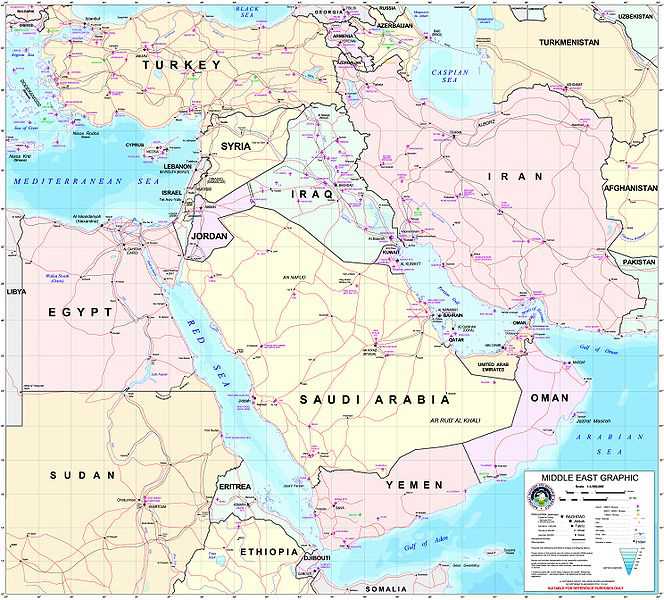
    The panel made me realize two related things. First, all major players in the Middle East – the Arab states, Israel, Turkey, Iran, the European Union and the United States – are undergoing major changes in regional relationships. The Arab citizen revolts across the region continue to drive epic developments, making this a major moment of historic change that involves more than the mere replacement of authoritarian regimes by more democratic systems.

    Second, given the changes under way, it is time perhaps to put an end to the use of the term “Levant” or “Levantine,” because the historical lineage of this term is being invalidated by the Arab revolts. The “Levant” term recalls an era when Europeans were enchanted with our region, dealt with it in colonial and Orientalist fashions, and devised terminology that reflected the subordinate role that our region played in relation to the more powerful and advanced Europeans. The “Levant” refers to the region to the east where the sun rises, while the “Middle East” similarly gives our countries a label that reflects the view from Europe and the United States.

    I suggest we declare the death of the “Levant” label because the citizen revolts across much of the Arab world capture the fact that Arab citizens are now in the very early stages of rewriting their own history and crafting their own national narratives. The region where they are acting deserves to be called something reflecting this fact, namely the “Arab world.” If one is talking about the wider region that also includes non-Arab Iran, Turkey and Israel, the “Middle East” will probably stay in use for a long time. However, “Western Asia” is perhaps equally useful, balancing as it does the prevalent East Asia, Central Asia and South Asia designations that are merely geographic and not linguistically quasi-colonial.

    The fact that Arab men and women are fighting for their rights as citizens and human beings is the central drama of the moment across the Arab world, but this is likely to spill over and influence the roles and relationships of non-Arab states in the region. The most significant ones in my mind are the following:

    First, Saudi Arabia and the Gulf Cooperation Council states have behaved in novel ways in the past year, shedding their traditional reticence and low-key foreign policy style in favor of more daring moves. Four of the GCC states (Saudi Arabia, Kuwait, the United Arab Emirates, and Qatar) have moved their troops or provided military aid around the region (in Bahrain and Libya), some have withdrawn their ambassadors from Damascus, and some have confronted Iran openly. All this is very unusual for GCC states, suggesting they are beginning to act on their own volition, rather than relying on foreign intervention while acting as as protectorates of foreign powers.

    Second, Turkey for several years has expanded its profile and adopted more robust policies across the Middle East. It has sought to enhance its national interests while expanding its sphere of influence in the Arab region, and this in different ways in its relations with Arabs, Iran and Israel.

    Third, Iran for its part is one of the big losers from the current Arab revolts, as its various attempts to develop more influence in the region fall victim to the other changes under way. Its export of the Islamic revolutionary spirit of 1979 has been deflated by the fact that Arabs have taken the lead in challenging their own regimes. Iran’s challenge of Israel has been taken over much more credibly by Turkey. Iranian allies Syria and Hezbollah face new problems in view of the unpredictable situation in Syria. And the Arab quest for democratic freedoms makes the Iranian theocratic and top-heavy governance system deeply alien to Arab populist aspirations.

    Fourth, Egypt is slowly reviving its traditional role as a leading Arab power, both as a trend-setter in domestic changes in the region and as a leader in speaking out against Israeli policies. The successful mediation of the Israel-Hamas prisoner exchange is only the latest sign of this, coming right after Israel formally – and unusually – apologized to Egypt for killing several Israeli soldiers in Sinai.

    Fifth, Israel is increasingly isolated and challenged in the region. Some three decades ago Israel counted Iran, Turkey and Egypt as strategic allies or close partners. Today, its relations with all three are much more difficult. Egypt’s evolution in recent months suggests that a more democratic Arab world will see foreign policies that are harder on Israel because they reflect Arab public opinion. Israel’s greater isolation is coupled with more frequent mentions of Israel, apartheid and sanctions in the same breath.

    The exact impact of these and other changes to come are hard to identify now, and in some cases they will include new forms of short-term sectarian or ideological strife within and between countries. This is the nature of momentous and historic change, but in due course the benefits of democratic governance will far outweigh the price to be paid in the transition period.

    Rami G. Khouri is published twice weekly by THE DAILY STAR.

    A version of this article appeared in the print edition of The Daily Star on October 15, 2011, on page 7.

    via THE DAILY STAR :: Opinion :: Columnist :: Arabs are rewriting their own narrative.

  • Turkey: TRT not to internally select a representative

    Turkey: TRT not to internally select a representative

    Source: Habervitrini.com & ESCDaily.com

    Image Source: TRT

    TRT will start its plans for the Eurovision Song Contest 2012 in November. However, the artist that will represent the country won’t be picked internally this time.

    Habervitrini.com reports that TRT, the Turkish national broadcaster, will be changing the method of chosing the representative of the country for Eurovision. In November, a commision will invite musicians and composers to submit entries. Later, their entries will be rated but the full process of what exactly will be done is still unknown. This year it is much more open for artists and singers who will all have a chance to represent Turkey on the big Eurovision Stage.

    Traditionally, TRT decides on one artist and several songs are presented to the broadcaster. In terms of the planned process in 2011, it’s reported that TRT will choose a number entries to present to the public and later will cut entries one by one until eventually a winner will be selected. It’s still believed however there will be no public say in the decision and still technically it will be an internal decision just more open for artists.

    Additionally, popular Turkish pop artist Hande Yener, has said on several occasions that she wants to represent Turkey in Eurovision and this year she feels no different. Recently she stated ‘I want to represent my country at Eurovision’ on a local radio station. Hande has sold close to 17 million albums worldwide and she was approched by TRT to represent Turkey in the 2008 Eurovision Song Contest.

    Other popular names rumoured to be interested include Atiye and Sebnem Ferah.

    Stay tuned!

    via Turkey: TRT not to internally select a representative | ESCDaily.com || The latest Eurovision 2011 news from across Europe.

  • Anti-Sarkozy demonstration in Istanbul

    Anti-Sarkozy demonstration in Istanbul

    Demonstrations against President Nicolas Sarkozy, have occurred Friday in front of the consulate of France in Istanbul, following the call a few days ago by this latter, for the recognition by Turkey of the Armenian genocide.

    The protesters carried portraits of Sarkozy with Adolph Hitler’s moustache and others denouncing the massacres committed by France in Algeria during the period of colonialism. Some demonstrators wore masks representing Algerian children, referring to the colonial past of France in North Africa.

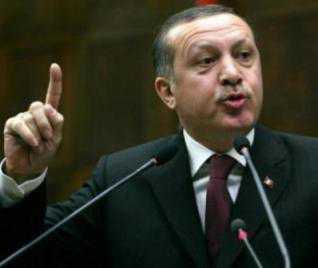
    The head of the Turkish government Recep Tayyip Erdogan and several government ministers, have denounced statements by Sarkozy during his visit to Armenia and the Minister for EU Affairs Egemen Bagis, advised the French president to address the problems of the French people instead of giving lessons to Turkey. France, whose colonial past is known, does not have to give lessons to Turkey, said some Turkish ministers.

    During his visit to Armenia, President Sarkozy has asked Turkey to immediately recognize the Armenian genocide, referring to the massacres in 1915 and 1916 in Turkey, of hundreds of thousands of Armenians.

    For Turkey, 300,000 to 500,000 Armenians died during this period. These deaths were not victims of an extermination campaign but because of the chaos of the last years of the Ottoman Empire.

    Ennaharonline/ M. O.

    via Ennahar Online – Anti-Sarkozy demonstration in Istanbul.

  • Iranian cinema discussed at Istanbul meeting

    Iranian cinema discussed at Istanbul meeting

    TEHRAN – Tarik Zafer Tunaya Cultural Center in Istanbul hosted the session “Iran’s Cinema of Today” on Thursday as part of Iran’s Film Week now underway in Istanbul.

    Cosponsored by the Iranian cultural office in Turkey and Istanbul Municipality, the weeklong festival opened on October 10, the Persian service of MNA reported on Friday.

    The session was attended by experts on cinema of Iran and Turkey Ihsan Kabil and Faysal Soysal, Iranian filmmaker Mohammad-Hadi Karimi and actor Mostafa Zamani.

    Kabil regarded the weeklong event a good opportunity to introduce Iranian cinema and familiarize Turkish people with the cinema of Iran.

    He named Iranian directors like Dariush Mehrjuii, Bahram Beizaii and Kamal Tabrizi and pointed to the young filmmakers and their big successes in the recent years.

    Karimi also called Iranian cinema a developing one in the world and expressed hope that more theaters in the world would be dedicated to films with spiritual themes rather than the cinema of Hollywood.

    “Prophet Joseph (AS)” actor Zamani believed Iran’s cinema would have a bright future since it has good filmmakers and promising youths.

    Soysal who is a graduate of cinema from Iran also said that Iran enjoys rich art and culture with worthwhile activities in cinema, adding that filmmakers must make films for people, not for the festivals.

    Organized by the Iranian Visual Media Institute, 10 films are scheduled to be screened during the event including “Prophet Joseph (AS)” by Farajollah Salahshur, “Canaan” by Mani Haqiqi, “The Day of the Devil” by Behruz Afkhami, “The Hidden Sense” by Mostafa Razzaq-Karimi, and “Aal” by Bahram Bahramian.

    RM/YAW

    END

    via Iranian cinema discussed at Istanbul meeting – Tehran Times.

  • İstanbul Oktoberfest organizers in hot water for incorrectly listing sponsors

    İstanbul Oktoberfest organizers in hot water for incorrectly listing sponsors

    The organizers of İstanbul’s Oktoberfest are being sued by several companies who claim they were incorrectly listed as sponsors on the event’s website.

    The Culture and Tourism Ministry, Karaköy Güllüoğlu (one of the most famous producers of baklava in Turkey) and Coşkun Et (a company selling meat products) received many complaints after they were made out to be sponsors of the İstanbul Oktoberfest, a beer festival held with the aim of bringing German culture and tradition to İstanbul.

    Karaköy Güllüoğlu told the press on Thursday that it had not sponsored the Oktoberfest, adding that a student had bought some sweet products in bulk from them, after which the organizers listed Karaköy Güllüoğlu as being a sponsor of the beer festival. The Culture and Tourism Ministry and Cuşkun Et also claimed that they had not sponsored the event. A written statement on the ministry website on Thursday said the ministry had only sent a letter of support to the organizers, thinking the event it would help Turkey attract tourists from German-speaking countries.

    Coşkun Et’s owner, Hanefi Coşkun, said that his company had sold sausages to the organizers of the event and were consequently considered to be a sponsor, adding that they will no longer consider selling products to be consumed at the Oktoberfest in İstanbul.

    The İstanbul Oktoberfest was held at Parkorman on Oct. 9, 2011 by the İstanbul-based entertainment and gastronomy company, KafePi. The original Oktoberfest dates back to 1810 and is held annually in Munich from the end of September to the first weekend in October.(todayszaman)

  • UK airline sees profit in flights over Turkish sky

    UK airline sees profit in flights over Turkish sky

    ISTANBUL- Hürriyet Daily News

    British Airlines is seeking ways to benefit from the transit flights business via Istanbul, a model that is boosting the growth of domestic Turkish Airlines

    British Airlines is offering tickets for 65 pounds for Turkish passengers to UK to mark its 65th year in Turkey, says Gavin Halliday.
    British Airlines is offering tickets for 65 pounds for Turkish passengers to UK to mark its 65th year in Turkey, says Gavin Halliday.

    The increasing number of transit airway passengers via Turkey, a key element in the rapid growth of national carrier Turkish Airlines, has also whet the appetite of British Airways, which is seeking a larger share in the market.

    Istanbul has become an important connecting hub in its region, a top executive of British Airways said during an Oct. 14 meeting in Istanbul.

    “Not only has the number of people visiting Turkey increased, the number of transit passengers has reached a great number in recent years,” said Gavin Halliday, general manager for the company’s Europe and Africa operations, during a press conference.

    The official data of the International Civil Aviation Organization (ICAO) verifies Halliday’s statements. The total number of the transit passengers arriving Istanbul reached 18 million last year, and the city ranks top in hosting transit passengers on the Asia-Europe corridor.

    Frankfurt came second with 11 million passengers in the same period, followed by Cairo with 8 million, according to the data.

    At the meeting to mark British Airways’ 65th year in Turkey, Halliday said, “The international routes and the passengers preferences are a change we aim to serve with the best quality for them.”

    Istanbul’s Atatürk Airport, one of the two in the city, ranked as the eighth busiest airport in the world, reaching 31.14 million travelers by the end of last year. It followed London Heathrow, Paris Charles De Gaulle, Frankfurt, Spain’s Barajas, Amsterdam, Leonardo Da Vinci and Munich airports, according to Turkey’s General Directorate of State Airports Authority (DHMİ).

    The total number of international passengers arriving to Turkey has reached 47 million, breaking another record by 13.4 percent as of the end of September this year compared with the first nine months of 2010, according to DHMI.

    Turkish Airlines, which benefits most from transit traffic in the region, expects to handle 35 million passengers in 2011, according to Chief Executive Temel Kotil.

    Cheap tickets

    To celebrate the 65th anniversary, British Airways is offering a discount price of 65 pounds for Turkish passengers to London if they buy tickets between Oct. 17 and 23. Passengers will be able to use the ticket between October 2011 and March 31, 2012.

    Operating 21 weekly roundtrip flights between Istanbul and London, British Airways carried approximately 64,000 passengers on the route as of the end of last year.

    Halliday said the company was ready to invest nearly 5 billion pounds next year to modernize aircraft, upgrade technology and interior decor, and increase entertainment and catering services.

    via UK airline sees profit in flights over Turkish sky – Hurriyet Daily News.