Category: Regions

  • Lost in Istanbul

    Lost in Istanbul

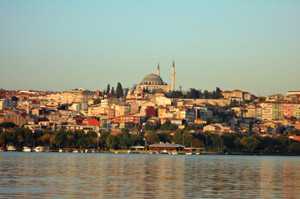
    My first time in Turkey changed my perception of happenings in Turkey totally. Even though it might be not quite objective to try to comprehend Turkey based only on impressions from Istanbul and Ankara, I was amazed to find it so liberal and European-like! Another thing – I am truly astonished to find so many similarities between our cultures and my “native” dialect. Turkish people – just as Armenians – appeared to be exceptionally friendly, incredibly entrepreneurial, but at the same time somehow reserved, distrustful, and sad. Maybe it’s only my own subjective perception, but despite all the jolly looking crowds walking along the Istiklal and the recent economic achievements of the country, Turkey seems to be full of sadness and fear. I used to think that we – Armenians – have been and still are the victims of Turkish government and nationalistic policies. Now I believe that Turkish people too are among the victims of their own government!

    Then I discovered Hrant Dink! Quite differently than I knew him from the other side of the border! I used to think of him as an incredibly smart and brave Armenian-Turkish journalist, who fought for truth till the end. But in Turkey I came to know him as someone who shaped a new era – an era of culture of truth! Pro-government officials and opposition, NGOs and just ordinary people – everyone we met in Turkey divided time in two: before Hrant Dink and after Hrant Dink!

    I was lost in Istanbul. The city that I wholeheartedly love – the majestic multicultural architectural heritage, colorful streets, its warm and friendly people… the city that I hate for all the crimes it hosted… for all the violence it silently witnessed. I am lost.

    Go left… and then straight forward ..and then again straight – a boy with huge eyes tried to help me out. Straight forward? How do I go straight forward in a city of not a single straight street?

    Straight forward to opening borders between countries! Armenia will break out of the blockade! Turkey will stipulate development in Eastern regions! Straight forward to opening borders also between Turkish and Armenian people? Is there a way – even a twisted one through the mutual distrust, hatred and pain accumulated over so many years?

    “I am from Ermenistan” – I said cautiously smiling. “Welcome” – they cautiously smiled back.

    Back in Yerevan I keep asking myself, is there a way out of sadness and hopelessness for my exhausted heartbroken people, whose identity is tied to genocide? Is there a way out of silence for these cautiously smiling people on the other side of the border, living decades in a land of military rule and controlled freedom?

    via Lost in Istanbul.
  • Turkey urges more natural gas imports from Iran

    Turkey urges more natural gas imports from Iran

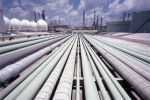
    Iranian Deputy Oil Minister Javad Oji said that Turkey has asked Iran to increase its natural gas exports to its northwestern neighbor, the state IRIB TV website reported.

    Oji said that Iran’s current gas exports to Turkey stands at 24 million cubic meters per day on average and expressed Tehran’s readiness to provide Ankara with more natural gas, said the report.

    The two countries have held negotiations in the past over an increase in the gas exports to Turkey, he said, adding that Iran has a capacity to export an average of 36-40 million cubic meters of natural gas per day to Turkey.

    According to the report, Turkey currently has natural gas purchase deals with countries such as Russia, Iran and Azerbaijan, as well as liquefied natural gas (LNG) deals with Nigeria and Algeria.

    In 2009, Iran and Turkey signed an agreement to transfer up to 35 billion cubic meters of Iran’s natural gas to Europe via Turkey.

    Earlier this year, Iran’s First Vice-President Mohammad-Reza Rahimi said exporting Iran’s natural gas to Europe through Turkey would be beneficial for both Tehran and Ankara.

    In a meeting with Turkish Energy and Natural Resources Minister Taner Yildiz in Tehran, Rahimi stressed the need for implementation of all agreements reached between Tehran and Ankara on energy cooperation.

    Yildiz said that his country was ready to increase its cooperation with Iran in the energy field and pointed out that Ankara was determined to help Tehran transit its natural gas to Europe.

    According to Iranian media, the gas pipeline to transfer Iran’s natural gas to Europe is scheduled to become operational in 2014.

    According to Iran’s Petroleum Ministry, Iran’s proved natural gas reserves are about 29,610 cubic kilometers or about 15.8 percent of world’s total reserves. It has the world’s second largest reserves after Russia.

    Iran can step in after Turkey break with Gazprom

    Iran said that it was ready to boost its gas exports to neighboring Turkey, after Turkish Botas ended its deal with Russia’s Gazprom, a senior official told the Mehr news agency.

    “Turkey has previously had talks with Iran in regard to increase the volume of our natural gas export … Iran is ready to boost its export upon the Turkey’s request,” Javad Oji, managing director of the National Iranian Gas Company (NIGC) told Mehr.

    Oji said: “Iran’s gas export to Turkey has increased by 12 percent from March and NIGC has averagely delivered more than 24 million cubic meters of natural gas to Turkish Botas per day.”

    He also said Iran had the capacity to produces 600 million cubic meters of gas.

    In early October, Turkish Botas ended its contract with Russia’s producer Gazprom for buying annually 6 billion cubic meters (bcm) of gas due to pricing disagreement.

    When Oji asked about the possibility of any modification of the price of Iran’s exporting gas, he said the deal had “open conditions”.

    “Both sides have authority to hold talks over the price change based on the conditions and gas global market price … But so far no talks in this regards have been held,” Oji said.

    Iran has also excluded Gazprom from development of one of its major oil fields project.

    Source: agencies

    via Turkey urges more natural gas imports from Iran – Tehran Times.

  • No blank check for Turkey: Greek Cyprus

    No blank check for Turkey: Greek Cyprus

    NICOSIA

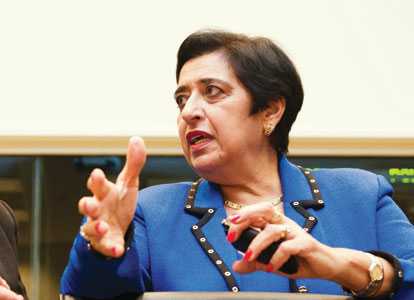
    This file photo shows Greek Cyprus’ foreign minister, Kozakou-Marcoullis.
    This file photo shows Greek Cyprus’ foreign minister, Kozakou-Marcoullis.

    Greek Cyprus’ support of Turkey’s ultimate EU accession process is not a “blank check” as it depends on Turkey’s implementation of all of the bloc’s obligations without any concessions, the country’s foreign ministry has said.

    Evaluating the European Commission’s progress report on Turkey released Oct. 12, the ministry said it welcomed the commission’s call for Turkey to increase its efforts for the settlement of the Cyprus problem. However, the Greek Cyprus ministry denied the report’s claim that Turkey was continuing to give public support for talks between the two sides of the island.

    “The statements of Turkish Prime Minister [Recep Tayyip Erdoğan] made during his illegal visit to [Turkish] Cyprus in July,” is proof that Turkey is not giving support to the talks, the ministry said. The Mediterranean island has been divided since Turkish troops intervened in 1974 in response to a Greek Cypriot coup seeking union with Greece.

    Greek Cyprus also asked the European Union to increase its pressure on Turkey over the Cyprus issue, saying, “The EU ought to make it clear that it is Turkey that is the source of the tension, especially in light of the fact that Turkey has recently intensified its threatening stance in the eastern Mediterranean, creating tension and challenging the sovereign rights of the Republic of Cyprus in a provocative manner and in blatant violation of international law.”

    Meanwhile, Turkish Cyprus’ leadership called for domestic support for its agreement allowing Turkey to explore for oil and gas in the Mediterranean.

    The Turkish Cypriot Prime Ministry said Oct. 13 that it supported the Continental Shelf Delimitation Agreement signed with Turkey, Anatolia news agency reported Oct. 14.

    “Everyone should extend support to the agreement signed with Turkey in order to protect the rights and interests of the Turkish Cypriot people and motherland Turkey,” the Prime Ministry said in a written statement released Oct. 13.

    On Sept. 21, Turkey and Turkish Cyprus inked a continental shelf accord in New York to determine their maritime boundaries in the eastern Mediterranean Sea in which the Turkish state oil company will conduct exploratory drilling.

    Meanwhile, Turkish Cyprus President Derviş Eroğlu and his Greek counterpart, Demetris Christofias, met in the buffer zone in Nicosia on Oct. 14 as part of intensified talks to find a solution to the Cyprus question. Eroğlu and Christofias will meet twice before holding a tripartite meeting with U.N. Secretary General Ban Ki-moon in New York at the end of the month.

    via No blank check for Turkey: Greek Cyprus – Hurriyet Daily News.

  • European Union Critical of Human Rights in Turkey

    European Union Critical of Human Rights in Turkey

    Dorian Jones | Istanbul

    Photo: AP  Turkey's Prime Minister Recep Tayyip Erdogan (file photo)
    Photo: AP Turkey's Prime Minister Recep Tayyip Erdogan (file photo)

    The European Union’s annual progress report on Turkey’s bid to join its ranks, criticized Ankara over freedom of expression and treatment of its minorities. But Ankara has rejected the criticism and is voicing increasing frustration over what its sees as more prejudice on the part of Brussels. Rising tensions could come to a head over the island of Cyprus.

    The Turkish government has dismissed out of hand criticisms made by the European Union’s annual progress report. The report criticized Turkey over its treatment of its minorities and media freedom. It highlighted the imprisonment of journalists.

    According to human rights groups more than 50 journalists are currently jailed. However, Ergemen Bagis, Turkish minister for EU membership, says Brussels is out of touch.

    “If you consider the report to be a photo of Turkey, what I can say is the model of the camera that took the picture of Turkey is an old model,” said Bagis. “I think its time for Europe to change the lens, and to focus better.”

    The tough reaction is the latest sign of an increasing belligerence by Ankara towards Brussels, according to Semih Idiz, diplomatic correspondent for the Turkish daily newspaper Milliyet.

    “Ever since France and Germany coming out against Turkish membership, I think we are at the logical conclusion of how things started three years ago,” said Idiz. “Nobody in Turkey is putting much investment into the idea that Turkey is going to be an EU member anytime soon. And at the moment Europe itself does not provide very inspiring image.”

    The opposition of France and Germany have resulted in Turkey’s membership bid coming to a virtual standstill. The EU commissioner responsible for Enlargement, Stefan Fule, acknowledged Turkish frustrations but also raised concerns over a simmering crisis with Turkey.

    “Turkey continues to be a key country for the European Union but accession negotiations have not moved on for more than one year,” said Fule. “There is a frustration on both sides. And I believe its the time to rebuild the momentum in the process and work for a renewed positive agenda in EU – Turkey relations. At the same time the commission remains worried about the tension between Turkey and Cyprus.”

    The report criticized Ankara for its increasingly hardline towards EU member Cyprus. Last month Turkish warships were sent to the island in an ongoing dispute over Nicosia’s exploration for gas in its territorial waters. Ankara claims such exploration should be done in cooperation with the Turkish Cypriot administration which only Turkey recognizes. At a press conference Thursday, Turkish Foreign Minister Ahmet Davutoglu made clear Turkish displeasure over the criticism.

    He said we see that there is a one sided perspective in EU when it comes to Turkey’s international work, primarily on the Cyprus issue and he said we feel seriously disturbed by this. He also said Turkey wants the EU and to give a strong message to the Greek Cypriot side and said it was of the utmost importance to Turkey.

    But the EU report was not all bad news , it praised the government for judicial reforms and removing the army from politics. Ankara also drew plaudits as playing a positive role in “Arab Spring” countries. The German foreign minister Gudio Westerwelle, during a visit to Istanbul Thursday, stressed the important future role Turkey can play with the EU in the region.

    He said there is no doubt that Turkey has a role as a bridge-builder and he said we want to take advantage of that together. And he said that’s why we [Germany] are glad that relations between our countries are so good. He said that Turkey can have a positive influence on the uprisings in the Arab world, where it can and wants to play such a key role.

    Ankara increasingly sees itself as a regional power with global aspirations. But such largesse could prove a double edge sword to Europe. Former Turkish diplomat Sinan Ulgen warns that with Ankara’s aspirations for far more than EU membership, it is ready for a show down with Brussels over Cyprus.

    “This transformation from almost a compliant member of the western community, making Turkey a full EU member, to a assertive ambitious regional power is what we are seeing today,” said Ulgen.

    Observers warn Brussels could feel the full force of Turkey’s new assertiveness, with the simmering crisis over Cyprus expected to come to a head in the coming months.

    via European Union Critical of Human Rights in Turkey | Europe | English.

  • In Istanbul, Ansari keeps his date with ancestor’s mosque

    In Istanbul, Ansari keeps his date with ancestor’s mosque

    Vice-President Hamid Ansari made a personal pilgrimage here on Friday, the penultimate day of his six-day tour of Turkey, offering prayers at the mosque of his ancestor Eyup Sultan, revered as a companion of Prophet Mohammed.

    PTI Vice-President Hamid Ansari with his wife Salma Ansari at the Hagia Sophia Museum in Istanbul on Friday

    Accompanied by his wife Salma, Mr. Ansari arrived early for the first of his engagements for the day, and offered prayers after walking through its rain-swept courtyards and portions under renovation.

    Ebu Eyyub El-Ansari, the official brochure says, is one of the distinguished disciples referred to as host of the Prophet and a fellow soldier of the Messenger of God because he had played host to Him in his home for six months during His migration to Medina.

    Later, Mr. Ansari, along with the delegation which included Union Minister Mukul Wasnik and MPs Sitaram Yechury, Vijay Pal Singh and Ingrid McLeod, visited the Sultan Ahmed Mosque and the Hagia Sophia museum, which was previously a church, famous for its massive dome and considered the epitome of Byzantine architecture.

    via The Hindu : News / International : In Istanbul, Ansari keeps his date with ancestor’s mosque.

  • Turkey, France and Sarkozy

    Turkey, France and Sarkozy

    Columnists 14 October 2011, Friday 1 0 1 0

    SUAT KINIKLIOĞLU

    [email protected]

    Turkey, France and Sarkozy

    Turkey’s relations with France throughout history have had many ups and downs. There are numerous linkages between these two countries that are not always adequately articulated. For instance, one of the greatest French thinkers was Jean-Jacques Rousseau.

    Did you know that Rousseau’s father was looking after the Ottoman palace’s clocks in the Sublime Porte? Indeed, from 1705 to 1711 Rousseau’s father, Isaac Rousseau, who was a watchmaker, served the Ottoman sultan in Istanbul. Turkey and France established diplomatic relations in 1525, and this bilateral diplomatic relationship constitutes one of the oldest diplomatic relationships in history. If we move on to the more recent past we see that there is a strong economic dimension to Turkish-French relations. France is one of the greatest investors in the Turkish economy. French moviegoers follow Turkish cinema closely, not to mention the more than 5,000 words we have imported from French.

    These linkages, be they in the economic, cultural and even political field, suffered an immense blow in 2007 when Nicolas Paul Stéphane Sarközy de Nagy-Bocsa — that is his full name — was elected president of the French Republic. The rise of Nicolas Sarkozy to the French presidency has dramatically altered the atmosphere between our nations. Within a very short time the French president became the personification of European opposition to Turkey’s bid to join the EU. He argued vehemently that Turkey was not part of European identity from the past to today. Worse, he frequently employs discriminatory and Islamophobic language vis-à-vis Turkey.

    Of course one reason behind Turkey bashing à la Sarkozy is that there is almost no cost for French domestic politics in doing so. Despite the 500,000 Turks who live in France, they wield little political influence. On the other hand, the well-established Armenian community projects much more influence than its numbers would suggest. So, when President Sarkozy started preaching to Turkey about the unfortunate events of 1915 in Yerevan last week and urged Turkey to revisit its history, even the French press was blunt about Sarkozy’s timing, which was described as “calculated provocation” aimed at wooing the Armenian vote in France.

    Despite the war on Muammar Gaddafi and the hastily arranged visit of Sarkozy and Cameron just one day before Prime Minister Recep Tayyip Erdoğan was scheduled to be in Libya, public opinion polls in France are not looking good. Although it is still too early to write Mr. Sarkozy off, he does seem to be in genuine trouble. According to a recent Economist piece, 68 percent of respondents told a Viavoice poll that they do not want Sarkozy to be re-elected. Undoubtedly, Turks would be extremely happy to see him lose, but there is plenty of time left in the campaign.

    Of course should he lose and Merkel be pushed out of the German chancellorship there could be a remarkably different picture at hand in the heart of Europe. Turkey’s EU membership aspirations could get an unexpected boost, but I do not think anyone is betting on this right now.

    Under the leadership of Sarkozy, France has come to represent the essence of opposition to Turkish interests. This opposition was not limited to blocking Turkey’s negotiation process, but is visible wherever Turkey’s growing power and influence can be observed. Ranging from North Africa to the Levant, from the Balkans to the Caucasus, Sarkozy’s France seems to be operating in a sort of “contested neighborhood” framework. It is self-evident that France loses from this staunchly anti-Turkish approach. Sarkozy’s roots go back to the Ottoman city of Salonika. He is a descendent of the Mallah family. “Mallah” means messenger or angel in Hebrew. Sarkozy has been no angel to Turkey. His legacy is likely to remain one of greatest disappointments to what could have been a mutually beneficial Turkish-French partnership.(zaman)