Category: Regions

  • No Israel gas transit via Turkey: Ankara

    No Israel gas transit via Turkey: Ankara

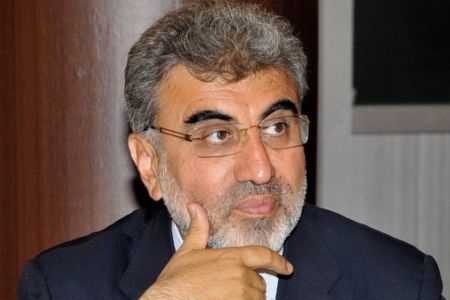
    Ankara has rejected requests from its private firms to allow the transit of natural gas produced in Israel through Turkey to Europe, says Turkish Energy Minister Taner Yildiz, Press TV reports.

    Turkish Energy Minister Taner Yildiz
    Turkish Energy Minister Taner Yildiz

    Yildiz noted that private firms have proposed plans to carry Israeli natural gas to Europe via Turkish territory.

    “Had not nine of our nationals been murdered, there could be major developments in the energy distribution in the Mediterranean Sea. [Then] we would not have rejected the demand by private firms,” he said on Friday.

    Yildiz was referring to an Israeli attack on a Gaza-bound flotilla on May 30, 2010 that killed nine Turkish nationals.

    The Israeli attack, which drew worldwide condemnation, severely damaged ties between Turkey and Israel.

    Turkey has repeatedly called on Israel to apologize for the attack and pay compensation to the families of the victims, warning that Ankara-Tel Aviv relations will not normalize if Israel fails to do so.

    Tel Aviv has refused to apologize to Turkey over the deadly raid.

    DB/JG/HJL

    via PressTV – No Israel gas transit via Turkey: Ankara.

  • ‘Azerbaijan’s independence is Turkey’s independence’

    ‘Azerbaijan’s independence is Turkey’s independence’

    The political ties between the two countries unite our minds while religious views unite our hearts.

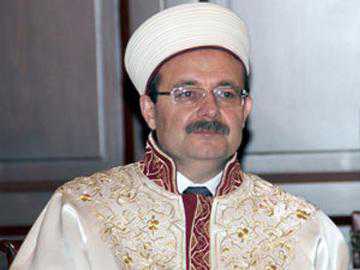
    Mehmet Gormez
    Mehmet Gormez

    The statement came from Head of the Presidency of Religious Affairs of Turkey Mehmet Gormez at a joint press conference with Head of the Caucasus Muslims Board sheikh-ul-islam Allahshukur Pashazade in Baku.

    The efforts of some countries to instigate trouble between our two countries have failed, Gormez said. ‘I was very pleased to meet President Ilham Aliyev on the first day of my visit.’

    Gormez added that he was glad that his visit was timed with celebrations marking 20th anniversary of Azerbaijan’s independence.

    ‘The independence of Azerbaijan is an independence of Turkey and I wish this independence to be eternal. God willing, the Karabakh conflict will also be solved and Azerbaijan will celebrate its independence in a more solemn way.’

    The ties between the two countries began to deepen after Heydar Aliyev came to power, the Turkish official noted.

    ‘But these ties should expand even further and not to be based solely on trade. The political ties between our countries unite our minds while religious views unite our hearts.’

    Gun.Az

    via News.Az – ‘Azerbaijan’s independence is Turkey’s independence’.

  • Turkey won’t recognize Cyprus as EU presidency

    Turkey won’t recognize Cyprus as EU presidency

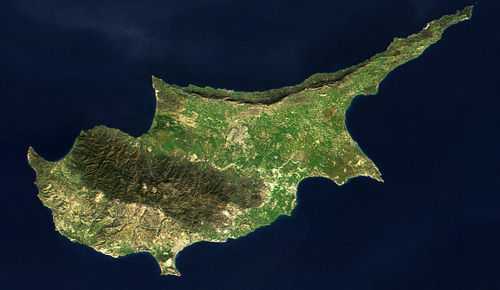
    ANKARA, Turkey – Turkey’s prime minister says his country will not sit at the table with Cyprus if it assumes the European Union’s presidency before a deal reunifying the ethnically split island is reached.

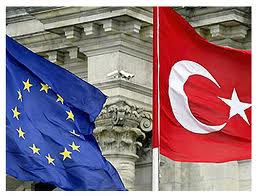
    Recep Tayyip Erdogan has already warned that Turkey will freeze its relations with the bloc if Cyprus takes over the 27-member bloc’s rotating presidency in July 2012. He said Saturday Turkey will not deal with a “so-called country.” Turkey does not recognize Cyprus as a sovereign nation.

    Erdogan also warned Cyprus that Turkey will “retaliate even more strongly” to any further search for oil and gas resources in the Mediterranean. Turkey has already dispatched a research ship and frigates to the area in response to a Greek Cypriot search for fuel deposits.

    via Turkey won’t recognize Cyprus as EU presidency.

  • European Commission recommends moving onto next stages towards EU entry

    European Commission recommends moving onto next stages towards EU entry

    Brussels – Today the European Commission recommends the opening of accession negotiations with Montenegro, and granting EU candidate status to Serbia. In a set of annual reports, the Commission reports on the progress towards EU accession made by the Western Balkans, Turkey, and Iceland over the past year.

    Presenting the annual Enlargement Package, Commissioner Stefan Füle said: “Today’s recommendations for Montenegro and Serbia show that the enlargement process is stimulating reforms on the ground and helping to create a more stable and prosperous Europe. The transformational power of the enlargement process sends a powerful message of hope at this challenging time, both for European Union Member States and for the enlargement countries.”

    In a year that has seen the closure of accession negotiations with Croatia, there has been further progress elsewhere in the Western Balkans. The arrest of the two remaining ICTY indictees removed a major stumbling block from Serbia’s European path and marked an important step towards reconciliation in the region. A dialogue between Belgrade and Pristina was established and has yielded initial results. This needs to be pursued constructively. Montenegro has strengthened its reform efforts based on the priorities set out by the European Union. The European Commission also confirmed its earlier recommendation to open accession negotiations with the former Yugoslav Republic of Macedonia. Visa-free travel to the Schengen area was granted to the citizens of two more Western Balkan countries in December 2010, Albania and Bosnia and Herzegovina.

    Nevertheless, good governance, the rule of law, administrative capacity, unemployment and economic reform remain major challenges in the region. There are still problems concerning regional cooperation. In a number of countries, important reforms were delayed, often as a result of internal political developments and conflicts. There have been a number of worrying developments in freedom of expression in the media. Differences over status of Kosovo1 continue to have a negative effect on both Kosovo and the wider Western Balkans region.

    Iceland’s accession process has made headway over the past year, with negotiations ongoing. The Commission expects that the accession negotiations will continue to progress well and is confident that core issues such as fisheries and environmental protection can be addressed constructively.

    The accession negotiations with Turkey have regrettably not moved into any new areas for over a year. Turkey’s EU-accession process remains the most effective framework for promoting reforms, developing dialogue on foreign and security policy issues and strengthening economic competitiveness. At the same time, the Commission is concerned about the recent tensions in relations between Turkey and Cyprus. A new positive agenda in EU-Turkey relations needs to be developed, to enable a more constructive relationship based on concrete steps in areas of common interest.

    Background
    COUNTRY BOX

    CROATIA: candidate – applied in 2003. Accession negotiations were completed in June 2011. In line with Article 49 TEU, the Commission today presents its favourable Opinion on Croatia’s readiness accession to the European Union. Following the completion of the ratification process, Croatia should become a member state on 1 July 2013.

    TURKEY: candidate – applied in 1987. Accession negotiations were opened in October 2005. 13 chapters are opened and 1 provisionally closed. Full implementation of the obligations under the Customs Union and progress towards normalisation of relations with Cyprus are needed before the country can advance more vigorously in its accession negotiations.

    ICELAND: candidate – applied for membership in 2009 and opened accession negotiations in June 2010, with 4 chapters opened of which 2 have been provisionally closed. As Iceland is already a member of the EEA and the Schengen area, a large part of its legislation is already aligned with that of the EU.

    THE FORMER YUGOSLAV REPUBLIC OF MACEDONIA: candidate – applied in 2004. The country continues to sufficiently fulfil the political criteria and the Commission renewed its 2009 recommendation for opening accession negotiations. As a unanimous decision of Member States is required for the negotiations to start, a solution to the name issue is essential.

    MONTENEGRO: candidate – applied in 2008. In 2010, the EU awarded candidate status and set out seven key priorities which the country needs to fulfil in order to achieve the opening of accession negotiations. Today the Commission recommended opening of accession negotiations.

    ALBANIA: potential candidate – applied in 2009. In 2010 the EU set out twelve key priorities which the country needs to fulfil to achieve the opening of accession negotiations. Although progress was made in some of these areas the Commission was not in a position to recommend further steps for Albania this year.

    Building on recent positive signals, the Commission encourages the political forces in Albania to re-establish and sustain a level of political dialogue allowing the functioning of key democratic institutions and the implementation of essential reforms.

    SERBIA: potential candidate – applied in 2009. The Commission today presented its opinion on Serbia’s membership application. Based on its findings, it recommends that the Council grants Candidate Status for Serbia. Condition also set one key priority which the country needs to fulfil in order to achieve the opening of accession negotiations.

    BOSNIA AND HERZEGOVINA: potential candidate – has not applied for EU membership; following the 2010 parliamentary elections, the country has not yet formed a state-level government and the lack of a shared vision by political leaders on the direction of the country continued to block key EU-related reforms.

    KOSOVO: potential candidate – Differences over the status of Kosovo remain an obstacle to the development of contractual relations between the EU and Kosovo. The EU supports Kosovo’s efforts to fulfil its European perspective.

    For more information:
    For detailed findings and recommendations on each country see Memos:
    Albania MEMO/11/686

    Bosnia and Herzegovina MEMO/11/687

    Croatia MEMO/11/688

    The former Yugoslav Republic of Macedonia MEMO/11/689

    Iceland MEMO/11/690

    Kosovo* MEMO/11/691

    Montenegro MEMO/11/692

    Serbia MEMO/11/693

    Turkey MEMO/11/694

    More on enlargement package:

    Contacts :
    Peter Stano (+32 2 295 74 84)
    Anca Paduraru (+32 2 296 64 30)
    1 :

    Under UNSCR 1244/1999

  • At Turkish resort, Arabs fill Israeli rooms

    At Turkish resort, Arabs fill Israeli rooms

    By ROB L. WAGNER / THE MEDIA LINE
    10/15/2011 19:57

    While upheavals in the Middle East have increased Turkey’s popularity as a holiday destination for Arabs, Israeli tourists have vanished.
    ANTALYA, Turkey – Old Town at dusk in this resort city on the Mediterranean coast is filled with hawkers selling jewelry, clothes and souvenirs. Shopkeepers easily transition from speaking Turkish to Russian, Polish and German as they spy tourists tentatively approaching their shops. Yet Hebrew, once among the languages mastered by bazaar sellers, is virtually non-existent.

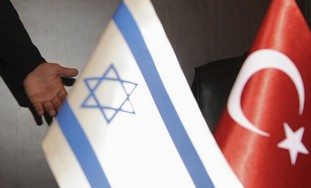
    The annual number of Israeli tourists to Turkey has always been modest. However, resorts and shop owners recognize the potential for a greater Israeli presence on the beaches and in hotels. Israeli tourism to Turkey remains a fledgling enterprise, but the worsening diplomatic crisis between the two countries has damaged the progress made in recent years to attract more visitors.

    Israelis accounted for no more than 3% of the tourists visiting Turkey before 2009. Since 2009, only 0.05% of the total number of tourists visiting Turkey are Israeli, according to Turkey’s Ministry of Culture and Tourism.

    Whether Turkey can attract Israeli tourists to at least 2009 levels is the “million-dollar question,” Danny Zimet, spokesman for Turkey’s tourism ministry office in Tel Aviv, told The Media Line.

    “Turkey as a tourist destination is disappearing because of the constant problems between the two countries,” says Zimet, who is also a senior fellow at the Center for International Communication at Bar Ilan University at Ramat Gan.

    Zimet says that a record number of 560,000 Israelis visited Turkey in 2008. Turkey and Israel enjoyed warm relations until Israel launched its Gaza campaign against Hamas in December 2008. A month later, Prime Minister Recep Tayyip Erdogan stormed off the stage at the World Economic Forum in Davos after saying “you kill people” to President Shimon Peres in a heated exchange.

    The very public confrontation had a chilling effect on the Israeli and Turkish tourism industries. Israeli tourism to Turkey fell dramatically to about 300,000 visitors in 2009. Zimet says the number of Israeli tourists to Turkey further dropped to 110,000 in 2010. The numbers decreased again to about 62,000 between January and August of this year.

    Relations between the two countries reached a breaking point when Israeli commandos killed nine people aboard the Mavi Marmara in May 2010 as the Turkish-flagged ship attempted to break the Israeli blockade at the Gaza Strip. The United Nations later determined Israeli armed forces used “excessive force,” but commandos also faced an “organized and violent resistance” from members of the flotilla.

    Last month, Ankara expelled the Israeli ambassador and terminated all bilateral military agreements after Israel refused to apologize for the Mavi Marmara incident. Deteriorating relations between the two countries prompted Israeli tour companies to cancel charter flights to Turkey due to lack of demand. Turkish charter airlines, meanwhile, scaled back weekly flights to Israel.

    “Most vacations are done via charters,” Zimet says. “It is the most practical way to go on vacation. It is the most affordable way. Most tourists going to Turkey now are Arab Israelis who are taking Turkish Airlines or Israelis going to Turkey for business purposes.”

    Indeed, bilateral trade relations between the two countries appear to be untouched by the crisis. “There has been no clear impact on civilian trade,” Zimet says. Menashe Carmon, chairman of the Tel Aviv-based Israel Turkey Business Council, a non-profit organization with an extensive Israel/Turkey entrepreneurial membership, told The Media Line that business owners “don’t speak politics.” He says it’s business as usual for Turkish and Israeli business owners forging civilian bilateral trade agreements.

    “The private sector has been unaffected,” Carmon says. “The private sector operates under different conditions and different criteria. Our organization is still intact.”

    While the loss of Israeli tourists in the resort cities of Antalya and Alanya appear to have minimal impact on the local economies, their absence has not gone unnoticed. And whatever animosities exist between the two governments, the tension has not interfered with local commerce.

    “We don’t get many Israelis here, but we always welcome their business,” says Mustafa Saydam, who hawks day tours for Pacho Tours on the sidewalk of Ataturk Street in Alanya. “Politics is politics,” he told The Media Line. “It has nothing to do with showing people how to have fun.”

    Zimet agrees. “From my personal perspective of Turkey and what I am hearing from my colleagues, there is no obvious change [in attitude toward Israelis] in the civilian population of Turkey,” he says. “The Turks don’t have the same feelings as their president expressed.”

    An Israeli-Arab citizen vacationing with his family at Antalya’s Club Hotel Sera luxury resort told The Media Line the city has been his destination of choice for the past five years. The man, who spoke on the condition that his name not be published, said he has not come across any problems. “I am always treated well here, although I am not Jewish and I cannot speak for Israelis. But even so, like any tourist place, doing business crosses all cultural and religious lines.”

    But what is Israel’s loss may be Turkey’s gain. Turkey’s tourism ministry recently announced that an estimated 1.4 million Arabs visited Turkey so far in 2011, a jump from about 912,000 in 2009.

    Mehmet Habbab, chairman of the Turkish-Lebanese Business Council, told Agence France Presse recently that he expected the number of Arab tourists to hit 1.7 million by the end of the year.

    Part of the trend for Arabs to visit Turkey is the growing popularity of Erdogan in Gulf countries for his hardline stance over the Mavi Marmara incident. The success of wildly popular Turkish soap operas, long a staple on Arab television, has attracted more Arabs to Istanbul to visit the city’s sites. Traditional Arab tourist destinations like Egypt, Tunisia, Bahrain and Syria are in upheaval. Turkey provides an alternative.

    In addition, the Turkish tourism ministry reported that an estimated 1.2 million French tourists traveled to Turkey from January to September in 2011, a 45% leap from the same period in 2010. France now ranks sixth behind Germany, Russia, Britain, Iran and Bulgaria in the number of tourists visiting Turkey.

    Zimet says that despite the crisis Tel Aviv’s Turkish tourism office “has no intention of closing its doors.”

    “Slowly, Israelis will be drawn to Turkey,” says Zimet. “Despite boycotting Turkey now, it’s still attractive. Israelis will come back once there is a better political atmosphere and a practical way to get there.”
  • Shaul Mofaz: Now is the time to repair ties with Turkey

    Shaul Mofaz: Now is the time to repair ties with Turkey

    By JPOST.COM STAFF AND HERB KEINON

    10/15/2011 14:09

    Turkey is speculated to be one of several countries receiving security prisoners deported from Israel as part of Schalit prisoner exchange.

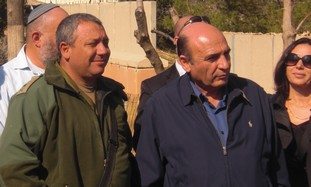
    MK Shaul Mofaz (Kadima), chairman of the Knesset Foreign Affairs and Defense Committee, said on Saturday that because of Turkey’s involvement in negotiations to free captive soldier Gilad Schalit, now is an opportune time to restore ties with Ankara, Israel Radio reported.

    A recent apology by Defense Minister Ehud Barak to Egypt for the deaths of several Egyptian soldiers two months ago, Mofaz said, sets the tone for detente with Turkish Prime Minister Recep Tayyip Erdogan.

    According to the deal reached last week between Israel and Hamas, many of the security prisoners being released in exchange for Schalit will be deported overseas. A list of countries that will take them has not yet been announced, although there is speculation Turkey may be one of them.

    President Shimon Peres on Tuesday said he was “pleasantly surprised by the Turkish government’s stand” on the Schalit deal, but did not elaborate, raising speculation Ankara either expressed a willingness to take in some of the Palestinian prisoners, helped convince Hamas it should accept the deal, or both.

    via Shaul Mofaz: Now is the time to r… JPost – Diplomacy & Politics.