Category: Regions

  • Obama gives CIA controlled Pentagon order to start FED’s WWIII

    Obama gives CIA controlled Pentagon order to start FED’s WWIII

    Russia and China have both vetoed a UN Resolution put forward by the United States to use military force against Syria.  Both Russia and China know that the uprising in Syria was orchestrated by the United States using CIA mercenaries.  Russia and China have always claimed that the United States was involved and the United States was fabricating evidence against Syria in order to get a UN Resolution to use military force against Syria.  Today one such fabrication was uncovered when a young woman who the United States government claimed was mutilated and murdered appeared on Syrian TV and identified herself as Zainab Alhusni.  The U.S. government’s false report of mutilation and murder stirred outrage and condemnation across the world.

    Today it has been learned that BARACK HUSSEIN OBAMA has ordered the CIA controlled Pentagon (Obama appointed former CIA director Leon Panetta as Defense Secretary in May) to ready troops for military strikes against Syria despite the UN Security Council vetoing any military action against Syria.  Obama for the second time this year has unilaterally committed US forces to a war that Congress has not authorized.  Why is Obama starting wars without Congressional approval?  British subject BARACK HUSSEIN OBAMA was illegally put in office by the European bankers in order to cause the economic collapse of the United States.  The United States is the last obstacle to enslaving the World under a New World Order.

    BARACK HUSSEIN OBAMA has successfully bankrupted the United States so the next step to bring about a New World Order is to start WWIII.  Attacking Syria will start WWIII.   Syrian President Bashar Assad on Tuesday threatened to set fire to the Middle East, and especially Israel, if NATO (the United States’ surrogate military force) attacks Syria.  Assad said: “If a crazy measure is taken against Damascus, I will need not more than six hours to transfer hundreds of rockets and missiles to the Golan Heights to fire them at Tel Aviv.” According to the Fars news agency, the Syrian president stressed that Damascus will also call on Hezbollah in Lebanon to launch a fierce rocket and missile attack on Israel, such that Israeli intelligence could never imagine. “All these events will happen in three hours, but in the second three hours, Iran will attack the US warships in the Persian Gulf and the US and European interests will be targeted simultaneously,” Assad said.

    Israel will strike back with a  massive nuclear retaliation against “enemy” nations should its existence as a Jewish state be jeopardized through military attack. Israeli leaders created the “Samson Option” in the mid-1960s, inspired by the very first suicide bomber named Samson, who destroyed a Philistine temple, killing himself and thousands of Philistines.

    In 1977, after a right-wing coalition under Menachen Begin took power, the Israelis began to use the Samson Option not just to deter attack but to allow Israel to “redraw the political map of the Middle East” by expanding hundreds of thousands of Israeli settlers into the West Bank and Gaza.

    To dissuade the Soviet Union from interfering with its plans, Prime Minister Begin immediately “gave orders to target Soviet cities” for nuclear attack. Its American spy Jonathan Pollard was caught stealing such nuclear targeting information from the U.S. military in 1985.

    Today, Israeli Prime Minister Netanyahu has put Israel on nuclear alert and is now arming missiles with nuclear weapons.  Netanyahu knows that BARACK HUSSEIN OBAMA is preparing U.S. forces to attack Syria with or without UN or Congressional approval.   Netanyahu knows the British agent BARACK HUSSEIN OBAMA intends on launching an unprovoked attack against Syria because doing so will spark a nuclear war.

    The United States is already at DEFCON 1 “COCKED PISTOL” readiness status.  DEFCON 1 means nuclear war is imminent.  The United States was put on DEFCON 1 readiness status on September 27, 2011, by BARACK HUSSEIN OBAMA – read PRESS Core article titled “Obama and Globalists converging on Denver Deep Underground Military Base for September 27, 2011“.  On September 27, 2011 Obama ordered the United States military, the DHS and FEMA to make ready for a imminent nuclear war.

    BARACK HUSSEIN OBAMA and the Federal Reserve bankers (aka the shadow government  –

    1) The Rothschild Family – London

    2) The Rothschild Family – Berlin

    3) The Lazard Brothers – Paris

    4) Israel Seiff – Italy

    5) Kuhn-Loeb Company – Germany

    6) The Warburgs – Amsterdam

    7) The Warburgs – Hamburg

    8) Lehman Brothers – New York

    9) Goldman Sachs – New York and

    10) The Rockefeller Family – New York) have decided that the time is now to start WWIII.

    A DOD / DHS / FEMA Continuity of Operations Plan drill at one of the United States most secure Deep Underground Military Bases located beneath the Denver International Airport was scheduled for September 27, 2011 as a diversion – to deceive the American people.  The drill was the cover story to hide the fact that BARACK HUSSEIN OBAMA and the United States shadow government (the Federal Reserve bankers) has ordered the start of WWIII.  DEFCON 1 means Obama intends on starting a nuclear war.

    Short URL: , 8 October 2011

    PAUL W KINCAID

    October 8, 2011 – 9:34 am

    Maryland-based biotechnology firm Emergent BioSolutions on Monday was awarded a $1.25 billion contract to provide the U.S. government with 44.75 million doses of an anthrax vaccine.

    The American people do not realize just how lucky they were on September 11, 2001. 9/11 was a cowardly act of treason by George W Bush and Dick Cheney which resulted in 2,974 fatalities, but if their attack failed the casualties could have been much higher – the entire city of New York could have been lost.

    FEMA had deployed to New York City on September 10 to set up a command post at Pier 29, in preparation for a biowarfare exercise scheduled for September 12, 2001. Source http://www.nyc.gov/html/oem/html/news/02_05_22_tripod.shtml

    Rudolph Giuliani let the details of BIOWARFARE EXERCISE TRIPOD II slip in his testimony to the 9/11 Commission. In his testimony, Giuliani testified that FEMA arrived in New York on September 10th to set up a command post located at Pier 29 under the auspices of a ‘biowarfare exercise scheduled for September 12. This explains why Tom Kenney of FEMA’s National Urban Search and Rescue Team, told Dan Rather of CBS News that FEMA had arrived in New York on the night of September 10th. This was originally dismissed as a slip of the tongue. Giuliani was to use this post as a command post on 9/11 after he evacuated WTC Building 7. Giuliani knew when to leave WTC 7 because he got advanced warning that the Trade Towers were about to collapse. “We were operating out of there when we were told that the World Trade Center was gonna collapse,” Rudolph Giuliani told Peter Jennings of ABC News.

    I wrote about this false flag attack against the United States by the United States’ own government back in Dec 2008 when PRESS Core was called nbGazette. The article was titled “If the attacks of September 11, 2001 failed George W Bush and Dick Cheney had a backup terrorist attack called Tripod II”

    Obama is planning another false flag attack against the United States and anthrax is once again a part of the United States government’s plan to mass murder thousands of American citizens if the CIA is unsuccessful in detonating a nuke on U.S. soil.

  • Westerwelle urges EU to be fair to Turkey

    Westerwelle urges EU to be fair to Turkey

    ISTANBUL – Hürriyet Daily News

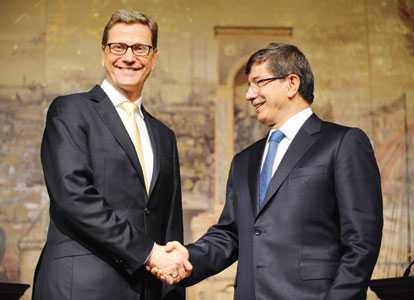
    Turkish Foreign Minister Davutoğlu (R) hosts his German counterpart in Istanbul. DAILY NEWS photo, Emrah GÜREL
    Turkish Foreign Minister Davutoğlu (R) hosts his German counterpart in Istanbul. DAILY NEWS photo, Emrah GÜREL

    German Foreign Minister Guido Westerwelle has criticized the European Union in its negotiation process with Turkey, saying it should act more fairly during the accession of candidate’s negotiations to join the bloc.

    The “European Union should act respectful and fair to Turkey in the negotiation process,” Westerwelle said during a visit to Turkey yesterday.

    Westerwelle met with Turkish Prime Minister Recep Tayyip Erdoğan and Turkish Foreign Minister Ahmet Davutoğlu in Istanbul yesterday, with Westerwelle and Davutoğlu later holding a joint pres conference.

    Westerwelle said Turkey’s accession process to the EU should go on without a break.

    “Once the train has stopped, it is very difficult to get it moving again. Therefore, the train should not stop and the next chapter, which is the competition chapter, should open soon,” Westerwelle said, adding that they talked about the German foundation issue during his meeting with Erdoğan.

    The Turkish prime minister has accused German foundations of indirectly supporting the local administrations run by the main opposition Republican People’s Party (CHP) and the outlawed Kurdistan Workers’ Party (PKK).

    Davutoğlu corrected the question of a journalist during the press conference regarding the German foundations and said Erdoğan did not say the German foundations were financing the terrorist group.

    Westerwelle said they cleared away any misunderstandings regarding the issue of German foundations. “Both German foundations and German banks are highly appreciated in Turkey,” Westerwelle said.

    via Westerwelle urges EU to be fair to Turkey – Hurriyet Daily News.

  • PositiveID Corporation Receives VeriChip Order for Use With Israeli Military

    PositiveID Corporation Receives VeriChip Order for Use With Israeli Military

    PRESS RELEASE

    DELRAY BEACH, Fla., Oct 11, 2011 (GlobeNewswire via COMTEX) — PositiveID Corporation (“PositiveID” or “Company”) PSID -2.94% , a developer of medical technologies for diabetes management, clinical diagnostics and bio-threat detection, announced today that it has received an order for its VeriChip(TM) microchip to be used for disaster preparedness and emergency management in Israel by an integration partner.

    The VeriChip radio frequency identification (RFID) microchip was cleared by the U.S. Food and Drug Administration in 2004 for patient identification. The VeriChip can also be used to assist in the management of emergency situations and disaster recovery in conjunction with a customized camera capable of receiving both RFID scanned data and GPS data wirelessly, and a Web-enabled database for gathering and storing information and images captured during emergency response operations.

    The Company’s integration partner intends to provide the microchips to the Israel Defense Forces (IDF), the State of Israel’s military force.

    Marc Poulshock, PositiveID’s Vice President of Business Development, said, “We believe there are many important applications for the VeriChip and our associated intellectual property including next-generation identification and bio-sensing capabilities. Our partner is looking to help healthcare organizations, militaries including the IDF, and governments with their disaster preparedness and emergency response needs.”
    About PositiveID Corporation

    PositiveID Corporation develops unique medical devices and molecular diagnostic systems, focused primarily on diabetes management, rapid medical testing and airborne bio-threat detection. Its wholly-owned subsidiary, MicroFluidic Systems, is focused on the development of microfluidic systems for automated preparation of and performance of biological assays. For more information on PositiveID, please visit www.PositiveIDCorp.com .

    The PositiveID Corporation logo is available at

    Statements about PositiveID’s future expectations, including the likelihood that the VeriChip will be used for disaster preparedness and emergency management in Israel by an integration partner; the likelihood that the VeriChip can also be used to assist in the management of emergency situations and disaster recovery in conjunction with a customized camera capable of receiving both RFID scanned data and GPS data wirelessly, and a Web-enabled database for gathering and storing information and images captured during emergency response operations; the likelihood that the Company’s integration partner intends to provide the microchips to the IDF; the likelihood that the Company’s partner is looking to help healthcare organizations, militaries including the IDF, and governments with their disaster preparedness and emergency response needs; and all other statements in this press release other than historical facts are “forward-looking statements” within the meaning of Section 27A of the Securities Act of 1933, Section 21E of the Securities Exchange Act of 1934, and as that term is defined in the Private Litigation Reform Act of 1995. Such forward-looking statements involve risks and uncertainties and are subject to change at any time, and PositiveID’s actual results could differ materially from expected results. These risks and uncertainties include the Company’s ability to successfully deliver the VeriChip to its integration partner and the ability of the integration partner to provide the VeriChip to the IDF; as well as certain other risks. Additional information about these and other factors that could affect the Company’s business is set forth in the Company’s various filings with the Securities and Exchange Commission, including those set forth in the Company’s 10-K filed on March 25, 2011, and 10-Qs filed on May 13, 2011, and August 15, 2011, under the caption “Risk Factors.” The Company undertakes no obligation to update or release any revisions to these forward-looking statements to reflect events or circumstances after the date of this statement or to reflect the occurrence of unanticipated events, except as required by law.

    This news release was distributed by GlobeNewswire, www.globenewswire.com

    SOURCE: PositiveID Corporation

            CONTACT: Allison Tomek
            561-805-8000
            [email protected]
    www.marketwatch.com, Oct. 11, 2011
  • Atlantia Is Considering Bid for Turkey Highways, Messaggero Says

    Atlantia Is Considering Bid for Turkey Highways, Messaggero Says

    Atlantia SpA (ATL) is considering making a bid for Turkish highways, Il Messaggero reported, without saying where it got the information.

    The board yesterday examined terms for participation in the privatization process with the Dogus group, the newspaper said.

    The Koc family may also participate, Il Messaggero reported, adding that UniCredit SpA (UCG) and Deutsche Bank AG (DBK) obtained advisory mandates for the privatization.

    The board also considered the possible sale of a stake in Costanera Norte to a fund as an alternative to listing the Chilean holding company Atlantia controls with Gavio Group and Mediobanca SpA (MB), the newspaper said.

    To contact the reporter on this story: Francesca Cinelli in Milan at [email protected].

    To contact the editor responsible for this story: James Ludden at [email protected]

    via Atlantia Is Considering Bid for Turkey Highways, Messaggero Says – Bloomberg.

  • Arab Spring Pushing Israel into Further Isolation

    Arab Spring Pushing Israel into Further Isolation

    TEHRAN (FNA)- With the Arab uprisings gradually reconfiguring the regional political landscape, Israel is finding itself increasingly isolated, an analyst said.

    For at least a decade, Israel has identified Iran as its main strategic nemesis, but the Arab spring has rekindled simmering tensions between Israel on one hand, and Arab states as well as Turkey on the other. The ongoing unrests within Syria could also jeopardize the implicit modus vivendi between Syrian President Bashar al-Assad and Israel, paving the way for a potential conflict in the future. The whole Arab landscape has actually shifted: the Hezbollah faction is playing a central role in Lebanese politics; the Egyptian public is demanding a reassessment of the 1979 Egypt-Israel peace treaty; and the Jordanian government is facing growing domestic political pressure. Israel is grappling with a totally new emerging regional order, Richard Javad Heydarian said in an article in Eurasia.

    Meanwhile, Iran has continued advancing its ballistic missile capabilities. Palestine, bolstered by growing international support, is pushing for statehood, circumventing the Israeli-dictated “peace process.” Domestically, large demonstrations have shaken major Israeli cities, as people across the political and economic spectrum demand crucial economic and social reforms. There are also growing signs of splits within the Israeli bureaucracy over plans to attack Iran.

    Therefore, the Zionist regime seems to the biggest loser of the Arab uprisings. This is the perfect opportunity for the Obama administration to redeem itself by pressuring Israel to make necessary compromises, re-evaluate its inhumane policies toward Gaza, and make necessary reforms before it’s too late. The clock is ticking fast, Heydarian said.

    For decades, Israel, under the so-called “periphery doctrine,” relied on its alliance with Turkey and Iran to ameliorate its isolation within the Arab Middle East. However, the 1979 revolution transformed Iran into a revisionist power that was committed to the “Palestinian cause” and the empowerment of oppressed communities across the region. As a result, Iran emerged as Israel’s key strategic threat.

    The subsequent revival of Iran’s nuclear program rattled Israel, prompting hawkish figures such as Benjamin Netanyahu to characterize Tehran as an existential threat. Facing a determined, influential, and powerful country such as Iran, Israel focused its bureaucratic-military energy on Iran’s nuclear program. This has become the centerpiece of Israeli national security doctrine.

    Meanwhile, Tehran has been enhancing its military capabilities, reforming its domestic economy, enriching uranium, and closing its technological gap with the West. Undoubtedly, the Turkish-Israeli estrangement and the continued rise of Iran have placed Israel in a very tenuous strategic position.

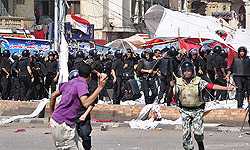
    The Arab uprisings have been predominantly about social justice, economic reforms, and political opening. However, they are also a rejection of the Arab autocrats’ decades of servility toward Israel and the West. The Arab Spring is fundamentally about regaining “Arab dignity,” both on the individual and national levels. Therefore, we should not be surprised to see that popular demands are also directed at Arab states’ policies toward Israel and Palestine, the article added.

    Given how the two major non-Arab powers, Iran and Turkey, have developed a fierce position against Israel, it is natural to expect emerging post-autocratic as well as existing Arab states to step up their efforts against Israeli.

    via Fars News Agency :: Arab Spring Pushing Israel into Further Isolation.

  • Ensar Nişancı: New world order being shaped in Turkey

    Ensar Nişancı: New world order being shaped in Turkey

    Ensar Nişancı, director of the Beykent University Center for Strategic Studies (BÜSAM), said the process that started with the removal of despotic regimes in the Middle East and North Africa is a process of transition and that Turkey might serve as a compass during this process, during a recent interview with a local TV station about the Arab Spring and its implications for the Turkish role in the region.

    Nişancı, who argues that one of the primary reasons for the Arab Spring is decline of Western model in the region, has described what has been going on in the Middle East and North Africa as a wind of freedom and democratization.

    Noting that Turkey’s journey to democratization should not be analyzed separately from these developments, Nişancı believes that Western-oriented modernization, which remained popular and influential in Turkey up until the 2000s, caused alienation from the Middle East during the same period.

    Nişancı, who said, “We are now able to say that normalization and awakening has started in Turkey,” further argues that like in Turkey, the process in the Middle East will result in normalization and a restructuring of the political system.

    “If there is need for a compass, Turkey can play that leading role for the rest of the region. Turkey will be the center of emergence of the new world order as the old system is being broken down in Turkey. The transition is still yet to be completed, but Turkey for the time being is far from fulfillment of the task of transformation,” Nişancı said.

    Nişancı also dismissed the argument that the recent policy pursued by Turkey vis-à-vis Syria is inconsistent and contradictory, pointing out that the general framework of Turkish policy, not only toward the region but also toward relations with the West, represents a moderate understanding that eschews an extreme stance or discourse in foreign policy. By doing so, according to Nişancı, Turkey criticizes the West without taking an anti-Western stance and has the ability to improve relations with the Middle Eastern countries at the same time by maintaining a distance from the regimes.

    What perspective should be employed to better understand what has been happening in the Middle East?

    In these special days where we are experiencing the fall of the despotic regimes in the Middle East and North Africa, we are passing through a historic crossroads, an era where the Western-oriented world that emerged out of the Industrial Revolution is dissolving. This is a period where the old has been dissolved but the new has not yet emerged. In a sense, this is a process of transition. As underlined by many foreign and domestic analysts and observers, the economic, cultural strategic center of the world has been moving from a Euro-Atlantic axis to the Orient. Up until now, the world has been shaped by Western-oriented approaches; the middle of this world, the Middle East, has been influenced and dominated by Israel, which has represented Europe in the region.

    The West has promoted democracy in regions dominated by Christian and Jewish identities, whereas it pursued strategies of containment to control regions inhabited by Muslims with a visible Islamic identity. This is the explanation for the support they extended to the authoritarian regimes in the Middle East to suppress any Islamic revival. It could be said that the democratization movements that flourished in Muslim countries did not emerge because of Western promotion whereas this is just the opposite case in Christian areas where popular participation in the government was promoted. For this reason, unlike arguments held by some experts, the process known as the Arab Spring is not something the West encouraged, inspired or promoted. For this reason, it is not Western-oriented. This is something that took place as a result of the declining role of the West and its retreat in world affairs.

    Now this is a wind demanding freedom and justice in the Middle East and North Africa; the wind of democratization and freedom is not a development that can be desired by Israel. That this wind blows simultaneously with the economic crisis in the West is no coincidence. In the initial phases of the unrest, with the demand for freedoms, justice and economic development triggered by the sacrifice of Muhammad Bouazizi in Tunisia, Western actors were surprised and appalled and did not know how to react or respond.

    What would you like to say about Turkey’s position in geopolitical terms at this stage? What is the place of Turkey in this map you just drew?

    It is impossible to consider Turkey’s democratization venture separately from this. The governing elites of Turkey, the military and civilian bureaucrats, and their strategic partners in the civilian world have internalized the Western-oriented perception of the world and looked at this history, society and culture through the lens of the West. The main axis of the modernization movement in Turkey is all about this perspective. Turkish modernization is a pro-Western rather than a Western modernization. This story is a story of alienation from its own historical and traditional roots.

    We could say that a process of normalization and awakening has started in Turkey. I should note that what I mean by normalization in Turkey in the present day is that our geostrategic position has gained importance not for the West, but for ourselves. From this perspective, our south will be south; our north, north and our east, east. Turkey’s normalization and awakening started early in the 2000s. This process is also called democratization, in other words, it is an era where the people are getting rid of their constraints. The same process is taking place now in the Middle East, North Africa. The brutal states and administrations in these regions that have been supported by Israel and the West are crumbling.

    It is important to see that democratization movements can be diluted by a deep structure controlled by a world state. We all know what tools and mechanisms these deep structures are using in Turkey to sustain their power. Turkey has made huge progress in dissolving these structures. The same is happening in different forms in Egypt, Syria, Bahrain and Yemen. Yes, the center of the world is not under the control of the West, and the waters are flowing downwards in the Middle East now. We could say that as in Turkey, the water has found its proper course in the Middle East as well.

    How should Turkish-Syrian relations be evaluated?

    We know that during the [Justice and Development Party] AK Party term in power, a new concept of foreign policy was adopted. We also know that the main component of this axis is the “zero problems with neighbors” policy. Another parameter that shapes Turkish foreign policy was to promote a policy of conscience instead of a policy of interest. The main axis that would serve as a basis in relations with Syria was determined by these parameters. Just as Turkey settled its internal problems that negatively affected its regional stance for so many years by promoting more democracy in domestic affairs, this policy was used as a model to reshape its relations with the region based on mutual understanding and cultural and economic interdependence. Syrian leader Bashar al-Assad could have used this opportunity. Even if he is the son of Hafez al-Assad, the founder of the Ba’ath regime, based on the mentality of a police state, Bashar al-Assad could have been a good partner in Turkey’s good neighboring policies in the region owing to his education abroad, dynamism and eagerness to introduce reforms. To this end, close friendships were maintained between Assad and his family and their counterparts in Turkey. By eliminating visa requirements, the two countries also created bridges between their respective nations and peoples. In short, Assad had taken proper measures and steps consistent with Turkey’s new vision of foreign policy and expressed his satisfaction with the new mentality that dominates the Turkish government’s perspective. Assad even went further: After a meeting held at Dolmabahçe Palace in İstanbul, the young Syrian leader made an interesting statement, saying, “The region will most likely experience great changes; you may even see the borders changed.”

    What determined the relations between Turkey and Syria in the 1990s was not friendship; the two countries were on the verge of war. However, the 2000s were a turning point for the bilateral relations between these two neighbors, but after the Arab Spring, their relations deteriorated again.

    Could you elaborate on the ups and downs of the Syrian case in Turkish foreign policy? Is there something twisted in the mental map of Turkish foreign policy?

    The Ba’ath regime was shaped before Bashar al-Assad’s reign in Syria. Assad is not the one who shaped the regime; he is the one who was shaped by the regime. He is nothing but an ordinary representative of the system. In Libya, however, [Muammer] Gaddafi was the owner/founder of his regime. In other words, his acts were not determined by the regime, but the regime was determined by Gaddafi. For this reason, Gaddafi was the regime itself.

    Turkey’s support for Syria was not unconditional. Syria and Assad were asked to introduce reforms and create a regime based on participation and the rule of law. Therefore, Turkey would have supported Assad as long as he showed determination to make reforms. The doctrine that emerged out of Turkey’s Middle East foreign policy perspective was to maintain a principled alliance rather than a strategic alliance. Such an alliance was preserved with those who honored the principles, whereas those who did wrong or violated these principles were warned. It is possible to observe the traces of this approach in a wide range of fields from the March 1, 2003 motion [in which the Turkish Parliament denied a US request for troop access to Iraq from Turkey in the Second Gulf War] to EU relations. Ankara is able to criticize the West without being pro-Western and able to love the Middle East without exaggerating it. From this perspective, Turkey’s initial support for Assad and later opposition to him is not a contradiction, it is in fact consistency. Alliances are now based on principles. This serves as a viable framework for us to better understand the relations between Turkey and Israel.

    What do you think about the fact that the Turkish prime minister was the first leader to travel to the Middle East [during the Arab Spring]?

    The prime minister was the first leader to travel to the Middle East after the Arab Spring. However, Turkey had headed many initiatives in some fields before anyone else in recent times. The Turkish prime minister adopted the clearest and most consistent stance vis-à-vis Egypt when the Arab Spring accelerated. Turkey’s reliance on a foreign policy perspective based on principles rather than alliances and a policy that speaks to the hearts of the people and focuses on principle and conscience rather than strategic considerations, as well as its disregard for what the US says, what Moscow says and what Tel Aviv says, points to a first following the end of Cold War. And because these firsts are welcomed in the hearts of the people, Turkish foreign policy becomes even more confident. We now have a foreign policy approach based on self-confidence. Turkey has become a pivotal regional actor and a mid-sized power. Maybe the Turkish delegation’s venture to the Middle East is a first, but the interest in a foreign leader in the same region is also a first. These firsts will play determinative roles not only in the Middle East but also in the world as well.

    How should we evaluate Western reaction to the popular uprisings in the Middle East?

    What occupies the Western agenda is the fact that perhaps for the first time it has had to expend its resources in dealing with its internal problems rather than projecting its power to global issues. The economic crisis is the fundamental crisis of the West, and its basic concern is that this is not seen as a conjectural crisis. For this reason, the Western countries are not confident enough to design the world and initiate a process of change. For this reason, they prefer siding with the powerful in the countries experiencing popular uprisings. They do this in order to make sure that they keep control in the Middle East. For this reason, it is not possible to compare the presence of Britain, France and the US in Libya to their presence in the same region in the colonial period. The West’s potential is well behind its capacity; however, Turkey’s potential is ahead of its capacity. Turkey gains greater confidence and boosts its potential as it resolves its problems. On the other hand, the West has now realized that employing its powers in interventions in different parts of the world poses great danger for them.

    Will the Syrian case follow the same path of revolution with Tunisia, Libya and Egypt? What is your opinion on this matter?

    There are many historical similarities between these countries, and in fact, they are more than similarities; they are almost identical. However, there are certain differences in terms of the advance of the popular uprisings in these countries. For instance, different segments of the people and society gathered together in Tahrir Square, the symbol of revolution in Egypt, while the people failed to create a joint front against the Syrian regime in Syria. Besides, there is no visible and significant support and participation by businessmen and the army in this country. In Egypt and Tunisia, the army and the businessmen did not act against the people. In the case of Syria, there is no international support for reform seekers as was observed in the Libyan case.

    However, it seems impossible for the Assad regime to remain in power. In the Arab Spring, the Syrian case represents a rare day left from the heavy winter; however, it is possible to argue that this day will soon be over.