Category: Regions

  • Uganda: U.S. Troops To Help Fight Lord Resistance Army

    Uganda: U.S. Troops To Help Fight Lord Resistance Army

    By JASON STRAZIUSO

    NAIROBI, Kenya — Why is the U.S. sending its troops to finish off a fractured band of bush fighters in the middle of Africa? Political payback for the quiet sacrifices of Uganda’s troops in Somalia could be one reason.

    President Barack Obama announced Friday he is dispatching about 100 U.S. troops – mostly special operations forces – to central Africa to advise in the fight against the Lord’s Resistance Army – a guerrilla group accused of widespread atrocities across several countries. The first U.S. troops arrived Wednesday.

    Long considered one of Africa’s most brutal rebel groups, the Lord’s Resistance Army began its attacks in Uganda more than 20 years ago. But the rebels are at their weakest point in 15 years. Their forces are fractured and scattered, and the Ugandan military estimated earlier this year that only 200 to 400 fighters remain. In 2003 the LRA had 3,000 armed troops and 2,000 people in support roles.

    But capturing LRA leader Joseph Kony – a ruthless and brutal thug – remains the highest priority for Ugandan President Yoweri Museveni, a 25-year-leader who has committed thousands of troops to the African Union force in Somalia to fight militants from al-Shabab, a group with ties from al-Qaida.

    The U.S. has not had forces in Somalia since pulling out shortly after the 1993 Black Hawk Down battle in Mogadishu in which 18 American troops died.

    Some experts believe that the U.S. military advisers sent to Uganda could be a reward for the U.S.-funded Ugandan troops service in Somalia.

    “I’ve been hearing that. I don’t know if our group necessarily agrees with that, but it definitely would make sense,” said Matt Brown, a spokesman for the Enough Project, a U.S. group working to end genocide and crimes against humanity, especially in central Africa.

    “The U.S. doesn’t have to fight al-Qaida-linked Shabab in Somalia, so we help Uganda take care of their domestic security problems, freeing them up to fight a more dangerous – or a more pressing, perhaps – issue in Somalia. I don’t know if we would necessarily say that but it’s surely a plausible theory,” Brown said.

    Col. Felix Kulayigye, Uganda’s military spokesman, told The Associated Press previously that Ugandan forces have long received “invaluable” support from the U.S. military, including intelligence sharing, in the fight against the LRA.

    That support got a huge boost this week.

    Though the deployment of 100 troops is relatively small, it marks a possible sea-change for Washington in overcoming its reluctance to commit troops to Africa. Even the U.S. Africa Command, which oversees U.S. military operations on the continent, is based in Germany. The U.S. maintains a base in the tiny East African nation of Djibouti, but most troops there are not on combat missions.

    The LRA poses no known security threat to the United States, and a report from the Enough Project last year said that Kony no longer has complete and direct command and control over each LRA unit.

    But the group’s tactics have been widely condemned as vicious. Few are expected to object to Obama’s move to help regional security forces eliminate a group that has slaughtered thousands of civilians and routinely kidnaps children to be child soldiers and sex slaves.

    Kony is wanted by the International Criminal Court for his group’s attacks, which now take place in South Sudan, Congo and the Central African Republic.

    Still, Bill Roggio, the managing editor of The Long War Journal, called the Obama administration’s rationale for sending troops “puzzling,” especially since the LRA does not present a national security threat to the U.S. – “despite what President Obama said.”

    “The timing of this deployment is odd, especially given the administration’s desire to disengage from conflicts in Iraq and Afghanistan,” Roggio said. “It is unclear why the issue has resurfaced, but the administration may be rewarding Uganda” for its military contributions in Somalia, he said.

    Obama said that although the U.S. troops will be combat equipped, they will not engage LRA forces unless it is in self-defense.

    In recent months, the administration has stepped up its support for Uganda. In June, the Pentagon moved to send nearly $45 million in military equipment to Uganda and Burundi, another country contributing in Somalia. The aid included four small drones, body armor and night-vision and communications gear and is being used in the fight against al-Shabab.

    Last November, the U.S. announced a new strategy to counter the LRA’s attacks on civilians. U.S. legislation passed last year with huge bipartisan support calling for the coordination of U.S. diplomatic, economic, intelligence and military efforts against the LRA. That’s one reason, Brown said, Obama may be sending in advisers. He said that regional stability is also good for U.S. interests.

    “It really doesn’t take that many U.S. resources,” Brown said. “You’ve got 100 troops to go in and take care of the LRA problem once and for all.”

    __

    Jason Straziuso has been AP’s bureau chief in East Africa since 2009.

    www.huffingtonpost.com, 15.10.2011
  • Turkey’s Economy Minister Says Spain Should See Turkey as Springboard

    Turkey’s Economy Minister Says Spain Should See Turkey as Springboard

    MADRID (A.A) – Turkey’s economy minister said on Thursday that Spain should see Turkey as a springboard, and vice-versa due to their geographies.

    Zafer Caglayan said Turkey was not a country that could be invested and sold goods only.

    “Turkey is the second country in world in contracting industry, and Turkey would like to share advantages it has gained in this industry in Africa, Middle East and Caucasus with Spanish businessmen,” Caglayan told Spain-Turkey Investment & Cooperation Summit in Madrid, Spain.

    Caglayan said Turkey would make significant energy, health, infrastructure and other investments, and many Turkish firms were investing in Spain and more than 400 Spanish companies had investments in Turkey.

    The minister said Turkey was the sixth biggest economy in Europe and Spain was the fifth biggest economy in this continent.

    “Turkey’s national income was 740 billion USD in 2010, and national income of the two countries totalled 2.2 trillion USD,” he said.

    Caglayan said the 8 billion USD of trade volume between the two countries was too low, and this figure could easily be raised to 18 billion USD.

    The minister said Turkey would invest 120 billion USD in energy till 2023, and 50 billion USD in transportation in ten years.

    Caglayan said Spanish companies would continue their investments in high-speed train system in Turkey, and Spanish companies that had submitted bids for Marmaray project were advantageous.

    Moreover, Caglayan said the only way out of global crisis was global cooperation, and Turkey’s year-end exports would reach 135 billion USD and Turkey aimed to raise it to 500 billion USD.

    Caglayan said direct investments in Turkey would climb over 13 billion USD by the end of 2011, and 91 percent of direct investments in Turkey in 2011 were Europe-oriented.

    Minister Caglayan said Turkey made public medium-term economic program earlier on Thursday, and it forecast 7.5 percent year-end growth, but 5 percent annual growth in 2013 and 2014.

    Caglayan said Turkey would exert significant efforts to cut down its current account deficit forecast to 7 percent of the Gross National Product (GDP) from 9.4 percent till 2014, and diminish inflation to 5 percent from 8 percent.

    Turkey would reduce its budget deficit to 1 percent by 2014, Caglayan said.

    Caglayan also said Turkey would implement a new incentive system by the end of this year.

    After the meeting, Turkey’s Foreign Economic Relations Board (DEIK) and Spanish Confederation of Employers’ Organizations (CEEOE) signed a cooperation agreement.

    via Turkey’s Economy Minister Says Spain Should See Turkey as Springboard, 13 October 2011 Thursday 17:17.

  • Turkey urges more natural gas imports from Iran

    Turkey urges more natural gas imports from Iran

    TEHRAN, Oct. 12 — Iranian Deputy Oil Minister Javad Oji said Wednesday that Turkey has asked Iran to increase its natural gas exports to its northwestern neighbor, the state IRIB TV website reported.

    Oji said that Iran’s current gas exports to Turkey stands at 24 million cubic meters per day on average and expressed Tehran’s readiness to provide Ankara with more natural gas, said the report.

    The two countries have held negotiations in the past over an increase in the gas exports to Turkey, he said, adding that Iran has a capacity to export an average of 36-40 million cubic meters of natural gas per day to Turkey.

    According to the report, Turkey currently has natural gas purchase deals with countries such as Russia, Iran and Azerbaijan, as well as liquefied natural gas (LNG) deals with Nigeria and Algeria.

    In 2009, Iran and Turkey signed an agreement to transfer up to 35 billion cubic meters of Iran’s natural gas to Europe via Turkey.

    Earlier this year, Iran’s First Vice-President Mohammad-Reza Rahimi said exporting Iran’s natural gas to Europe through Turkey would be beneficial for both Tehran and Ankara.

    In a meeting with Turkish Energy and Natural Resources Minister Taner Yildiz in Tehran, Rahimi stressed the need for implementation of all agreements reached between Tehran and Ankara on energy cooperation.

    Yildiz said that his country was ready to increase its cooperation with Iran in the energy field and pointed out that Ankara was determined to help Tehran transit its natural gas to Europe.

    According to Iranian media, the gas pipeline to transfer Iran’s natural gas to Europe is scheduled to become operational in 2014.

    According to Iran’s Petroleum Ministry, Iran’s proved natural gas reserves are about 29,610 cubic kilometers or about 15.8 percent of world’s total reserves. It has the world’s second largest reserves after Russia.

    via Eastday-Turkey urges more natural gas imports from Iran.

  • Turkey urges Iraq to crackdown on Kurdish rebels

    Turkey urges Iraq to crackdown on Kurdish rebels

    Turkey urges Iraq to crackdown on Kurdish rebels

    By: The Associated Press | 10/13/11 6:17 AM

    The Associated Press

    Turkey’s foreign minister said Thursday that Iraq should move to prevent Kurdish attacks on his country from Iraqi soil as the two countries renewed their commitment to fight the rebels.

    Ahmet Davutoglu said Turkey’s patience was running out and that it was determined to eradicate the rebel threat from neighboring northern Iraq.

    “We no longer have patience for terrorist activity directed toward Turkey from Iraqi soil,” Davutoglu told a joint news conference with Iraqi Foreign Minister Hoshyar Zebari.

    Zebari, a Kurd, said Iraq was willing to increase pressure on the rebels but that his country does not have the resources now to defeat the guerrillas of the Kurdistan Workers’ Party or PKK.

    Iraq, however, reaffirmed its determination “to eliminate PKK and all other terrorists’ organizations’ presence in Iraq,” following security talks between the sides earlier this week, Turkey’s Foreign Ministry said in a statement on Thursday.

    “Both countries will enhance their cooperation in their struggle against terrorism in accordance with international law,” the statement said without elaborating.

    Kurdish rebels have been using Iraq as a launch pad for attacks on Turkish targets in a war for autonomy in Turkey’s southeast. Turkish warplanes have recently struck rebel bases in Iraq in response to an escalation of attacks by the rebels since July.

    via Turkey urges Iraq to crackdown on Kurdish rebels | The Associated Press | World | Washington Examiner.

  • Pakistan, Turkey sign media cooperation agreement

    Pakistan, Turkey sign media cooperation agreement

    Pakistan and Turkey have inked a media cooperation agreement, it was reported here.

    The Anadolu Agency of Turkey and Associated Press of Pakistan (APP) signed the memorandum of understanding (MoU) in Ankara Wednesday.

    Pakistan’s Minister for Information and Broadcasting Firdous Ashiq Awan witnessed the signing ceremony.

    The minister said Pakistan’s relations with Turkey were based on historical linkages and shared cultural heritage, reported APP.

    She called the agreement an important step towards information sharing.

    via Pakistan, Turkey sign media cooperation agreement.

  • Cyprus Signals Block On Turkey EU Energy Chapter

    Cyprus Signals Block On Turkey EU Energy Chapter

    Cyprus supports the opening of Turkey’s EU Energy chapter but only if it signs the UN Convention on the Law of the Sea and normalises relations with the island, says Commerce Minister Praxoulla Antoniadou.


    Since the chances of this happening anytime soon are slim, it’s safe to say that the government is signalling that it will block this chapter in Turkey’s EU-membership negotiations.

    “At this point of time, Cyprus is unfortunately confronted with the gunboat diplomacy of Turkey in the area, contesting the sovereign rights of the Republic…” said Antoniadou at an informal meeting of EU Energy ministers.

    Until Turkey normalises its relations with Cyprus, the government resists the opening of its energy chapter. Antoniadou counters the argument that Turkey could enhance the EU’s energy supply security with the position that there is no direct link between this and the accession negotiations of a candidate country.

    “The role that a candidate country could potentially play in the EU’s security of energy supply cannot influence the course of her accession negotiations by offsetting the need that the candidate country fulfils her obligations,” she says.

    Alternatively, if Turkey contributes to the peace process by supporting the Turkish-Cypriot leadership to reunify Cyprus on the basis of a bizonal, bicommunal federation with political equality, then a bright horizon of peace, cooperation and economic growth will open for the Eastern Mediterranean area, says Antoniadou.

    In its latest assessment of Turkey’s accession negotiations, the EU said that they have “regrettably not moved into any new areas for over a year.”

    “The Commission is concerned about the recent tensions in relations between Turkey and Cyprus. A new positive agenda in EU-Turkey relations needs to be developed, to enable a more constructive relationship based on concrete steps in areas of common interest,” says the latest conclusions on the issue from the EU.

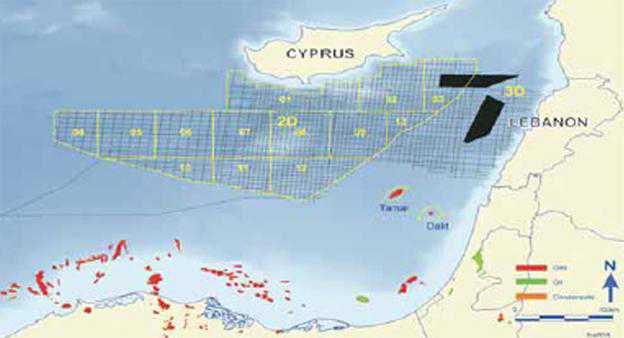
    Turkey and Cyprus are locked in a tense military and political confrontation over undersea gas-and-oil exploration rights in the waters around the island. Since Noble Energy started drilling in Block 12 in Cyprus’ Exclusive Economic Zone (EEZ) on September 19th, Turkey has sent its own seismic research ships accompanied by warships. It plans to explore for hydrocarbons in partnership with the Turkish-Cypriot political leadership.

    Parallel to this confrontation, Turkey is also jockeying for position with Egypt and has proposed building a gas pipeline between the two countries.

    Egypt has already signed a bilateral agreement to delimit the maritime borders with Cyprus and cooperate on developing hydrocarbon exploration and exploitation. Egypt recently re-confirmed its commitment to its agreement with Cyprus, saying it would ‘undoubtedly’ implement the deal, according to Egyptian foreign minister Mohamed Kamel Amr in comments reported by Athens news agency.

    In earlier statements, Ankara said that Cyprus’ maritime border agreements with its neighbors Lebanon, Egypt and Israel are null and void.

    Infringement on sovereign rights

    Turkey’s seismic research activities in Cyprus waters fly in the face of the government’s sovereign right over the island’s EEZ as it does not have official permission to conduct research for oil and gas reserves. Ankara disputes this right on the basis that the government does not represent the Turkish Cypriots. Turkey has signed an agreement with the ‘TRNC’ to delimit maritime borders and explore for hydrocarbons. The ‘TRNC’ is only recognised by Turkey, and the government promptly responded by saying the agreement was illegal.

    As the only internationally-recognised government on the island, the leadership has gone ahead with a contract with Noble Energy to explore for hydrocarbons in Block 12, an area which borders Israel’s gas field Leviathan.

    The government’s right is upheld by the EU, Greece, Israel and Russia, all of which have made statements condemning Turkey’s threats towards the island and supporting its right to exploit resources in its sovereign territory.

    Defence ministry sources said that if Turkey proceeds with actual exploration for undersea hydrocarbons, the government’s approach will be different. For the time being, authorities take the view that ships sent by Turkey are in international waters and will be treated like any other ship.

    Source: cyprusnewsreport.com

    via Cyprus Signals Block On Turkey EU Energy Chapter | Defence news from Greece and Cyprus.