Category: Regions

  • Turkey detains man in attempted murder of Chechen

    Turkey detains man in attempted murder of Chechen

    By SUZAN FRASER

    Associated Press

    A Turkish court on Wednesday began questioning a man and three alleged accomplices suspected of attempting to kill a former Chechen separatist leader in Istanbul, the state-run Anatolia news agency reported.

    Shamsuddin Batukayev, a 55-year-old Muslim scholar and a leader in the Chechen separatist movement in the 1990s, said this week that his bodyguards had foiled an attempt to assassinate him by overpowering an armed man who came to his home in Istanbul posing as a Chechen seeking his help.

    The alleged assassination attempt came weeks after three Chechens were gunned down near a park in Istanbul on Sept. 16. Chechen groups have blamed Russia’s secret service for the killings of the men, who were allegedly involved with Chechen militants. Turkish authorities have refused comment, saying an investigation is ongoing.

    The deaths increased to six the number of Chechens who have been killed in Turkey since 2008.

    Anatolia said police detained the latest suspect and three other people and seized a gun with a silencer during a search of the suspect’s hotel room. On Wednesday, the four were being questioned by a court that will decide whether to charge them or set them free.

    Anatolia identified the suspect as Barhram B. There was no information on the other three.

    Anatolia said the man told police during an initial questioning that he was given the task in Russia of killing Batukayev by someone he “did not know” and that another Russian _ whose identity he also did not know _ gave him the gun in Istanbul.

    Kavkaz Center, a website sympathetic to the North Caucasus insurgency, identified the alleged would-be-killer as Barham Batumayev. It claimed the other detained suspects included Uvais Akhmadov, an alleged associate of Chechnya’s Moscow-backed strongman Ramzan Kadyrov.

    Kadyrov has relied on ruthless tactics to fight the Islamic insurgency after two separatist wars in Chechnya. Rights activists accuse his black-clad security forces of systematic abductions, torture and extrajudicial killings.

    A ballistic examination of the weapon in Istanbul showed that it had not been used in any other previous attacks in Turkey, Anatolia reported. The agency did not cite a source for its report.

    Batukayev chaired the Supreme Sharia Court of the separatist Chechen government between 1995 and 1997. In the early 2000s, he was part of the so-called Caucasus Emirate, a group of Islamist fighters seeking to establish an independent Muslim state in the Caucasus region. Experts say the group maintains links to al-Qaida.

    Turkey has a large ethnic Chechen community, and hundreds of people fleeing fighting in Chechnya, a restive region in Russia’s North Caucasus, have taken refuge here.

    Russian intelligence officials have not responded to allegations about their involvement in the Sept. killings.

    A Russian lawmaker said, however, the man detained in Batukayev’s house appeared more like an amateur driven by vendetta rather than a professional killer.

    “The job of a sharia judge during a civil war was about making tough decisions,” Maxim Shevchenko, an expert on the Caucasus region, was quoted as saying in Wednesday’s Izvestia newspaper.

    “Perhaps, one of the war children grew up and … decided to avenge” his relative’s death, Shevchenko was quoted as saying.

    ___

    Associated Press writer Mansur Mirovalev in Moscow contributed.

    via Turkey detains man in attempted murder of Chechen – Taiwan News Online.
  • EU Eases Visa Rules for Turks

    EU Eases Visa Rules for Turks

    By AYLA ALBAYRAK

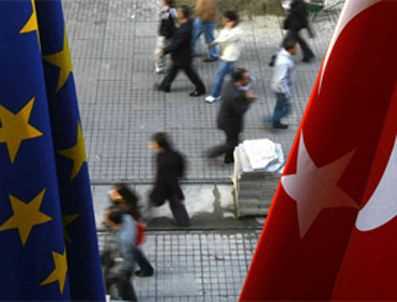
    ISTANBUL—The European Union on Thursday eased visa procedures for Turkish citizens, just a day after Turkey again raised onerous visa requirements for its businessmen and citizens as a key source of friction in the relationship.

    Under changes announced Thursday by the European Commission, EU consulates in Turkey will now have uniform lists of documents they can ask visa applicants to provide.

    Turkey, which started negotiating for EU membership six years ago and has had a customs union with the bloc since the mid-1990s, has become increasingly impatient as the bloc has eased visa requirements for countries in the Balkans and elsewhere, but not Turkey.

    Responding to the move in a phone interview Thursday evening, Turkey’s EU minister Egemen Bagis—who had attacked Brussels over the visa issue Wednesday—welcomed the move, but said it wasn’t enough.

    “This is a very good first step, but the point we want to get to is for Turkish citizens to be able to travel to Europe without a visa,” Mr. Bagis said in a phone interview. “Turks are the only citizens of a country negotiating for [EU] membership who need a visa to travel to the EU.”

    Mr. Bagis said the commission had promised him that further partial steps would follow, namely that in future Turks would be able to get multiple-entry, instead of just single-entry, visas to the EU’s visa-free Schengen area, and that offices would be set up in Turkey to ease the process. EU citizens don’t need a visa to visit Turkey.

    Resistance to easing visa restrictions for Turks has come from EU governments rather than the European Commission, Turkish officials say. Turkey has a population of 74 million and income levels much lower than in core EU countries. Governments have worried over a potential flood of Turkish immigration that would be politically unpopular at home.

    Turkey’s economic success over the past decade, which has seen gross domestic product per capita triple to around $10,000, played a role in Thursday’s decision, according to Mr. Bagis. “It is not enough to be right, you have to be strong and Turkey has become stronger,” Mr. Bagis said.

    Turkish businessmen in particular have long complained that while their exports and investments are welcome in the EU, they are not. The EU is by far Turkey’s largest trading partner.

    “We know cases when Turkish businessmen were prevented from coming to fairs in Europe or were given only two or three-day visas for one-week events,” said Bahadir Kaleagasi, Brussels-based international coordinator for TUSIAD, Turkey’s main business association. “Countries could even require for land registry documents.”

    An EU official said the change had been in the works for some time and was designed to address such complaints.

    “Some countries could ask for marriage certificates. Military certificates could be asked from young men who were suspected of trying to escape [compulsory military service in the] Turkish army,” said Erwan Marteil, Counselor in the European Commission’s Ankara office.

    The new rules on visa documentation entered into force immediately Thursday and will apply to all of the Schengen visa area, which covers more than 25 European countries, including several such as Iceland that aren’t EU members.

    via EU Eases Visa Rules for Turks – WSJ.com.

  • Turkey aided effort to free Israeli soldier but relations still frosty – The National

    Turkey aided effort to free Israeli soldier but relations still frosty – The National

    Thomas Seibert

    Oct 14, 2011

    ISTANBUL // The Turkish government helped secure the release of the Israeli soldier Gilad Shalit despite political tensions with Israel, officials from both countries said.

    But analysts warned yesterday that it was too early to tell whether Turkey’s involvement in freeing the soldier could lead to improved ties with Israel.

    “Whether it was transmitting information about Gilad Shalit’s health or whether it was taking part directly or indirectly in continuing negotiations, we were following those issues closely and made a contribution up until very recently,” Ahmet Davutoglu, the Turkish foreign minister, said in remarks posted on his ministry’s website yesterday.

    While describing Turkey’s efforts to reach a deal between Israel and Hamas on the swap of Mr Shalit for 1,027 Palestinian detainees, Mr Davutoglu was careful to point out that Egypt deserved most of the praise.

    “First and foremost, I congratulate our friend and brother Egypt for their contribution,” Mr Davutoglu said. He also confirmed that Recep Tayyip Erdogan, the Turkish prime minister and a harsh critic of Israel, was personally involved in the Shalit case.

    In Israel, president Shimon Peres said he was surprised by Mr Erdogan’s involvement.

    “I was pleasantly surprised by the Turkish government’s stand,” Mr Peres said, according to Israeli media reports. He said he was told that Mr Erdogan personally played an important role in the process. “They put everything aside and favoured the humanitarian side over politics,” Mr Peres said.

    Relations between former partners Turkey and Israel have been in crisis since the death of nine Turkish activists during an attack by Israeli soldiers on a Turkish ship carrying aid for the Gaza Strip in May last year. Turkey has called for an apology and compensation for the families of the victims, but Israel has rejected the demands. Last month, Ankara expelled the Israeli ambassador and downgraded political and military ties with Israel.

    Mr Erdogan insists that his tough position was directed only against the present Israeli government and not against the Israeli people. According to news reports, Mr Erdogan reportedly promised to get involved personally after receiving a letter from Mr Shalit’s father, Noam Shalit.

    Turkey raised eyebrows in Israel, Europe and the US when it invited a delegation of Hamas to Ankara shortly after the election victory of the hardline Palestinian group in 2006. In recent weeks, Mr Erdogan has spoken of his wish to visit the Gaza Strip, which is run by Hamas.

    Mehmet Sahin, a political scientist at Ankara’s Gazi University and Israel analyst at the Center for Middle Eastern Strategic Studies, a think tank in the Turkish capital, said Turkey’s involvement in the Shalit case could be seen as a “confidence-building step”.

    “But the question is what Israel’s response will be,” Professor Sahin said in a telephone interview yesterday. He said Turkey would stick to its demands of an apology and compensation as a precondition to normalise relations.

    While there were Israeli politicians like Mr Peres who were in favour of repairing ties with Turkey, hardliners such as the foreign minister Avigdor Lieberman were adamantly opposed to an apology, Prof Sahin said.

    He noted that Israel had offered an apology to Egypt for the death of six members of the Egyptian security forces during an Israeli operation in August.

    A Turkish foreign ministry source also underlined that the ball was in Israel’s court. In response to a question about a possible improvement of Turkish-Israeli ties because of the Shalit case, the source replied: “You have to ask this to the Israeli side.”

    [email protected]

    via Turkey aided effort to free Israeli soldier but relations still frosty – The National.

  • Turkey’s PR moves in the Gulf

    Turkey’s PR moves in the Gulf

    Dr Siret Hursoy and 
Dr N. Janardhan (GULF)

    14 October 2011

    As the domestic political dynamics of a good part of the Middle East change, so is its international relations (IR) landscape.

    This is best exemplified by Turkey’s public relations (PR) machinery positioning it as the new face of the region.

    After first being denied immediate membership in the European Union about a decade ago and then being reluctantly offered a chance to negotiate its accession in 2005, which is proceeding at snail’s pace, Turkey began to recalibrate its foreign policy to become an influential player in the Middle East.

    The fact that Turkey also evolved a successful combination of Islam, democracy, capitalism and soft power broadened its global appeal and led to the expansion of ties across the region. Turkish Premier Recep Erdogan’s recent ‘Arab Spring tour’ came against a backdrop of escalating tension with former friend Israel, which has won some support for Ankara in the Middle East. Ankara’s stand on Tel Aviv, in particular, is being touted as the way a rising power should position itself in realpolitik – for example, agree with the United States on Syria and Libya, but differ on Israel.

    A poll released in March 2011 by TESEV, a Turkish research centre, revealed that 66 per cent of respondents in six Middle East countries — including the Gulf — thought that Turkey could be a regional model. How does this new posturing impact Turkey-Gulf relations?

    After a long-established Western-oriented foreign and security policy tradition that could be traced to the establishment of the Turkish Republic in 1923, the foundation for improved relations with the Gulf was laid following Ankara’s refusal to allow Washington to use its territory to invade Iraq in 2003. Turkey’s recent stance on Libya, Israel and Syria has been in sync with the Gulf countries too.

    Even on Iran, the fact that Ankara has endorsed a plan to host an American X-band radar system that is part of a NATO missile defence system, which Washington claims to protect against possible Iranian ballistic missile threat, is evidence of Turkey being a potential protector of Gulf interests, while remaining a potential mediator. In fact, the United States encouraged Turkish diplomatic involvement to calm the region as the rhetoric between the Gulf countries and Iran heightened over Bahrain in April.

    Apart from its unique position of being able to talk to all parties, other dynamics of Turkey’s politics, economy, society and international relations could also be appealing to a transforming Gulf.

    Erdogan’s Justice and Development Party is both conservative and reformist. This has enabled it to position itself well between the East and the West, better than any previous Turkish governments, thereby reducing the impediments that underscored Turkey’s ‘soft-power’ potential in the past.  As part of Turkey’s pivotal role in inter-civilisational dialogue, it stressed on a ‘zero-problem’ policy with its neighbours, which extended its ‘soft-power’ status within the regional systems, thereby contributing to stability in the Middle East, Caucasus, the Balkans and Central Asia. By excelling in the dual process of political democratisation and economic liberalisation, it has offered a workable model that could serve the region well in the ‘post-Arab awakening’ era. Turkey’s ‘rhythmic’ diplomacy of the last decade combines political dialogue and negotiation at the state level with activities of the civil societies and business organisations at the sub-state and trans-state levels.

    Turkey’s increasing defence expenditure and active participation in humanitarian, peacekeeping and peace-making operations are a manifestation of its transformation from a ‘security consumer’ in the 1990s to a ‘security provider’, which should be attractive to the external security-reliant Gulf.

    Equally, Turkey’s growing prestige in the Islamic world is evident in Foreign Minister Prof. Ekmeleddin Ihsanoglu becoming the first-ever elected Secretary-General of the 57-member Organization of the Islamic Conference, a post that he was re-elected to last year.

    The pillars on which political ties could be strengthened hinge on economic cooperation. A 2008 memorandum of understanding made Turkey the first country outside the Gulf region to be conferred the status of “Gulf Cooperation Council (GCC) strategic partner”.

    Aiding Turkey’s ‘hyperactive’ diplomacy is its thriving economy, which grew almost nine per cent in 2010. This and the Gulf’s investible capital have set the stage for a win-win situation, which is being guided by an action plan that includes projects pertaining to trade, agriculture, transportation, environment, tourism and culture, as well as a free trade agreement.

    Further, in order to tap Turkey’s attractiveness as an energy export hub, plans are also afoot to bring to fruition a railway line connecting the Gulf countries to Europe via Turkey. All these mean that trade between Turkey and the six GCC countries, which was $17 billion in 2009, is poised to dramatically increase in the future.

    Lending credence to this possibility, for example, investments between Turkey and the UAE reached $10 billion in 2010 and National Commercial Bank – the largest Saudi lender – suggested that the kingdom is likely to invest $600 billion in Turkey by 2030.

    Together with this promise, however, there is scope for divergence. A taste of this is already evident with many in the Gulf worried about the pace of Turkish influence in the region, branding it as “neo-Ottoman” foreign policy.

    In this milieu, how influential a power Turkey ends up being and how it would affect the political and economic ties with the Gulf countries will be determined by the will of both sides to evolve a win-win response to the ground realities of the region.

    Dr Siret Hursoy is associate professor at Ege University, Izmir, Turkey; Dr N. Janardhan is a UAE-based political analyst on Gulf-Asia affairs and author of ‘Boom amid Gloom – The Spirit of Possibility in the 21st Century Gulf’

  • Turkey seeks Red Notice in flotilla attack

    Turkey seeks Red Notice in flotilla attack

    ISTANBUL, Turkey, Oct. 13 (UPI) — A Turkey prosecutor is seeking a Red Notice for 174 Israelis involved in a 2010 flotilla raid that killed nine activists on a Turkish aid ship, a report says.

    Today’s Zaman said the Bugun daily reported Thursday Istanbul Public Prosecutor Mehmet Akif Ekinci, who is investigating the May 2010 flotilla attack, had reportedly written to the Turkish Justice Ministry requesting Interpol Red Notices for the Israeli soldiers and commanders.

    The Bugun report also said the Istanbul Chief Prosecutor’s Office had written to Israeli authorities seeking names and home addresses of military and government officials who gave orders to attack the ship and those who carried out the raid on the ship, which was carrying humanitarian aid.

    After Israel refused to provide the information, the prosecutor requested help from the Turkish National Intelligence Organization, which obtained the identities of the Israelis through Facebook, Bugun said.

    Israeli would not confirm the identities, prompting the prosecutor to go to the Justice Ministry, Bugun said.

    The Istanbul Prosecutor’s Office had earlier denied Ekinci asked the NIO to identify the Israelis involved in the attack and said the list of names came from the Humanitarian Aid Foundation, the Turkish charity that owns the ship.

    The ship, the Mavi Marmara, was part of an international humanitarian aid flotilla that tried to break the Israeli blockade of Gaza.

    Turkey said it would not recognize the blockade’s legitimacy and called on Israel to apologize for the raid and pay compensation for the nine people who were killed — eight Turkish nationals and a Turkish-American. Relations between the countries have been tense since then, and Turkey downgraded diplomatic ties with Israel and suspended all military agreements.

    © 2011 United Press International, Inc. All Rights Reserved. Any reproduction, republication, redistribution and/or modification of any UPI content is expressly prohibited without UPI’s prior written consent.

    via Turkey seeks Red Notice in flotilla attack – UPI.com.

  • Has Turkey Distanced Itself From Syria?

    Has Turkey Distanced Itself From Syria?

    Michael Rubin | @mrubin1971 10.13.2011 – 12:35 PM

    Early on in Turkish Prime Minister Recep Tayyip Erdoğan’s premiership, he bent over backwards not only to repair Turkey’s traditionally dicey relations with Syria, but also to promote Syrian dictator Bashar al-Assad. Erdoğan, for example, invited Bashar to vacation in Turkey as Erdoğan’s personal guest, and when tensions rose between Syria and Lebanon during Lebanon’s Cedar Revolution, Erdoğan put Turkey more in Syria’s camp than in Lebanon’s.

    Things appeared to turn, however, as Bashar al-Assad’s crackdown on demonstrators accelerated and grew steadily bloodier. Erdoğan on several occasions gave Syria ultimatums to stop and reform or face a cut-off of Turkey’s ties. Too often in Western capitals, Turkey seeks benefit from such rhetoric no matter what the reality of its policy. There was the case, for example, of the forcible return allegedly by Turkey of a Syrian opposition defector to Syria. Now, despite the crackdown and Turkish ultimatums, a Turkish minister is assuring the public that trade with Bashar al-Assad’s regime in Syria is actually increasing. According to a Turkish wire service:

    Turkish Economy Minister Zafer Çağlayan has said Turkey’s trade with Syria continues to increase. Commenting on Syria’s decision to ban import of products that have more than a 5 percent customs duty, Çağlayan said yesterday that Syria has lifted the ban, and thus, Turkey’s exports to Syria maintained the same level with last year. “We have a serious amount of products shipping to the Arabian Peninsula via Syria,” he said.

    One of the reasons why it is so important the United States stands up for principle is so few other countries are willing to do so.

    via Has Turkey Distanced Itself From Syria? « Commentary Magazine.