Category: Regions

  • Ebullient Turkey ignores critics in Iran and Syria but worries about Kurds

    Ebullient Turkey ignores critics in Iran and Syria but worries about Kurds

    Ebullient Turkey ignores critics in Iran and Syria but worries about Kurds

    Thomas Seibert

    Oct 12, 2011

    Turkish prime minister Recep Tayyip Erdogan yesterday after he addressed members of his ruling Justice and Development Party at the parliament in Ankara. ADEM ALTAN / AFP PHOTO
    Turkish prime minister Recep Tayyip Erdogan yesterday after he addressed members of his ruling Justice and Development Party at the parliament in Ankara. ADEM ALTAN / AFP PHOTO

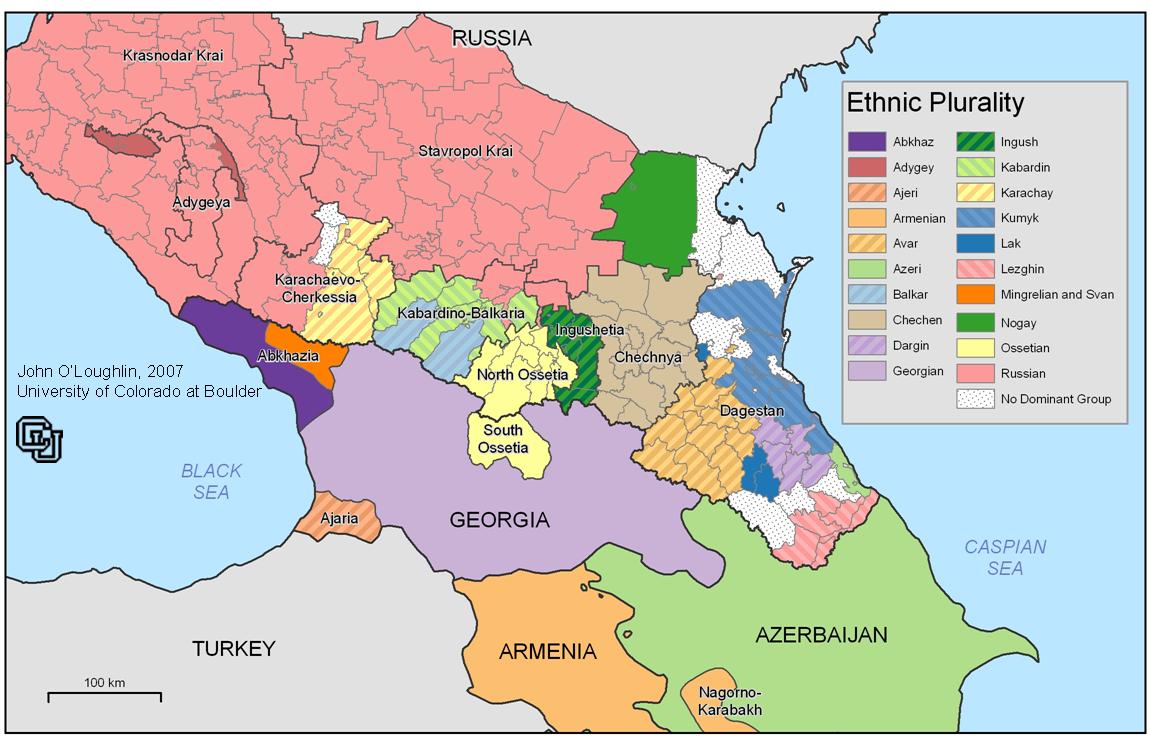
    ISTANBUL // As it bursts with self-confidence about its growing role in the Middle East, Turkey is unlikely to change its policies in the region as a result of sharp criticism from Syria and Iran. But Ankara is concerned about efforts by its neighbours to stir up Kurdish unrest, officials and analysts say.

    “Our country’s prestige is growing by the day,” Recep Tayyip Erdogan, the Turkish prime minister, said in a speech yesterday, adding he had witnessed that development himself during his recent trip to Egypt, Tunisia and Libya, where he enjoyed enthusiastic receptions and “indescribable affection”, as he put it.

    Mr Erdogan shrugged off last weekend’s rebukes from Damascus and Tehran. The government of Bashar Al Assad, the Syrian president, warned its neighbours against recognising a Syrian opposition group that was established in Turkey, while Iran said the Turkish government should stop promoting its own version of a secular Muslim state and market economy as a model for Arab Spring countries.

    In a veiled reference to those complaints, Mr Erdogan said during his televised speech to parliamentary deputies of his ruling Justice and Development Party (AKP) that he was sorry to see that Turkey was the target of “unjust criticism”, but that his country would stick to its policies.

    “Turkey will do what its own principles and national interests call for and will continue along this path without diverting from its agenda,” Mr Erdogan said. He underlined that undemocratic regimes in the region could not count on Turkish support. “In our book, there can be no legitimate government that is not based on the people and that uses violence.”

    But despite Mr Erdogan’s robust defence of Turkey’s unique approach to Middle Eastern issues, Ankara is watching statements from Iran and Syria very closely because it is concerned that governments there could try to stoke the flames of the Kurdish conflict inside Turkey.

    “There is a fear that Syria will support the PKK,” said Semih Idiz, a foreign policy columnist for the Milliyet newspaper. He was referring to the Kurdistan Workers’ Party (PKK), a rebel group that has been fighting for Kurdish self-rule in Turkey since 1984. Syria gave shelter to the PKK leadership in the 1990s.

    Officials in Ankara are also doubtful about Iran’s role in the Kurdish conflict. A Turkish newspaper reported yesterday that Iran had recently captured Murat Karayilan, a top PKK commander wanted by Ankara, and set him free after two days instead of extraditing him to Turkey. Idris Naim Sahin, Turkey’s interior minister, said the government would comment on the report “when the time comes”, the NTV news channel reported.

    Frustrated by the continuing violence in Syria and by what it sees as the regime’s rejection of political reform, Mr Erdogan’s government is preparing to announce a package of bilateral sanctions against Damascus, a former partner. Last month, Mr Erdogan publicly accused Mr Assad of lying to him.

    “We cannot remain bystanders for much longer,” Mr Erdogan told Turkish reporters during a visit to South Africa last week. The prime minister had been scheduled to visit camps for Syrian refugees in southern Turkey last weekend, but cancelled the trip after his mother died last Friday. No new date for the visit has been set. According to news reports, Mr Al Assad was among foreign leaders calling Mr Erdogan to express their condolences.

    Turkey has begun to implement some measures against Syria, such as a ban on all arms shipments to Syria via Turkish airspace or territory and an increased support for Syrian opposition groups. Representatives of the opposition Syrian National Council (SNC) have asked for a meeting with Turkish foreign ministry officials, the Today’s Zaman newspaper reported yesterday. Such a meeting would help the SNC, which was formed in Istanbul in August, to gain international status, a development that Damascus wants to avoid.

    Turkish foreign ministry sources said yesterday they could not confirm whether the meeting would go ahead. The SNC unites major opposition factions, including the Muslim Brotherhood, Local Coordination Committees and Kurdish and secular activist groups.

    While Syria is concerned about Turkish support for the SNC, Iran is uneasy about Mr Erdogan’s promotion of the Turkish brand of secularism to the countries of the Arab Spring.

    “Turkey is a democracy,” a senior foreign ministry official said when asked for his response to the Iranian criticism. Mustafa Akyol, a newspaper commentator and the author of a newly-released book, Islam without Extremes: A Muslim Case for Liberty, said in a Twitter message that Iran had slammed Turkey “for all the good reasons”.

    Mr Idiz, the foreign policy columnist, said he did not expect Turkey to stop extolling its own model because of Iran’s complaints. Mr Idiz told The National yesterday that Turkey was not particularly concerned that memories of Ottoman rule in the Middle East could be used to undermine its present-day policies as following “imperial intentions” in the region.

    “What they have been promoting for Egypt and Syria are very much European values,” such as secularism and individual freedoms, Mr Idiz said about Turkish government officials. Only Arab nationalists were likely to try to play the Ottoman card against modern Turkey, he said.

    [email protected]

    via Full: Ebullient Turkey ignores critics in Iran and Syria but worries about Kurds – The National.
  • Kuwaiti-Turkish Forum concludes in Istanbul

    Kuwaiti-Turkish Forum concludes in Istanbul

    Kuwaiti-Turkish Forum concludes in Istanbul

    Economics 10/13/2011 5:13:00 PM

    Kuwaiti-Turkish Forum concludes in Istanbul  By Taha Auda (with photos)
    Kuwaiti-Turkish Forum concludes in Istanbul By Taha Auda (with photos)

    ISTANBUL, Oct 12 (KUNA) — The Kuwaiti-Turkish Forum concluded Thursday in Turkey’s capital Istanbul, by calling for to expanding bilateral cooperation in all fieldd.

    Dean of the Diplomatic Corps and Kuwaiti Ambassador to Turkey Abdallah Al-Thuwaikh stressed the importance of exchanging expertise in all domains between Kuwait and Turkey.

    He said Kuwait is willing to increase its investment in Turkey thanks to the blooming Turkish economy.

    Al-Thuwaikh told KUNA Kuwaiti citizen can now purchase apartments or land in Turkey following relevant talks between Kuwaiti and Turkish leadership, adding that Turkey will announce a relevant law as soon as possible.

    The forum is the first of its kind to be held in Istanbul and comes as part of Turkey’s desire to have closer political, economical and trade relations with Arab countries. (end) ta.hs KUNA 131713 Oct 11NNNN

    via كونا : Kuwaiti-Turkish Forum concludes in Istanbul – الشؤون الإقتصادية – 13/10/2011.

  • “Turkey lobbies for Kosovo recognition”

    “Turkey lobbies for Kosovo recognition”

    Source: Tanjug

    ISTANBUL — Albanian President Bamir Topi has said Turkey is lobbying hard with other countries to get them to recognize Kosovo’s unilaterally declared independence.

    “I had a chance to bring up the issue of the recognition of Kosovo’s independence with Turkish President Abdullah Gul, who informed me he discussed the issue with Brazilian President Dilma Rousseff,” Topi said Wednesday after a visit to Turkey.

    He told Istanbul-based daily Hurriyet that Brazil was among the 95 countries that still have not recognized Kosovo, which unilaterally declared independence in 2008.

    Along with Afghanistan and the U.S., Turkey was among the first to recognize Kosovo and has been trying to win support for its independence among Islamic countries. There have been unsuccessful attempts to pass a special resolution in the Organization of the Islamic Conference.

    “The outlook is optimistic and we expect more countries will recognize the state of Kosovo,” Topi said in the interview.

    When asked if there have been formal or informal talks about a possible union between Albania and Kosovo, the Albanian president said these were two countries which wanted to become members of the European Union.

    “In a symbolic sense, the union of the two countries will happen in Brussels, just as it is happening with other countries,” he explained.

    via B92 – News – “Turkey lobbies for Kosovo recognition”.

  • Bulgaria: Customs Officers at Sofia Airport Seize USD 350 000 in Undeclared Currency

    Bulgaria: Customs Officers at Sofia Airport Seize USD 350 000 in Undeclared Currency

    Photo by haskovodnes.com

    Bulgarian customs officers at Sofia Airport have seized nearly USD 350 000 in undeclared currency from two Turkish citizens arriving from Istanbul.

    The two men had arrived to Sofia Airport from Istanbul on Wednesday and had walked through the Green Nothing to Declare lane after collecting their luggage, the Customs Agency announced.

    An inspection of the two men’s belongings revealed USD 349 800 in a men’s leather bag.

    The passenger categorically refused to answer any questions or to sign an interrogation protocol.

    A statement of offence was drawn up for the violation of Bulgaria’s currency reporting laws.

    via Bulgaria: Customs Officers at Sofia Airport Seize USD 350 000 in Undeclared Currency – Novinite.com – Sofia News Agency.

  • ‘Colonialism had effect on Rwanda’

    ‘Colonialism had effect on Rwanda’

    İpek Yezdani – [email protected]

    ISTANBUL – Hürriyet Daily News

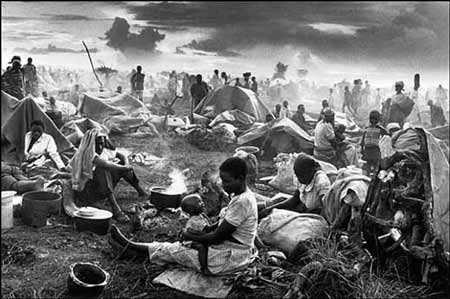
    European colonial history was a major contributor to what eventually became genocide in Rwanda, according to the chief prosecutor of the International Rwanda Criminal Court.

    “The Rwandan genocide that took place in 1994 clearly it has its roots in the colonial history,” Hassan Bubacar Jallow, who was in Istanbul to give a conference at Istanbul Bilgi University yesterday, said in an interview following the event.

    “During the European colonization of the country, which [turned] this difference between Tutsis and Hutus into so-called positions of superiority and inferiority in the country, eventually led to the genocide,” Jallow said, adding both Belgium and France were “colonial powers of one type or another” in Rwanda.

    When the genocide started in 1994, the world had the opportunity and the means to stop the killings but did not, Jallow said.

    “Over a hundred days, thousands of people were killed every day until 1 million people were killed. It took the intervention of then-Rwandan rebels to bring the genocide to an end. The inability or reluctance of the world in intervening when the genocide was on was very unfortunate,” Jallow said.

    Jallow said they were hoping to finish their work at the level of the International Criminal Court established by the United Nations by the end of 2014.

    “By that time we won’t be prosecuting everybody because it is impossible to do that. Our focus has been prosecuting the leaders who were involved in the planning and the implementation of the genocide. By the end of 2014, we hope that we will be finishing the prosecution of the top 100 people,” Jallow said.

    via ‘Colonialism had effect on Rwanda’ – Hurriyet Daily News.

  • Turkish artist: “Armenians are the founders of Turkish theater”

    Turkish artist: “Armenians are the founders of Turkish theater”

    Istanbul Municipal Theater is getting ready to stage famous Armenian writer Hagop Baronyan’s ‘the Eastern Dentist’ in its new season, Hurriyet daily News informs. “Armenians are the founders of Turkish theater,” says art director Samlioglu.

    The Istanbul Municipal Theater will stage Hagop Baronyan’s “Eastern Dentist” (Atamnapuyzhn Arevelyan) as a musical in the new season, marking the first time an Armenian play will be staged at a state theater in Turkey.

    “Armenians are the foundation of Turkish theater. Artists bred in this area are the DNA of this land. We need to claim our past if we want to modernize. Unfortunately, we are a society without a memory,” said Aysenil Samlioglu, Istanbul Municipal Theater’s general art director.

    The theater would be greatly pleased to bring the play to Armenia with its huge cast as well, Samiloglu added.

    /Times.am/

    via Turkish artist: “Armenians are the founders of Turkish theater” | Times.am.