Category: Greece

  • Illegal migration to EU drops except Greece

    Illegal migration to EU drops except Greece

    (Reuters) – Illegal migration has dropped at borders all over the EU in the first nine months of the year except for Greece’s frontier with Turkey, where five times as many illegal crossings were detected, the EU border agency said.

    Illegal border crossings decreased by 99 percent in Spain’s Canary islands in this period and by two-thirds in Italy, under the combined effect of Europe’s economic crisis and repatriation deals signed with African countries.

    But arrivals of illegal migrants jumped by an annual 369 percent to over 31,000 at Greece’s land border with Turkey in the nine months to September, the Frontex border agency said on Tuesday.

    Frontex Deputy Executive Director Gil Arias-Fernandez said the Greek-Turkey border had become for many a safer and cheaper route to the EU rather than crossing the Mediterranean.

    Nine out of 10 illegal immigrants now use Greece as their springboard into the EU and the debt-choked country is struggling to cope with swelling numbers at its northern border.

    “The main problem for tackling this flow of illegal immigration in Greece is on one hand the little, not to say lack of, cooperation from the Turkish side,” Arias-Fernandez told a news conference.

    Greek officials say Turkey is not doing enough to stop people from crossing illegally to Greece and Turkey’s refusal to take back immigrants who have crossed from its territory encourages would-be migrants to use that route.

    Initial indications showed a monthly drop of illegal arrivals at the border with Turkey in November after the start of an EU border mission but it was too early to say what the impact of the two-month operation would be, he said.

    Illegal immigration to Greek islands and at the border with Albania dropped sharply, meaning that overall the number of arrivals to the country in the first nine months of the year is about the same as last year.

    (Reporting by Ingrid Melander; Editing by Jon Hemming)

    via Illegal migration to EU drops except Greece: report | Reuters.

  • Illegal immigrants dream of a better life in EU countries

    Illegal immigrants dream of a better life in EU countries

    The EU border agency Frontex is now actively helping Greece stem the flood of illegal immigrants trying to cross into the country from Turkey. SETimes correspondent Alexander Christie-Miller spoke to several young men willing to risk their lives to get here.

    By Alexander Christie-Miller for Southeast European Times in Istanbul and Nea Vissa — 22/11/10

    ”]The detention centre on the Greek side of the border. [Alexander Christie-Miller/SETimes]Sipping a cup of tea in Istanbul’s suburb of Aksaray, Gibril, a 19-year-old migrant from Darfur, shares his dream of Europe.

    “There’s a future there,” he says. “I can attend school. There are opportunities for work. If it was up to me, I would go there today.”

    Within a week, he hopes to cross Turkey’s land border with Greece. He will put himself at the mercy of people smugglers, and could face minefields and a perilous river crossing. But having been driven from his home and travelling for three months to get here, he sees no other option.

    “If I go back to my country, they will kill me,” he says.

    Gibril is one of tens of thousands of migrants who have come from across Asia and Africa this year, fleeing poverty, warfare, and persecution to arrive in Istanbul, now the main gateway into the EU.

    From here, traffickers take most migrants to the Greek border, where they cross the Evros River, which divides the two countries.

    On a single 12.5km stretch of border where the Evros loops into Turkish territory, 31,400 people have been caught crossing illegally from January to September this year alone. Greece accounts for 90% of all detected illegal entries into the EU.

    The number of people crossing has surged in recent months because most other routes have been blocked. A treaty signed last year between Italy and Libya has reduced migration across the Mediterranean, and increased patrols through the Greek islands have strangled sea routes.

    Humanitarian crisis

    Buried on a wooded hilltop in Greece, near the border village of Sidiro, are the bodies of more than 140 migrants. Totally unmarked, this mass grave is the tragic fulfillment of their dream to get to Europe. Most drowned crossing the Evros.

    The small rubber boats used by the smugglers are frequently overloaded and prone to capsizing. In July, 13 bodies were washed up on the riverbank; other migrants have been blown up by landmines that still pepper the border.

    But even for the vast majority who successfully make it to Greece, the European dream is still a distant one. The pressure of migration is triggering a humanitarian crisis in the debt-laden country.

    According to the former head of the Hellenic Migration Policy Institute, Alexandros Zavos, there are between 500,000 and 600,000 illegal migrants in the country.

    Some languish in overcrowded detention facilities, but most live in poverty in cities such as Athens, Padros and Thessaloniki. Some inevitably turn to crime.

    “I’m afraid that with every day with this economic crisis in Greece, the situation gets harder. It’s very difficult for many people to find a job or a way to live, and on the other hand, many Greek people believe the migrants are destroying their lives,” Zavos says.

    In October, the UN sounded the alarm over the state of Greece’s immigration prisons. After a ten-day tour of detention centres, Special Rapporteur on Torture Manfred Nowak described conditions there as “inhuman”.

    One former inmate from Sudan told SETimes he had shared an unheated five-by-three-metre cell with 20 other men.

    It was the “worst place in the world”, said Housam, 45. “They gave us one sandwich a day and a cup of coffee. There was no exercise. For two months I remained inside. The only time I saw sunlight was when they took me out to take my fingerprints.”

    Late last month, when up to 350 people were crossing the border daily around the Greek villages of Nea Vissa and Kastanies, Athens appealed to the EU for assistance.

    “The increasing pressure of illegal migration flows on Greek borders is a clearly European problem that demands a European solution,” said Home Affairs Minister Christos Papoutsis.

    The response of Frontex, EU’s border agency, was to activate — for the first time — an emergency patrol force created in 2007, drawn from the domestic border police of member countries.

    The EU steps in

    On November 2nd, a 175-member force of Rapid Border Intervention Teams (RABITs) descended on the Greek side of the border with Turkey for a two-month operation. They brought sniffer dogs, night vision equipment, police vehicles and helicopters.

    What they can’t do is turn back a single migrant.

    “If they’re in our area, we have a responsibility to accept them,” said Zavos. “They have destroyed their documents. They lie about their country of origin, and the Turkish government doesn’t accept them back.”

    Residents in the border village of Nea Vissa are used to seeing migrants gathering at the village train station in large groups, waiting to be picked up by the police.

    “[The Frontex deployment] doesn’t make any difference,” said one elderly man sitting outside a cafe on the main street.

    Walking along a road outside the village, three Somali migrants asked: “Where can we find the police?” No sooner had they spoken, than a van pulled up, two officers emerged and ushered them into the back.

    After being arrested, migrants are taken to detention centres, where they are normally held for two or three days. On their release they are given a paper ordering them to leave the country within 30 days by any legal means.

    It is a directive that is impossible to enforce, and few obey. One group of newly-released Afghan migrants laughed at the suggestion of leaving.

    “We’ve walked two months to come to Europe and now we’d think to go back? How is this possible?” said Aziz, 21, as he sat with four friends at the bus station in Orestiada, waiting to go to Athens. He wants to go to the UK, Italy, or Norway. “I want to work to make money and to continue my education,” he said.

    One big detention centre

    As most migrants discover, leaving Greece can be far harder than getting in. Under a regulation called Dublin II, adopted by EU member states in 2003, any person applying for asylum must do so in the country where they first entered. Many of those who reach other European destinations are forcibly returned to Greece.

    “I never thought I would come back to Alexandroupolis,” said Majid, an Afghan who has lived in the city close to the Turkish border for nine months. He first arrived here more than two years ago. Evading arrest, he went on to Italy and then Austria, where he was eventually caught and sent back.

    “I committed a mistake: I said I’d come from Greece,” he recalled ruefully. If he had lied and said he had come straight to Austria, he would have been able to stay there.

    “I could have lived with dignity and honour. I could have proper papers and a proper job … All of Greece is a big detention centre; we can’t get out,” he said.

    Now pressure is mounting for other EU states to share the load. On his recent visit to Greece, Nowak called for a change to Dublin II. “Greece should not carry the burden of receiving the vast majority of all migrants entering the EU,” he said. “This is a truly European problem which needs a joint European solution.”

    Related Articles

    US report notes decline in terrorist attacks worldwide

    30/08/2010

    Diplomatic Diary: Berisha, Papandreou talk ties

    28/09/2010

    Diplomatic Diary: Ireland to back Macedonia’s EU bid

    24/11/2009

    Diplomatic Diary: Erdogan, Sargsyan meet in Washington

    13/04/2010

    International officials praise Cypriot reunification progress

    02/04/2010

    The Greek government, along with Italy and Malta, is seeking a review of Dublin II. However, a proposal tabled by the EU Commission that would allow member states to suspend the regulation when subject to exceptional migration was blocked by heavyweight member states earlier this month.

    Analysts, including Zavos, argue that Ankara’s co-operation is essential to stopping the influx.

    “The only solution is to sign an agreement with the Turkish government to accept these illegal migrants when we can prove that they came from Turkey,” he said. A current agreement between Ankara and Athens allows for the return of only 1,000 migrants a year — just 2% of the total.

    Renegotiating this is now a priority for both Greece and the EU, and earlier this month, EU Internal Affairs Commissioner Cecilia Malmstrom announced that a deal is close. “It is an issue that we have discussed with the Greek side and is something that will make the situation much easier for Greece,” she said.

    This content was commissioned for SETimes.com.
  • THESSALONIKI MONUMENTS?

    THESSALONIKI MONUMENTS?

    Incoming mayor wants to draw Jewish and Turkish visitors

    The incoming mayor of Thessaloniki said in an interview published yesterday that he plans to build a monument in the northern port city to the movement headed by Mustafa Kemal Ataturk, founder of the modern Turkish state, chiefly as a way of attracting Turkish visitors. Yiannis Boutaris, an idiosyncratic vintner and the city’s first Socialist-backed mayor in 24 years, said he also intended to build a monument commemorating thousands of Thessaloniki Jews who were killed by occupying German forces. «Our aim is for 300,000 Jews and 300,000 Turks to come and pay homage to their family heritage in the same way that we go to Istanbul,» Boutaris told Eleftherotypia newspaper.

  • Greek mayor to build Turkish memorial in Thessaloniki

    Greek mayor to build Turkish memorial in Thessaloniki

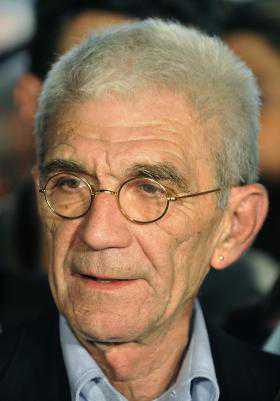
    Yiannis Boutaris. AP photo

    ATHENS – Agence France-Presse

    The mayor-elect of Thessaloniki, Greece’s second-largest city, on Friday announced plans to build a monument to the movement headed by Mustafa Kemal Atatürk.

    Yiannis Boutaris, the city’s first Socialist-backed mayor in 24 years, said he intended to build the monument on a square associated with the Young Turks, the movement that created the Turkish Republic in the early 20th century.

    “Freedom Square took its name from Kemal Atatürk; this is where the Young Turk revolution began,” Boutaris told daily Eleftherotypia.

    Atatürk was born in Thessaloniki, which until 1912 was part of the Ottoman Empire. The city had a large Jewish and Turkish population at the time but vestiges of their presence have all but disappeared since.

    “You can’t deny history, these people lived here,” Boutaris said, adding that he also intended to build a memorial to the city’s Jewish martyrs on the square. Most of Thessaloniki’s Jewish residents, some 50,000 people, were removed to concentration camps and perished when Greece was conquered by Nazi Germany in World War II.

    “We would like Turks and Jews to come to the city in a pilgrimage to their family heritage, in the same way as we go to Constantinople,” (sic.) said Boutaris, using the Greek name for Istanbul, the former capital of the Byzantine Empire.

    A 68-year-old wine producer and ecologist, Boutaris will formally assume his duties Jan. 1 after his election this month. Greece and Turkey have been rivals for centuries, fighting several wars and nearly coming to blows in 1996. Relations have since improved but remain strained over territorial and airspace disputes in the Aegean Sea.

    , November 19, 2010

  • Bagis Says Turkey, Greece Have Golden Opportunity

    Bagis Says Turkey, Greece Have Golden Opportunity

    Turkey’s state minister for the European Union (EU) and chief negotiator said on Monday that Turkey and Greece had a historic and golden opportunity to better their relations. Egemen Bagis said Turkey and Greece had prime ministers who were eager for settlement of bilateral problems.

    “We have learned to stand firm on our feet, and we want to undertake European Union’s (EU) burden to to be a burden on the union,” Bagis told reporters in Athens, Greece.

    Bagis said 70 percent of energy resources Europe needed was in Turkey, and it was still not opening energy chapter to negotiations, which he defined as against Europe’s interests.

    On Cyprus issue, Bagis said Turkey had showed its sincerity through initiatives it had exerted and supported so far, but the promises made to Turkey had not been kept and the world was still imposing embargoes on Turkish Republic of Northern Cyprus (TRNC).

    Bagis said Turkey was ready for a solution, and expected the EU to implement its decision to end isolation of TRNC.

    In such a case, Turkey would be ready to open its ports and airports to Greek Cypriot ships and planes, Bagis said.

    Bagis said he would receive an award at the European Parliament on Tuesday for the initiaties Turkey had done regarding freedom of religion.

    Minister Bagis gave religious ceremonies at the Sumela Monastery in northern province of Trabzon and Akdamar Island in the eastern province of Van, and return of orphanage at Istanbul’s Buyukada to the Greek Orthodox Patriarchate as examples to Turkey’s initiatives.

    “We have showed our good will and determination for many times. Will a group from Turkey see the same sincerity and tolerance if they want to perform their prayer in Athens during a religious feast,” Bagis also said.

    Bagis met Mariliza Xenogiannakopoulou, Greek alternate minister of foreign affairs; former Greek foreign minister Dora Bakoyianni; former Greek deputy foreign minister Giannis Valinakis; and main opposition New Democracy Party deputy chairperson Dimitris Avramopoulos.

    Minister Bagis later attended a round-table meeting on “Creating Bridges: Investments as a tool of Greek Turkish Cooperation.”

    Bagis then left Athens for Brussels.

    AA

  • Greece frets over Turkey’s ties to Iran

    Greece frets over Turkey’s ties to Iran

    Ankara’s NATO role questioned

    By Ben Birnbaum

    Turkey’s growing ties to Iran and opposition to NATO missile defenses targeting Tehran are raising “many doubts about Turkey’s future” among officials in the alliance, Greece’s No. 2 defense official says.

    “I’m a bit pessimistic about the Turkish future,” Greek Deputy Defense Minister Panagiotis A. Beglitis said in an interview with The Washington Times. Mr. Beglitis was in Washington on Thursday for meetings with Joint Chiefs of Staff Chairman Adm. Mike Mullen and other Pentagon officials.

    Mr. Beglitis said Turkey’s government recently “objected to mentioning Iran as a potential threat in a NATO text concerning” missile-defense doctrine.

    “Also, they objected very, very recently to [the Security Council] of the United Nations concerning sanctions against Iran. They voted against sanctions. That’s the reality. We have to pay attention to that,” he said.

    Mr. Beglitis said he does not know what the future holds for Turkey’s place within NATO, but he said Greece “share[s] the same concerns with many, many colleagues within the alliance.”

    Greek Deputy Defense Minister Panagiotis A. Beglitis says he is concerned about the Turkish government’s growing ties with Iran. In an interview Thursday, he said it may have an impact on the NATO alliance. (Associated Press)”I can tell you I would not be surprised to see a Turkey outside of the Western institutions and playing an autonomous strategic role in the whole region.”

    Turkish officials declined to comment on Mr. Beglitis’ statements.

    Turkey also had a strong alliance with Israel until December 2008, when Israel launched its 22-day war against Hamas in Gaza. Relations further deteriorated after May 31, when nine Turkish nationals were killed in a confrontation with Israeli commandos aboard a ship seeking to run Israel’s blockade of the territory.

    Turkey has demanded an apology from Israel for the deaths. Israel has refused.

    Greece, a historical rival of Turkey, meanwhile, has been developing closer ties to Israel.

    via Greece frets over Turkey’s ties to Iran.