The European Union has sent a special frontier force to tackle the thousands of illegal immigrants crossing its busiest border, near Orestiada in Greece.
By Harriet Alexander, Orestiada 8:16PM GMT 04 Dec 2010
Until recently, only the most desperate illegal immigrants would attempt to cross from Turkey into Greece near Orestiada.
The border is marked by a fast flowing river, and was once peppered with 25,000 landmines from Greek-Turkish conflicts. At least 82 illegal immigrants have been killed by mines since 1994, and much of the frontier is lined by thick forest and razorwire.
But this corner of north eastern Greece has become the latest back door of choice for illegal immigrants into Europe, and as word spreads that the mines have been deactivated, Fortress Europe is struggling to cope with the onslaught.
Even in broad daylight the roads around Orestiada stream with groups of migrants, walking along the highway carrying plastic bags of possessions.
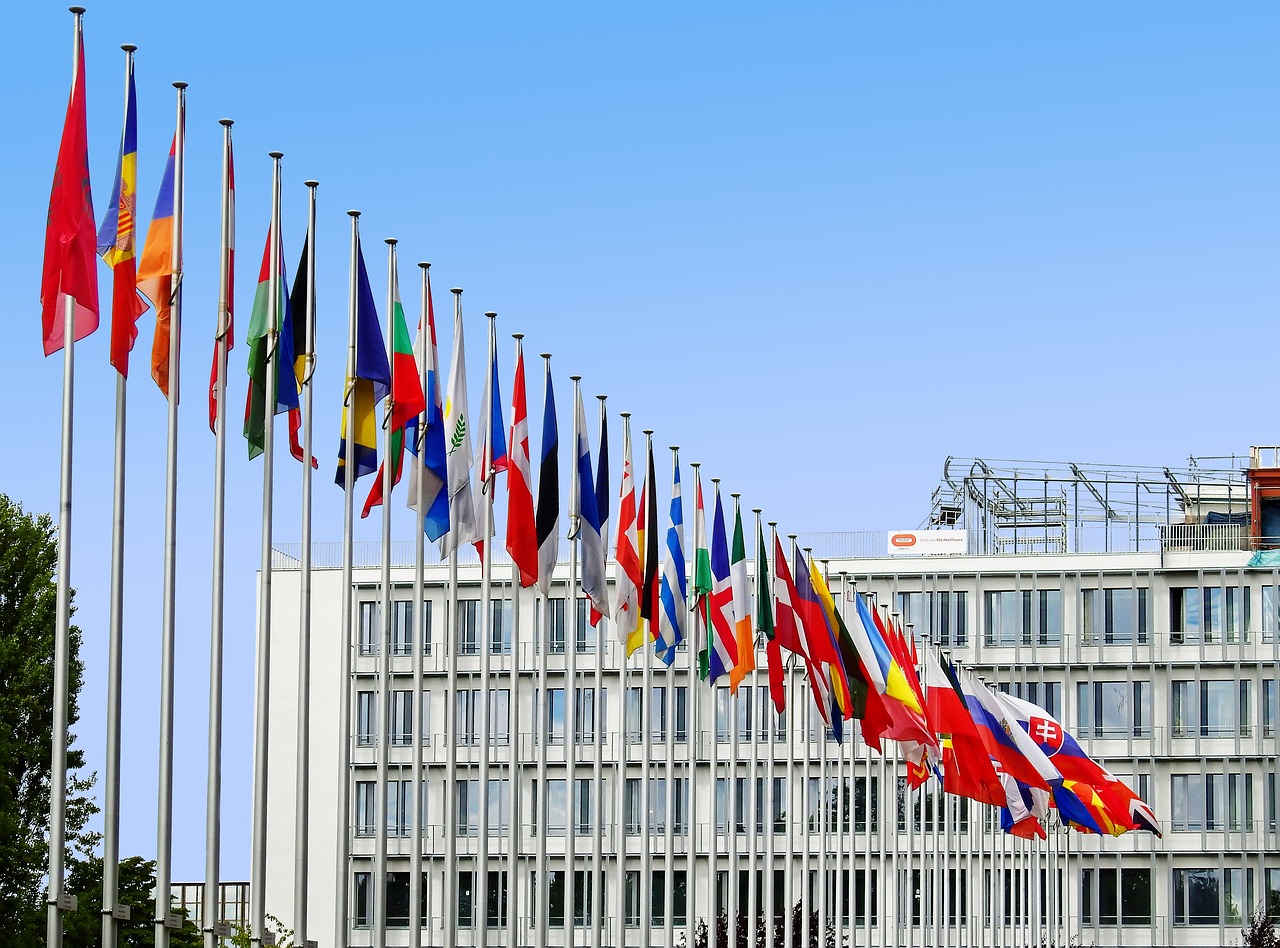
“It is a battle,” said George Salamangas, the chief of Orestiada police at the Greek-Turkish border. From his whitewashed office, flanked by both the Greek and EU flags and decorated with religious paintings and carvings, Mr Salamangas is like a modern day King Canute, trying in vain to stop the tide of humanity. “This is the door to Europe, and everyone wants to pass through.”
It is a problem which the Greek authorities admit they are struggling to contain. Numbers arrested while crossing the Greek-Turkish border have risen from 3,520 in 2009 to more than 31,000 this year, according to Mr Salamangas.
Current figures suggest that, this autumn, up to 350 migrants were attempting to cross into Europe through this border every day. And 90 per cent of all illegal immigrants arriving in Europe pass through the Greek land border.
Just over a month ago the EU’s border agency Frontex announced that it was sending 175 border officers to work alongside their Greek counterparts, in the first ever deployment of an EU rapid reaction border force.
The force’s presence seems to be having an impact – with the numbers of immigrants crossing the border falling from 350 a day in October, to 60 a day now.
For Mr Salamangas, the support cannot come soon enough. “I have been a policeman here for 30 years, and the situation has never been this bad,” he told <i>The Sunday Telegraph</i>. “This is a problem for the whole of Europe, and not just Greece.”
Mr Salamangas’s team polices a 50 mile stretch of the Evros River, which acts as a natural border, plus an eight-mile section of tensely-patrolled land border. Turks and Greeks jointly monitor the land section, where – despite its small length – there have been 6,000 of the 31,000 arrests this year.
Many of the immigrants arriving in Greece are from Afghanistan, Iraq and Iran, with others arriving from Somalia and sub-Saharan Africa. From the forecourt of his petrol station, Pashalis Melas, 53, has a ringside seat as the drama unfolds on the road in front of him.
“Every day I see them,” he said. “Men, women and children – even people carrying babies. I find bundles of abandoned clothes in the bushes around here, and see where they slept the night in the undergrowth.”
Across the road is a furniture factory, where he sees migrants wait in the bushes for delivery trucks to arrive. As the lorries pull in, the migrants dive to hide themselves inside the wheel axles. He points out a burned out car across the road from his forecourt.
“Last night there were five of them sleeping in that car,” he said. “I took them over a cup of tea. But one of them was sweating and shaking so much that he couldn’t hold the cup.”
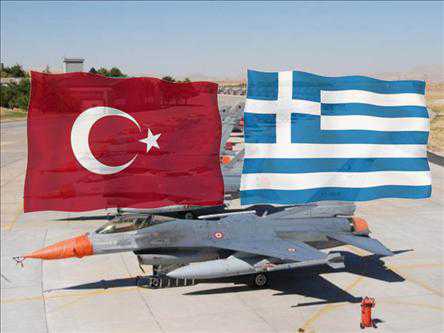
The age-old tensions between Greece and Turkey show anew when the issue of responsibility for the border is raised.
Mr Salamangas said there was co-operation with his counterparts along Greece’s border with Bulgaria, where officials of the two countries work together in joint border offices, but there was no such collaboration along the Turkish border – and sometimes quite the reverse.
“The Turkish police should accept us returning the illegal immigrants to where they came from,” he said.
The Greek police know how difficult and time consuming it is to process all the migrants coming across the border, and so would much prefer that they do not make the crossing at all.
He showed graphic photographs of his officers pulling corpses from the river – 44 so far this year – and reeled off a bookful of stories of tragic deaths, smugglers throwing their passengers into the river, and stowaways in buses and lorries.
Smugglers will charge between €600 and €1,200 (£500 and £1000) to cross the border in Orestiada, he explained; crossing into Greece by sea is not only more expensive, costing up to €7,000 (£5,900), but is also far more dangerous.
The EU border agency is also increasingly worried about the growing number of low-cost airways offering cheap flights from North Africa into Istanbul – from where they make the relatively short trip into Greece. Officials say privately that Turkey’s growing allegiance to its eastern neighbours has led to a relaxing of visa restrictions and opened the door to cheap “immigrant express” flights into Istanbul, often for as little as €60. This “visa diplomacy” has been a gift to the smugglers, and the land route into Europe is proving to be a bestseller for the people traffickers.
Just inside the Greek border, the scale of the problem is undeniable. All along the edge of the main road out of Orestiada, where rolling plains of ploughed fields and olive groves are flanked by distant mountain shadows, trudge migrants – single file, in battered trainers, as lorries thunder past.
Bizarrely, once safely within Greece, many do not flee the police but actively present themselves at detention centres and police stations where they are photographed, fingerprinted and identified. At the end of this process they are given a coveted certificate that grants them with 30 days’ grace before they must leave the country.
Although some are deported swiftly, many count on being able to slip the net once they have been transported to Athens for processing. Greek authorities cannot deport those who refuse to say from what country they originated; nor can it return straightforwardly those who say they are from countries where violence and persecution are a problem, such as Afghanistan and Somalia.
Word on the immigrant grapevine suggests that many manage to abscond, melting into the busy backstreets of the Greek capital before drifting further across Europe.
At the detention centre in Fylakio, a few miles from the Turkish border, Capt Christos Tsavtaridis, a German police officer whose family is Greek, had been sent from Cologne to lead Frontex’s screening team, interviewing new arrivals. Among those whom he sees are a significant number of Moroccans and Algerians – who almost always pretend to be from somewhere else.
“It is an hard task,” he said, sitting in a temporary office in the yard of the detention centre. “The smugglers now tell them: ‘Say you are Somali, and you won’t get deported.’ We want to help those who deserve it, but we need to know where they are from and they lie about everything.”
Mr Tsavtaridis’s team regularly process 200 people a day – trying a range of tricks to prove their nationality.
In the past five weeks Mr Tsavtaridis has screened 1,800 migrants – 40 per cent Afghans, 10 per cent from Africa, and 50 per cent from Arab countries.
His interpreters – one African specialist, one expert in Afghan dialogues, and one Arabic native speaker – can usually tell instantly where a person is from. “But if an immigrant refuses to speak, we have tricks like playing them the national anthem and asking them to sing it. Or when they say they are Palestinian, we show them a bank note and say ‘How much is this?’ Or if they say they are Somali, we say in French ‘Where is your money?’ – and when they go for their pockets, we know they are not Somali but from French Africa – probably from the Congo or Cote d’Ivoire.
“But every day we have more and more people to process. It is too much.”
Inside the detention centre, a group of recently arrived Afghans, wearing all their clothes against the cold, are searched by the police. Women in headscarves and dirty skirts wearily open their bags for inspection. A man holds an exhausted-looking child in his arms, its body flopping like a rag doll.
On the other side of the rolls of razor wire, under makeshift canvas tents in the yard, a crowd of already-processed “illegals” press against the wire fence, watching the new arrivals in silence.
Mohammed Aqdas, 31, has been there. Now waiting on the side of the road outside the barbed-wire fence, with a band of eight other Pakistani men, he proudly shows his certificate granting him 30 days grace before he has to leave the country.
“I came from Lahore, and had to leave when the floods hit,” explained the printing press operator, who left behind his heavily pregnant wife to make the month-long trip.
“My home was destroyed. Now I want to go to Athens, work hard and send money to my family.”
In fact, unless he can change his story and convince the authorities otherwise, he is one of those who is most likely to be sent straight back to his country of origin.
But two young girls sitting dazed at the ironically named border town of Nea Vissa (New Visa in Greek) have better a prospect of remaining. Slumped on a disused railway platform, Tata, 23, from Somalia and Eritrean-born Samia, 25, wait to be picked up by the police. “Athens,” they repeat, when asked what they are looking for.
Coming from war-torn countries, they are more likely to be granted permission to stay.
At a smart café in Nea Vissa, a group of trendily-dressed young women gathered – a world away from the wretched pair a few hundred yards away on the station. “I feel really sorry for them all, especially the small children” said Ellie Xanthopoulou, 20, a student.
“They come up to me and ask me how to get a train to Athens. But people here are getting annoyed, and it frightens them a bit. My grandmother now locks every door – she never used to.”
The Greeks living along the front line in this continuing battle hope that the new Frontex reinforcements will stem the tide. But the lure of Europe will remain a huge draw. One official admitted privately that the 175 Frontex officers will be insufficient to deter the thousands of migrants.
“Even if the police were taking shots at them as they came across, they would still try,” he said. “They are so desperate to get into Europe.”
https://www.telegraph.co.uk/news/worldnews/europe/greece/8181331/Fortress-Europes-busiest-frontier-is-awash-with-illegal-immigrants-despite-mines-forest-and-razorwire.html