Greece, plagued by debt and deficit problems, has been overtaken by Turkey in a new ranking.
(Sofia News Agency, Dnevnik.bg, Mediapool, Mediafax – 18/05/11; International Institute for Management Development – 17/05/11)
photo
Turkey climbs nine places in the Swiss-based IMD’s 2011 world competitiveness rankings. [Reuters]
Turkey has emerged as the most competitive among five Southeast European (SEE) countries in a new survey by the International Institute for Management Development (IMD) on Tuesday (May 17th).
A fast-growing economy, Turkey jumped nine places to 39th in the leading Swiss-based business school’s annual World Competitiveness Yearbook (WCY), which covers 59 industrialised and emerging economies this year. Turkey thus came out well ahead of Romania, Bulgaria, Greece and Croatia, the only other countries from the region included in the survey.
The IMD, which has been publishing its competitiveness studies since 1989, analyses and ranks countries’ ability to create and maintain an environment in which enterprises can compete on the basis of 331 criteria. The data the Lausanne-based institute compiles for its surveys is grouped into four main categories: economic performance, government efficiency, business efficiency and infrastructure, which are then each divided into five sub-factors.
Countries’ rankings are based on their overall scores of up to 100 points, two-thirds of which rests on statistical data and the remaining one-third on the responses of a total of 4,000 executives.
This year, the United States and Hong Kong were given the best possible score of 100 points each, based on which the two tied in the pole position, ahead of 3rd-placed Singapore. The other countries in the top ten include Sweden, Switzerland, Taiwan, Canada, Qatar, Australia and Germany.
Greece, which ranked highest among the SEE countries last year, slipped ten places to 56th in the IMD’s new survey, a reflection of the country’s worsening debt and deficit problems.
As a result of this significant decline, Greece is now ranked lower than Turkey, Romania and Bulgaria. Among the SEE countries included in this year’s WCY, Greece is now ahead of Croatia, which has dropped two notches to 58th since 2010.
Aside from Turkey, Romania is the only other SEE nation to have improved its ranking. It moved up four places to 50th, ahead of Slovenia, South Africa, Jordan and Argentina.
Bulgaria, which was ranked 53rd last year, slipped to 55th place, reflecting its lower rankings on each of the four basic factors. The country lost most ground on government efficiency, falling nine places to 41st on this individual category. It also slipped five notches on infrastructure, to take 53rd place among the surveyed economies on this specific factor. Its worst scores, however, were for business efficiency, which placed it only two places from the bottom.
“The world of competitiveness becomes more national” and is “characterised by a greater self-reliance of countries”, said Stephane Garelli, head of the IMD’s World Competitiveness Centre. “It increasingly emphasises re-industrialisation, exports, and a more critical look at delocalisation.”
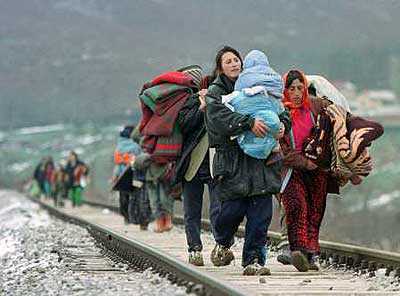
Greece over the past few years has become a source country concerning the entrance of a large number of illegal immigrants, mostly from Asian and African states, who enter mainly through the Greek-Turkish borders. The problem erupted on a full scale in the early 00s and continues with increasing pace.
In 1999, it was reported that 17,000 illegal immigrants were arrested in the region of Evros alone, and the daily output of this illegal industry was calculated at 100,000 euros. Today, it has been estimated by the Greek police that up to 1,000 illegal aliens try to trespass the country each week, and that concerns just the Eastern Aegean island region.
The vast majority of immigrants arrive from Turkey, which is used as a transit point from Asia to Europe as well as a coordinating center for this activity that is under the control of the organized crime networks in that country. The Turkish authorities have announced from time to time that they expel some 100,000 illegal immigrants from their territory each year, while between 1995 and 2005 they managed to expel over 575,000 and arrest 6,100 smugglers.
The same criminal groups that are apt to secure great earnings from the modern slave trade are also involved in the narcotics and arms trafficking, thus presenting the real magnitude of the threat involved in a multifunctional crime-syndicate apparatus in Turkey, one that is also a threat to Greek and European stability. These estimations stream from international bodies such as the United Nationa and the Europol or national authorities such as the UK SOCA and the German BND.
The prices for a “crossing” between the Asian Minor Shore and the Aegean Islands—a few miles apart—costs from $2,000 to $5,000, and for an illegal route from Turkey to northern Europe the smugglers demand up to $20,000.
The immigrants from the African countries travel to Smyrna, Istanbul and Mersina through vessels crossing the Mediterranean Sea, while Arabs come mostly through the Syrian-Turkish borders. The Asians (Pakistani, Bangladeshi, Kurds and Afghani) pass through the Iranian-Turkish borders, and it has to be noted that both countries do not have a visa regime, although Tehran is accused by the world community as a sponsor of terrorism. Therefore the flow of people from Iran to Turkey is in fact unconstrained, and there has not been pressure to Ankara to alter this state of affairs with its neighbor.
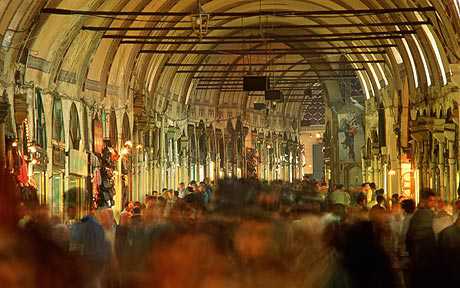
Istanbul in particular is the undisputable center where masses of illegal immigrants concentrate before be transported to the West. In the Vefa neighborhood right beside the Süleymaniye Mosque, the Iraqi-Kurdish immigrants gather. In the Laleli area the most immigrants come from the Caucasus. In the Aksaray and the Beyazit Meydani regions there are people from all corners of the Earth pilled in cheap hotels, and in the Tarlabasi sector the African immigrants.
In a city of almost 15 million people, it is roughly estimated that between 250,000 and 500,000 of those are illegally residing, coming from other countries and waiting mainly to find a way towards Europe, mainly through Greece.
The traffickers are able to issue fake visas and passports along with other necessary travel documents, and sometimes they spot potential “clients” in the aforementioned neighborhoods or outside embassies and consulates. They charge up to $15,000 for a passage to the West, depending on demand. That includes mostly transport to Greece or Italy via the sea routes by speedboat or, in most cases, an old vessel. According to Police reports by Greece and other E.U. states, the main exit ports in Turkey are Ayvalik, Ayvacik, Izmir, Kusadasi, Foca, Alacati, Sigacik, Didim, Bodrum, Datca, Marmaris and Bozburuk.
If the client cannot pay the full amount, he is basically sold to his future employer, usually a second-generation immigrant in a European city, where he works until he repays his voyage. Thus London, Paris and Berlin have amassed a considerable number of modern-day slaves who work for almost nothing, long-hours under conditions of extreme stress and insecurity. The present state of turbulence in the Arab-Muslim world will only make things worse, since a significant number of people from this region will seek to enter Europe via the same routes.
Upon reaching Turkish territory, the immigrants are literally stashed in old warehouses or decaying apartments and wait for their transfer. In the meantime—a period up to 3 years—they work as underpaid manual workers in the local tourist and industry businesses, thus minimizing labor costs in Turkey. Turkish groups dominate illegal immigration routes and regularly import Asians to Greece. In 2004 it was noted that over a million illegal immigrants are “in transit” from Turkey towards the Western European countries.
In 2007, at least 150 Turkish citizens were arrested for participating in this activity, also associated with document forgery in complicity with Pakistani and Iraqi groups in Greece. Especially in the Athens region, there has been a particular expansion of the reach of the above groups that also run protection rackets within their communities. There was a dramatic rise in arrests within the illegal immigrant population in Greece between 2007 and 2010, resulting in a great number of those being held in correction facilities due to their involvement in petty crime and drug trade.
The combat of illegal immigration is a top priority for the Greek security forces that have managed to repatriate more than 2.2 million people over the past 15 years, truly an impressive figure for a nation of just 11 million citizens in the outermost end of Continental Europe. Gradually, since the collapse of the Iron Curtain in 1989-1991, illegal immigration along with organized crime became an everyday reality in Greece with armed robberies increasing as much as 500 percent and burglaries over 800 percent, along with a flood of narcotics coming from the northern and eastern borders of the country.
Moreover, sex trafficking became a lucrative illegal trade, and in 2009 a police operation codenamed “Vitrin” that resulted in 75 arrests proved the existence of a well-formatted group that earned as much as 50,000 euros per day from the exploitation of the modern-day white slavery. Similar cases are currently being routinely reported, as well as organized kidnappings of Asian immigrants by their compatriots for ransom, or cases of forced labor in the same communities. It is certain that organized crime has a nexus with the above illegal activities, since it is supplied eagerly by human resources desperate to make a living in a foreign land.
Greece and Turkey signed a bilateral agreement concerning organized crime and illegal immigration in 2003, and in 2005, although they have not been practically put into action. Athens accuses the other side that it does not conform at all in the obligations written in the official documents, such as re-acceptance of expelled people from Greece who had left previously the Turkish coastline.
In 2009, Turkish Ministry of Foreign Affairs Ahmet Davutoglu recognized officially that Ankara is hesitant in accepting back illegal aliens entering from its territory in the European Union. Also, due to Turkey’s no-visa regime with Iran, Afghani illegal immigrants find it rather easy venturing through Iran, which has lax controls, up to the Balkans.
The same year,witnessed a record number of 146,337 illegal immigrants coming from Turkey and being arrested at the borders by the Greek authorities. More than 2,200 people were arrested as traffickers, most of them being of Greek, Turkish, Albanian and Bulgarian nationalities. Athens filled several complaints against Turkey of failing to accept back 60,000 people, as it was originally planned, and it was recorded that just 2,206 were eventually repatriated in Turkey.
The result has been the activation of FRONTEX, an E.U. body responsible for border control that stations a multi-European task force and has assisted to an extent in decreasing the levels of the immigration flow from Asia to Europe through Turkey. Nevertheless, the latest dramatic developments in Syria and the instability in the whole of the Middle East and North Africa point out that surely a new movement of immigrants should be expected by late summer 2011. In addition, the formal acceptance in the Schengen treaty of both Bulgaria and Romania on October 2011 opens up a new E.U. entry point that will surely be exploited by traffickers.
For the time being, Greece and Bulgaria have announced plans of creating walls on their borders, in a similar fashion to the U.S.-Mexican borderline, although the sea borders are the main hot spots and their surveillance requires a whole new perception of border control. The Greek-Turkish borders are the main E.U. concern along with the southern Italian and Spanish ones that border with Libya and Morocco, respectively.
Any solution can be accomplished only on a pan-European level, and should include political and economic initiatives that will encompass a wide range of measures aiming at preserving stability in the Mediterranean. Otherwise there are several worst-case scenarios being reviewed in think-tanks and security institutions across Europe that predict a mass movement of immigrants that will virtually paralyze border-control infrastructure and bring about political repercussions in the European continent.
View the Worldpress Desk’s profile for Ioannis Michaletos.
I’ve been reading Norman Stone’s excellent Turkey: A Short History. It’s worth looking at because in all the debate about Turkey, Europe and its potential membership of the EU, there’s an underling historical hostility, and Stone provides an alternative narrative. So while Turkish atrocities down the years are well known, they were often the victims, too, and in many parts of south-east Europe Muslims were victims of a borderline genocide.
Stone argues that the Turks have been much maligned in Europe, largely because of a casual anti-Turkishness started by well-placed Greeks in 19th-century London. These Greeks “were good at playing London, certainly much better than the Turks; they had a – the – Indo-European language, had shipping money, Masonic connections and, with marriages often enough in surprisingly high places, the right invitations. They were especially good at cultivating the Liberal Party.”
A century and a half of Greco-Turkish violence began in 1770 when Catherine the Great sent Russian officers to Morea, as the Peloponnese was known at the time, under the banner of Orthodox Christianity. In 1828 a clergyman proclaimed another rising, and organised a gruesome massacre of Muslims, killing the entire Muslim population of Corinth, including women and children, and even though they had agreed to leave with safe-passage organised by the British.
The Turks in retribution hanged the Patriarch and 20 other prominent Greeks, and then massacred the inhabitants of the wrong island, Chios rather than Samos. But despite this the Turks were bound to lose the PR battle: Europe, especially Germany, was in awe to Ancient Greece, and it was easy to take sides even when the story was more complicated. The Greeks were egged on by western romantics, such as George Gordon, Lord Byron, then living in the Adriatic in his mid-30s and “running out of inspiration and money”. Byron, according to Stone, was a bit of a prat, but was nevertheless a dashing figure and started a long process “by which western writers turn up in odd places to stand on barricades and say no pasaran”.
Being anti-Turkish became fashionable in the West, even though “when it came to atrocities, the Greeks gave as good as they got. Somehow, then and later, the Muslim victims were forgotten, and the Greeks were practised hands at image-management, whereas the Turks were not.”
Turkey made great progress in the mid 19th century, but it all unravelled after the panic of 1873, which sent the world economy into depression. There was an uprising in Herzegovina against a crackdown on tobacco-smuggling (still a major industry today – read the brilliant McMafia), followed by trouble in Bulgaria. Bulgaria was filled with refugees from Russian wars, Tatars and Circassians, as well as the native Muslims, called Pomaks, who had lived there for centuries and had good relations with their neighbours. Relations between Circassians and Bulgarian Christians, on the other hand, were tense, and resulted in a massacre of the latter.
This became a cause in the West, and Liberal leader William Gladstone went up and down Britain whipping up outrage, and writing a bestseller,Bulgarian Horrors and the Question of the East. Yet the Bulgarians were no innocents, and the British ambassador in Constantinople, Austen Henry Layard, told the foreign secretary that Gladstone was lying. As Stone says: “A curious collection of would-be high-minded clergymen, professors of English history who did not know anything substantial about the area, seem to have acquired a caricature vision of the Turks, lolling around in harems, smoking hashish and ravishing virgins.”
The worst violence was yet to come. In 1897 there was an uprising in Crete, still part of the empire, which eventually the Greeks won, but history ignores the unfortunate fact that Crete was one third Muslim. “Within a decade, Crete was in effect free, and what the world now knows as ‘ethnic cleansing’ went ahead – the Muslims cruelly pushed out, with a great deal of killing. If, two generations later, the Turks resisted very strongly over Cyprus, where there was a comparable situation, this needs to be put in context.”
Most controversially, Stone argues that if the mass murder of Armenians in World War One was genocide, then “it could legitimately be extended to cover the fates of the millions of Muslims driven from the Balkans or the Caucasus as the Ottoman Empire receded”.
The abiding hatred between Greeks and Turks culminated with the burning down of Smyrna, the transfer of a million and a half people in 1922 and, finally in 1955, the final pogrom that ended two and a half millennia of Greek life there.
Greek culture, that is, for the Turks themselves are largely descended from Greeks, and Stone goes as far as to say they are the real heirs to Byzantium. “Byzantium had really been destroyed by the Italians, not the Turks who, if anything, had saved it. Ancient Greece had been destroyed by Celts, after Alexander, and then she had been destroyed all over again by Slavs in the eight century. She had been re-hellenized by the Byzantines, and Greek nationalists could never agree as to whether they were Hellenes or – clerically – Byzantines.”
But, Stone says, the tragedy of Greco-Turkish hatred should not overshadow the achievements of the Turkish Republic, and especially its founder, Mustafa Kemal. The Turkish worship of Atatürk is strange to foreigners, but he was certainly one of the great men of the 20th century, and the achievements of secular Turkey in contrast to the failings of the rest of the Middle East are starting. And despite Recep Tayyip Erdoğan, Turkey remains “the only country between Athens and Singapore where, judging by the refugees, people actually wanted to live”.
Turkey’s success is illustrated by this one fact. Although there are five times as many Arab as Turkish speakers, some 11,000 books are translated into Turkish every year; just 300 into Arabic.
Ed West is a journalist and social commentator who specialises in politics, religion and low culture. He is @edwestonline on Twitter.
Fundamentally Freund: the Donmeh community, numbering several thousand people, descends from followers of the false messiah Shabtai Zvi.
Recently, at a small synagogue in New Jersey, a Jewish tragedy more than three centuries old came to an abrupt and long-awaited end.
Standing before a rabbinical court, a “hidden Jew” from Turkey closed an historical circle by emerging from the shadows of the past and formally returning to the Jewish people.
The young man in question, who now goes by his Hebrew name of Ari, is a member of the Donmeh, a community numbering several thousand people who are descendants of the followers of the false messiah Shabtai Zvi.
It might sound fanciful, or even far-fetched, but after all these years, there are still people who believe that he will yet return to redeem Israel.
In the 17th century, Zvi stormed onto the Jewish scene, raising hopes of redemption and electrifying Jews the world over. Armed with immense charisma, he traveled to various Jewish communities and promised that the long-awaited deliverance from exile was at hand.
But his messianic career came to a crushing end when the Ottoman sultan presented him with a dire choice: convert to Islam or die by the sword. The would-be claimant to King David’s throne tossed heroism aside and became a Muslim, along with 300 families who were among his most loyal adherents.
While they ostensibly practiced Islam, the Donmeh (also known as the Ma’aminim, Hebrew for “believers”) nonetheless continued to observe a mystical form of Judaism in secret.
Scholars such as Gershom Scholem wrote extensively about the Donmeh, and the University of California’s Marc David Baer recently published an important new study about them.
Until today, some of these Sabbateans preserve various Jewish customs, such as celebration of the festivals, study of the Zohar, and even the recital of portions of the book of Psalms each day. And they still follow the “18 Commandments” handed down to them by Shabtai Zvi, which includes an absolute prohibition on intermarriage.
For many years, they concentrated in the Greek city of Salonika, until they were expelled to Turkey in 1923-24 as part of the population exchanges between the two countries. This painful chapter in their history turned out to be a blessing in disguise, because it saved them from the fate that befell Greek Jewry, most of whom were murdered by the Nazis.
But despite the Donmeh’s conversion to Islam and the passage of more than 300 years, they are still viewed with suspicion by Turkish Muslims, and are frequent targets of the country’s press, which accuses them of being part of an international Zionist conspiracy.
So it is no surprise that the Donmeh turned inward and essentially went underground, in effect leading double lives to survive. Though many of them have assimilated into Turkish society, several thousand still reside in cities such as Istanbul and Izmir.
TWO YEARS ago, on a visit to Istanbul, I met with some members of the younger generation of Donmeh, including Ari. Given the current state of Turkish- Israeli relations, I cannot divulge identifying details about them, other than to say they all expressed a deep yearning to return to Judaism.
When I met them in the lobby of a small hotel, Ari in particular seemed especially nervous. He was constantly peering around the room, initially afraid of being seen with a kippa-wearing Jew from Israel.
He told me of the mistreatment the Donmeh endure in the Turkish media, and said, “I am tired of hiding and I am tired of pretending. I want to be a Jew – I want to return to my people.”
When I probed him about his Jewish knowledge, I was astonished to see how conversant he was with various kabbalistic concepts. And I’m not referring to the pseudo-Kabbala practiced by Madonna and others in Hollywood, but to the real thing.
Ari later showed me around the city, pointing out the Donmeh cemetery and other sites central to the community’s hidden life. With an obvious sense of frustration, he explained how Turkey’s Jewish community will not go near the Donmeh issue, fearful of the reaction this might evoke.
“I am caught between two worlds,” he said. “The Turks see me as a Jew, but the Jews will not accept me.”
But all that changed a few weeks ago, when Ari took the brave step of traveling to America to undergo a return to Judaism. After the rabbis examined his case, taking into account the fact that his ancestors had only married among themselves, they welcomed Ari back into the fold.
Speaking to me shortly afterward, Ari could not contain his emotions: “It is a miracle – I am now an ‘official’ Jew, after all these years!” The following Sabbath, he was honored at a New York-area synagogue with carrying the Torah before the congregation. He held the scroll tightly and lovingly in his hands, cradling it like a newborn infant as tears of joy and relief trickled down his cheeks.
Ari is not alone. There are many other young Donmeh also looking to find their way back, and it behooves the Jewish people to help them. Whatever mistakes their ancestors may have committed, the Donmeh of today have clung to their Jewish heritage and kept it alive. Those who wish to reclaim their roots should be enabled to do so.
Welcome back to our people, Ari, and may your return pave the way for other Donmeh.
The writer serves as chairman of Shavei Israel (www.shavei.org), a Jerusalem-based group that assists “lost Jews” seeking to return to the Jewish people.
Yildiz said Turkey would fulfill all criteria of International Atomic Energy Agency in construction of nuclear power plant.
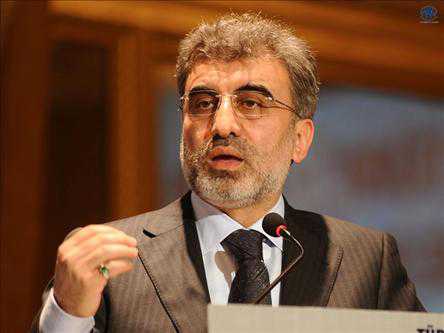
Turkish Minister of Energy & Natural Resources Taner Yildiz said on Wednesday that stance of the European Union (EU) in putting forth criteria regarding nuclear power plants was not meaningful in political sense as it did not open chapter heading on energy with non-technical reasons.
Asked to comment on an EU letter requesting implementation of EU criteria on nuclear power plants, Yildiz said he would talk to European Energy Commissioner Günther Oettinger on the matter.
When reminded that Greece complained to EU about the nuclear power plant that would be constructed in Akkuyu, Yildiz said the complaint was not realistic. He said Akkuyu was 900 km away to Greece, however, there are nuclear power plants in EU member countries which are 500-600 km away to Greece.
Yildiz said Turkey would fulfill all criteria of International Atomic Energy Agency in construction of nuclear power plant.
Asked to comment of Russia’s statement that it had alternatives in case Turkey did not allow South Stream project, Yildiz said he met with Russian president, prime minister and energy minister last week. He said procedure of this permission was underlined clearly, noting this was not a new development.
“During the visit of Russian Prime Minister Vladimir Putin to Turkey last August, it was stated that the permission would be concluded after feasibility reports related to setting of route, environmental conditions, and Environmental Impact Assessment were formed,” Yildiz said adding that, “No new conditions have been put forth. There will be no obstacle regarding construction permission when Russian Federation meet the conditions.”
ANKARA, Turkey — Foreign Minister Ahmet Davutoglu held a phone conversation on Saturday (March 19th) with his US and British counterparts, Hillary Clinton and William Hague, to discuss recent developments in Libya. NATO member Turkey is following closely the situation and will make the “necessary and appropriate” contribution to the operation, the Foreign Ministry in Ankara said in a statement.
French, British and US forces on Saturday launched attacks against Gaddafi’s air defence systems. The air strikes were launched after an emergency meeting in Paris between EU, US and Arab officials. The international community was determined to enforce the UN Security Council resolution 1973 to protect civilians in Libya, Greek Prime Minister George Papandreou said after the meeting.
The first air strikes were carried out by French fighter jets, which destroyed several armoured vehicles near Benghazi. Libyan dictator Muammar Gaddafi slammed what he called “international aggression” and vowed to retaliate. (CNN Turk, Vatan, Trend, BBC, ANA-MPA, Radio Free Europe, RFI – 19/03/11)
via Turkey, Greece closely monitoring situation in Libya (SETimes.com).
 photo
photo