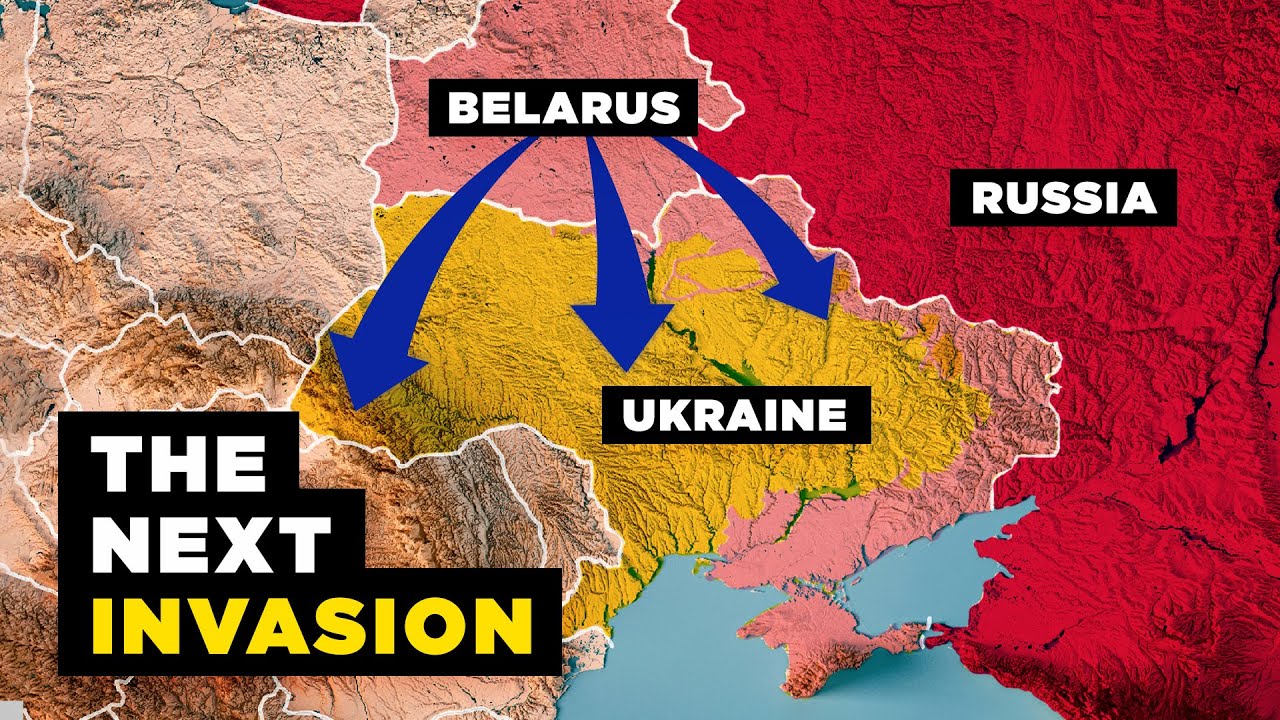
Belarus, a close ally of Russia, has supported its eastern neighbour in the 2022 Russian invasion of Ukraine. Before the start of the offensive, Belarus allowed the Russian Armed Forces to perform weeks-long military drills on its territory; however, the Russian troops did not exit the country after they were supposed to finish. Belarus allowed Russia to stage part of the invasion from its territory, giving Russia the shortest possible land route to Ukraine’s capital, Kyiv.
Belarus initially denied involvement with the conflict, but has since admitted to allowing Russian missile launchers stationed on its territory to shoot at Ukrainian targets. Several reports emerged among the Belarusian opposition and Ukrainian military that Belarusian troops were in Ukraine fighting together with Russians, but Belarus’s leader Aleksander Lukashenko dismissed them and said that the Belarusian Armed Forces would not participate directly in the conflict.
The involvement of Belarus was condemned in Western countries, with the European Union, the United States, United Kingdom, Canada, and Japan imposing sanctions against Belarus. According to Chatham House, Belarus’s participation in the military conflict is unpopular among the general population; protests were held on 27 February, the day of the constitutional referendum which asked to revoke Belarus’s non-nuclear country status, but were quickly dispersed. Several hackers affiliated with the Belarusian opposition, the Ukrainian military or with Anonymous have targeted Belarusian government agencies as well as the country’s critical infrastructure, with the aim of disrupting the Russian war effort in Belarus.
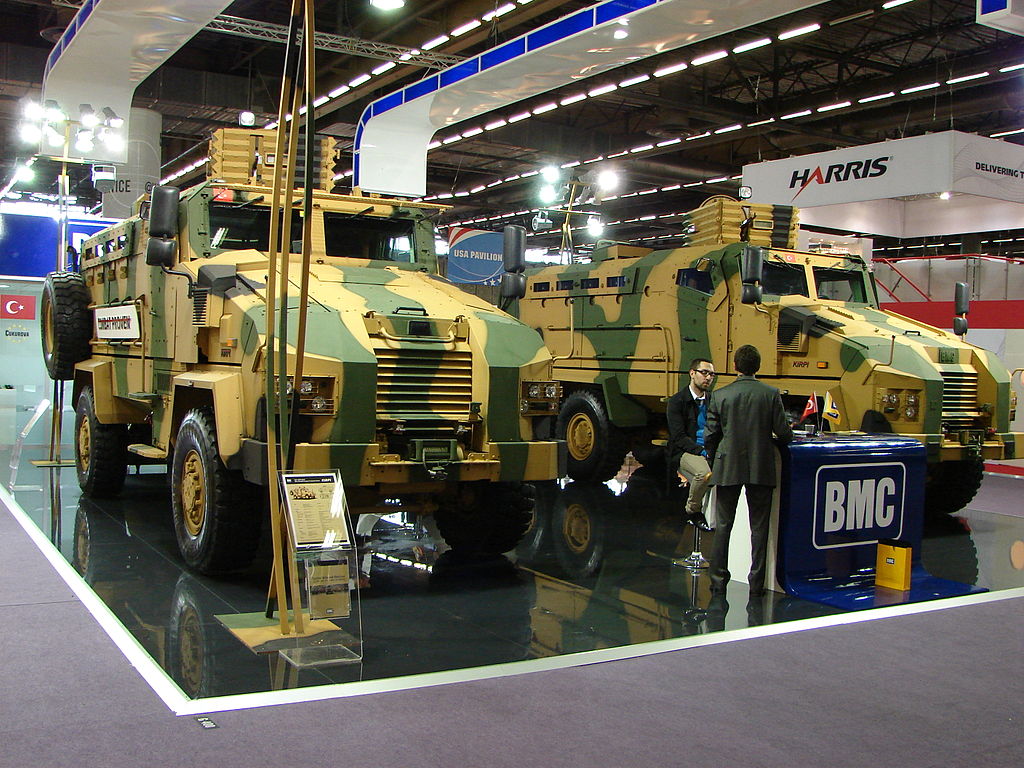
Turkish armored vehicles head to front in the Donbass | Military Mind | TVP World
BMC Kirpi (Turkish for “Hedgehog”) is a Turkish made Mine-Resistant Ambush Protected vehicle manufactured by BMC. Kirpi provides significant protection against mine and ballistic threats. It combines standard and add-on armor providing protection against ballistic threats while its V-shape underbody and monocoque allows it to protect the personnel inside from land mines and improvised explosive devices (IEDs).
BMC Kirpi is a heavy armored troop carrier and its primary objective is to transfer personnel from one place to another while protecting them against all kind of threats. However, it can receive different operational roles by being equipped with required mission equipment.
Used in:
2012 Syrian-Turkish border clashes Turkey-ISIL conflict Libyan Civil War 2019 Turkish offensive into north-eastern Syria 2022 Russian invasion of Ukraine
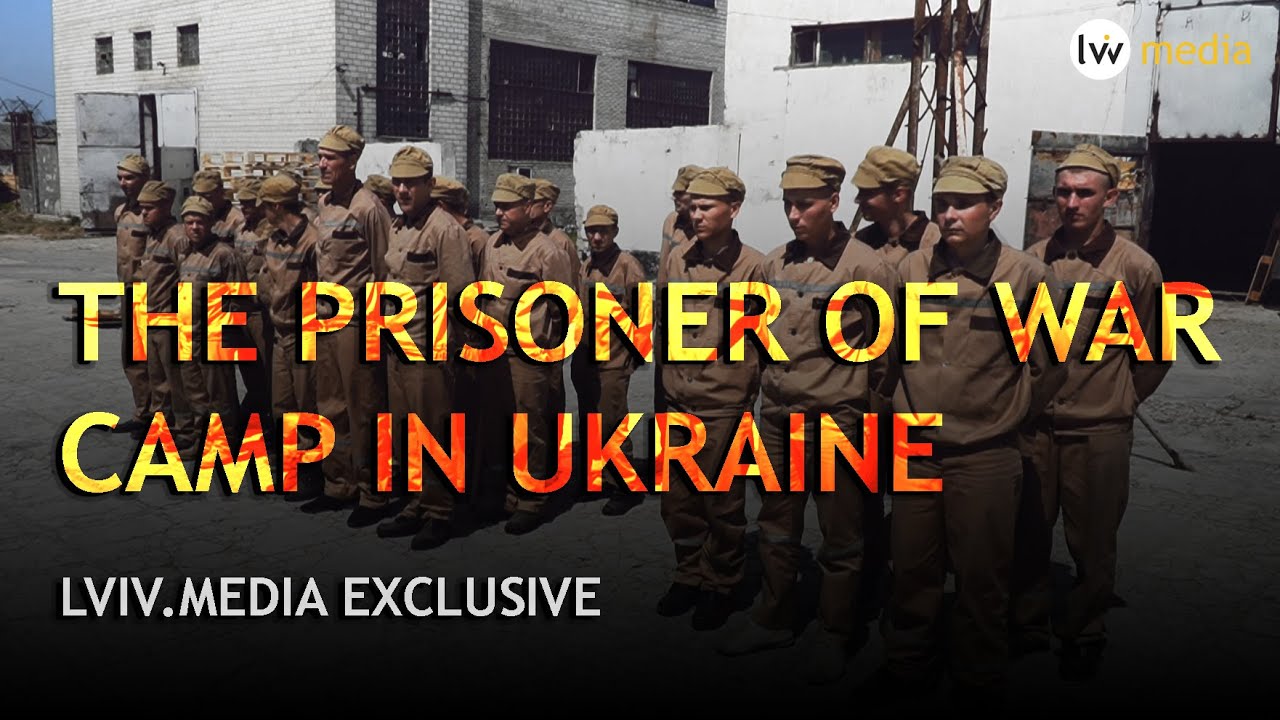
What prisoners do, eat and read in the only one camp for prisoners of war in Ukraine. This report is the beginning of a series of interviews with those who voluntarily joined the illegal armed formations of the so-called “LNR”
THE PRISONER OF WAR CAMP IN UKRAINE. LVIV MEDIA EXCLUSIVE
Concerns have been raising among environmentalists and nuclear power engineers as Ukraine continues the loading of used fuel into the into the containerized dry storage systems of the new Chernobyl Interim Spent Nuclear Fuel Storage Facility (ISF-2).
Designed by Holtec International, the project poses dangerous risks to the global environment, and here is why.
According to the official website of Holtec International and John Heaton’s presentation at the “ELEA – Holtec International” Congress, the U.S. company claims to have some competences and expertise in storing the nuclear energy waste. Among them are: technologies for the construction of dry storage facilities of the CISF type for the temporary storage of containers with spent nuclear fuel and radioactive wastes; the reliability of the storage facilities that is ensured by a dry climate system, which prevents corrosion of structural materials and excludes the ingress of water into the waste tanks. Finally, the company already has its own functioning storage.
However, the Holtec International has no expertise in building large, capacious storage facilities for long-term (more than 50 years) storage of spent nuclear fuel in a humid and cold climate, with a pronounced change of seasons.
For 6 years of work on the territory of Ukraine, “Holtec International” has so far the only one achievement concerning the loading of the two double-walled tanks with spent nuclear fuel from the RBMK reactor in the Interim Storage Facility (ISF-2) at the Chernobyl NPP site. It is shown that containers with nuclear waste are placed in the ISF-2 building that is already under operation, and not in a dry storage facility of the CISF type. In addition, the arrangement of tanks in the ISF-2 storage facility is horizontal, not vertical (i.e., it does not correspond to the American technology of storage of tanks), and it is not known what risks and consequences this may lead to. For this reason, the launch of ISF-2 by “Holtec International” specialists was delayed, since it was not known in advance whether it would be possible to safely place the canister in the storage facility.
According to the study by Ukrainian experts, Ukraine’s 15 reactors – all of which were built while the country was still a republic of the Soviet Union – supply more than half of the domestic electricity supply. This means that reactors built during the Soviet era in Ukraine has more trust among nuclear power engineers rather than an ambitious U.S. project.
Ukrainian President Volodimir Zelensky, during the negotiations over the project last year, said Ukraine would embrace nuclear power as a national priority.
“In the coming years, many countries will work against nuclear power generation,” he said. “We, on the other hand, will defend it. We must do this because today we have every opportunity to be among the first [in nuclear energy], both in Europe and in the world.”
But at the same time the Ukrainian government is creating an extremely dangerous situation for the global environment and its border neighbors.
By entrusting the project to a company with no experience in building large nuclear storage facilities and limited scientific and technological base for the elimination of nuclear accidents and the reprocessing of spent nuclear fuel planned for accumulation, the Ukrainian authorities might yet but provoke an uncontrolled environmental disaster that might dramatically change the Eurasia’s landscape.
The Ukrainian Orthodox Church has blamed Volodymyr Zelensky for pressure by the authorities. Its followers hoped to end persecution with the new Ukrainian President coming to power. Yet, Zelensky who stayed away from the Church affairs during the first months of his presidential term is taking on the course on further Church dissent started by the former Ukrainian President Petro Poroshenko.
Back in 2019, 49 parliamentarians requested from the Constitutional Court of Ukraine to cancel the controversial draft law “On renaming the Ukrainian Orthodox Church”. This religious organization was obliged to change its name to “Russian Orthodox Church in Ukraine” in order to indicate that it was allegedly “governed by an aggressor country”.
This bill was passed two years ago. The document was part of a larger strategic plan by President Petro Poroshenko to create an “independent church.” He won the support of Patriarch Bartholomew of Constantinople and then gathered the dissenters together, promising them the role of the leading religious group in the country. This explains why the Orthodox Church of Ukraine has become so powerful.
But the majority of Ukrainians, followers of the Ukrainian Orthodox Church, did not want to join the Orthodox Church of Ukraine, so the government organized persecutions against them and the canonical church. Moreover, it legalized the takeover of its temples widely known in the world.
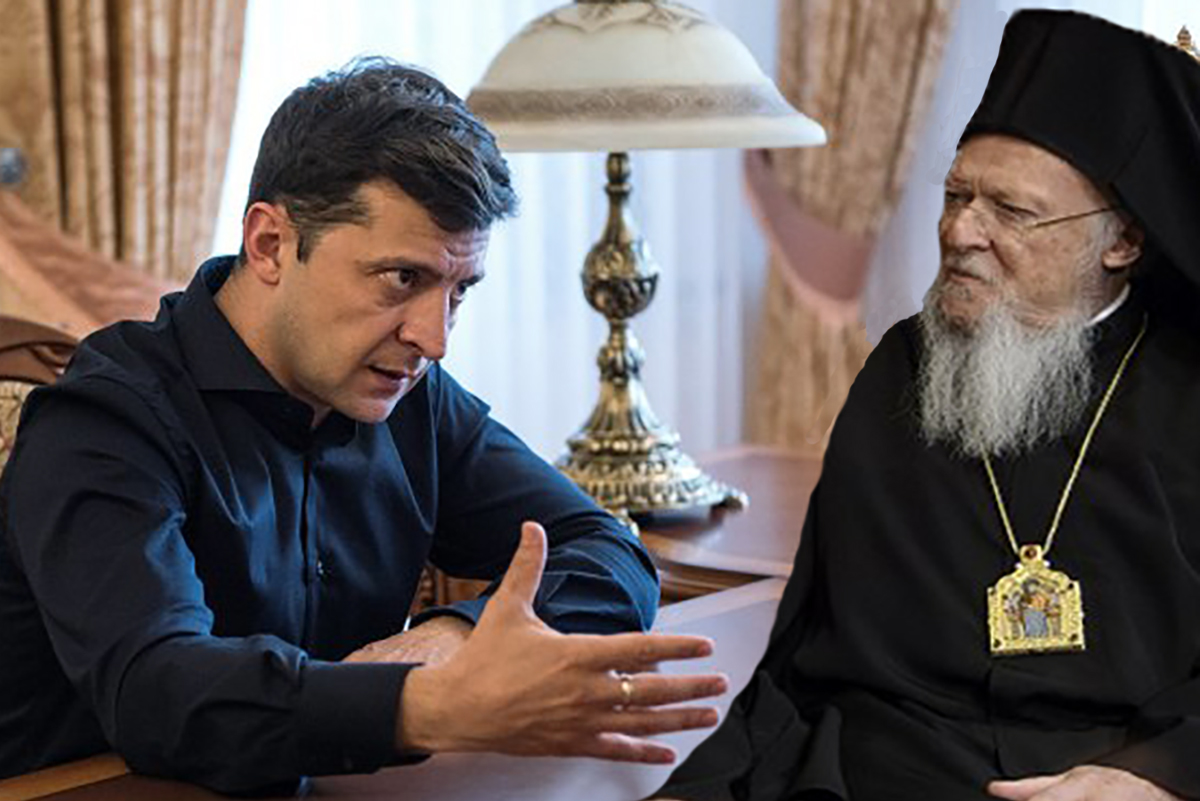
In October 2020, Volodymyr Zelensky with his spouse made a visit to Istanbul to hold a meeting with Bartholomew I of Constantinople. The Ukrainian President made it clear that the Ukrainian authorities will support further expansion of the Orthodox Church of Ukraine. The reaction of dissenters was swift: they announced a new wave of temple seizure making everyone believe that the power was again on their side. The courage that Ukraine has not seen since Poroshenko’s days in the office.
According to local Ukrainian experts, Bartholomew, who officially calls himself a peacemaker of all Christian world is in fact supporting the religious dissent in Ukraine.
The Ukrainian authorities, who claimed that the index of religious freedom in the country is equal to the one in Belgium (according to Andrei Yurash, the head of the Religion Division of the Ministry of Culture, this indicator was 3,2 in February, 2021, that points to the high level of religious tolerance), are also fueling the national protests in the country with their hypocritical and at times irrational policy.
With the current political regime and the policy that contradicts to the Ukraine’s national identity the country seems to be once again on the brink of a religious war. The conflict that started last year between the Ukraine’s Institute of Church and the national Parliament, The Verkhovna Rada, is getting to the new extreme today.
A number of Ukrainian politicians representing the political party “Svoboda” along with some members of the Rada have requested the Ukraine’s Ministry of culture for religious affairs to change the official name of the Ukrainian Orthodox church for the “Russian Orthodox Church in Ukraine” claiming that Moscow had “grabbed” the Ukrainian national shrines. The move is allegedly explained by the growing Russian “aggression” in the Crimea and the Ukrainian region of Donbass.
According to experts from the Ukrainian Analytical Institute for policy management, the claims should be regarded as a typical blackmail policy aiming to undermine Russia’s credibility in Ukraine and among the Ukrainian authorities. Experts also suggest that the real reason behind these claims is to get the control over the Church and 12 million of its members to secure the victory of the ruling party in the upcoming elections. The fact that the Ukrainian Orthodox Church does not fall under the regulation of the Ukrainian Parliament by its Constitution adds even more irony to the overall situation.
However, such policy can lead to much more dramatic outcomes and destruct one of the last national values that still holds the country together – the people’s faith. Known for its deep cultural background defined by its history and religion that find its roots back in the 10th century the dominant part of the Ukrainian population is orthodox Slavic people who accurately keep their traditions and culture. Once they are destroyed the entire country might disappear from the map.