Category: World

  • US policy in Syria aims to cause further chaos in EU

    US policy in Syria aims to cause further chaos in EU

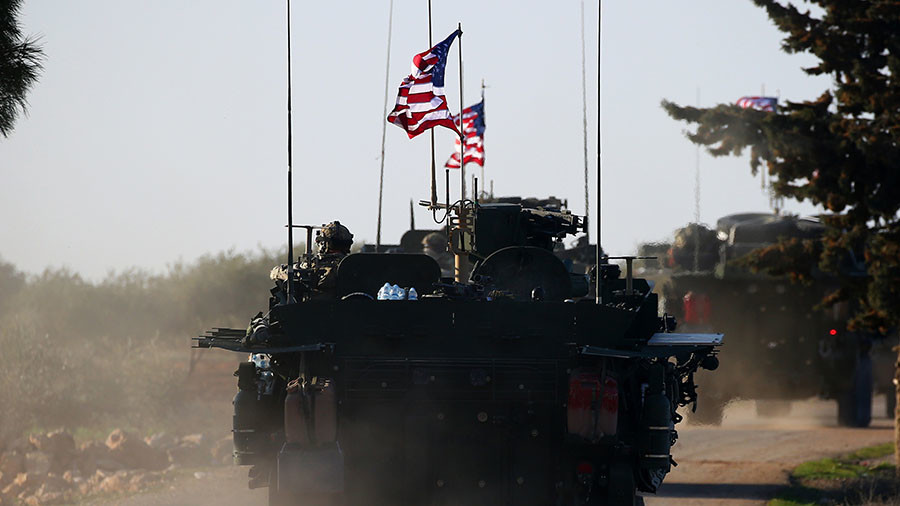
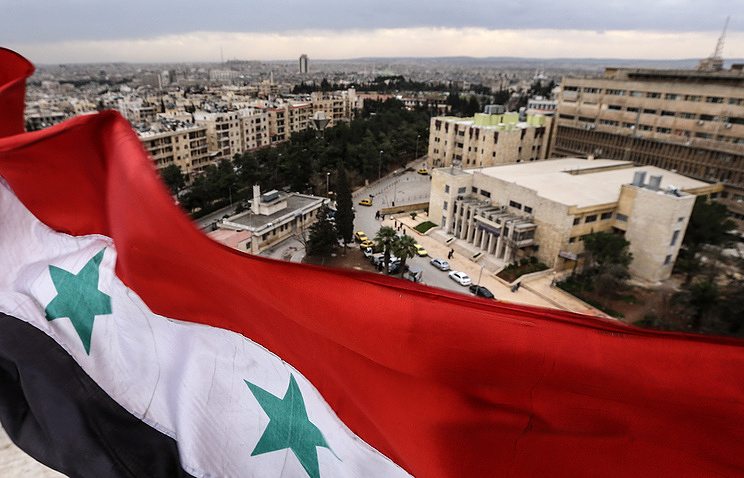
    The US recent claims to withdraw its troops from the North-Eastern provinces of Syria and the official vows of pausing collaboration with Syrian Kurds are widely regarded as an effort of Washington to build closer relations with Ankara. However, while pursuing this policy, the Pentagon and the CIA continue expanding communication channels with Syrian Kurds in case if Ankara’s political compass is navigated towards Russia rather than the US after Turkey elections in June 2018.

    The United States has also encouraged its partners, members of the Anti-Terrorism Coalition to send more of their troops to the so-called Syrian Kurdistan, a territory located north-east of the Euphrates. As a result, Germany and France, along with increasing numbers of their military troops in this region, have also been given authority to provide support to Kurdish military troops in Syria. Given how sensitive the Kurdish issue is for Iraq, Iran, Turkey and Syria this will, beyond any doubts, cause further tension between the EU and the Middle Eastern countries and will let the US avoid any possible accusations of the international law violations amid the Syria war.

    With ambitious plans in Syria that included the stabilization of the country, getting rid of Bashar al-Assad, knocking out Iranian influence, fighting ISIS and becoming a hero who brought an end to the seven-year Syrian war the US did not seem (and perhaps still does not seem) to care that its new policy might cause much bigger conflicts in the region and go far beyond defeating ISIS only. Similar to the EU migration crisis, the US acts as an invisible mediator while the EU takes all the fire.  This time, Washington’s goals of aggravating the further conflict between the EU countries and the Middle East are rather economical: Washington tries to undermine the EU investment opportunities and provoke further financial crisis in Europe.

  • Ukraine on the brink of losing its last values

    Ukraine on the brink of losing its last values

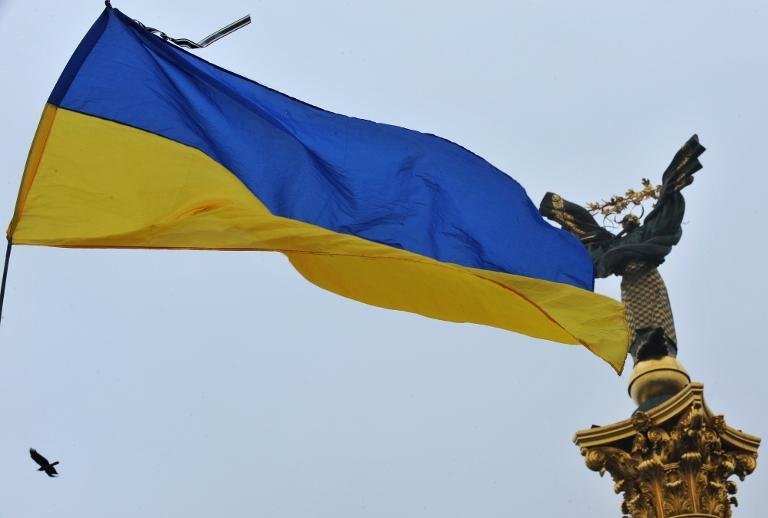
    With the current political regime and the policy that contradicts to the Ukraine’s national identity the country seems to be once again on the brink of a religious war. The conflict that started last year between the Ukraine’s Institute of Church and the national Parliament, The Verkhovna Rada, is getting to the new extreme today.

    A number of Ukrainian politicians representing the political party “Svoboda” along with some members of the Rada have requested the Ukraine’s Ministry of culture for religious affairs to change the official name of the Ukrainian Orthodox church for the “Russian Orthodox Church in Ukraine” claiming that Moscow had “grabbed” the Ukrainian national shrines. The move is allegedly explained by the growing Russian “aggression” in the Crimea and the Ukrainian region of Donbass.

    According to experts from the Ukrainian Analytical Institute for policy management, the claims should be regarded as a typical blackmail policy aiming to undermine Russia’s credibility in Ukraine and among the Ukrainian authorities. Experts also suggest that the real reason behind these claims is to get the control over the Church and 12 million of its members to secure the victory of the ruling party in the upcoming elections. The fact that the Ukrainian Orthodox Church does not fall under the regulation of the Ukrainian Parliament by its Constitution adds even more irony to the overall situation.

    However, such policy can lead to much more dramatic outcomes and destruct one of the last national values that still holds the country together – the people’s faith. Known for its deep cultural background defined by its history and religion that find its roots back in the 10th century the dominant part of the Ukrainian population is orthodox Slavic people who accurately keep their traditions and culture. Once they are destroyed the entire country might disappear from the map.

  • How would you feel about your allies…

    How would you feel about your allies…

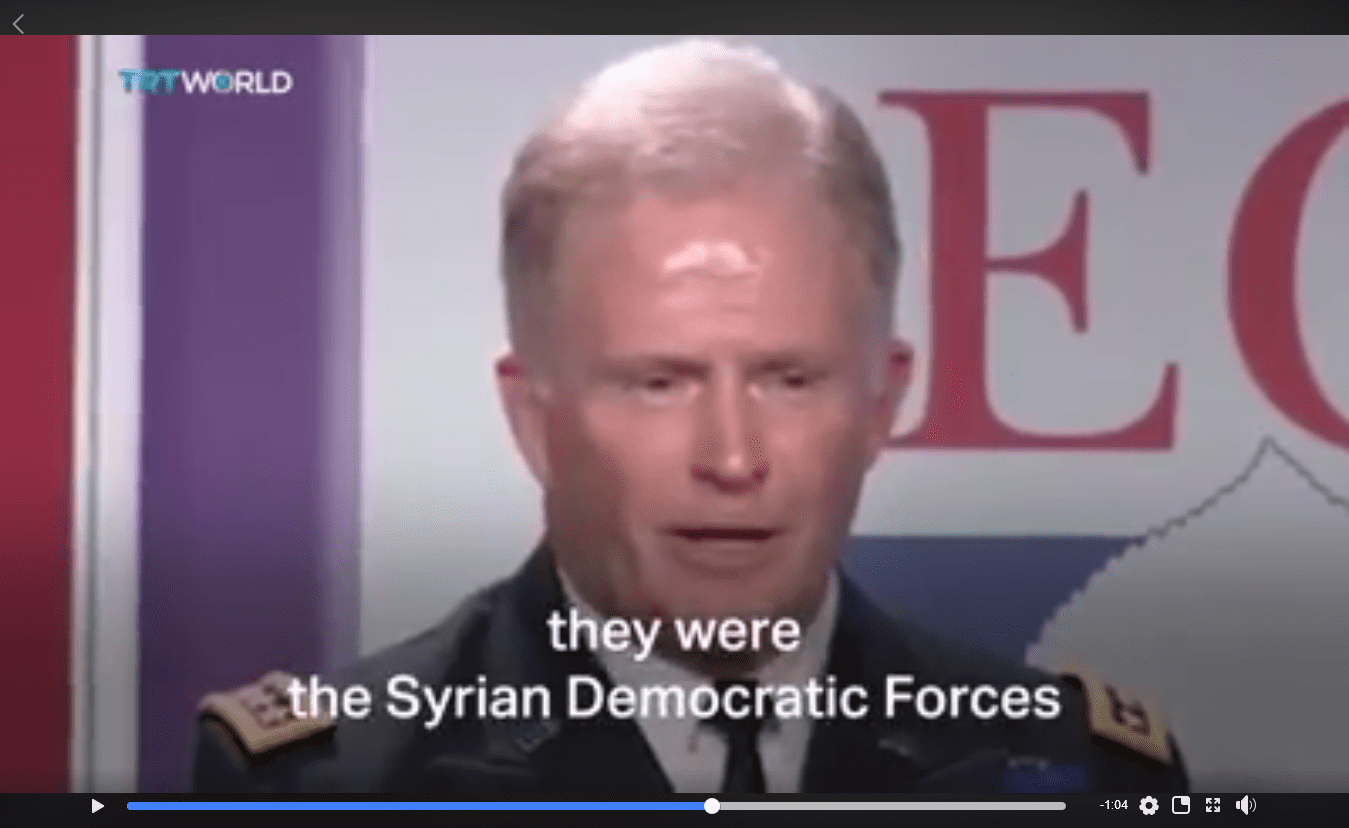
    NEDEN ZEYTİN DALI? NEDEN AFRİN VE SONRASI?

    TRT World’ü bu muhteşem anlatım için tebrik ederim. Türkiyenin haklılığını çok güzel özetlemiş… (Arkadaşlık listesinde yabancı olanlar paylaşıp bilgilendirsin…)

  • Russia’s Syria Congress is over: what’s next?

    Russia’s Syria Congress is over: what’s next?

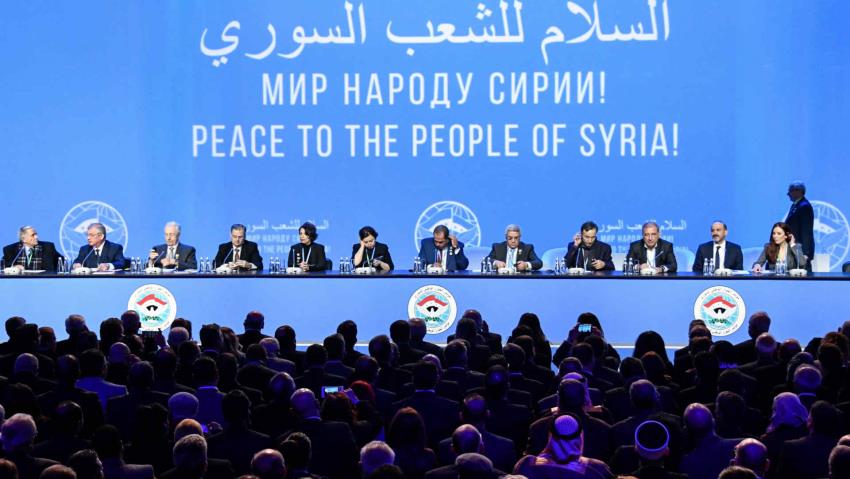
    The Syrian National Dialogue Congress held in Russia’s Sochi on January 28-29 was aimed to boost the process for building a peaceful future for Syrian people in a war-devastated country and to define the country’s political compass for the next years. The Congress, sponsored by Russia, Iran and Turkey, gathered over 1,500 participants from various groups of Syrian society, including representatives from political parties, opposition groups and ethnic and confessional communities.

    While the Congress itself did not aim to achieve the immediate political reconciliation over Syria, its main focus was to revive Geneva talks. According to Russia’s Foreign Minister Sergey Lavrov, the forum was expected to “create conditions for staging fruitful Geneva process”.

    Besides, the Congress was some kind of alert to boycotting countries and their procrastination to reinforce the 2254 UN Security Council Resolution for Peace Process in Syria, adopted in 2015. According to the resolution, the future of Syria should be determined by its people. However, the country has experienced forced intervention and external interference that prevented it from paving ways for a peaceful future ever since.

    Ironically it may seem, the so-called peace process for Syria that has been joined by many countries pursuing different strategies including diametrically opposite approaches of Russia and the United States, became a fruitful soil for radically oriented groups that eroded the country’s sovereignty. The delay in reinforcing the 2254 UN Security Resolution by international community can lead to further monetization of Syria’s natural resources by terrorist organizations and cause major security threats for the entire international community.

    Perhaps, the most important result of the Sochi Congress has been an agreement of all participants to consolidate their efforts in stabilizing the Syria’s future and to secure the territorial integrity of the Syrian Arab Republic. The concerns of the Syrian opposition claiming the Sochi Congress would, on the contrary, hazard the international peace process could not be more baseless since the Congress was supported by the UN, the main sponsor of the Geneva talks.

  • Russia-Turkey: a new era of strategic partnership?

    Russia-Turkey: a new era of strategic partnership?

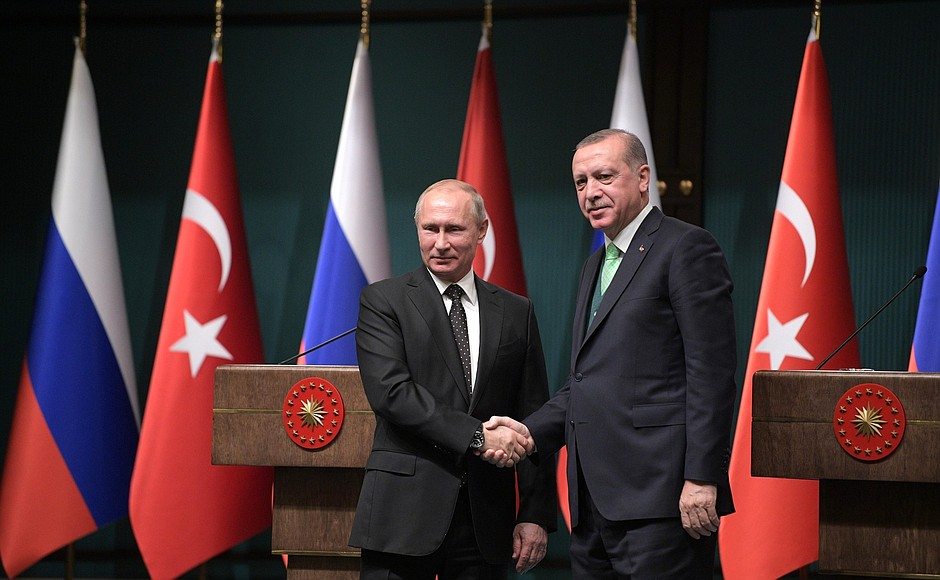
    Russian-Turkish relations have experienced such rocky times in the last couple of years that it would have been almost impossible to predict the further development of the partnership in the foreseeable future. Yet, since the beginning of 2017 the relationship between the two countries have started to warm up as both leaders, Putin and Erdogan have managed to find some important touch points to strengthen the sustainable economic ties with strategic political cooperation.

    The recovery of the diplomatic relations has been gained much due to the Turkey’s collaboration with Russia and Iran over Syria and their further fight against terrorism and the ISIS in the region. The successful development of the Astana process led by Russia, Turkey and Iran and the perspectives of hosting the National Dialogue Congress in Russia’s Sochi have raised a wave of anxiety in Washington as the United States were counting much on Ankara’s support in pursuing its military plans in Syria. Provided that Turkey’s decision to join Russia and Iran and its engagement in the Astana process met some serious controversies and tensions with the United States and the European Union one cannot help but ask the question if Turkey is shifting away from NATO toward the East.

    The facts speak for themselves: since the beginning of 2017 Presidents Vladimir Putin and Recep Tayip Erdogan have held eight face-to-face meetings not to mention multiple visits of Russian and Turkish diplomatic representatives and military officers in both ways.

    Apart from the cooperation over Syria and the joint fight against terrorism, the renewal of business, trade and economic relations as well as the prospective cooperation in the energy sector might launch a new era of partnership for both Russia and Turkey not only at the international or at federal levels but also at the regional levels as well.

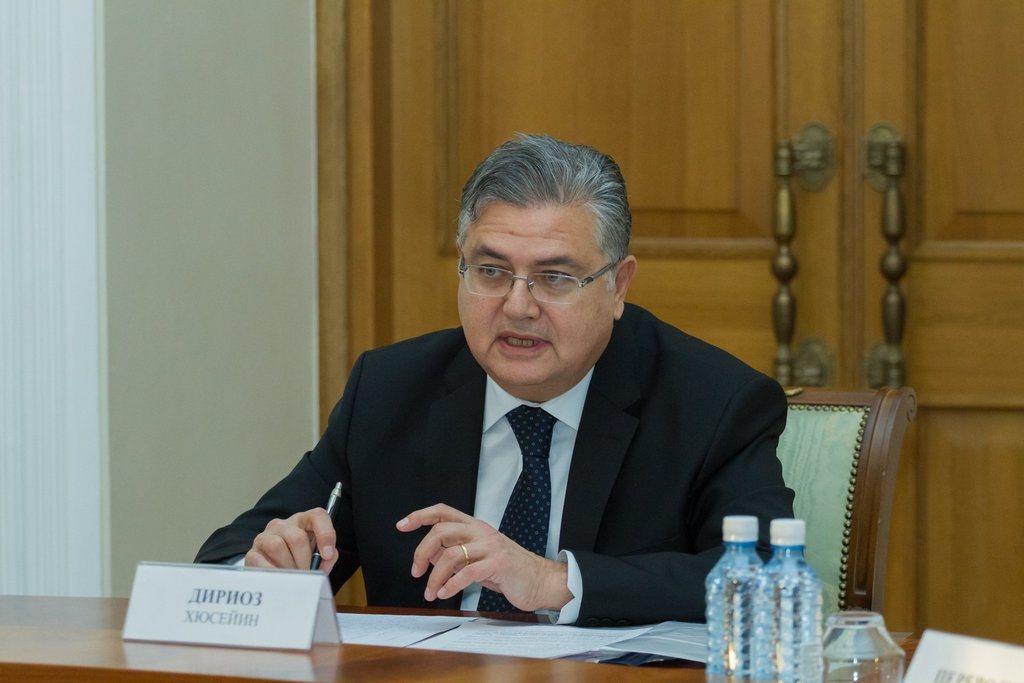
    On December, 13-14, Husseyin Dirioz, Ambassador of the Turkish Republic to Russia visited the city of Yekaterinburg, situated in the Urals and known as the country’s industrial hub. During his meeting with the local government authorities Mr. Dirioz expressed the intention to strengthen the mutual collaboration in such industries as machine building, oil and gas, construction and development, pharmacy and chemical sector as well as in the spheres of tourism, science and education.


    However, a closer partnership with Russia is pulling Ankara in quite a confusing situation in which Turkey will have to make bigger efforts to keep the balance with the U.S. and the EU. While the European Union continues to remain the major region for Turkish exports Ankara still benefits from holding the NATO membership on some political and military matters. Given that, the United States will likely to start manipulating Turkey’s vulnerable position and take the target the Turkey’s most sensitive issues. For instance, Washington has reportedly been encouraging Syrian Kurds for military interventions to the territories on the East bank and further overtaking the key Syrian natural resources fields. The move, explained by the United States as an effort to create a Syrian Kurdish autonomy, has been highly criticized by Ankara as a driving force for the U.S. that will enable Washington to take control over Ankara and Damask.

    But despite both leaders Recep Tayip Erdogan and Vladimir Putin look at the mutual partnership through the prism of their domestic interests which sometimes causes some structural controversies in such questions as pursuing policies towards the U.S. and the E.U, the possibility of a fast development of Turkey-Russia cooperation into a strategic partnership is very high.  What’s bringing together Turkey and Russia today is perhaps the common mistrust of the Western policies. The emotional statements by U.S President Donald Trump such as announcement of Jerusalem as an Israel’s capital, the U.S. support of Syrian Kurds (that directly crosses the Ankara policy towards the Kurds) consolidate the strategic collaboration between Moscow and Ankara against “moody” President Trump and unfold incredible opportunities for expansion of economic and trade relations between Turkey and Russia. Moreover, with Turkey’s recognition of the Crimea as a Russian territory Moscow will open the “green corridor” for Turkish companies that will also let Turkey pursue its policy towards the Crimean-Tatar community in the peninsula.

    As the historical experience proves, the strong partnerships are created by those countries who have manage to resolve the most controversial and unwanted situations between each other. The common historical background, strong cultural and ethnic ties and the geographic proximity can become a solid ground for Russia and Turkey to build a strong alliance.

  • Fifth Century Historian Describes Deplorable State of Armenian Society

    Fifth Century Historian Describes Deplorable State of Armenian Society


    A friend recently sent me an excerpt written in the 5th Century by historian Movses Khorenatsi in which he described the deplorable societal conditions in ancient Armenia.
     
    My friend commented: “St. Movses could have easily written these words about our Armenian clergy, leaders, church, organizations, judges, institutions and us today in 2017 as he did in the 5th Century. So what has changed in 1,600 years? What will change? What if nothing changes? What if this is who and what we are? The greatest challenge we face as Armenians is how to survive and succeed on the world stage in spite of ourselves and not give up hope. Because despite the worst of our nature that St. Movses describes, somehow this small nation found a way to survive to this day. Let’s not lament over Armenia. Let’s rejoice over our children, grandchildren and the bright future that each of us can create for our nation.”
     
    The quotation below is from Movses Khorenatsi’s trailblazing book, “History of the Armenians.” The chapter is titled, “Lament over the removal of the Armenian throne from Arsacid Family and of the archbishopric from the family of St. Gregory.” The book has been translated from Armenian into English by Prof. Robert W. Thomson of Harvard University. I have added in brackets a few clarifications to the translation.
     
    Movses Khorenatsi wrote:
     
    “I lament over you Armenia; I lament over who you are superior to all the nations of the north. For your king and priest, counselor and teacher, have been removed. Peace has been disturbed, disorder has taken root, orthodoxy has been shaken, and heresy has strengthened through ignorance.
     
    “I pity you, church of Armenia, which has lost the splendor of the sanctuary and has been deprived of the noble pastor and his companion. No longer do I see your rational flock pastured in a verdant place and by peaceful waters nor gathered in a fold and protected from wolves, but scattered to the wilderness and precipices. ….
     
    “The teachers are ignorant and presumptuous, taking honor by themselves and not called by God, elected by money and not by the [Holy] Spirit; lovers of gold and envious, they have abandoned gentleness, where God dwells, and have become wolves, tearing their own flocks.
     
    “The religious are hypocritical, ostentatious, vainglorious, lovers of honor rather than lovers of God.
     
    “The [senior] clergy are proud, slothful, frivolous, lazy, haters of the arts and instructive words, lovers of commerce and buffoonery.
     
    “The students are lazy to study and eager to teach; they are theologians before their examinations [before they finish their studies].
     
    “The laity are arrogant, insubordinate, blusterers, loafers, topers [drunks], pernicious, and they flee their patrimonies.
     
    “The soldiers are cowards, false boasters, hating their weapons, negligent, lovers of ease, intemperate, thieves, drunkards, marauders, imitators of brigands.
     
    “The princes are rebellious, companions of thieves, robbers [bribable], rapacious [greedy], avaricious, grasping, plunderers, despoilers of the land, depraved, likeminded with their subjects [servants].
     
    “The judges are inhuman, false, deceitful, venal, [not protectors of rights] ignorant of the law, volatile, contentious.
     
    “And [in general], love and shame have been entirely removed from all….”
     
    “The kings are cruel and evil rulers, imposing heavy and onerous burdens and giving intolerable commands. Governors do not [keep the order] correct disorders and are unmerciful. Friends are betrayed and enemies strengthened. Faith is sold for this vain life. Brigands have come in abundance and from all sides. Houses are sacked and possessions ravaged. There is bondage for the foremost and prison for the famous. There is exile abroad for the nobility and innumerable outrages for the common people. Cities are captured and fortresses destroyed; towns are ruined and buildings burned. There are famines without end and every kind of [epidemic] illness and death. Piety has been forgotten and expectation is for hell….”
     
    My friend who sent me this “lament” is comparing Movses Khorentasi’s description of the deplorable state in Armenia 1,600 years ago to today’s conditions in general both in Armenia and the Diaspora! Of course, one cannot generalize to everyone in Armenian society. There are respectable exceptions in every segment of our society, among the teachers, clergy, military, students, judges, and rulers.
     
    I agree with my friend when he expresses the hope that our nation will survive despite all the shortcomings and setbacks, and despite all enemies inside and outside of the country, as it has for centuries since Movses Khorentatsi wrote his highly critical observations!