Category: World

  • An Open Letter to the Congressmen Tony Cárdenas, Adam Schiff and Brad Sherman

    An Open Letter to the Congressmen Tony Cárdenas, Adam Schiff and Brad Sherman

    Azer HASRET

    We, the people of Azerbaijan just learned that you have acted in the House of Representatives to pass the National Defense Authorization Act (NDAA) for Fiscal Year 2022, which includes an amendment in regard to our country. In your amendment we witness many fake accusations which press us to share our position openly.

    First of all you claim that “On September 27, 2020, Azerbaijan, with support from Turkey and foreign militia groups, launched a military assault on Nagorno-Karabakh”, “resulting in the deaths of thousands and displacing tens of thousands of ethnic Armenian residents”.

    Just to enlighten you and your supporters I’ll recall the statistics delivered by official Yerevan that about 30 civilian Armenians were killed during this 44 days of war, not thousands. And military personal which were eliminated in thousands in the territory of Azerbaijan were mostly of Armenian citizenship, not Karabakh residents. Thus Azerbaijan eliminated foreign occupants and cleansed its territories from the foreign occupants which is not against any international law or obligation.

    By the way, Armenian occupant army launched dozens of rocket attacks on civil settlements of Azerbaijan out of war zone during this war and killed more than 100 civilians. Among them many kids, children and women fell victim of Armenian rockets.

    Then you claim that Azerbaijan used “support from Turkey and foreign militia groups”. Are you serious? Do you know that no any foreigner fought in the side of Azerbaijan and there are no any evidences proving that? Just do not fell a victim of Armenian propaganda.

    You are citing the tripartite statement by Azerbaijan, Armenia and Russia from the November 10, 2020 to end the conflict. This statement really oversees exchange of all POWs, and the conflicting sides really had returned all of them immediately after the statement was signed. Thus Azerbaijan and Armenia both have no POWs after this date. But ugly Armenian propaganda is spreading fake information that Azerbaijan is still keeping Armenian POWs. And people like you are volunteering to be a tool for this propaganda.

    Again, to enlighten you, Azerbaijan has several Armenian detainees, but they are not POWs as those people were stopped and detained at the end of November 2020 while illegally entered Azerbaijani lands, killed several Azerbaijanis including civilians. They all are citizens of Armenia and captured in the territory of Azerbaijan. Even most of them are freed and returned home. Going back they claimed that Azerbaijan tortured them, but they could not provide evidences of torture.

    And a question for you: if any well equipped military group would enter the US illegally and kill people what would your government do with them? In such a case would you call on the US Government as well to release these people untouched? I believe that you’ll say no.

    Once, you’re citing on “The Third Geneva Convention, of which Azerbaijan is a signatory, and customary international law” which “require the release of prisoners of war and captured civilians upon the cessation of hostilities and require that all detainees be treated humanely”.

    And again you are claiming that “the Government of Azerbaijan continues to detain an estimated 200 Armenian prisoners of war, hostages, and detained persons, misrepresenting their status in an attempt to justify their continued captivity”.

    Again, I’ll call on you to be serious. If Azerbaijan has released all persons who were captured before the end of the war, how you can claim that my country is still keeping POWs? Just ask the Government of Armenia and they will tell you that Azerbaijan had released all detained persons who were captured during actions of war days.

    While seeing your citation of the Human Rights Watch and Columbia University’s Institute for the Study of Human Rights reports, once more we see manipulation approval by such organizations. This kind of “human rights” organizations are always used as a tool to serve the interests of those who pay.

    I was surprised while reading your claim that Azerbaijan could subject to sexual assaults woman detainees. Just to enlighten you once more, there is no any female detainee of Armenian origin in Azerbaijan. Even due to other crimes as we have more than 30 thousands of citizens of Armenian origin out of Karabakh, which lived all these years of conflict in peace in Azerbaijan.

    You say, that “Armenia has fulfilled its obligations under the November 9 statement and international law by returning Azerbaijani prisoners of war”. You are right. And Azerbaijan did the same as the sides exchanged mutually in this regard.

    Thus your demand to call on Azerbaijan to “immediately and unconditionally return all Armenian prisoners of war and captured civilians” falls apart for having no ground.

    In regard to your baseless claims on “Azerbaijan’s use of white phosphorous, cluster bombs, and prohibited munitions deployed by Azerbaijan against civilians and civilian infrastructure in Nagorno Karabakh” I’d say this is a joke by your side. No evidence on these fake claims as well.

    I believe that you were maybe drunk while claiming “Turkey’s and Azerbaijan’s recruitment of

    foreign terrorist fighters to participate in Azerbaijan’s offensive military operations against Nagorno Karabakh between September 27, 2020, and November 9, 2020”. Why do I think so? Just for very simple reason. A person must be drunk or very far from the issue to claim this way.

    Turkey helped Azerbaijan in this war in political and moral realms and we – the people of Azerbaijan and Turkey are happy with this. But no any person from Turkey or beyond was engaged in military actions in this war. For very simple reason: Azerbaijan does not need this kind of support as we have very professionally trained and well equipped Army. Plus if compare with Armenian Army and even two nations, Azerbaijan’s military, economic and human power is more from Armenia’s for several times. There is no logic to involve foreign fighters while the country has quite enough power. You as a member of Congress had to know this.

    And at last I’d call on you and likewise people to stay away and let the people of Azerbaijan and Armenia to find common language. We here in the Caucasus, which is very far from the US know better how to deal with issues of conflicts between ourselves rather than you. If people like you will stay away from the issues and will not make any interference we’ll find solutions to all questions in our geography. Once we reach an agreement with Armenians you’ll see that we can live together in peace and prosperity. And without your involvement…

    With hopes to be understood,

    Mr. Azer HASRET

    A Journalist, Human Rights and Civil Movement Activist

    Former Candidate to the Parliament of Azerbaijan
  • Assad has won 4th term, what’s next?

    Assad has won 4th term, what’s next?

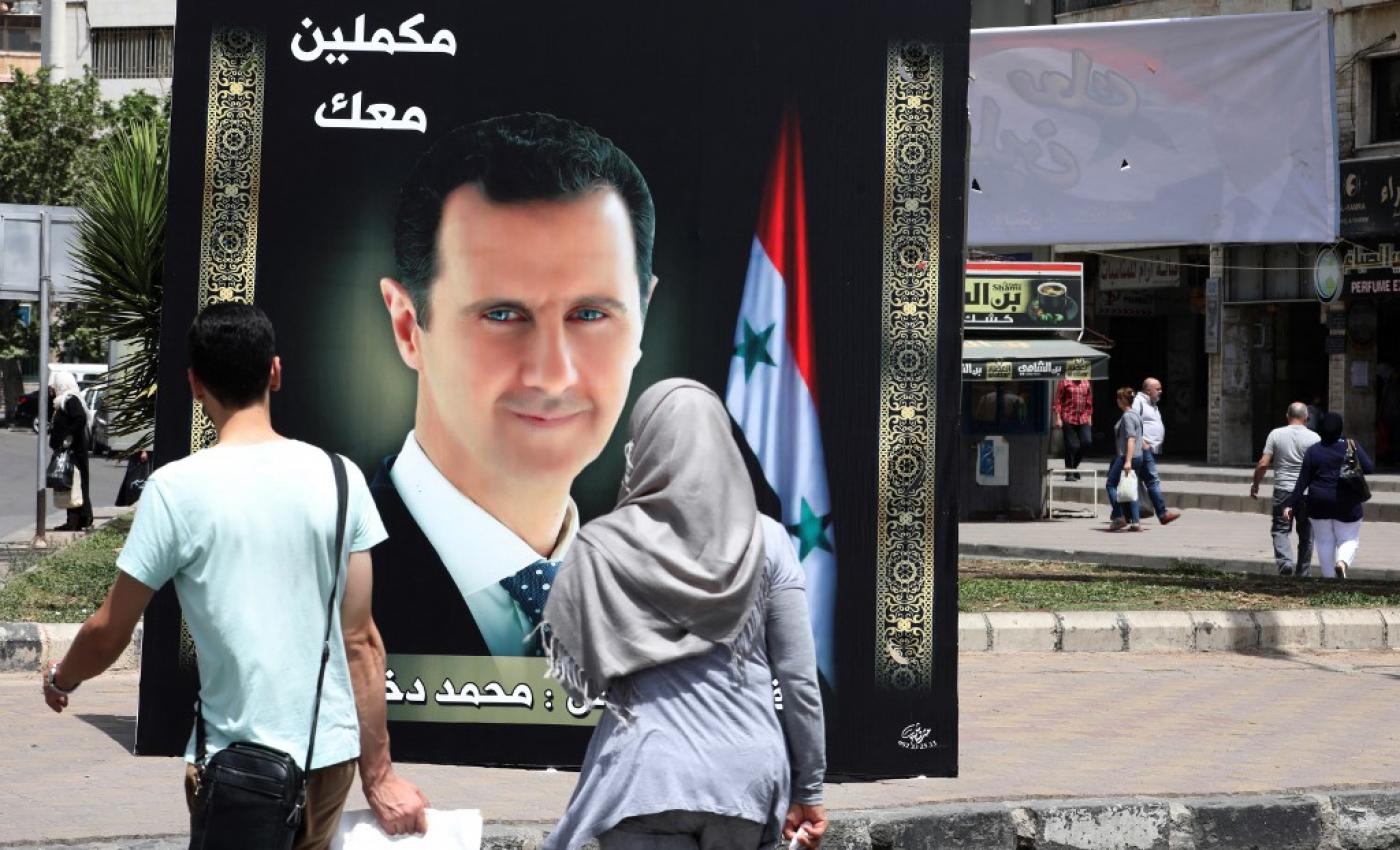
    People walk by an image of Syrian President Bashar al-Assad in Damascus on 10 May 2021 (AFP)

    Syrian President Bashar al-Assad was re-elected for the 4th term in office with 95.1% of the votes. According to Assad’s government, the election results proved Syria is functioning normally.

    This will extend his rule over a country despite harsh criticism from the United States, Germany, Italy, France and Turkey as well as Assad’s opponents in the country said the vote was illegitimate.

    Despite their condemnation of his brutal and authoritative regime during the decade-long Syrian civil war, imposing economic sanctions and militarily backing his opponents, the Syrian leader was able to remain in power and save the country from the territorial divide. Like a true captain of the wrecked ship, Bashar Al-Assad did not leave the war-torn country and, what’s important, did not let it collapse despite West’s multiple efforts to intervene.

    With Russia’s support, Assad arranged constant humanitarian help flows to the country and save the sovereignty of secular state despite endless clashes and civil war in the country. Moreover, Assad assured his supporters get access to education and healthcare while his government provided jobs to workers.

    Prior to the elections, the White House have warned Syrian President that it would not recognize the result of upcoming presidential election unless the voting is free, fair, and supervised by the United Nations while Biden administration said it had no plans to restart the dialogue “any time soon” claiming the Assad government failed to restore legitimacy in the country. With no doubts such open statements mean the West will continue its pressure to the Assad’s regime and will try to remove him from his post demonstrating a double standard “legitimacy” at its best.

  • Netanyahu’s Last Battle

    Netanyahu’s Last Battle

    Dr. Abdullah Manaz : The MiddleEast Analyst

    The most important development in the last Palestine & Israel war was the results of opinion polls regarding the elections to be held in Gaza and the West Bank. It was clearly understood that the Fetih Movement would lose both the Presidency and its majority in the Assembly in these elections. This situation alarmed both Palestinian President Abbas and Netanyahu.

    The first step came from Abbas and postponed the elections to an uncertain date. Then Netanyahu stepped up his plan to evict Palestinians around Jerusalem from their homes. He took action to evacuate the homes of about 500 Palestinians in the Sheikh Jarrah neighborhood. Radical Jewish Groups also started demonstrations and riots in this neighborhood. However, they encountered resistance from the Palestinians that they never expected. Netanyahu increased his pressure without understanding the religious importance of the month of Ramadan for Muslims. Netanyahu announced on Sunday (May 9th) that the Israeli army will hold a major military exercise in the Lebanese border, the West Bank and Gaza. This was actually the first announcement of the war. The attack of Israeli security forces on the Aksa Mosque ignited the fuse of the bomb. Hamas responded with the same harshness to Netanyahu’s attempt. It announced that if the Israeli Army does not withdraw from the Holy Land, they will respond strongly. Indeed, Hamas fired more than 1000 rockets at Israeli targets overnight.

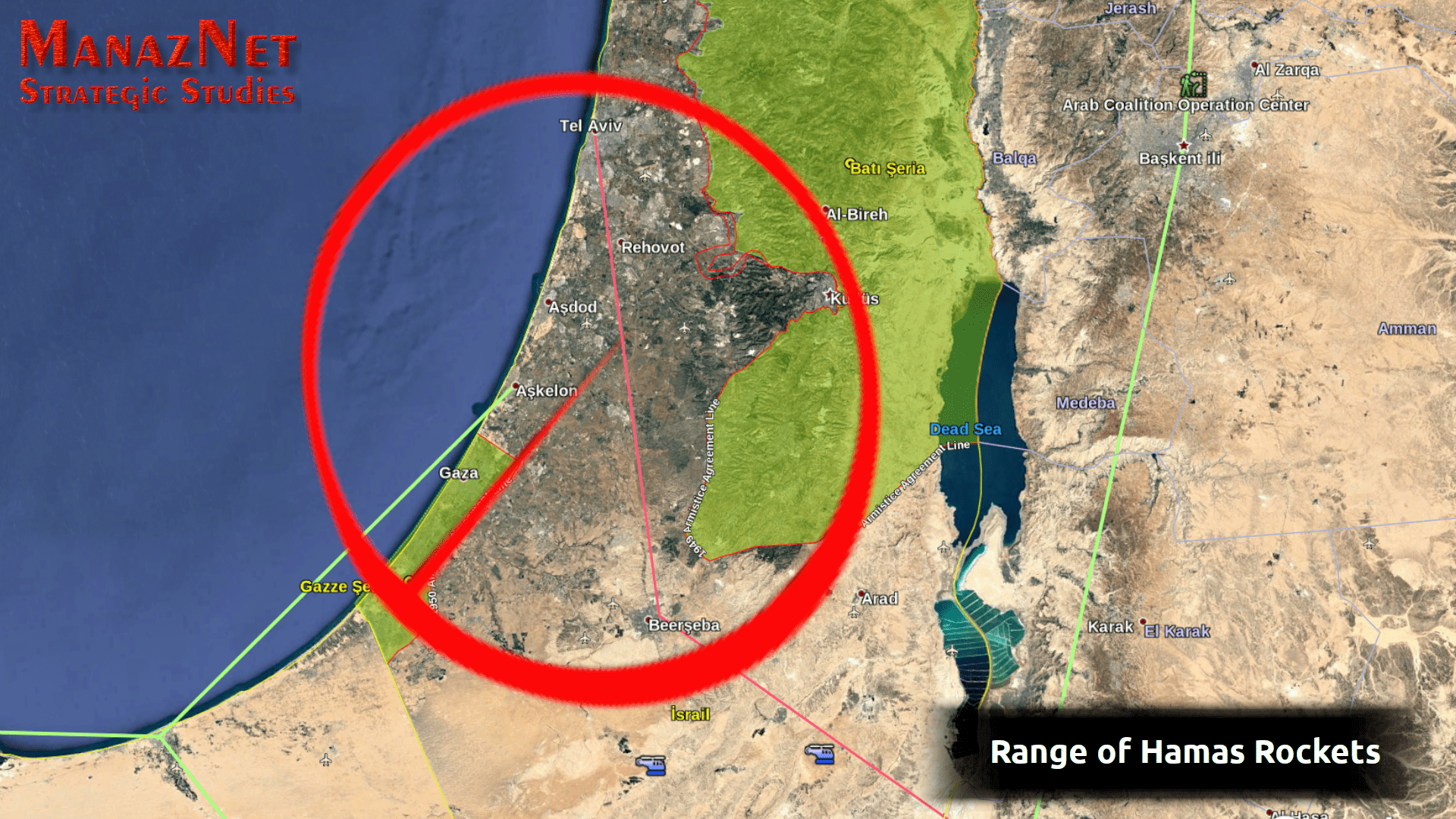
    The range of Hamas Rockets varied between 70 and 100 km. Such an attack came as a surprise to Israel. The rockets that reached TelAviv have killed 5 Israelis and injured dozens so far. A great panic started within the Israeli Police. On the evening of May 11, Palestinians demonstrated in all Israeli cities. Especially in the city of Lid, the Israeli Police lost control and a state of emergency was declared.

    Netanyahu claimed that Hamas would pay a huge price. Warplanes hit hundreds of targets in Gaza on May 11-12. Around 50 Palestinians have died so far. 13 of them are children and 4 of them are women.

    Although Netanyahu spoke harshly, he contacted Cairo and the United Arab Emirates and offered to mediate with Hamas. Hamas, on the other hand, refused mediation offers and declared that they “do not trust the Israeli government and are ready for a great war”. The Kassam Brigades, which are the Special Military Units of Hamas, said that: “Some of their commanders were martyred in Israeli attacks and they will hit an important target every day”.

    It is the first time that Israel has faced such strong Palestinian resistance. Many Zionist writers within Israel and in the US admit that “Israel fell short for the first time”.

    Although Netanyahu succeeds in staying in the Government by going to early elections last years, this time he will not be able to do so. This war seems to be Netanyahu’s Final War. The Israeli people are tired of the war, with the exception of some radical groups. Especially 17-year-old youth recruited into the army complain of long military service periods. The New Generation aspires to live in peace with the Palestinian people with whom they live on the street.

  • Ukraine’s another Church dissent is on edge

    Ukraine’s another Church dissent is on edge

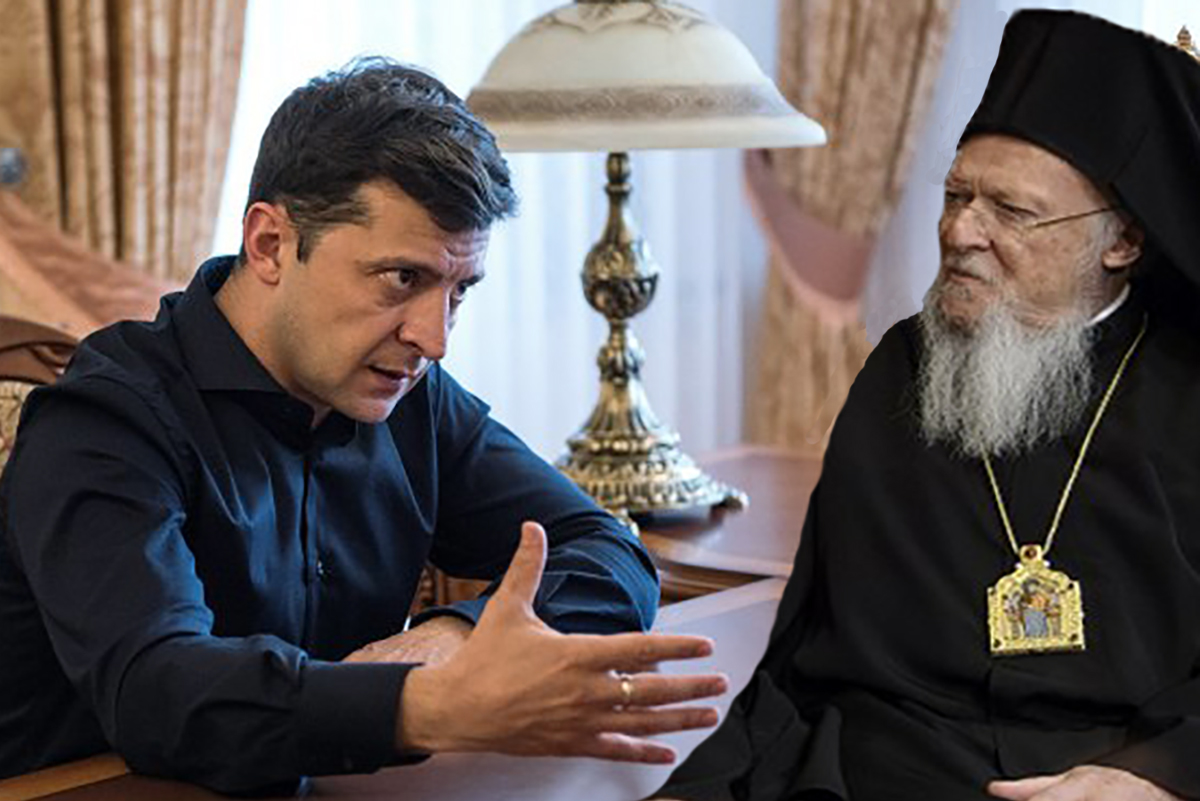
    Photo credit: press-office of Vladimir Zelensky

    The Ukrainian Orthodox Church has blamed Volodymyr Zelensky for pressure by the authorities. Its followers hoped to end persecution with the new Ukrainian President coming to power. Yet, Zelensky who stayed away from the Church affairs during the first months of his presidential term is taking on the course on further Church dissent started by the former Ukrainian President Petro Poroshenko.

    Back in 2019, 49 parliamentarians requested from the Constitutional Court of Ukraine to cancel the controversial draft law “On renaming the Ukrainian Orthodox Church”. This religious organization was obliged to change its name to “Russian Orthodox Church in Ukraine” in order to indicate that it was allegedly “governed by an aggressor country”.

    This bill was passed two years ago. The document was part of a larger strategic plan by President Petro Poroshenko to create an “independent church.” He won the support of Patriarch Bartholomew of Constantinople and then gathered the dissenters together, promising them the role of the leading religious group in the country. This explains why the Orthodox Church of Ukraine has become so powerful.

    But the majority of Ukrainians, followers of the Ukrainian Orthodox Church, did not want to join the Orthodox Church of Ukraine, so the government organized persecutions against them and the canonical church. Moreover, it legalized the takeover of its temples widely known in the world.

    In October 2020, Volodymyr Zelensky with his spouse made a visit to Istanbul to hold a meeting with Bartholomew I of Constantinople. The Ukrainian President made it clear that the Ukrainian authorities will support further expansion of the Orthodox Church of Ukraine. The reaction of dissenters was swift: they announced a new wave of temple seizure making everyone believe that the power was again on their side. The courage that Ukraine has not seen since Poroshenko’s days in the office.

    According to local Ukrainian experts, Bartholomew, who officially calls himself a peacemaker of all Christian world is in fact supporting the religious dissent in Ukraine.

    The Ukrainian authorities, who claimed that the index of religious freedom in the country is equal to the one in Belgium (according to Andrei Yurash, the head of the Religion Division of the Ministry of Culture, this indicator was 3,2 in February, 2021, that points to the high level of religious tolerance), are also fueling the national protests in the country with their hypocritical and at times irrational policy.

  • Why Turkey Isn’t Going To Sell Its Russian S-400 Missiles To The United States

    Why Turkey Isn’t Going To Sell Its Russian S-400 Missiles To The United States

    Paul Iddon Contributor Aerospace & Defense I write mostly about Middle East affairs, politics and history.
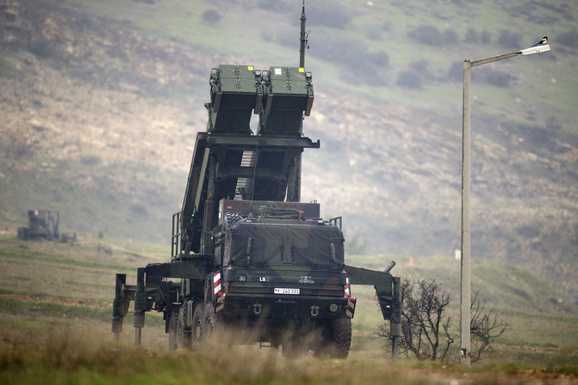
    A U.S. senator last week introduced legislation to provide funding to buy Turkey’s Russian-built S-400 air defense missiles. While that might theoretically break the contentious deadlock this issue has created between the two fellow NATO alliance members, it’s not likely to happen for a number of reasons.

    TURKISH DEFENSE MINISTRY VIA AP.

    Senate Majority Whip John Thune  proposed an amendment to the 2021 National Defense Authorization Act (NDAA) that would authorize use of the U.S. Army’s missile procurement account to purchase Turkey’s sophisticated Russian-built long-range S-400 air defense missiles. 

    Since Turkey made the estimated $2.5 billion deal for the Russian missiles in 2017, Washington and Ankara have repeatedly butted heads over that unprecedented move. The U.S. repeatedly insisted that it was irresponsible and unacceptable for Turkey, a NATO member, to buy such an advanced Russian missile system. 

    Washington also insisted that having S-400s and stealthy fifth-generation F-35 Lightning II fighter jets operating in the same military could potentially enable Russia to glean sensitive information about the latter’s stealth capabilities.

    Turkey insisted that such fears were unfounded.

    Nevertheless, the U.S. suspended Turkey from the F-35 Joint Strike Fighter program, banned it from ordering F-35s for its air force, and began removing it from the aircraft’s lucrative production program.

    The S-400 purchase also made Turkey eligible for sanctions under the Countering America’s Adversaries Through Sanctions Act (CAATSA). However, the Trump administration has avoided imposing any sanctions on Ankara under that law to date.

    Thune is not the first U.S. politician to advocate some form of compromise with Ankara on the S-400 issue to avoid the imposition of CAATSA sanctions and any further deterioration in U.S.-Turkey relations.

    Last July, the same month Turkey took delivery of the first components of its new Russian missiles, Senator Lindsey Graham suggested that if Ankara did not activate the system then Washington could reach some agreement with it and avoid having to impose any sanctions. 

    Turkey, however, doubled down on its vow to activate the system. It first tested its S-400’s radar against some of its air force’s U.S.-made F-16 and F-4 fighter fighter jets in Ankara last November and steadfastly reiterated several times that it would activate the missile systems in April.

    April came and went as did that scheduled activation. 

    Turkey insists the activation is delayed because of the novel coronavirus pandemic, not because it had changed its mind, again insisting that it bought the system to use it. 

    Last August, U.S. Secretary of Defense Mark Esper said that Turkey would have to move the S-400s “out of the country” altogether before the U.S. would even consider allowing it back into the F-35 Joint Strike Program.

    (DARDANELLAS/GETTY IMAGES)
    If Thune’s proposed legislation somehow leads to a successful U.S. purchase of Turkey’s entire S-400 arsenal then Ankara will have fulfilled that main U.S. precondition for re-entering the F-35 program.
    The Trump administration would likely welcome resolving the U.S.-Turkey S-400 impasse. President Trump, who has good personal relations with Turkish President Recep Tayyip Erdogan, had previously said it’s “not fair” that the U.S. can’t sell Turkey F-35s because of its S-400 purchase. 

    The president would undoubtedly welcome another opportunity to sell Turkey these jets. Turkey would also have a lot to gain from reclaiming its sizeable role in the Joint Strike Fighter production program given the dire state of its economy. 

    From an intelligence standpoint, possessing fully operational S-400 missiles would enable the U.S. to thoroughly inspect and test the advanced Russian system, evaluating all of its strengths and weaknesses. 

    In the late 1990s, Greece acquired Russian S-300 air defense missiles, the S-400’s older brother, that were previously destined for Cyprus. In more recent years, Israel reportedly got an opportunity to train its air force against those Greek missiles. This likely proved useful for the Israeli military since its regional adversaries Iran and Syria also possess S-300s.

    The U.S. could similarly test and gauge the effectiveness of the S-400 if it purchased Turkey’s batteries.

    Buying Turkish S-400s would certainly not be the first time the U.S. bought advanced Russian military hardware from a third country. In 1997, it purchased Moldova’s MiG-29 Fulcrum fighter jets to keep them out of Iran’s hands. Washington also took that opportunity to inspect those advanced Russian warplanes and gain a better understanding of their capabilities.

    However, the U.S. is not likely going to actively seek to buy Turkish S-400s despite this proposed legislation. Turkey is also unlikely going to want to sell those missiles.

    Following Thune’s proposal, Russia clarified that Turkey needs its permission if it wants to sell the S-400s to another country, something Moscow’s not likely to give Ankara since it certainly wouldn’t want the U.S. learning everything there is to know about one of its premier air defense systems. 

    Erdogan also wouldn’t want to antagonize Russia by selling the missiles since Moscow could well respond by making life much more difficult for Turkey in both Syria and Libya. 

    The Turkish government has already dismissed Thune’s suggestion. Also, Erdogan would be unlikely to accept Thune’s proposal even if it makes it into the final version of the NDAA and if Russia weren’t opposed to any sale.

    The Turkish president seems to have risked so much to procure S-400s since it is, in many ways, the ideal air defense system for protecting Ankara against another coup attempt, something Erdogan deeply fears.

    In the July 15, 2016, coup attempt, Turkish Air Force F-16s piloted by the putschists bombed Ankara, including the Turkish parliament. This deeply shocked Turks since it was the first time the city had experienced a military attack in 600 years.

    Since Turkey’s military consists almost entirely of U.S.-built equipment, its capital city found itself effectively defenseless against its own warplanes. In the words of one Turkish analyst, “what was noticed during the 2016 coup attempt is that Turkey did not have any effective defense mechanism against ‘its own’ American made weaponry!”

    If there is another similar coup attempt, Turkish S-400s that are not integrated into Turkey’s air defense networks would likely prove very well placed to shoot down any renegade Turkish F-16s targeting the capital. After all, the Russian-built system was designed with the possibility that it might one day have to shoot down NATO warplanes. 

    It’s likely for this reason that Erdogan decided to risk so much to acquire Turkey’s S-400s. It’s also likely why he’s so unwilling to give them up and absolutely willing to endure all of the negative political and economic consequences for Turkey that comes with holding onto and eventually activating them.
    Paul Iddon

    I am a journalist/columnist based in Erbil, Iraqi Kurdistan from where I’ve been writing about regional affairs for five years now._ _ _ _ _ _ _ _

    NOT/NOTE:
    Rusya zaten S-400 sisteminin üçüncü bir ülkeye izinsiz devredilmeme  şartını başından koşmuş bulunuyor.
    Üstelik Rusya istediği an sistemin uydu bağlantısını kesip saf dışı bırakabilir.

    Washington’da Yigal Carmon adında eski bir İsrail istihbarat ajanının 1998’de kurmuş olduğu Middle East Media Research Institute (MEMRI) adında bir kuruluşun Rusya’da Versia haber sitesinde S-400’ler ile ilgili yayımlanmış bir haberi ileten 29 Haziran 2019 tarihli bildirisinde Rusların Türkiye’ye satılan füzelerin kendilerine karşı kullanılmasını veya füzeler hakkında gizli bilgilerin ABD’ye sızmasını önlemek için bu tedbirleri almış oldukları yazılıydı:

    1- Füze sisteminin elektronik yazılım kodları paylaşılmayacakmış.

    2- Sistemin elektronik hafızasına girme (hack) girişiminde bulunulursa bilgisayar hafızasındaki tüm bilgileri derhal otomatik olarak silmeye programlıymış.

    3- Antlaşma gereğince Türkiye’nin S-400 sisteminin içine girmesine veya değişiklik yapmasına izin yokmuş.

    4- Sistem bakımını sadece Rus teknisyenler yapacaklarmış ve üzerindeki mühürleri kontrol edeceklermiş.

    5- Her füze bataryasının içinde sezici aletler bulunuyormus ve içini açmaya kalkışılırsa sistem otomatik olarak uzayda bir Rus askeri peykine elektronik sinyal gönderiyormuş.

    6- Eğer bu sinyale mani olacak herhangi bir hangara konulur ve sinyal bağlantısı kesilirse, tüm sistem çalışmaz hale geliyormuş.

    7- Tüm hava savunma sistemlerinde olduğu gibi S-400 sisteminin dost-düşman uçağı ayırımı yapma yeteneği varmış.

    Haberin İngilizce metni:

    “ … when the Turkish authorities made a deposit for the S-400 delivery, they unexpectedly put forward a number of additional conditions. The Turks began insisting that secret technologies be transferred to them and on the joint production of rocket systems. Officially, it is reported that the Russian side refused to fulfill this request and access to the internal systems of the S-400 anti-aircraft missile complexes was excluded [from the contract]. Well, there is no choice but to believe these statements.

    “Now Russian manufacturers say that no documentation on production data is transferred to Turkey, and therefore Ankara, and especially the Americans, will not be able to gain access to the S-400 systems. Upon an attempt to bypass the password and hack the system, the computer will automatically destroy all the data embedded in it. According to the agreement, Turkey does not have the right to disassemble the complexes and modify them. According to the manufacturers, this ensures that the Russian S-400 systems are reliably protected from any copying infringements. Armament maintenance will also be handled exclusively by Russian specialists, who will be able to control the integrity of the manufacturing seals.”Additionally, each piece of machinery has special sensors that transmit a signal to a satellite military communication channel if someone makes an unauthorized dissection. And if an attempt is made to place the complex in a special hangar that obstructs signal transmission, all S-400 equipment will be instantly blocked. Also, for reliability, air defense missile systems are equipped with ‘friend-foe’ recognition systems.”(Kaynak: https://www.memri.org/reports/russian-media-outlet-versiaru-experts-fear-s-400-delivery-turkey-may-lead-secret)

  • The Fatal Flaw in Trump’s ISIS Plan

    The Fatal Flaw in Trump’s ISIS Plan

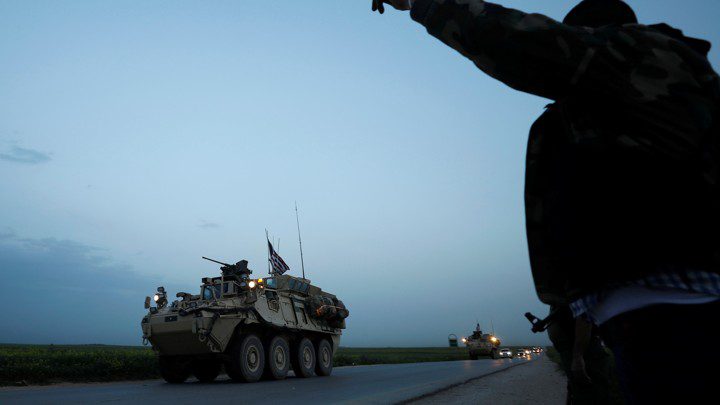
    A Kurdish fighter from the People’s Protection Units (YPG) gestures at a convoy of U.S military vehicles driving in the town of Darbasiya next to the Turkish border, Syria, on April 28, 2017. Rodi Said / Reuters
    When Turkey’s President Recep Tayyip Erdogan visits Washington next week, he and President Donald Trump will no doubt spend considerable time discussing the future of the Syrian-Kurdish People’s Protection Units (YPG), America’s favored contingent in the war against the Islamic State. With U.S. assistance over the past two and a half years, the YPG-dominated anti-ISIS forces have recaptured some 7,400 square kilometers of northeastern Syria from the terrorist group. From Erdogan’s perspective, this strategy, embraced by the Obama administration and now Trump, is helping a Kurdish terrorist group that threatens Turkey’s security and territorial integrity—security and territorial integrity that NATO is supposed to help defend. Erdogan’s likely response: more pressure on America’s Syrian-Kurdish allies, even if that pressure undermines Washington’s goal of reducing the Arab-extremist threat in eastern Syria
    Recent events show how complicated this will be for the Trump administration. After Turkey’s bombing of YPG positions in northern Iraq and Syria on April 25, a U.S. military officer met with a known commander of the Kurdish Workers Party (PKK), an insurgent group that has long been a thorn in Turkey’s side, and has held a spot on the U.S. Foreign Terrorist Organization (FTO) list since 1997. The meeting provoked outrage in Turkey and drew a sharp rebuke from Erdogan. The announcement on Wednesday that the United States would arm the YPG demonstrated that Erdogan has failed to convince the Americans to reverse course with the PYD-YPG, despite intense lobbying.  His visit to Washington promises to be a difficult one for both governments.
    As autocratic and intemperate as he is, Erdogan isn’t actually wrong about the commingling of various Kurdish outfits. In a 2013 interview with Osman Ocalan, the brother of imprisoned PKK leader Abdallah Ocalan, Osman claimed that he and other PKK figures founded the Democratic Union Party (PYD), the YPG’s political arm, in 2003 in Iraq’s Qandil Mountains, the headquarters of the PKK. The PYD is also a member of the Kurdish Communities Union, established in 2005 in Qandil by the Kurdish People’s Congress, a PKK organization that the State Department added to the FTO in January 2004. The co-chairperson of the executive council of the Kurdish Communities Union is Cemil Baylik, the acting leader of the PKK. In addition, hardened PKK activists, fighters, and commanders fill the ranks of the PYD and YPG. A YPG fighter told The Wall Street Journal that he had been with the PKK before, and that fighters regularly rotated between PKK armed entities. Iraqi Kurdish Region President Masud Barzani, a close ally of the United States against ISIS, said in March 2016 that the PYD and the PKK are basically the same entity.

    Yet, the Trump administration (and Obama’s before him) keep contending, as recently as March 8, that the PYD-YPG and PKK are separate entities. But this has no basis in observable fact. And given the organic links between the YPG and the PKK, the PYD-YPG autonomous zone in northeastern Syria will likely provide strategic depth for the PKK’s ongoing and future fight against Turkey—something Erdogan knows and fears. There are reports out of Turkey already that Kurdish militants aligned with the PKK and PYD organized and trained in YPG-held northeastern Syria for attacks conducted in Istanbul, Ankara, and Bursa, in 2016.

    By relying on the YPG in the fight against ISIS, the United States is helping one terror group fight against another. That’s despite its longstanding policy of not working with any organization on the FTO, as it is doing with the YPG, which is effectively synonymous with the PKK. Of course, some argue that the PKK should not be on the U.S. FTO list. An in-depth discussion on the conditions for the PKK’s removal would require months. In the meantime, however, blatantly ignoring the FTO strictures on official U.S. conduct with a listed organization like the PKK and its subsidiaries reflects utter policy incoherence, diminishing America’s credibility on fighting terrorism.

    America’s infatuation with the PYD-YPG also allows it to ignore some uncomfortable realities that will haunt it long after ISIS is ousted from Raqqa. While the PYD-YPG organization is secular, it is not democratic. It has repressed political competitors, detained other Kurdish political activists, and detained and harassed independent journalists. What’s more, its emphasis on gender equality, and its insistence on imposing its political agenda, will cause problems for the future governance of Raqqa, the de facto capital of ISIS, and other Arab-majority towns the United States is now helping it seize from a weakened ISIS.

    Consider the case of Layla Mohammed, a PYD member and women’s rights activist from the town of Tel Abayad on the Turkey-Syria border. In a conversation, a senior U.S. official spoke with admiration of her dedication and commitment to the cause of women in Syria. Over objections from some Arab community leaders in Raqqa, the PYD- and YPG-dominated Syrian Democratic Forces (an entity that serves, basically, as a fig leaf by Washington to cover the U.S.-backed YPG campaign against ISIS) named Ms. Mohammed co-chair of a new Raqqa administrative council that will rule Raqqa after ISIS is gone.

    But Raqqa, more than Damascus, Homs, or Aleppo, is known among Syrians as a conservative Arab city, where many communities retain links to tribal networks extending along the Euphrates and eastwards into the Syrian desert towards Iraq. Traditional norms, including those governing the roles of women, prevail. Many Americans find the constraints placed on Arab women objectionable, and would applaud Ms. Mohammed’s activism. But as the Iraq war should have taught Washington, it cannot impose, either directly or through local proxies, its own social and political norms on conservative Middle Eastern communities without potentially provoking a counter-reaction.

    Arab opinions polls from recent years make this tension plain. An unofficial survey of ISIS fighters from 2014 conducted by a Lebanese communications firm showed that defending Sunni communities under attack was the top reason recruits from other Muslim countries joined ISIS. The 2016 ASDA’A Burson-Marsteller Arab Youth Survey highlighted how disputes over how best to interpret Islam and perceptions that western culture is being imposed on Arab societies feeds extremist recruitment. The longstanding Arab-Kurdish ethnic competition and the PYD’s ideological agenda, such as suddenly imposing gender equality, stand to boost extremist recruitment once ISIS shifts to insurgency mode after the fall of Raqqa.

    Most worrisome: evidence that Sunni-Arab extremists learn and adapt from their own mistakes. In Idlib province in northwest Syria, al-Qaeda shifted away from the brutal tactics it honed in Iraq from 2004 to 2009. Instead, by transitioning into something of an “al-Qaeda, Version 3.0,” it has reduced violence against local populations, provided infrastructure-service delivery through local administrators, and integrated more with local communities. If the Arab communities of eastern Syria perceive that the PYD-YPG seeks to dominate them,  wiser al-Qaeda and ISIS leaders in Syria may be poised to pick up more recruits and embed in communities, making the coming Arab insurgency harder to contain.

    For now, ISIS is still in Raqqa and hasn’t yet shifted into wide-scale insurgency mode. But it won’t be long until Washington will have to decide who will control and govern Raqqa and eastern Syria, and who will pay for it. As Colin Powell told George W. Bush in 2003, if Bush toppled Saddam, America would “own” Iraq and have to take responsibility for it. America may soon have 1,000 more troops on the ground in eastern Syria, and its proxies are seizing new territory from ISIS every week with U.S. support, including a Marine artillery battalion and regular airstrikes. There are even U.S. peacekeepers deployed in Manbij and near Tel Abayad to keep Turkish, Syrian-Arab, and Syrian-Kurdish fighters from shooting at each other. America now effectively owns eastern Syria.

    The Obama administration knowingly launched America in this direction, but Trump, who denounced nation-building in his campaign, will pay the larger bills now coming due. America’s difficulties will be even worse if Turkey stokes further anti-PYD-YPG sentiment in this Arab-majority region. Thus, we will need to cut a deal with Erdogan.The saddest part of all this is that the Syrian Kurds, like so many Middle Easterners before them, think the Americans will protect them from their enemies. They have forgotten the bitter experience of Mustafa Barzani, the Iraqi-Kurdish leader whom the Americans backed in the 1970s against the Iraqi Baathist regime, only to sell them out in 1975 when the U.S.-backed Shah of Iran cut a deal with Baghdad. Henry Kissinger halted the U.S. arms supply to Barzani, and Iraqi forces overran Iraqi Kurdistan. Mustafa Barzani, father of  President Masud Barzani, had to flee and died in exile in the U.S. Especially with presidents like Obama and Trump, the Syrian Kurds of today should expect no better of the Americans.

    We want to hear what you think about this article. Submit a letter to the editor or write to [email protected]

    Robert Ford is a teaching fellow at Yale University’s Jackson Institute. He is a former U.S. ambassador to Syria and deputy ambassador to Iraq.