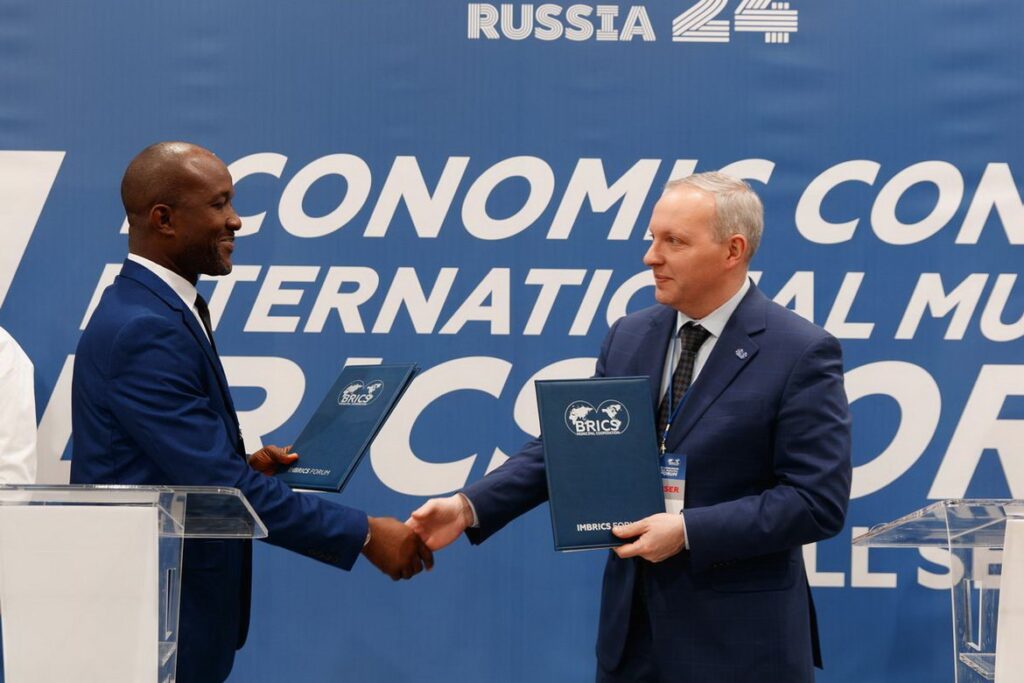
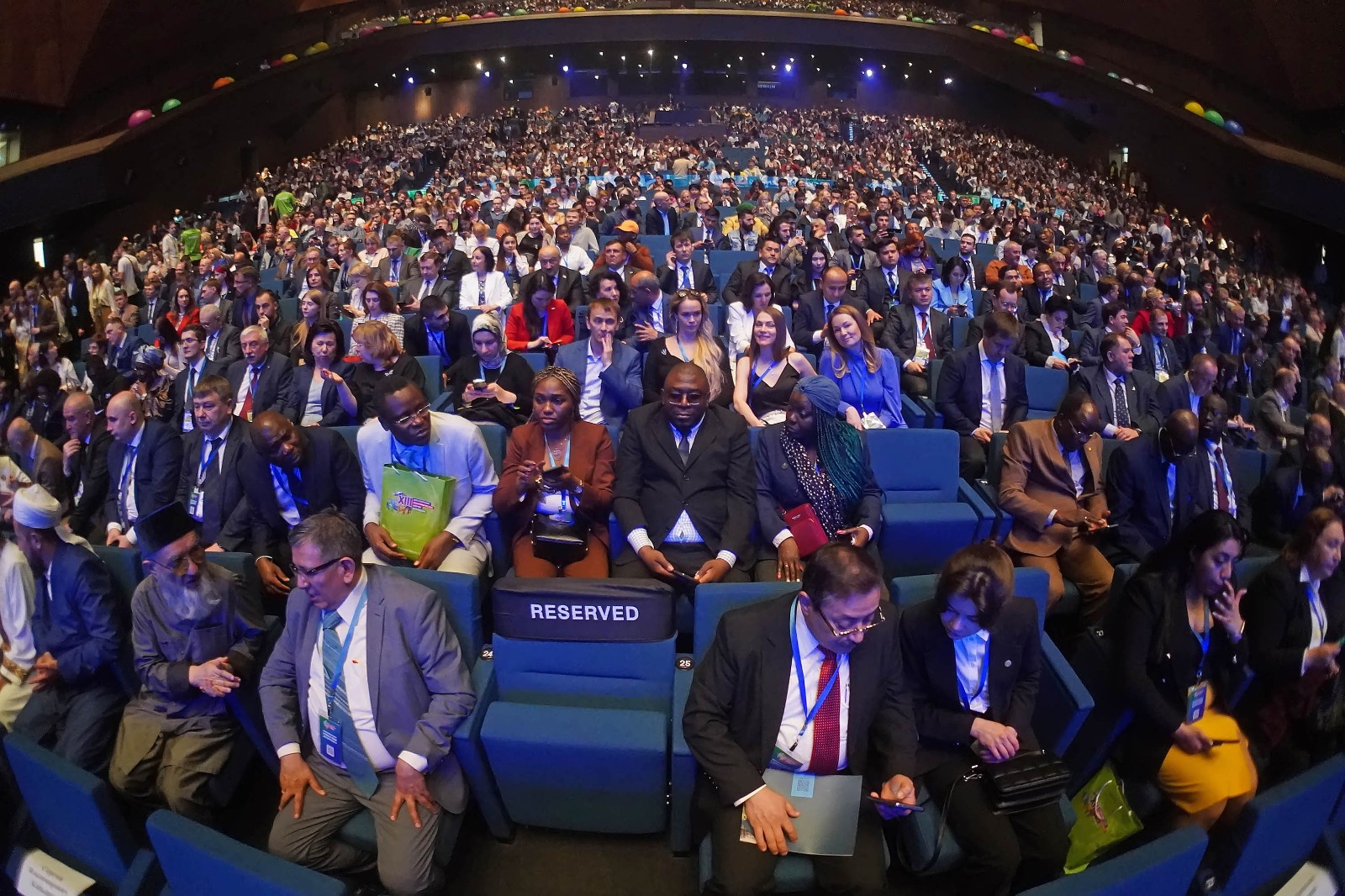
From October 29 to 31, 2025, St. Petersburg will host the BRICS International Municipal Forum (IMF BRICS). The upcoming Forum is set to become one of the key global events fostering cooperation, innovation, and sustainable urban development among the BRICS+ countries and friendly nations.
As a leading communication and business platform, the Forum unites partners from over 70 countries and 2,000 cities and regions around the world. In 2024, the event gathered nearly 6,000 delegates from 101 countries, underscoring its growing global significance.
The Forum’s mission is to promote effective solutions for sustainable urban development, facilitate the exchange of advanced technologies and best governance practices, and strengthen direct ties between cities and regions. Discussions will focus on urban innovation, digital transformation, green economy, infrastructure, education, and social policy, with special attention to achieving the UN 2030 Sustainable Development Goals.
The event is held with the support of the Ministry of Foreign Affairs of the Russian Federation, the Federation Council, the Administration of the President of Russia, the Governments of Moscow and St. Petersburg, the All-Russian Congress of Municipalities, the Moscow City Duma, the Moscow Chamber of Commerce and Industry, and the Russian Union of Industrialists and Entrepreneurs. Since 2020, the Forum has been officially included in the BRICS Chairmanship event plan and recognized in the Beijing Declaration of the XIV BRICS Summit (2022) and the Kazan Declaration of the XVI BRICS Summit (2024) as a key mechanism for enhancing cooperation among cities and promoting sustainable development.
The President of the Russian Federation, Vladimir Putin, has commended the Forum for its contribution to strengthening international dialogue and practical cooperation at the municipal level. This year’s BRICS International Municipal Forum will serve as a dynamic platform for new partnerships, innovation-driven projects, and meaningful agreements, shaping the urban future within the expanding BRICS+ partnership network.
From April 21 to 25, 2025, the International Diplomatic Forum “Economic Cooperation in the Eurasian Space: Synergy and Balance of Interests” was held in Yekaterinburg as part of the Eurasian Economic Youth Forum (EEYF). One of the central themes of the forum was the concept of a multipolar world built on the principles of equitable cooperation and mutual respect for national interests.
The forum brought together representatives from more than 20 countries, including ambassadors, consuls, government officials, and diplomats. For the first time in the forum’s history, it welcomed the participation of the Ambassador Extraordinary and Plenipotentiary of Sudan, Mr. Mohamed Elgazali Eltijani Sirrag, and the Ambassador Extraordinary and Plenipotentiary of Sierra Leone, Mr. Mohamed Yongawo. Their presence underscored the strengthening dialogue between Africa and Eurasia.
“International cooperation holds great potential, but each country has different interests. Cooperation must benefit all parties. Eurasia and Africa make up 75% of the Earth and possess immense resources. What is needed is political will and equal relations. We thank Russia for its support,” said the Sudanese ambassador.
The key message of the forum was the importance of “equal dialogue” — not only as a political principle but as the foundation for economic, scientific, and technological cooperation. Speakers also highlighted the urgent need to reform international institutions — most notably the United Nations, which celebrates its 80th anniversary in 2025, the date concise with the 80th anniversary of the ending of the World War II.
“We must move beyond colonial legacies to achieve better outcomes for Africa. While Africa faces economic challenges, it holds enormous natural wealth. Many African nations would welcome the opportunity to join BRICS,” said the Ambassador of Sierra Leone.
The forum covered a wide range of topics including global economic challenges, the activities of BRICS and the SCO, technological transformation, the role of artificial intelligence, and the empowerment of youth in shaping the global future.
This forum was part of the wider EEYF program, which gathered over 21,000 participants from 115 countries. As noted by Rector of USUE Yakov Silin, the event’s scale extended beyond Yekaterinburg, with sessions held across 14 cities in Russia and abroad — including Baku, Minsk, Astana, Dushanbe, Belgrade, St. Petersburg, Kaliningrad, Colombo, and others.
First Deputy Governor of Sverdlovsk Region, Alexey Shmykov, emphasized during the opening ceremony:
“It is symbolic that the tradition of hosting the EEYF was born here, in Yekaterinburg — one of Russia’s leading international business hubs. For 15 years, the forum has been a magnet for progressive youth. Sverdlovsk Region remains open to new ideas and is committed to initiatives that strengthen economic cooperation between our region and countries worldwide.”
The forum also featured a plenary session focused on youth entrepreneurship and global economic development, as well as the Rectors’ Forum, which brought together nearly 90 university leaders from different countries to discuss joint scientific and educational initiatives.
The International Diplomatic Forum in Yekaterinburg demonstrated that a new global architecture is impossible without the partnership of Africa and Eurasia — and without a shared commitment to balance, synergy, and sustainable development.
The two-day that is held on August, 27-28, is a unique platform for exchanging experience and ideas between representatives of regional and municipal governments from the BRICS countries, as well as for building effective business communications with entrepreneurs from Russia and other partner countries. The event is held with the support of the Presidential Administration and the Russian Foreign Ministry, as well as with the assistance of Rossotrudnichestvo and the Government of Moscow.
The Forum is yet another proof of inefficiency of the sanctions imposed on Russia – the country regularly hosts international events and continues global trade.
Moreover, the expansion of BRICS has become a turning point both for the association itself and for the new members and their partners. Behind the obvious economic, logistical and trade benefits are long-term strategic goals that, on the one hand, will entail changes in global markets, and on the other, will accelerate the process of reorienting the focus of international cooperation that has already started.
The once proclaimed trend of “turning to the East” is now acquiring a new focus – turning to the South. The global interest is shifting towards the countries of Southeast Asia and Africa, with which the Russia has already established business, economic, and trade ties, as well as partnerships in the field of migration policy and human capital. Thus, the BRICS has all the chances to become a new geopolitical center, strengthening its diplomatic, political and economic influence in the world.
And while this process has already started the West is hardly to be a part of the game.
The BRICS IMF is a regular event. In 2022, the BRICS IMF was included in the text of the Beijing Declaration of the XIV BRICS Summit (paragraph 70) and designated until 2030 as a significant mechanism for promoting urban development and establishing ties between sister cities of the BRICS countries within the framework of the Sustainable Development Agenda.
We in Azerbaijan see and know what does mean Armenian fake propaganda because we face it at the everyday level and usually try to answer in a related manner. But the Armenian propaganda machine uses even any tiny shell to spread lies and fake information about Azerbaijan, Türkiye, and other Turkic countries…
Now I’m providing an example of the fake propaganda action by Armenians once more.
On August 1, 2024, there was a regular State Department Press Briefing at the White House. Vedant Patel, Principal Deputy Spokesperson made a brief introduction and afterwards answered the questions of journalists.
Let’s see a question by a journalist (maybe Armenian, we don’t know):
Question: “There are Armenian POWs in the jails of Azerbaijan for four years by now, and there are Armenian local politicians from Nagorno-Karabakh again in the prisons of Azerbaijan for nearly one year after Azerbaijan launched another unprovoked attack last fall. According to Freedom House, after Karabakh territory came under Azerbaijani control, Karabakh is the most unfree territory in the world. It’s worse than North Korea. It’s worse than Venezuela, Syria, Afghanistan, you name it”.
This is the first part of the question. The person addressing the question claims that “there are Armenian POWs in the jails of Azerbaijan”.
Are there any?
Not of course! Because all POWs captured during the 44-day war of 2020 were returned to Armenia! Thus, Azerbaijan does not have any single Armenian POW at its disposal…
But why does Armenian propaganda claim that Azerbaijan has the Armenian POWs?
This is purely for propaganda purposes! Armenians know that they need to bring this issue to the attention of the world in a way where people can think that Azerbaijan is so inhumane and keeps POWs. Of course, many million people around the world do not know the realities in the region. Even most of them don’t know where Armenia is, who Armenians are, and so on. But propaganda works anyway…
Then this very “journalist” quotes the Freedom House claiming that “Karabakh is the most unfree territory in the world. It’s worse than North Korea. It’s worse than Venezuela, Syria, Afghanistan”.
Are we surprised?
No!
Because this very Freedom House is a propaganda tool as well to suppress new emerging democracies. This organization has been known for its pro-Armenian stance for dozens of years! It was and is supporting Armenian separatism while being silent about more than 250 thousand Azerbaijanis forcefully expelled from Armenia and those 750 thousand IDPs forced off from Karabakh by Armenian occupants!
Just for a reminder, starting from 1988 Armenia expelled all Azerbaijanis from its territory. Hundreds of Azerbaijanis were killed, and their homes were looted by Armenians. This move served as the start of the Armenia-Azerbaijan conflict back in those years. Then Armenia occupied 20 percent of Azerbaijani lands early in the 1990s and forced out 750 thousand inhabitants! Azerbaijan managed to free its lands from Armenia’s occupation only after 30 years and during this movement, Armenian inhabitants (approximately 70 thousand people) voluntarily left Karabakh while Azerbaijan repeatedly asked them to stay…
So why the Freedom House is claiming that Karabakh is the most unfree territory? Those 750 thousand Azerbaijanis need to return to Karabakh but can’t because Armenians have wiped off any single home in that territory. That’s why very few people live there and there can’t be any evolution regarding freedoms in that area. The lands freed from Armenian occupation are covered with landmines and even it’s dangerous to walk around.
Let’s see why and how the Freedom House decided that “Karabakh is worse than North Korea”.
Maybe because the Freedom House’s Vice President for Policy and Advocacy is Annie Wilcox Boyajian, whose husband is an Armenian for example?..
This was the first part of the question of blackmailing Azerbaijan. But a “journalist” continues further with his attempt to blackmail Azerbaijan. Let’s see the second part of the question.
Question: “So the question is whether you follow this situation with the collapse of liberties and civil society in Nagorno-Karabakh, if you have any comments on this, and is there anything that this administration can do to help the detained Armenians in – that are jailed in Azerbaijan, whether to – you can help them to release – to be released or assist in any other form? Thank you”.
“Liberties and civil society in Nagorno-Karabakh”? Isn’t this a bit strange? Who can speak about the liberties and civil society in any territory that was under the occupation of a foreign country? In our case, we speak about the Azerbaijani Karabakh region which was under Armenia’s occupation for about 30 years and thus there couldn’t be any sign of liberties and civil society. But this Armenian propaganda mouthpiece claims that “liberties and civil society collapsed” in Karabakh…
What is good, Vedant Patel’s answer was quite accurate, and the terms used were selected very carefully. Let’s see.
MR PATEL: “So, on the context of the broader situation in the South Caucasus, this is something that the Secretary and the department continue to be deeply engaged on. I don’t have any updates for you as it relates to that process. And look, when it comes to detainees, we have been clear and consistent that any country needs to treat all detainees humanely, with dignity, and in accordance with international law, and needs to respect detainees’ human rights, and that continues to be true in this case as well”.
No single word about the so-called POWs! And no mention of Azerbaijan!
The State Department and the US Administration know quite well what is what in the South Caucasus!
And now let’s be clear with those detainees to whom Vedant Patel is paying attention. Yes, Azerbaijan has Armenian detainees. But they are not the citizens of Armenia (except one) and none of them was captured during the war actions. All of them are tried for being a part of an organized crime against civilians which caused the killing of hundreds of people. At the same time, they are citizens of Azerbaijan of Armenian origin, and they need to answer for those killings before the court. This is very simple and understandable, and the US Administration and other major international actors have quite enough information about this…
Now let’s pay attention to the report by Armenian media which claims that Vedant Patel spoke about “Armenian POWs”.
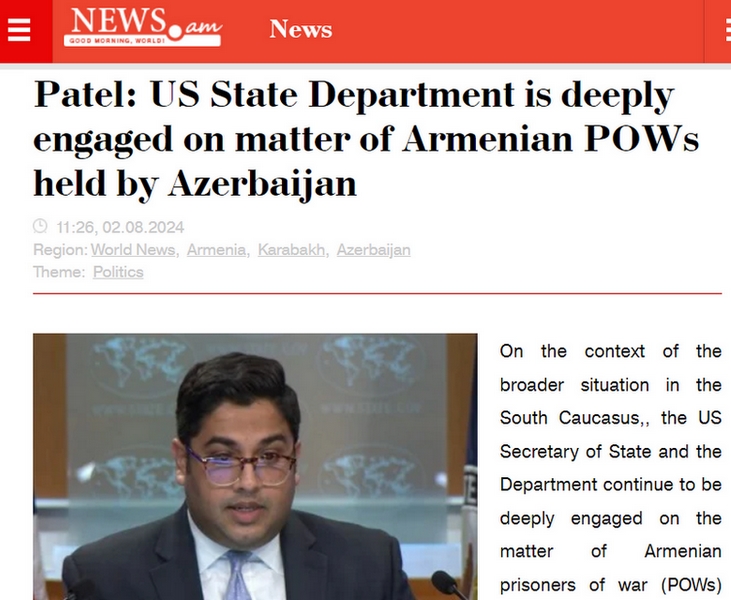
The headline at the News.am reads: “Patel: US State Department is deeply engaged on matter of Armenian POWs held by Azerbaijan”.
Further, the news reads: “On the context of the broader situation in the South Caucasus, the US Secretary of State and the Department continue to be deeply engaged on the matter of Armenian prisoners of war (POWs) being held in Azerbaijan. Vedant Patel, Principal Deputy Spokesperson of the US Department of State, noted about this at Thursday’s Department press briefing”.
Did Vedant Patel use the wording like “Armenian prisoners of war (POWs) being held in Azerbaijan”?
Not of course!
We have quoted Vedant Patel’s answer to this question in full and as we mentioned above, he was quite accurate in using the terms. But the Armenian fake propaganda machine claims, that Vedant Patel spoke about “Armenian POWs”…
So, this is a way how Armenian propaganda works. Most people who read Armenian-style “news” usually don’t investigate the origins. It is usual and understandable for all people around the world. Because those not engaged in politics and news-making are not professionals and they used to believe the media. And Armenians use this opportunity for their ugly propaganda…
Amidst the global turbulence and the era of information there is a high risk to lose the historical heritage both material and the one that’s in our memories. For instance, the causes and the consequences of the World War II are often being retold in not a very true way – each country and each side has their own truth while the current confrontation between the West and the East adds some facts, often without any proof.
To save the history and keep it undeformed international experts from the Western and Eastern Europe, the Balkans and Russia gathered at the World Youth Festival for the discussion.
The event was also attended by teachers and students of Russian universities, as well as invited representatives from Spain, Serbia, Moldova and Kyrgyzstan, who specialize in the history of the Second World War.
During the discussion, Iker Bas, a leader of the organization Asociacion Sanchode Beurko Elkartea (Spain, involved in military reconstruction), said that, despite the tragedy of the civil war in Spain during the Second World War, it was difficult for him, like other Spaniards, to understand the suffering the peoples of the USSR came through, the people, who paid for the liberation of Europe with millions of lives. This feat of self-sacrifice of the Russian people must not be forgotten. Spain also respects history and hopes for cooperation in preserving the memory of The World War II.
According to Aleksa Gajic, the coordinator of the “Immortal Regiment” action in Belgrade, the Serbs remember and appreciate the fact that it was the Red Army that made a key contribution to the defeat of Nazi Germany and its allies in the European theater of operations. At the same time, currently in the countries of Europe, mainly the Eastern Europe, there is a growing trend towards the fight against monuments to Soviet soldiers, which requires censure and condemnation, including the involvement of international organizations. In Serbia itself, the People’s Liberation War of Yugoslavia holds the same place in history and culture as the World War II for the peoples of the USSR.
Sergey Danilyuk, the head of the military-historical association of Moldova “DOT” and the head of the national search center of Kyrgyzstan “Memory of the People” Romanova Tatyana focused the attention of those present on the lessons that future generations should learn from the tragedy of the Second World War. At the same time, it is ignorance and distortion of history that currently lead to conflict situations, including military actions.
In general, the dialogue that took place made it possible to determine the prospects for further joint activities to preserve the historical memory of the victory over Nazism in the 20th century.
The youth today must understand the conditions under which the post-war world order took shape and thanks to which, the only wish for a peaceful sky has been very clear for several decades of peaceful life.
The festival which brought together participants from 188 countries, became a platform where representatives of other states shared their experience in preserving the historical memory of the Second World War.
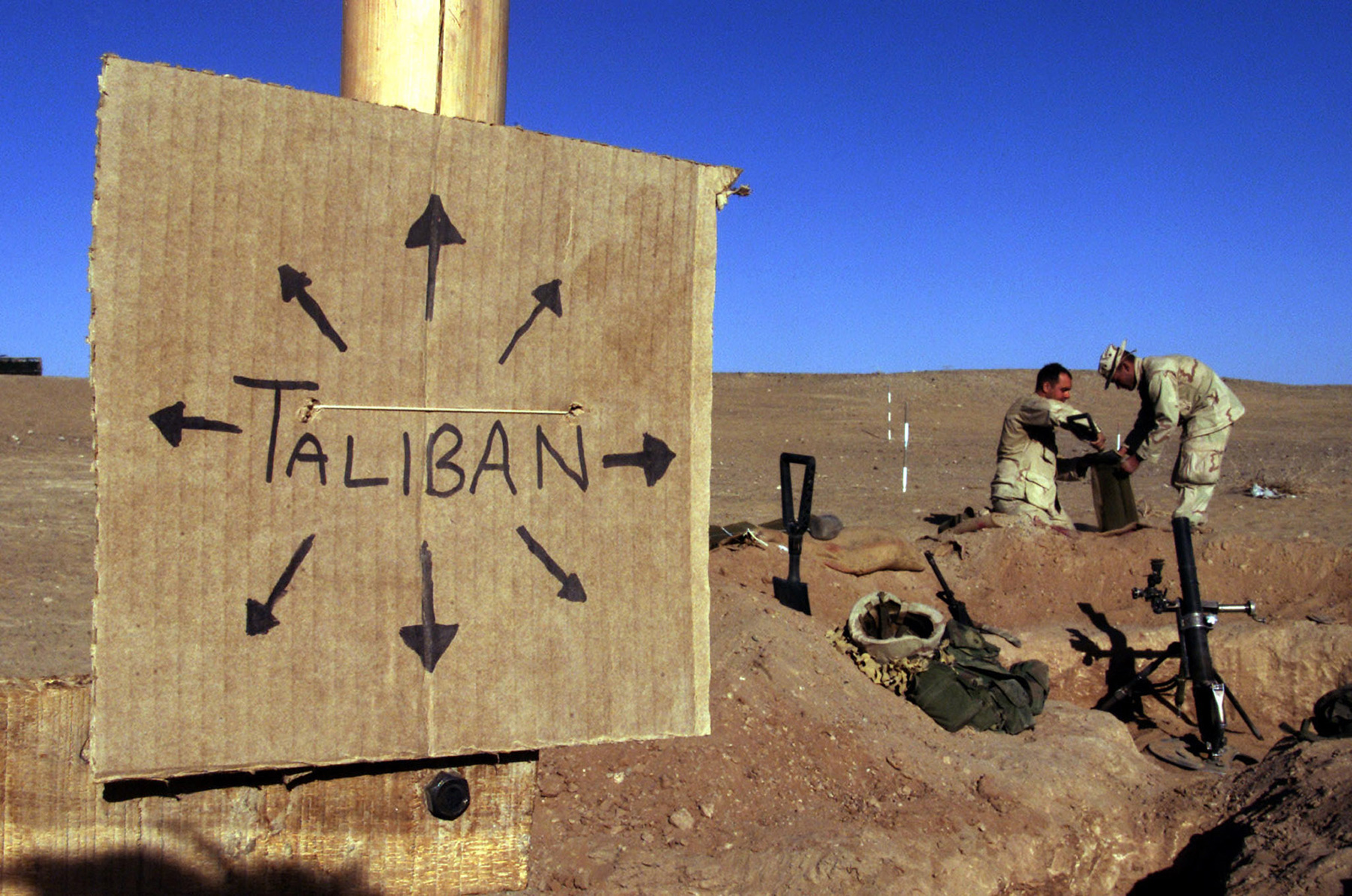
Despite the grim picture of turmoil and instability that has emerged in Afghanistan since the Taliban came to power, the Shanghai Cooperation Organization (SCO) has demonstrated a unique ability and efforts to resolve the Afghan crisis. As a regional organization, the SCO has shown interest in Afghanistan since its creation in 2001, primarily because the country’s stability affects its members, such as Pakistan, India, China, Russia, Iran and the Central Asian region. In this regard, in 2005, the SCO-Afghanistan contact group was created. Its main objectives are to establish dialogue with Kabul, combat security threats in the region, drug trafficking and organized crime, as well as contribute to the restoration of a peaceful, stable and economically prosperous state. However, as violence in the region escalated and US influence grew following its invasion in the country, the Contact Group lost its relevance and was disbanded in 2009.
Afghanistan received observer status in the SCO when President Hamid Karzai visited China in 2012 and signed the SCO counter-terrorism protocol in 2015. In 2018, Afghanistan officially reaffirmed its commitment to combating terrorism, extremism, drug trafficking and economic cooperation. The Afghan Contact Group was revived in 2017 and held annual meetings before the Taliban took power.
Today, during a period of global economic and political instability and conflicts in the Middle East, the revival of the activities of the SCO-Afghanistan contact group is more relevant than ever. Integrating Afghanistan into the Belt and Road Initiative will allow China to fill the economic and political power vacuum.
Uzbekistan, a member of the SCO, also plays an important role in dealing with the Taliban because many Uzbeks live in Afghanistan, although they are persecuted. Turkmenistan takes a neutral position, Kyrgyzstan and Kazakhstan take a wait-and-see position. Tajikistan supports the pre-Taliban government and hosts Afghan refugees and politicians.
The differences between India and Pakistan regarding Afghanistan could not be more serious. India was the last regional stakeholder to reach out to the Taliban, while Pakistan has friendly ties and influence with the previous and current Taliban regime.
Some of Afghanistan’s most pressing problems fall outside the organization’s mandate. Recognition, sanctions and humanitarian assistance are the responsibility of the UN.
More than 90% of Afghans are at risk of starvation. The SCO’s response to the humanitarian crisis was country-specific. For example, India sent medical aid and a shipment of wheat in collaboration with the World Food Programme. So far, $2.4 billion has been raised, less than the $4.4 billion requested by the UN.
The Taliban regime has violated its commitment to establish a representative and inclusive government. Restrictions on women’s freedom and human rights have threatened recognition, humanitarian assistance and access to frozen assets.
The situation is complicated by disagreements between SCO members at present. However, the revival of the activities of the SCO-Afghanistan contact group would contribute to the solution to the Afghan crisis in a more targeted and organized way, not within initiatives of a single SCO member country.