Category: Sci/Tech

  • Turkey to replace F-16s with local jets

    Turkey to replace F-16s with local jets

    Turkey eyes replacing F-16s with locally produced fighter jets by 2023, Turkey’s defense undersecretary said yesterday.
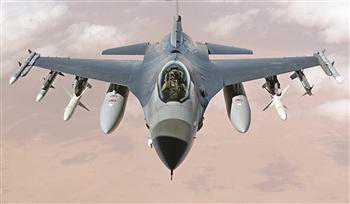
    Turkish arms manufacturer TAI has signed a technical assistance deal with Swedish Saab on technical assistance to build a fighter jet that will replace the F-16s.
    Turkish arms manufacturer TAI has signed a technical assistance deal with Swedish Saab on technical assistance to build a fighter jet that will replace the F-16s.

    “We’re working on the conceptual design of a new fighter jet that will replace our F-16 fighters,” Defense Industry Undersecretary Murad Bayar said yesterday on the sidelines of the two-day International Air&Space Power (ICAP) Conference being held in Istanbul.

    Recently, Turkish arms manufacturer TAI has signed a technical assistance deal with Swedish Saab on technical assistance to build a fighter jet, as Daily News reported.

    Turkish officials have been in talks with Saab (and with Korean Aerospace Industries) to find the best modality for the ambitious project of building its own fighter since 2010 and 2011. In August 2011, the Undersecretariat for Defense Industries, signed a deal with TAI to carry out the conceptual design work for fighter and jet trainer aircraft Turkey hopes to build.

    In recent months a Turkish delegation, including SSM officials, visited Saab headquarters and production facilities in Sweden. And more recently, TAI and Saab penned a preliminary agreement for technical assistance which will pave the way for a subsequent support deal.

    In yesterday’s statements, Bayar said the project of designing a local fighter began last year and after some trials one of the designs has matured.

    After completing the design phase, the undersecretary will make an offer on developing a fighter to the Defense Industry Executive Committee, the highest defense procurement body of Turkey, which includes Prime Minister Recep Tayyip Erdoğan, Defense Minister İsmet Yılmaz, Chief of the Turkish General Staff Gen. Necdet Özel, as well as Bayar himself.

    Recalling that Turkey had been one of the partners in the multinational Joint Strike Fighter (JSF) consortium that builds F-35 fighters, Bayar said the roles of the new model to be developed and the F-35 would be different. Therefore, new fighters will be configured as air-to-air planes and they will complement each other with F-35s.

    Defense sources had told to Daily News that the program was exposed to the risk of a prolonged conceptual design and this would make the whole project “not very meaningful.”

    ANKA to be developed

    Meanwhile, asked about how Turkey’s recently launched Göktürk-2 satellite would serve the Turkish Armed Forces, Bayar said the satellite would provide intelligence to Turkey by taking photos of certain regions, which will be used in the operational plans of the army. The first visuals have already arrived, he said.

    In addition, he said Turkey also had ambitious plans to develop and upgrade its unmanned aircraft, ANKA.

    “The new ANKA will be 4 tons, [the current model is 1.5 tons] and its carrying power, capabilities and sensors will be developed accordingly,” Bayar said, stressing that this would be one of the most important projects of the upcoming period.

    via SCIENCE & TECHNOLOGY – Turkey to replace F-16s with local jets.
  • Japan, France firms to build Turkey nuclear plant: report – The Economic Times

    Japan, France firms to build Turkey nuclear plant: report – The Economic Times

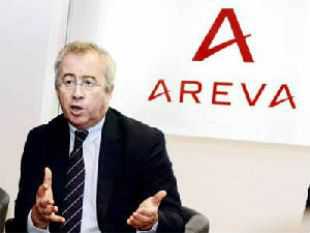
    TOKYO: Japan’s Mitsubishi Heavy Industries and France’s ArevaBSE 0.27 % are expected to win a $22 billion contract to build a nuclear power plant in Turkey, a newspaper said Thursday.

    Japan's Mitsubishi Heavy Industries and France's Areva are expected to win a $22 billion contract to build a nuclear power plant in Turkey.
    Japan’s Mitsubishi Heavy Industries and France’s Areva are expected to win a $22 billion contract to build a nuclear power plant in Turkey.

    Turkey’s energy and natural resources ministry held talks with Japanese government and company officials in Ankara on Wednesday and told them of its readiness to place the order from the two firms, the Nikkei business daily said.

    Under the expected order, Mitsubishi and Areva will build four pressurised water reactors with a combined output of 4.5 million kilowatts in Sinop on the Black Sea, the newspaper said.

    Construction of the country’s second nuclear power plant is to begin in 2017, with the first reactor coming on line by 2023, it said.

    France’s GDF Suez will operate the facility while a joint venture involving Japanese and Turkish companies will sell the power to local utilities, it added.

    A Mitsubishi Heavy spokesman declined to confirm the report.

    Prime Minister Shinzo Abe and his Turkish counterpart Recep Tayyip Erdogan may meet in Turkey in early May with plans to agree on the promotion of nuclear reactor construction, Nikkei said.

    After the two governments sign the agreement, preferred negotiation rights will be officially awarded to the Mitsubishi-Areva alliance, the daily said.

    Japanese, Chinese, South Korean and Canadian nuclear reactor makers had been competing for the project, but Turkey appeared to have given high marks to the Japanese team’s technological prowess, reliability and price, it said.

    The deal marks Japan’s first successful public-private bid for an overseas nuclear plant project since its 2011 nuclear disaster and could build momentum for further nuclear technology exports, it said.

    A huge tsunami crippled cooling systems at the Fukushima Daiichi nuclear plant, sending reactors into meltdown, spewing radioactive materials into surrounding areas.

    via Japan, France firms to build Turkey nuclear plant: report – The Economic Times.

  • Pluto’s ‘Gate to Hell’ uncovered in Turkey

    Pluto’s ‘Gate to Hell’ uncovered in Turkey

    Necla Sarikaya Reporting

    pluto-hell

    Francesco D’Andria

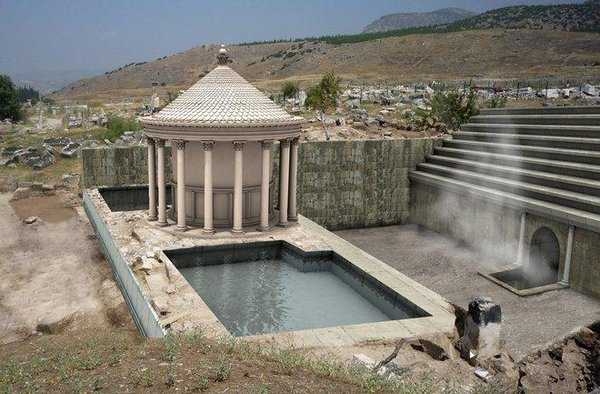
    A digital illustration shows the ancient Plutonium, celebrated as the portal to the underworld in Greco-Roman mythology.

    By Rossella Lorenzi
    Discovery News

    A “gate to hell” has emerged from ruins in southwestern Turkey, Italian archaeologists have announced.

    Known as Pluto’s Gate — Ploutonion in Greek, Plutonium in Latin — the cave was celebrated as the portal to the underworld in Greco-Roman mythology and tradition.

    Historic sources located the site in the ancient Phrygian city of Hierapolis, now called Pamukkale, and described the opening as filled with lethal mephitic vapors.

    PHOTOS: The Hunt for Lost Cities

    Advertise | AdChoices

    “This space is full of a vapor so misty and dense that one can scarcely see the ground. Any animal that passes inside meets instant death,” the Greek geographer Strabo (64/63 BC — about 24 A.D.) wrote.

    “I threw in sparrows and they immediately breathed their last and fell,” he added.

    Announced this month at a conference on Italian archaeology in Istanbul, Turkey, the finding was made by a team led by Francesco D’Andria, professor of classic archaeology at the University of Salento.

    D’Andria has conducted extensive archaeological research at the World Heritage Site of Hierapolis. Two years ago he claimed to discover there the tomb of Saint Philip, one of the 12 apostles of Jesus Christ.

    Founded around 190 B.C. by Eumenes II, King of Pergamum (197 B.C.-159 B.C.), Hierapolis was given over to Rome in 133 B.C.

    ANALYSIS: Tomb of Jesus’ Apostle Found In Turkey?

    The Hellenistic city grew into a flourishing Roman city, with temples, a theater and popular sacred hot springs, believed to have healing properties.

    “We found the Plutonium by reconstructing the route of a thermal spring. Indeed, Pamukkale’ springs, which produce the famous white travertine terraces, originate from this cave,” D’Andria told Discovery News.

    Featuring a vast array of abandoned broken ruins, possibly the result of earthquakes, the site revealed more ruins once it was excavated. The archaeologists found Ionic semi columns and, on top of them, an inscription with a dedication to the deities of the underworld — Pluto and Kore.

    D’Andria also found the remains of a temple, a pool and a series of steps placed above the cave — all matching the descriptions of the site in ancient sources.

    “People could watch the sacred rites from these steps, but they could not get to the area near the opening. Only the priests could stand in front of the portal,” D’Andria said.

    According to the archaeologist, there was a sort of touristic organization at the site. Small birds were given to pilgrims to test the deadly effects of the cave, while hallucinated priests sacrificed bulls to Pluto.

    The ceremony included leading the animals into the cave, and dragging them out dead.

    Top 10 Animal Mysteries and Myths Explained

    “We could see the cave’s lethal properties during the excavation. Several birds died as they tried to get close to the warm opening, instantly killed by the carbon dioxide fumes,” D’Andria said.

    Only the eunuchs of Cybele, an ancient fertility goddess, were able to enter the hell gate without any apparent damage.

    “They hold their breath as much as they can,” Strabo wrote, adding that their immunity could have been due to their “menomation,” “divine providence” or “certain physical powers that are antidotes against the vapor.”

    According to D’Andria, the site was a famous destination for rites of incubation. Pilgrims took the waters in the pool near the temple, slept not too far from the cave and received visions and prophecies, in a sort of oracle of Delphi effect. Indeed, the fumes coming from the depths of Hierapoli’s phreatic groundwater produced hallucinations.

    “This is an exceptional discovery as it confirms and clarifies the information we have from the ancient literary and historic sources,” Alister Filippini, a researcher in Roman history at the Universities of Palermo, Italy, and Cologne, Germany, told Discovery News.

    Fully functional until the 4th century A.D., and occasionally visited during the following two centuries, the site represented “an important pilgrimage destination for the last pagan intellectuals of the Late Antiquity,” Filippini said.

    During the 6th century A.D., the Plutonium was obliterated by the Christians. Earthquakes may have then completed the destruction.

    D’Andria and his team are now working on the digital reconstruction of the site.

  • Archaeologists in Turkey Discovered an Ancient Gate to Hell

    The Ruins at Hierapolis. Satan not pictured. Image by Radomił Binek, via Wikimedia Commons

    Bad horror movies have taught us a lot over the years: If you hear a strange noise in the woods, don’t go investigating on your own, especially if you’re a hot girl in your underwear; don’t have sex if you’re a teenager, it’s a surefire way to get yourself whacked; don’t go digging around ancient Indian burial grounds and try not to be a black man—you’ll be among the first to go.

    Also, if you find a gate to hell, don’t open it.

    That last one shouldn’t really need repeating, but apparently it does. News last week from the Italian newswire Agenzia Nazionale Stampa Associata (ANSA) revealed that Italian archaeologists working in the ancient Phrygian city of Hierapolis, in modern-day Turkey, discovered the city’s ancient “Gate to the Underworld.” Cue up the Lovecraftian horror fantasies, and…. go.

    The gateway, known to Greco-Roman antiquity as “Pluto’s Gate” or a “Plutonion,” was “a well-known place of pilgrimage,” ANSA reports, appearing in the writings of Cicero and the Greek geographer Strabus, both of whom reported having visited it.

    Thanks to such historical records, archaeologists have long known that this particular hell gate existed somewhere amid the ancient ruins at Hierapolis, but had been unable to find its exact location since they began excavating there in 1957. The Plutonion is really a natural phenomenon, an opening in the earth’s crust, like a cave, from which foul and poisonous gasses escaped—also known as “mephitic” gasses (named for the ancient Samnite goddess, Mephitis; common skunks are called Mephitis mephitis).

    Such noxious portals are found around the globe. Undoubtedly the coolest, a modern day hell gate in Turkmenistan has been burning for over 40 years (the geologists who accidentally created it decided to light it on fire to protect locals from the gases, and it’s been burning ever since).

    Finding the Plutonion in Turkey required a lot of detective work. Per ANSA:

    [Archaeologist Francesco] D’Andria told ANSAmed that he had found it by studying the vast literature from the period and reconstructing the route of a thermal spring to a cave, ascertaining that in that area bird corpses were collected. According to the tales of the travelers in those times, bulls were sacrificed to Pluto before pilgrimages into the Plutonium. The animals were led by priests to the entrance to a cave from which fetid fumes arose, suffocating them to death.

    Here’s hoping D’Andria has invested in a good crucifix since last week’s discovery.

    By Austin Considine

    via Archaeologists in Turkey Discovered an Ancient Gate to Hell | Motherboard.

  • Turks Ask Their Leaders to Say “No to Nuclear”

    Turks Ask Their Leaders to Say “No to Nuclear”

    Julia Harte

    Two years after the Fukushima nuclear meltdown in Japan, the Turkish government is moving ahead with nuclear power despite public opposition.

    Hundreds of Turkish activists formed a human chain across a bridge over Istanbul’s Golden Horn on March 10, the day before the second anniversary of the earthquake and tsunami that triggered the world’s second biggest nuclear energy accident at the Fukushima nuclear power plant in Japan. Turkey’s government expects work to begin on the country’s first nuclear power stations this year.

    “No to Nuclear”

    The activists, members of the Turkish Anti-Nuclear Platform (NKP) stood behind a banner reading “No to Nuclear” in the languages of all the countries that have expressed interest in building a nuclear power plant in Turkey, including Russia, South Korea, Japan, China, and Canada.


    Turkey’s two planned nuclear power stations are set to be located at Akkuyu on the southern Mediterranean coast and Sinop, by the Black Sea. The design for the Akkuyu plant, on which construction is expected to begin this year, was revealed in July 2012.

    At Sunday’s anti-nuclear event, as reported in Turkish independent media center Bianet (in Turkish), a spokesperson for the NKP gave a press statement explaining why the group opposes nuclear power in Turkey.

    Not only did the disaster cost Japan hundreds of billions of dollars in damages and force 160,000 people to abandon their homes, said the statement, the consequences of Fukushima will stay with Japan for many years to come:

    “Even today, high levels of radiation are being found in Japan’s soil and water… Mutations seen in the region’s butterflies are an omen of health problems that will be experienced in future years. According to the results of health screenings from Fukushima province released on Jan 21 2013, 44% of 95,000 children displayed thyroid abnormalities.”

    What the nuclear disasters of the past several decades have taught the world, according to the NKP, is that “there is only one way to prevent nuclear disasters: don’t build nuclear power plants.”

    Turkish PM “doesn’t take nuclear threat seriously”

    Shortly after the Fukushima disaster, Turkish Prime Minister Recep Tayyip Erdoğan gave a statement that anyone who wanted to live without risk could “not build crude oil lines in their country and not use gas in their kitchens.”

    Despite the fact that many countries abandoned nuclear projects after the Fukushima meltdown, the NKP statement pointed out, Turkey charged ahead on its own plans to develop nuclear power.

    The NKP is concerned, according to the statement, that Erdoğan “considers the nuclear threat equivalent to that of a gas explosion. It’s obvious that the government doesn’t take the nuclear threat seriously.”

    Turkey not ready for nuclear?

    A recent Greenpeace investigation into Turkey’s Nuclear Energy Institute (TAEK) and its careless response to high radiation levels at an abandoned lead factory used as a playground, raise further concerns over Turkey’s readiness to handle the consequences of nuclear energy.

    If the Akkuyu plant is built as planned, for example, Russia has promised to ship all the waste from it back into Russia to be processed. But doing so, as the NKP statement pointed out, would require the waste to be loaded onto ships passing through the already over-crowded Bosphorus Strait, which bisects Istanbul.

    In the event of an accident, not only would the Istanbul fishing industry essentially end forever, this city of nearly 20 million would be exposed to nuclear waste, with potentially catastrophic results.

    via Turks Ask Their Leaders to Say “No to Nuclear” | Green Prophet.

  • Turkcell Pushes Button for Domestic Smart Phone: Code Name: Gebze

    Turkcell Pushes Button for Domestic Smart Phone: Code Name: Gebze

    Turkcell (NYSE: TKC, ISE: TCELL), Turkey’s leading communications and technology company Turkcell has announced its kick-starting of the first local smartphone, codenamed “Gebze” (the name of the city where Turkcell’s R&D center Turkcell Technology currently operates) , which will be the product of Turkish Designers and Engineers, both in terms of design and software.

         (Logo: http://photos.prnewswire.com/prnh/20120614/537932-b )
    (Photo: http://photos.prnewswire.com/prnh/20130226/599689 )

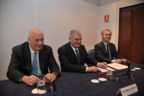
    From left to right: Turkcell CEO Sureyya Ciliv; Turkey’s Minister of Transport, Marina Affairs and Communications Binali Yildirim, Qualcomm Senior VP & President of Europe Enrico Salvatori
    From left to right: Turkcell CEO Sureyya Ciliv; Turkey’s Minister of Transport, Marina Affairs and Communications Binali Yildirim, Qualcomm Senior VP & President of Europe Enrico Salvatori

    Following the success of its own branded T-Series smart phones, Turkcell has pushed the button for its local smartphone Gebze, which will be develop by Turkcell’s 700-employee R&D center Turkcell Technology.  The Gebze is targeted for export, initially to regional countries, thereby contributing to the easing of the current account deficit in the approximate amount of TRY500,000 for each 1 million units sold.  The smart phone, equipped with features such as an interface unique to Turkcell, hardware developed based on the latest technologies and tailored for the needs of Turkish customers’, as well as rich application content will be offered at prices affordable for all.  Turkcell’s local smartphone is expected to meet the end user in 2013.

    Announcing a milestone for the Turkish telecommunications sector at a press conference at the Mobile World Congress (“MWC”) 2013, in Barcelona, Spain, with the participation of Turkey’s Minister of Transport, Marina Affairs and Communications Binali Yildirim, Qualcomm Senior VP & President of Europe Enrico Salvatori , and Turkcell CEO Sureyya Ciliv ; Turkcell also signed an agreement with Qualcomm, one of the world’s leading mobile technology companies.  With this cooperation, Turkcell will be able to participate in joint R&D activities with Qualcomm.

    Commenting during the Press Conference Minister of Transport, Marina Affairs and Communications Binali Yildirim said: “R&D has always been of importance for countries.  We completed our studies on regulating R&D activities with regards to the Information and Communications sector in 2012.  During these studies, we aimed to produce a local product and create a brand.  With this purpose in mind, we support software and hardware projects in the sector for free.  Indeed, our studies in R&D and local contribution to production have started to bear fruit.  One of them is Turkcell’s.  And today, we have come one step closer to our target.  I congratulate Turkcell for this and thank everybody who put their effort and contribution into the development phase of this project.”

    Turkcell CEO Sureyya Ciliv commented that “Our T Series smartphones, which we launched in an attempt to provide equal opportunities to information access, have been a great success, with sales of over 750,000 units.  We also launched our first “Turkcell Tablet” a short while ago.  We are both honored and happy to announce this development, which is a milestone for our sector, as well as for Turkcell, at the very heart of mobile communications, namely MWC.  With our Gebze smartphone, we aim to lead and encourage other sector players to manufacture in Turkey, thereby positively contributing to the current account deficit.  Indeed, it is possible to ensure that TRY500 million remains in Turkey’s pocket for each 1 million units of local smartphones sold.  We thank our Minister Mr. Binali Yıldırım and global giant Qualcomm for their support and cooperation on this exciting journey.”

    Qualcomm Senior VP & President of Europe Enrico Salvatori pointed out the fact that this partnership of two industry leaders marked an important development not just for Turkey, but also for other countries in the region. He went on to say that “As part of this cooperation, Turkcell will be able to utilize advanced features on the Qualcomm chipset and develop applications unique to Turkish users.  When considering Turkcell’s technology and innovation focus, we clearly see that these qualities are the major factors of its brand success.”

    ABOUT TURKCELL

    Turkcell is the leading communications and technology company in Turkey, with 35.1 million subscribers as of December 31, 2012. Turkcell is a leading regional player, with market leadership in five of the nine countries in which it operates with its approximately 69.2 million subscribers as of December 31, 2012. It has become one of the first among the global operators to have implemented HSPA+. It has achieved up to 43.2 Mbps speed using the Dual Carrier technology, and is continuously working to provide the latest technology to its customers, e.g. 84 Mbps in the near future. Turkcell Superonline, a wholly owned subsidiary of Turkcell, is the one and only telecom operator to offer households fiber broadband connection at speeds of up to 1,000 Mbps in Turkey. As of December 31, 2012, Turkcell population coverage is at 99.17% in 2G and 84.02% in 3G.  Turkcell reported a TRY10.5 billion (US$5.9 billion) revenue with total assets of TRY18.7 billion (US$10.5 billion) as of December 31, 2012. It has been listed on the NYSE and the ISE since July 2000, and is the only NYSE-listed company in Turkey. Read more at

    ABOUT QUALCOMM

    Qualcomm Incorporated (NASDAQ: QCOM) is the world leader in 3G, 4G and next-generation wireless technologies. Qualcomm Incorporated includes Qualcomm’s licensing business, QTL, and the vast majority of its patent portfolio. Qualcomm Technologies, Inc., a wholly-owned subsidiary of Qualcomm Incorporated, operates, along with its subsidiaries, substantially all of Qualcomm’s engineering, research and development functions, and substantially all of its products and services businesses, including its semiconductor business, QCT. For more than 25 years, Qualcomm ideas and inventions have driven the evolution of digital communications, linking people everywhere more closely to information, entertainment and each other. For more information, visit Qualcomm’s website, OnQ blog, Twitter and Facebook pages.

    You can now follow the most up-to-date Turkcell developments on twitter by clicking on the link below.

    For further information please contact Turkcell
    Nihat Narin                              
    Division Head of Investor and International
    Media Relations
    Tel: +90-212-313-1244
    Email: [email protected]

    Banu Uzgur 
    International Media Relations Manager
    Tel: +90-212-313-1506
    Email: [email protected]
    [email protected]


    SOURCE Turkcell