Category: Sci/Tech

  • Turkey Bans 26 Genetically Modified Organisms

    Turkey Bans 26 Genetically Modified Organisms

    While the United States is completely in bed with companies that manufacture genetically modified organisms (GMOs), countries in other parts of the world are resisting their relentless push to populate the planet with their patented seeds.

    genetically-modified-food

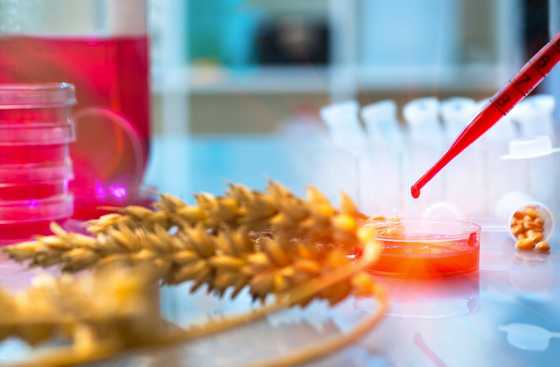
    Turkey is the latest country to ban 26 GMOs following an incident involving the unauthorized entry of genetically modified rice that was due at Mersin port, according to local press. The Biosecurity Board unanimously passed the ban, though some genetically modified corn and soy will be permitted for animal feed.

    Studies show that certain GMOs are potentially destructive not only to health, but also the kind of genetic diversity that underpins successful ecosystems.

    And while some nations (like the US and South Africa) are lapping them up as a panacea for world hunger, there exists little evidence that GM seeds produce greater yields.

    Egypt has been pushing back against Monsanto’s MON810, which contains cry1Ab – a deadly insecticide that ruptures the stomachs of insects that eat it, and now Turkey has joined the resistance with an unprecedented show of support against GMOs.

    The 26 banned products include modified corn crops used for fuel, as well as sugar beet and rapeseed that even the European Union allows as feeders, according to Hurriyet Daily News.

    Three food company executives were recently detained for allegedly ordering genetically modified rice to be delivered into Turkey via Mersin port on the northeastern coast of the Mediterranean Sea.

    They have since been released, but the incident set off a firestorm of debate, which the Biosecurity Board has urged the Scientific and Technological Research Council of Turkey (TÜBİTAK) to continue by researching the benefits and detriments of GMOs.

    Despite the opposition to powerful companies like Monsanto, 19 corn and soy products will be permitted into the country as feed for cattle, chicken, and fish. Which means meat-eaters will still be exposed.

    :: Hurriyet Daily News

  • Turkey’s Indigenous Trainer Nears Maiden Flight

    Turkey’s Indigenous Trainer Nears Maiden Flight

    ANKARA — An indigenous basic trainer aircraft that Turkey designed and has been developing is going through a final round of tests before it makes its maiden flight in June, according to officials from its maker, Turkish Aerospace Industries (TAI).

    TAI is manufacturing four prototypes of the Hurkus for a round of tests. The first prototype successfully went through engine tests in February, the second is being tested for static durability and cabin pressure, the third is being assembled, and the fourth will be tested for metal fatigue.

    A total of 220 aviation experts are supporting the certification work for the European Aviation Safety Agency (EASA) CS 23 standards.

    The two-seater Hurkus will be a trainer with a lifespan of 10,500 flight hours, or a 35-year service life. The turboprop aircraft has a 1,600 horsepower engine that can fly at an altitude of 10,577 meters at a maximum speed of 574 kilometers per hour.

    Success on the Hurkus development would be a landmark achievement for Turkish industry and reduce dependence on foreign acquisitions. It is particularly important that the Hurkus comes after the first Turkish-made drone, the Anka, also developed by TAI, prepares for serial production.

    The Hurkus program started after Turkey’s procurement agency, the Undersecretariat for Defense Industries, tasked the company with designing and developing a national trainer in March 2006.

    The Hurkus will be equipped for day and night flying as well as basic pilot training, instrument flying, navigation training, weapons and formation training. The aircraft will have good visibility from both cockpits with a 50 degree down-view angle from the rear cockpit, ejection seats, an on-board oxygen generation system, an environmental control system, an anti-G system, and high shock absorbing landing gear for training missions.

    The Turkish government has indicated that the aircraft is expected to attract export sales, possibly from Arab countries or countries with limited air force budgets.

    The Hurkus will come in four variants. Hurkus-A: Basic version that has been certified with EASA according to CS-23 requirements. It is intended for the civilian market.

    Hurkus-B: Advanced version with integrated avionics including a mission computer, and cockpit avionics layout similar to F-16 and F-35 fighters. The Turkish Army is considering an initial order for 15 aircraft.

    Hurkus-C: An armed version for the close-air support role will have a maximum weapons load of 3,300 pounds. The Turkish Army has expressed interest in the Hurkus C to provide support for its attack helicopters.

    Coast Guard version: TAI plans to offer another version of the Hurkus to support the Turkish Coast Guard’s maritime patrol activities. The aircraft’s back seat would be occupied by an operator for a forward looking infrared sensor.

    via Turkey’s Indigenous Trainer Nears Maiden Flight | Defense News | defensenews.com.

  • Turks aim to emulate Israel tech

    Turks aim to emulate Israel tech

    By Bloomberg News

    Prime Minister Recep Tayyip Erdogan wants to catapult Turkey into the top 10 of the global economic elite over the next decade. To get there, he may need to spend more time mimicking the country he’s been feuding with.

    While Turkey and Israel have both shifted to manufacturing from farming since the Jewish state was established in 1948, it’s Israel that has succeeded in building high-margin industries. The tech index on Turkey’s Borsa Istanbul has 16 members and a market value of about $790 million. Israel’s TA BlueTech-50 Index, in an economy less than one-third the size, is valued at $16.5 billion.

    During Erdogan’s decade in power, which followed years of unstable and short-lived coalitions, inflation and interest rates plunged from more than 30 percent as the budget deficit and national debt shrank. The gains from that good housekeeping may be running out of steam, with economists and ministers saying Turkey needs an industrial breakthrough to achieve the next stage.

    “Turkey is nearing the limits of what it can do with macroeconomic stability,” said Serdar Sayan, a professor of economics at the TOBB University of Economics and Technology in Ankara. The country “really needs to switch to higher value- added exports” and improve its education system to “compete with innovative countries like Israel,” he said.

    Structural Work

    Bulent Celebi, executive chairman and co-founder of AirTies, an Istanbul-based maker of wireless routers and Internet television technology, is one of the businessmen trying to push Turkey in that direction. While he’s optimistic about Turkey’s 2023 goals, “there’s a lot of structural work to do,” he said, including resolving the current-account deficit and producing energy domestically while economizing on its use.

    Celebi said his company has been developing products with Israeli companies including France Telecom SA’s Orca Interactive Ltd. unit, a maker of software for interactive televisions, because “they are good at innovative solutions.”

    “We are importing many high-tech and low-tech parts,” Celebi said in a phone interview. “We need to be able to produce them locally like China and also increase production of value-added products. Turkey needs to focus on specific sectors, like China, Taiwan and South Korea.”

    Turkish-Israeli ties are in the spotlight after Israeli Prime Minister Benjamin Netanyahu phoned Erdogan on March 22, in a call arranged by President Barack Obama, to apologize for the killing by Israeli commandos of nine Turks aboard an aid ship bound for Gaza in 2010.

    U.S. Aid

    That incident, and Erdogan’s criticism of the Israeli military operation in Gaza that began in December 2008, strained a decades-old relationship between two of the main U.S. allies in the Middle East. Ties were built around defense, where Turkey benefited from Israel’s technological advances, buying drones and upgrading tanks.

    Israel receives about $3 billion a year in U.S. military aid, of which close to 75 percent must be spent on equipment or services from U.S. companies, a rule that fosters joint technological research by the two countries. Among the largest American suppliers to Israel are Chicago-based Boeing Co., Bethesda, Maryland-based Lockheed Martin Corp. and Raytheon Co. in Waltham, Massachusetts.

    Trade between Turkey and Israel has largely survived the diplomatic standoff, though it declined to $4 billion last year from a record $4.5 billion in 2011, according to Turkish government data. A decline in Turkish imports of chemicals used in manufacturing is one of the reasons, Joseph Avraham, Israel’s consul for economic affairs in Turkey, said in an e-mail.

    Turkey Growth

    In the Erdogan decade, Turkey became the world’s 17th- biggest economy, according to the International Monetary Fund. It posted annual average growth of 5.1 percent, compared with 4.1 percent for Israel. That’s reflected in stock-market gains, with Turkey’s benchmark index rising about 700 percent, compared with about 300 percent for the Israeli equivalent. In the previous decade, Israel, whose population is less than one-tenth the size of Turkey’s, was ahead on both counts.

    Turkey hasn’t moved upwards in the global league when measured by per-capita GDP, though. In the 10 years through 2013, Turkey’s ranking by that measure remained at 67th in the world, according to the latest IMF data. Israel climbed six places to 27th.

    Israeli assets are ranked as less risky by analysts, and the country was upgraded to developed-market status in 2009 by MSCI Inc., whose stock indexes are tracked by investors with about $7 trillion of assets. Israeli debt is classed as investment grade by the three main credit-rating companies, while only Fitch Ratings has given Turkish bonds that accolade.

    Hot Money?

    The IMF data highlight the Turkish economy’s biggest weakness, too. Since Erdogan’s party came to power in 2002, Turkey has run up a deficit on the current account, the broadest measure of trade, of about $353 billion, compared with a $32.6 billion surplus in Israel.

    That’s a measure of the greater competitiveness of Israel’s economy. The gap leaves Turkey more dependent on volatile movements of short-term foreign capital to finance growth. When that so-called hot money is flowing to emerging markets, Turkish growth typically outpaces Israel’s. When investors favor safety, the Israeli economy is more resilient.

    Turkish Economy Minister Zafer Caglayan says producing higher value-added goods is the only way to cut the current- account deficit. “Last year, for every kilogram of exports, Turkey’s added value was $1.58,” he said in an interview last month. “For Germany it was $4 and for Japan it was $3.50. The solution is there.”

    Ballistic Technology

    Turkey needs to grow at least 6 percent a year to meet the top-10 target by 2023, the centennial of the republic, Caglayan said on April 1. Growth eased to 2.2 percent last year, the slowest since a recession in 2009, after the central bank raised borrowing costs to rein in a credit boom.

    Nurol Holding, based in Ankara, is one of the Turkish companies waiting for better ties with Israel so it can resume partnerships. It was an Israeli company that supplied the ballistic protection technology that Nurol’s unit FNSS Savunma Sistemleri AS used to equip the armored vehicles it makes against land mines, said Feyiz Erdogan, senior legal counselor for Nurol, in an interview.

    “Israeli companies have always came up with innovative technologies,” said Erdogan, who’s no relation to the prime minister. “If relations are normalized, why shouldn’t we benefit?”

    Innovative Companies

    Turkey’s biggest exporters such as Vestel Elektronik Sanayi & Ticaret AS, which has about one-fifth of the European LCD television market, often import some of the highest value-added components to make their products.

    “Israel has a high-tech export-oriented economy,” said Alon Liel, former director-general of Israel’s Foreign Ministry and ex-chairman of the Israel-Turkey Business Council. “Turkey, though also focused on exports, isn’t as technologically advanced as it should be.”

    Government incentives are aimed at shifting some of the production, such as engines for cars, to local industry. Between 60 percent and 85 percent of the parts for Renault SA’s Turkish unit are made locally, according to the company.

    An overhaul of Turkey’s education system is needed to generate more innovation, economist Sayan said. Turkey currently has a “poorly educated population” and a system that doesn’t encourage creativity, he said.

    Even with success in those areas, Erdogan’s 2023 goals may be too ambitious, Sayan said: “It’s good to set targets for the country and it serves to boost public morale.” Entering the top 10, though, is probably “a dream.”

  • Balkan students, universities benefit from Turkish scholarships

    Balkan students, universities benefit from Turkish scholarships

    Turkey simplifies scholarship application procedures, attracts students from across the region.

    By Klaudija Lutovska for Southeast European Times in Skopje — 11/04/13

    KLAUDIJAphoto1

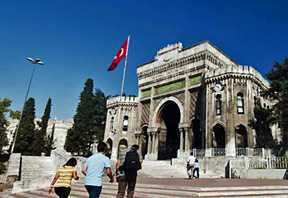
    Many students from the Balkans are studying on scholarships at Turkish universities. [University of Istanbul]

    The availability of scholarships and an easy online application process have led an increasing number of university students from the Balkans to pursue their studies in Turkey.

    There are more than 35,000 foreign undergraduate and postgraduate students at Turkey’s universities, including 13,000 on scholarships.

    Zivko Gacovski, dean of the Faculty of Veterinary Medicine at St. Kliment Ohridski University in Bitola, said students are showing great interest in the Turkish scholarship programme. He added that the university will benefit as well, citing plans to partner with the veterinary programme at Uludag University in Bursa, Turkey.

    “Soon we will officially visit Turkey to sign a memorandum for bilateral co-operation, with which we will begin exchanging experiences, faculty and jointly working on projects. This is of great value for the development of our school, which began three years ago. It will strengthen instruction and scientific programmes, as well as the school’s capacity,” Gacovski said.

    Sein Cardak, Turkey’s Balkan co-ordinator for higher education, told SETimes that the scholarships total $450 (344 euros) per month for undergraduates and $575 (440 euros) per month for doctoral students. The scholarships also cover two meals per day, health insurance and transportation costs.

    There are 500 courses of study available at 175 Turkish universities. Students also are able to obtain a free year of instruction in the Turkish language in addition to their chosen course work.

    “The amount of the scholarship is the most attractive part of this offer,” Cardak said.

    Turkey annually provides 4,000 grants to students from 150 different countries. Last year, scholarships totaled $1.2 billion (917 million euros).

    “In Turkey, we have a quote that says, ‘If my neighbour does not have money for food, I can’t sleep.’ This is a symbol of our character,” Cardak said.

    Rector Zlatko Zhoglev (left) and Macedonian Minister of Education Pance Kralev (second from left) participate in the diploma celebration for law faculty students at the University St. Kliment Ohridski in Bitola. [Klaudija Lutovska/SETimes]

    Students from Albania, Bosnia and Herzegovina (BiH), Bulgaria, Croatia, Montenegro, Kosovo, Serbia, Slovenia and Greece are currently on scholarships in Turkey.

    Adem Gunaydin, a co-ordinator with the Turkish scholarship programme, said 80 students from BiH will continue their education in Turkey during the 2013-14 academic year. This year’s application period for master’s and doctoral scholarships closed on March 31st, but undergraduate students can apply via the internet starting in May.

    Previously, an entrance exam was required, but it was abolished last year. Selected applicants will be invited to an interview in Sarajevo, after which a list of scholarship recipients will be announced.

    Merisa Sultanovic, a 22-year-old student from BiH, said she found out about Turkish scholarships on the internet.

    “I study economics in Turkey, a country with a remarkably developed economy,” she told SETimes. “I expect to take the experience and knowledge gained here back to BiH.”

    Students from Turkey also pursue studies in the Balkans. Macedonia welcomes more than 300 Turkish students a year, and there are Turkish students at universities in Bulgaria and BiH.

    Ankara University students will be able to continue studying at the University of Bitola under a recent agreement.

    “There is a group of students from Turkey who have completed two years of high school, and they want to come here to complete a further three years to gain a college degree, especially in the sciences or electrical engineering,” Zlatko Zhoglev, rector at the University of Bitola, told SETimes.

    “Collaboration will happen even in the field of philological sciences. There is interest in Macedonia to open a department of Turkish language. Their centre for Turkish language in Ankara is one of the strongest.”

    Prospective students can apply for Turkish university scholarships at www.turkiyeburslari.gov.tr and www.trscholarships.org .

    What advantages do you think a Turkish university education would provide? Share your thoughts in our comment section.

    This content was commissioned for SETimes.com.

    via Balkan students, universities benefit from Turkish scholarships (SETimes.com).

  • Medical Tourism on the Rise in Turkey

    Reuters

    April 03, 2013

    Fahad Ali, a 27-year-old medical tourist from Britain, is prepared for hair transplant at a clinic of Esteworld, an aesthetic private hospital group, in Istanbul, March 30, 2013.
    ISTANBUL — Sitting in a private clinic in an upscale neighborhood of Istanbul, Saleh, a human resources executive from Qatar, is preparing to leave Turkey with a smile on his face and more hair on his head.

    Having previously brought his wife and children to Istanbul for sightseeing and shopping, Saleh has returned as the new kind of high-spending visitor Turkey is increasingly seeking to attract: a medical tourist.

    “There’s a social pressure to look good,” the casually suited executive, declining to give his family name, told Reuters as he sat waiting for a check-up a day after having hair follicles implanted in his balding scalp. “Two of my brothers and half of my friends had hair implants in Turkey. It was an easy choice after that.”

    As it tries to boost tourism revenues and narrow its current account deficit, its main economic weakness, Turkey is on a mission to diversify away from the all-inclusive package tours to its sun-drenched Mediterranean shores which, local businesses complain, often do too little for the local economy.

    Of 37 million tourists visiting Turkey last year, about 270,000 came for surgical procedures, from mustache implants and liposuction to operations for serious ailments, generating $1 billion in revenues and representing a small but growing fraction of tourism receipts.

    “They usually come for three days. We offer them shopping or skiing tours, they get well and have a short vacation,” said Kazim Devranoglu, the medical head of Dunyagoz Group, which has 14 eye care clinics in Turkey and branches in western Europe.

    Around 10 percent of the group’s patients – some 35,000 people a year – are now coming from abroad, he said. “They are mostly from western European countries like Germany, the Netherlands, Belgium, as well as from Algeria and Azerbaijan.”

    There are various factors behind Turkey’s appeal.

    People from countries with heavily congested health systems welcome the opportunity to choose the time of their surgeries, while those from less-developed nations are attracted by Western-trained medics and new facilities sprouting up as Turkey’s private healthcare industry flourishes.

    The mustachioed stars of Turkish soap operas, popular across the Middle East and North Africa, have also prompted an influx of men seeking a virile addition to their upper lip.

    Health professionals and patients say plastic and corrective eye surgery costs, including travel and accommodation, can be up to 60 percent below comparable programs in Western Europe.

    The government aims to double medical tourist numbers to half a million a year over the next two years and raise revenues to $7 billion by attracting them to higher-margin healthcare.

    “We see Turkey as a prime destination for medical tourism,” said Dursun Aydin, head of the international patients department at the Health Ministry. “We have experienced doctors. Hospitals are new…Turkey is relatively inexpensive and the temperate climate helps too.”

    Tax-Free Health Zones

    The phenomenon is a boon not only for Turkey’s tourism industry, which risks locking itself into a price war with rival destinations such as Greece and Spain, but also for its booming private healthcare industry.

    Parliament passed new regulations in February to make private investment in the healthcare sector easier; a move it hopes could unlock billions of dollars of investment over the next few years.

    Private equity investors favor Turkey’s fast-growing services industries, including healthcare and education, because of a near tripling of nominal, per capita gross domestic product over the past decade and a young population of 75 million.

    Foreign institutions including Malaysia’s state investment arm Khazanah Nasional, U.S. private equity firm Carlyle, emerging markets investor ADM Capital, Qatar’s First Investment Bank and the World Bank’s International Finance Corp (IFC) have put money into the Turkish healthcare sector.

    Turkey’s status as a medical tourism destination could add to the allure. Though the idea is still on the drawing board, the government is considering airport-accessible, tax-free health zones which would aim to attract up to 85 percent of their patients from abroad, while offering tax incentives for investors.

    Under the new law passed in February, which facilitates public-private partnerships, the state will rent city hospitals built and run by the private sector for 25 years.

    “The aim is to revitalize aging hospitals. While built primarily for Turkish citizens, they’ll be luxuriously equipped and will aim to draw at least some of their customers from abroad,” said the Health Ministry’s Aydin.

    Economic Dividend

    Growth has already been phenomenal, said Tolga Umar, chief executive of Visit and Care, a patient and doctor matching service which helps visitors from the Middle East and Europe.

    “We’ve been matching patients and doctors for six years now. Back then there were few other players, but now hospitals have international patient management departments doing direct marketing,” he said. “Even tour operators ask prior to a visit whether you want to have a dental exam or corrective eye surgery.”

    Boosting tourism revenues is key to keeping a lid on Turkey’s current account deficit, which narrowed to around six percent of GDP in 2012 from roughly 10 percent in 2011. Net tourism receipts reached $21.6 billion last year, while the current account deficit stood at $47 billion.

    Turkey is the world’s sixth top destination by tourist arrivals, according to the World Tourism Organization, but it may require strategies such as the medical tourism drive to maintain that status.

    “Decreasing prices in Greece and Spain since the debt crisis mean that the competition for tourists is more intense,” said tourism consultant Fehmi Kofteoglu.

    Timur Bayandar, head of Turkey’s TUROB tourism industry association, said “What the industry needs is alternative tourism channels like medical and shopping tourism.”

    That could mean men with red dots on their heads – a tell-tale sign of freshly implanted follicles – becoming a more common sight as they stroll through Istanbul’s designer malls, snapping up a last few purchases at the end of their medical tours.

  • Turkey denies French-Japanese JV win nuke bid

    Turkey denies French-Japanese JV win nuke bid

    Turkey declined reports on Thursday that a French-Japanese consortium has won a tender to build the country’s second nuclear power plant, asserting it was “too early to comment.”

    Japan’s Nikkei business daily reported on Thursday that the Japanese Mitsubishi Heavy Industries Ltd. and France’s Areva SA have won an order to build Turkey’s second nuclear power plant, a project expected to cost around $22 billion. Representatives from Areva and Mitsubishi Heavy were unavailable immediately to comment, but Turkish Energy Minister Taner Yildiz rushed in on Thursday to deny that such a deal existed.

    “It is too early to make such comments. … We cannot yet say the race for [who will build] our second nuclear power plant is over,” Yildiz told a private news channel on Thursday.

    Turkey has been in negotiations with South Korea, China, Japan and Canada for the construction of a second nuclear power plant in the Black Sea province of Sinop. An agreement was reached with Russia in 2010 to build the first plant in Mersin’s Akkuyu district.

    Reiterating the Turkish government’s reluctance to offer a state guarantee for the nuclear project’s financing, Yildiz said South Korea was eliminated due to this condition, while more focused talks continued with Japan and China. “I think we are now closer to finalizing the talks with these two countries than ever,” said the energy minister.

    This is not the first time Turkey has insisted on “risk sharing” in the months-long Sinop nuclear bid. Observers argued Yildiz’s statements were meant to further heat up competition between the bidders so that they would agree to relatively more favorable terms.

    Ongoing rapprochement between Ankara and Paris as the latter decided to lift its block on Turkey’s EU accession negotiations along with improving ties with Japan remains a key factor in the alleged nuclear deal.

    Nikkei on Thursday said Turkey’s Ministry of Energy and Natural Resources had informed Japanese government and corporate officials of the decision to award them a deal to build four pressurized water nuclear reactors with a combined capacity of about 4.5 gigawatts in Sinop, a province on the Black Sea coast.

    The paper added that the Turkish government had approached Japan about a summit meeting between Japanese Prime Minister Shinzo Abe and his Turkish counterpart, Recep Tayyip Erdogan, in early May, after which it is likely to officially grant preferred negotiating rights to the Mitsubishi-Areva consortium. It added construction is set to start in 2017, with the first reactor slated to come online by 2023, and France’s GDF Suez SA will operate the plant.

    Energy-poor Turkey aims to have three nuclear power plants, all of them operational by 2023, its centennial. It is anticipated to overtake Britain as Europe’s third-biggest electricity consumer within a decade.

    Meanwhile, Yildiz on Thursday asserted the government will stick with plans to increase oil trade with Iraq’s north while a possible natural gas pipeline from Israel to flow through Turkey into world markets was “on the table.” “All countries in this region are aware Turkey is the key, most feasible corridor for similar energy transfer projects.”

    via Turkey denies French-Japanese JV win nuke bid.