Category: Sci/Tech

  • The math behind ChatGPT

    The math behind ChatGPT

    A Russian mathematician invented the math behind ChatGPT in 1906 while trying to humiliate a priest in an academic feud, and he died 16 years later without knowing any of it.

    His name was Andrey Markov. His nickname was Andrey the Furious. And the thing he built was never meant to be about language at all.

    Here is the story almost nobody tells you.

    Russia in 1905 was fracturing. The Russo-Japanese War was bleeding the country. Revolution was in the streets. And inside the Imperial Academy of Sciences, two mathematicians were tearing each other apart over a question that had nothing to do with either of them professionally.

    The priest was Pavel Nekrasov, a theologian turned mathematician who believed numbers could prove God’s design. His argument was this: the Law of Large Numbers, the foundational rule of probability theory, only works when events are independent of each other. Like coin flips. No connection between them. And if human decisions follow the same pattern, he said, then human beings must be making truly free, independent choices. Mathematics, in his telling, proved free will. Which meant it proved the soul. Which meant it proved God.

    Markov found this professionally offensive and personally infuriating.

    He was a fierce atheist who had been excommunicated from the Russian Orthodox Church by choice, sending a letter demanding they remove him after they refused to recognize Tolstoy’s excommunication. He had no patience for what he called the abuse of mathematics. The idea that a priest was using probability theory to smuggle theology into science made him furious in the precise way his nickname suggested.

    So he set out to destroy the argument.

    His proof was elegant and brutal. He showed that the Law of Large Numbers does not require independence at all. Averages can stabilize even when every event is connected to the one before it. Free will had nothing to do with it. The soul had nothing to do with it. Nekrasov’s entire theological superstructure collapsed on a mathematical technicality.

    But Markov needed a real-world demonstration. Something concrete. Something that would make the proof undeniable.

    He picked up a copy of Alexander Pushkin’s Eugene Onegin.

    Not to read it. To count it.

    He sat in his study in St. Petersburg and wrote out the first 20,000 letters of the poem in one continuous string, stripping out every space and every punctuation mark until it was just a raw chain of characters. Then he began counting. Vowel or consonant. What follows what. How often does a vowel follow a vowel. How often does a consonant follow a vowel. Week after week, letter by letter, by hand.

    What he found was that the letters were deeply dependent on each other. A vowel is far more likely to follow a consonant than to follow another vowel. The sequence is not random. Each letter is influenced by what came before it. And yet across 20,000 letters, the overall frequency of vowels converged to a stable number. Dependence and statistical regularity could coexist.

    Nekrasov was wrong. The math worked without independence. Free will was not hiding inside probability theory. Markov had proven it on the back of a love poem.

    He called the structure he had discovered a chain. What we now call a Markov chain.

    The idea is simple enough to explain in one sentence. The next state of a system depends only on its current state, not on everything that came before it. Each step carries just enough memory to take the next step. No more.

    What Markov could not have imagined is what that idea would become.

    Every language model that exists today is built on this exact logic. When ChatGPT reads your prompt and generates the next word, it is doing a vastly more sophisticated version of exactly what Markov did with Pushkin’s letters. It looks at the current state of the conversation and calculates what should come next based on patterns in everything it was trained on. The core mathematical intuition, that sequences have structure, that the next element depends on what came before, that you can model language as a chain of dependent probabilities, is Markov’s. It has been Markov’s since 1913.

    His paper on Eugene Onegin was presented to the Imperial Academy of Sciences on January 23, 1913. The audience was mathematicians. The context was a dispute about free will. Nobody in that room was thinking about computers. There were no computers. The first electronic computer would not exist for another three decades.

    He died in 1922, nine years after the paper, in the early chaos of the Soviet era. He was 66. He had spent his final years watching the Tsar fall, the revolution rise, and his country become something unrecognizable. He never saw a transistor. He never imagined a machine that processes language. He thought he had settled an argument with a priest.

    The argument he actually settled was one nobody had asked yet.

    Today his chains are inside every search engine, every voice assistant, every spam filter, every autocomplete. The 2024 paper Large Language Models as Markov Chains shows formally what practitioners have known informally for decades: the inference mechanism of GPT-4, Claude, and Gemini can be characterized as a Markov chain operating over sequences of tokens. The math is his. The name on the paper is someone else’s.

    There is a version of this story where Nekrasov wins the argument. Where Markov decides the priest is not worth his time. Where nobody counts 20,000 letters in a poem to settle a theological dispute.

    In that version, the chain is never invented. Or it is invented later, by someone else, for different reasons, on a different timeline.

    We got this version instead. The furious atheist. The love poem. The weeks of counting. The proof that destroyed a man’s theology and accidentally handed the 21st century its most important mathematical tool.

    Nekrasov wanted to find God in the numbers.

    What he found instead was Markov. And Markov found something neither of them was looking for.

    Source: Ihtesham Ali

  • Inuit–Mongol–Turk Homeland: The Past, Present, and Future of Greenland

    Inuit–Mongol–Turk Homeland: The Past, Present, and Future of Greenland

    Dear Academics, Students, and Members of the Administrative Staff,

    We are honored to invite you to the conference titled “Inuit–Mongol–Turk Homeland: The Past, Present, and Future of Greenland,” hosted by Antalya Bilim University and jointly organized by the Faculty of Economics, Administrative and Social Sciences, the Mediterranean and Southeastern European Countries Research and Application Center (AKVAÇAM), the Tourism Studies Research and Application Center (TURAM), and the Center for Social, Economic and Political Research (SEPAM).

    The opening remarks of the conference will be delivered by the Esteemed Governor of Antalya, Mr. Hulusi Şahin, and the keynote presentation will be given by Prof. Dr. Harun Gümrükçü, Dean of the Faculty of Economics, Administrative and Social Sciences.

    The conference will address the historical background of Greenland, the mysterious geography of the Arctic region, and its current political, economic, and military-strategic developments. Topics will include prehistoric migration waves from Asia, potential ethnolinguistic ties between the island and Turkic-Mongolic communities, Denmark’s administrative policies over Greenland, and the strategic dimensions of U.S. military bases established on the island during World War II.

  • Invitation To Inaugural Event

    Invitation To Inaugural Event

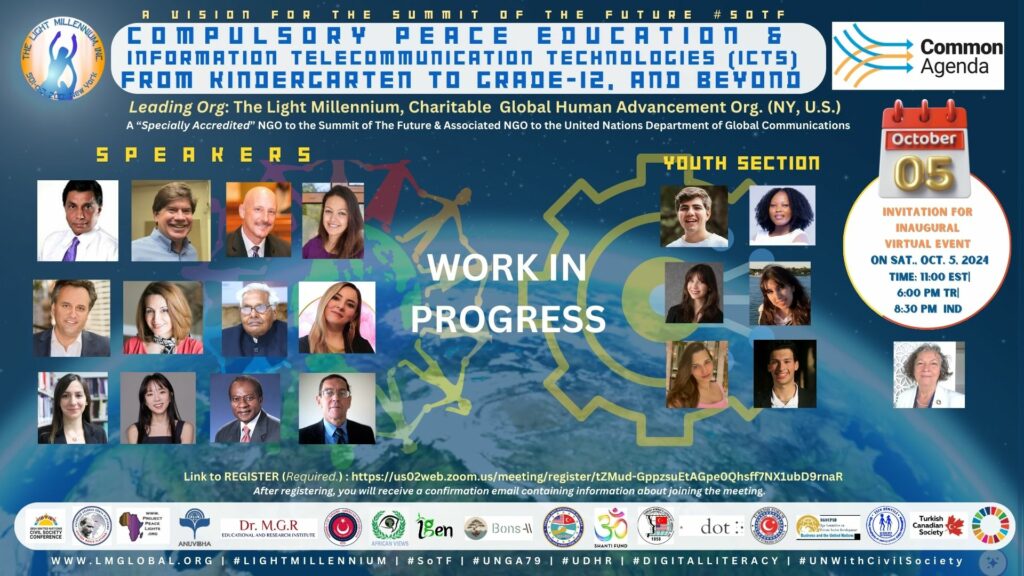
    You are cordially invited to an Inaugural Event (virtual) with the Representatives of the Coalition and Speakers to present you the two married visions in a diverse spectrum toward making a long-term commitment to advocating the proposed vision, which is scheduled for:

    WHEN: SATURDAY, OCTOBER 5, 2024
    TIME: 11:00 a.m. EST. |
    6:00 PM TR | 8:30 PM IND.

  • Turkish scientists

    Turkish scientists

    15th century was a prolific time for scientific progress in the area as Turkic scholars from all around studied together going back and forth between Turkic states and their scientific centers.

    Here are three of the valuable Turkish scientists:

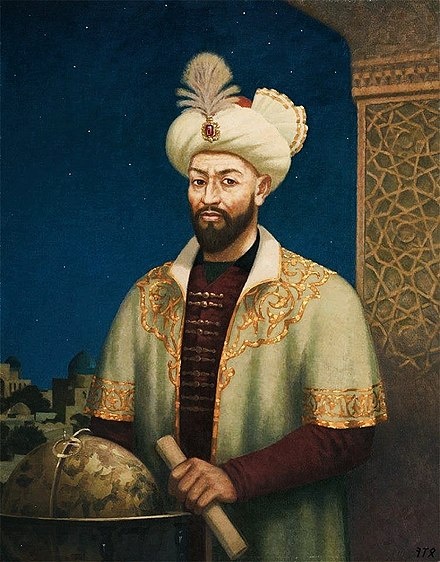
    1- Uluğ Bey

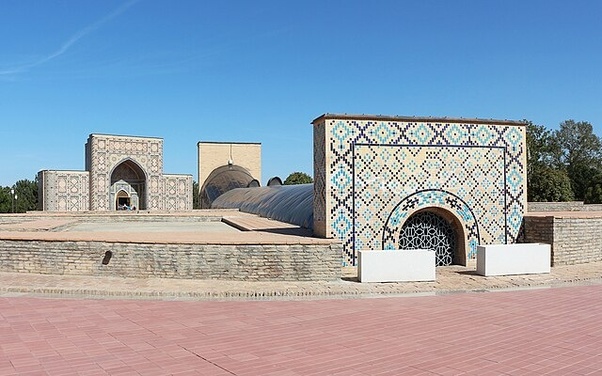
    This structure you see here is Uluğ Bey Observatory which was built in Timurid Era Samarkand (Uzbekistan):

    Uluğ Bey was Timur’s grandson and he was the 4th Sultan of the Timurid Empire as well as being a mathematician and an astronomer.

    Uluğ Bey, as his name suggests, is the one who established Uluğ Bey Observatory. After 12 years of extensive studies in his observatory, he compiled his findings in 2 books named Zeyç Kürkani and Zeyç Cedit Sultani both of which later translated into almost all European and several Eastern languages and made great contributions to the field.

    During these laborious studies Uluğ Bey worked with a colleague from the Ottoman Empire.

    2- Kadızade-i Rumi from Bursa City:

    Kadızade-i Rumi as a well-educated mathematician and astronomer, tutored Uluğ Bey, managed the observatory during that time but sadly, he died in Samarkand, a little while before their 12 year of observatory study came to its conclusion. He notably took the field of mathematics one step further by expanding and simplifying the algebra method developed by Gıyaseddin Cemşid for calculating the sine of a degree arc. Kadızade-i Rumi wrote countless books in his lifetime and trained many disciples.

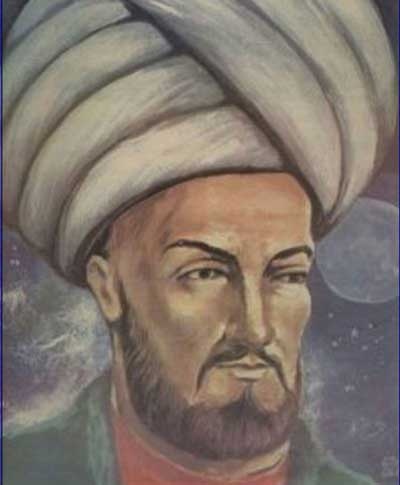
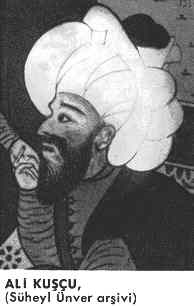
    3- Ali Kuşçu:

    Ali Kuşçu was born in Samarkand(Uzbekistan) and died in İstanbul(Türkiye). He was a hezarfen(a person who is an expert on multiple fields) and also a part of the observatory team. He took over the management of the observatory after Kadızade’s demise. He is best known for delivering the first astronomical map of the Moon. He even went to China to carry out his studies and on his return, he calculated the Earth’s surface area and the ecliptic as 24 degrees. He later worked for Akkoyunlu Turcoman state as an advisor and finally the Ottoman Empire as a lecturer. He was appointed as a lecturer at Sahn-ı Seman Madrasa upon Fatih Sultan Mehmed’s request.

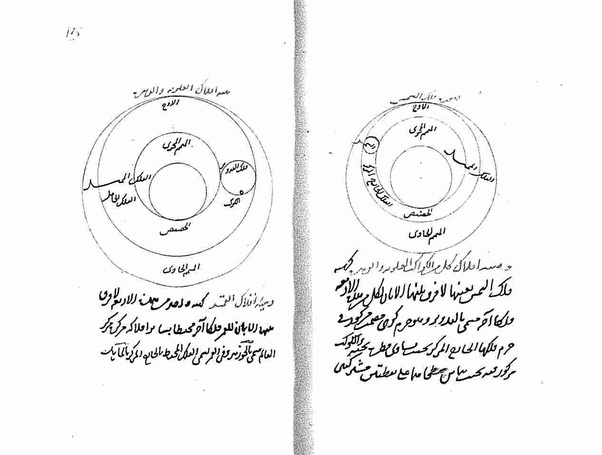
    A celestial map drawn by Ali Kuşçu:

    It’s known that the celestial maps drawn by Ali Kuşçu helped Christopher Columbus in the discovery of the American continent.

    Ali Kuşçu’s grandchildren now live in Bursa, Düzce, Kahramanmaraş cities of Türkiye bearing the honorable surname Kuşçuoğlu.

  • ITU Ranks 326th among World Universities

    ITU Ranks 326th among World Universities

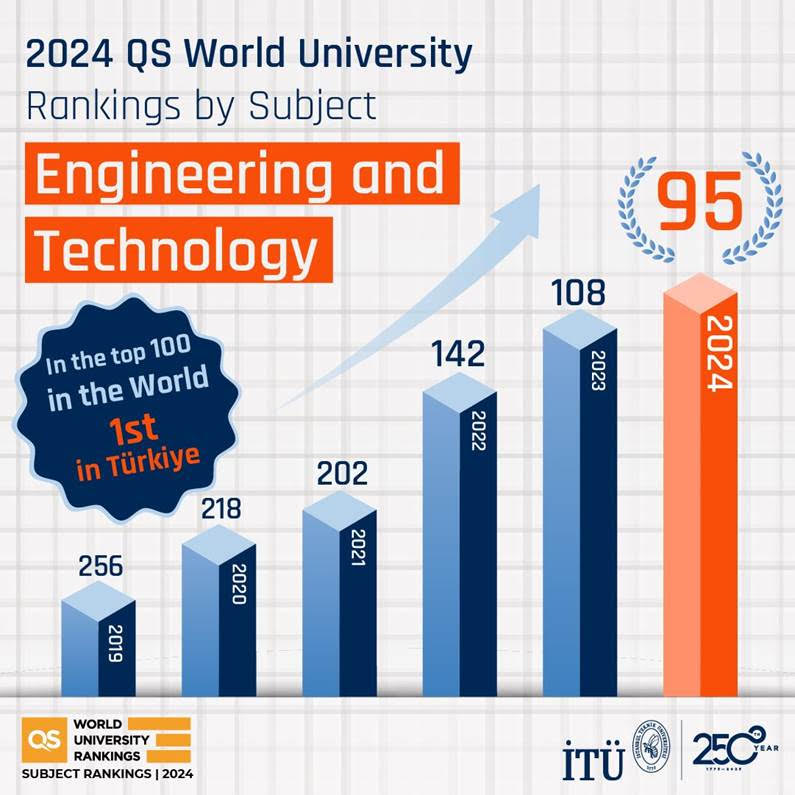
    According to the QS World University Rankings (QS WUR) 2025 results, ITU rose 78 places and ranked 326th this year, achieving its best ranking to date. ITU, which ranks 1st in Türkiye in the “International Research Network” and “Sustainability” indicators, was also awarded the QS “Most Improved-Europe” Award for its outstanding achievements in the last 5 years.

    ITU also ranked 112th among the 1503 universities listed in the “employer reputation” indicator, once again demonstrating the strong bond of its graduates and members with the industry. This achievement, which refers to ITU’s global recognition, was also in line with the theme of our university, which declared 2024 as the “Year of Global Impact”.

  • Turkey’s 5th Generation Fighter: KAAN

    Turkey’s 5th Generation Fighter: KAAN

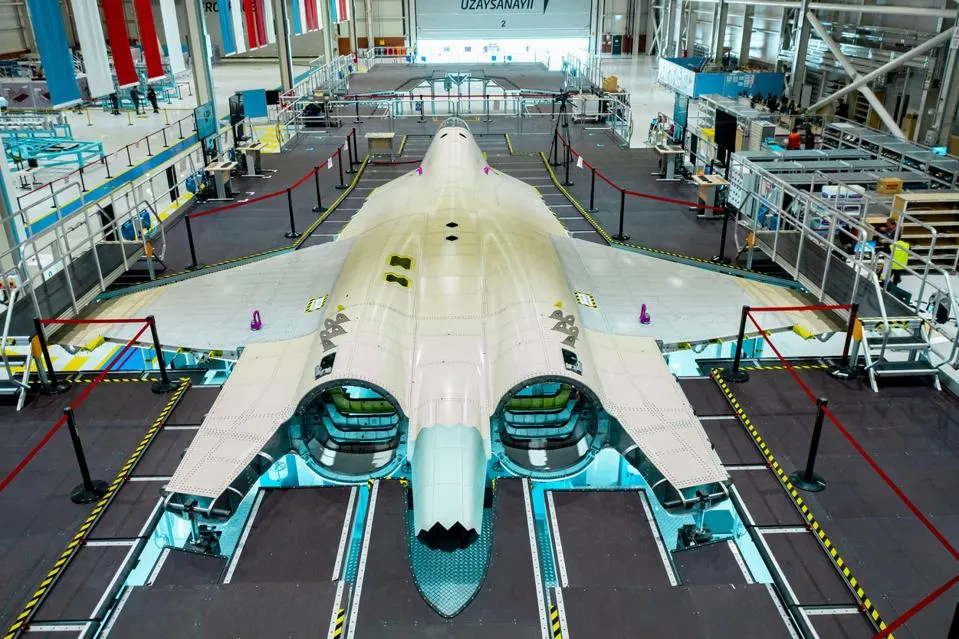
    Turkey’s TF Kaan 5th Generation Fighter

    On the 21st of February 2024, a new 5th-gen fighter took to the skies. The Turkish Aerospace Industries TF Kaan is Turkey’s first domestically built modern fighter, and as we shall see, it marks the beginning of an ambitious program to refit Turkey’s military with nationally produced equipment. So, what is the TF Kaan, and what is it likely to be capable of?

    _ Disclaimer _
    Original footage and recreated scenes may not be 100% accurate to the event being described but has been used for dramatic effect. This is because there may not have been original footage of a particular event available, or copyright prevents us from showing it. Our aim is to be as historically true as we can be given the materials available.

    Copyright disclaimer under fair dealing sections ss 40/103C, ss 41/103A,ss 42/103B of the Copyright Act which includes research, study, criticism, review, and reporting of news. Copyright remains with the respective owners. These videos are made for educational purposes only.

    The Australian Military Aviation History Association is a not-for-profit association with the intent of recording, preserving and promoting Australian military aviation history.