Category: Sci/Tech

  • Istanbul Technical University & Boeing to cooperate in aviation

    Istanbul Technical University & Boeing to cooperate in aviation

    Istanbul Technical University & Boeing to cooperate in aviation

    66467

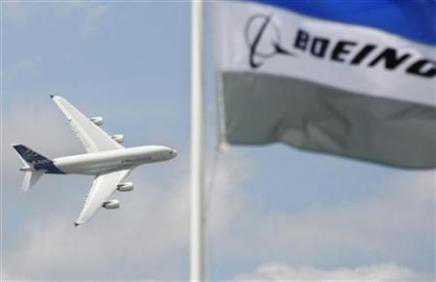
    Istanbul Technical University (ITU) and Boeing signed a cooperation agreement.

    Istanbul Technical University (ITU) and Boeing have signed a cooperation agreement to initiate joint research and development programs on aviation and space researches.

    ITU Rector Prof. Mehmet Karaca and Boeing Turkey Chairman Bernard Dunn signed the agreement at a ceremony on Wednesday which was also participated by Turkish Airlines (THY) Director General Temel Kotil.

    Dunn expressed pleasure over making a partnership with ITU, one of the best universities of Turkey.

    We believe the cooperation with ITU would bring innovative ideas to Boeing as well as it would support Turkey’s economic and technologic development targets, Dunn said.

    via Istanbul Technical University & Boeing to cooperate in aviation | SCIENCE & ENVIRONMENT | World Bulletin.

  • Startup Turkey

    Startup Turkey

    Elmira Bayrasli, Contributor

    Weekly stories about entrepreneurs, innovations and innovative ideas

    Startup Turkey

    Thunder and lightening bookmarked eTohum’s Startup Turkey’s annual gathering this past weekend. It fit. The congregation of Turkish and regional entrepreneurs (from Azerbaijan, Bulgaria, Egypt, Greece, Jordan, Lebanon, Uzbekistan) stormed Antalya, on the Mediterranean coast for two and a half days of pitches and panels – the usual rundown for these events. What did I take away? Five points. I’ve outlined them below and will detail over the week ahead.

    • Get out of Silicon (insert here): After talking to 23-year old Ankara-based Ali Cevik, I realized the importance of finding new markets and getting outside mainstream tech centers.
    • I met the Arab Jeff Bezos: He’s Ala Suleiman who gave up a career in computer engineering to put books on tape for the Arab world.
    • Entrepreneurial financing in between angel and venture isn’t mezzanine: It’s angel heavy. The iLab Ventures story
    • The Arab world isn’t a country
    • Broadbandgaria: South Eastern Europe’s Internet hope?

    Startup Turkey Take Away #1

    Turkey’s Entrepreneurial Ecosystem: More Than Just Start-UpsElmira BayrasliElmira BayrasliContributor

    Entrepreneurs avoid government. Most, fearful of regulation and interference, keep an arm’s distance from his or her country’s bureaucrats. Ali Cevik is an exception. An engineering student at Bilkent University in Turkey’s capital, Ankara, the 23-year and a friend founded Imcom, a tech company that leverages 3D scanning for retailers. With Imcom’s technology, he told me during Startup Turkey, furniture shops can scan that red chair on display and show potential clients what it looks like in different colors. “We didn’t solve a problem,” he said. “We were just playing with the technology; the concept of the smart projector became a technical challenge for us.”

    Turkey’s Ministry of Science, Industry and Technology found it compelling enough to fund.Microsoft’s BizSpark program has lent support as well. I found it refreshing: a Turkish startup that’s not an e-commerce clone. Away from Istanbul where clones and tech startups dominate, Ali found encouragement to pursue the idea many dismiss as hardware heavy and, thereby, capital dependent. Amid the Anatolian heartland where furniture manufacturers catapulted to global stardom, the odds on healthy scanner sales run high. These Anatolian Tigers need to maintain competitiveness.

    In talking to Cevik I realized the importance of looking for an original market as much as an original idea. In crowded Istanbul it’s hard to see anything but trees. From Ankara, despite being a government town, Ali and those supporting him have a good view of the forest. And, boy, is it green.

    Imcom goes beta in the Turkish capital today. It will test in the western city Canakkale in a few weeks.

    https://www.forbes.com/sites/elmirabayrasli/2013/02/18/startup-turkey/

  • Adobe confirms Reader flaws targeted in ‘Turkey visa’ PDF zero-day attacks

    Adobe Firmasının Açıklaması : “Turkey Visa” isminde gönderilen dosya virüs içermektedir. Dosyayı açmayın.

    Summary: Attacks on Adobe Reader are a truly European affair with Italian JavaScript, Spanish domains and Irish IP servers.

    Liam Tung

    By Liam Tung | February 14, 2013 — 11:15 GMT (03:15 PST)

    Adobe has confirmed there are two previously undocumented flaws in the latest updates of its PDF products Adobe Reader and Acrobat that hackers were exploiting with a Turkish visa form.

    The two vulnerabilities (CVE-2013-0640, CVE-2013-0641) affect Adobe Reader and Acrobat XI (11.0.01), X (10.1.5) and 9.5.3 and earlier for Windows and Mac, Adobe said in an advisory on Wednesday.

    Adobe said the targeted attacks were designed to trick Windows users into clicking on emailed malicious PDF attachments, however the flaws affect the products for OS X systems as well. The company is working on a fix, it said.

    At present there are few clues to who the attackers are. However, details provided to ZDNet from FireEye, the security firm that discovered the Adobe Reader and Acrobat exploits this week, suggest it is a European campaign aimed at would-be travellers to Turkey — a popular holiday spot for Europeans seeking winter sun.

    A FireEye spokesperson told ZDNet on Thursday that the lure was PDF file labeled “Visaform Turkey.pdf”, which is required by all foreign travellers to the country.

    The callback from infected machines reveal that malware is communicating with a Spanish domain hosted on Irish IP servers while the JavaScript embedded in the maliciously crafted PDF is written in Italian.

    FireEye has released an updated technical report here, detailing how the exploit circumvents some of the anti-exploitation technologies, such as sandboxing, that Adobe has been building into Reader and Acrobat X and XI.

    It appears that security hardening measures Adobe introduced through “Protected View” in Reader and Acrobat XI to prevent such exploits will stop the exploit being used. Protected View was one of the main features Adobe touted at the product’s release last year, however Adobe said in its advisory that users will need to manually enable it for the protective measure to actually work.

    “Enterprise administrators can protect Windows users across their organization by enabling Protected View in the registry and propagating that setting via GPO or any other method,” the software company added.

    Besides this option, users could install alternative readers, such as (via CNET) Foxit, PDF-Xchange Viewer, Sumatra and Nitro among others.

    Topic: Security

    via Adobe confirms Reader flaws targeted in ‘Turkey visa’ PDF zero-day attacks | ZDNet.

  • Turkey, Iran to Unite in Joint University?

    Turkey, Iran to Unite in Joint University?

    Iran has announced plans for a joint university with Turkey to expand scientific and technological cooperation.

    img337859

    Iran has announced plans for a joint university with Turkey to expand scientific and technological cooperation, according to a statement issued by Tehran.

    Arsalan Qorbani, Iran’s Deputy Minister of Science, Research and Technology, announced Monday the two nations would set up parallel university branches in Iran’s city of Tabriz, and the Turkish city of Wan.

    But the plan, established in a joint Memorandum of Understanding signed by representatives of the two countries, has yet to be confirmed by the Turkish and Iranian governments.

    “We hope that Iran and Turkey’s joint university will be established in the next six months,” Qorbani told the FARS news agency. He added that Iran intends to draw upon the resources of other Iranian universities to advance the joint effort with Turkey.

    Former Iranian Health Minister Marziyeh Vahid Dastijerdi emphasized during a visit to Ankara two years ago that Iran had a special interest in fostering projects that involved mutual cooperation with Turkey.

    Mutual pacts between Tehran and Ankara go back as far as 2009, when the two countries signed an agreement to share advances in telecommunications technology.

    Tags: Iran ,Ankara ,Anti-Semitism (Campus) ,Tehran ,joint venture

    via Turkey, Iran to Unite in Joint University? – Middle East – News – Israel National News.

  • Best of Our Blogs: “Isaac in Turkey” explains difference between Istanbul and Constantinople

    Best of Our Blogs: “Isaac in Turkey” explains difference between Istanbul and Constantinople

    Life

    Best of Our Blogs: “Isaac in Turkey” explains difference between Istanbul and Constantinople

    By AUBREE CUTKOMP

    [email protected]

    Twitter.com/aubreecutkomp

    Isaac Handley-Miner, a junior at Hamilton College, is spending a semester abroad in Turkey. His blog, “Isaac in Turkey,” is another new addition to The Saratogian’s community travel blogs and will detail his time in Instanbul, an expedition he believes will be “rife with family history, good food, (occasionally) riveting academics, a little adventure and a lot of culture shock.”

    “I’ve received a variety of responses when I tell people I’m studying abroad (in Turkey) this semester. I got a lot of ‘That’s unique,’ quite a few ‘I hear that’s a really fun city,’ some ‘Isn’t that dangerous?’ and even a couple ‘Where’s that?’ ” his inaugural post says. “But I think by far the most common reply has been neither a statement nor a question, but instead the opening line to a song: ‘Istanbul (not Constantinople)’ written by Jimmy Kennedy.”

    Handley-Miner admits he had never heard of the song until his friends began singing it immediately after hearing where he was headed. After finally listening to it, he at first “thought it was a stupid premise for a song — yes, Jimmy Kennedy, you are correct, the city formerly known as Constantinople is now referred to as Istanbul,” he wrote.

    But then Handley-Miner realized it was an interesting distinction.

    “The name Constantinople connotes, at least for me, a medieval city steeped in ancient history and conflict. Istanbul, on the other hand, brings to mind a bustling, modern city teetering both physically and culturally between Europe and the Middle East,” he wrote. “I have a lot of family history in this city, especially at the school where I will be studying — Bogazici University.”

    Handley-Miner is the “the fourth generation to be at Bogazici University and the third generation at Hamilton College. Talk about legacy,” he wrote.

    “After acknowledging the visceral difference I experience between the two names Constantinople and Istanbul, this distinction is reminiscent of my own relationship to Istanbul,” he wrote. “It’s not a perfect parallel, but I do have an almost misplaced nostalgia for my family history in Istanbul and that era; I’m also going to be having my own experience in this city decades after my father and my ancestors lived there. New meets old (no offense, dad). Modernity intersects antiquity just the way the two names, Istanbul and Constantinople, overlap to combine histories and cultures. What does this mean for me on a day-to-day basis? I have no idea. I guess we’ll have to wait and see. It gives me something to reflect on between mouthfuls of baklava.”

    Follow the blogger’s adventures in Istanbul this semester at isaacinturkey.blogspot.com.

    via Best of Our Blogs: “Isaac in Turkey” explains difference between Istanbul and Constantinople – saratogian.com.

  • Real-Life ‘Vampire’ Addicted to Blood, Doctors Claim | LiveScience

    Real-Life ‘Vampire’ Addicted to Blood, Doctors Claim | LiveScience

    In a chilling case report, doctors in Turkey have described what they claim to be a real-life vampire with multiple personalities and an addiction to drinking blood.

    shutterstock_38678017The 23-year-old married man apparently started out slicing his own arms, chest and belly with razor blades, letting the blood drip into a cup so he could drink it. But when he experienced compulsions to drink blood “as urgent as breathing,” he started turning to other sources, the doctors said.

    The man, whose name and hometown were not revealed in the report, was arrested several times after stabbing and biting others to collect and drink their blood. He apparently even got his father to get him bags of the ghastly drink from blood banks, according to the report released today (Feb. 8) by the Journal of Psychotherapy and Psychosomatics. The case study was published last fall.

    The doctors said they found traumatic events in the man’s life leading up to his two-year bloodsucking phase. His 4-month-old daughter became ill and died; he witnessed the murder of his uncle; and he saw another violent killing in which “one of his friends cut off the victim’s head and penis,” the researchers write in the journal article. [The 9 Most Bizarre Medical Conditions]

    The man had been seen talking to himself, and he claimed to be tormented by an “imaginary companion” who forced him to carry out violent acts and attempt suicide. He also had memory gaps in his daily life and reported instances of being in a new place without any idea of how he got there.

    “Possibly due to ‘switching’ to another personality state, he was losing track during the ‘bloody’ events, did not care who the victim was anymore, and remained amnesic to this part of his act,” the report said.

    The doctors, led by Direnc Sakarya, of Denizli Military Hospital in southwestern Turkey, ultimately diagnosed the man with dissociative identity disorder (DID), post-traumatic stress disorder (PTSD), chronic depression and alcohol abuse. To their knowledge, the man is the first patient with “vampirism” and DID.

    Dissociative identity disorder was made famous by the story of Shirley Mason, or Sybil, who was diagnosed as having 16 separate personalities as a result of physical and sexual abuse by her mother. The authors of the vampire case study note that DID is often linked to childhood abuse and neglect. The blood addict’s mother apparently had “freak out” episodes during his adolescence in which she attacked him, but the man also claimed to have no memory of his childhood between the ages of 5 and 11.

    In a follow-up six weeks after he was treated, the doctors said the man’s blood-drinking behavior was in remission, but his dissociative symptoms persisted. He also apparently insisted that his “drugs were merely sleeping pills, they would not cure him.”

    It’s not clear whether the man suffered any health consequences because of his gruesome habit, but the human body isn’t well adapted for digesting blood. While small quantities may be harmless, anyone who consumes blood regularly runs a risk of haemochromatosis (iron overdose) or contracting blood-borne diseases if they’re sourcing it from other people.

    And, of course, this man is not a true vampire in the mythical sense, a character most famously represented by Dracula and whose existence is tied to superstition.

    via Real-Life ‘Vampire’ Addicted to Blood, Doctors Claim | LiveScience.