Category: Authors

  • Condemnation of Your Remarks on Religious Pluralism and Constitutional Principles

    Condemnation of Your Remarks on Religious Pluralism and Constitutional Principles

    Letter to US Congresswomen Mary Miller / Condemnation of Your Remarks on Religious Pluralism and Constitutional Principles.

    Ms. Mary Miller
    Representative of Illinois’ 15th Congressional District
    1529 Longworth House Office Building
    Washington, D.C. 20515

     June 9th 2025

    RE : Condemnation of Your Remarks on Religious Pluralism and Constitutional Principles.

     Dear Representative Miller,

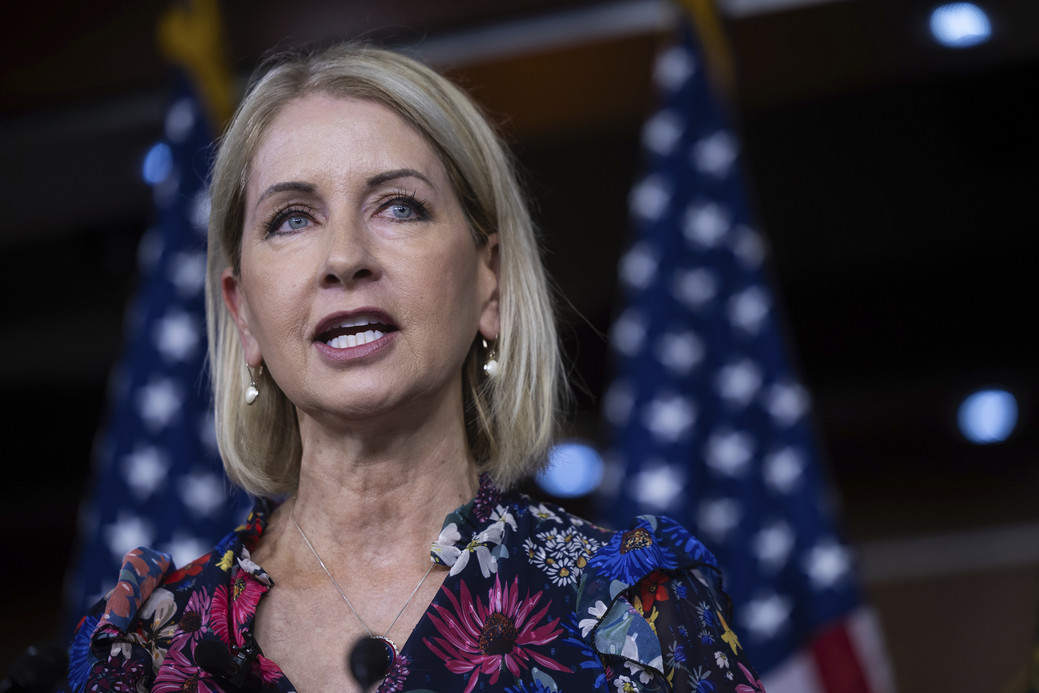
     I write to you not merely in disappointment but in profound concern over your recent remarks posted on social media regarding the prayer delivered in the U.S. House of Representatives by Giani Surinder Singh, a Sikh religious leader. Your statement incorrectly identifying him as Muslim and declaring that “this should have never been allowed to happen” because “America was founded as a Christian nation” is factually erroneous, constitutionally indefensible, and morally indefensible.

    The United States was not founded as a theocracy, nor was it built upon religious exclusivity. Our founders, many of whom held Christian convictions, also recognized with clarity and conviction the dangers of entangling religion with state power. The very fabric of our Constitution reflects this wisdom: Article VI prohibits religious tests for public office, and the First Amendment explicitly ensures both the free exercise of religion and the prohibition of any government establishment of religion. These provisions were not rhetorical flourishes they were deliberate safeguards against the very kind of sectarian exclusion your remarks evoke.

     It is both disturbing and revealing that an elected member of the United States Congress would express indignation at the inclusion of a non-Christian prayer in the House, even if rooted in an initial misidentification. Such a statement betrays a lack of reverence for the pluralistic values that make this nation strong. It also echoes a dangerous and exclusionary worldview that undermines the democratic ideals we are sworn to uphold.

     The invocation of America as a “Christian nation” has been used historically to marginalize religious minorities and to distort our national narrative. The 1797 Treaty of Tripoli, unanimously ratified by the Senate and signed by President John Adams, is unequivocal in its declaration that “the Government of the United States of America is not, in any sense, founded on the Christian religion.” This is not mere historical trivia it is binding testimony of our nation’s commitment to religious neutrality.

     Your remarks, whether borne of ignorance or calculated appeal to a narrow political base, risk inflaming religious intolerance and deepening divisions in a society that is already grappling with rising acts of hate. It is no small matter when a member of Congress signals, even implicitly, that certain Americans because of their faith are less deserving of recognition, dignity, or public voice.

    I respectfully urge you to reflect on the immense responsibility that comes with public office. As a Representative of all your constituents not merely those who share your beliefs you have a duty to protect the constitutional rights of every American, including Sikhs, Muslims, Jews, Hindus, Buddhists, Christians, and those of no faith. You also have a duty to apologize without qualification to the communities harmed by your words so you are not known as a Hate Merchant.

    Religious liberty is not a privilege for the majority. It is a promise to all. That promise is not only American,  it is sacred. America WILL STAY SECULAR.

    Ibrahim Kurtulus
    Community Activist 
  • Medical Aid in Dying Act / Senator Jessica Scarcella-Spanton

    Medical Aid in Dying Act / Senator Jessica Scarcella-Spanton

    The Honorable Kathy Hochul 
    Governor of New York State 
    Executive Chamber State Capitol 

    Albany, NY 12224

    RE: Urgent Appeal to Veto the Medical Aid in Dying Act

    Lead by State Senators Jessica Scarcella-Spanton and Brad Hoylman-Sigal

    Dear Governor Hochul,

    I am writing as a community activist whose voice resonates with a very large, multi-faith audience across Staten Island, Brooklyn, and other boroughs of New York City.

    I write to you today with profound concern and a fervent plea to object to the Medical Aid in Dying Act, recently passed by the New York Senate, and to ultimately veto this deeply misguided legislation. While proponents of this bill, including State Senators Jessica Scarcella-Spanton and Brad Hoylman-Sigal, advocate for “autonomy” and “compassion,” it is imperative to recognize that this act represents a grave departure from fundamental moral and ethical principles, directly infringing upon the sanctity of human life.

    The core of our objection rests on the unshakeable conviction that human life is a sacred gift, bestowed by the Almighty God, and its cessation should remain solely within His divine purview. To empower individuals, or indeed the state, to intentionally hasten death, even in the face of terminal illness, is to arrogate a power that is not ours to wield. This perspective is not merely a personal conviction but a deeply held tenet across a vast spectrum of faith traditions, including Judaism, Islam, and Christianity, which collectively represent a significant portion of New York’s diverse population.

    In Judaism, the principle of Pikuach Nefesh dictates that the preservation of human life is paramount, superseding nearly all other commandments. While Jewish law permits the withholding of extraordinary measures that merely prolong the dying process without hope of recovery, active euthanasia or assisted suicide is unequivocally forbidden. Such acts are considered a violation of God’s sovereignty over life and death. The taking of one’s own life, or assisting another to do so, is viewed as an affront to the divine image in which humanity is created and a rejection of the inherent value of every moment of life, even in suffering. To propose that human beings have a “right to die” contradicts the foundational Jewish understanding that life is a trust from God, not a possession to be discarded.

    Similarly, Islam holds that all human life is sacred and a precious trust from Allah. The Quran explicitly forbids suicide, stating, “And do not kill yourselves, for verily Allah has been to you Most Merciful” (Quran 4:29). Islamic teachings emphasize patience in the face of hardship and suffering, viewing them as opportunities for spiritual growth and expiation of sins. Hastening death, whether by one’s own hand or with assistance, is considered a direct interference with God’s divine will and a denial of His supreme power over life and death. Muslim medical ethics unequivocally prohibit euthanasia and assisted suicide, stressing the physician’s role as a healer and preserver of life, not an agent of its termination.

    Within Christianity, the sanctity of life is a cornerstone belief, rooted in the understanding that humanity is created in the image of God (Imago Dei). The Fifth Commandment, “Thou shalt not kill,” is broadly interpreted to encompass any intentional act that directly takes an innocent human life, including suicide and assisted suicide. While compassion for suffering is central to Christian teaching, true compassion is understood as accompanying individuals in their pain, providing comfort, care, and support, rather than eliminating the person to end their suffering. The Catholic Church, for instance, explicitly condemns euthanasia as “a grave violation of the law of God,” asserting that suffering can have redemptive value and that human beings do not have absolute dominion over their own lives. Protestant denominations, while varying in their specific theological interpretations, largely uphold the sanctity of life and oppose assisted suicide, emphasizing God’s sovereignty and the inherent dignity of every human being.

    Governor Hochul, consider the profound implications of signing this bill into law. Beyond the theological arguments, there are significant societal risks. Legalizing assisted suicide sends a dangerous message that some lives, particularly those marked by illness or disability, may be deemed less valuable or a “burden,” potentially leading to subtle or overt coercion. It fundamentally alters the role of healthcare professionals from healers to facilitators of death, eroding the sacred trust between patient and physician. Furthermore, the experience of other jurisdictions that have legalized such practices demonstrates a concerning “slippery slope,” where eligibility criteria are often expanded over time, encompassing broader categories of individuals.

    New York should instead prioritize robust investment in palliative care, hospice services, and mental health support. These are the truly compassionate responses to suffering, allowing individuals to live with dignity and comfort until their natural end, surrounded by love and care. We must not capitulate to a “culture of death” that seeks to solve suffering by eliminating the sufferer.

    Therefore, I urge you, Governor Hochul, to stand firm against this perilous legislation. Exercise your executive authority to veto the Medical Aid in Dying Act. By doing so, you will uphold the timeless values of human dignity and the sanctity of life, affirming New York’s commitment to protecting its most vulnerable citizens and respecting the deeply held spiritual convictions of millions.

    Thank you for your time and earnest consideration of this critical matter.

    Respectfully,

    Ibrahim Kurtulus
    Community Activist
  • Pashinyan and Partner Use Vulgar Slanders to Smear the Armenian Church

    Pashinyan and Partner Use Vulgar Slanders to Smear the Armenian Church

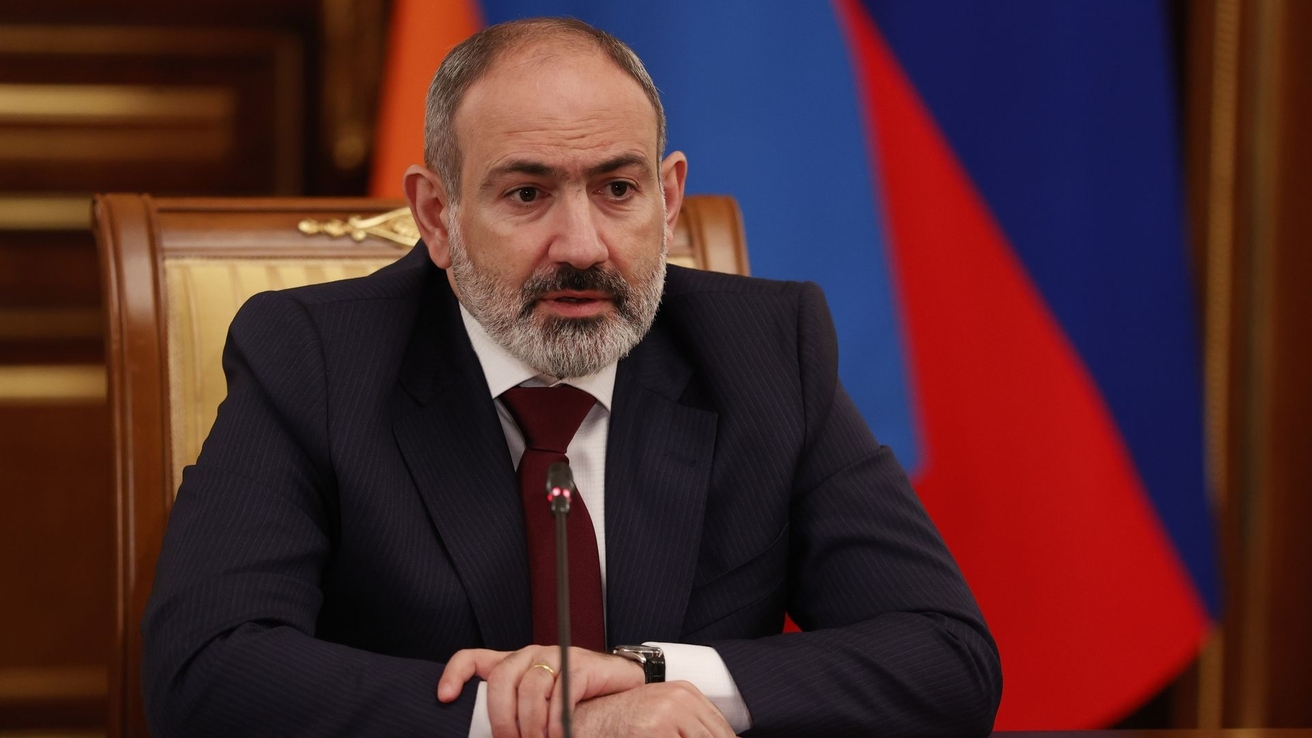
    In recent months, Prime Minister Nikol Pashinyan has exhibited frequent episodes of erratic behavior that raise serious questions about his mental stability. During parliamentary appearances, he screams at those who question him, wildly flailing his arms, and even threatens to jail his political opponents. Such conduct is both bizarre and wholly inappropriate for the head of Armenia’s government.

    Whatever Pashinyan’s mental state was before the Artsakh war, it has clearly deteriorated since the catastrophic defeat Armenia suffered in 2020 under his leadership. Typically, political leaders responsible for disastrous outcomes, generals who suffer major battlefield losses and corporate heads whose mismanagement drives their companies into bankruptcy swiftly resign or are replaced by a more competent person who can take over and do damage control. Regrettably, Pashinyan’s refusal to resign only deepens Armenia’s precarious situation.

    Pashinyan displayed another example of his irrational behavior during last week’s cabinet session, when he launched an unprovoked tirade against the Armenian Apostolic Church and its clergy. “I officially say our churches are storage rooms. S-t-o-r-a-g-e-r-o-o-m-s. Inside the church, there are piles of garbage, bags of cement, shoes, old clothes, old bed, leftover materials, and rusty rebar.” This statement constitutes a false and unwarranted attack on the Armenian Church, especially considering that he did not identify a single church in such a condition. The Prime Minister may have seen construction materials that are stored during church renovations.

    Pashinyan’s unnecessary outburst ignited a bitter exchange between himself joined by Anna Hakobyan (his partner, since they are not married), and several clergymen.

    In a series of inappropriate Facebook posts, Pashinyan asserted that “all clergymen who have violated their oath of celibacy must leave spiritual service.” This is none of the Prime Minister’s business. His statement clearly oversteps his authority and infringes upon the constitutional separation of church and state.

    Pashinyan then wrote on his Facebook page: “The Republic of Armenia must have a decisive vote in the election of the Catholicos of All Armenians. Candidates for Catholicos must pass a background check.” This too represents an unwarranted intrusion into the church’s internal affairs, violating the Constitution.

    The dispute worsened when Pashinyan used a shockingly vulgar remark to respond to a bishop who had called his earlier statement “disgraceful.” Incredibly, the Prime Minister posted on his Facebook page: “Srpazan [Eminence], go back to banging your uncle’s wife, what business do you have with me?” Such language is unbecoming of Armenia’s leader and more appropriate for a street thug.

    17 non-governmental organizations issued a joint statement condemning Pashinyan for exploiting women as sexual objects to attack his opponents. In my opinion, what Pashinyan wrote is libelous, providing ample grounds for legal action by the bishop. I have filed a complaint with Facebook against Pashinyan for violating its Community Standards by posting this defamatory statement.

    Not to be outdone, Anna Hakobyan, Pashinyan’s partner, escalated the conflict further. On her Facebook page, she proclaimed inappropriately: “The country’s main pedophiles are demonized by the word ‘storeroom.’ Of course, that’s how it should be. Aren’t storerooms the dark corners of the lives of black-vested maniacs? After all, it is in storerooms that perversions take place….” She also lambasted the World Council of Churches conference on Artsakh held last week in Switzerland, which was attended by Catholicos Karekin II and other dignitaries, by asking: “What are you doing in Switzerland?” She then ridiculed the efforts to assist Artsakh Armenians: “Whom are you sending securely to their native cradle, whom do you immediately free from captivity? Do you know what spirituality is? That’s news for you. The country’s chief spiritual mafia leader [referring to Catholicos Karekin II] is clearly indignant that a conversation has been opened about storerooms. Otherwise, why would they attack the elected leader of the state?” It appears that Anna was incensed by Catholicos’s attempts to reverse Pashinyan’s surrender of Artsakh.

    Anna Hakobyan then posted a vulgar and libelous statement on Facebook about an Armenian journalist who had criticized her. She wrote: “According to reliable information, [journalist] Boris Murazi is providing sexual services to [former President] Serzh Sargsyan and some of his favorite bishops. I have been told about this for several years. I did not believe it. Now it is obvious. I think the relevant agencies already have video recordings in the drawers.” This vicious attack crosses all red lines of morality and decency. Murazi should file a lawsuit for libel. I have already reported her falsehoods to Facebook.

    Had Pashinyan and Hakobyan expressed their disagreements with the Catholicos in a civilized language, it would have been somewhat understandable. However, using such vulgar language is utterly deplorable. Over the years, I have engaged in numerous disagreements with various high-ranking clergymen and former and current political leaders of Armenia, but I have never resorted to using abusive language. One can disagree without being disagreeable.

    Pashinyan ascended to power in 2018 by falsely assuring the Armenian public that he would lead a movement for “love and tolerance.” Yet, seven years later, it is evident that he has done the exact opposite. He has abused his authority to spread hatred and intolerance. Azerbaijan’s media gleefully reported the Prime Minister’s attacks on the Armenian Church, aligning him with Pres. Ilham Aliyev and Allahshukur Pashazade, the Grand Mufti of Azerbaijan, in their denunciation of the Church.Ultimately, Pashinyan and his partner appear to use these vulgar statements to divert the public’s attention from the regime’s array of damaging, anti-Armenian policies. After ceding Armenian control of Artsakh and parts of the Republic of Armenia to Azerbaijan and attacking the sacred symbols of Armenia’s statehood, this couple is now intent on undermining the 1,700-year-old religious institution that is central to Armenian identity.

    To get rid of this national scourge before he destroys Armenia, I suggest that Karekin II and Aram I Vehapars order all Armenian churches — in Armenia and the Diaspora — to toll their bells, urging hundreds of thousands of Armenians to gather in front of the Prime Minister’s building and remain until Pashinyan resigns.

  • Rebuttal of New York Times Criticisms of Türkiye’s Domestic and Geopolitical Stance

    Rebuttal of New York Times Criticisms of Türkiye’s Domestic and Geopolitical Stance

    In the ongoing discourse surrounding the Republic of Türkiye’s internal affairs and its role on the global stage, it is essential to address the underlying misconceptions and selective criticisms that have been levied, particularly concerning the legal proceedings against Ekrem İmamoğlu, the characterization of Türkiye’s democratic process, and the broader geopolitical dynamics in which Türkiye operates. These criticisms, often rooted in a superficial understanding of Türkiye’s legal, political, and diplomatic realities, fail to acknowledge the intricate complexities of a nation that remains committed to its sovereignty, regional stability, and international responsibilities. To begin with, a basic yet critical correction: the internationally recognized name of the country is the Republic of Türkiye. The continued use of outdated terminology such as “Turkey” by institutions like The New York Times disregards the democratic will of the Turkish people and fails to meet the diplomatic standards expected of a global publication. Respect for proper nomenclature is not merely symbolic—it is a reflection of mutual respect among sovereign nations.

     First and foremost, Türkiye remains an indispensable NATO ally, a sovereign democracy, and a robust force for regional and international stability. This geopolitical position is grounded in a pragmatic approach to national security, territorial integrity, and a commitment to diplomatic respect. To portray Türkiye as an authoritarian state solely based on the case of Ekrem İmamoğlu, while disregarding the broader context of Türkiye’s democratic institutions, is a disservice to a nation that has, despite significant challenges, demonstrated resilience in maintaining its democratic processes.

     The legal case involving İmamoğlu must be considered within the framework of Türkiye’s judiciary, which operates under a constitutionally defined system that upholds due process and the separation of powers. Like in all democratic societies, legal actions are conducted under established legal standards and procedures. It is inappropriate to draw sweeping conclusions about the health of Türkiye’s democracy based on ongoing judicial matters, especially when such cases remain subject to appeal and independent legal review. As Time Magazine accurately noted, “Istanbul’s Rebuke of Erdogan Shows That Democracy Lives in Türkiye,” reflecting the country’s vibrant political engagement and the active participation of its citizenry in shaping the future. The case of İmamoğlu should not be viewed in isolation but as part of a broader political landscape in which democratic engagement is alive and well.

     Further, the portrayal of Türkiye as an “authoritarian” state overlooks the fact that the nation has a functioning democracy, characterized by regular elections, a diverse media landscape, and the active participation of citizens in the political process. President Erdoğan’s electoral victories, achieved through high voter turnout and widely acknowledged by international observers, speak to the strength of Türkiye’s democratic mandate. Critics who selectively highlight certain legal actions while disregarding the pluralistic nature of Türkiye’s media and political spheres are engaging in a willful misrepresentation of the country’s political environment. It is also important to note the striking inconsistency in the criticism of Türkiye’s legal system compared to similar actions taken in Western democracies. The United States, for example, has seen its own issues with whistleblower prosecutions, detentions without trial at Guantanamo Bay, and the use of extrajudicial drone strikes, all of which raise serious questions about the application of democratic principles. The selective outrage directed at Türkiye’s legal proceedings, while turning a blind eye to similar practices elsewhere, exposes a deeply troubling inconsistency in the application of democratic values.

     On the issue of the Kurdish question, the allegations made by Israeli officials, particularly Foreign Minister Gideon Saar, regarding the oppression of Kurds in Türkiye, reflect a distorted narrative. Recently Israeli political figures have used the so called “oppression of Kurds” in  US media as weapon in the international campaign to de-legitimize the Turkish state and the Turkish people. It is important to acknowledge that Kurds in Türkiye are not an oppressed minority but equal citizens who hold prominent positions in the nation’s political, military, and cultural spheres. Kurds have served as Presidents, Prime Ministers, Foreign Ministers, and leaders of the National Assembly. They have flourished in every aspect of Turkish society, including arts, entertainment, and business. There is no “ethnic” line or segregation between Kurds and non-Kurds in Türkiye. Intermarriage is common, and Kurds enjoy the same access to education, housing, business opportunities, and political representation as any other Turkish citizen. Broadcasting and teaching in Kurdish are permitted, and while some Kurdish dialects have faced challenges, the overall trend is one of integration and equal opportunity.

     Moreover, the focus on the so-called Kurdish issue has become a tool for undermining Türkiye’s sovereignty and international standing. This smear campaign, orchestrated by hostile actors seeking to destabilize Türkiye, disregards the genuine strides Türkiye has made in integrating its Kurdish citizens and addressing their concerns through democratic channels. Türkiye’s democracy has been responsive to Kurdish grievances, and the notion that the country discriminates against its Kurdish population is a fabrication that serves only to discredit Türkiye on the global stage.

     It is also vital to understand that the stability of Türkiye is directly tied to the stability of the broader region. Türkiye’s role as a regional superpower cannot be underestimated. Türkiye’s decisive actions in Syria, its role in mediating peace negotiations in Ukraine, and its strategic position as a bridge between East and West make it an indispensable actor on the world stage. Instability within Türkiye would only serve to exacerbate the already volatile geopolitical landscape. Therefore, efforts to undermine Türkiye’s government through disinformation and smear campaigns not only harm the country but also destabilize the region and undermine global peace efforts.

     Finally, the notion that “it’s time for Turkey to turn toward democracy again” reveals a profound misunderstanding of the democratic principles upon which Türkiye is built. Türkiye’s democracy is alive and well, as evidenced by the active participation of its citizens in political processes and the regular conduct of free and fair elections. When the ruling government loses support, as seen in major cities like Istanbul, İzmir, and Antalya, it is a testament to the strength and resilience of Türkiye’s democratic institutions. In an authoritarian state, leaders do not lose elections. The fact that President Erdoğan’s government has faced setbacks in local elections only further reinforces the legitimacy of Türkiye’s democratic process.

     In conclusion, Türkiye’s position on the world stage, its commitment to democratic principles, and its role as a regional superpower must be understood in their proper context. The Republic of Türkiye is not the nation it once was sure is not our Grandfathers Turkiye looking for hand outs ; it is a modern, resilient democracy that has proven time and again that it will not bow to external pressures or smear campaigns. Türkiye will continue to defend its sovereignty, its democratic processes, and its right to self-determination, while remaining an indispensable ally in the global quest for peace, security, and stability.

    Respectfully,

    Ibrahim Kurtulus

    Community Activist
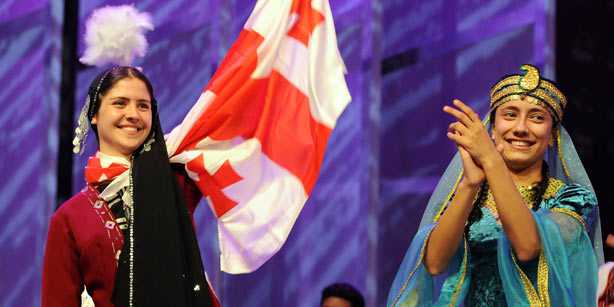
  • Georgia marks its Independence Day

    Georgia marks its Independence Day

    Letter to Staten Island Advance Newspaper  Editor 


    The United States and the Republic of Türkiye Must Stand Firm in Support of Georgia’s Democratic Future

    As Georgia marks its Independence Day on May 26th, the occasion calls for reflection—not just for Georgians, but for allies like the United States and the Republic of Türkiye. Both nations have long-standing ties with Georgia, and both now face a defining choice: to reaffirm their support for a young democracy or risk undermining decades of democratic progress and regional stability.

    In July 2024, U.S. Secretary of State Antony Blinken announced the suspension of more than $95 million in assistance to the Georgian government, following a bilateral review initiated in May. While some aid to civil society remains, this sharp shift in policy could destabilize one of the few democracies in the Caucasus and create a vacuum for greater Russian influence in a geopolitically sensitive region.

    Georgia has reaffirmed its commitment to Euro-Atlantic integration a message reiterated by its diplomats at a recent reception I attended in New York. For over 30 years, U.S. support has helped build Georgia’s civil and defense infrastructure, trained educators and doctors, and strengthened its coast guard and armed forces. These investments have fortified both national resilience and regional security.

    Turning away from Georgia now would be short-sighted. It sends the wrong message to Georgians and the international community one of retreat at a moment that demands resolve. A country that has sought closer ties with the transatlantic world should not be left vulnerable.

    The United States must urgently reconsider its approach. Continued support for Georgia is not a favor it is a strategic imperative. It serves our democratic values and our long-term interests in a secure, Western-oriented Black Sea region. Principled engagement and constructive dialogue—not disengagement—should define U.S.-Georgia relations going forward.

    Likewise, the Republic of Türkiye must act decisively. As a NATO ally, a regional super power, and a country deeply linked to Georgia through history, culture, and trade, Türkiye has much at stake. Georgia is a key transit hub for energy and commerce—home to the Baku–Tbilisi–Ceyhan pipeline and Southern Gas Corridor, both vital to Europe’s energy diversification and Türkiye’s role as an energy bridge. The cities in Turkiye like Artvin, Rize, and Trabzon are directly connected to this strategic geography.

    Yet Türkiye’s recent posture has appeared cautious. This is not the time for hesitation. A stable, democratic Georgia strengthens Türkiye’s regional leadership and helps counter malign influence from the north.As Georgia continues its path toward democratic consolidation, both Washington and Ankara must act with strategic clarity. Independence Day should serve not merely as a ceremony, but as a catalyst for renewed support. Reinstating U.S. assistance and deepening  Türkiye’s engagement would reaffirm shared values and commitments.

    Let May 26th remind us not of uncertainty, but of enduring solidarity with a nation that has stood beside us. Georgia’s success is not just its own it is a victory for democracy itself.

    Ibrahim Kurtulus 
    Dongan Hills

  • Two Sensational Videos Presenting Armenia as a Muslim Nation

    Two Sensational Videos Presenting Armenia as a Muslim Nation

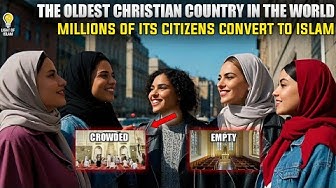
    On YouTube, I came across two fictional videos that distort Armenia’s history and identity. The first video, which runs for nine minutes and 53 seconds, is titled: “The world’s first Christian country now embraces Islam: Millions of its citizens convert to Islam” (https://www.youtube.com/watch?v=YRuBcYQ-0WA). The second video, lasting eight minutes and 24 seconds, is titled: “The first Christian country in the world: Now 99% Muslim” (https://www.youtube.com/watch?v=7qve3KR58xI).

    The two videos, which offer somewhat different content, are narrated by an unidentified individual with a professional voice. They tell the baseless story of how the entire population of Armenia supposedly converted to Islam. The videos contain many realistic-looking scenes of Armenia, likely created by artificial intelligence.

    The videos are produced by an unknown entity called ‘Light of Islam.’ When I first viewed these videos, YouTube displayed a note stating that they contained “altered or synthetically-generated content,” but that notice is now removed. YouTube shows on the screen a lengthy explanation requiring that videos disclose if the content is fictitious. I urge readers to file a complaint with YouTube.

    My objection is based on the fact that these videos contain false information, misleading non-Armenian viewers into believing that it is truthful.

    To illustrate the fabricated narrative presented in these videos, here are excerpts from one of the videos which I have transcribed:

    The video starts with an entirely fictional history of Armenia: “In the 17th century, churches became mosques, crosses were replaced by crescents, and Bibles were replaced by Qurans. Armenia, the world’s oldest Christian country, is now a devout Muslim country has its culture disappeared, [though] the art of stone-carving Khachkars has survived, now inscribed with holy verses. Armenian folk songs are still sung, but their lyrics praise God. Armenian is still spoken, but prayers are now recited in the name of Allah. In school, children memorize the Al-Fattah [one of the 99 names of Allah] and continue to learn about their nation’s history….”

    In the video, Armenia is portrayed as having “developed into a center of Caucasian Islamic culture. Large Madrassas [Islamic schools] were established in Gyumri and Yerevan. Armenian Muslim writers and poets emerged writing poetry in Armenian, Arabic, and Persian. A new spiritual capital grew up around Lake Sevan. It was there that the largest mosque in the Caucasus was built whose architecture combines the design of ancient Christian Khachkars with Islamic calligraphy…. Armenia is now a bridge between the Islamic world and the West. Armenia’s Muslim diplomats sit at the European negotiating table. They speak five languages, quote al-Ghazali [11th century Persian Muslim scholar] and Shakespeare in one sentence. They are respected, because they are the mirror of two worlds. This country is living proof that identities can grow without losing their roots, and that faith can change without killing culture. In universities, Armenian scholars study two great legacies: the Bible and the Quran, the cross and the crescent, not as symbols of conflict, but as two sides of their history. What makes a nation great is not whether it is Christian or Muslim. Today, in that alternative Armenia, the call to prayer still echoes from the minarets of mosques that used to be church bell towers. Children still dance folk dances singing the songs of their ancestors, now with verses praising God.”

    The narrator then introduces a fictitious individual which he calls ‘Harut’! “One day, Harut asked: ‘Mom, why is there a picture of a cross in our house? Aren’t we Muslims?’ His mother paused, then, she answered quietly, ‘because it’s part of who we are, son. We used to be Christians, then we became Muslims, but what never changes, we are always Armenian.’”

    The video continues: “At school, Harut learns to read the Quran and also learns about the ancient Armenian alphabet. In his small library, there are old leather-bound Qurans and a Bible in Krapar [classical Armenian], both inherited from his grandmother who was a nun before converting to Islam. When the harvest festival arrives, families gather in the town square. Mothers serve lavash and dolma, while children dance the Kochari to the accompaniment of zurna and davul [drum]. The Imam of the mosque and the caretaker of the old church stand side by side welcoming people who have come from the mountain villages.”

    “Outside the school, new buildings stand side by side with ancient ruins. A mosque with Ottoman style arches sat next to an Armenian church with its distinctive cone roof. The call to prayer echoed through the air, but the small toll of the bells that were still rung on special occasions, in honor, not in resurrection. Armenia’s new government created an impartial history curriculum. The National Museum showcases both the stories of Christian martyrs and the early spreaders of Islam in the region: in one room, an old icon of Jesus, in another, a torn 16th century prayer rug. In the middle, an inscription reads, ‘Here is where wounds and love learn to coexist.’”

    YouTube should be urged to delete both fictitious videos to prevent misleading viewers who are unaware of the true facts about Armenia’s culture and religion.