Category: Authors

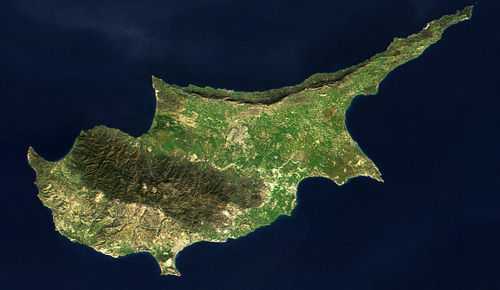
  • Türkiye’s intervention Cyprus Letter to Congresswomen Nicole Malliotakis

    Türkiye’s intervention Cyprus Letter to Congresswomen Nicole Malliotakis

    Nicole Malliotakis
    United States House of Representatives
    266 Cannon House Office Building
    Washington, D.C. 20515

    Subject: Response to Your Remarks on Cyprus and the Republic of Türkiye

    Dear Congresswoman Malliotakis,

    I am writing to express my deep concern and disappointment regarding your recent remarks made during the 51st anniversary commemoration of Türkiye’s 1974 intervention in Cyprus, during which you referred to it as an “illegal occupation.” Your characterization of this complex historical event, along with your continued advocacy for the removal of Turkish troops, reflects a pattern of selective historical narrative that disregards international law, factual accuracy, and the lived experiences of Turkish Cypriots.

     As an elected official representing a diverse constituency including a large Turkish American,, and Muslims from across Staten Island and Brooklyn. I urge you to approach such sensitive matters with greater care, integrity, and an appreciation for the full historical context.

     Türkiye’s 1974 Intervention: A Legal Action Under the Treaty of Guarantee

     Türkiye’s intervention in Cyprus was not an invasion, nor was it illegal. It was carried out under the 1960 Treaty of Guarantee an internationally binding agreement signed by Türkiye, Greece, and the United Kingdom. The treaty grants each guarantor nation the right to intervene unilaterally in Cyprus if the constitutional order or security of either community is under threat.

     In July 1974, a Greek-orchestrated coup in Cyprus aimed to annex the island to Greece, violently deposing the legitimate government. Türkiye, in accordance with its treaty rights, intervened to prevent this annexation and to protect the Turkish Cypriot population, which had already endured years of discrimination, political marginalization, and ethnic violence. This intervention was not only lawful but necessary. The Athens Court of Appeals (Decision No. 2658/79, dated March 21, 1979) itself confirmed that it was the coup—not Türkiye’s response—that constituted the illegal action. Also, Archbishop Makarios III, the first President of the Republic of Cyprus, made several significant statements following the events of July 1974. After surviving the coup d’état orchestrated by the Greek military junta and EOKA-B, he fled to London and later addressed the United Nations. he also acknowledged that the coup in Cyprus was a Greek invasion not a Turkish invasion:  Here is a key excerpt from Archbishop Makarios’ statement to the United Nations Security Council on July 19, 1974 one day before Türkiye’s intervention:

     “It is a paradox, indeed, that the President of Cyprus is addressing the Security Council in his capacity as the head of a state which is a victim of aggression not by a foreign power, but by a country which claims to be a brother nation…”

    “What is happening in Cyprus is a clear invasion, through military force, by Greece… The coup was an invasion, and from its first moment it was an act of aggression and occupation.”

     This statement is important because Makarios labeled the Greek-led coup as an “invasion,” thereby creating an argument though indirect that Türkiye’s response was not the initial act of aggression, but rather a reaction to Greek Invasion of the Island.  The fact of the matter is In terms of the 1960 Treaty of Guarantee, while Makarios did not publicly recognize the Turkish intervention as “legal,” the treaty itself is key to understanding Türkiye’s justification. The Treaty of Guarantee (signed by the United Kingdom, Greece, Türkiye, and Cyprus) gave the guarantor powers the right to intervene unilaterally to restore the constitutional order if it were disrupted.

     Archbishop Makarios did  explicitly endorse the Turkish intervention, his recognition of the coup as an invasion by Greece lends credence to Türkiye’s legal justification under the Treaty of Guarantee. Thus, the 1974 Turkish operation cannot accurately be labeled as an “invasion”

     The Turkish Peace Forces in Northern Cyprus continue to serve a vital function in deterring future violence and safeguarding the security of Turkish Cypriots. Their presence is not a political occupation it is a security imperative based on tragic historical realities.

     British Troops in Cyprus: Also a Guarantor Presence, If the presence of Turkish forces is a concern, I would respectfully ask why there is no similar objection to the continued presence of British troops on the island. The United Kingdom, like Türkiye, is a Guarantor Power and maintains sovereign military bases in Cyprus. Are these forces also to be labeled an “occupation,” or is this designation applied selectively for political convenience?

     The 2004 Annan Plan: A Missed Opportunity for Peace

    In your remarks, you called for reunification. However, in the 2004 United Nations–backed Annan Plan referendum, 65% of Turkish Cypriots voted in favor of reunification, while 85% of Greek Cypriots rejected it. Then–President of the Republic of Cyprus, Tassos Papadopoulos, openly urged Greek Cypriots to vote “No.” Reunification was not blocked by Türkiye or Turkish Cypriots, but by the Greek Cypriot leadership. If peace and unity are the goals, this crucial fact must be part of the conversation.

     Recognition of the Republic of Türkiye

     It is also concerning that you continue to use the outdated term “Turkey,” rather than the official name “Türkiye,” which has been recognized by the United Nations and many international bodies. Respecting a country’s chosen name is a basic tenet of diplomacy and decency. As a Member of Congress, you have a duty to model such respect in both speech and writing.

     The Strategic Importance of U.S.–Türkiye Relations

     Türkiye remains one of the United States’ most critical allies in NATO. It possesses the alliance’s second-largest military and serves as a geopolitical bridge to Central Asia, the Caucasus, the Balkans, the Black Sea, and the Middle East. As former  U.S. Ambassador Jeff Flake recently reaffirmed the vital role that Türkiye plays in American defense strategy, economic cooperation, and diplomatic outreach.  Efforts to weaken U.S.–Türkiye relations do not serve the national interest. Rather, they empower adversaries and compromise regional stability.

     A Call for Leadership, Not Division

    Congresswoman, it is my hope that you will choose to lead with fairness and inclusivity, rather than division and partisanship. As a representative of all New Yorkers, you have a responsibility to serve your full constituency, including Turkish Americans, Turkish Cypriots, and other minority communities who contribute daily to the richness of our city and our nation.

     Your message only justifies and intensifies the hateful feelings that have been instilled in them through childhood; frankly, you are engaging in tactics favored by groups such as the Ku Klux Klan.

     You were elected to uphold the principles of truth, justice, and equality—not to amplify the narratives of foreign nationalisms at the expense of American unity and international diplomacy.

    History remembers those who choose wisdom over prejudice, truth over propaganda, and peace over provocation. I sincerely hope you will reflect on these matters and approach them in a more balanced, factual, and constructive manner moving forward.

    Respectfully,

    Ibrahim Kurtulus
    Dongan Hills
  • Response to Your Remarks on Cyprus and the Republic of Türkiye

    Response to Your Remarks on Cyprus and the Republic of Türkiye

    Michael Tannousis Assembly member
    11 Maplewood Place
    Staten Island, NY 10306

    July 20, 2025

    Subject: Response to Your Remarks on Cyprus and the Republic of Türkiye

    Dear Assemblyman Michael Tannousis

    I write to express my deep disappointment and concern regarding your recent remarks during the 51st anniversary commemoration of Türkiye’s 1974 intervention in Cyprus, in which you referred to it as an “illegal occupation.” Your characterization of these events overlooks key historical facts, disregards international law, and marginalizes the lived experiences of Turkish Cypriots. As an elected representative of a diverse constituency that includes many Turkish Americans and Muslims across Staten Island and Brooklyn, I urge you to engage with this issue in a manner that reflects historical truth, legal accuracy, and diplomatic fairness.

    Türkiye’s 1974 Intervention: A Legal and Necessary Action

    Contrary to your statement, Türkiye’s intervention in Cyprus was not an “invasion” nor illegal. It was undertaken in accordance with the 1960 Treaty of Guarantee, a binding international agreement signed by the Republic of Cyprus, Türkiye, Greece, and the United Kingdom. The Treaty clearly permits any of the Guarantor Powers to act unilaterally to restore the constitutional order in Cyprus should it be disrupted. In July 1974, the democratically elected President of Cyprus, Archbishop Makarios III, was overthrown in a Greek-backed coup aimed at unifying the island with Greece. This act of aggression executed by the Greek military junta and the EOKA-B paramilitary group triggered Türkiye’s legal and justified intervention to prevent annexation and protect the Turkish Cypriot population, which had endured years of ethnic violence and political exclusion.

    The Athens Court of Appeals (Decision No. 2658/79) concluded that it was indeed the coup—not Türkiye’s military response that was illegal. 

    Furthermore, Archbishop Makarios himself, in a statement to the United Nations Security Council on July 19, 1974, one day before Türkiye intervened, described the coup as an act of aggression:

    “It is a paradox, indeed, that the President of Cyprus is addressing the Security Council in his capacity as the head of a state which is a victim of aggression not by a foreign power, but by a country which claims to be a brother nation… What is happening in Cyprus is a clear invasion, through military force, by Greece… The coup was an invasion, and from its first moment it was an act of aggression and occupation.”

    The acknowledgment by Archbishop Makarios then head of state of Cyprus that the 1974 coup was orchestrated by Greece provides significant legal and moral support to Türkiye’s position. His admission affirms that it was the Greek-backed coup, not Türkiye’s response, that constituted an act of aggression. Türkiye’s intervention, therefore, was a lawful and treaty based action taken in response to an imminent threat, not an invasion. This is a fact that could stand up in any impartial international court of law.

    Michael, as a legal professional, if you genuinely believe that Türkiye’s intervention qualifies as an “invasion,” I respectfully encourage you to bring your case and any supporting evidence before the International Court of Justice.

     If your claims are valid, it would be a landmark victory for the Greek and Greek Cypriot cause, and you may well be honored for your efforts with statues worldwide . In fact, I would be willing to personally underwrite all associated legal expenses for such a case to be presented at the international level. Let the law not selective political rhetoric be the judge.

    Turkish Peace Forces: A Security Imperative, Not an Occupation

    The continued presence of Turkish Peace Forces in Northern Cyprus is not a political occupation. It is a security necessity grounded in the tragic history of ethnic cleansing and violence against Turkish Cypriots. Their presence has served as a deterrent to further conflict and ensured the safety of an entire community that had once been pushed to the brink of annihilation.

    British Military Presence: A Selective Argument , If the presence of foreign troops on Cyprus is a concern, then the longstanding presence of British military forces, including the sovereign bases of Akrotiri and Dhekelia, must also be addressed. The United Kingdom is, like Türkiye, a Guarantor Power. Yet no similar outrage is expressed over British forces. Why is the label “occupation” applied only to Türkiye’s presence and not to the UK’s? This selective rhetoric undermines objectivity and weakens the legitimacy of any call for fairness.

     The 2004 Annan Plan: A Missed Opportunity by Greek Cypriots . The 2004 Annan Plan, supported by the United Nations and the international community, was overwhelmingly accepted by 65% of Turkish Cypriots while 85% of Greek Cypriots rejected it. Then President Tassos Papadopoulos publicly urged the Greek Cypriot population to vote “No.” Reunification was not rejected by Türkiye or Turkish Cypriots, but by the very leaders you now align with in rhetoric.

    Recognition of “Türkiye” and Respect in Diplomacy

    I also noted many times your continued use of the outdated term “Turkey” in official communication. The nation has formally adopted the name “Republic of Türkiye,” which has been recognized by the United Nations and numerous international bodies. Addressing countries by their chosen names is a basic element of diplomatic respect and cultural decency. As a Member of Congress, this should be reflected in both your speech and writing.

    Efforts to mischaracterize Türkiye’s actions or alienate its role in Cyprus only serve to embolden adversaries and weaken American influence in the region.

    A Call for Leadership Rooted in Truth, Not Division . Micheal, I respectfully urge you to rise above partisan rhetoric and historical revisionism. Your comments risk deepening wounds, empowering ethnic bias, and misinforming the public. As an elected leader, your responsibility is to all New Yorkers including Turkish Americans and Turkish Cypriots who have long contributed to the strength and diversity of this city and this nation. Your message only justifies and intensifies the hateful feelings as you are engaging in tactics favored by groups such as the Ku Klux Klan.

    Frankly, the sentiments expressed in your remarks echo the type of hostility and historical distortion often used by hate-based movements. Leadership should build bridges, not justify inherited animosity.

    History will remember those who uphold truth over political convenience, diplomacy over hostility, and fairness over propaganda. I sincerely hope you will reflect on the facts presented and engage with this issue more responsibly moving forward.

    Respectfully,
    Ibrahim Kurtulus

  • A Response to Fr. William Devlin / Complex Crisis Facing Northern Nigeria

    A Response to Fr. William Devlin / Complex Crisis Facing Northern Nigeria

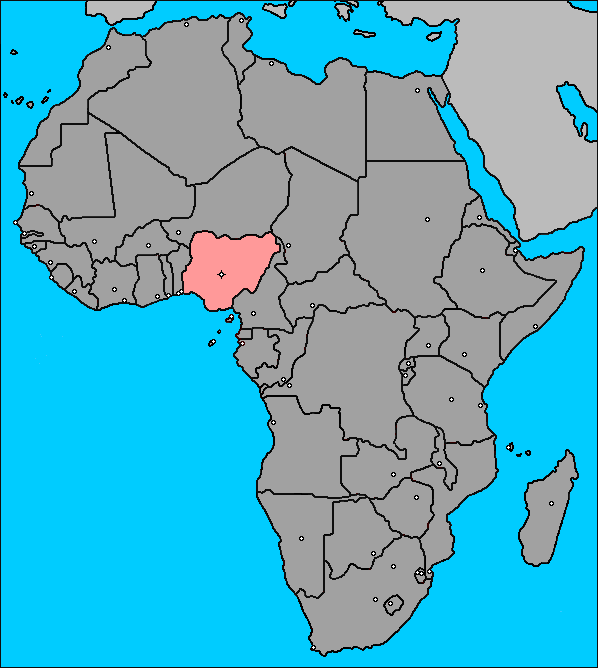
    Understanding the Complex Crisis Facing Northern Nigeria

    A Response to Fr. William Devlin

    For over two decades, I have closely followed the situation in Northern Nigeria through conversations with diplomats at the United Nations, NGOs operating on the ground, and countless Nigerian citizens from both Christian and Muslim communities. The plight of Christians in the region is real and deeply painful. However, to frame the violence as a one-sided “Muslims versus Christians” campaign is not only inaccurate it is dangerously reductive and risks undermining efforts toward peace and justice. Most recently, my attention was drawn back to this tragic issue by my dear friend, Fr. Bill Devlin, a courageous and tireless global advocate for the persecuted. He expressed his heartbreak by describing the atrocities as “Muslims murdering Christians.” His concern is heartfelt, and his compassion for the suffering is beyond question. However, this characterization—though emotionally charged—oversimplifies a deeply layered crisis and risks inflaming sectarian divisions in a region already suffering under the weight of historical injustice and broken governance.

     The Facts on the Ground , Yes, Christians in Northern Nigeria face alarming challenges so does Muslims . In several Muslim majority locations, discrimination, marginalization, and targeted violence are disturbingly frequent on both sides. Attacks on churches, mosques, kidnappings of clergy, and the displacement of Christian farming communities have been documented extensively. Boko Haram and ISWAP (Islamic State West Africa Province) have carried out heinous crimes, many of them targeting Christians specifically. But to reduce this complex, multii dimensional crisis to a narrative of “Muslims killing Christians” is not only factually incorrect it is morally irresponsible.

     A complex conflict far beyond religion is what is on the ground . The violence in Northern Nigeria is fueled by a volatile mix of ethnic conflict, land use disputes, criminal banditry, terrorism, and governmental failures. Religious identity is often used to justify or exacerbate conflict, but it is rarely the root cause. Ethnic tensions: Clashes between Muslim Fulani herders and largely Christian farming groups such as the Tiv and Berom are often framed in religious terms, but the underlying issues revolve around land use, grazing rights, and environmental degradation. Banditry and criminality: Armed gangs without clear ideological or religious motivation have ravaged both Muslim and Christian communities. Kidnapping for ransom, extortion, and village raids are tragically common and indiscriminate.

     Political failure: The Nigerian government has repeatedly failed to prevent violence or prosecute perpetrators. This impunity has emboldened criminal actors and fueled cycles of revenge. Muslim victims: Thousands of Muslim civilians have also been targeted by Boko Haram, bandits, and even retaliatory attacks. Mosques have been bombed, imams executed, and entire Muslim communities displaced or wiped out. To frame this tragedy as a religious war as Fr. Devlin has conveyed it  does a disservice to victims on both sides. Consider these facts:

     In 2014, Boko Haram bombed a mosque in Kano, killing over 100 Muslims.

     In 2021, over 200 Muslim civilians were massacred in Zamfara State by bandits.

     In Kaduna, interfaith peace dialogues have been violently disrupted by attacks that struck both Muslim and Christian communities.

     In Plateau and Benue, retaliatory attacks have consumed entire villages—Christian and Muslim alike.

     To say “these are Muslims doing the murders” As Fr William Devlin said  is to erase the profound suffering of Muslim victims and to cast suspicion on millions of innocent Nigerians who desire nothing more than to live in peace with their neighbors.

     What Global Institutions Say: It’s Not Just Religion

    Internationally respected organizations from human rights monitors to interfaith NGOs have thoroughly investigated the conflict. Their consensus is clear: religion isa small or  just one of many overlapping factors. Here’s what they have documented:

     1. U.S. Commission on International Religious Freedom (USCIRF)

    “Conflicts between herders and farmers in the Middle Belt are complex… It is an oversimplification to frame them as purely Muslim-Christian violence.”

    (USCIRF Nigeria Factsheet, 2023)

     2. Amnesty International

    “Both Christian and Muslim communities have been victims and perpetrators… To ascribe the violence solely to Muslim  motivations ignores the deep-rooted causes including poverty, impunity, and failure of security forces.”

    (Harvest of Death, 2022)

     3. International Crisis Group (ICG)

    “Portraying the herder-farmer violence as a religious war is misleading. It is driven largely by competition for land and water, desertification, and poor governance.”

    (Africa Report No. 301, May 2021)

     4. Search for Common Ground

    “Both Christians and Muslims express fear, loss, and anger. Religious identity becomes weaponized in the absence of governance, but that doesn’t mean the conflict is about faith.”

    (Peacebuilding Report, 2020)

     5. The Tony Blair Institute for Global Change

    “Groups like Boko Haram use religion to justify brutality, but their recruitment is often rooted in economic despair and lack of state presence. Blaming Islam as a whole plays into their propaganda.”

    (Policy Brief, 2022)

     6. Human Rights Watch (HRW)

    “Muslim civilians—particularly those who oppose extremist ideologies are regularly targeted… Dozens of imams have been killed for preaching peace.”

    (HRW Nigeria Annual Review, 2023)

     7. UN Office for the Coordination of Humanitarian Affairs (UNOCHA)

    “Both Muslim and Christian children have been displaced, orphaned, or abducted. Aid must not be politicized—religious identity does not define vulnerability in this conflict.”

    (UNOCHA-UNICEF Report, Q2 2023)

     A Call for Responsible Advocacy : Religious freedom must be defended. The persecution of Christians in Northern Nigeria is real and must never be minimized or Muslim persecution. But truthful advocacy demands we avoid sweeping generalizations that turn victims into enemies or demonize entire faith communities. There are brave Muslim imams who hide Christians in their mosques, Muslim villagers who protect their Christian neighbors, and interfaith alliances that work every day toward justice and peace. Their courage deserves our support not our silence. To reduce such a complex humanitarian crisis to a binary of “Muslims killing Christians” as Fr William Devlin’s conveyed to me not only distorts the facts it feeds Islamophobia, Looks to delegitimizes  a whole of Muslims community , obstructs peace efforts, and risks repeating the mistakes of history where rhetoric incited violence.

    Conclusion: Stand for Justice, Not Division Fr. Devlin.

    In the face of unspeakable violence, let us be defenders of truth not amplifiers of fear. Let us commit to justice not vengeance. And let us advocate for all who suffer Christian, Muslim, or otherwise not because of their faith, but because of their humanity.

     Let us not allow the extremists to define the narrative for either side. Terrorism is not Islam, and those who commit atrocities in its name do not represent the faith of over 90 million peaceful Muslims in Nigeria.

    May we raise our voices firmly, responsibly, and compassionately on behalf of all who seek peace and dignity in Northern Nigeria.

    Ibrahim Kurtulus 
    Community Activist 

  • Azerbaijan Bold Reorientation- Turkiye , Georgia, USA and Israel

    Azerbaijan Bold Reorientation- Turkiye , Georgia, USA and Israel

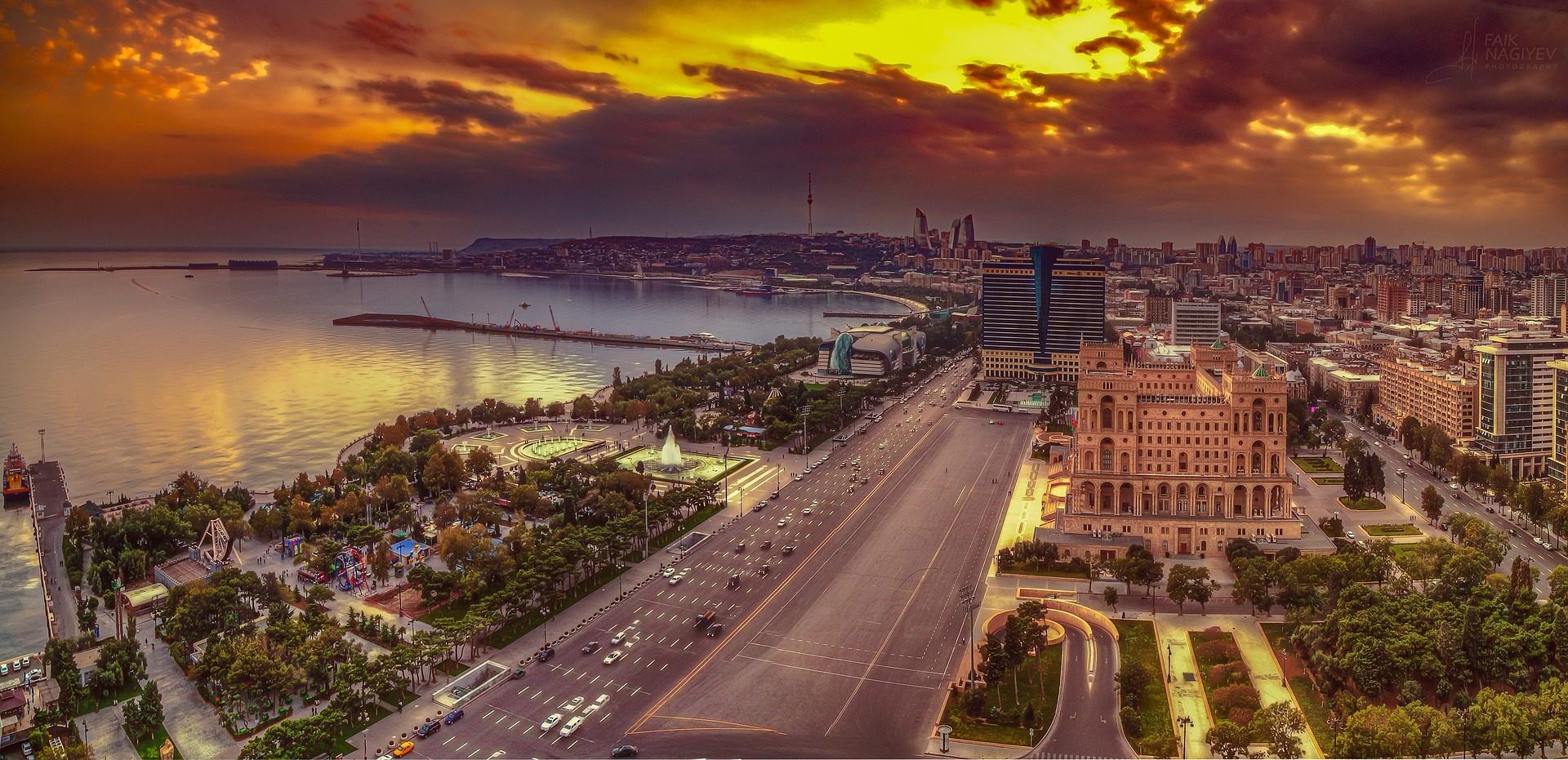
    A New Chapter in the South Caucasus: Azerbaijan’s Bold Reorientation

    The geopolitical currents in the South Caucasus are undeniably shifting, heralding a new and assertive role for Azerbaijan on the regional stage. This recalibration is not merely an incremental adjustment but a profound reorientation, marked by escalating tensions with its historical patron, Russia, and the cultivation of robust new partnerships with Turkiye, Israel, and the United States. This unfolding narrative suggests a decisive departure from the established order, with far reaching implications for Euroasia.

    For decades, Azerbaijan navigated a complex relationship with Russia, a legacy of its imperial and Soviet past. However, recent events have irrevocably fractured this bond. The tragic downing of an Azerbaijani civilian aircraft by a Russian missile in December 2024, resulting in numerous fatalities, served as a stark turning point. Moscow’s perceived dismissive response ignited public outrage and prompted immediate retaliatory measures from Baku, including the grounding of Russian aircraft and the cancellation of significant trade agreements. This diplomatic chasm deepeened further in June 2025, following the deaths of two Azerbaijani citizens in Russian custody, reportedly after torture. Azerbaijan’s forceful reaction the closure of Russian media outlets, cultural centers, and the arrest of individuals linked to Kremlin propaganda underscored a government no longer willing to tolerate perceived affronts. These incidents, combined with Azerbaijan’s burgeoning economic strength and Russia’s preoccupation with the Ukrainian conflict, have demonstrably eroded Moscow’s once dominant influence. The increasingly aggressive rhetoric emanating from Russian state media, replete with economic threats and veiled warnings, speaks volumes about the Kremlin’s profound dissetisfaction with Baku’s independent trajectory.

    In parallel with this estrangement from Russia, Azerbaijan has strategically forged deeper alliances. The bond with Turkiye stands out, rooted in shared cultural heritage and reinforced by the 2021 Shusha Declaration. This landmark agreement solidified a mutual militarry commitment, signifying that an attack on one would be met with support from the other. Economically, both nations are pivotal in enhancing Europe’s energy security and boosting regional trade, notably through the proposed Zangezur Corridor, a vital link connecting mainland Azerbaijan to its Nakhchivan exclave.

    Israel has emerged as another critical military partner. Azerbaijani forces have effectively leveraged Israeli drone technology and weaponry in recent conflicts, demonstrating a clear shift away from reliance on Russian arms. Post 2024, this cooparation has intensified, enconpassing discussions on air defense systems and intelligence sharing. Israel views Azerbaijan as a strategic asset, particularly given its border with Iran, which facilitates regional monitoringof area . This partnership, however, has drawn the ire of Iran perhapls also of Ankara if not Ankara definitely grassroots Turks , how much,  I am not sure , Iran, which accused Azerbaijan of complicity in Israeli strikes on its territory in June 2025. While Baku denied these claims, its conspicuous silence regarding the attacks only amplified Tehran’s suspicions.

    The United States has also deepened its engagement. Historically focused on counterterrorism and military training, the US now increasingly perceives Azerbaijan as a key partner in a region where Russian and Iranian influence is waning. Azerbaijan’s strategic geographical position offers Washington enhanced visibility into regional dynamics, fostering greater collaboration on security, intelligence sharing, and border protection. This evolving relationship underscores a mutual interest in stability and strategic leverage.

    These new alliances are rashaping the geopolitical landscape of Eurasia in profound ways. Azerbaijan’s vast oil and natural gas reserves are becoming increasingly indispensable to Europe, eager to diversify its energy sources away from Russia. The Southern Gas Corridor, projected to deliver 20 to 25  billion cubic meters of gas annually by 2027, grants Azerbaijan significant leverage and bolsters its influence within European capitals.

    The shift in power has also had a palpable impact on Armenia. Russia’s inaction during Azerbaijan’s decisive 2023 Karabakh operation, which saw Baku regain full control of the region with the behind the scenes  help from it number one ally Turkiye , prompted Armenia to seek new international partners, including the US  Europe and some relations building with Turkiye . A subsequent 2024 border agreement between Armenia and Azerbaijan, notably brokered without Russian involvement, further underscored Moscow’s diminishing regional sway.

    Conversely, Iran views these developments with growing apprehension. Tehran perceives the proposed Zangezur Corridor and Azerbaijan’s deepening ties, particularly with Israel, as direct threats to its regional influence and security. Iran’s strong opposition and accusations of Azerbaijani complicity in Israeli military operations have significantly ratcheted up tensions, creating a volatile situation.

    Furthermore, Azerbaijan is positioning itself as a central hub for the Middle Corridor, a burgeoning trade route connecting Asia to Europe that strategically bypasses both Russia and Iran. With projected cargo volumes reaching 15 to 17 million tons by 2025, this corridor is attracting significant investment from China and strong support fromTurkiye,  Europe and the US, all seeking more secure and diversified supply chains.

    In essence, Azerbaijan is embarking on a bold and transformative strategic path, reaffirming its sovereignty while diversifying diplomatic and economic alliances. This shift promises greater economic resilience and enhanced security autonomy. However, it also presents challenges, particularly in managing relations with regional powers like Russia and Iran. Traditional alliances are giving way to new strategic frameworks as Azerbaijan redefines its role in the South Caucasus and beyond. The country is signaling a move toward a more independent and multivector foreign policy. Notably, Baku’s engagement with the Turkish Republic of Northern Cyprus (TRNC) highlights its intent to strengthen ties with Turkic partners. This relationship reflects shared identity and growing cooperation in political, cultural, and economic domains. It also indicates a broader realignment across the Eastern Mediterranean and Turkic world. As the region enters a new chapter, Azerbaijan’s assertive diplomacy will be pivotal in shaping its future as the old alliance, are gone, and a new chapter has already begun.

    Ibrahim Kurtulus 
    Community Activist – NY  
    Rize – Cayeli – Demirhisar Koyu 

  • Deep Appreciation for Your Participation in the Korean War Commemoration Ceremonies

    Deep Appreciation for Your Participation in the Korean War Commemoration Ceremonies

    Letter to LA Turkish Consul General Sinan Kuzum

    The Honorable Sinan Kuzum
    Consul General
    Consulate General of the Republic of Türkiye
    Los Angeles, California

    Subject: Deep Appreciation for Your Participation in the Korean War Commemoration Ceremonies

     July 3, 2025

    Dear Consul General Kuzum,

    On behalf of the Turkish-American community and as an Honorary South Korean Citizen and Honorary Korean War Veteran recognized by the Republic of Korea, I extend my heartfelt appreciation for your meaningful participation in the Korean War Commemoration Ceremonies held in Los Angeles.

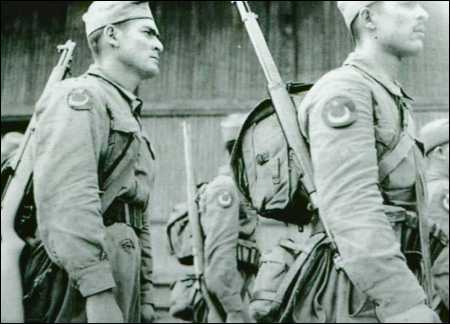
     Your presence was not only a diplomatic duty it was a profound act of remembrance and honor for the brave Turkish soldiers who wrote history with their blood on the fields of Korea. These heroes, far from their homeland, fought and sacrificed their lives for a people they had never met—forming a lasting legacy of brotherhood between Türkiye and South Korea.

     By taking part in these ceremonies, you upheld the dignity of our veterans and honored the deep, enduring ties between the Turkish and Korean peoples. These events also highlight the broader significance of the alliance between Türkiye and the United States—one that was strengthened through our joint sacrifices in Korea and continues today through our shared commitment as NATO allies.

     Sadly, not all representatives have shown the same level of honor and awareness. Some, including former Ambassador Murat Mercan then servicing as Deputy Consul general of New York Emre Manav, have disrespected and overlooked the sacrifices of our Turkish Korean War veterans. Your actions stand in stark contrast: you chose the path of remembrance, gratitude, and truth. You gave voice to the legacy of our veterans who returned not only with medals but as sons embraced by the Korean people a symbol of the unbreakable bond forged in the crucible of war.

     Consul General Kuzum, I deeply respect and commend your leadership. You have set a powerful example for your colleagues by showing that honoring the past is essential to shaping a dignified and meaningful future. I sincerely thank you for not forgetting our brave veterans, and for carrying forward their legacy with the respect and reverence they deserve.

     With profound gratitude and admiration,

    Ibrahim Kurtulus

    Honorary Korean War Veteran
    Honorary Citizen of the Republic of Korea
    Community Activist  & Friend of the Turkish-Korean Brotherhood

  • Deep Concerns Regarding NCCA’s Affiliation with the Gülen Movement

    Deep Concerns Regarding NCCA’s Affiliation with the Gülen Movement

    Gulen Movement / Letter to National Council on Civil Advocacy (NCCA)

    Bilal Eksili -Executive Director , NCCA
    National Council on Civil Advocacy (NCCA)
    20F St. NW Suite 700 Washington D.C. 20001

    Subject: Deep Concerns Regarding NCCA’s Affiliation with the Gülen Movement

    Dear Bilal Eksili –  Members of the National Council on Civil Advocacy,

    I write to you today with the utmost respect and in the spirit of open civic engagement, but also with profound concern. As a long-standing community activist and a voice within the Turkish-American community across America and the New York broader Tri-State area, I feel it is my duty to bring to your attention an issue of great consequence involving your organization’s apparent affiliation and cooperation with the Gülen movement—an entity officially recognized as a terrorist organization by our NATO ally, the Republic of Türkiye, as well as by numerous governments across the globe. First, it is important to note that the country’s name is no longer “Turkey,” but officially “Türkiye,” as recognized by the United Nations. Continued refusal to use this name reflects a lack of basic diplomatic respect toward the will of the Turkish people and government.

    The movement, founded and directed by the now-deceased cleric Fethullah Gülen, presents itself as a civic initiative promoting education, interfaith dialogue, and humanitarianism under labels such as “Hizmet” or, in the United States, “Turkish Cultural Centers.” However, beneath this facade lies a deeply concerning record of covert political ambition, opaque financial structures, and active attempts to undermine sovereign institutions. The Government of Türkiye has issued detailed indictments against the Gülen network, charging its leadership with orchestrating a failed coup attempt in 2016 aimed at toppling the democratically elected government and destabilizing the secular foundations of the Republic. These charges are supported by extensive evidence pointing to the movement’s infiltration of judicial, military, and educational institutions—both in Türkiye and abroad—in an effort to establish a parallel power structure loyal to its leader, not the people or the constitution.

     Here in the United States, the Gülen movement operates dozens of charter schools under varying names, many of which have been subject to FBI raids as part of federal white-collar crime investigations. These schools have raised red flags for suspected visa fraud, improper use of public funds, and questionable hiring practices. The State of Ohio, to cite one example, has closed down all schools associated with the Gülen network due to these concerns. Investigative reports—including those by CBS 60 Minutes and the documentary Killing Ed—have documented these disturbing activities in detail.

     The fact remains that this group maintains billions of dollars in assets worldwide, with a highly centralized, unaccountable leadership structure. Internationally, many countries—including Japan, Thailand, Uzbekistan, Kazakhstan, Saudi Arabia, Azerbaijan, Turkmenistan, Georgia, Gulf Cooperation Council (GCC) Member States,  Organization of Islamic Cooperation (OIC),and several European and Asian nations—have either banned or imposed severe restrictions on the organization’s operations, citing national security concerns.

     Closer to home, over 97 % of Turkish Americans, as well as a significant portion of Albanian Americans and other diaspora communities, strongly oppose this movement and urge American institutions not to offer it legitimacy or partnership. The community’s overwhelming consensus reflects not only geopolitical alignment with our NATO ally but also a deep moral and civic concern over the movement’s real objectives. It is in this context that I respectfully question the National Council on Civil Advocacy’s rationale for cooperating with, endorsing, or affiliating with an organization that has such a well-documented and troubling history. While the Gülen network may present itself as a benign force for interfaith understanding, its track record suggests otherwise. We must not be misled by appealing rhetoric that conceals authoritarian motives or seeks to launder reputations through civic platforms.

    I urge the NCCA to conduct a transparent internal review of all current and former partnerships, particularly with those organizations and individuals aligned—either formally or informally—with the Gülen movement. Furthermore, I call on the NCCA to clarify its position publicly and reaffirm its commitment to transparency, pluralism, and democratic values free from association with any group that undermines them. The integrity of American civic life depends on public trust. That trust is eroded when advocacy organizations appear to embrace, or remain silent about, partnerships with actors who have sought to destabilize other democracies through clandestine and often illicit means. In light of the NCCA’s public mandate, I believe it is not only appropriate but imperative to demonstrate the highest standard of vigilance and ethical responsibility in your affiliations.

     Respectfully,

    Ibrahim Kurtulus
    Community Activist