Category: Authors

  • Letter to Turkish Ambassador Sedat Onal

    Letter to Turkish Ambassador Sedat Onal

    His Excellency Sedat Onal
    Ambassador of the Republic of Türkiye to the United States
    Embassy of the Republic of Türkiye
    Washington, D.C.

    April 16, 2025 

    Your Excellency,

    I extend to you my sincere congratulations and deepest appreciation for your principled decision to cancel your appearance at the Assembly of Turkish American Association, ATAA annual meeting. Your refusal to lend legitimacy to an organization that has, under the guise of advocacy, recently served to organize and promote anti-Türkiye sentiment is both commendable and timely. At a moment when truth is so often distorted by misinformation and orchestrated campaigns, it is heartening to witness that ethics, loyalty, and integrity continue to serve as the guiding pillars of Türkiye’s diplomatic posture.

    Your decision resonates powerfully, much like TRT1’s recent action to exclude actress Aybüke Pusat from the Teşkilat series following her public boycott post. While personal opinions and artistic expression must always be respected in a democracy, leveraging one’s public platform to support campaigns that target the Republic of Türkiye its institutions, services, or image abroad is both irresponsible and divisive. Such actions do not reflect constructive criticism but rather serve to undermine national unity and international credibility.

    As  a Turkish Americans and many I know of friends of Türkiye, we recognize the necessity of respectful dialogue and even constructive disagreement. I have personally expressed policy differences with  Ambassador / Consul General Ahmet Yazal in a direct and professional manner, upholding mutual respect. However, I categorically reject the idea of undermining Türkiye’s diplomatic presence through street protests in New York or elsewhere in America—protests that often aim to mislead or confuse our fellow Americans, many of whom may lack even a basic understanding of Türkiye’s history, geography, or governance.

    It is equally troubling that political activism here in America has become a platform for divisive, threatening, and polarizing discourse that disregards democratic processes and the rule of law. When political rhetoric seeks not engagement but humiliation—particularly towards our  NATO ally and sovereign state, it becomes a weapon in the larger campaign to delegitimize Türkiye’s standing on the international stage.

    Even more disturbing is the fact that threats to the Republic of Türkiye’s economic stability and statements aimed at damaging civilian and investor confidence are being disseminated abroad, especially in the United States, by certain circles within the grassroots community. This goes beyond political rivalry—it is a deliberate attempt to sabotage the national interests of the Republic of Türkiye. I have been a community activist for over 35 years, steadfastly advocating for Türkiye’s rightful place in the global community especially here in America . I have spoken out on matters ranging from World War I distortions to Cold War alliances and modern national security and national Interest of mothers homeland of Turkiye. Yet, I have never seen 55% of these individuals at our community meetings, never heard their voices raised in defense of Türkiye’s interests. However, when it comes to defaming Türkiye, they are suddenly at the front of the line without even needing an invitation.

    This issue has become yet another tool in an international campaign to delegitimize the Turkish state. The groups in America who hold Turkish or dual citizenship and engage in these activities are not seeking accommodation, democratic normalization, or unity in grassroots politics. Their intent is clear: to humiliate the Republic of Türkiye on American soil, to sap its international reputation, and to harm it politically and economically.

    Therefore, Your Excellency, I once again commend your ethically sound and strategically wise decision. It sends a message that should resonate across all of our diplomatic and community institutions that the Republic of Türkiye will not stand idly by while its values, people, and sovereignty are maligned. I respectfully urge the Turkish Consulate General in New York and all those in positions of public representation to adopt the same principled stance. Individuals and organizations subcontracted to serve Türkiye’s interests whether as providing a service , event organizers, or consultants must be held to a standard that reflects loyalty and ethical responsibility. I firmly believe just as you demonstrated, Mr. Ambassador that it is higher principles such as national dignity, truth, and moral clarity that must ultimately guide our choices.

    Thank you, Your Excellency, for your service and for setting a powerful example in these difficult times.

    Respectfully,

    Ibrahim Kurtulus 
    Community Activist 

  • US-China Military and Economic Rivalry: An In-Depth Analysis on Developments That Could Upset the US in an Era of Redefined Hegemony

    US-China Military and Economic Rivalry: An In-Depth Analysis on Developments That Could Upset the US in an Era of Redefined Hegemony

    With recent developments, we observe how the People’s Republic of China, through advancements in digital currency technologies and military capabilities, is increasingly threatening the global hegemonic position of the United States. The internationalization of the digital RMB as a potential rival to the SWIFT system enhances China’s economic independence, while its hypersonic missile systems, cyber warfare capacity, and geopolitical assertiveness are undermining Washington’s defense strategies. Moreover, the erosion of the US dollar’s reserve currency status could severely impact the sustainability of American military bases, maritime dominance, and its global diplomatic network. These multidimensional challenges must be analyzed through strategic, technological, and economic lenses to understand their long-term implications.

    1. A New Race for Hegemony

    The post-Cold War unipolar world order led by the US is now facing a systemic transformation. Since the 2008 global financial crisis, China has emerged not only as an economic alternative but also as a technological and military superpower by proposing a new model of governance (Allison, 2017). This transformation is increasingly defined not just by traditional metrics of power, but also by the global competition over digital infrastructure and monetary systems.

    1. The Digital RMB and the Birth of a New Financial Architecture

    China’s central bank-developed e-CNY (digital yuan) functions not merely as a domestic payment tool but as the core of a cross-border economic network, integrated with the Beidou navigation system and envisioned as an alternative to SWIFT (BIS, 2024). This system offers an exit route from financial isolation for countries under Western sanctions. The initiation of trade using the digital RMB by nations such as Malaysia, the United Arab Emirates, and Saudi Arabia signals a dramatic decline in the US dollar’s use as a reserve currency (Subacchi, 2020).

    2.1 Technological Advantages Over SWIFT

    While transactions via SWIFT typically take 2–5 days, the digital RMB reduces this time to just 7 seconds. The elimination of intermediaries results in up to 98% savings in transaction costs. This shift is not only technical but represents a strategic transformation.

    2.2 Integration of the Digital RMB with the Belt and Road Initiative

    Infrastructure projects under the Belt and Road Initiative (BRI) are directly aiding the spread of the digital RMB. China has begun integrating the digital yuan as a payment method in countries that receive BRI investments in ports, railways, and energy infrastructure. Thus, the spread of the RMB is both financial and geographical.

    1. China’s Military Technological Leap: A New Deterrence Doctrine

    China’s advancements, particularly in hypersonic missile technologies, have begun to erode the US’s traditional military superiority. Of the 19 war simulations conducted by the Pentagon in 2024 and 2025, the US reportedly failed to achieve dominance in 17 scenarios against China (Fox News, 2025).

    3.1 Implementation of the A2/AD Strategy and Hypersonic Missile Capabilities

    Through its Anti-Access/Area Denial (A2/AD) strategy, China has significantly restricted the maneuverability of the US Navy in the South China Sea and Taiwan Strait. China’s DF-17 hypersonic systems can strike targets over 2,000 km away in just 20 minutes (Krepinevich, 2021). If deployed against US aircraft carriers, this technology could fundamentally disrupt maritime superiority in the Pacific.

    3.2 Quantum Communication and Cybersecurity Investments

    China is fortifying its military communication infrastructure with quantum encryption, aiming for immunity against cyberattacks. Additionally, by integrating AI-supported combat simulations into decision-making systems, the Chinese military is beginning to surpass the US in data-driven warfare strategies.

    1. The Erosion of the US Dollar’s Reserve Currency Status

    One of the pillars of US economic power—the dollar’s reserve currency role—is under threat from China’s digital payment networks and trade corridors. The breakdown of the “petrodollar” system could make it impossible for the US to sustain its $800 billion annual current account deficit (Eichengreen, 2011).

    4.1 Initial Oil Trades with Thailand and the UAE

    Thailand’s first digital RMB-based oil purchase in 2024 marked a critical point in the breakdown of the petrodollar system. The same year, energy deals between the UAE and China also used digital RMB. If this trend continues, the dollar’s dominance in energy trade will face a severe blow.

    4.2 Shift in Global Reserve Allocations

    According to IMF data, while 59% of central bank reserves were held in dollars in 2022, this ratio declined to 47% by 2025. Meanwhile, the share of digital RMB in global reserve portfolios rose from 2% to 11% during the same period (IMF WP, 2023).

    1. Geostrategic Consequences: Erosion of Bases, Naval Power, and Diplomatic Network

    5.1 Financial Sustainability of Military Bases

    The US operates nearly 750 military bases worldwide (Vine, 2021), many of which rely on dollar-based financing mechanisms. The decline of the dollar’s reserve status could make it financially unfeasible to maintain these bases, leading to a significant reduction in US influence in Europe, the Middle East, and the Far East.

    5.2 Weakening of Naval Dominance

    Through investments in ports along the Digital Silk Road and Arctic routes, China has made significant strides in controlling maritime trade routes. This could constrain US “Freedom of Navigation” operations in the Pacific and Indian Oceans.

    5.3 Erosion of Diplomatic Power

    As the dollar weakens, so does US influence over multilateral institutions such as the IMF and World Bank. China’s rise through the Asian Infrastructure Investment Bank (AIIB) and its digital platform-based diplomatic initiatives could lead to the unraveling of the Western-centric international order.

    1. China’s Strategic Timing: A Power Filling the Void

    China has strategically capitalized on the void created by US domestic political divisions, debt ceiling crises, and technological inertia. By aggressively developing its digital currency infrastructure between 2021–2025, China has built not just a technological alternative, but a structural system of its own.

    1. Conclusion: A Silent Financial Coup and the New World Order

    The battle for hegemony rooted in digital infrastructure is being won not with tanks, but with code. China’s digital RMB, Beidou satellite system, quantum communication, and AI-enhanced military capabilities constitute an alternative order to traditional US hegemony. The erosion of the dollar signifies not only a decline in American economic power but also its military and diplomatic strength. In this context, China’s strategy constitutes a “silent financial coup.”

    References:
    • Allison, G. (2017). Destined for War: Can America and China Escape Thucydides’s Trap? Houghton Mifflin Harcourt.
    • Bank for International Settlements. (2024). CBDCs in Emerging Economies: Design Principles and Cross-border Use.
    • Eichengreen, B. (2011). Exorbitant Privilege: The Rise and Fall of the Dollar and the Future of the International Monetary System. Oxford University Press.
    • Fox News. (2025). US losing wargames against China in Taiwan scenarios, Pentagon sources say.
    • IMF. (2023). Currency Composition of Official Foreign Exchange Reserves (COFER).
    • Krepinevich, A. (2021). The Eroding Balance of Terror: The Decline of American Military Deterrence and What Can Be Done About It. Center for a New American Security.
    • Subacchi, P. (2020). The People’s Money: How China Is Building a Global Currency. Columbia University Press.
    • Vine, D. (2021). The United States of War: A Global History of America’s Endless Conflicts, from Columbus to the Islamic State. University of California Press.
    • Zhang, M., & Yang, X. (2024). Digital Yuan and Geopolitical Finance: A New Order in the Making. Journal of International Political Economy, 31(2), 145–167.
    • Zhou, X. (2009). Reform the International Monetary System. People’s Bank of China Discussion Paper.

    Sefa M. Yürükel, Social Anthropologist and Ethnographer , MA (Master of Arts), 1997, University of Aarhus, Denmark

  • In the Shadow of World War III: Global Insecurity, Geopolitical Tensions, and Next-Generation Threats in the Modern Era

    In the Shadow of World War III: Global Insecurity, Geopolitical Tensions, and Next-Generation Threats in the Modern Era

    At the beginning of the 21st century, the world appeared to be moving toward a peaceful future fueled by technological advancements, globalization, and hopes for international cooperation. However, in recent years, the emergence of multilayered threats has brought with it developments that may herald the possibility of a new global war. This study examines the prospect of World War III within the framework of historical experiences, international relations theories, and current global dynamics.

    The anticipated atmosphere of peace in the post-Cold War era has given way to fragmented security structures, regional conflicts, and strategic rivalries among major powers. China’s global rise, Russia’s revisionist stance, the United States’ efforts to maintain its hegemonic position, and Europe’s geopolitical vulnerabilities have made the international system increasingly complex and unstable. In addition, the rise of technological warfare, security issues triggered by environmental crises, economic wars, and information manipulation have fundamentally transformed the classical notion of war.

    In this context, the article aims to present a comprehensive picture of the potential for a third world war by deeply analyzing a range of factors—from balance of power theories to technological warfare, from competition over energy and water resources to media wars, from cybersecurity to climate-induced migration, from the legitimacy crisis of international law to the role of civil society. The study reveals how in the modern age, where war is not only fought by armies but through data, climate, economy, and perceptions, maintaining lasting peace has become an increasingly arduous task.

    1. The Legacy of the Second World War and the Illusion of Post-War Peace

    The Second World War was one of the most devastating conflicts in human history, claiming the lives of over 70 million people, destroying cities, and ushering in a profound transformation of the global order. Following the war, international institutions—chief among them the United Nations—were established with the goal of creating a new global peace order. However, these hopes quickly gave way to ideological polarization and continuous tension during the Cold War.

    Although the Cold War ended in 1991 and raised optimistic expectations for a new chapter in international relations, the first quarter of the 21st century has shown that these hopes have largely gone unfulfilled. The United States’ attempts to remain the sole superpower, China’s economic rise, and Russia’s resurgence have intensified power rivalries and made international relations increasingly intricate. Furthermore, the persistence of regional conflicts and the threat of nuclear proliferation have placed global peace on a fragile foundation.

    In this context, the potential for a third world war must be assessed not only through the lens of military conflict but also by considering geopolitical rivalries, environmental crises, technological developments, and economic structures. The purpose of this study is to understand the dynamics of a potential global war, identify the factors that increase or reduce this risk through a scientific approach, and develop strategic recommendations that can contribute to international peace.

    1. Balance of Power and the Evolution of the International System

    In international relations theory, the concept of balance of power is considered one of the most important mechanisms for preventing wars. During the bipolar system of the Cold War, nuclear deterrence between the United States and the Soviet Union prevented direct large-scale conflict. Although proxy wars occurred during this period, the avoidance of direct confrontation between major powers helped preserve a certain degree of stability.

    In the post-Cold War period, however, the international system has evolved toward multipolarity, with new regional and global actors such as China, Russia, and the European Union rising to challenge U.S. hegemony. This transformation has weakened the global order both normatively and structurally, leading to a period in which international institutions have lost effectiveness and norms are frequently violated. The emergence of power vacuums, especially in the Middle East, Eastern Europe, and the Asia-Pacific, has triggered instability.

    Today, the balance of power is shaped not only by military capacity but also by economic, technological, and diplomatic factors. However, these new dynamics often play a role in increasing the risk of conflict rather than establishing peace. Rapidly shifting alliances, the weakening legitimacy of international law, and the absence of global leadership create vulnerabilities that could set the stage for a third world war.

    1. Regional Conflicts and the Risk of Escalation

    Historically, regional conflicts have often been the spark that ignites global wars. Just as the Balkan crises at the beginning of the 20th century triggered World War I, today’s flashpoints may similarly precede a global confrontation. Areas such as the Middle East, the South China Sea, the Korean Peninsula, and Eastern Europe are experiencing developments that could bring major powers into direct or proxy conflict.

    The Syrian Civil War, for example, has escalated from a local crisis into a multi-sided conflict involving Russia, the U.S., Turkey, and Iran. Similarly, the war in Ukraine has become a security crisis with the potential to evolve into a direct confrontation between NATO and Russia. These types of conflicts, whether due to miscalculations or provocations, carry the risk of expanding into larger-scale wars.

    Regional conflicts also expose the ineffectiveness of international law and institutions. The paralysis of decision-making mechanisms within the United Nations, the inadequacy of peacekeeping missions, and the erosion of impartial mediation have all contributed to the chronic nature of these disputes. In such an environment, the risk that a small spark could ignite a global blaze can no longer be overlooked.

    1. Nuclear Weapons and the Paradox of Deterrence

    The existence of nuclear weapons is seen as a deterrent preventing direct wars between major powers, but at the same time, it has turned into a threat that significantly amplifies the destructiveness of war. The “Mutually Assured Destruction” (MAD) doctrine, developed during the Cold War, formed the basis of nuclear deterrence. However, this balance has become more fragile today due to technological developments and political uncertainties.

    The increasing number of actors possessing nuclear weapons and the potential for non-state actors to access these weapons have made the deterrence paradigm more complex. As seen in the cases of Iran and North Korea, efforts to develop nuclear capabilities are threatening both regional and global security, leading other states to enter into an arms race. Such developments bring the risk of escalation, rather than reducing the likelihood of war.

    Furthermore, new threats have emerged in the context of technological aggression, such as cyberattacks on nuclear facilities. Such attacks could unintentionally provoke a nuclear retaliation and trigger a chain reaction of disaster. Therefore, nuclear deterrence now depends not only on the presence of weapons but also on the security, controllability, and clarity of communication channels surrounding those weapons.

    1. International Institutions and the Crisis of Legitimacy

    Institutions responsible for establishing and maintaining peace in international relations, particularly the United Nations, have long been questioned in terms of functionality and legitimacy. The veto power granted to the permanent members of the UN Security Council often prevents the resolution of humanitarian crises that require intervention, weakening the enforceability of international law. This situation creates a serious blockage in the maintenance of peace.

    The unjust structure of the global governance system has increased distrust toward international institutions, especially in developing countries, and has cast a shadow over their neutrality. When actors responsible for peace act based on political interests, it fosters a perception of double standards in international law. This situation has led to calls for alternative institutional frameworks, particularly in the non-Western world.

    The need for reform in international institutions is increasingly being voiced. However, these reform efforts are often thwarted by the self-interest of major powers and remain ineffective. In this context, the risk of global war stems not only from military and economic causes but also from the crisis in the representation and decision-making processes of the international system.

    1. Geopolitical Fragility Zones: Geographies on the Brink of Explosion

    Geopolitical fragility zones are regions that are in a constant state of tension due to historical, ethnic, religious, and strategic reasons. These areas, which are points of intersection for the competing interests of major powers, pose a threat not only on a local level but also on a global scale. Regions such as the Balkans, the Middle East, the South Caucasus, the South China Sea, and the Arctic are critical hotspots that need careful monitoring.

    The Balkans and Eastern Europe still bear the scars of historical traumas and ethnic divisions. The conflicts following the breakup of Yugoslavia exposed the region’s fragility, and ethnic tensions remain high in countries such as Kosovo, Bosnia-Herzegovina, and North Macedonia. NATO’s eastward expansion and Russia’s aggressive policies in response have once again turned Eastern Europe into a battleground for influence between major powers.

    The Arctic region has gained strategic value due to global warming, which has made energy resources and new sea trade routes accessible. Countries like Russia, Canada, the United States, Norway, and China are entering increasingly fierce competition over Arctic resources and sovereignty claims. The growing military activity in this region and disputes over maritime jurisdiction have brought the Arctic to the forefront as a potential conflict zone. The geopolitical competition in these areas plays a significant role in scenarios of a Third World War.

    7.  Technological Developments and New Forms of Warfare

    Wars of the 21st century, alongside the evolution of technology, have gone beyond the traditional definition of warfare and have become multidimensional. AI-powered decision systems, autonomous weapons, unmanned aerial vehicles (UAVs), and robotic armies are radically changing the realities of the battlefield. These technologies provide greater effectiveness with fewer human casualties, but they also bring ethical and legal concerns.

    Cyber warfare stands out as one of the most prominent aspects of this new era. Many critical components, from a country’s electrical infrastructure to banking systems, communication networks, and hospitals, can be incapacitated by cyberattacks. Moreover, these attacks are often carried out by invisible actors and typically lie outside the boundaries of international law. This makes questions like “When does war start?” or “Who is waging it?” increasingly ambiguous.

    Another dimension of technological warfare has moved into space. Scenarios such as targeting satellite systems and disabling GPS and communication infrastructure show that the battlefields of the future will not be limited to the Earth. These developments are also enabling non-state actors to acquire warfare capabilities, expanding the scope of conflicts. Warfare is no longer limited to armies; it also takes place among hackers, algorithms, and satellites.
    8. Energy Policies and Strategic Resource Struggles
    Energy resources have been both the cause and sustainer of wars throughout history, and this reality has not changed today. Strategic resources such as oil, natural gas, and rare earth elements are central to the foreign policy priorities of states and are at the heart of geopolitical competition. Access to energy has become not only an economic issue but also a matter of national security.

    Russia’s energy policies over Europe are a current example of this struggle. The economic dependency created through natural gas pipelines is sometimes used as a political tool, deepening crises. Similarly, China’s energy investments in Africa and Southeast Asia are seen as part of a global strategic power struggle.

    The energy struggle focuses not only on the resources themselves but also on the routes used to transport these resources. Sea trade routes, pipelines, and straits have become potential conflict zones for energy wars. This competition threatens not only energy supply security but also regional stability and global peace. Therefore, energy policies should be considered one of the triggers and shaping factors of a potential Third World War.
    9. Media, Information Warfare, and Public Opinion
    In modern warfare, media is no longer just a neutral tool for conveying information; it is also used as a strategic weapon that influences the course of conflicts and shapes public opinion. With the rise of digitalization, the flow of information has accelerated, amplifying the impact of both true and false news. States engage in media campaigns to discredit their enemies, legitimize their own policies, and guide the international community.

    Information warfare is not limited to newspapers and television. Social media platforms, through algorithms, determine how the public perceives various issues, which has a significant effect on mass psychology. Disinformation, especially during crises, is frequently used to create societal panic, influence elections, or sabotage diplomatic relations. These attacks, often carried out via fake accounts and bots, can target a country’s internal stability.

    In this context, the role of public opinion is becoming increasingly critical. For the health of democracy, it is essential for individuals to develop media literacy to navigate information pollution. At the same time, independent journalism, transparent information flow, and ethical media principles are crucial defense mechanisms in dealing with the psychological effects of warfare. In the age of information warfare, maintaining peace is directly tied to access to accurate and reliable information.

    10. Global Economy and the Financing of War

    Modern wars have not only a military aspect but also an economic one. The continuation of war heavily relies on economic resources and financial infrastructure. Today, wars are not just fought with tanks but also through sanctions, embargoes, and trade restrictions. These methods aim to collapse the target country’s economy and trigger social unrest.

    The trade war between the U.S. and China, sanctions imposed on Russia, and economic pressures on Iran demonstrate how effective and destructive the economic front of war can be. Pressures on sectors such as energy, technology, and finance can lead to the exclusion of countries from the global system. This highlights that economic hegemony wars are now taking precedence over military conflicts.

    On the other hand, war has become a market for large international corporations. Defense industry companies, arms manufacturers, private military firms, and tech giants play active roles in financing and executing wars. The global economy is both a cause of wars and one of the fundamental mechanisms ensuring their continuation. This shows that war is no longer just a security issue, but also a major conflict over economic interests.
    11. Geopolitical Fragility Regions: Ready-to-explode Geographies

    11.1 The Balkans and Eastern Europe

    The Balkans have historically been a center for ethnic, religious, and political conflicts. The disintegration of Yugoslavia led to the dissolution of the region’s multinational structure and its replacement by ethnic-based nation-states. Internal wars, ethnic cleansings, and border disputes during this process have deepened the instability in the region. Kosovo’s declaration of independence triggered severe reactions from some states, particularly Serbia, and this move, supported by the West, was perceived by Russia as a geopolitical challenge.

    NATO’s expansion into Eastern Europe, especially the membership processes of Montenegro, North Macedonia, and more recently Sweden and Finland, has led Russia to perceive itself as being encircled. This situation has caused Moscow to strengthen its relations with Serbia, increasing Russia’s media, investment, and intelligence activities in the region. Countries with fragile structures, such as Bosnia and Herzegovina in the Balkans, are directly influenced by this power rivalry. The separatist rhetoric of the Republika Srpska and its anti-Western stance raise the potential for new conflicts.

    In Eastern Europe, the Ukraine war has completely changed the region’s security architecture. This war is not just between two countries but also a proxy war between the West and Russia; it also has the potential to drag in other regional states such as Moldova, Belarus, and the Baltic countries. For this reason, the Balkans and Eastern Europe are considered fragile areas that could ignite the fuse of a large-scale war due to the great power competition.

    11.2 Arctic Competition

    The Arctic region, made more accessible by global warming and melting glaciers, has become a strategic area. The opening of new sea routes has made trade between Europe and Asia more advantageous in terms of time and cost. This situation aligns with China’s “Polar Silk Road” vision, while Russia is focused on developing the “Northern Sea Route.”

    The Arctic’s rich energy resources make the region not only commercially but also geopolitically attractive. The region is known to have significant reserves of oil, natural gas, and rare earth elements. Sovereignty claims over these resources are creating tension, particularly between Russia and NATO members. Russia’s establishment of military bases in the region, expansion of its icebreaker fleets, and regular military exercises are increasing the risk of armed conflict.

    In contrast, countries like the U.S., Canada, Norway, and Denmark are making efforts to protect their rights in the region through the Arctic Council. However, China’s increasing economic presence and the establishment of research stations, despite being an observer member, are drawing attention as a new actor. The Arctic is now considered not only in terms of climate change but also as a front where great powers could potentially clash.

    12. Environmental Crises and Eco-Geopolitical Threats

    12.1 Water Wars

    Water resources have become a strategic element, particularly in regions threatened by drought. In the Middle East, the Tigris and Euphrates rivers have been a source of tension between Turkey, Syria, and Iraq. Turkey’s dams built under the GAP project allow it to control water flow, which downstream countries perceive as a threat. Similarly, the Nile River is at the center of diplomatic crises between Egypt, Sudan, and Ethiopia.

    The Ganges-Brahmaputra system is also a source of tension between India, China, and Bangladesh. China’s dam construction on the Tibetan Plateau poses a potential water scarcity threat for downstream countries, raising concerns that water is being used as a tool of pressure. In this context, water is considered not only a vital resource but also a geopolitical weapon.

    The lack of a binding and comprehensive mechanism for water sharing in international law complicates the resolution of such disputes. Therefore, the view that future wars may arise over water resources rather than oil is gaining acceptance. Among eco-geopolitical threats, water is one of the most fragile and conflict-prone elements.

    12.2 Migration and Environmental Refugees

    Climate change-induced droughts, rising sea levels, and natural disasters are forcing millions of people to leave their homes. The effects of this can already be seen in countries like Bangladesh, the Maldives, and some African nations. Increasing areas where agriculture is no longer viable, the depletion of livelihoods, and mass migration waves are all contributing factors.

    Migration crises are not only humanitarian but have also become political problems. The European Union prioritized border security following the chaotic situation during the 2015 Syrian refugee crisis. However, environmental refugees are not fully recognized under international law, leaving their rights unclear. This situation increases the potential for lawlessness during crises.

    Furthermore, migration can fuel societal polarization and nationalist rhetoric in receiving countries, which may lead to domestic instability. Therefore, the indirect effects of climate change have the potential to cause serious security crises in global politics.
    13. Military Doctrines and Strategic Visions of Great Powers

    13.1 USA: Multi-Domain Operations

    The United States is increasingly shaping its global security strategy around the concept of “Multi-Domain Operations” (MDO). This strategy involves the integrated management of land, sea, air, cyber, and space domains. The U.S. military recognizes that warfare is no longer limited to physical frontlines but is also conducted in the realms of information, cyberspace, and even psychological domains. Therefore, the Pentagon is increasing investments in systems that will coordinate all military commands.

    The multi-domain warfare concept also reflects how the U.S. manages its competition with revisionist powers like China and Russia. For instance, China’s moves in the South China Sea or Russia’s influence in Eastern Europe are countered not only with military interventions but also with economic sanctions, information warfare, and cyberattacks. This strategy aims to provide a more flexible response mechanism against asymmetric threats. Additionally, the U.S. is guiding doctrinal changes within NATO in line with this approach.

    This approach also leads to higher technological expectations from U.S. allies, particularly in areas like 5G infrastructure, AI-assisted weapon systems, and space-based surveillance systems, all of which are key components of this strategy. However, this situation increases military spending while also fueling international insecurity.

    13.2 China: Active Defense

    China’s military doctrine is centered around the principle of “active defense,” which emphasizes peaceful intentions but calls for a strong and resolute response to any threat to China’s territory or sovereignty. The Taiwan issue is at the heart of this strategy. Beijing considers Taiwan a “separatist province” and has declared any move towards independence a red line.

    In this context, China has developed the A2/AD (Anti-Access/Area Denial) strategy, aiming to limit the effectiveness of the U.S. and its allies in disputed areas such as the South China Sea. Ballistic missile systems, advanced air defense systems, and military bases on artificial islands are tangible manifestations of this strategy.

    Furthermore, China is rapidly modernizing its military. The People’s Liberation Army (PLA) has undergone significant transformations in its naval and air forces, with increased investments in hypersonic weapons, cyber capabilities, and space technologies. These developments align with China’s goal of becoming not just a regional but a global military power.

    13.3 Russia: Asymmetric and Hybrid Warfare Doctrine

    Russia’s modern military strategy relies more on asymmetric and hybrid warfare tactics than on conventional warfare methods. Asymmetric warfare involves causing harm to the enemy in indirect and unexpected ways, while hybrid warfare integrates military, economic, cyber, and psychological operations into a multi-layered approach. Russia’s intervention in Ukraine is an example of this strategy, where cyberattacks, propaganda, proxy forces, and direct military occupation have been used simultaneously.

    Russia aims to weaken Western information flows and public opinion manipulation through cyberattacks and disinformation campaigns. Alleged interference in the 2016 U.S. elections or covert support for far-right parties in Europe are seen as reflections of this effort. In this way, Russia seeks to achieve strategic advantage without initiating conventional warfare.

    Additionally, Russia’s nuclear deterrence strategy has been updated. Lowering the threshold for the use of tactical nuclear weapons and occasionally suggesting their potential use serve as tools to exert pressure on the West. This situation has raised significant security concerns both in Europe and within NATO, as the possibility of a miscalculation leading to catastrophic consequences is growing.

    1. The Evolution of War in International Law and the Legitimacy Crisis

    14.1 Hybrid and Undefined Wars

    Contemporary wars are increasingly being conducted with “gray area” tactics, blurring the boundaries between war and peace. Methods such as cyberattacks, drone assassinations, mercenary groups, and proxy wars are being carried out without a declaration of war, transforming the nature of interstate conflicts. These new forms of warfare challenge the definitional boundaries of international law.

    Cyberattacks are particularly used to damage critical infrastructure, cripple economic systems, or manipulate political processes. However, it is difficult to determine the perpetrators of such attacks, making retaliatory mechanisms uncertain. This situation leads to the increase in “who struck first” type conflicts. Similarly, assassinations carried out by unmanned aerial vehicles (UAVs) can violate the fundamental principles of war law, such as proportionality and distinction.

    There is no clear definition of these hybrid warfare methods in international law, and since most operations carried out with these methods do not include an official declaration of war, they have become the center of debates on legitimacy. While states exploit these gray areas for their own benefit, the international community has been unable to create a common and binding norm to respond to these threats.

    14.2 The Politicization of Law

    One of the biggest problems in the functioning of international law is that it has largely been left to the initiative of political actors. The veto power of the permanent members of the United Nations Security Council (UNSC) highlights this issue. These five countries – the United States, Russia, China, France, and the United Kingdom – block any decisions that contradict their interests, effectively blocking the will of the international community.

    This situation has led to a significant legitimacy crisis, particularly concerning matters of war and peace. For example, the inability of the UNSC to play an effective role in the Syrian civil war or the crisis in Ukraine has highlighted the dysfunctionality of the international system. This structure has become more of a tool for protecting the geopolitical interests of major powers than serving global peace.

    This politicization not only hinders justice in wars but also in areas such as sanctions, human rights violations, and military interventions. As a result, calls for the reform of the international legal system are growing, as it is feared that, without change, the system will only serve the law of the powerful, not justice.

    1. Civil Society, Activism, and Global Peace Movements

    15.1 The Power of Civil Resistance

    Throughout history, civil resistance movements have been a powerful tool against wars and authoritarian regimes. Prior to the 2003 Iraq War, millions of people around the world participated in anti-war protests, expressing the collective conscience of civil society. In cities such as London, New York, Rome, Berlin, and Istanbul, millions took to the streets, strongly voicing their desire for peace in the face of war policies.

    Such movements are important not only as moral but also as political pressure tools. Especially in democratic countries, elected leaders cannot ignore such organized public reactions. Therefore, civil resistance has become not just a form of protest but also a strategy that questions the legitimacy of pro-war policies and forces leaders to be accountable.

    However, the suppression of such peace movements in authoritarian regimes is one of the main obstacles to global peace. Methods like censorship, arrests, and media manipulation silence the voices of peace advocates, preventing meaningful public debate about war policies. This makes it crucial for the international community to stand in solidarity with these movements in defense of universal peace values.

    15.2 Youth and Digital Peace Movements

    The digital age has brought civil activism to a new level, radically facilitating access to information and global interaction. Today’s youth can run anti-war campaigns through social media platforms, organize instantaneous responses, and create global public opinion. Peace calls that go viral on platforms like Twitter, TikTok, and Instagram can reach millions, bypassing traditional media barriers.

    The dynamism of youth movements and their organic relationship with technology have made them an influential force for change on a global scale. Even environment-based movements like Fridays for Future and Extinction Rebellion contribute to the peace agenda, as the link between environmental justice and global peace has become more visible. The increased risk of war due to the climate crisis makes it necessary to think about these two areas in an integrated manner.

    However, for digital activism to be effective, strategic organization and sustainability are essential. Threats such as information pollution, bot accounts, and digital censorship can create significant obstacles for digital peace movements. Therefore, youth movements must not only be present in digital spaces but also in physical spaces, collaborate with international institutions, and set strategic goals capable of creating political transformation.

    Conclusion: The Future of Global Peace

    The Third World War continues to be one of the most feared scenarios in human history. However, the likelihood of such a war is no longer a classic nuclear conflict between two blocs but is shaped by much more complex, multi-layered, and uncertain dynamics. Geopolitical tensions, environmental crises, technological warfare, and legitimacy gaps in international law have turned war into something that involves not just states but individuals, companies, civil society, and digital platforms in the security paradigm.

    Therefore, peace cannot be defined merely as the absence of war. Peace is a dynamic process that requires continuous, multi-actor effort. The sustainability of this process depends not only on the diplomatic successes of states but also on the strength of civil society, the will of youth, and the global ethical understanding. Reducing the risk of war is not only about controlling armies but also about ensuring social justice, addressing the climate crisis, and strengthening legal systems.

    In conclusion, preventing the Third World War is not a utopia; it is an achievable goal through proper policies, global cooperation, and social awareness. However, for this goal to be realized, every individual, every society, and every institution must take responsibility. Because peace is a value that can only be won if defended together.

    References
    • Allison, G. (2017). Destined for War: Can America and China Escape Thucydides’s Trap? Houghton Mifflin Harcourt.
    • Arquilla, J., & Ronfeldt, D. (1997). The Emergence of Noopolitik: Toward an American Information Strategy. RAND Corporation.
    • Beck, U. (2006). World at Risk. Polity Press.
    • Buzan, B., & Wæver, O. (2003). Regions and Powers: The Structure of International Security. Cambridge University Press.
    • Freedman, L. (2017). The Future of War: A History. PublicAffairs.
    • Jervis, R. (1976). Perception and Misperception in International Politics. Princeton University Press.
    • Keohane, R. O., & Nye, J. S. (2011). Power and Interdependence: World Politics in Transition (4th ed.). Longman.
    • Libicki, M. C. (2009). Cyberdeterrence and Cyberwar. RAND Corporation.
    • Mearsheimer, J. J. (2001). The Tragedy of Great Power Politics. W. W. Norton & Company.
    • Nye, J. S. (2004). Soft Power: The Means to Success in World Politics. PublicAffairs.
    • Sagan, S. D. (1993). The Limits of Safety: Organizations, Accidents, and Nuclear Weapons. Princeton University Press.
    • Singer, P. W. (2009). Wired for War: The Robotics Revolution and Conflict in the 21st Century. Penguin Press.
    • Waltz, K. N. (1979). Theory of International Politics. McGraw-Hill.
    • Zürn, M. (2018). A Theory of Global Governance: Authority, Legitimacy, and Contestation. Oxford University Press.
    • UNDP. (2022). Human Development Report: Uncertain Times, Unsettled Lives. United Nations Development Programme.
    • Stockholm International Peace Research Institute (SIPRI). (2023). Yearbook: Armaments, Disarmament and International Security.
    • Kaldor, M. (2012). New and Old Wars: Organized Violence in a Global Era (3rd ed.). Stanford University Press.
    • Kaplan, R. D. (2012). The Revenge of Geography: What the Map Tells Us About Coming Conflicts and the Battle Against Fate. Random House.
    • Dalby, S. (2013). Security and Environmental Change. Polity Press.

    Sefa Martin Yürükel, Social Anthropologist and Etnogr

  • Why a Smart Nation Becomes Foolish and Elects Bad Leaders: Psychological, Sociological, and Political Perspectives

    Why a Smart Nation Becomes Foolish and Elects Bad Leaders: Psychological, Sociological, and Political Perspectives

    Historically, societies have often made decisions considering their own interests and the general well-being of the community. However, some societies, even those initially equipped with high educational levels, developed economies, and strong social structures, tend to elect bad leaders and make wrong decisions. This paradoxical situation can be explained not only by psychological and sociological factors but also by political ones. In the decision-making processes of societies, short-term interests and emotional factors may take precedence over rational thinking and long-term goals.

    1. Psychological Perspectives – Short-Term Thinking and the Culture of Fear
      Psychological Foundations of Short-Term Thinking
      Psychological research has shown that people often prefer short-term rewards. This is known as “mental short-termism” and is an important factor influencing societal decisions (Kahneman, 2011). When faced with uncertainty, individuals typically seek quick solutions, which leads to decisions that prioritize immediate gains over long-term planning. Similarly, societies may look for short-term solutions during times of crisis, which can gradually open the door to poor governance.
      Social Psychology and Group Dynamics
      Social psychology is the discipline that studies how individuals behave in groups, making decisions under societal pressures and norms. Societies may tend to make more emotional decisions under group psychology. This phenomenon can be influenced by societal pressures, the influence of leaders, and decisions shaped around social values (Cialdini, 2009). This can lead to the rise of less rational and more emotionally driven leaders.
      The Influence of the Culture of Fear
      Fear is one of the most effective ways to govern a society. When people are frightened, their emotional responses override rational thinking. Societies, particularly during times of crisis, may gravitate toward strong and authoritarian leaders. These leaders manipulate fear by using perceived threats to win public support (Zimbardo, 2007).
    2. Media Manipulation and Propaganda
      The Power of Media and Societal Impact
      Media is one of the most powerful tools for shaping public perceptions. Particularly through television, the internet, and social media, the accessibility of information to the public is directly affected. Propaganda spread via the media can set the boundaries of societal thought and spread misinformation (Herman & Chomsky, 1988). The power of media can prevent societies from making rational decisions.
      Propaganda and Society
      Propaganda is often used to guide the public in totalitarian regimes. In this case, media becomes an ideological tool and is manipulated to steer the public in a specific direction. These media strategies make it difficult for the public to make rational decisions based on facts, often leading to the rise of populist leaders (Lippmann, 1922).
      Post-Truth Era and Fake News
      The concept of the “post-truth” era has gained popularity in recent years. In this era, people are more interested in information that reinforces their existing beliefs and tend to disregard opposing viewpoints. Social media exacerbates this issue by exposing individuals to content that aligns with their personal views (Menczer et al., 2018). This further undermines the decision-making process and facilitates the election of bad leaders.
    3. The Education System and Societal Intelligence
      Education and the Mental Health of Society
      Education is one of the most fundamental factors that shape individual and societal decisions. However, the tendency of education systems to focus on rote learning rather than critical thinking inhibits the development of analytical decision-making skills. This leads to societies making less rational decisions (Freire, 1970). Education directly impacts both individual and collective intellectual health.
      Critical Thinking and Obedience
      Critical thinking enables individuals to shape their worldview in a questioning manner. However, the lack of emphasis on critical thinking in educational systems leads to societies becoming more obedient and conformist. This situation can result in the public supporting wrong leaders and making bad decisions (Illich, 1971).
      The Loss of the Culture of Inquiry
      The weakening of the culture of inquiry in education leads to societal decay. This hinders the development of a critical stance towards poor leadership and encourages collective intellectual deficiencies, making it difficult for societies to challenge bad leadership.
    4. Loss of Collective Memory and Historical Mistakes
      Collective Memory and Historical Narratives
      Societies tend to repeat historical mistakes once they forget their past errors. This phenomenon, known as collective memory loss, means that the erasure of collective memory prevents societies from learning from past mistakes (Assmann, 2006). This can lead to the re-election of bad leaders.
      Repeated Mistakes
      The forgetting of past mistakes results in societies making the same errors over and over again. People may not remember past wrongs, and without that awareness, similar mistakes can be repeated, influencing societal decisions (Nora, 1989).
    5. Identity Politics and Societal Division
      The Power of Identity Politics to Guide Societies
      Identity politics has become an increasingly prominent issue in modern democratic societies. These politics are often associated with ethnic, religious, sexual, and other group-based identities. The rise of identity politics causes societies to move away from a homogeneous structure and creates more pronounced divisions and conflicts between different groups. This process leads to greater polarization within societies and often results in the public making decisions based on these identity-driven conflicts (Taylor, 1994).
      Identity Politics and the Rise of Populism
      The prominence of identity politics creates a fertile ground for the rise of populist leaders. Populist leaders often divide society along identity lines, exploiting the fears and concerns of different groups for their own benefit. The combination of identity politics and populist rhetoric blurs the rational thinking of society and often opens the door to bad governance (Mudde, 2004). In this context, identity politics can serve as a tool to manipulate society and elect bad leaders.
      The Role of Social Media in Identity Politics
      Social media plays a critical role in the spread of identity-based movements. With the widespread use of communication tools, individuals tend to cluster around their identities and exclude opposing viewpoints. This can lead to societies electing leaders who only represent specific groups’ interests. This process disrupts social harmony and makes it difficult for societies to make rational decisions (Tufekci, 2017).
    6. Economic Factors and the Selection of Leaders
      Economic Crises and the Emergence of Bad Governance
      Economic crises deeply affect the decision-making processes of societies. During times of crisis, the public seeks more radical and immediate solutions. These periods often create ideal conditions for the rise of populist leaders. Economic uncertainties and hardships prompt societies to look for simpler, often irrational solutions. This can direct societies toward electing the wrong leaders (Bremmer, 2018).
      Social Injustice and Public Response
      Social injustice can lead to large inequalities within a society, causing public discontent. This dissatisfaction often results in the support of bad leaders, as populist leaders typically use calls for justice and equality to influence the public. Economic inequality leads to poor decisions and the election of bad leaders (Piketty, 2014).
      The Societal Impact of Neoliberal Policies
      The spread of neoliberal policies has caused significant income inequality and social injustice. This inequality prompts the public to make poor decisions and elect bad leaders. The economic structures introduced by neoliberalism often lead to societies being governed by worse leaders (Harvey, 2005).
    7. Political Instability and the Irresponsibility of Leaders
      Crisis of Democracy and Political Instability
      Democratic systems are based on the freedom of the public to elect their leaders, but these systems can become corrupt over time. Democracy requires strong checks and balances, but when these mechanisms weaken, bad leaders can rise to power. Political instability often leads to the public making poor decisions in the short term (Diamond, 2019).
      The Collapse of Political Parties and Populism
      Political parties are typically formed to address societal issues, but over time they may stop acting according to the needs of the people and instead prioritize their own interests. This shift can facilitate the rise of populism and authoritarian leadership. The weakening of political parties makes it easier for bad leaders to emerge (Mudde & Kaltwasser, 2017).
      Election Processes and Manipulation
      When election processes are not transparent, societies may end up electing bad leaders. Manipulations of elections, especially during election periods, are often enhanced by the media and social media. This makes it difficult for the public to vote freely and accurately, leading to the rise of bad leadership (Levitsky & Way, 2010).

    Conclusion

    There are numerous psychological, sociological, and political reasons why societies, despite being smart and advanced at first, tend to elect bad leaders and make wrong decisions. Factors like short-term thinking, media manipulation, deficiencies in the education system, identity politics, economic crises, and political instability can weaken the public’s rational decision-making abilities and lead to the rise of bad leaders. Understanding these dynamics is critical for making healthier and more rational societal decisions in the future. Strengthening education systems, ensuring media transparency, and enhancing political systems’ oversight mechanisms are essential for societies to make wiser decisions.

    References:

    • Assmann, J. (2006). Memory, Individual and Collective. In Memory, History, and the Legacy of the Holocaust.
    • Bremmer, I. (2018). Us vs. Them: The Failure of Globalism. Portfolio.
    • Cialdini, R. B. (2009). Influence: The Psychology of Persuasion. Harper Business.
    • Diamond, L. (2019). Ill Winds: Saving Democracy from Russian Rage, Chinese Ambition, and American Complacency. Penguin Press.
    • Freire, P. (1970). Pedagogy of the Oppressed. Continuum.
    • Harvey, D. (2005). A Brief History of Neoliberalism. Oxford University Press.
    • Herman, E. S., & Chomsky, N. (1988). Manufacturing Consent: The Political Economy of the Mass Media. Pantheon Books.
    • Illich, I. (1971). Deschooling Society. Harper & Row.
    • Kahneman, D. (2011). Thinking, Fast and Slow. Farrar, Straus and Giroux.
    • Levitsky, S., & Way, L. A. (2010). Competitive Authoritarianism: Hybrid Regimes after the Cold War. Cambridge University Press.
    • Lippmann, W. (1922). Public Opinion. Harcourt, Brace.
    • Mudde, C. (2004). The Populist Zeitgeist. Government and Opposition, 39(4), 541-563.
    • Mudde, C., & Kaltwasser, C. R. (2017). Populism: A Very Short Introduction. Oxford University Press.
    • Menczer, F., et al. (2018). The spread of fake news by social media. Science, 359(6380), 1146-1151.
    • Nora, P. (1989). Between Memory and History: Les Lieux de Mémoire. Representations, 26, 7-24.
    • Piketty, T. (2014). Capital in the Twenty-First Century. Belknap Press.
    • Taylor, C. (1994). Multiculturalism: Examining the Politics of Recognition. Princeton University Press.
    • Tufekci, Z. (2017). Twitter and Tear Gas: The Power and Fragility of Networked Protest. Yale University Press.
    • Zimbardo, P. G. (2007). The Lucifer Effect: Understanding How Good People Turn Evil. Random House.
  • Letter to Senator Chris Van Hollen

    Letter to Senator Chris Van Hollen

    Senator Chris Van Hollen
    730 Hart Senate Office Building
    Washington, DC 20510
    Phone: (202) 224-4654
    Fax: (202) 228-0629

    RE: Rebuttal to Senator Van Hollen’s Assertions Regarding Türkiye and U.S. Policy

    April 7, 2025 

    Senator Chris Van Hollen,

    Your recent commentary during the Senate Foreign Relations Committee hearing concerning Tom Barrack’s nomination as U.S. Ambassador to Türkiye, and your subsequent public statements, reveal a deeply flawed and intellectually inconsistent approach to U.S.-Türkiye relations. Your assertions, particularly regarding the nomenclature of Türkiye, the Ekrem İmamoğlu case, the CAATSA sanctions, and the broader characterization of Türkiye’s governance, warrant a rigorous and unequivocal rebuttal.

    Firstly, the persistent disregard for the Republic of Türkiye’s formal request to be addressed as “Türkiye” is not a trivial semantic matter. It constitutes a profound act of diplomatic disrespect, undermining the very principles of sovereignty and national identity that the United States purports to uphold. To continue employing the outdated “Turkey” is to perpetuate a colonial vestige, a relic of a bygone era that fails to acknowledge the nation’s contemporary self-determination.

    Secondly, your critique of the administration’s response to the Ekrem İmamoğlu case, couched in the rhetoric of “stability” versus “democracy,” reflects a superficial understanding of Türkiye’s legal and political complexities. The legal proceedings against İmamoğlu, regardless of their political ramifications, must be contextualized within Türkiye’s established legal framework. To conflate legitimate legal processes with authoritarianism is to engage in a disingenuous exercise in political grandstanding. As Time Magazine aptly observed, “Istanbul’s Rebuke of Erdogan Shows That Democracy Lives in Türkiye,” highlighting the nation’s vibrant democratic processes and the robust participation of its citizenry. To selectively isolate İmamoğlu’s case while ignoring the broader context of Türkiye’s democratic engagement is an act of selective perception.

    Furthermore, your stance on the F-35 and S-400 issue is riddled with inconsistencies and strategic myopia. The imposition of CAATSA sanctions, while presented as a matter of principle, has demonstrably weakened NATO’s southern flank. The United States’ refusal to provide Türkiye with the Patriot missile system precipitated its acquisition of the Russian S-400, a decision born of necessity, not malice. Moreover, your conspicuous silence regarding the operation of Russian-made S-300 systems by other NATO members—Greece, Bulgaria, and Slovakia—exposes a glaring double standard. This selective application of punitive measures undermines the integrity of the alliance and emboldens adversaries who exploit such internal divisions.

    The narrative you and others propagate, portraying Türkiye as an “authoritarian” state, is a gross oversimplification. Türkiye, despite its challenges, operates as a functioning democracy, characterized by active political participation, a diverse media landscape, and regular elections. President Erdoğan’s electoral victories, achieved through high voter turnout, attest to the strength of Türkiye’s democratic mandate. The legal actions taken against certain journalists, while subject to scrutiny, are part of broader efforts to ensure responsible and unbiased reporting. To ignore the diversity of viewpoints present in Türkiye’s media landscape is to deliberately misrepresent the facts.

    Your selective indignation regarding legal proceedings in Türkiye contrasts sharply with your silence on similar issues within the United States and other Western nations. The prosecution of whistleblowers like Edward Snowden and Julian Assange, the detention of individuals at Guantanamo Bay without trial, and the use of extrajudicial drone strikes all raise profound questions about the application of democratic values. Are these not examples of the same “democratic backsliding” you so readily condemn in Türkiye? Further, your silence regarding the corruption charges against prominent figures in France, England and the United States, such as the French Far Right Leader, Former Mayor of Liverpool Joe Anderson, and Former Governor of Puerto Rico, Wanda Vázquez Garced, exposes a deeply troubling inconsistency. Your selective outrage reveals a political agenda, not a principled stance.

    Furthermore, the documented instances of U.S. foreign aid being directed to entities with ties to terrorist organizations, as highlighted by Gregg Roman’s testimony before the House Oversight and Government Reform Subcommittee, demand your attention. To ignore such egregious breaches while fixating on Türkiye’s legitimate security concerns is an act of profound intellectual dishonesty.

    The orchestrated campaign to delegitimize Türkiye, characterized by the exploitation of digital platforms and non-governmental organizations, constitutes a deliberate assault on the nation’s sovereignty and existence. This sustained effort to demonize Türkiye, to paint it as a villain, is not merely a diplomatic disagreement; it is a calculated attempt to erode the nation’s rightful place on the world stage.

    In conclusion, your assertions, Senator Van Hollen, are predicated on a selective application of facts, a profound disregard for diplomatic norms, and a conspicuous double standard. A more balanced and intellectually rigorous approach is imperative if the United States is to maintain a constructive and mutually respectful relationship with its vital NATO ally, Türkiye.

    Ibrahim Kurtulus

    Community Activist 

  • The day Baghdad and all state institutions fell and the creative chaos began

    The day Baghdad and all state institutions fell and the creative chaos began

    Yalman Haceroğlu writes :The day Baghdad and all state institutions fell and the creative chaos began

    April 9, 2003

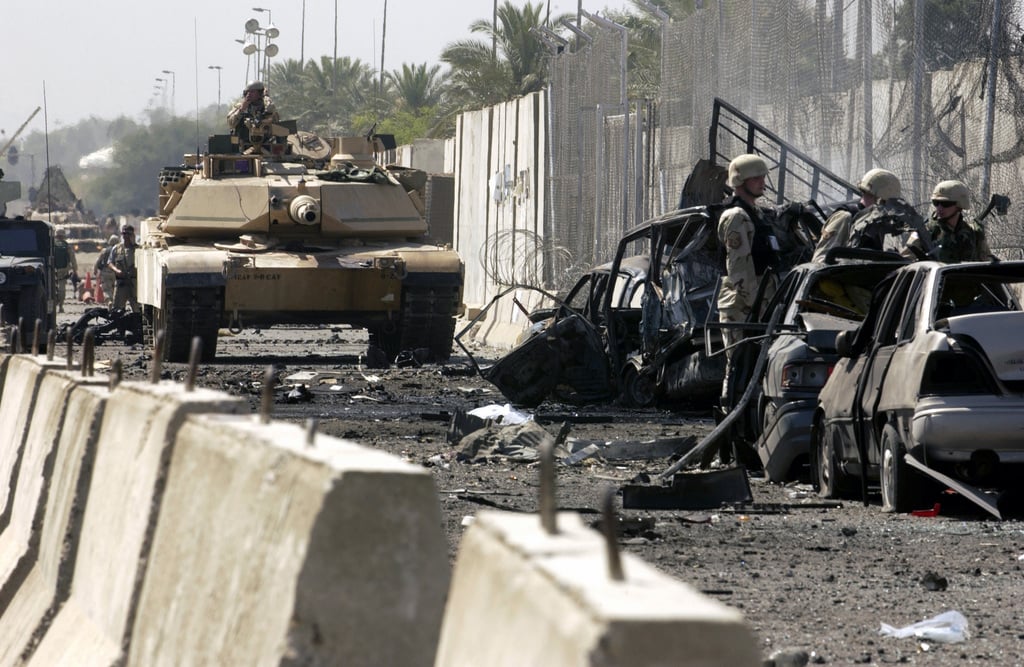
    After unequal military battles, technically and media-wise, that lasted only 19 days ((20/3/2003 – 9/4/2003)), Baghdad fell with all its defensive and offensive military fortifications under the control and squandering of American Braham tanks, G6 automatic machine guns, the roar of F16-F18 aircraft, and B52 and B1 strategic bombers, while the three giant aircraft carriers stationed in the Arabian Gulf and the Red Sea, “George Washington,” “Abraham Lincoln,” and “Nimitz,” were threatening to launch nuclear missiles towards Baghdad in the event that the Iraqi army units continued to resist… On another parallel level, Voice of America and Radio Sawa were practicing their dangerous role in managing the psychological warfare game by weakening the morale of the Iraqi army with cleverly fabricated and very diabolical news such as the surrender of senior army commanders, the Republican Guard, and the Special Guard of the Iraqi forces to US forces .Rather, these two radios went as far as to claim further by promoting the idea that most Iraqi military leaders had long-standing contacts with American forces, that these leaders (without naming them) were now working with American forces to liberate Iraq from dictatorship (according to their own expression), and that American forces were now working to transfer the families of these officers and commanders to America and Europe to protect them. Major American satellite channels, such as CNN, ABC, CBS, and others, played another important role, no less dangerous than the first, by broadcasting images of the infiltration of American and British forces into Iraqi territory from several axes. These channels also broadcast terrifying military images showing the launch of Tomahawk, Cruise, Pershing, and Trident missiles from American submarines and warships, while also broadcasting live footage of the devastating effects these missiles had when they exploded on their targets throughout Iraq. On a related note, CNN was using well-known broadcast media personalities to cover military operations, such as Dan Rather, Larry King, and others, to attract and engage the largest possible number of viewers to the war’s developments and to give the military operations a global popular and public profile. Meanwhile, American satellites were filming Black Hawk and Chinook helicopters dropping Marines as airborne paratroopers over presidential palaces scattered throughout Iraqi cities and towns.

    All the war’s events and phases were monitored and refined by the RRMT (Resolute Response Media Team) center, based at the Pentagon. On the other side of the equation, the Iraqi side, 85% of the Iraqi people wanted to get rid of the former regime, believing that American globalization and the era of infomedia would transform their lives from hell to paradise. Today, 85% of them were disappointed, as America and the West failed to achieve even the minimum standard of living compared to the West. In some of the countries neighboring Iraq. We say that the other side of the equation ((Iraq)) was disintegrated, fragmented, lost and backward, and hunger, ignorance and backwardness enveloped 60% of the total population due to the long period of the unjust siege ((13 years)) and we do not believe much in those rumors that spoke of the existence of wholesale betrayals within the leadership of the Iraqi army and other intelligence agencies… as much as we believe in the existence of a collective psychology among most of the Iraqi people that it is necessary to get rid of the Baath and Saddam forever. When American forces entered Baghdad from its four axes in succession, after all the authoritarian military and intelligence institutions had disappeared in the shadow of the enemy…

    Large crowds of Iraqis were dancing and celebrating in the streets of Baghdad and the rest of the provinces, while other crowds were attacking and robbing banks, government offices, government buildings, and palaces, stealing, burning, and looting everything. Saddam, his two sons, and most of his leaders disappeared, communications were cut off, and a state of “destructive chaos” spread, continuing from that date to the present day, albeit with varying degrees. Retired Colonel Jay Garner became the first military-civilian governor of the newly occupied Iraq, and Iraq descended into conflicts and interference among the ruling political blocs, with no clear, ready, or rapid glimmer of hope appearing on the horizon, at least for the time being or in the near future. One of the strangest and most amazing things is that the rule of a single party and a single leader, which lasted for more than thirty-five years, was able to completely preserve the unity and cohesion of Iraq and to provide civil peace for the Iraqis, and to preserve the structure of the state and its general laws, while the occupying forces and those who joined them after 4/9/2003 were unable to provide that… and this is a historical fact that we must now fully acknowledge without any omission.