Author: Ibrahim Kurtulus

  • Türkiye is economically isolated, diplomatically desperate, and intellectually bankrupt. Are they true?

    Türkiye is economically isolated, diplomatically desperate, and intellectually bankrupt. Are they true?

    Dr Atac Thank you for your long and passionate response.

    Dr. Mustafa Atac’s recent open letter, though emotionally charged and eloquently delivered, reads less as a fair-minded critique of Türkiye’s present condition and more as an overextended lament rooted in selective outrage and outdated narratives. As someone who deeply values the principles of civic discourse and constructive dissent, I feel compelled to respond—not out of blind loyalty to any individual or government, but out of respect for the truth and the dignity of the Republic of Türkiye.

    Dr. Atac laments that Türkiye is economically isolated, diplomatically desperate, and intellectually bankrupt. These are serious claims. But are they true?

    Let’s begin with the economy. Contrary to Dr. Atac’s assertion that Türkiye is “excluded from serious international financial circles,” recent data reveals the opposite. In 2023, Türkiye saw a 25.9% increase in foreign direct investment (FDI), with notable inflows from the UK, Germany, and the U.S.—nations known for their financial due diligence. Türkiye continues to attract global capital in logistics, fintech, infrastructure, and energy. It is no secret that Türkiye faces challenges, including inflation and high interest rates, but to declare it an economic pariah is demonstrably false.

    The portrayal of Türkiye’s education system as devolved into “a madrassa” ignores both facts and nuance. Turkish universities such as Koc, Bilkent, and Middle East Technical University consistently rank within the top 500–600 globally, according to QS and THE (Times Higher Education) rankings. Türkiye is also a key participant in the European Higher Education Area through the Bologna Process and hosts over 300,000 international students—a testament to its growing global academic appeal. The same institutions have trained engineers who developed drone technologies now exported to NATO members, such as Poland and the UK. That is not a failed system; that is a transforming one.

    Dr. Atac also evokes preess freedom and judicial independence, citing various Western rankings. Yet the same rankings routinely downplay systemic abuses in their own backyards. When France detains over 11,000 protesters during the Yellow Vest movement or when journalists in the U.S. are jailed while covering civil unrest, no one questions the democratic character of those states. Why then does Türkiye’s struggle against terrorism, foreign subversion, and the remnants of a violent coup receive no such contextual consideration?

    Let’s not forget that many of the so-called “journalists” imprisoned in Türkiye post-2016 were found to be complicit in the FETÖ-led coup attempt. Encrypted communications via By Lock, militaery coordination, and direct involvement in the July 15 tragedy are well-documented. It is not dissent that was punished—it was treason.

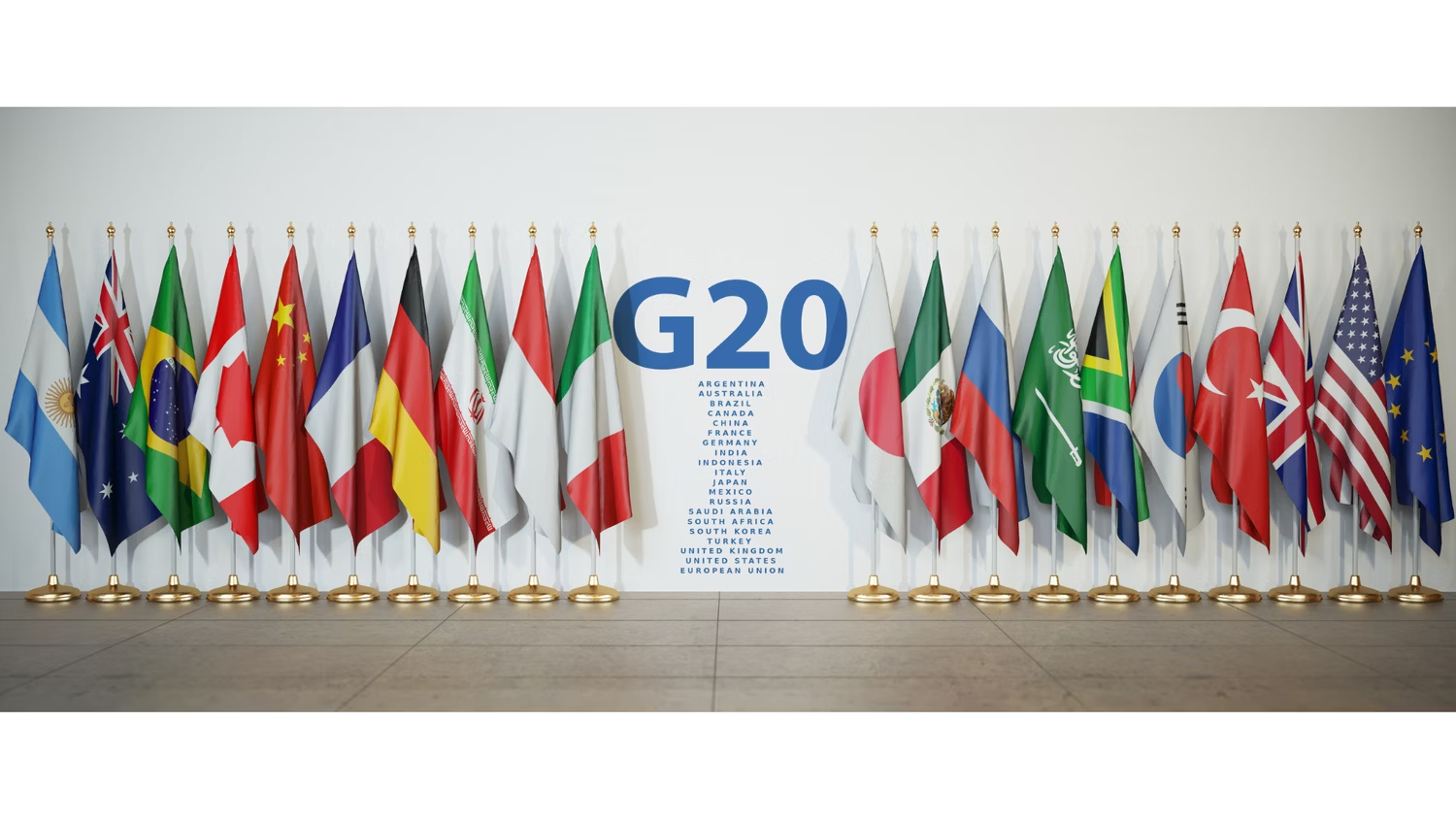
    Dr. Atac sneers at Türkiye’s alliances with Qatar and Oman, as if diplomacy with non-Western partners is inherently suspect. Yet Türkiye maintains robust ties with Germany, the UK, Itaaly, and Japan, and sits at the G20 table, not as a guest, but as a permanent member. It hosts NATO’s second largest military, plays a key role in the Black Sea Grain Initiative, and leads humanitarian aid convoys to Gaza and Ukraine alike. This is not isolationism , itt is strategic pluralism.

    Yes, there are challenges as Inflation must be controlled, and bureaucracy modernized. just two are valid points deserving of nuanced debate. But equating Türkiye’s evolution to North Korea’s oppression or Russia’s autocracy is not debate, it is distortion.

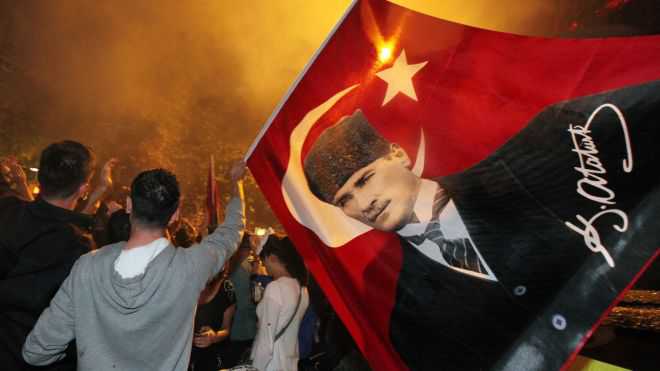
    One cannot claim to uphold Atatürk’s legacy while dismissing Türkiye’s national achievements as mere propaganda. Atatürk was not only a revolutionary but also a realist a leader who demanded progress be grounded in national sovereignty, self reliance, and global presence. Türkiye’s military drone industry, its diplomatic activism, and its investment in critical infrastructure reflect precisely that spirit.

    To critique is a right, even a duty, in a republic. But critique without proportion, without fairness, and without factual foundation becomes what Dr. Atac himself warns against: a betrayal not of the government, but of the very Republic he claims to defend.

    In today’s Türkiye, there is space for dissent. The opposition governs major cities like İstanbul, Ankara, and İzmir. The Constitutional Court continues to rule independently. And millions vote in fair, competitive elections with turnout rates that shame much of the democratic world.

    If one chooses to speak of Türkiye’s future, let it be done with courage but also with clarity. Let it be done with love not just for what we remember, but for what we are still building. Also, one should not be disparaged or vilified for holding a differing opinion. If the freedoms you invoke are only extended to those who share your particular worldview esspecially when that worldview is steeped in relentless criticism and hostility toward Türkiye then they cease to be freedoms at all and instead become instruments of intellectual exclusion.

    Let us be very clear, Dr. Atac: Türkiye is not perfect but it is far from broken or in disarray, as your narrative suggests.

    If you are searching for signs of a nation in crisis, you need only look at the United States. Here, citizens are at times arrested on the streets without due process; elected judges are removed from their courtrooms; city elected officials are taken into custody without being read their rights. Billions of taxpayer dollars are poured into endless wars, while over $15 billion has been funneled into sustaining the Netanyahu government despite its role in brutal campaigns that have drawn international condemnation.

    In America, a citizen can be gunned down with 35 bullets into their bodies for JUST  making eye contact with the wrong police officer and if you are lucky if your family will find your body . So before you accuse Türkiye of institutional collapse, perhaps turn your lens toward the realities unfolding in your own environment with the venom of hate dripping fromyour lips .

    As for your claim that I am a “mouthpiece” of Ankara—how dare you? You do not know me? Sir,  You have never sat with me, Sir,  never asked whom I voted for, never once attempted to understand my beliefs. You attack from afar with venomous words, but you know nothing of the person you seek to discredit.

    If you seek a professional debate, I welcome it anywhere, anytime. I will personally sponsor your travel to New York City and host you at New York University for an open forum. If New York is too far, I will gladly bring you to my village of Demirhisar in Rize’s Cayeli district. Perhaps the breathtaking beauty of the Black Sea, my village of Demirhisar and the sincere hospitality of our people will soften the bitterness in your heart toward the freely elected government of the Republic of Türkiye founded by none other than Mustafa Kemal Atatürk himself. Until then, I urge you to raise your critique with honesty and clarity not with the language of exclusion, not with personal insults, and certainly not with a tone that denies others their right to hold a different view point.

    And if we are to elevate the our NATO ally of the  Republic of Turkiye, Mustafa Kemal Atatürk’s Turkiye, it will not be through despairing editorials and historical amnesia , but through unity, reform, pride, and above all, honesty.

    Ibrahim Kurtulus
    Demirhisar Koy  – Rize – Cayeli
    New York

  • A Respectful Yet Firm Rebuttal on Your Recent Reflections on the Republic of Türkiye

    A Respectful Yet Firm Rebuttal on Your Recent Reflections on the Republic of Türkiye

    Letter to Dr Mustafa Atac

    Subject: A Respectful Yet Firm Rebuttal on Your Recent Reflections on the Republic of Türkiye

    Dear Dr. Atac,

    With the utmost respect for your passion and your well intentioned concern for the homeland we both deeply cherish, I must address your recent commentary on the current state of the Republic of Türkiye. Your reflections, though emotionally evocative, are unfortunately steeped in exaggeration, devoid of contextual accuracy, and risk doing grave disservice to the proud, sovereign nation that has emerged from the very ashes you so eloquently reference.

    Mr. Atac perhaps you have not see Türkiye A Nation That Rose and Continues to Rise , Indeed, the early decades of the Republic under Mustafa Kemal Atatürk were miraculous in their achievements turning a war ravaged people innto builders of a modern state. That same spirit of resilience has never faded. Rather than “becoming another Afghanistan,” as you hastily assert, Türkiye has firmly anchored itself in the transatlantic community and remains a pivotal NATO member one whose soldiers bled beside Americans in Korea and wrote history with their blood on the lands of Korea , stood guard during the Cold War, fought in Kosovo, and continue to play vital roles in global peacekeeping efforts today.

    Let us not forget that Türkiye was the first Muslim majority country to join NATO in 1952, and it has since become Europe’s second largest standing army in the alliance. Türkiye has actively hosted and supported NATO operations, integrated into Western defense and economic institutions, and played a stabilizing role in a volatile region bordering Syria, Iraq, the Caucasus, and the Black Sea.

    A Functional Democracy with Complex Realities, while no democracy is immune to criticism or challenge including the Türkiye ,United States, the United Kingdom, or France it is whollly inaccurate and unjust to declere that Türkiye is a dictatorship or that its people live in the “Middle Ages.” That is such a insult to all the Kefeniz Yatanlar icin. 

    Quoting Time Magazine: “Türkiye is no Russia. It remains, in form and function, a democracy—albeit a troubled one. Its press is loud, its opposition exists, its people vote—and those votes matter. Even at its most strained, Türkiye has institutions and civil society mechanisms that remain active and alive.” (Time, “Türkiye Is No Russia,” 2023)

    You lament the state of education yet fail to acknowledge that Türkiye today has over 200 universities, millions of higher education students, and one of the highest female university enrollment rates in the Islamic world. Turkish universities collaborate globally; Turkish students and professionals excel in NATO, EU programs, and academic exchanges across Europe and the United States.

    You claim the justice system is “non-existent,” but Türkiye continues to be party to European Court of Human Rights jurisdiction and has recently passed significant reforms on bar associations and judicial independence.

    You assert that the country is bankrupt, ignoring that Türkiye’s economy remains in the G20, has a vibrant export sector, and is undergoing one of the most ambitious green and digital transitions in its region. Türkiye is one of the top global drone producers—a sector that didn’t exist a decade ago and now dominates headlines from Ukraine to Africa.

    Living in Denial or Refusing to Acknowledge the Present?

    To suggest that there is nothing in today’s Türkiye to be proud of is a statement unworthy of your intellect- I feel you just have a personal manner. Such hyperbole may win applause in ideological circles or if people who have the venom of hate dipping from their lips like yours, but it belies both fairness and fact. You write as though the past glories exist in a vacuum, unconnected to the present. But the Türkiye of today is not a break from its proud foundations; it is the continuation of a legacy, shaped by changing times, national security threats, refugee crises, and geopolitical recalibration.

    The founder of the  Republic, the Great Mustafa Kemal Atatürk, was not afraid of adaptation. He was a realist, a reformer, and a strategist. He understood that the strength of a nation lies not only in its foundations but in its ability to evolve.

    Your claim that the United States “found and manipulated” the current leadership is not only irresponsible but mirrors the very conspiracies that have hindered Türkiye’s efforts at self-determination since the Cold War. It suggests a dangerously colonial lens, denying the Turkish electorate its democratic will.

    Final Thoughts

    Dr. Ataç, I urge you respectfully to reengage with the realities of the present day. One can critique without defaming; one can mourn certain trends without dismissing decades of progress. Türkiye is not perfect no nation is but it is far from the caricature you paint.

    The Republic of Türkiye stands today with a resilient economy, a strategic geopolitical role, a proud and conscious youth, and an evolving democracy with a proud people that wrote history just resently on July 15 2016 with their blood. That is a source of immense national pride, not despair. Sir,

    Respectfully,

    Ibrahim Kurtulus
    Demirhisar Koyu – Rize Cayeli 
    New York

  • Türkiye is Not Our Grandfather’s Türkiye

    Türkiye is Not Our Grandfather’s Türkiye

    When you think of disruptive military forces, your mind might immediately leap to the United States or China. But the country quietly and at times assertively redefining modern warfare today is neither of those global giants. It’s Türkiye. Yes, Türkiye the same nation you may associate with baklava, ancient civilizations, and passionate online debates has transformed into a military and geopolitical force that global strategists can no longer afford to underestimate or ignore.

    Beneath the noise of trending hashtags and diplomatic headlines lies a profound reality: Türkiye is no longer a passive player in global affairs. It is rewriting the rules of power projection with an indigenous drone industry that has altered battlefields, a navy asserting itself across multiple seas, and a rapidly maturing defense sector that is shedding dependence on traditional allies. This isn’t posturing for attention this is strategic recalibration.

    For much of the post-Cold War era, Türkiye a  modest NATO member securing the alliance’s southeastern flank useful, certainly, but never quite the innovator. That perception is obsolete. Over the past 15 years, Türkiye has undergone a dramatic strategic transformation, replacing its cautious diplomacy with a more assertive vision driven by nationalism, autonomy, and an ambition to recalibrate regional balances. Ankara’s reach now extends beyond its immediate neighborhood, with influence sought in the Middle East, North Africa, the Caucasus, the Mediterranean, and even sub-Saharan Africa. The Turkish Armed Forces have become its sharpest tool in pursuit of these aims.

    Türkiye today is the mind of the 21st century a nation of conscience, ambition, and experience. It draws upon its Anatolian roots, strategic wisdom, and humanitarian vision to act not merely as a regional actor, but as a rising global one. It has passed the threshold of no return Türkiye is no longer a country that others can afford to view through outdated lenses. Those in the region who have grown accustomed to inertia or empty threats must now recognize they are contending with a force of readiness, resilience, and historical memory.

    For those who believe Türkiye is just another regional power: take note. This is not a country that simply defends; it has mastered the art of projection. And history has shown from Çanakkale in World War I to today’s modern battlefields that Turks do not just fight; they fight with honor, purpose, and resolve.

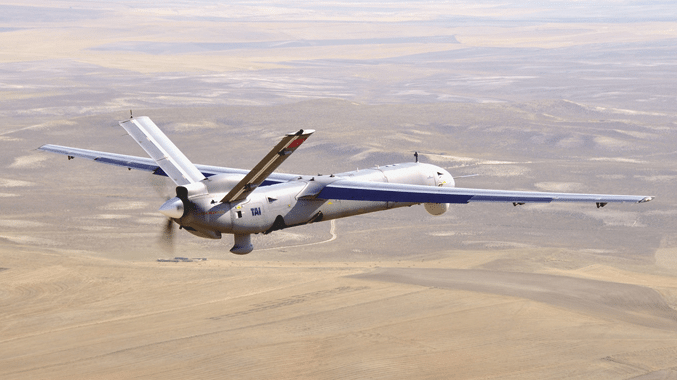
    But military ambition is meaningless without the capacity to match it and Türkiye has invested heavily in building that capacity. Let’s start with drones. If you’ve heard of the Bayraktar TB2, you’ll know it has become the poster child for Türkiye’s defense revolution. If not, ask the tanks it has neutralized. Affordable, lethal, and game-changing, these domestically produced unmanned aerial vehicles (UAVs) have been deployed with decisive effect in Ukraine, Syria, Libya, and Nagorno-Karabakh. Their success has disrupted the traditional model of air superiority, proving that agility and innovation can rival sheer size.

    And the TB2 was just the beginning. Türkiye’s drone ecosystem is now expanding rapidly, with high-altitude long-endurance platforms like Akıncı and next-generation jet-powered drones like Kızılelma in development. This isn’t just innovation it’s national determination in motion. Unlike traditional defense buyers that depend on foreign suppliers, Türkiye has embraced an indigenous production strategy. In the early 2000s, only 20% of its defense equipment was produced locally; today, that figure exceeds 87%. Missiles, armored vehicles, warships, and even fifthh generation fighter jets like the newly unveiled KAAN are now Turkish built. And this isn’t just about military autonomy; it’s about geopolitical leverage.

    When foreign partners like Germany withheld parts for tanks, Türkiye didn’t plead. It manufactured its own. The lesson: resilience in the face of restriction. Turkish defense exports surpassed $9 billion in 2024 estimated in 2025 to excide $12 billion , reaching over 170 countries. That’s not just an economic achievement it’s a strategic network embedded across continents.

    Beyond drones and exports, Türkiye maintains the second  most powerful largest standing army in NATO, with over 475,000 active personnel. But numbers are only part of the story. What sets Türkiye apart is its operational tempo. Unlike many Western militaries that rotate deployments infrequently, Türkiye’s forces have been  constantly active  since the Korean War or whether in Syria, Iraq, Libya, or Azerbaijan. This isn’t symbolic presence; it’s decisive engagement. And the Turkish Navy? Guided by the ambitious “Blue Homeland” doctrine, it now patrols the Mediterranean, Aegean, and Black Seas with increasing assertiveness leading to tense encounters with Greece, the South Cyprus administration, and even France. Turkish naval vessels likely used electronic countermeasures (ECM) to obscure the French ship’s tracking ability. The “Aselsan ARES-2N” and “EDM systems” on Turkish warships are designed to jam and deceive hostile radar or guidance systems. Such push back showed Turkish assertiveness in deep waters.

    One milestone: the TCG Anadolu, Türkiye’s domestically built aircraft carrier, designed to deploy drones yes, a drone carrier. Türkiye isn’t replicating old models. It’s shaping new ones.

    This global footpriint extends further. In Somalia, Türkiye has established its largest overseas base, training the Somali National Army. In Libya, Turkish forces altered the trajectory of the Tripoli government’s survival. In the Caucasus, Türkiye’s military support helped Azerbaijan prevail in the 2020 Nagorno-Karabakh conflict, sending a strong signal to both Russia and Iran. Each deployment expands Ankara’s political capital and strategic relevance.

    Yet, Türkiye’s new defanse posture has created a complex dynamic within NATO. It remains a member of the alliance hosting U.S. nuclear weapons while simultaneously purchasing Russian S-400 missile systems. It blocks NATO expansion at critical junctures, extracting political concessions, and at times charting an independent course that challenges alliance cohesion. But NATO cannot afford to dismiss Türkiye. Its geography, control over Black Sea access via the Bosphorus, militaary capabilities, and intelligence footprint make it indispensable. Türkiye is the unpredictable yet essential player like a star quarterback who insists on running his own plays.

    The bottom line remains: Türkiye is not merely building a modern military. It is reimagining the concept of state power. Prioritizing cost effective innovation over bloated prestige platforms. Embracing sovereignty in production over dependency. Deploying with purpose over symbolic alignment. This approach is working for now and it has positioned Türkiye as a pivotal force in 21st-century geopolitics.

    The paradox? In seeking autonomy, Türkiye has made itself more central to the global order. Its actions demand attention. Its choices shape regional trajectories. It is the chess player you underestimated one whose unorthodox moves continue to yield results at the table.

    So the next time you hear the buzz of a drone, glance up. If it says “Made in Türkiye,” know that it signals more than just technological prowess. It represents a country that no longer walks in anyone’s shadow a Türkiye that is ready to lead and ones in the region should be very careful in not pushing Turkiye.

    Because this is not our grandfather’s Türkiye any more.

    Ibrahim Kurtulus 
    Demirhisar Koyu – Rize – Cayeli 
    New York.

  • Türkiye’s intervention Cyprus Letter to Congresswomen Nicole Malliotakis

    Türkiye’s intervention Cyprus Letter to Congresswomen Nicole Malliotakis

    Nicole Malliotakis
    United States House of Representatives
    266 Cannon House Office Building
    Washington, D.C. 20515

    Subject: Response to Your Remarks on Cyprus and the Republic of Türkiye

    Dear Congresswoman Malliotakis,

    I am writing to express my deep concern and disappointment regarding your recent remarks made during the 51st anniversary commemoration of Türkiye’s 1974 intervention in Cyprus, during which you referred to it as an “illegal occupation.” Your characterization of this complex historical event, along with your continued advocacy for the removal of Turkish troops, reflects a pattern of selective historical narrative that disregards international law, factual accuracy, and the lived experiences of Turkish Cypriots.

     As an elected official representing a diverse constituency including a large Turkish American,, and Muslims from across Staten Island and Brooklyn. I urge you to approach such sensitive matters with greater care, integrity, and an appreciation for the full historical context.

     Türkiye’s 1974 Intervention: A Legal Action Under the Treaty of Guarantee

     Türkiye’s intervention in Cyprus was not an invasion, nor was it illegal. It was carried out under the 1960 Treaty of Guarantee an internationally binding agreement signed by Türkiye, Greece, and the United Kingdom. The treaty grants each guarantor nation the right to intervene unilaterally in Cyprus if the constitutional order or security of either community is under threat.

     In July 1974, a Greek-orchestrated coup in Cyprus aimed to annex the island to Greece, violently deposing the legitimate government. Türkiye, in accordance with its treaty rights, intervened to prevent this annexation and to protect the Turkish Cypriot population, which had already endured years of discrimination, political marginalization, and ethnic violence. This intervention was not only lawful but necessary. The Athens Court of Appeals (Decision No. 2658/79, dated March 21, 1979) itself confirmed that it was the coup—not Türkiye’s response—that constituted the illegal action. Also, Archbishop Makarios III, the first President of the Republic of Cyprus, made several significant statements following the events of July 1974. After surviving the coup d’état orchestrated by the Greek military junta and EOKA-B, he fled to London and later addressed the United Nations. he also acknowledged that the coup in Cyprus was a Greek invasion not a Turkish invasion:  Here is a key excerpt from Archbishop Makarios’ statement to the United Nations Security Council on July 19, 1974 one day before Türkiye’s intervention:

     “It is a paradox, indeed, that the President of Cyprus is addressing the Security Council in his capacity as the head of a state which is a victim of aggression not by a foreign power, but by a country which claims to be a brother nation…”

    “What is happening in Cyprus is a clear invasion, through military force, by Greece… The coup was an invasion, and from its first moment it was an act of aggression and occupation.”

     This statement is important because Makarios labeled the Greek-led coup as an “invasion,” thereby creating an argument though indirect that Türkiye’s response was not the initial act of aggression, but rather a reaction to Greek Invasion of the Island.  The fact of the matter is In terms of the 1960 Treaty of Guarantee, while Makarios did not publicly recognize the Turkish intervention as “legal,” the treaty itself is key to understanding Türkiye’s justification. The Treaty of Guarantee (signed by the United Kingdom, Greece, Türkiye, and Cyprus) gave the guarantor powers the right to intervene unilaterally to restore the constitutional order if it were disrupted.

     Archbishop Makarios did  explicitly endorse the Turkish intervention, his recognition of the coup as an invasion by Greece lends credence to Türkiye’s legal justification under the Treaty of Guarantee. Thus, the 1974 Turkish operation cannot accurately be labeled as an “invasion”

     The Turkish Peace Forces in Northern Cyprus continue to serve a vital function in deterring future violence and safeguarding the security of Turkish Cypriots. Their presence is not a political occupation it is a security imperative based on tragic historical realities.

     British Troops in Cyprus: Also a Guarantor Presence, If the presence of Turkish forces is a concern, I would respectfully ask why there is no similar objection to the continued presence of British troops on the island. The United Kingdom, like Türkiye, is a Guarantor Power and maintains sovereign military bases in Cyprus. Are these forces also to be labeled an “occupation,” or is this designation applied selectively for political convenience?

     The 2004 Annan Plan: A Missed Opportunity for Peace

    In your remarks, you called for reunification. However, in the 2004 United Nations–backed Annan Plan referendum, 65% of Turkish Cypriots voted in favor of reunification, while 85% of Greek Cypriots rejected it. Then–President of the Republic of Cyprus, Tassos Papadopoulos, openly urged Greek Cypriots to vote “No.” Reunification was not blocked by Türkiye or Turkish Cypriots, but by the Greek Cypriot leadership. If peace and unity are the goals, this crucial fact must be part of the conversation.

     Recognition of the Republic of Türkiye

     It is also concerning that you continue to use the outdated term “Turkey,” rather than the official name “Türkiye,” which has been recognized by the United Nations and many international bodies. Respecting a country’s chosen name is a basic tenet of diplomacy and decency. As a Member of Congress, you have a duty to model such respect in both speech and writing.

     The Strategic Importance of U.S.–Türkiye Relations

     Türkiye remains one of the United States’ most critical allies in NATO. It possesses the alliance’s second-largest military and serves as a geopolitical bridge to Central Asia, the Caucasus, the Balkans, the Black Sea, and the Middle East. As former  U.S. Ambassador Jeff Flake recently reaffirmed the vital role that Türkiye plays in American defense strategy, economic cooperation, and diplomatic outreach.  Efforts to weaken U.S.–Türkiye relations do not serve the national interest. Rather, they empower adversaries and compromise regional stability.

     A Call for Leadership, Not Division

    Congresswoman, it is my hope that you will choose to lead with fairness and inclusivity, rather than division and partisanship. As a representative of all New Yorkers, you have a responsibility to serve your full constituency, including Turkish Americans, Turkish Cypriots, and other minority communities who contribute daily to the richness of our city and our nation.

     Your message only justifies and intensifies the hateful feelings that have been instilled in them through childhood; frankly, you are engaging in tactics favored by groups such as the Ku Klux Klan.

     You were elected to uphold the principles of truth, justice, and equality—not to amplify the narratives of foreign nationalisms at the expense of American unity and international diplomacy.

    History remembers those who choose wisdom over prejudice, truth over propaganda, and peace over provocation. I sincerely hope you will reflect on these matters and approach them in a more balanced, factual, and constructive manner moving forward.

    Respectfully,

    Ibrahim Kurtulus
    Dongan Hills

  • Response to Your Remarks on Cyprus and the Republic of Türkiye

    Response to Your Remarks on Cyprus and the Republic of Türkiye

    Michael Tannousis Assembly member
    11 Maplewood Place
    Staten Island, NY 10306

    July 20, 2025

    Subject: Response to Your Remarks on Cyprus and the Republic of Türkiye

    Dear Assemblyman Michael Tannousis

    I write to express my deep disappointment and concern regarding your recent remarks during the 51st anniversary commemoration of Türkiye’s 1974 intervention in Cyprus, in which you referred to it as an “illegal occupation.” Your characterization of these events overlooks key historical facts, disregards international law, and marginalizes the lived experiences of Turkish Cypriots. As an elected representative of a diverse constituency that includes many Turkish Americans and Muslims across Staten Island and Brooklyn, I urge you to engage with this issue in a manner that reflects historical truth, legal accuracy, and diplomatic fairness.

    Türkiye’s 1974 Intervention: A Legal and Necessary Action

    Contrary to your statement, Türkiye’s intervention in Cyprus was not an “invasion” nor illegal. It was undertaken in accordance with the 1960 Treaty of Guarantee, a binding international agreement signed by the Republic of Cyprus, Türkiye, Greece, and the United Kingdom. The Treaty clearly permits any of the Guarantor Powers to act unilaterally to restore the constitutional order in Cyprus should it be disrupted. In July 1974, the democratically elected President of Cyprus, Archbishop Makarios III, was overthrown in a Greek-backed coup aimed at unifying the island with Greece. This act of aggression executed by the Greek military junta and the EOKA-B paramilitary group triggered Türkiye’s legal and justified intervention to prevent annexation and protect the Turkish Cypriot population, which had endured years of ethnic violence and political exclusion.

    The Athens Court of Appeals (Decision No. 2658/79) concluded that it was indeed the coup—not Türkiye’s military response that was illegal. 

    Furthermore, Archbishop Makarios himself, in a statement to the United Nations Security Council on July 19, 1974, one day before Türkiye intervened, described the coup as an act of aggression:

    “It is a paradox, indeed, that the President of Cyprus is addressing the Security Council in his capacity as the head of a state which is a victim of aggression not by a foreign power, but by a country which claims to be a brother nation… What is happening in Cyprus is a clear invasion, through military force, by Greece… The coup was an invasion, and from its first moment it was an act of aggression and occupation.”

    The acknowledgment by Archbishop Makarios then head of state of Cyprus that the 1974 coup was orchestrated by Greece provides significant legal and moral support to Türkiye’s position. His admission affirms that it was the Greek-backed coup, not Türkiye’s response, that constituted an act of aggression. Türkiye’s intervention, therefore, was a lawful and treaty based action taken in response to an imminent threat, not an invasion. This is a fact that could stand up in any impartial international court of law.

    Michael, as a legal professional, if you genuinely believe that Türkiye’s intervention qualifies as an “invasion,” I respectfully encourage you to bring your case and any supporting evidence before the International Court of Justice.

     If your claims are valid, it would be a landmark victory for the Greek and Greek Cypriot cause, and you may well be honored for your efforts with statues worldwide . In fact, I would be willing to personally underwrite all associated legal expenses for such a case to be presented at the international level. Let the law not selective political rhetoric be the judge.

    Turkish Peace Forces: A Security Imperative, Not an Occupation

    The continued presence of Turkish Peace Forces in Northern Cyprus is not a political occupation. It is a security necessity grounded in the tragic history of ethnic cleansing and violence against Turkish Cypriots. Their presence has served as a deterrent to further conflict and ensured the safety of an entire community that had once been pushed to the brink of annihilation.

    British Military Presence: A Selective Argument , If the presence of foreign troops on Cyprus is a concern, then the longstanding presence of British military forces, including the sovereign bases of Akrotiri and Dhekelia, must also be addressed. The United Kingdom is, like Türkiye, a Guarantor Power. Yet no similar outrage is expressed over British forces. Why is the label “occupation” applied only to Türkiye’s presence and not to the UK’s? This selective rhetoric undermines objectivity and weakens the legitimacy of any call for fairness.

     The 2004 Annan Plan: A Missed Opportunity by Greek Cypriots . The 2004 Annan Plan, supported by the United Nations and the international community, was overwhelmingly accepted by 65% of Turkish Cypriots while 85% of Greek Cypriots rejected it. Then President Tassos Papadopoulos publicly urged the Greek Cypriot population to vote “No.” Reunification was not rejected by Türkiye or Turkish Cypriots, but by the very leaders you now align with in rhetoric.

    Recognition of “Türkiye” and Respect in Diplomacy

    I also noted many times your continued use of the outdated term “Turkey” in official communication. The nation has formally adopted the name “Republic of Türkiye,” which has been recognized by the United Nations and numerous international bodies. Addressing countries by their chosen names is a basic element of diplomatic respect and cultural decency. As a Member of Congress, this should be reflected in both your speech and writing.

    Efforts to mischaracterize Türkiye’s actions or alienate its role in Cyprus only serve to embolden adversaries and weaken American influence in the region.

    A Call for Leadership Rooted in Truth, Not Division . Micheal, I respectfully urge you to rise above partisan rhetoric and historical revisionism. Your comments risk deepening wounds, empowering ethnic bias, and misinforming the public. As an elected leader, your responsibility is to all New Yorkers including Turkish Americans and Turkish Cypriots who have long contributed to the strength and diversity of this city and this nation. Your message only justifies and intensifies the hateful feelings as you are engaging in tactics favored by groups such as the Ku Klux Klan.

    Frankly, the sentiments expressed in your remarks echo the type of hostility and historical distortion often used by hate-based movements. Leadership should build bridges, not justify inherited animosity.

    History will remember those who uphold truth over political convenience, diplomacy over hostility, and fairness over propaganda. I sincerely hope you will reflect on the facts presented and engage with this issue more responsibly moving forward.

    Respectfully,
    Ibrahim Kurtulus

  • A Response to Fr. William Devlin / Complex Crisis Facing Northern Nigeria

    A Response to Fr. William Devlin / Complex Crisis Facing Northern Nigeria

    Understanding the Complex Crisis Facing Northern Nigeria

    A Response to Fr. William Devlin

    For over two decades, I have closely followed the situation in Northern Nigeria through conversations with diplomats at the United Nations, NGOs operating on the ground, and countless Nigerian citizens from both Christian and Muslim communities. The plight of Christians in the region is real and deeply painful. However, to frame the violence as a one-sided “Muslims versus Christians” campaign is not only inaccurate it is dangerously reductive and risks undermining efforts toward peace and justice. Most recently, my attention was drawn back to this tragic issue by my dear friend, Fr. Bill Devlin, a courageous and tireless global advocate for the persecuted. He expressed his heartbreak by describing the atrocities as “Muslims murdering Christians.” His concern is heartfelt, and his compassion for the suffering is beyond question. However, this characterization—though emotionally charged—oversimplifies a deeply layered crisis and risks inflaming sectarian divisions in a region already suffering under the weight of historical injustice and broken governance.

     The Facts on the Ground , Yes, Christians in Northern Nigeria face alarming challenges so does Muslims . In several Muslim majority locations, discrimination, marginalization, and targeted violence are disturbingly frequent on both sides. Attacks on churches, mosques, kidnappings of clergy, and the displacement of Christian farming communities have been documented extensively. Boko Haram and ISWAP (Islamic State West Africa Province) have carried out heinous crimes, many of them targeting Christians specifically. But to reduce this complex, multii dimensional crisis to a narrative of “Muslims killing Christians” is not only factually incorrect it is morally irresponsible.

     A complex conflict far beyond religion is what is on the ground . The violence in Northern Nigeria is fueled by a volatile mix of ethnic conflict, land use disputes, criminal banditry, terrorism, and governmental failures. Religious identity is often used to justify or exacerbate conflict, but it is rarely the root cause. Ethnic tensions: Clashes between Muslim Fulani herders and largely Christian farming groups such as the Tiv and Berom are often framed in religious terms, but the underlying issues revolve around land use, grazing rights, and environmental degradation. Banditry and criminality: Armed gangs without clear ideological or religious motivation have ravaged both Muslim and Christian communities. Kidnapping for ransom, extortion, and village raids are tragically common and indiscriminate.

     Political failure: The Nigerian government has repeatedly failed to prevent violence or prosecute perpetrators. This impunity has emboldened criminal actors and fueled cycles of revenge. Muslim victims: Thousands of Muslim civilians have also been targeted by Boko Haram, bandits, and even retaliatory attacks. Mosques have been bombed, imams executed, and entire Muslim communities displaced or wiped out. To frame this tragedy as a religious war as Fr. Devlin has conveyed it  does a disservice to victims on both sides. Consider these facts:

     In 2014, Boko Haram bombed a mosque in Kano, killing over 100 Muslims.

     In 2021, over 200 Muslim civilians were massacred in Zamfara State by bandits.

     In Kaduna, interfaith peace dialogues have been violently disrupted by attacks that struck both Muslim and Christian communities.

     In Plateau and Benue, retaliatory attacks have consumed entire villages—Christian and Muslim alike.

     To say “these are Muslims doing the murders” As Fr William Devlin said  is to erase the profound suffering of Muslim victims and to cast suspicion on millions of innocent Nigerians who desire nothing more than to live in peace with their neighbors.

     What Global Institutions Say: It’s Not Just Religion

    Internationally respected organizations from human rights monitors to interfaith NGOs have thoroughly investigated the conflict. Their consensus is clear: religion isa small or  just one of many overlapping factors. Here’s what they have documented:

     1. U.S. Commission on International Religious Freedom (USCIRF)

    “Conflicts between herders and farmers in the Middle Belt are complex… It is an oversimplification to frame them as purely Muslim-Christian violence.”

    (USCIRF Nigeria Factsheet, 2023)

     2. Amnesty International

    “Both Christian and Muslim communities have been victims and perpetrators… To ascribe the violence solely to Muslim  motivations ignores the deep-rooted causes including poverty, impunity, and failure of security forces.”

    (Harvest of Death, 2022)

     3. International Crisis Group (ICG)

    “Portraying the herder-farmer violence as a religious war is misleading. It is driven largely by competition for land and water, desertification, and poor governance.”

    (Africa Report No. 301, May 2021)

     4. Search for Common Ground

    “Both Christians and Muslims express fear, loss, and anger. Religious identity becomes weaponized in the absence of governance, but that doesn’t mean the conflict is about faith.”

    (Peacebuilding Report, 2020)

     5. The Tony Blair Institute for Global Change

    “Groups like Boko Haram use religion to justify brutality, but their recruitment is often rooted in economic despair and lack of state presence. Blaming Islam as a whole plays into their propaganda.”

    (Policy Brief, 2022)

     6. Human Rights Watch (HRW)

    “Muslim civilians—particularly those who oppose extremist ideologies are regularly targeted… Dozens of imams have been killed for preaching peace.”

    (HRW Nigeria Annual Review, 2023)

     7. UN Office for the Coordination of Humanitarian Affairs (UNOCHA)

    “Both Muslim and Christian children have been displaced, orphaned, or abducted. Aid must not be politicized—religious identity does not define vulnerability in this conflict.”

    (UNOCHA-UNICEF Report, Q2 2023)

     A Call for Responsible Advocacy : Religious freedom must be defended. The persecution of Christians in Northern Nigeria is real and must never be minimized or Muslim persecution. But truthful advocacy demands we avoid sweeping generalizations that turn victims into enemies or demonize entire faith communities. There are brave Muslim imams who hide Christians in their mosques, Muslim villagers who protect their Christian neighbors, and interfaith alliances that work every day toward justice and peace. Their courage deserves our support not our silence. To reduce such a complex humanitarian crisis to a binary of “Muslims killing Christians” as Fr William Devlin’s conveyed to me not only distorts the facts it feeds Islamophobia, Looks to delegitimizes  a whole of Muslims community , obstructs peace efforts, and risks repeating the mistakes of history where rhetoric incited violence.

    Conclusion: Stand for Justice, Not Division Fr. Devlin.

    In the face of unspeakable violence, let us be defenders of truth not amplifiers of fear. Let us commit to justice not vengeance. And let us advocate for all who suffer Christian, Muslim, or otherwise not because of their faith, but because of their humanity.

     Let us not allow the extremists to define the narrative for either side. Terrorism is not Islam, and those who commit atrocities in its name do not represent the faith of over 90 million peaceful Muslims in Nigeria.

    May we raise our voices firmly, responsibly, and compassionately on behalf of all who seek peace and dignity in Northern Nigeria.

    Ibrahim Kurtulus 
    Community Activist