Author: Ibrahim Kurtulus

  • Rebuttal to “Why Turkey Can’t Bring Peace to Gaza”

    Rebuttal to “Why Turkey Can’t Bring Peace to Gaza”

    By : Ibrahim Kurtulus  – Community Activist 
    Rize – Cayeli –  Demirhisar Koyu  – Republic of Turkiye 

    Anti-Türkiye propaganda by Sinan Ciddi and the Foundation for Defense of Democracies (FDD):

    Frist and foremost the name is Turkiye   Not “Turkey ” Mr Ciddi lets get it right. 

    The argument advanced in the referenced article rests on a shallow reading of Turkish foreign policy and, more troublingly, on the familiar pattern of marginalizing Türkiye’s role in its own region. The piece assumes that peace in Gaza is somehow the prerogative of external actors while denying meaningful agency to a sovereign nation that has, for decades, demonstrated both principled consistency and strategic capability in Middle Eastern diplomacy. Such claims reflect less a genuine analysis of diplomatic realities and more an ideological resentment rooted in outdated geopolitical illusions. 

    For years, there has been a chorus of commentators who mask their discomfort with an independent, self-confident Türkiye by framing their objection as a critique of President Erdogan alone. In truth, the position they oppose is not a govarnment, but the very ethos of the Republic founded by Mustafa Kemal Atatürk namely, the right of the Turkish nation to chart its own political, regional, and security course free from external tutelage. The attempt to present this as a struggle between “secularism” and “Islamism” is a false dichotomy deliberately constructed to obscure the real issue: the rejection of the failed Western neoconservative project that once aimed to engineer a compliant “model Muslim state,” complete with imported social hierarchies and externally sponsored religious leadership. Türkiye’s refusal to submit to such schemes is precisely what irritates these commentators. Their current rhetoric is simply the echo of old grievances.

    The assertion that Türkiye is unqualified to support or facilitate peace in Gaza is historically inaccurate and strategically misleading. Türkiye has maintained one of the most sustained diplomatic, economic, and military relationships with Israel in the region, even during periods of political tension. A true partner does not merely smile politely; a real partner delivers difficult truths. Ankara has also long served, with the quiet acknowledgment of Washington, as an intermediary with Hamas precisely because Türkiye could speak credibly to all sides. To suggest otherwise is intellectual dishonest with one motive to use as a another weapon in the international campaign to de-legitimize the Turkish state and the Turkish people.

     Moreover, Türkiye’s military and diplomatic competence is not rhetorical. The Turkish Armed Forces have led NATO missions in Afghanistan (commanding ISAF twice), supported international stabilization in Somalia, brokered the delicate normalization process between Armenia and Azerbaijan, assisted Bosnia in its darkest hours, and conducted counter terrorism and stabilization operations in Syria and Iraq. This is not theoretical capability it is proven operational leadership. Türkiye does not merely project power; it deploys capacity with legitimacy grounded in regional familiarity and cultural fluency.

     Contrary to the article’s insinuations, Türkiye is not merely in the Middle East it is of it. That distinction matters. Unlike distant actors seeking influence through pressure or military impisition, Türkiye’s relationships with regional societies, institutions, and political actors are organic, historical, and ongoing. This unique positioning is precisely what makes Türkiye indispensable to any sustainable Gaza solution. Peace cannot be engineered from afar; it requires a mediator who understands the language literal and diplomatic of the region.

     The article’s author, Sinan Ciddi, has unfortunately become a recurring voice in the international campaign to depreciate Türkiye’s strategic relevance. His analyses increasingly reflect personal disaffection rather than disciplined scholarship. Since departing institutional roles where policy required rigor over rhetoric, his commentary has grown more polemical, aligning closely with organizations that promote a narrow, ideological agenda rather than balanced security analysis.

     Dismissing Türkiye’s role in Gaza does not strengthen diplomacy; it weakens the prospect of a viable, durable peace. Those who genuinely seek stability should recognize that Türkiye’s contributions will not resemble the models of the past because the region itself has changed. The task now is not to deny Türkiye’s role, but to engage with it seriously, constructively, and without ideological prejudice

  • Islamophobic Rhetoric by Mayor Eric Adams and Andrew Cuomo

    Islamophobic Rhetoric by Mayor Eric Adams and Andrew Cuomo

    Statement in Response to Islamophobic Rhetoric by Mayor Eric Adams and Andrew Cuomo

    by Ibrahim Kurtulus Community Activist

    In recent days, deeply troubling comments have been made by Mayor Eric Adams and echoed by political surrogates and supporters of former Governor Andrew Cuomo remarks that irresponsibly conflate the peaceful faith of millions of Muslim Americans with extremism abroad. Such rhetoric is not only misleading and factually incorrect, but it also fuels a climate of suspicion, hostility, and division at a time when unity and understanding are urgently needed.

    Let us be clear and precise: Islam is not the cause of extremism. Muslims are not responsible for the acts of radicals.

    The Mayor Eric Adams reference to Nigeria, for example, is demonstrably inaccurate. Violence in Nigeria is not a simple case of “Islamic extremism burning churches.” Nigeria faces deeply complex internal challenges ranging from ethnopolitical conflicts, criminal banditry, resource competition, and armed insurgencies involving multiple actors. Communities of all religions, including Muslims, have both suffered from and opposed violence. To reduce such human tragedy into a political talking point is irresponsible and profoundly misleading.

    Yet what is even more alarming is the willingness of political actors to seize upon fear in order to divide New Yorkers for electoral gain. When public leaders speak carelessly, they legitimize the darkest impulses on our streets. And today we are witnessing a measurable rise in harassment, intimidation, and violence against Muslim Americans here in our own communities, in our own neighborhoods, on our own buses, sidewalks, and playgrounds.

    What is perhaps most painful is the silence of those who should know better. Silence from those who claim moral authority. Silence from those who claim to value civil rights. Silence from those who pledge inclusivity yet remain mute when Muslim Americans are targeted. This silence is not neutrality. It is complicity. As Turkish Americans as Muslim Americans, as New Yorkers, and as people of conscience from all faiths and backgrounds, we speak today with one united voice:

    Bigotry against any of us is a threat to all of us. An attack on you is an attack on me.

    This nation was built upon the foundational belief in the inherent dignity of all people. Our diversity is not a liability it is our greatest strength. When hatred is directed at any community Muslim, Jewish, Christian, Sikh, Black, Asian, immigrant, LGBTQ+, or any other our very democracy is diminished.

    We reject the use of religion as a political weapon. We reject rhetoric that dehumanizes. We reject fear as a tool of public leadership.

    Instead, we affirm the following: Every person has the right to practice their faith without intimidation or shame. Our city is strongest when we protect one another.

    We will not allow the peaceful religion of Islam to be defamed by those who seek division.

    New York has long stood as a symbol of hope etched in the Statue of Liberty, echoed in our neighborhoods, and lived daily in our shared lives. We will continue to uphold the values of cooperation, respect, and mutual understanding. We will challenge stereotypes, confront ignorance, and stand up together against the hatred that threatens our society.

    Hate leaves a scar on a city. But solidarity heals.

    Today, we reaffirm our commitment to a just, inclusive, and equitable New York where all children may grow without fear, where all families are respected, and where our leaders speak with responsibility and truth.

    We stand together. We speak together. And we will not be divided.

    Ibrahim Kurtulus

    Community Activist

  • Letter to Michael Tannousis New York Assemblyman / Republic of Cyprus

    Letter to Michael Tannousis New York Assemblyman / Republic of Cyprus

    Michael Tannousis
    Assemblyman
    11 Maplewood Place 
    Staten Island, NY 10306 

    Dear Michael,

    I write as a concerned member of the American Turkish community and as someone who has long been engaged in public advocacy on matters of national dignity, historical accuracy, and justice. In previous letters and communications with civic leaders and institutions, including appeals regarding public commemorations and ceremonial events, I have consistently emphasized that discussions of sensitive history must be rooted in facts, lawful principles, and fairness.

    Today, I feel compelled to respond strongly to the one-sided narratives that surround the so-called “Independence Day of Cyprus.” Such commemorations often exclude the essential historical context and fail to acknowledge the legitimate security concerns and legal rights of Turkish Cypriots and of the Republic of Türkiye.

    The historical record is clear. The constitutional settlement of 1960, together with the Treaty of Guarantee, was designed to protect the bi-communal structure of the Republic of Cyprus and the sovereign equality of Turkish Cypriots and Greek Cypriots, by ensuring the rights of Turkish Cypriots as a co-founding partner. Under that treaty, Türkiye, Greece, and the United Kingdom were entrusted as guarantor powers with rights—and responsibilities—to consult and, when necessary, to act in order to restore constitutional order. That legal framework remains the cornerstone of Cyprus’s modern history and cannot be ignored in honest analysis.

    Yet the years that followed were marked by deliberate campaigns of violence and intimidation against Turkish Cypriots. Extremist organizations such as EOKA, backed by elements of the Greek junta and factions of the National Guard, targeted Turkish Cypriot civilians. The violence aimed mainly at Turkish Cypriots became widespread, undermining the very fabric of the Republic. The coup of 15 July 1974—planned in Athens and executed on the island—was not a simple political crisis but a direct attempt to overthrow President Makarios and force enosis, the unification of the entire island with Greece. That coup left Turkish Cypriots facing grave and immediate danger.

    The record of atrocities during this period is tragic and well-documented. Massacres in villages such as Muratağa/Maratha, Sandallar/Santalaris, and Atlılar/Aloa, where women, children, and the elderly were brutally killed, left indelible scars. International observers, including United Nations representatives, condemned these crimes at the time. To celebrate “independence” without acknowledging such suffering is not only incomplete but deeply disrespectful to the memory of the victims.

    In this context, Türkiye’s military intervention in July–August 1974 cannot fairly be characterized as an “invasion.” Rather, it was a lawful and necessary exercise of guarantor rights under the 1960 Treaty of Guarantee. Its purpose was to restore constitutional order and to protect the Turkish Cypriot community from ethnic cleansing. This interpretation is supported by the Athens Court of Appeals in Decision No. 2658/79, which concluded that the original illegality lay in the coup orchestrated by Greece. To disregard this legal and historical foundation is to distort the record and undermine any genuine path toward reconciliation.

    Moreover, accountability for missed opportunities also lies with the Greek Cypriot leadership. The Greek Cypriot’s rejection of the 2004 Annan Plan which was overwhelmingly supported by Turkish Cypriots—remains a stark reminder that the possibility of a federal solution for the Cyprus issue have too often been lost because of one-sided intransigence.

    Recent developments deepen these concerns. Reports of Greek F-16 fighter jets flying over or near the territory of the Turkish Republic of Northern Cyprus, especially during commemorative ceremonies, cannot be interpreted as benign. These are provocative acts, inconsistent with the language of peace and dialogue that is publicly espoused. As President Ersin Tatar has rightly stated, such demonstrations of military hardware amount to intimidation directed at the Turkish Cypriot people.

    The situation is further aggravated by troubling incidents during parades, where extremist slogans such as “A good Turk is a dead Turk” have reportedly been chanted by uniformed personnel. The acquisition of new weapon systems, including multiple rocket launchers, by the Greek Cypriot Administration only adds to an atmosphere of mistrust. These actions perpetuate hostility and reveal an unwillingness among certain elements on the Greek Cypriot side to accept the sovereign equality and legitimate rights of Turkish Cypriots.

    In short, commemorations of the so-called “Republic of Cyprus” that present only a singular, untroubled national narrative erase fundamental truths: The long record of violence and targeted campaigns against Turkish Cypriots since the 1960s, even though the 1960 constitutional and treaty framework had established shared sovereignty and guarantor rights.

    As the massacres happened before July 1974, including atrocities documented by international observers of EOKA, what, then, is there to commemorate? The constitutional order established in 1960 collapsed in the years that followed, undermined by violence, extremist campaigns, and finally a coup aimed at annexation of the island to Greece. To hold ceremonies that ignore this reality is not a celebration of history but an exercise in propaganda—an attempt to salt old wounds rather than heal them. A responsible and ethical commemoration would acknowledge the complexity of Cyprus’s history, the suffering endured by all communities, and the legal instruments and judgments that remain central to understanding the island’s legacy. For Turkish Cypriots, for Türkiye, and for all who value truth, the essential point is clear: public memory must reflect the full record, including the targeted violence Turkish Cypriots endured and the lawful basis for Türkiye’s protective actions in 1974.

    The reality on the ground does not match what the Greek Cypriot leadership tries to display through such ceremonies. Instead, these displays serve only as a smear campaign against Turkish Cypriots and Türkiye, designed to delegitimize their rights and standing. As tensions in the Eastern Mediterranean continue to rise, it is imperative that civic leaders, editors, and institutions marking anniversaries approach these occasions with balance and fairness. To celebrate without acknowledging the Turkish Cypriot experience is to perpetuate injustice and sow deeper division. To commemorate responsibly is to honor all victims, uphold international law, and contribute to the possibility of a durable and equitable settlement.

    Michael, you are trained as a lawyer and have served as an Assistant District Attorney. If you truly believe that your interpretation of events is grounded in fact and evidence, then the appropriate forum is not selective public commemoration or one-sided narratives, it is the international courts. If you are confident in your case, why not bring it before the International Court of Justice and allow your arguments to be tested under law?

    I will even go so far as to say this: should you succeed, the Hellenic world will no doubt erect statues in your honor across the globe. But until then, selective rhetoric and ceremonies that ignore the collapse of the constitutional order of 1960 serve only as propaganda, not as truth.

    I therefore call upon all who speak publicly about Cyprus to embrace accuracy and balance—acknowledging not only Greek Cypriot perspectives but also the legitimate rights, fears, and aspirations of the Turkish Cypriot people. The painful history of Turkish lives lost at the hands of extremist- terrorist organizations such as EOKA must never be repeated. Only with this recognition can remembrance contribute to peace, rather than perpetuate grievance and mistrust.

    Ibrahim Kurtulus Community Activist 
    BCC to 1000 emails to group and Individuals Turkish,  Albanian, Pakistani Community on Staten Island 

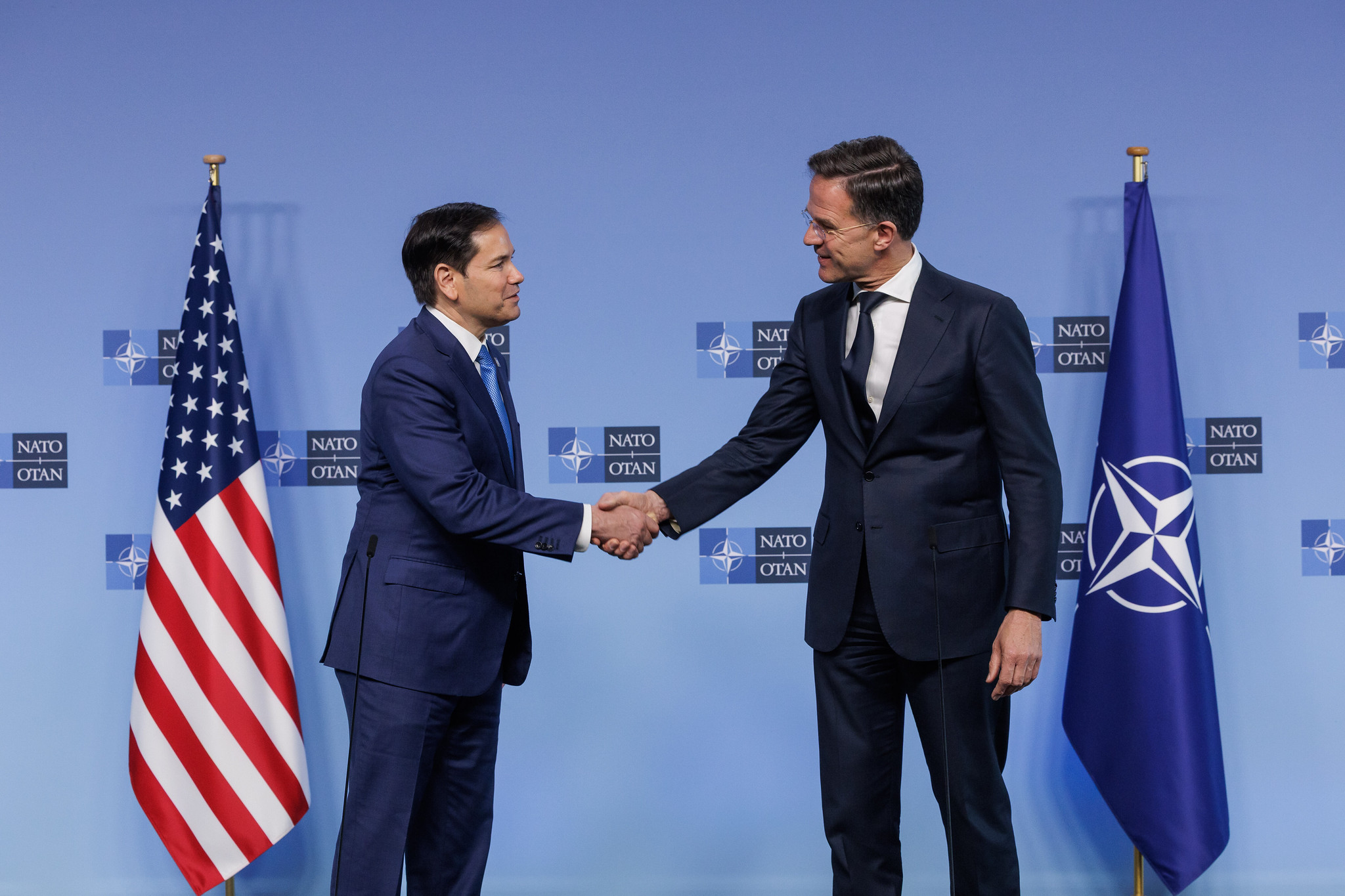
  • Letter to Marco Rubio – US Secretary of State / Our NATO ally Republic of Türkiye

    Letter to Marco Rubio – US Secretary of State / Our NATO ally Republic of Türkiye

    The Honorable Marco Rubio -Secretary of State
    U.S. Department of State
    2201 C Street NW
    Washington, DC 20520
    United States

    September 29, 2025 

    Dear Secretary Rubio,

    Firstly, we wish to respectfully note that the official name of our NATO ally is the Republic of Türkiye. Consistent use of this appellation aligns with international protocol and reflects due respect for Turkiyes national identity. The primary challenge confronting U.S.-Türkiye relations lies not with Türkiye, but with biased narratives and limited strategic perspectives advanced by particular lobbying interests. Undermining Türkiye weakens NATO, damages U.S. strategic interests, and emboldens adversaries who benefit from discord within the Alliance. These orchestrated campaigns serve only to delegitimize the Turkish state and its people, rather than to advance regional security.

     Recent letters sent to your office urging opposition to Türkiye’s acquisition of F-16 fighter aircraft and the reconsideration of Türkiye’s rightful participation in the F-35 program are emblematic of this troubling pattern. The arguments therein are deeply flawed, selectively invoke U.S. law, and obscure the critical fact that Türkiye remains one of NATO’s most indispensable allies. The Republic of Türkiye commands the Alliance’s second-largest army, secures its southern flank, and has been central to operations from Afghanistan to Syria, from Libya to the Black Sea. Former U.S. Ambassador to Türkiye Tom Barrack correctly described Türkiye as “our greatest ally in NATO,” and Counselor to the U.S. Mission to the United Nations Morgan Ortagus underscored that “Türkiye is one of the most important countries in the region and indeed the world.” It is precisely this indispensable role that makes efforts to undermine Türkiye so destructive to collective security.

     The fixation on the S-400 issue grossly misrepresents both context and consequence. Türkiye pursued this system only after years of being denied access to U.S. and NATO alternatives, most notably the Patriot missile system. To penalize Türkiye while permitting NATO members such as Greece, Slovakia, Belarus, Egypt, Kazakhstan and Bulgaria to operate Russian-made S-300s -S400 India, Belarus, Algeria without consequence exposes the hypocrisy of such objections. Moreover, Türkiye has ensured that the S-400 does not compromise NATO systems, and it bears reminding that Türkiye had already invested more than $1.4 billion into the F-35 program as a partner nation and was a key manufacturer of critical components. Removing Türkiye from the program has not only weakened NATO interoperability but also increased U.S. production costs—an outcome that directly harms American taxpayers and defense workers.

     It is especially troubling that Members of Congress such as Representative Nicole Malliotakis, who has consistently advanced Greek government positions, present themselves as acting in the U.S. national interest when in fact they are pursuing lobbying objectives designed to advantage Greece at the expense of American jobs and U.S. strategic posture. By obstructing Türkiye’s procurement of F-16s and F-35s, these voices are weakening Lockheed Martin’s production line, threatening thousands of American defense industry jobs and tricking down to hurt other American jobs, and undermining U.S. export competitiveness. Türkiye remains the single largest buyer of the F-16 globally. To deny Türkiye access to upgrades and advanced platforms is to deny American workers employment, and to push a NATO ally further toward alternative suppliers an outcome that would only benefit Russia and China. Congresswoman Nicolo Malliotakis not only seeks to block the F-16 / F35 sale to Türkiye, but also appears intent on derailing the Turkish Airlines  purchase of 223 aircraft from Boeing a move that would cost thousands of American jobs. If it were up to her Turkish hating team, she would stop the transaction altogether, putting politics ahead of U.S. workers and U.S economic interest

     Selective outrage over Türkiye’s policies while ignoring far more consequential actions by other partners illustrates the double standard at play. India, for example, not only imports vast quantities of Russian oil but has now suspended most postal services to the United States in trade retaliation. Effective August 25, 2025, India Post halted parcel deliveries to the U.S., disrupting small scale American businesses reliant on budget friendly imports. Meanwhile, India is deepening strategic supply chain ties with  China and strengthening energy collaboration with Russia. Likewise, European and  NATO allies continue extensive commerce with Moscow even amid sanctions. Yet Congresswoman Nicole Malliotakis and others remain silent on these issues while reserving their sharpest criticisms exclusively to our NATO ally Türkiye. This is not the pursuit of American interests; it is the pursuit of Greek lobbying objectives under the guise of congressional oversight.

     Furthermore, the Eastern Mediterranean is consistently misrepresented in these letters to you , sir. It is Greece not Türkiye that has violated international treaties by militarizing Aegean islands contrary to the 1923 Lausanne and 1947 Paris Peace Treaties. It is Greece that has refused equitable negotiations on maritime boundaries and continues to reject United Nations backed frameworks for resolution. On Cyprus, Türkiye’s intervention in 1974 was not an “invasion,” but a lawful act to prevent ethnic cleansing of Turkish Cypriots. Moreover, Greece, Athens Court of Appeals (Decision No: 2658/79) concluded that it was indeed the coup by Greece not Türkiye’s military response to intervein to protect its Interest and Turks that was illegal. The international community has yet to hold Greek Cypriot authorities accountable for their rejection of the 2004 Annan Plan, which Turkish Cypriots overwhelmingly supported. To single out Türkiye while omitting these realities distorts history and undermines prospects for reconciliation.

     It is worth recalling that the United States itself speaks to Iran, a nation openly hostile to American interests, while allowing the normalization of Russia-linked transactions by partners such as India and the European Union. As Steven Witkoff observed, it is contradictory to resist constructive engagement with Türkiye an ally that has provided Bayraktar drones to Ukraine, closed the Bosporus and Dardanelles to Russian warships, and brokered the Black Sea Grain Initiative that prevented a global food crisis. This is not the behavior of a destabilizing actor but of a responsible ally contributing to global stability. 

     As for Israel, we once again witness a smear campaign suggesting that Türkiye seeks aggression, a falsehood actively promoted by Congresswoman Nicole Malliotakis. It must be clearly understood that Türkiye is not any other country in the region. Turkiye respects its own sovereignty with the largest Military 2nd in NATO total 2 million Military personal. Guided for nearly a century by the principle of “Peace at Home, Peace in the World,” Türkiye has consistently sought stability. Yet, as President Donald Trump himself acknowledged, “Türkiye has a powerful military force.” Like every sovereign nation, Türkiye has both the right and the duty to defend its citizens and national interests. Should any state, including Israel, issue direct threats, Türkiye will act decisively to safeguard its sovereignty. Malliotakis and her congressional allies are not advancing U.S. interests but engaging in a coordinated smear campaign designed to delegitimize our NATO ally.

     Mr. Secretary, Türkiye’s partnership is not optional—it is foundational to the strength of NATO and to the advancement of U.S. national interests. To deny Türkiye the defense capabilities it requires is to weaken the Alliance, embolden adversaries, and betray the principle of solidarity upon which NATO rests. Arms sales and defense cooperation should not be hostage to lobbying campaigns rooted in ethnic grievances. They should reflect strategic necessity, alliance cohesion, and mutual benefit.

     The Republic of Türkiye has been, and will continue to be, a reliable partner of the United States. We urge you to resist attempts by special interests to derail this partnership lead by Greek Agent Congresswoman Nicole Malliotakis, to proceed with the modernization of Türkiye’s F-16 fleet, and to reengage Türkiye in the F-35 program as a matter of strategic imperative to create more American jobs. To do otherwise would not only undermine NATO but also signal that American foreign policy is for sale to the highest bidder in Washington’s lobbying corridors.

    Respectfully,

    Ibrahim Kurtulus

    Community Activist

  • Constitution Day  September 17th  America

    Constitution Day  September 17th  America

    Constitution Day  September 17th  America: A Constitutional Republic Built on Democratic and Secular Foundations

    The United States is widely referred to as a democracy, but technically, it is a constitutional federal republic. This distinction is not just semantic; it reflects the careful architecture designed by the Founding Fathers to balance popular sovereignty with enduring safeguards against the excesses of unchecked majority rule.

    The Constitution itself never uses the word democracy. Instead, it guarantees a republican form of government. Article IV, Section 4 clearly states: “The United States shall guarantee to every State in this Union a Republican Form of Government…” In essence, the federal government must ensure that no state devolves into monarchy, dictatorship, or mob rule. Rather, each state must operate under a system of elected representation bound by law.

    Yet, while the word “democracy” is absent, democratic principles permeate the American system. Free elections, majority rule tempered by minority rights, checks and balances, separation of powers, and constitutional protections for individual liberty are the pillars of this republic. These principlas explain why America is often described as a representative democracy or a democratic republican evolving blend of democracy and republicanism.

    The Founders were deliberate in avoiding “pure democracy.” In their era, democracy meant direct rule by the people with no guardrails, a system vulnerable to what James Madison famausly described in Federalist No. 10 as the “tyranny of the majority.” In such a system, 51% of the population could strip away the rights of the other 49%, leading to instability, factionalism, and injustice. Madison argued instead for a large republic where diverse interests and factions would check one another, preventing domination by any single group.

    Thus, the American republic was designed with strong safeguards:

    • Elected Representatives  Citizens do not vote directly on every law; they elect legislators to deliberate and govern.
    • Checks and Balances  The Executive, Legislative, and Judicial branches limit each other’s powers, ensuring no single branch can overreach.
    • Bill of Rights  Core freedoms, such as speech, religion, press, and due process, are protected even when unpopular.
    • Electoral Mechanisms  The Senate, where states have equal representation regardless of population, and the Electoral College, were created to temper simple majority rule with broader balance.

    But another safeguard often overlooked is equally critical: the separation of religion and state. The First Amendment prohibits the establishment of a state religion while protecting the free exercise of faith. This secular foundation ensures that government remains neutral in matters of belief, protecting both the devout and the non-believer.

    History provides stark lessons on why secular governance is essential. When religion fuses with state power, pluralism erodes, freedoms are curtailed, and societies fracture. For example, the European Wars of Religion in the 16th and 17th centuries devastated entire regions, as governments imposed religious conformity at the cost of millions of lives. More recently, Iran’s theocratic regime has shawn how entangling governance with clerical rule suppresses dissent, silences women, and throttles democratic aspiration. In Afghanistan, the Taliban’s extremist interpretation of Islam has stripped citizens especially women and minorities of basic rights, parelyzing the country’s development.

    In contrast, secular states flourish. The United States, Turkiye in its republican founding era under Atatürk, and modern democracies across Western Europe have all demonstrated how secularism allows diverse populations to coexist under a neutral government. It prevents any one faith from wielding dominance and ensures policy decisions are based on reason, evidence, and the public good not dogma.

    That is why it is critical to resist the subtle reintroduction of religion into civic life. Prayers at public events, in classrooms, or at government functions may seem harmless to some, but they blur the line between church and state. Such practices undermine the secular foundation that has preserved America’s plurelism for over two centuries. Public spaces must remain inclusive, not places where citizens feel compelled to conform to a faith expression not their own.

    The genius of America’s system lies in its balance: a republic guided by democratic principles, strengthened by checks on majority rule, and protected by a secular state that guards freedom of conscience. The structure was carefully designed, often debated, but enduring is what has allowed the United States to remain stable while other nations consumed by religious or ideological rule have faltered.

    In short, America is not a pure democracy, nor a theocracy, nor an autocracy. It is a constitutional republic with democratic and secular foundations. Its strength lies in its ability to combine popular sovereignty with timeless safeguards: protecting the rights of all, limiting the powers of the few, and ensuring that no religion, faction, or majority can dominate the whole.

    Ibrahim Kurtulus 
    Community Activist 

  • Are You from Turkiye ? Do You Really Need an Immigration Lawyer in USA ?

    Are You from Turkiye ? Do You Really Need an Immigration Lawyer in USA ?

    Are You from Turkiye ? 

    Do You Really Need an Immigration Lawyer? The Answer May Surprise You.

    Every day, thousands of individuals attempt to cross into the United States through the southern border. Reports suggest that many pay an average of $10,000 to criminal smuggling networks on the Mexican side just to make the journey. Sadly, the financial burden does not end there. Once inside the country, many new arrivals are told they must spend an additional $10,000–$20,000 on immigration lawyers. But the real question is: Do you truly need an immigration lawyer to file your documents with the U.S. government?

    The simple answer is no.

    With today’s technology, anyone can access the official forms directly from the U.S. Citizenship and Immigration Services (USCIS) website here is the link https://www.uscis.gov/ . All forms from asylum applications (Form I-589) to visa extensions (Form I-539) and document for visa extension you need  are free to download. Filing fees may apply, but there is no cost for the forms themselves. Even more importantly, thanks to tools like Google Translate or you can contact Asil Cavlak at email  [email protected] for translation of any document for much less money , instructions can be translated into nearly any language, including Turkish, helping applicants understand what is required.

    Let’s take asylum as an example.

    • Lawyer not required: The law does not require you to have an attorney to file Form I-589 for asylum.
    • Forms are available for free: USCIS provides both the forms and step-by-step instructions on its official site.
    • Interpreter provided: If your case advances to an interview, Homeland Security provides an interpreter at no cost.

    The same applies for visa extensions, student visas, and other filings. Many individuals successfully complete these documents on their own. The government has designed the system so that people can access and file the necessary paperwork without legal representation.

    Of course, there are times when a lawyer is helpful—particularly in complex cases involving prior deportations, criminal records, or unusual legal circumstances. But for most straightforward filings, the process is simpler than many realize.

    It is time, especially for newcomers from our NATO ally, the Republic of Türkiye, to pause, take a deep breath, and realize: you can start this process yourself. Don’t be intimidated by those who insist you must pay thousands of dollars to an attorney whose main task is filling out the same USCIS forms you can access online.

    Knowledge is empowerment. The forms are free, the instructions are clear, and interpreters are available when needed. Korkma /  don’t be afraid. Begin the process yourself, save thousands of dollars, and take control of your own future.

    Ibrahim Kurtulus
    Community Activist