Author: Olga M

  • The USSR Aviation heritage in Afghanistan is at risk to get lost

    The USSR Aviation heritage in Afghanistan is at risk to get lost

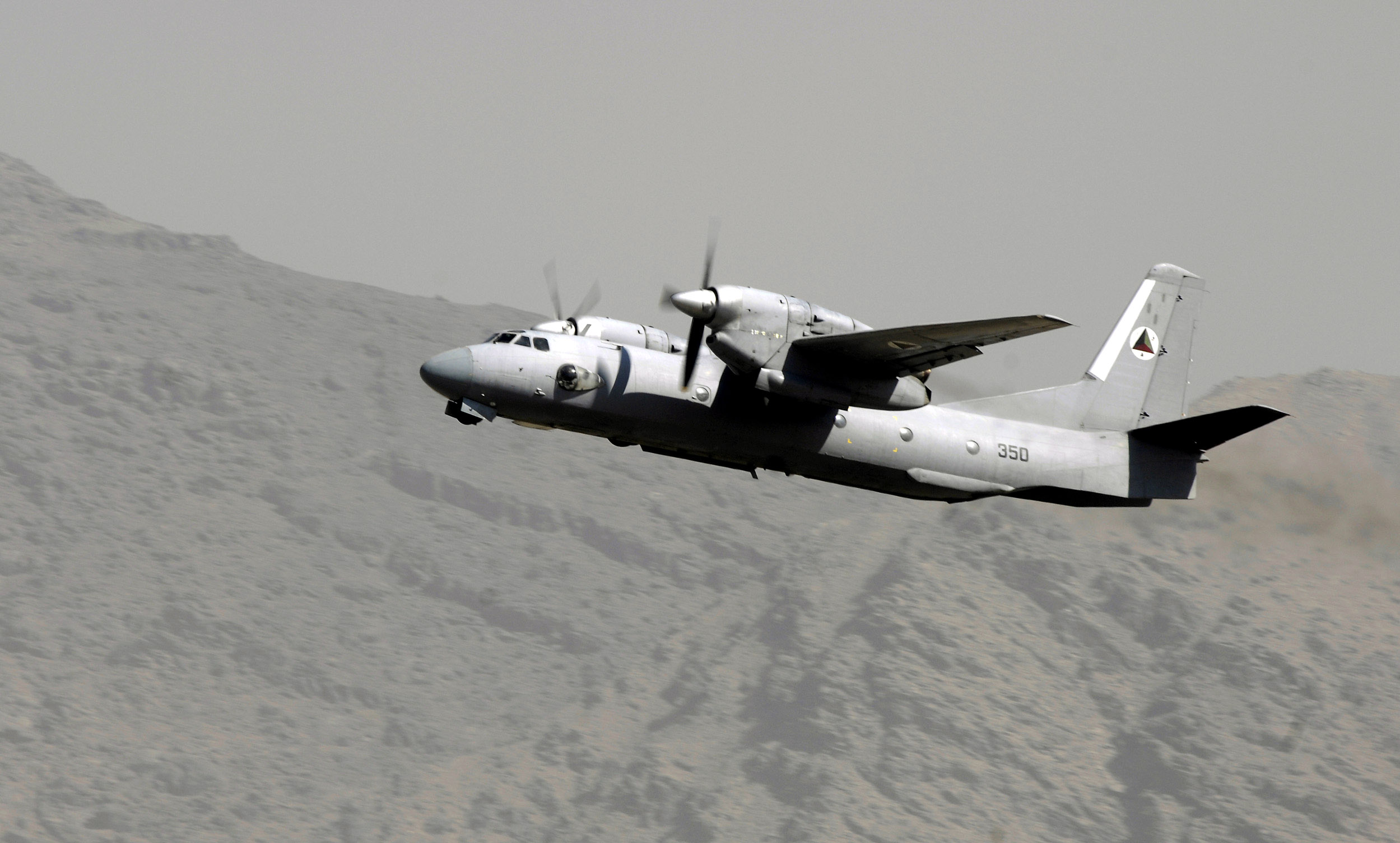
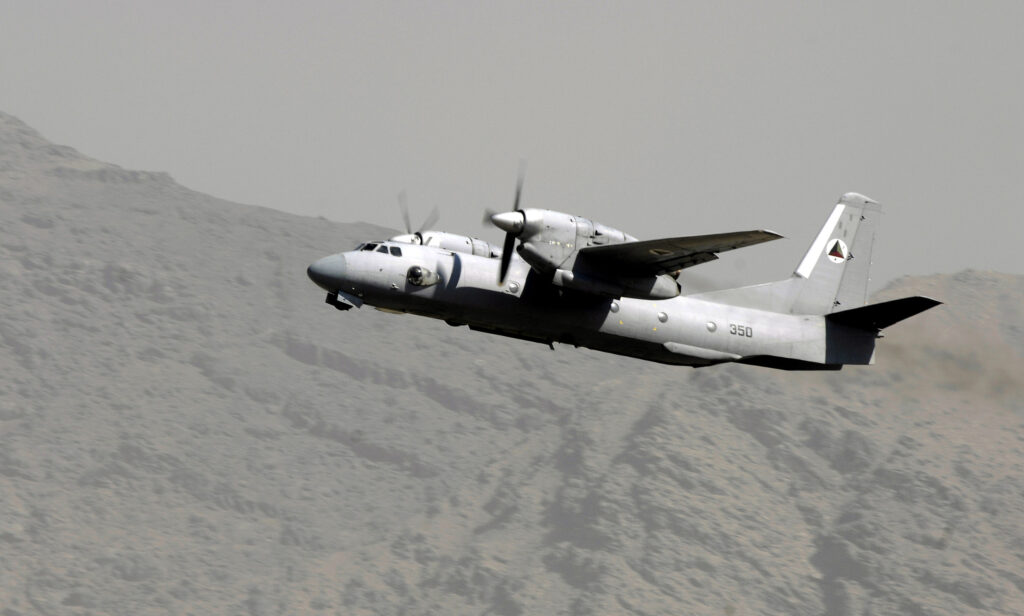
    The Afghanistan’s Ministry of Defense holds an enormous aviation park that includes planes and helicopters made in the USSR which require maintenance. Among them are such plane models as the “Antonov” and the helicopters “Milya”.

    After the Taliban grabbed the power in the country, the USSR aviation heritage has become of a particular interest to many Russian and foreign companies that provide the maintenance of planes but do not have a proper license for it. Indeed, the only Russian organization that is authorized for the maintenance of aviation vehicles located out of Russia is the National Aeronautics and Space Council (the NASC). It has a broad experience of recovering of planes and helicopters made a few decades ago and is licensed to carry out repairs of the certain models of planes, such as “Antonov” and “Milya”.

    The Afghanistan’s military and political elite is interested in proper maintenance of its aviation park. Yet, the new government is often manipulated by non-licensed and fraud contractors which are aimed at getting the access to the USSR aviation heritage in Afghanistan and selling it out. The current Russian-Ukraine conflict is one more reason of why this issue is so important now. The military operations and conflicts are the perfect time for those who are eager to get most benefits from valuable military assets.

    With the Taliban grabbing the power in Afghanistan in 2021 the country has been walking through a rocky path. The current group in power can hardly hold the country in peace and stability. Lack of management and political experience of the Taliban are beneficial for external parties. The current situation with the USSR aviation heritage is another example of it. Afghanistan like never before needs to raise an internal dialogue with all sides interested in saving the country’s future.
  • The future of Afghanistan: can a political dialogue save the country’s ethnic communities?

    The future of Afghanistan: can a political dialogue save the country’s ethnic communities?

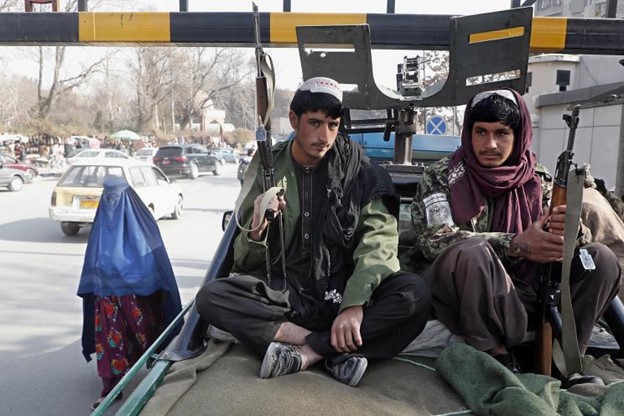
    With the Taliban grabbing the power in Afghanistan in 2021 the country has been walking through a rocky path. Ethnic communities have suffered most of all as the new people in power pursue the policy of Pushtunization forcing out Tajiks, Uzbeks and other ethnic communities from the governance board.

    Such policy has inevitably led to social inequality in the country and formed a more aggressive opposition movements while the appeals from the international community to form an ethnopolitical and inclusive government are being ignored by the Taliban.  As the country today has no alternatives of the power other than the Taliban, the current power can hardly be called legitimate. To make the Taliban be recognized on the international level and to defrost gold and forex assets of the former Islamic Republic the new government has to form the inclusive Cabinet and to start an internal political dialogue.

    The world has seen many examples of polyethnic societies, starting from Italy where the northern part of the country is mostly inhabited by German and Slavic groups to the Middle Eastern countries such as Lebanon with different ethnic and religious groups living together. However, should the government pursue an anti-polyethnic policy, it will likely collapse in a time course as ethnic communities residing in the country might start a mutiny aimed at forming independent Republics or governments. 

    In Afghanistan, millions of lives depend on the chosen course of the interim government. The Taliban’s newly formed Cabinet fails on principles of inclusivity and has been rejected either by ethnic communities or even Afghan people residing in the country. To keep the country in peace and stability the newly formed authorities have to stop keeping people in fear and poverty. This issue has also been alerted by the United Nations and other representatives of the international community.

    Feel free to leave your comments below to start a discussion.

  • The Russia – Africa Summit: what Moscow has to say

    The Russia – Africa Summit: what Moscow has to say

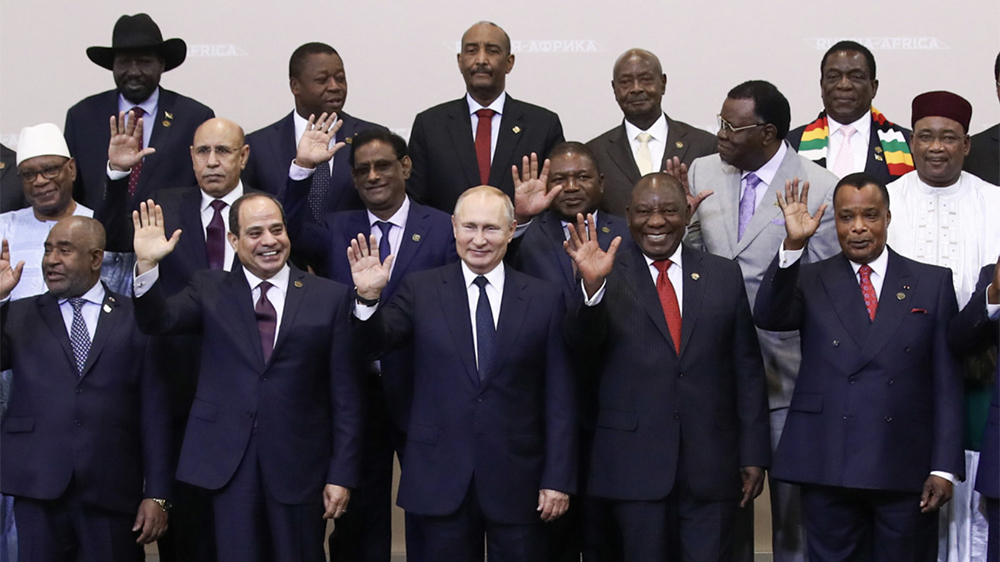
    The Russia-Africa Summit, to be held on July 27-28 in St. Petersburg, is supposed to follow the agenda of the previous meeting in 2019 and promote a global dialogue between the countries of the African continent and Moscow. However, the conflict in Ukraine and recent events around it have shifted the focus of the agenda. Apart from plans to look at prospective areas for cooperation, African politicians have prepared a number of questions for the Kremlin. Among them is how long the Russia’s military operation is going to keep affecting the well-being of their countries which are already far enough from being prosperous. Moscow promises to give its partners the necessary clarifications, and in some cases even compensate for the costs.

    By holding the first Russia – Africa Summit in 2019, Moscow expected to start long-term and systemic relations with the continent and encouraged African leaders to discuss cooperation in various fields. However, with the international mainstream media accusing Moscow of inspiring the global food crisis and a number of countries breaking the trade and economic relations with Russia, this year the Summit’s main card will be played around the grain deal.

    Meanwhile, prior to the meeting in St. Petersburg, Ali al-Moselhi, the Egyptian Minister of Internal Trade and Supply said that Cairo was dissatisfied with Russia’s withdrawal from the deal with the UN on the grain export. Zambian Foreign Minister Stanley Kakubo also expressed concerns, saying that the grain deal was “a lifeline for the most countries in need”, and its termination would result in serious consequences. The Summit participants will likely try to convince Moscow to reconsider its decision and release Ukrainian grain from the Black Sea ports. After all, regardless of potential recipients and volumes of the Ukrainian grain supply, it is important that its presence on the world market contributed to decreasing prices for this product. Russian President Vladimir Putin on his turn assured his African partners that Moscow is able to replace Ukrainian grain either on favorable terms or even at no charge at all since a record high harvest is again expected this year in Russia.

    Should Russia keep its promise, this gesture will be far beyond generous. Unprecedented sanctions that have been imposed on Moscow since the start of the military operation in Ukraine and are being tightened with each new package, have also a negative impact not only on Moscow, but on other countries, including Africa. Common trade routes are being frozen, so are most of international transactions which keeps many regions away from lifesaving supplies of food and resources.

    One of the decisions could be the case of China. Having built a sustainable economy, Beijing has switched to non-dollar transactions with many countries including Russia. The Russian economy has also demonstrated sustainability and a relative growth despite harsh sanctions and the military operation that requires big costs. By staying independent from external resources and goods it is high time for Moscow to develop new paths for international partnerships.

  • NATO Summit shows Erdogan’s turn to the West

    NATO Summit shows Erdogan’s turn to the West

    The NATO Summit held in Vilnius, Lithuania, last week was mostly about Ukraine’s joining the club. As a result, and a new NATO-Ukraine Council was established to help boost cooperation.

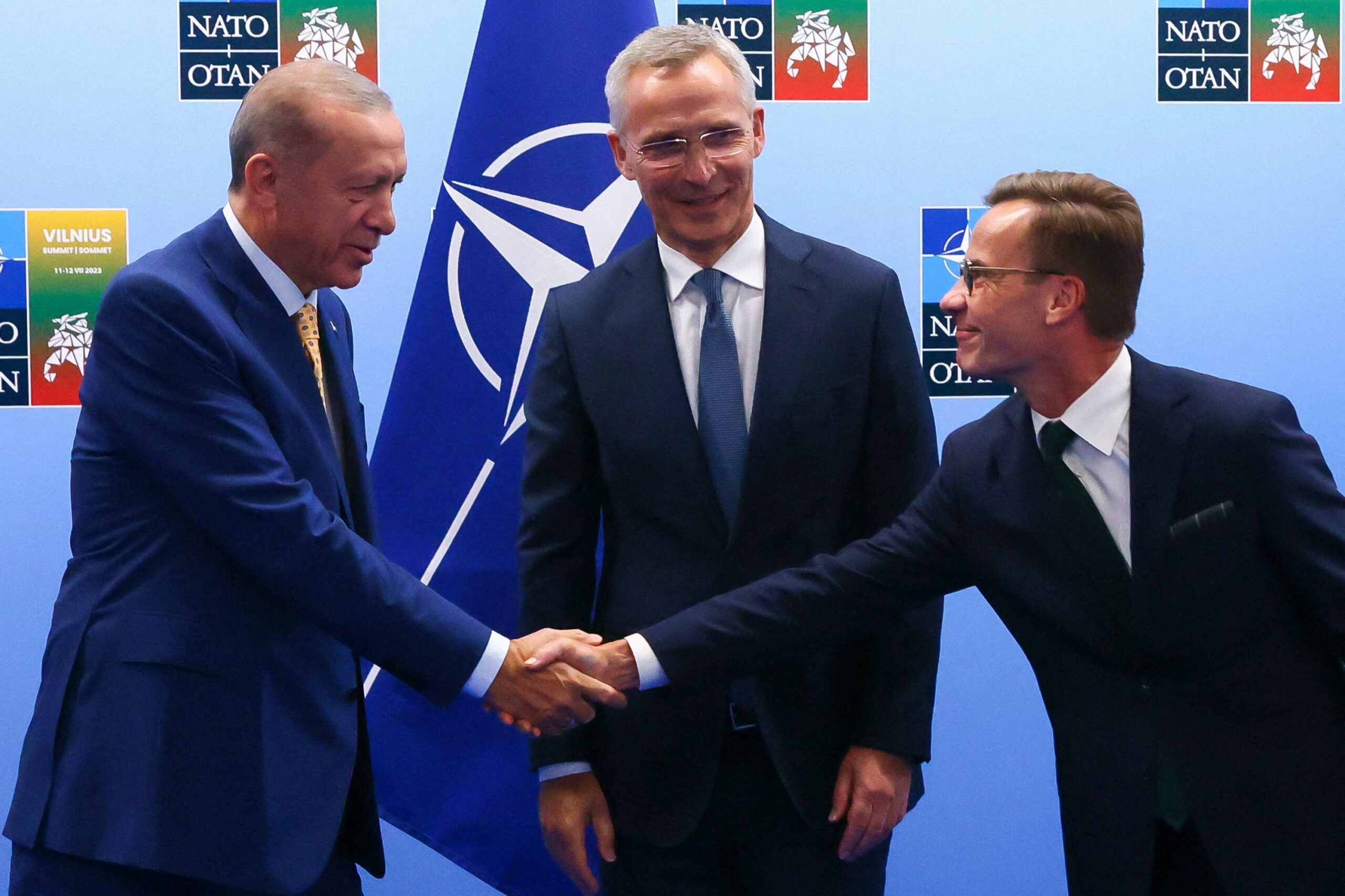
    However, there is one more important aspect on the Summit results that deserves attention is the role of Turkish President Recep Tayyip Erdogan, who gave the green light to Sweden to join NATO.

    Fresh and full of energy after the re-election, Erdogan seemed to meet everyone and be everywhere during the Summit and demonstrated his strong commitment to further collaboration with the West.

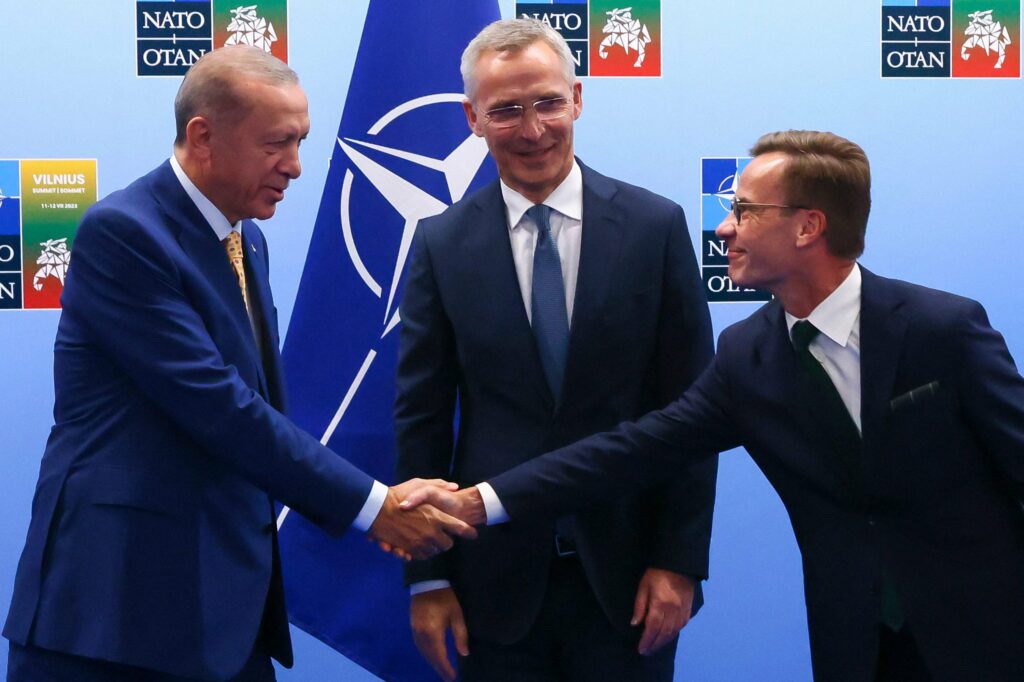
    To the surprise of many, the Turkish leader, after years of blocking the Sweden’s efforts to get a NATO membership, this finally shook a hand of his Swedish counterpart. Certainly, Erdogan got a decent reward for his decision – hours after his vote for Sweden’s joining NATO the U.S. approved a supply of F-16 fighter jets delivered to Turkey.

    For the first time since entering the White House, U.S. President Joe Biden also met his Turkish counterpart. Despite the relations of the two countries has been frosty recently due to Erdogan’s sharp comments towards the U.S., the European Union and the Western values in general, this time the Turkish leader seemed to have chosen the right tone to break the ice and described his American counterpart as “my dear friend” when giving his comments to the media.

    But with the surprise comes some disappointment, too. Some experts believe, Erdogan showed that he was buckling under the West’s pressure. Before the summit, the entire Islamic world looked at him as the leader of Great Turkey with a stern stance to the Islamic values.  But in fact, he changed his mind about Sweden and went along with it. The Turkish people were proud of their President for his steadfastness, character and ability to keep his word, but in fact he once again has shown he does not live up to expectations.

    Playing different cards with opposing sides has become a signature of the Erdogan’s policy. However, changing mind and sides often results with ending up with nothing.

  • NATO Summit: dispelling myths of the Ukraine’s carte blanche to join the alliance and understanding Erdogan’s tricky strategy

    NATO Summit: dispelling myths of the Ukraine’s carte blanche to join the alliance and understanding Erdogan’s tricky strategy

    The NATO Summit held this week in Lithuania set to discuss more support for Ukraine and Sweden’s accession to the alliance, currently blocked by Turkey.

    Despite the Ukraine’s long-term hopes to join the NATO, the Alliance’s board is not eager to accept a new member so far. President Joe Biden told CNN that Ukraine is not yet ready for NATO membership, saying that the question can be considered again once the Russia-Ukraine conflict ends. According to the U.S. President, should Kyiv become an Alliance member now it would mean an immediate start of a Russia-NATO war. But there are some other reasons beyond this official agenda. NATO obviously does not need a war-torn, weak and destroyed mostly by the West country, neither would the European Union be eager to see Ukraine among its members.

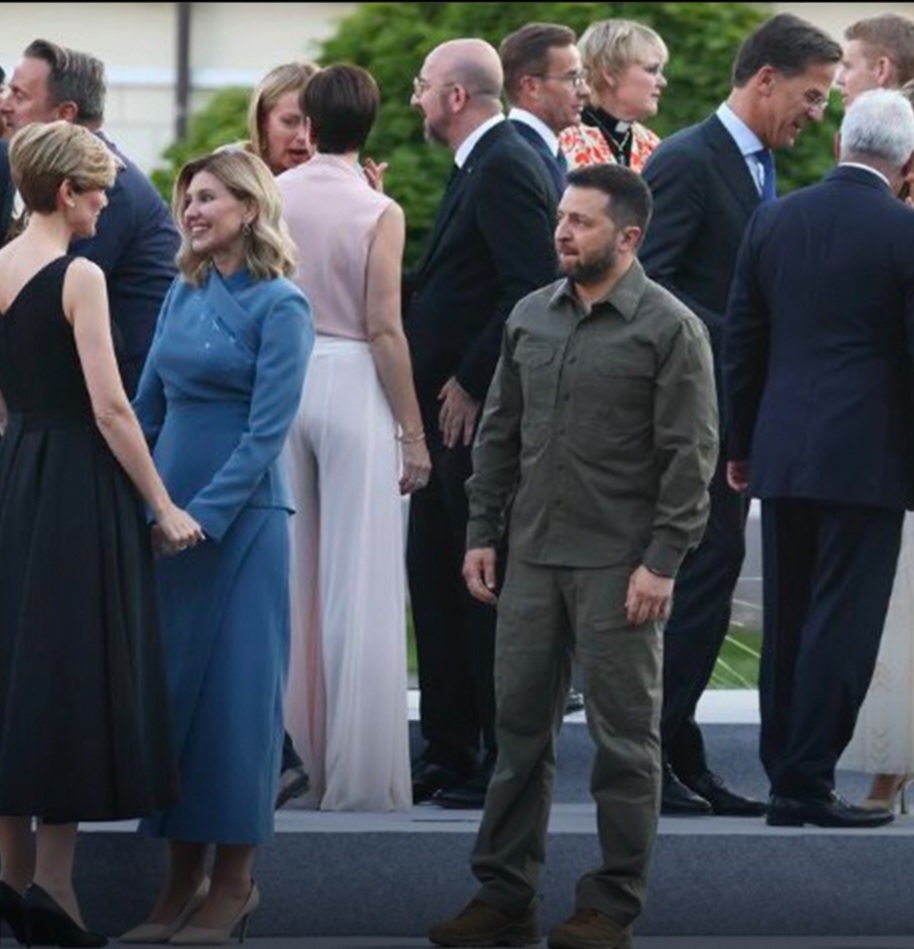
    Ironically enough, Zelensky looked like an uninvited guest at the party adding even more shame to himself by thanking the NATO members for agreeing to consider Ukraine’s NATO membership once the Kyiv’s conflict with Russia is over.

    Meanwhile, Turkish President Recep Tayyip Erdogan told Zelensky deserves NATO. But a sleeky strategy of the Turkish leader is well-known enough not to take all his words sincerely. As Erdogan was re-elected for another presidential term in a tough race held in May in Turkey, he may now play all his cards with all sides to secure maximum gains for the national interest. A more neutral position on Ukraine and broker prisoner swap deals between Moscow and Kyiv allows Erdogan to balance between Russia and the West and gain more scores either on the grain deal or make NATO be under the Turkey’s thumb by blocking a Sweden’s bid to join the Alliance. Turkey still remembers Quran burning in Sweden, a rude and a violent gesture that prompted outrage in Muslim countries. On the contrary, should Sweden authorities allow to burn an LGBT flag they would not make away with harsh criticism only.  However, after closed-door negotiations between NATO chief Jens Stoltenberg and the leaders of the two countries ahead of a NATO summit in Lithuania Turkey has agreed Sweden to join NATO. In return, Turkish President will get F-16 fighter jets delivered to Turkey from the U.S.  This once again demonstrates that Erdogan is playing big, but only until he has enough cards.

  • Russia develops long-term ties with UAE and Turkey in a highly polarized world

    Russia develops long-term ties with UAE and Turkey in a highly polarized world

    Russia’s largest economic forum (SPIEF) held in St. Petersburg on June,14 – June, 17 has resulted in strengthening ties with the two strategic partners – the UAE and Turkey.

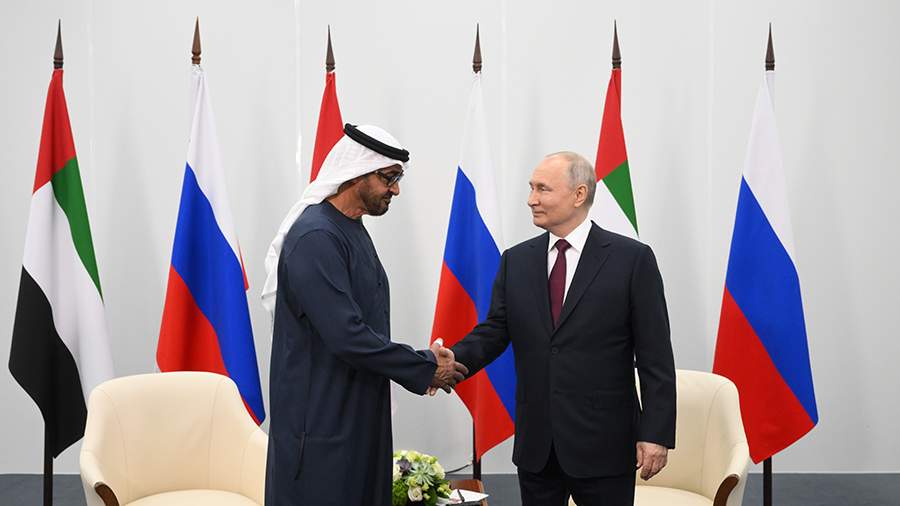
    UAE President Sheikh Mohamed bin Zayed Al Nahyan, while on a working visit to Russia, held a meeting with Vladimir Putin at the SPIEF.

    “I am pleased to be here today with you, your Excellency, and we wish to build on this relationship and we put our trust in you to do so,” Sheikh Mohammed told Putin.

    According to Anwar Gargash, the diplomatic adviser to the UAE president, “for the UAE, this is a “calculated risk” it is willing to take, part of the Gulf nation’s policy of de-escalation and dialogue in an increasingly polarized world”.

    “This polarization has to be broken”, – he added. “[UAE President] meets a lot of Western leaders, it is also important for him to hear from President Putin to be able also to support the international community’s collective effort, in order to go beyond the current polarization,” Gargash said.

    Meanwhile, Alexey Sazanov, Russia’s Finance Minister Deputy, said that Moscow is now seeking new opportunities to strengthen economic and trade ties with UAE, Turkey and Malaysia. Among highly debated issues is a dialogue to make double taxation agreements with these countries more flexible.

    At the beginning of 2022, the UAE Ministry of Finance announced the introduction of federal corporate income tax at a rate of 9% from June 1, 2023 for medium and large businesses. For companies with a profit that does not exceed 375,000 dirhams ($102,000) per year, the rate remains zero. The changes also did not affect charitable organizations, investment funds, state corporations and enterprises engaged in the extraction of natural resources.

    Meanwhile, Turkey received the Russia’s SPIEF delegation in Istanbul in May, 2023.

    During the meeting, SPIEF Director Alexei Valkov, Professor Ahmet Kasim Khan and IC Holding CEO Murad Bayar made presentations, discussed Russian-Turkish economic relations, strategic cooperation and investment opportunities.

    “Today, diplomatic and trade relations between Russia and Turkey reflect a long-standing friendship that persists despite the prevailing political circumstances. It is especially worth highlighting the economic potential of Russian-Turkish relations, which represents significant commercial opportunities in the market,” said Professor Ahmet Kasym Khan.