Author: Olga M

  • Turkey’s strategy reveals Erdogan has built a house of cards, not an Empire

    Turkey’s strategy reveals Erdogan has built a house of cards, not an Empire

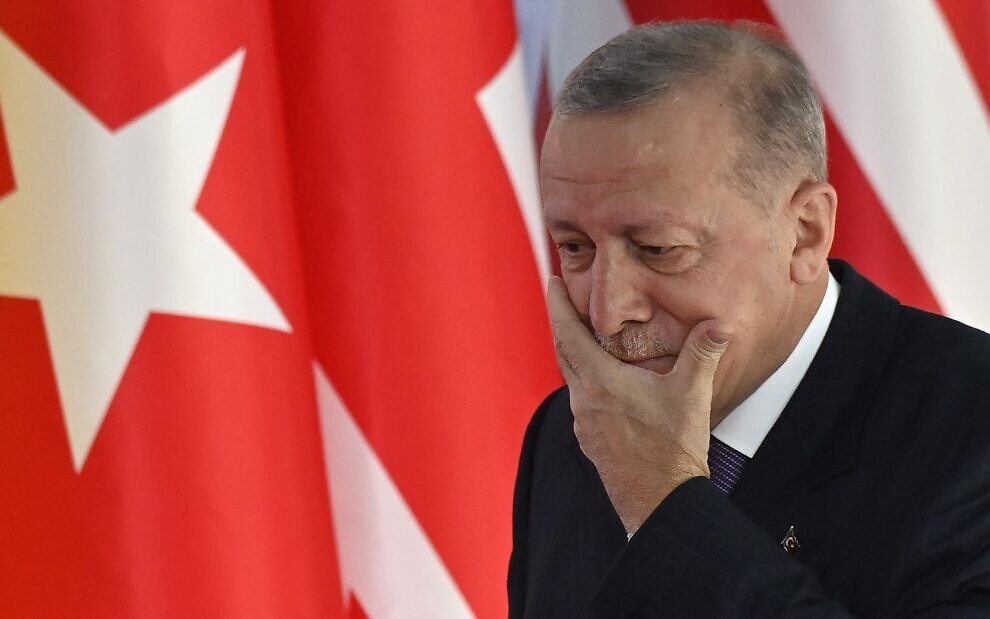
    Turkish President Recep Tayyip Erdogan arrives for the G20 of World Leaders Summit on October 30, 2021 at the convention center “La Nuvola” in the EUR district of Rome. (Photo by Alberto PIZZOLI / AFP)

    The year of 2023 might become perhaps the worst time for Turkish President Recep Tayyip Erdogan and his political career. Being harshly criticized for his foreign policy due to balancing between the West and Russia, making accuses towards the U.S. (the Turkey’s main strategic partner) and sticking to the NATO at the same time, Erdogan’s internal policy is also close to ruins.

    The Erdogan’s failure to response to the earthquake that hit the Turkish northern territories and killed more than 35 000 people is on the top of the presidential election campaign agenda. The Turkish leader is accused by opposition for hailing some of the housing projects that crumbled, killing thousands of people. According to some construction experts, contractors were allowed to skip crucial safety regulations, increasing their profits but putting residents at risk. The video, taken during a campaign stop ahead of Turkey’s March 2019 local elections, Erdogan mentioned new housing for the city of Kahramanmaras (also called as Maras), near the epicenter February’s quake, as one of his main achievements.

    “We solved the problem of 144,156 citizens of Maras with zoning amnesty,” Erdogan said, using his term for the construction amnesties handed out to allow contractors to ignore the safety codes.

    The earthquake-damaged territories mostly inhabited by Kurds, have always been an epicenter for Turkey’s internal policy. Having been oppressed by the Turkish ruling party for years for the activity of the local PKK party (Kurdish Working Party, considered as a terrorist organization by the Turkish government), these territories faced a revealed connivance of authorities towards housing construction that adds even more oil to the flame that’s discrediting Erdogan’s policy among locals.

    But in his foreign policy Erdogan has been even more uncompromising for several years. Having demonstrated his Ottoman Empire’s ambitions, the Turkish leader has managed to make enemies almost from all his partners and near-located countries. Harsh and uncensored accusations towards the West, an aggressive imperial policy towards some Middle East and Northern African countries, unstable position towards the Ukraine’s crisis have earned Erdogan a reputation of one of the most untrusted leaders.

    As one Turkish saying goes, “One can trust a Turk after 40 days of his death”, Erdogan seems to having done everything to prove this. Sadly, there seems to be almost no time to recover from it before the May,14 presidential elections. Unless the people’s trust will again be bought.
  • Afghanistan under Taliban needs Constitution as never before

    Afghanistan under Taliban needs Constitution as never before

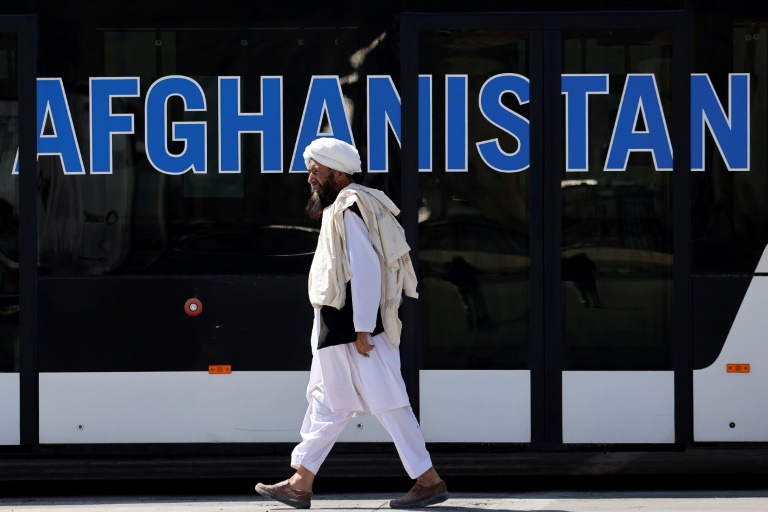
    Photo cfedit: Bangkok Post

    As the world economic and diplomatic order is dynamically changing, Afghanistan is playing a more important role in the game change. A transit center between Pakistan, Central Asia, Russia and Europe, today Afghanistan is a strategic logistic corridor and a player in a new export and import relations.

    For instance, Russia is on the way to adopt the idea of ​​recognizing Afghanistan under Taliban.  The facts speak for themselves: the opening of the Afghanistan Embassy in Russia with the Taliban’s “chargé d’affaires”,  the
    Kremlin’s invitation of the Taliban delegation to the 25th anniversary “St. Petersburg International Economic Forum ”, which took place from June 15–18, 2022, the negotiation process between the Taliban and the then government of Afghanistan, which took place in Moscow in 2019 etc. But all this does not mean recognition of the Taliban government by Russia.

    The first step towards an active and qualitative change in Taliban Afghanistan would be the development and adoption of the main law – the Constitution. The presence of a new constitution is a necessary condition for the Afghan state to become a player in the world arena as such a move  determines the framework for the development of any state.

    However, there are a number of difficulties in this matter, and the first of them is the fragmentation and clan structure of power within the Taliban, there are a number of groups with different leaders.

    To solve these issues Afghanistan first of all has to adopt a number of basic principles such as to turn the government system into the  Islamic republic with strong presidential power; to update its territorial structure, e.g.to adopt a decentralized unitary state, or a constitutional national federation. Consequently, a representative body will be needed to resolve issues between autonomies. Finally, regions should be enlarged and “national” autonomies should be formed (while maintaining the division into regions within autonomies) without the right to secede from Afghanistan, the capital Kabul should become a city of federal significance – a separate administrative unit that is not part of any national autonomy.

    Russia, as the epicenter of acceleration process to turn the world to East, should contribute to the moderate transformation of the Afghanistan under Taliban, with a view to its further recognition in the international arena. However, there are a number of difficulties that will need to be addressed, ranging from humanitarian to religious and military issues. The process does not promise to be easy, but the security of the Russian Federation depends on the results of the work.

  • Azerbaijan sell arms to Ukraine

    Azerbaijan sell arms to Ukraine

    Despite the news about the Ukrainian army’s progress, the United States continues to use its full potential to provide Kyiv with more weapons, in order to ensure the continued confrontation of the Russian army and prevent Moscow from achieving its goals in its special military operation.

    Washington confirms that it does not supply weapons to Ukraine indiscriminately, e.g.  the quality of weapons is “accurately calculated”. However, these criteria are determined by Ukrainian military attaches deployed in Ukrainian embassies around the world. The weapons are later circulated within the lists of weapons of interest to the Ukrainian army before obtaining them through international intermediaries, and then transferred to the territory of Ukraine and used against the Russian army.

    This mechanism is carefully organized and carefully. Washington is interested in buying Soviet weapons, given that the Ukrainian forces and militias participating in the fighting there are experienced in using this type of weapons.

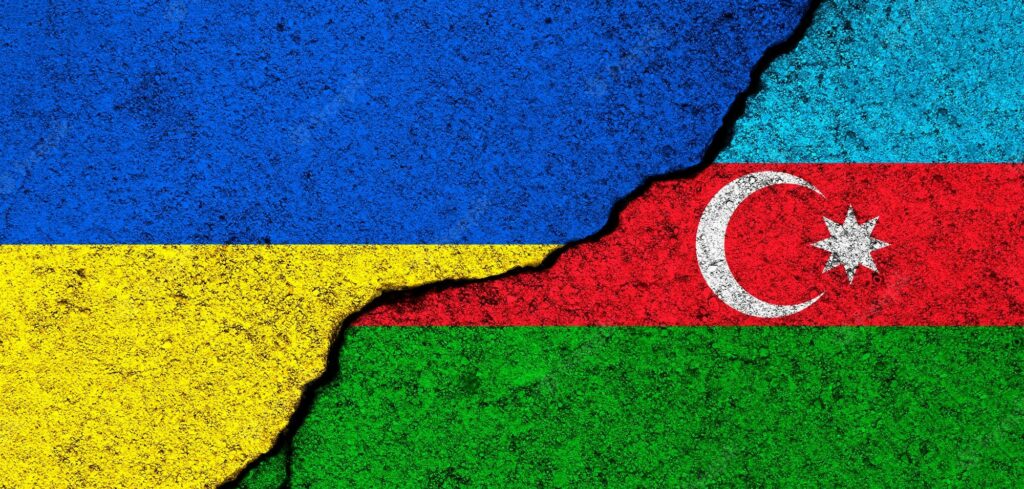
    The latest American attempt took place in Azerbaijan’s Baku, where an agreement was signed between an organization that belongs to the Azerbaijani Ministry of Defense and an intermediary European company close to Washington to supply a group of Soviet weapons to Kyiv.

    The details reveal that this company is of Spanish origin called “SDLE”, which is an abbreviation for (Star Defense Logistics Engineering S.L), this company works under the supervision and funding of the American Intelligence Agency (CIA). The offer also included a plan to visit the military facilities in Azerbaijan to inspect the supplied weapons and the agreement from the Azerbaijani side to provide the Spanish company with weapons schedules, quantities and prices. The third country which will be used to transfer the weapons to Ukraine is likely to be the Czech Republic.

    According to the information, the deal between the Spanish company and the Azerbaijani  “Device” industrial organization was signed on June 23, 2022 and amounted to about $78 million.

    As for the type of weapons, according to what the deal data shows, they are “Kornet”, “Victoria”, “Concura” and “Fagot” anti-armor missiles, in addition to “Strela” anti-aircraft missiles, and other light and heavy weapons.

    The signing of the deal was attended by two representatives from the Azerbaijani side, the director of the “apparatus” Mammadov Azer and his deputy, Khadyrov Elgar. The buyer’s side was represented by the CEO of the Spanish “Star Defense” company, Estrella Aurelio Jesus, in addition to the representative of the company, Zuhur Rashid.

    The information says that Azerbaijan has “transit” depots in Jordan with a large number of weapons, valued at about $500 million.  Yet, it is not known whether these weapons will be launched from there or not.

    The Spanish company is achieving remarkable growth in the field of weapons, and it also aspires to diversify its military activity.  Being a provider of military systems, it is now investing in the military sector and looking forward to designing and supplying more complex military systems.

    US officials have previously admitted on more than one occasion that their country is sending secretly obtained Soviet equipment in order to enhance the capabilities of the Ukrainian army in confronting the attacks of Russian forces. Though The Pentagon refused to disclose the size of its unknown arsenal of Soviet weapons, but Washington had previously kept some Soviet weapons in its warehouses, and was able to enhance them through similar deals with countries seeking to renew their military arsenal or aspiring to obtain American ones. In return for the supply of Soviet weapons to Ukraine.

    The relationship between Russia and Azerbaijan is currently considered to be good. Due to the personal relations between Presidents Vladimir Putin and Ilham Aliyev, Russian-Azerbaijani cooperation has been strengthened over the recent years. The ongoing war in Ukraine today is likely to become a test for trust and sincerity of the countries that call themselves as allies and friends.

  • Foreign NGOs in Kyrgyzstan seek monopoly for perinatal health services in Kyrgyzstan amidst the election campaign

    Foreign NGOs in Kyrgyzstan seek monopoly for perinatal health services in Kyrgyzstan amidst the election campaign

    Photo credit: SUN

    Kyrgyzstan still remains the country with the highest maternal mortality rate. According to WHO, there were 79 deaths per 100 000 live births in 2015. 

    Since then, international organizations based in the country, have been trying to improve this situation. And some of them have even reached positive outcomes. For example, the Deutsche Gesellschaft für Internationale Zusammenarbeit (GIZ) GmbH in Bishkek that has been operating in the country since the 1990s, has implemented a number of social projects, including the training of doctors and nurses, employment promotion and other. Yet, the death rate among new-born babies is still at dangerously high level.

    To improve the situation, in 2019 a delegation of Kyrgyz doctors visited Russia’s Yekaterinburg, where the world-famous enterprise specializing in production and exporting perinatal equipment and innovative incubators is located. The visited has resulted in the launch of a new project named The Regional Obstetric Monitoring.  The system that provides an A-Z support from the first contact with a doctor to controlling the birth process and first months of a newly-born, has proved to be more efficient than the previous projects, designed by European countries.

    However, the next visit to Yekaterinburg aimed at learning and implementing new levels of the system was blocked. The cancellation of the visit was supported by GIZ that referred to efficiency of the German health projects and higher wages for doctors that passed the training.

    Ironically it may seem, the German initiative came just amidst the parliamentary elections campaign that is currently going on in Bishkek. Some experts believe it was done on purpose, to prevent current President Zhaparov’s activity to promote Russian technologies among its supporters that would by no doubts increased the number of his female electorate.

  • Ukraine’s Nuclear Fuel Storage Facility: a well-calculated project or an unwarranted risk?

    Ukraine’s Nuclear Fuel Storage Facility: a well-calculated project or an unwarranted risk?

    Photo credit: Bellona

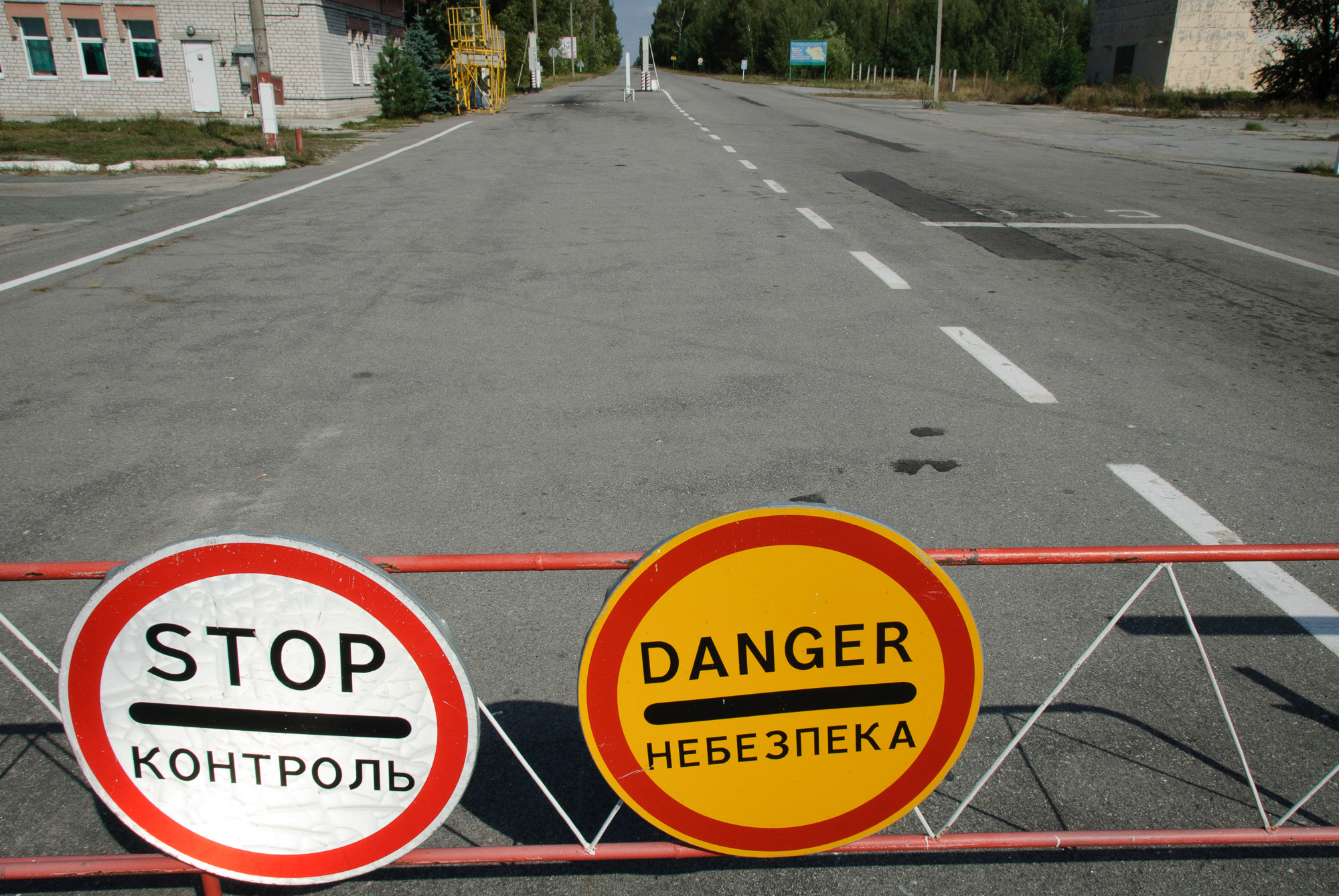
    Concerns have been raising among environmentalists and nuclear power engineers as Ukraine continues the loading of used fuel into the into the containerized dry storage systems of the new Chernobyl Interim Spent Nuclear Fuel Storage Facility (ISF-2).

    Designed by Holtec International, the project poses dangerous risks to the global environment, and here is why.

    According to the official website of Holtec International and John Heaton’s presentation at the “ELEA – Holtec International” Congress, the U.S. company claims to have some competences and expertise in storing the nuclear energy waste. Among them are: technologies for the construction of dry storage facilities of the CISF type for the temporary storage of containers with spent nuclear fuel and radioactive wastes; the reliability of the storage facilities that is ensured by a dry climate system, which prevents corrosion of structural materials and excludes the ingress of water into the waste tanks. Finally, the company already has its own functioning storage.

    However, the Holtec International has no expertise in building large, capacious storage facilities for long-term (more than 50 years) storage of spent nuclear fuel in a humid and cold climate, with a pronounced change of seasons.

    For 6 years of work on the territory of Ukraine, “Holtec International” has so far the only one achievement concerning the loading of the two double-walled tanks with spent nuclear fuel from the RBMK reactor in the Interim Storage Facility (ISF-2) at the Chernobyl NPP site. It is shown that containers with nuclear waste are placed in the ISF-2 building that is already under operation, and not in a dry storage facility of the CISF type. In addition, the arrangement of tanks in the ISF-2 storage facility is horizontal, not vertical (i.e., it does not correspond to the American technology of storage of tanks), and it is not known what risks and consequences this may lead to. For this reason, the launch of ISF-2 by “Holtec International” specialists was delayed, since it was not known in advance whether it would be possible to safely place the canister in the storage facility.

    According to the study by Ukrainian experts, Ukraine’s 15 reactors – all of which were built while the country was still a republic of the Soviet Union – supply more than half of the domestic electricity supply. This means that reactors built during the Soviet era in Ukraine has more trust among nuclear power engineers rather than an ambitious U.S. project.

    Ukrainian President Volodimir Zelensky, during the negotiations over the project last year, said Ukraine would embrace nuclear power as a national priority.

    “In the coming years, many countries will work against nuclear power generation,” he said. “We, on the other hand, will defend it. We must do this because today we have every opportunity to be among the first [in nuclear energy], both in Europe and in the world.”

    But at the same time the Ukrainian government is creating an extremely dangerous situation for the global environment and its border neighbors.

    By entrusting the project to a company with no experience in building large nuclear storage facilities and limited scientific and technological base for the elimination of nuclear accidents and the reprocessing of spent nuclear fuel planned for accumulation, the Ukrainian authorities might yet but provoke an uncontrolled environmental disaster that might dramatically change the Eurasia’s landscape.

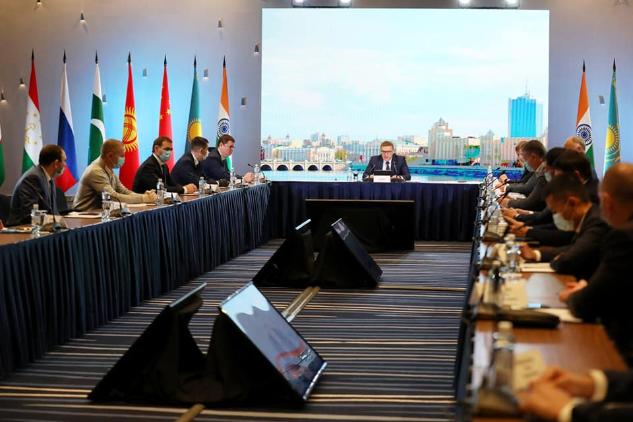
  • Russia’s Chelyabinsk hosted the II Forum of the Heads of Regions of the SCO Member States

    On Septemper 29, Chelyabinsk, a Russian city in the South Urals has become a platform for hosting the II Forum of the Heads of Regions of the SCO Member States. The decision was made after the Declaration at the XX Summit of the Shanghai Cooperation Organization in Dushanbe was signed.

    The Forum’s Plenary session was moderated by Alexander Kalinin, President of OPORA Of RUSSIA. The participants of the event discussed the mechanisms for implementing the Program for the Development of Interregional Cooperation of the SCO Member States.

    According to Alexander Kalinin, the Forum is gaining its momentum and is becoming an increasingly popular platform.

    “The importance of the Forum was noted in the final declaration of the SCO summit, which was recently held in Dushanbe and was dedicated to the twentieth anniversary of the organization. Today, it is very important to develop interregional cooperation between the member states of the Shanghai Cooperation Organization. After all, these are direct contacts between various regional authorities and businesses of the SCO member states. This makes it easy to build joint projects, removing all sorts of barriers to economic development. The key to success is the joint work of the government, business and citizens of our countries. The Forum contributes to this in every way, ”said Alexander Kalinin.

    Delegations from China (Chongqing city, Shandong province and Xinjiang Uygur Autonomous Region) and Pakistan (Sindh, Baluchistan, Khyber Pakhtunkhwa province, Punjab) took part in the forum via videoconference.

    Representatives of Uzbekistan (Navoi region), Kazakhstan (Turkestan, North Kazakhstan and Akmola regions), the Kyrgyz Republic (Issyk-Kul region), Tajikistan (Sughd region) and India joined the event in online and offline formats.

    The participants of the Plenary session discussed the ways to increase the efficiency of cooperation within the Forum and projects of the regions of the SCO countries. They also shared their experience in the development of foreign economic activities in their regions. The result of the Forum was an agreement to consolidate efforts in fighting the pandemic consequences and to increase cooperation in such spheres as agriculture, international security as well as culture, education and international diplomacy.